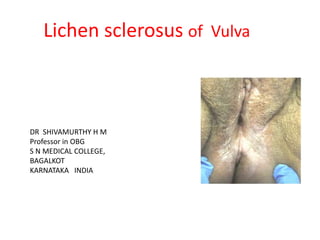
Lichen sclerosus of Vulva
DR SHIVAMURTHY H M
Professor in OBG
S N MEDICAL COLLEGE,
BAGALKOT
KARNATAKA INDIA
Lichen sclerosus
LS is a chronic inflammatory disease
that was first identified in 1887
Fistarol and Itin, 2013.
Lichenification
• It is a skin condition that occurs in response to
excessive itching or rubbing of the skin,
and
• results in thick, leathery patches of skin.
• This occurs because the outer layer of skin
naturally thickens with the extra irritation,
• often happens in tandem with eczema or
other skin disorders.
Sclerosis
Pathological hardening oftissue
especially from overgrowth of
fibrous tissue or increase in
interstitial tissue.
L S Nomenclature
It has since been referred to as
Kraurosis vulvae
Vulvar dystrophy
White spot disease
Lichen albus
Guttate scleroderma
Lichen Sclerosus et atrophicus
(Fistarol and Itin, 2013, Schlosser and Mirowski, 2015).
• The exact prevalence of LS is unknown.
• It is estimated that the prevalence ranges from
0.1% to 1.7% .
• with a higher prevalence reported in
gynecology practices compared with
dermatology practices
• A recent study determined the incidence of
vulvar LS at 14.6 per 100,000 woman-
years(2016)
• Goldstein et al., 2005,Wallace, 1971.
• Bleeker et al., 2016
Epidemiology
Incidence contd......
• Because LS can be asymptomatic and not
always identified by physicians, its
prevalence is likely greater than what has
been reported.
Age incidence
• Although LS can occur at any age, it typically
has a bimodal onset in prepubertal or
postmenopausal women.
• The most frequent among women who are
postmenopausal*.
• Prepubertal LS was previously believed to
resolve by puberty; however, several studies
have refuted this notion**.
**Powell and Wojnarowska, 2002, Smith and Fischer, 2009.
*(Wallace, 1971)
Etiology
• The exact etiology of LS has not been fully elucidated;
• however, it is thought to be an immune-mediated disorder.
• LS has been associated with autoimmune diseases in up to 28% of
patients (Cooper et al., 2008).
• Autoimmune thyroiditis is the most common concomitant
autoimmune disorder, followed by alopecia areata, vitiligo, and
pernicious anemia (Birenbaum and Young, 2007, Cooper et al., 2008).
• A familial predisposition has been reported in 12% of patients and an
association with HLA ( human leukocyte antigen ) DQ7, DQ8, and DQ9
has also been reported (Powell and Wojnarowska, 2001, Sherman et
al., 2010).
• Although autoantibodies that target extracellular matrix protein may
be elevated in the sera of patients with anogenital LS, it is thought that
these autoantibodies are secondary and not directly pathogenic in the
disease process (Fistarol and Itin, 2013, Oyama et al., 2003).
Aetiology contd.......
• Additionally, Howard et al. (2004) found that
30%( one third of patients in their cohort of 96
)patients with vulvar LS had autoantibodies
that targeted the basement membrane zone
(BMZ).
• However, Gambichler et al. (2011) later
reported no significant difference in BMZ
autoantibody levels between patients with LS
and control subjects
Clinical findings
• LS primarily affects the vulvar and perianal
area and spares the vagina, although there
have been rare reports of biopsy-proven LS
that involve the vagina*
• LS can occur extragenitally in up to 13% of
patients and presents exclusively extragenital
in 6% of cases**
(Zendell and Edwards, 2013)*.
(Thomas et al., 1996, Wallace, 1971).**
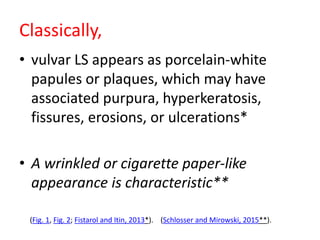
Classically,
• vulvar LS appears as porcelain-white
papules or plaques, which may have
associated purpura, hyperkeratosis,
fissures, erosions, or ulcerations*
• A wrinkled or cigarette paper-like
appearance is characteristic**
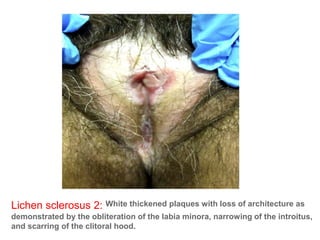
(Fig. 1, Fig. 2; Fistarol and Itin, 2013*). (Schlosser and Mirowski, 2015**).
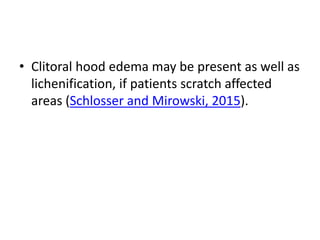
• Clitoral hood edema may be present as well as
lichenification, if patients scratch affected
areas (Schlosser and Mirowski, 2015).
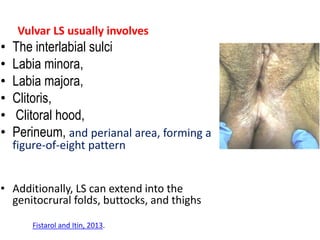
Vulvar LS usually involves
• The interlabial sulci
• Labia minora,
• Labia majora,
• Clitoris,
• Clitoral hood,
• Perineum, and perianal area, forming a
figure-of-eight pattern
• Additionally, LS can extend into the
genitocrural folds, buttocks, and thighs
Fistarol and Itin, 2013.
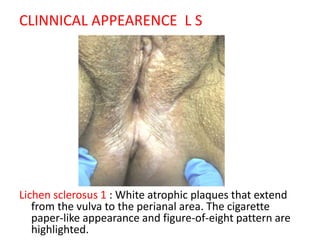
CLINNICAL APPEARENCE L S
Lichen sclerosus 1 : White atrophic plaques that extend
from the vulva to the perianal area. The cigarette
paper-like appearance and figure-of-eight pattern are
highlighted.
Lichen sclerosus 2: White thickened plaques with loss of architecture as
demonstrated by the obliteration of the labia minora, narrowing of the introitus,
and scarring of the clitoral hood.
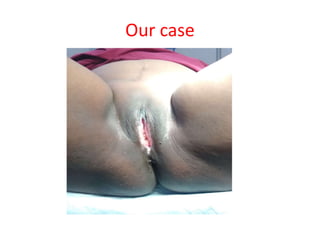
Our case
Residual effect of L S
• LS can leave scars later in the disease course
and result in
• The fusion of the labia minora with the labia
majora,
• Complete resorption of the labia minora,
• Fusion of the clitoral hood,
• And/or scarring of the introitus, which may lead
to sexual dysfunction and in extreme cases
interference with urination
(Fistarol and Itin, 2013, Schlosser and Mirowski, 2015).
In children,
• LS often presents with vulvar purpura or
ecchymosis, which may mimic sexual abuse*
• Additionally, children with LS may present with
gastrointestinal complaints due to perianal
involvement.
(Powell and Wojnarowska, 2001*).
SEQUELE OF L S
• LS can lead to vulvar lentiginosis, which appears
as dark brown or black macules with irregular
borders*
• Vulvar lentiginosis can be readily distinguished
from melanoma on the basis of biopsy results.
• However, it is important to note that genital nevi
in the setting of LS can mimic melanoma both
clinically and histologically.
(* Fistarol and Itin, 2013).
Symptoms
• Patients with LS can experience debilitating
symptoms with pruritus as a hallmark of this
condition (Fistarol and Itin, 2013).
• LS can also cause pain, burning, and
dyspareunia (Fistarol and Itin, 2013).
• LS is asymptomatic in up to 39% of adult
patients (Goldstein et al., 2005).
• In contrast, LS in children is usually symptomatic
(Powell and Wojnarowska, 2001).
Pathology
Pathognomonic histological changes in patients with LS
include
• Hyperkeratosis,
• Epidermal atrophy,
• Homogenization of collagen in the papillary dermis
(Schlosser and Mirowski, 2015).
• Histopathology in patients with early LS, however, may be nonspecific and
difficult to differentiate from LP because both involve a lymphocytic,
lichenoid interface dermatitis (Fung and LeBoit, 1998).
Diagnosis
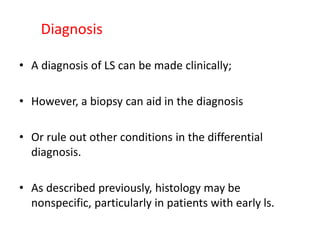
• A diagnosis of LS can be made clinically;
• However, a biopsy can aid in the diagnosis
• Or rule out other conditions in the differential
diagnosis.
• As described previously, histology may be
nonspecific, particularly in patients with early ls.
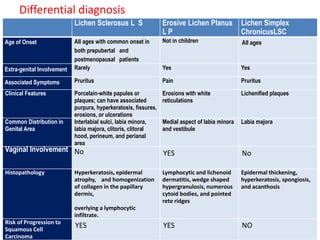
Differential diagnosis
Lichen Sclerosus L S Erosive Lichen Planus
L P
Lichen Simplex
ChronicusLSC
Age of Onset All ages with common onset in
both prepubertal and
postmenopausal patients
Not in children All ages
Extra-genital Involvement Rarely Yes Yes
Associated Symptoms Pruritus Pain Pruritus
Clinical Features Porcelain-white papules or
plaques; can have associated
purpura, hyperkeratosis, fissures,
erosions, or ulcerations
Erosions with white
reticulations
Lichenified plaques
Common Distribution in
Genital Area
Interlabial sulci, labia minora,
labia majora, clitoris, clitoral
hood, perineum, and perianal
area
Medial aspect of labia minora
and vestibule
Labia majora
Vaginal Involvement No YES No
Histopathology Hyperkeratosis, epidermal
atrophy, and homogenization
of collagen in the papillary
dermis,
overlying a lymphocytic
infiltrate.
Lymphocytic and lichenoid
dermatitis, wedge shaped
hypergranulosis, numerous
cytoid bodies, and pointed
rete ridges
Epidermal thickening,
hyperkeratosis, spongiosis,
and acanthosis
Risk of Progression to
Squamous Cell
Carcinoma
YES YES NO
Disease course
• LS is a chronic, relapsing condition
• That can result in loss of vulvar architecture
• Development of vulvar squamous cell
carcinoma (VSCC).
PROGRESSION IN TO VSCC
• Histologically confirmed vulvar LS determined
after 20-year incidence of VSCC at 6.7%
• Age of ≥ 70 years
• Presence of vulvar intraepithelial neoplasia(VIN)
at the time of diagnosis were independent risk
factors for the development of VSCC
(Bleeker et al., 2016).
Treatment
• Ultra-potent topical steroid medications are
the mainstay of treatment for patients with LS
and there is strong evidence supporting their
efficacy.
• Nonspecific, particularly in patients with early
LS.
In children
• In children with LS, a biopsy should
ideally be restricted to treatment-
refractory cases.
Treatment contd…
• Ointment is the preferred vehicle because it is
less irritating compared with other forms of
treatment *
• 96% experienced an improvement in
symptoms,
• 23% had a complete return to normal skin,
• and 68% had a partial return**
Guerrero and Venkatesan, 2015* Cooper et al., 2004a**.
In children
Ultra-potent topical steroid medications
should be used as a first-line treatment in
children as well and there are data to support
their safety and efficacy in the prepubertal
population
(Ellis and Fischer, 2015, Fischer and Rogers,
1997).
Intralesional corticosteroid medications
can be effective, especially for thick,
hyperkeratotic plaques.
Mazdisnian et al., 1999).
Treatment contd
• Emollients can also be helpful to improve
symptoms and maintain remission
(Cattaneo et al., 1996).
Topical calcineurin inhibitors
• Topical calcineurin inhibitors have
documented efficacy in the treatment of
patients with vulvar LS.
• Can be considered to treat patients who are
refractory to or intolerant of topical
corticosteroid medications.
• Clobetasol has been found to be a superior
treatment
Topical testosterone, a treatment that was used in the
past, has demonstrated no statistically significant
difference when compared with petroleum jelly
(Sideri et al., 1994).
(Funaro et al., 2014, Goldstein et al., 2011).
Photodynamic therapy
• Photodynamic therapy have also been
described in the treatment of patients with
vulvar LS (Bousema et al., 1994, Rasi et al.,
2010, Shi et al., 2016, Terras et al., 2014, Virgili
et al., 1995).
•
Surgery
• Lastly, surgery may be beneficial in cases of
scarring and disfigurement as a result of LS
(Goldstein and Burrows, 2007).
Maintenance treatment and follow-up
• Until recently, data on appropriate follow-up
and maintenance practices for patients with
vulvar LS were limited.
• Lee et al. (2015) addressed these knowledge
gaps in a prospective cohort study of 507
women with biopsy-proven LS treated with
corticosteroid medications over a mean time
period of 4.7 years.
• 1 totally compliant patients had 0 cases of VSCC
• but
• 2 partially compliant cases had a statistically significant
increased risk of VSCC at 4.7%.
• Compliant patients also had significantly lower rates of
scarring and symptoms.
• Importantly, maintenance treatment with topical
corticosteroid medications was well-tolerated.
• This study is the largest to date to report on the outcomes
of topical corticosteroid treatment for patients with LS and
demonstrates that long-term maintenance therapy is
warranted (Lee et al., 2015).
•
Follow up
Lee et al. recommended that once initial
treatment with topical corticosteroid
medications resulted in normal skin color and
texture, the topical corticosteroid strength
should be reduced.
FOLLOW UP
• Patients should be evaluated every 3 months
until their topical corticosteroid regimen is stable
and their skin color and texture are normal.
• Additionally, patients should be followed
indefinitely and seen at least annually
(Lee et al., 2015).
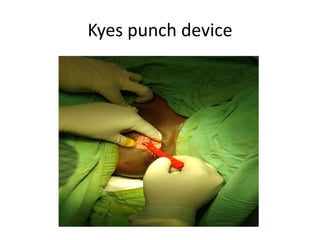
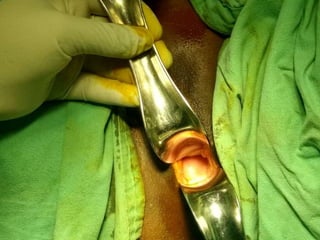
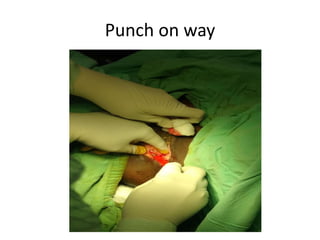
Procedure we did with of Kyes punch
device
Vulvallesion L S
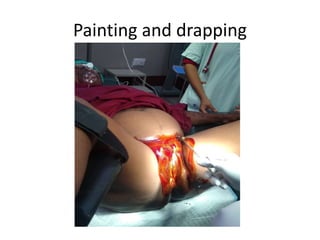
Painting and drapping
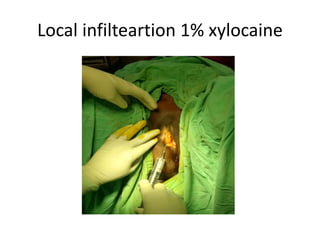
Local infilteartion 1% xylocaine
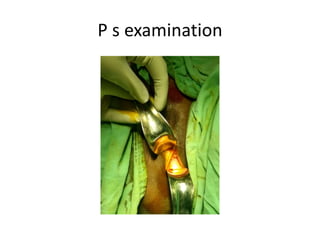
P s examination
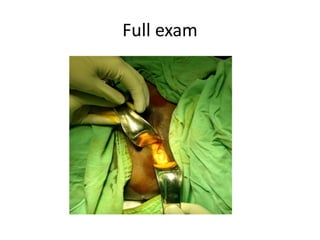
Full exam
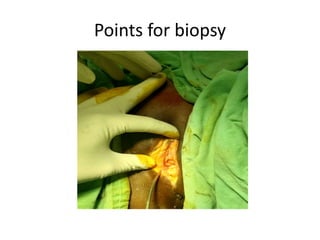
Points for biopsy
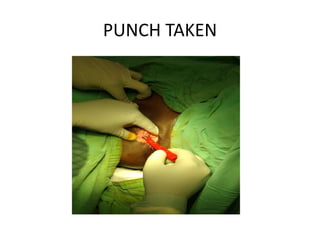
PUNCH TAKEN
Kyes punch device
Punch on way
THE END

Lichen Sclerosis of Vulva

  • 1.
    Lichen sclerosus ofVulva DR SHIVAMURTHY H M Professor in OBG S N MEDICAL COLLEGE, BAGALKOT KARNATAKA INDIA
  • 2.
    Lichen sclerosus LS isa chronic inflammatory disease that was first identified in 1887 Fistarol and Itin, 2013.
  • 3.
    Lichenification • It isa skin condition that occurs in response to excessive itching or rubbing of the skin, and • results in thick, leathery patches of skin. • This occurs because the outer layer of skin naturally thickens with the extra irritation, • often happens in tandem with eczema or other skin disorders.
  • 4.
    Sclerosis Pathological hardening oftissue especiallyfrom overgrowth of fibrous tissue or increase in interstitial tissue.
  • 5.
    L S Nomenclature Ithas since been referred to as Kraurosis vulvae Vulvar dystrophy White spot disease Lichen albus Guttate scleroderma Lichen Sclerosus et atrophicus (Fistarol and Itin, 2013, Schlosser and Mirowski, 2015).
  • 6.
    • The exactprevalence of LS is unknown. • It is estimated that the prevalence ranges from 0.1% to 1.7% . • with a higher prevalence reported in gynecology practices compared with dermatology practices • A recent study determined the incidence of vulvar LS at 14.6 per 100,000 woman- years(2016) • Goldstein et al., 2005,Wallace, 1971. • Bleeker et al., 2016 Epidemiology
  • 7.
    Incidence contd...... • BecauseLS can be asymptomatic and not always identified by physicians, its prevalence is likely greater than what has been reported.
  • 8.
    Age incidence • AlthoughLS can occur at any age, it typically has a bimodal onset in prepubertal or postmenopausal women. • The most frequent among women who are postmenopausal*. • Prepubertal LS was previously believed to resolve by puberty; however, several studies have refuted this notion**. **Powell and Wojnarowska, 2002, Smith and Fischer, 2009. *(Wallace, 1971)
  • 9.
    Etiology • The exactetiology of LS has not been fully elucidated; • however, it is thought to be an immune-mediated disorder. • LS has been associated with autoimmune diseases in up to 28% of patients (Cooper et al., 2008). • Autoimmune thyroiditis is the most common concomitant autoimmune disorder, followed by alopecia areata, vitiligo, and pernicious anemia (Birenbaum and Young, 2007, Cooper et al., 2008). • A familial predisposition has been reported in 12% of patients and an association with HLA ( human leukocyte antigen ) DQ7, DQ8, and DQ9 has also been reported (Powell and Wojnarowska, 2001, Sherman et al., 2010). • Although autoantibodies that target extracellular matrix protein may be elevated in the sera of patients with anogenital LS, it is thought that these autoantibodies are secondary and not directly pathogenic in the disease process (Fistarol and Itin, 2013, Oyama et al., 2003).
  • 10.
    Aetiology contd....... • Additionally,Howard et al. (2004) found that 30%( one third of patients in their cohort of 96 )patients with vulvar LS had autoantibodies that targeted the basement membrane zone (BMZ). • However, Gambichler et al. (2011) later reported no significant difference in BMZ autoantibody levels between patients with LS and control subjects
  • 11.
    Clinical findings • LSprimarily affects the vulvar and perianal area and spares the vagina, although there have been rare reports of biopsy-proven LS that involve the vagina* • LS can occur extragenitally in up to 13% of patients and presents exclusively extragenital in 6% of cases** (Zendell and Edwards, 2013)*. (Thomas et al., 1996, Wallace, 1971).**
  • 12.
    Classically, • vulvar LSappears as porcelain-white papules or plaques, which may have associated purpura, hyperkeratosis, fissures, erosions, or ulcerations* • A wrinkled or cigarette paper-like appearance is characteristic** (Fig. 1, Fig. 2; Fistarol and Itin, 2013*). (Schlosser and Mirowski, 2015**).
  • 13.
    • Clitoral hoodedema may be present as well as lichenification, if patients scratch affected areas (Schlosser and Mirowski, 2015).
  • 14.
    Vulvar LS usuallyinvolves • The interlabial sulci • Labia minora, • Labia majora, • Clitoris, • Clitoral hood, • Perineum, and perianal area, forming a figure-of-eight pattern • Additionally, LS can extend into the genitocrural folds, buttocks, and thighs Fistarol and Itin, 2013.
  • 15.
    CLINNICAL APPEARENCE LS Lichen sclerosus 1 : White atrophic plaques that extend from the vulva to the perianal area. The cigarette paper-like appearance and figure-of-eight pattern are highlighted.
  • 16.
    Lichen sclerosus 2:White thickened plaques with loss of architecture as demonstrated by the obliteration of the labia minora, narrowing of the introitus, and scarring of the clitoral hood.
  • 17.
  • 18.
    Residual effect ofL S • LS can leave scars later in the disease course and result in • The fusion of the labia minora with the labia majora, • Complete resorption of the labia minora, • Fusion of the clitoral hood, • And/or scarring of the introitus, which may lead to sexual dysfunction and in extreme cases interference with urination (Fistarol and Itin, 2013, Schlosser and Mirowski, 2015).
  • 19.
    In children, • LSoften presents with vulvar purpura or ecchymosis, which may mimic sexual abuse* • Additionally, children with LS may present with gastrointestinal complaints due to perianal involvement. (Powell and Wojnarowska, 2001*).
  • 20.
    SEQUELE OF LS • LS can lead to vulvar lentiginosis, which appears as dark brown or black macules with irregular borders* • Vulvar lentiginosis can be readily distinguished from melanoma on the basis of biopsy results. • However, it is important to note that genital nevi in the setting of LS can mimic melanoma both clinically and histologically. (* Fistarol and Itin, 2013).
  • 21.
    Symptoms • Patients withLS can experience debilitating symptoms with pruritus as a hallmark of this condition (Fistarol and Itin, 2013). • LS can also cause pain, burning, and dyspareunia (Fistarol and Itin, 2013). • LS is asymptomatic in up to 39% of adult patients (Goldstein et al., 2005). • In contrast, LS in children is usually symptomatic (Powell and Wojnarowska, 2001).
  • 22.
    Pathology Pathognomonic histological changesin patients with LS include • Hyperkeratosis, • Epidermal atrophy, • Homogenization of collagen in the papillary dermis (Schlosser and Mirowski, 2015). • Histopathology in patients with early LS, however, may be nonspecific and difficult to differentiate from LP because both involve a lymphocytic, lichenoid interface dermatitis (Fung and LeBoit, 1998).
  • 23.
    Diagnosis • A diagnosisof LS can be made clinically; • However, a biopsy can aid in the diagnosis • Or rule out other conditions in the differential diagnosis. • As described previously, histology may be nonspecific, particularly in patients with early ls.
  • 24.
    Differential diagnosis Lichen SclerosusL S Erosive Lichen Planus L P Lichen Simplex ChronicusLSC Age of Onset All ages with common onset in both prepubertal and postmenopausal patients Not in children All ages Extra-genital Involvement Rarely Yes Yes Associated Symptoms Pruritus Pain Pruritus Clinical Features Porcelain-white papules or plaques; can have associated purpura, hyperkeratosis, fissures, erosions, or ulcerations Erosions with white reticulations Lichenified plaques Common Distribution in Genital Area Interlabial sulci, labia minora, labia majora, clitoris, clitoral hood, perineum, and perianal area Medial aspect of labia minora and vestibule Labia majora Vaginal Involvement No YES No Histopathology Hyperkeratosis, epidermal atrophy, and homogenization of collagen in the papillary dermis, overlying a lymphocytic infiltrate. Lymphocytic and lichenoid dermatitis, wedge shaped hypergranulosis, numerous cytoid bodies, and pointed rete ridges Epidermal thickening, hyperkeratosis, spongiosis, and acanthosis Risk of Progression to Squamous Cell Carcinoma YES YES NO
  • 25.
    Disease course • LSis a chronic, relapsing condition • That can result in loss of vulvar architecture • Development of vulvar squamous cell carcinoma (VSCC).
  • 26.
    PROGRESSION IN TOVSCC • Histologically confirmed vulvar LS determined after 20-year incidence of VSCC at 6.7% • Age of ≥ 70 years • Presence of vulvar intraepithelial neoplasia(VIN) at the time of diagnosis were independent risk factors for the development of VSCC (Bleeker et al., 2016).
  • 27.
    Treatment • Ultra-potent topicalsteroid medications are the mainstay of treatment for patients with LS and there is strong evidence supporting their efficacy. • Nonspecific, particularly in patients with early LS.
  • 28.
    In children • Inchildren with LS, a biopsy should ideally be restricted to treatment- refractory cases.
  • 29.
    Treatment contd… • Ointmentis the preferred vehicle because it is less irritating compared with other forms of treatment * • 96% experienced an improvement in symptoms, • 23% had a complete return to normal skin, • and 68% had a partial return** Guerrero and Venkatesan, 2015* Cooper et al., 2004a**.
  • 30.
    In children Ultra-potent topicalsteroid medications should be used as a first-line treatment in children as well and there are data to support their safety and efficacy in the prepubertal population (Ellis and Fischer, 2015, Fischer and Rogers, 1997).
  • 31.
    Intralesional corticosteroid medications canbe effective, especially for thick, hyperkeratotic plaques. Mazdisnian et al., 1999).
  • 32.
    Treatment contd • Emollientscan also be helpful to improve symptoms and maintain remission (Cattaneo et al., 1996).
  • 33.
    Topical calcineurin inhibitors •Topical calcineurin inhibitors have documented efficacy in the treatment of patients with vulvar LS. • Can be considered to treat patients who are refractory to or intolerant of topical corticosteroid medications.
  • 34.
    • Clobetasol hasbeen found to be a superior treatment Topical testosterone, a treatment that was used in the past, has demonstrated no statistically significant difference when compared with petroleum jelly (Sideri et al., 1994). (Funaro et al., 2014, Goldstein et al., 2011).
  • 35.
    Photodynamic therapy • Photodynamictherapy have also been described in the treatment of patients with vulvar LS (Bousema et al., 1994, Rasi et al., 2010, Shi et al., 2016, Terras et al., 2014, Virgili et al., 1995). •
  • 36.
    Surgery • Lastly, surgerymay be beneficial in cases of scarring and disfigurement as a result of LS (Goldstein and Burrows, 2007).
  • 37.
    Maintenance treatment andfollow-up • Until recently, data on appropriate follow-up and maintenance practices for patients with vulvar LS were limited.
  • 38.
    • Lee etal. (2015) addressed these knowledge gaps in a prospective cohort study of 507 women with biopsy-proven LS treated with corticosteroid medications over a mean time period of 4.7 years.
  • 39.
    • 1 totallycompliant patients had 0 cases of VSCC • but • 2 partially compliant cases had a statistically significant increased risk of VSCC at 4.7%. • Compliant patients also had significantly lower rates of scarring and symptoms. • Importantly, maintenance treatment with topical corticosteroid medications was well-tolerated. • This study is the largest to date to report on the outcomes of topical corticosteroid treatment for patients with LS and demonstrates that long-term maintenance therapy is warranted (Lee et al., 2015). •
  • 40.
    Follow up Lee etal. recommended that once initial treatment with topical corticosteroid medications resulted in normal skin color and texture, the topical corticosteroid strength should be reduced.
  • 41.
    FOLLOW UP • Patientsshould be evaluated every 3 months until their topical corticosteroid regimen is stable and their skin color and texture are normal. • Additionally, patients should be followed indefinitely and seen at least annually (Lee et al., 2015).
  • 42.
    Procedure we didwith of Kyes punch device
  • 43.
  • 44.
  • 45.
  • 47.
  • 48.
  • 49.
  • 50.
  • 51.
  • 53.
  • 56.