Li-Fi Technology
Introduction
History
How Li-Fi Works?
Real Time Usage of Li Fi
How it is different?
Wifi vs lifi
Application
Advantages
Disadvantages
Conclusion
Content

 LiFi is a wireless optical networking technology that uses light-
emitting diodes (LEDs) for data transmission.
 LiFi is designed to use LED light bulbs similar to those
currently in use in many energy-conscious homes and offices.
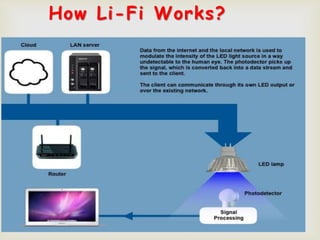
 However, LiFi bulbs are outfitted with a chip that modulates the
light imperceptibly for optical data transmission.
 LiFi data is transmitted by the LED bulbs and received by
photoreceptors.
Introduction

 Professor Harald Haas, from the University of Edinburgh in the UK, is
widely recognised as the original founder of Li-Fi.
 He coined the term Li-Fi and is Chair of Mobile Communications at
the University of Edinburgh and co- founder of pureLiFi.
 Haas promoted this technology in his 2011 TED Global talk and
helped start a company to market it.
 In October 2011, companies and industry groups formed the Li-Fi
Consortium, to promote high-speed optical wireless systems.
 The first Li-Fi smartphone prototype was presented at the Consumer
Electronics Show in Las Vegas from January 7–10 in 2014.
History

How Li-Fi Works?

Real Time Usage of Li Fi

Li-Fi technology is based on LEDs for the transfer
of data.
The transfer of the data can be with the help of all
kinds of light, no matter the part of the spectrum
that they belong.
That is, the light can belong to the invisible,
ultraviolet or the visible part of the spectrum.
How it is different?

 Li-Fi can be thought of as a light-based Wi-Fi. That is, it
uses light instead of radio waves to transmit information.
 Instead of Wi-Fi modems, Li-Fi would use transceiver-
fitted LED lamps that can light a room as well as transmit
and receive information.
 Wi Fi is great for general wireless covrage within building
and Li Fi is ideal for high density wireless date coverage
in confined area and for relieving radio interference issues.
 So the two technologies can be considered complimentary.
Wifi vs lifi

You Might Just Live Longer
Airlines
Smarter Power Plants
Undersea Awesomeness
 It Could Keep You Informed and Save Lives
Applications

 Li-Fi can solve problems related to the insufficiency of radio
frequency bandwidth because this technology uses Visible light
spectrum that has still not been greatly utilized.
 High data transmission rates of up to 10Gbps can be achieved.
 Since light cannot penetrate walls, it provides privacy and
security that Wi-Fi cannot.
 Li-Fi has low implementation and maintenance costs.
Advantages of LI-FI

 Light can't pass through objects.
 A major challenge facing Li-Fi is how the
receiving device will transmit back to
transmitter.
 High installation cost of the VLC systems.
 Interferences from external light sources like
sun, light, normal bulbs, opaque materials.
Disadvantage

 The possibilities are numerous and can be explored
further.
 If his technology can be put into practical use, every bulb
can be used something like a Wi-Fi hotspot to transmit
wireless data and we will proceed toward the cleaner,
greener, safer and brighter future.
Conclusion

Thanks
Any queries

Li fi technology

  • 1.
  • 2.
    Introduction History How Li-Fi Works? RealTime Usage of Li Fi How it is different? Wifi vs lifi Application Advantages Disadvantages Conclusion Content
  • 3.
      LiFi isa wireless optical networking technology that uses light- emitting diodes (LEDs) for data transmission.  LiFi is designed to use LED light bulbs similar to those currently in use in many energy-conscious homes and offices.  However, LiFi bulbs are outfitted with a chip that modulates the light imperceptibly for optical data transmission.  LiFi data is transmitted by the LED bulbs and received by photoreceptors. Introduction
  • 4.
      Professor HaraldHaas, from the University of Edinburgh in the UK, is widely recognised as the original founder of Li-Fi.  He coined the term Li-Fi and is Chair of Mobile Communications at the University of Edinburgh and co- founder of pureLiFi.  Haas promoted this technology in his 2011 TED Global talk and helped start a company to market it.  In October 2011, companies and industry groups formed the Li-Fi Consortium, to promote high-speed optical wireless systems.  The first Li-Fi smartphone prototype was presented at the Consumer Electronics Show in Las Vegas from January 7–10 in 2014. History
  • 5.
  • 6.
  • 7.
     Li-Fi technology isbased on LEDs for the transfer of data. The transfer of the data can be with the help of all kinds of light, no matter the part of the spectrum that they belong. That is, the light can belong to the invisible, ultraviolet or the visible part of the spectrum. How it is different?
  • 8.
      Li-Fi canbe thought of as a light-based Wi-Fi. That is, it uses light instead of radio waves to transmit information.  Instead of Wi-Fi modems, Li-Fi would use transceiver- fitted LED lamps that can light a room as well as transmit and receive information.  Wi Fi is great for general wireless covrage within building and Li Fi is ideal for high density wireless date coverage in confined area and for relieving radio interference issues.  So the two technologies can be considered complimentary. Wifi vs lifi
  • 9.
     You Might JustLive Longer Airlines Smarter Power Plants Undersea Awesomeness  It Could Keep You Informed and Save Lives Applications
  • 10.
      Li-Fi cansolve problems related to the insufficiency of radio frequency bandwidth because this technology uses Visible light spectrum that has still not been greatly utilized.  High data transmission rates of up to 10Gbps can be achieved.  Since light cannot penetrate walls, it provides privacy and security that Wi-Fi cannot.  Li-Fi has low implementation and maintenance costs. Advantages of LI-FI
  • 11.
      Light can'tpass through objects.  A major challenge facing Li-Fi is how the receiving device will transmit back to transmitter.  High installation cost of the VLC systems.  Interferences from external light sources like sun, light, normal bulbs, opaque materials. Disadvantage
  • 12.
      The possibilitiesare numerous and can be explored further.  If his technology can be put into practical use, every bulb can be used something like a Wi-Fi hotspot to transmit wireless data and we will proceed toward the cleaner, greener, safer and brighter future. Conclusion
  • 13.
  • 14.

Editor's Notes