The path to data plane
microservices
Ray	Kinsella
DPDK	Summit	USA	- San	Jose	- 2017
Legal Disclaimers
u Intel	technologies	may	require	enabled	hardware,	specific	software,	or	services	activation.	Check	with	your	system	manufacturer	
or	retailer.
u No	computer	system	can	be	absolutely	secure.	
u Tests	document	performance	of	components	on	a	particular	test,	in	specific	systems.	Differences	in	hardware,	software,	or	
configuration	will	affect	actual	performance.	Consult	other	sources	of	information	to	evaluate	performance	as	you	consider	your	
purchase.		For	more	complete	information	about	performance	and	benchmark	results,	visit		www.intel.com/benchmarks.	
u Cost	reduction	scenarios	described	are	intended	as	examples	of	how	a	given	Intel- based	product,	in	the	specified	circumstances	
and	configurations,	may	affect	future	costs	and	provide	cost	savings.		Circumstances	will	vary.	Intel	does	not	guarantee	any	costs	
or	cost	reduction.
u All	information	provided	here	is	subject	to	change	without	notice.	Contact	your	Intel	representative	to	obtain	the	latest	Intel	
product	specifications	and	roadmaps
u No	license	(express	or	implied,	by	estoppel	or	otherwise)	to	any	intellectual	property	rights	is	granted	by	this	document.
u ​Intel	does	not	control	or	audit	third-party	benchmark	data	or	the	web	sites	referenced	in	this	document.	You	should	visit	the	
referenced	web	site	and	confirm	whether	referenced	data	are	accurate.
u Intel,	the	Intel	logo,	and	other	Intel	product	and	solution	names	in	this	presentation	are	trademarks	of	Intel	.	.	.	
u *Other	names	and	brands	may	be	claimed	as	the	property	of	others.	
u ©	2017	Intel	Corporation.
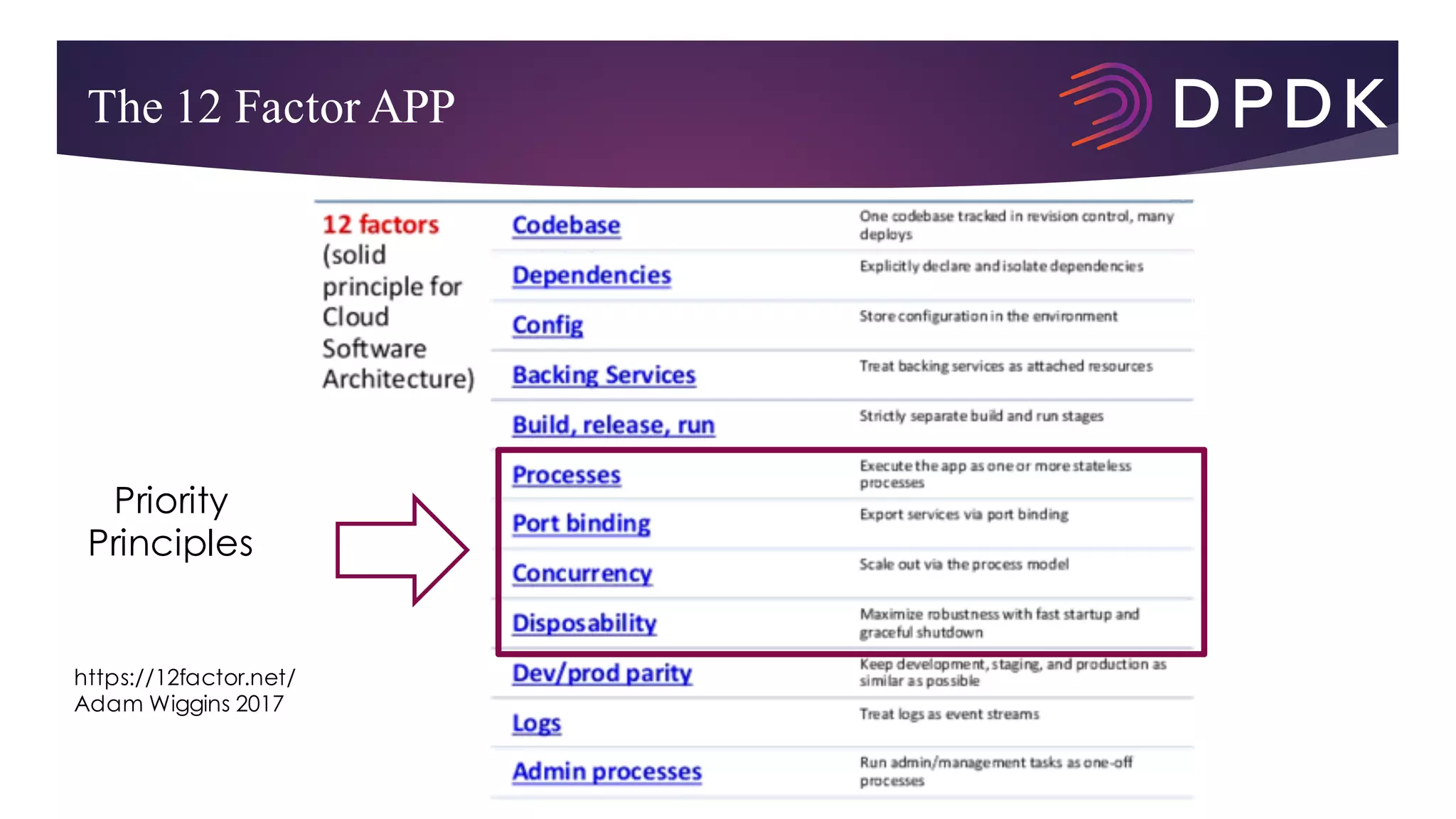
The 12 Factor APP
https://12factor.net/
Adam Wiggins 2017
Priority
Principles
4
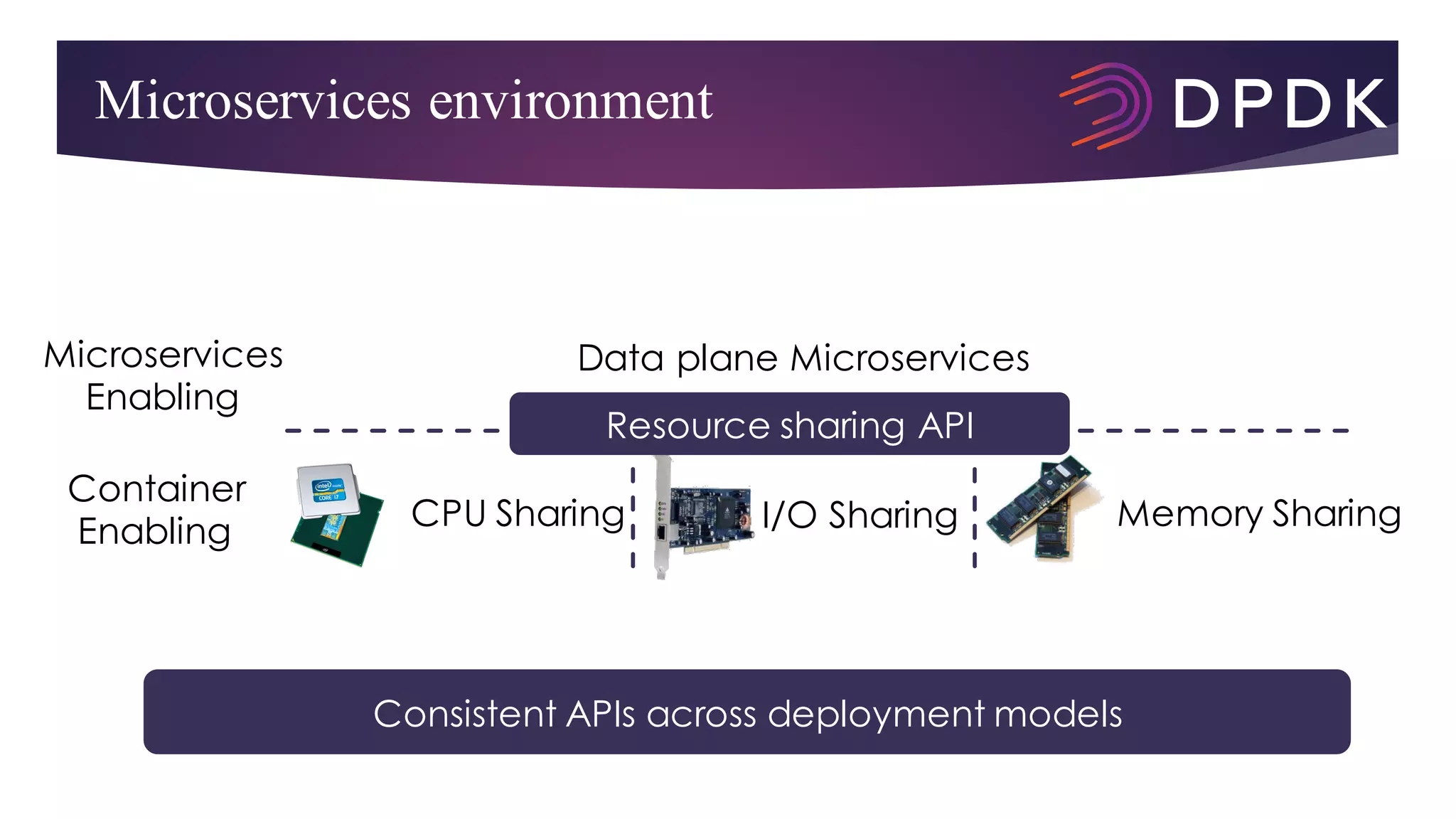
Microservices environment
Container
Enabling CPU Sharing I/O Sharing
Microservices
Enabling
Resource sharing API
Data plane Microservices
Memory Sharing
Consistent APIs across deployment models
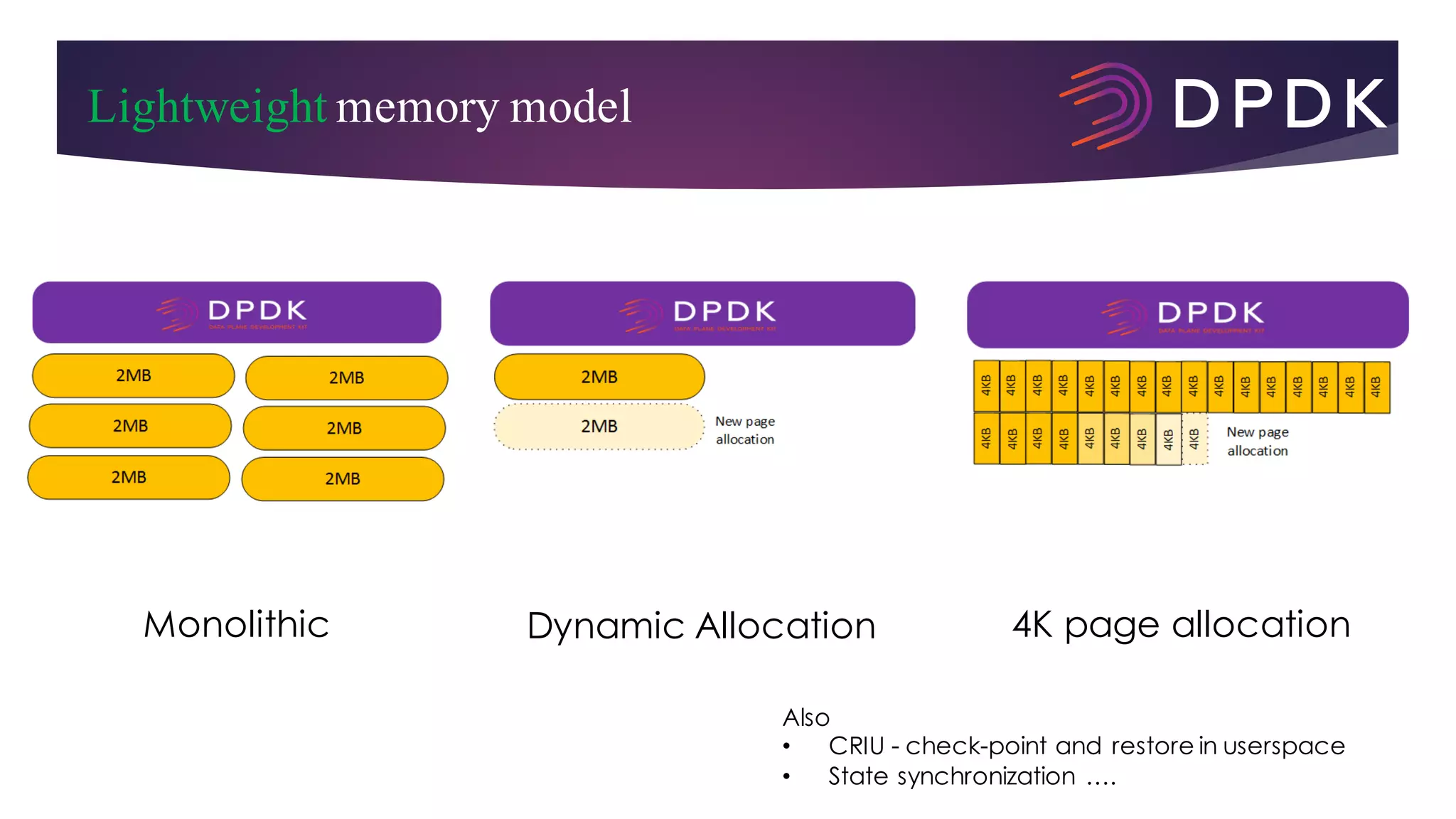
Lightweight memory model
Monolithic Dynamic Allocation
Also
• CRIU - check-point and restore in userspace
• State synchronization ….
4K page allocation
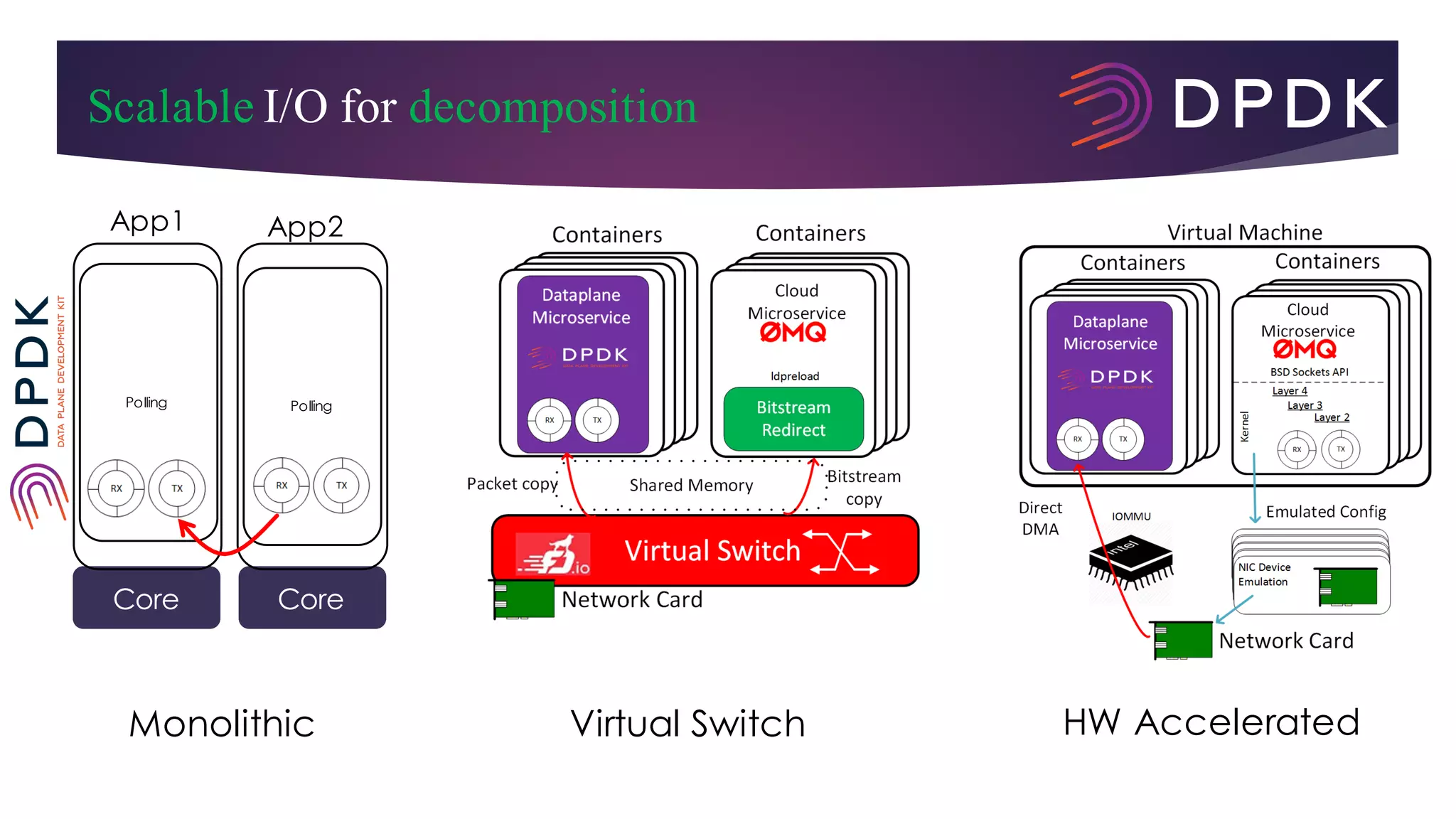
Scalable I/O for decomposition
HW AcceleratedVirtual SwitchMonolithic
Core Core
Polling Polling
App1 App2
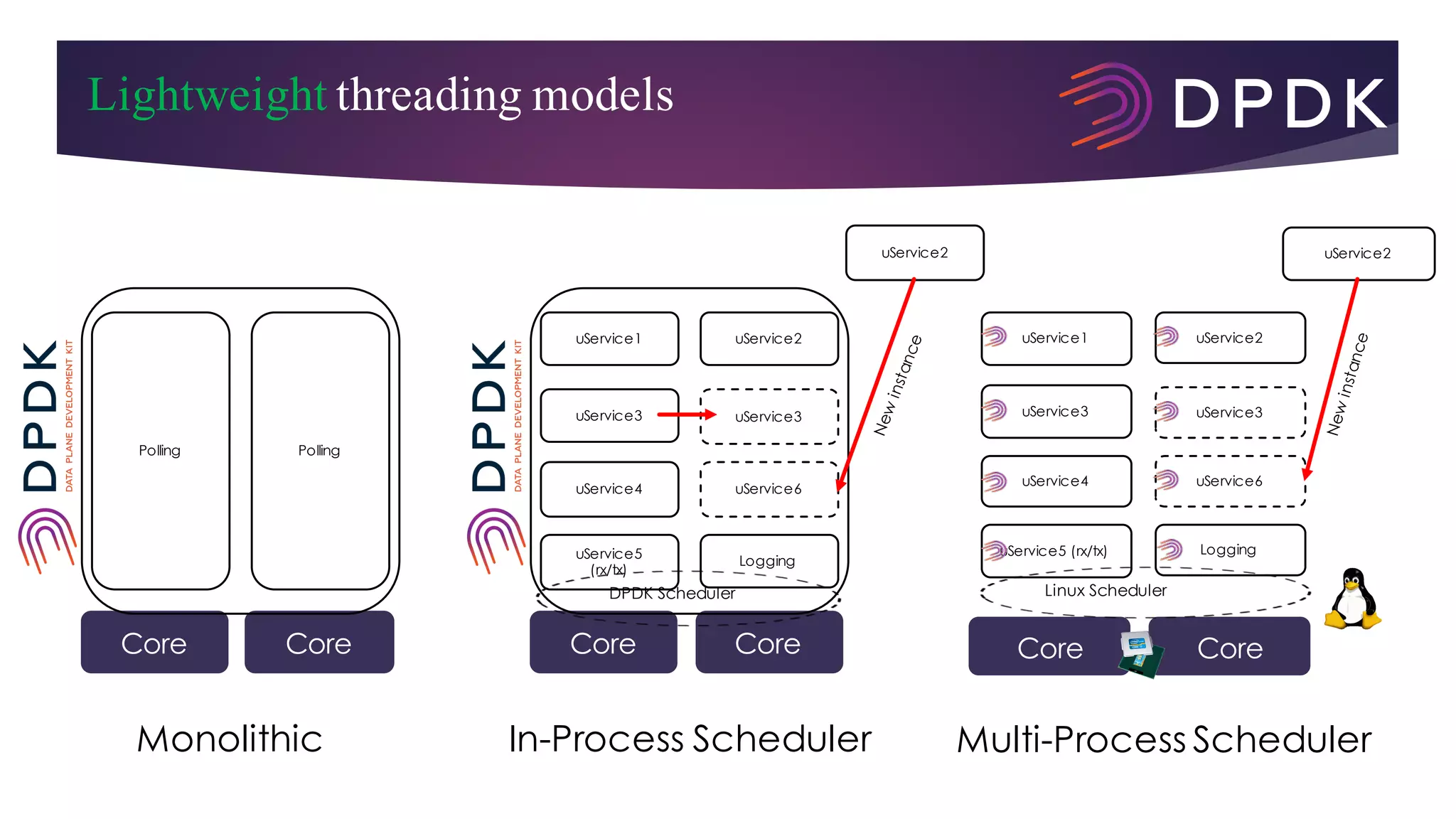
Lightweight threading models
Core Core
uService1
uService3
uService4
uService2
uService5
(rx/tx)
uService2
uService3
uService6
Logging
DPDK Scheduler
Multi-Process SchedulerIn-Process SchedulerMonolithic
Core Core
uService1
uService3
uService4
uService2
uService5 (rx/tx)
uService2
uService3
uService6
Logging
Linux Scheduler
Core Core
Polling Polling
Data plane microservice models
Model
In-process
Microservices
Multi-process
Microservices
Multi-node
Microservices
Why? Highest Performance Multi-process scaling Multi-node scaling
Scheduling DPDK Scheduler Cooperative OS Cooperative OS
Memory Monolithic Dynamic Dynamic
Transport Mem Ring
Mem Ring, vSwitch, HW
accelerated
RoCE, RDMA, TCP
Failure Protection No Yes Yes
Live Migration No No Yes
microserviceData plane microservice evolution
Questions?
Ray	Kinsella
ray.kinsella@intel.com
irc:	mortderire

LF_DPDK17_The Path to Data Plane Microservices

  • 1.
    The path todata plane microservices Ray Kinsella DPDK Summit USA - San Jose - 2017
  • 2.
    Legal Disclaimers u Intel technologies may require enabled hardware, specific software, or services activation. Check with your system manufacturer or retailer. uNo computer system can be absolutely secure. u Tests document performance of components on a particular test, in specific systems. Differences in hardware, software, or configuration will affect actual performance. Consult other sources of information to evaluate performance as you consider your purchase. For more complete information about performance and benchmark results, visit www.intel.com/benchmarks. u Cost reduction scenarios described are intended as examples of how a given Intel- based product, in the specified circumstances and configurations, may affect future costs and provide cost savings. Circumstances will vary. Intel does not guarantee any costs or cost reduction. u All information provided here is subject to change without notice. Contact your Intel representative to obtain the latest Intel product specifications and roadmaps u No license (express or implied, by estoppel or otherwise) to any intellectual property rights is granted by this document. u ​Intel does not control or audit third-party benchmark data or the web sites referenced in this document. You should visit the referenced web site and confirm whether referenced data are accurate. u Intel, the Intel logo, and other Intel product and solution names in this presentation are trademarks of Intel . . . u *Other names and brands may be claimed as the property of others. u © 2017 Intel Corporation.
  • 3.
    The 12 FactorAPP https://12factor.net/ Adam Wiggins 2017 Priority Principles
  • 4.
    4 Microservices environment Container Enabling CPUSharing I/O Sharing Microservices Enabling Resource sharing API Data plane Microservices Memory Sharing Consistent APIs across deployment models
  • 5.
    Lightweight memory model MonolithicDynamic Allocation Also • CRIU - check-point and restore in userspace • State synchronization …. 4K page allocation
  • 6.
    Scalable I/O fordecomposition HW AcceleratedVirtual SwitchMonolithic Core Core Polling Polling App1 App2
  • 7.
    Lightweight threading models CoreCore uService1 uService3 uService4 uService2 uService5 (rx/tx) uService2 uService3 uService6 Logging DPDK Scheduler Multi-Process SchedulerIn-Process SchedulerMonolithic Core Core uService1 uService3 uService4 uService2 uService5 (rx/tx) uService2 uService3 uService6 Logging Linux Scheduler Core Core Polling Polling
  • 8.
    Data plane microservicemodels Model In-process Microservices Multi-process Microservices Multi-node Microservices Why? Highest Performance Multi-process scaling Multi-node scaling Scheduling DPDK Scheduler Cooperative OS Cooperative OS Memory Monolithic Dynamic Dynamic Transport Mem Ring Mem Ring, vSwitch, HW accelerated RoCE, RDMA, TCP Failure Protection No Yes Yes Live Migration No No Yes microserviceData plane microservice evolution
  • 9.