LEVEL DESIGN
❖ Nintendo method
➢ The game design goals
➢ Super Mario Bros (1985)
➢ New Super Mario World (2013)
❖ Portal level design
❖ The 10 non exhaustive level design principles
Who is he ?
● Nintendo general manager
● Nintendo Creative Director
● Game Designer
“I think that, first a game needs a sense of accomplishment
and you have to have a sense that you have done something, that sense of satisfaction of
completing something”
“When I approach the design of my games, what I have to think about is how I am showing a
situation to the player conveying to him what he is supposed to do”
“The last is the immersive quality of the game, being able to feel like it’s a world you are immersed
in, that you’ve become an hero. That you’ve become brave.
Even if you’re actually crying”
Shigeru Miyamoto
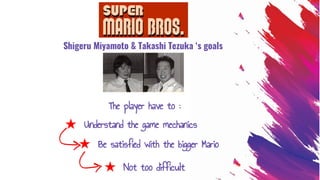
★ Understand the game mechanics
Shigeru Miyamoto & Takashi Tezuka ‘s goals
★ Not too difficult
The player have to :
★ Be satisfied with the bigger Mario
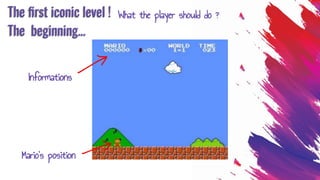
The first iconic level !
Informations
Mario’s position
The beginning...
What the player should do ?
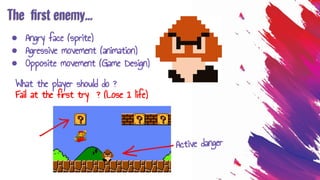
The first enemy...
● Angry face (sprite)
● Agressive movement (animation)
● Opposite movement (Game Design)
What the player should do ?
Fail at the first try ? (Lose 1 life)
Active danger
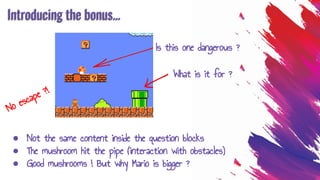
Introducing the bonus...
● Not the same content inside the question blocks
● The mushroom hit the pipe (interaction with obstacles)
● Good mushrooms ! But why Mario is bigger ?
Is this one dangerous ?
What is it for ?
No escape ?!
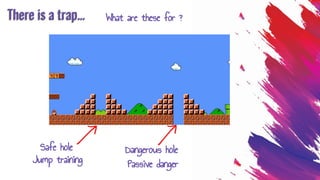
There is a trap...
Safe hole
Jump training
Dangerous hole
Passive danger
What are these for ?
Shigeru Miyamoto & Takashi Tezuka ‘s goals
★ Be satisfied with the bigger Mario
★ Understand the game mechanics
★ Not too difficult
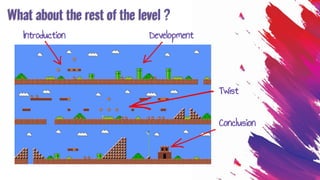
What about the rest of the level ?
Introduction Development
Twist
Conclusion
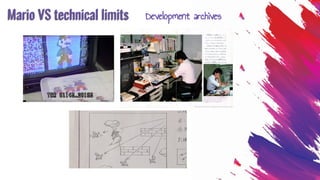
Mario VS technical limits Development archives
Kishōtenketsu Chinese and japanese narrative structure
in poetry
Koichi Hayashida
2007
2010
2011
2013
Level Design philosophy...
Koichi Hayashida
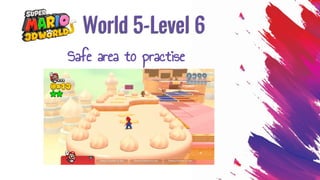
World 5-Level 6
Safe area to practise
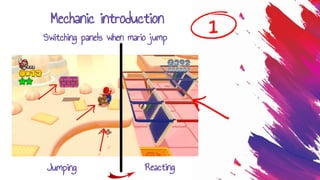
1Mechanic introduction
Switching panels when mario jump
Jumping Reacting
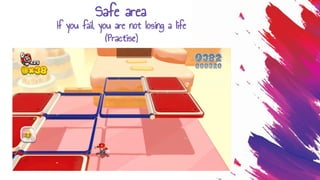
Safe area
If you fail, you are not losing a life
(Practise)
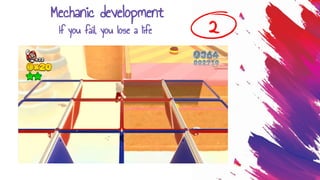
2
Mechanic development
If you fail, you lose a life
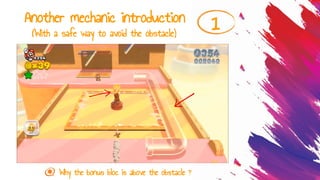
Another mechanic introduction 1(With a safe way to avoid the obstacle)
Why the bonus bloc is above the obstacle ?
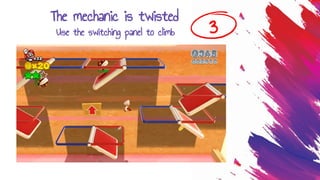
3
The mechanic is twisted
Use the switching panel to climb
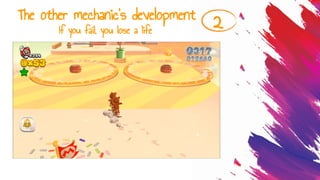
The other mechanic’s development
2If you fail, you lose a life
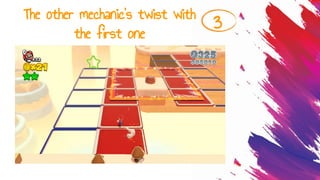
3The other mechanic’s twist with
the first one
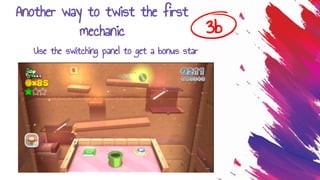
3b
Another way to twist the first
mechanic
Use the switching panel to get a bonus star
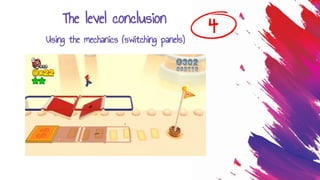
The level conclusion
Using the mechanics (switching panels)
4
What the Kishōtenketsu in video game is for ?
● Introduction :
Let the player understand what is the mechanic and how
he can counter it
● Development :
Let the player practise the mechanic he have previously
learned
● Twist :
Surprise the player
● Conclusion :
Let the player be proud of him and of what he have
accomplished
What about another kind of game
in another studio ?
2007
Kim Swift
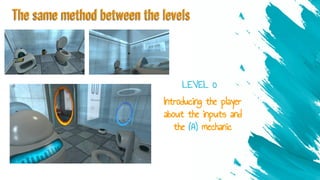
The same method between the levels
Introducing the player
about the inputs and
the (A) mechanic
LEVEL 0
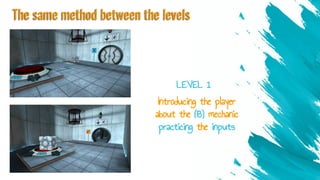
The same method between the levels
Introducing the player
about the (B) mechanic
practicing the inputs
LEVEL 1
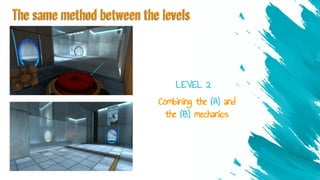
The same method between the levels
Combining the (A) and
the (B) mechanics
LEVEL 2
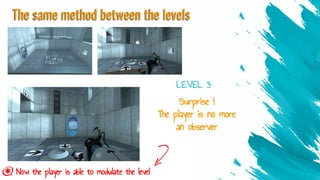
The same method between the levels
Surprise !
The player is no more
an observer
LEVEL 3
Now the player is able to modulate the level
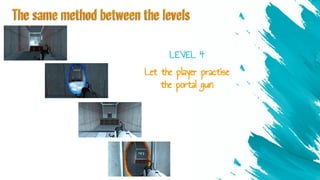
The same method between the levels
Let the player practise
the portal gun
LEVEL 4
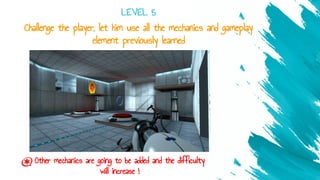
Challenge the player, let him use all the mechanics and gameplay
element previously learned
LEVEL 5
Other mechanics are going to be added and the difficulty
will increase !
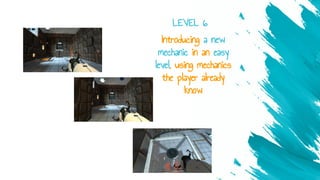
Introducing a new
mechanic in an easy
level, using mechanics
the player already
know
LEVEL 6
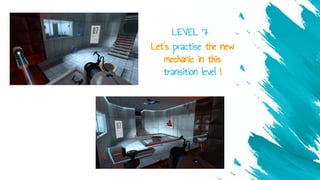
Let’s practise the new
mechanic in this
transition level !
LEVEL 7
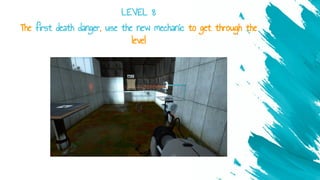
The first death danger, use the new mechanic to get through the
level
LEVEL 8
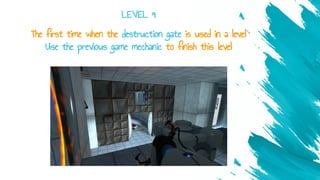
The first time when the destruction gate is used in a level
Use the previous game mechanic to finish this level
LEVEL 9
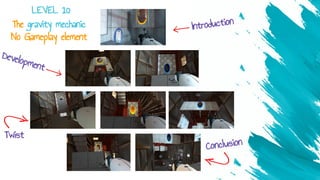
Introduction
Development
Twist
Conclusion
The gravity mechanic
No Gameplay element
LEVEL 10
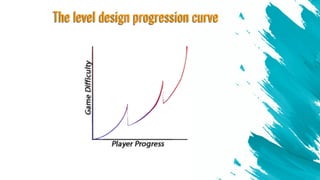
The level design progression curve
Environmental narrative
CONCLUSION
The 10 principles of Level Design
❖ constantly teach something to the player
❖ is driven mechanics
❖ tell the player what to do but not how
❖ does not use words to tell something
❖ is fun to navigate
❖ is surprising
❖ is easy, medium and hard
❖ empower the player
❖ creates emotion
❖ is efficient
A good level design...

Level design analysis (Nintendo and Valve exemples)

  • 1.
    LEVEL DESIGN ❖ Nintendomethod ➢ The game design goals ➢ Super Mario Bros (1985) ➢ New Super Mario World (2013) ❖ Portal level design ❖ The 10 non exhaustive level design principles
  • 2.
    Who is he? ● Nintendo general manager ● Nintendo Creative Director ● Game Designer “I think that, first a game needs a sense of accomplishment and you have to have a sense that you have done something, that sense of satisfaction of completing something” “When I approach the design of my games, what I have to think about is how I am showing a situation to the player conveying to him what he is supposed to do” “The last is the immersive quality of the game, being able to feel like it’s a world you are immersed in, that you’ve become an hero. That you’ve become brave. Even if you’re actually crying” Shigeru Miyamoto
  • 3.
    ★ Understand thegame mechanics Shigeru Miyamoto & Takashi Tezuka ‘s goals ★ Not too difficult The player have to : ★ Be satisfied with the bigger Mario
  • 4.
    The first iconiclevel ! Informations Mario’s position The beginning... What the player should do ?
  • 5.
    The first enemy... ●Angry face (sprite) ● Agressive movement (animation) ● Opposite movement (Game Design) What the player should do ? Fail at the first try ? (Lose 1 life) Active danger
  • 6.
    Introducing the bonus... ●Not the same content inside the question blocks ● The mushroom hit the pipe (interaction with obstacles) ● Good mushrooms ! But why Mario is bigger ? Is this one dangerous ? What is it for ? No escape ?!
  • 7.
    There is atrap... Safe hole Jump training Dangerous hole Passive danger What are these for ?
  • 8.
    Shigeru Miyamoto &Takashi Tezuka ‘s goals ★ Be satisfied with the bigger Mario ★ Understand the game mechanics ★ Not too difficult
  • 9.
    What about therest of the level ? Introduction Development Twist Conclusion
  • 10.
    Mario VS technicallimits Development archives
  • 11.
    Kishōtenketsu Chinese andjapanese narrative structure in poetry Koichi Hayashida 2007 2010 2011 2013 Level Design philosophy... Koichi Hayashida
  • 12.
    World 5-Level 6 Safearea to practise
  • 13.
    1Mechanic introduction Switching panelswhen mario jump Jumping Reacting
  • 14.
    Safe area If youfail, you are not losing a life (Practise)
  • 15.
    2 Mechanic development If youfail, you lose a life
  • 16.
    Another mechanic introduction1(With a safe way to avoid the obstacle) Why the bonus bloc is above the obstacle ?
  • 17.
    3 The mechanic istwisted Use the switching panel to climb
  • 18.
    The other mechanic’sdevelopment 2If you fail, you lose a life
  • 19.
    3The other mechanic’stwist with the first one
  • 20.
    3b Another way totwist the first mechanic Use the switching panel to get a bonus star
  • 21.
    The level conclusion Usingthe mechanics (switching panels) 4
  • 22.
    What the Kishōtenketsuin video game is for ? ● Introduction : Let the player understand what is the mechanic and how he can counter it ● Development : Let the player practise the mechanic he have previously learned ● Twist : Surprise the player ● Conclusion : Let the player be proud of him and of what he have accomplished
  • 23.
    What about anotherkind of game in another studio ? 2007 Kim Swift
  • 24.
    The same methodbetween the levels Introducing the player about the inputs and the (A) mechanic LEVEL 0
  • 25.
    The same methodbetween the levels Introducing the player about the (B) mechanic practicing the inputs LEVEL 1
  • 26.
    The same methodbetween the levels Combining the (A) and the (B) mechanics LEVEL 2
  • 27.
    The same methodbetween the levels Surprise ! The player is no more an observer LEVEL 3 Now the player is able to modulate the level
  • 28.
    The same methodbetween the levels Let the player practise the portal gun LEVEL 4
  • 29.
    Challenge the player,let him use all the mechanics and gameplay element previously learned LEVEL 5 Other mechanics are going to be added and the difficulty will increase !
  • 30.
    Introducing a new mechanicin an easy level, using mechanics the player already know LEVEL 6
  • 31.
    Let’s practise thenew mechanic in this transition level ! LEVEL 7
  • 32.
    The first deathdanger, use the new mechanic to get through the level LEVEL 8
  • 33.
    The first timewhen the destruction gate is used in a level Use the previous game mechanic to finish this level LEVEL 9
  • 34.
  • 35.
    The level designprogression curve
  • 36.
  • 37.
  • 38.
    The 10 principlesof Level Design ❖ constantly teach something to the player ❖ is driven mechanics ❖ tell the player what to do but not how ❖ does not use words to tell something ❖ is fun to navigate ❖ is surprising ❖ is easy, medium and hard ❖ empower the player ❖ creates emotion ❖ is efficient A good level design...