Lessons Learned on
Automation
Liang Gao (liangg@gmail.com)
Lesson -1 Automation Cost Money

You need people to write scripts

You need testbed to run those scripts (lots of
equipments)

You need people to monitor those test bed
runs, and debug running failures.

You need people to maintain those scripts to
reflect product change

Can you justify all those to your upper
management?
You might if you

Show some proof in the front.

Can go to your boss and say: I can reduce
major release cycle from 8 month to 5
month if I do this.

Can go to your boss and say: I can reduce
customer found bugs down by 20% if I do
this.
Lesson 2: Automated Testing is Dangerous

Once it is automated, chances are, it will not
be manually executed anymore.

No exploratory testing can be done

If your script has problem, and can not catch
bugs (output is pass even it should be fail), it
will be going into darkness for ever

You may lose your chance to catch bugs for
ever and you don’t know.
Lesson 3: No Framework, No Automation

If you have one couple of hundred scripts in
hand, you might be fine without a framework.

You need one if you have thousands of scripts
to manage.

How to know which test case passed/failed?

Where to get a decent running report.

How to group test cases easily.

How to debug

You need one if there are many people develop
scripts in parallel.
Lesson 4: Use Standard Script Language

VB/TCL/Perl/Python/Ruby

Customized scripts need learning period

Customized script language – Who maintain
it? No community support

Hard to communicate with others –
developers, other test outside the company
Lesson 5: Separate writer and runner

Engineer should not develop script and then
execute script. Script execution is a dedicated
job.

Debug takes time

Test bed problem?

Script problem?

Image regression bug?

Script integration takes time.

Script execution should be a 24/7 factory,
should be a machine. Script is just a by-
product, it is the full version report that you
want
Lesson 6: Test Bed Independent is very Important

Separate the writer and runner requires the script
should be testbed independent.

Script should be able to run from testbed to testbed
with minimum change to the test framework
configuration, not to script itself.

Hard coded router/switch names, IP addresses,
interface names are not good when switch testbeds

A handover process is needed between the writer
and runner.

Develop a “script checker” tool to check the hard
coded values in the script as an acceptance criteria.
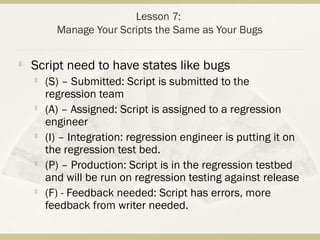
Lesson 7:
Manage Your Scripts the Same as Your Bugs

Script need to have states like bugs

(S) – Submitted: Script is submitted to the
regression team

(A) – Assigned: Script is assigned to a regression
engineer

(I) – Integration: regression engineer is putting it on
the regression test bed.

(P) – Production: Script is in the regression testbed
and will be run on regression testing against release

(F) - Feedback needed: Script has errors, more
feedback from writer needed.
Lesson 8: Design You Scripts As Data Driven.

Script need to be data driven

Different data means different test cases.
Test_case.tcl {router1 eth0} {router2 eth0}
{router3 eth0 eth1} {router4 eth0 eth1 eth2}
{mode 1} {phase 1} {traffic 1 speed}
Can test all combinations of Mode, Phase and
Traffic with one single script.

Data generation can be automated too.

Can catch more bugs when vary the data
Lesson 9: Log is More Important Than
Script

When fail, most of the time we only look at
the logs, not scripts for debugging.

Read log like read a book

More debugging info dumped when fail.
Lesson 10:
test case designer and automator separate?

Don’t use automator who doesn’t respect
testing

Don’t use automator who doesn’t
understand testing

C company use same tester to design,
manual execute and automate the test
cases. And so is J company
Lesson 11: User Standard Testbed
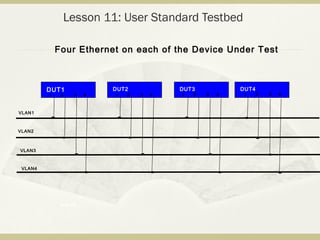
DUT2 DUT3 DUT4
VLAN1
VLAN2
VLAN3
VLAN4
Four Ethernet on each of the Device Under Test
1 2 3 4 1 2 3 4 1 2 3 4
被测设备 2
DUT1
1 2 3 4
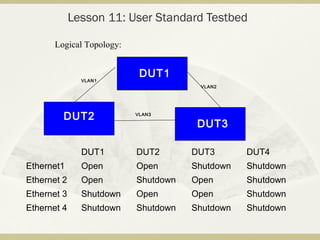
Lesson 11: User Standard Testbed
DUT1 DUT2 DUT3 DUT4
Ethernet1 Open Open Shutdown Shutdown
Ethernet 2 Open Shutdown Open Shutdown
Ethernet 3 Shutdown Open Open Shutdown
Ethernet 4 Shutdown Shutdown Shutdown Shutdown
Logical Topology:
DUT2
VLAN1
VLAN2
VLAN3
DUT1
DUT3
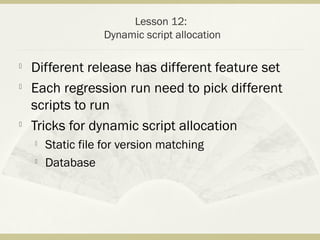
Lesson 12:
Dynamic script allocation

Different release has different feature set

Each regression run need to pick different
scripts to run

Tricks for dynamic script allocation

Static file for version matching

Database
Lesson 13:
Use Database to keep automation result history

Database for full version report

Database for regression bug debugging
Lesson 14:
Script maintenance – version per branch

Certify scripts for each new release

Keep them in a separate code branch
Version control

Version 1.0, Dec 24th, 2007, Liang Gao

Version 1.1 March 2008, Liang Gao
Lessons learned on software testing automation

Lessons learned on software testing automation

  • 1.
  • 2.
    Lesson -1 AutomationCost Money  You need people to write scripts  You need testbed to run those scripts (lots of equipments)  You need people to monitor those test bed runs, and debug running failures.  You need people to maintain those scripts to reflect product change  Can you justify all those to your upper management?
  • 3.
    You might ifyou  Show some proof in the front.  Can go to your boss and say: I can reduce major release cycle from 8 month to 5 month if I do this.  Can go to your boss and say: I can reduce customer found bugs down by 20% if I do this.
  • 4.
    Lesson 2: AutomatedTesting is Dangerous  Once it is automated, chances are, it will not be manually executed anymore.  No exploratory testing can be done  If your script has problem, and can not catch bugs (output is pass even it should be fail), it will be going into darkness for ever  You may lose your chance to catch bugs for ever and you don’t know.
  • 5.
    Lesson 3: NoFramework, No Automation  If you have one couple of hundred scripts in hand, you might be fine without a framework.  You need one if you have thousands of scripts to manage.  How to know which test case passed/failed?  Where to get a decent running report.  How to group test cases easily.  How to debug  You need one if there are many people develop scripts in parallel.
  • 6.
    Lesson 4: UseStandard Script Language  VB/TCL/Perl/Python/Ruby  Customized scripts need learning period  Customized script language – Who maintain it? No community support  Hard to communicate with others – developers, other test outside the company
  • 7.
    Lesson 5: Separatewriter and runner  Engineer should not develop script and then execute script. Script execution is a dedicated job.  Debug takes time  Test bed problem?  Script problem?  Image regression bug?  Script integration takes time.  Script execution should be a 24/7 factory, should be a machine. Script is just a by- product, it is the full version report that you want
  • 8.
    Lesson 6: TestBed Independent is very Important  Separate the writer and runner requires the script should be testbed independent.  Script should be able to run from testbed to testbed with minimum change to the test framework configuration, not to script itself.  Hard coded router/switch names, IP addresses, interface names are not good when switch testbeds  A handover process is needed between the writer and runner.  Develop a “script checker” tool to check the hard coded values in the script as an acceptance criteria.
  • 9.
    Lesson 7: Manage YourScripts the Same as Your Bugs  Script need to have states like bugs  (S) – Submitted: Script is submitted to the regression team  (A) – Assigned: Script is assigned to a regression engineer  (I) – Integration: regression engineer is putting it on the regression test bed.  (P) – Production: Script is in the regression testbed and will be run on regression testing against release  (F) - Feedback needed: Script has errors, more feedback from writer needed.
  • 10.
    Lesson 8: DesignYou Scripts As Data Driven.  Script need to be data driven  Different data means different test cases. Test_case.tcl {router1 eth0} {router2 eth0} {router3 eth0 eth1} {router4 eth0 eth1 eth2} {mode 1} {phase 1} {traffic 1 speed} Can test all combinations of Mode, Phase and Traffic with one single script.  Data generation can be automated too.  Can catch more bugs when vary the data
  • 11.
    Lesson 9: Logis More Important Than Script  When fail, most of the time we only look at the logs, not scripts for debugging.  Read log like read a book  More debugging info dumped when fail.
  • 12.
    Lesson 10: test casedesigner and automator separate?  Don’t use automator who doesn’t respect testing  Don’t use automator who doesn’t understand testing  C company use same tester to design, manual execute and automate the test cases. And so is J company
  • 13.
    Lesson 11: UserStandard Testbed DUT2 DUT3 DUT4 VLAN1 VLAN2 VLAN3 VLAN4 Four Ethernet on each of the Device Under Test 1 2 3 4 1 2 3 4 1 2 3 4 被测设备 2 DUT1 1 2 3 4
  • 14.
    Lesson 11: UserStandard Testbed DUT1 DUT2 DUT3 DUT4 Ethernet1 Open Open Shutdown Shutdown Ethernet 2 Open Shutdown Open Shutdown Ethernet 3 Shutdown Open Open Shutdown Ethernet 4 Shutdown Shutdown Shutdown Shutdown Logical Topology: DUT2 VLAN1 VLAN2 VLAN3 DUT1 DUT3
  • 15.
    Lesson 12: Dynamic scriptallocation  Different release has different feature set  Each regression run need to pick different scripts to run  Tricks for dynamic script allocation  Static file for version matching  Database
  • 16.
    Lesson 13: Use Databaseto keep automation result history  Database for full version report  Database for regression bug debugging
  • 17.
    Lesson 14: Script maintenance– version per branch  Certify scripts for each new release  Keep them in a separate code branch
  • 18.
    Version control  Version 1.0,Dec 24th, 2007, Liang Gao  Version 1.1 March 2008, Liang Gao