Five Steps Towards Your Testing Dream
Lisa Gagarina
@lisa_gagarina
JPMorgan Chase & Co.
ReactEurope
Paris, 23-24th
May 2019
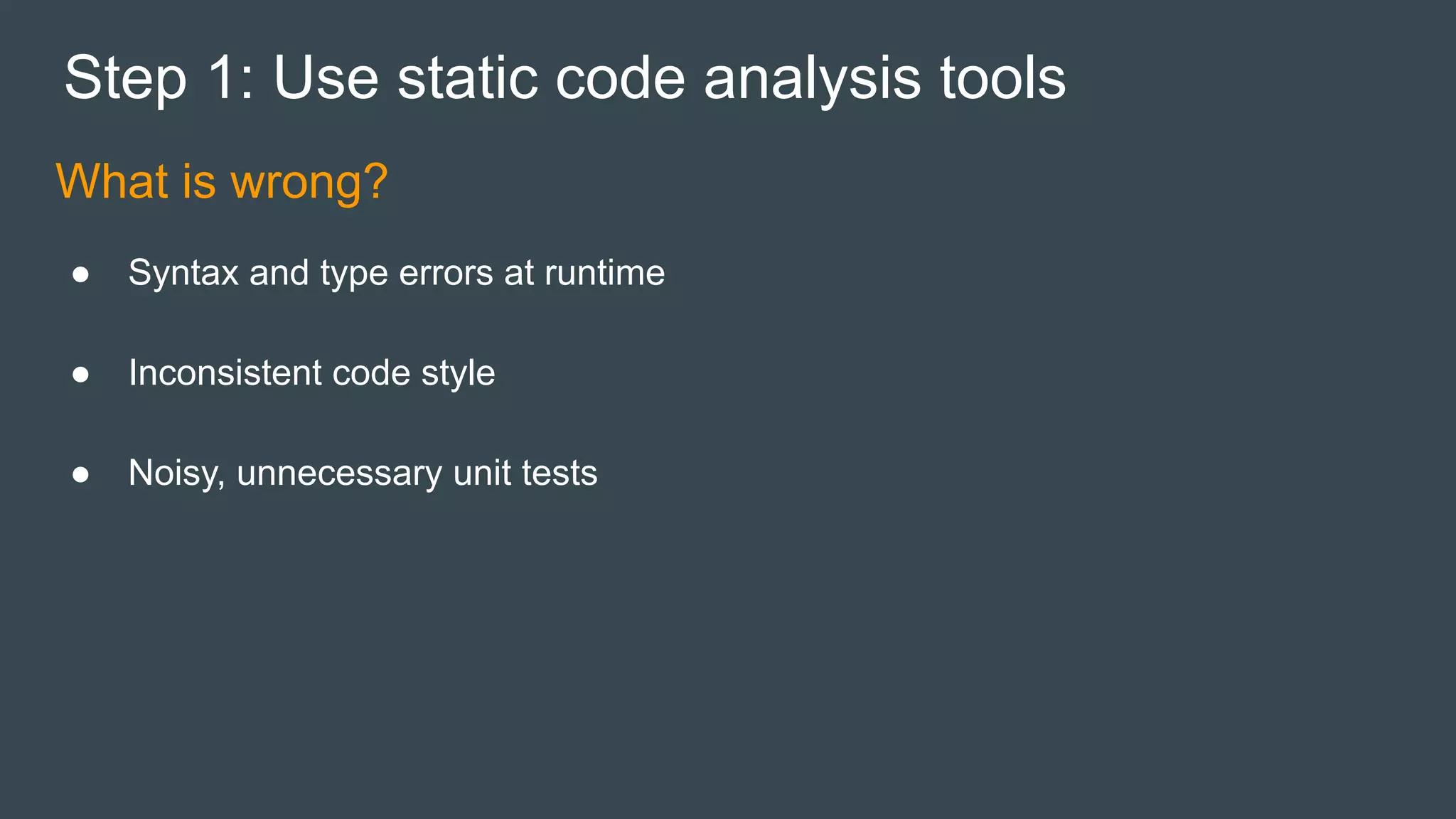
Step 1: Use static code analysis tools
What is wrong?
● Syntax and type errors at runtime
● Inconsistent code style
● Noisy, unnecessary unit tests
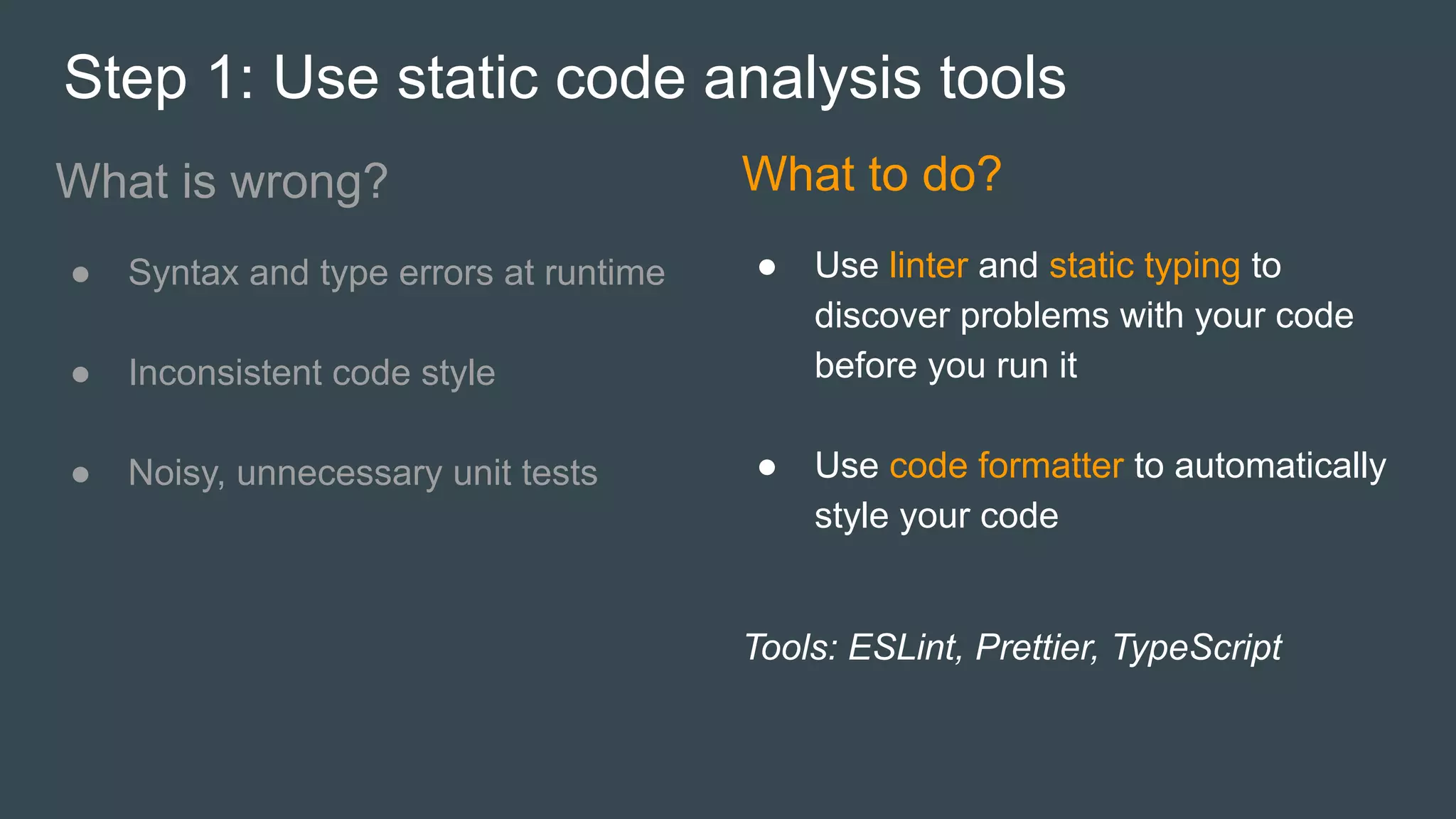
Step 1: Use static code analysis tools
What is wrong?
● Syntax and type errors at runtime
● Inconsistent code style
● Noisy, unnecessary unit tests
What to do?
● Use linter and static typing to
discover problems with your code
before you run it
● Use code formatter to automatically
style your code
Tools: ESLint, Prettier, TypeScript
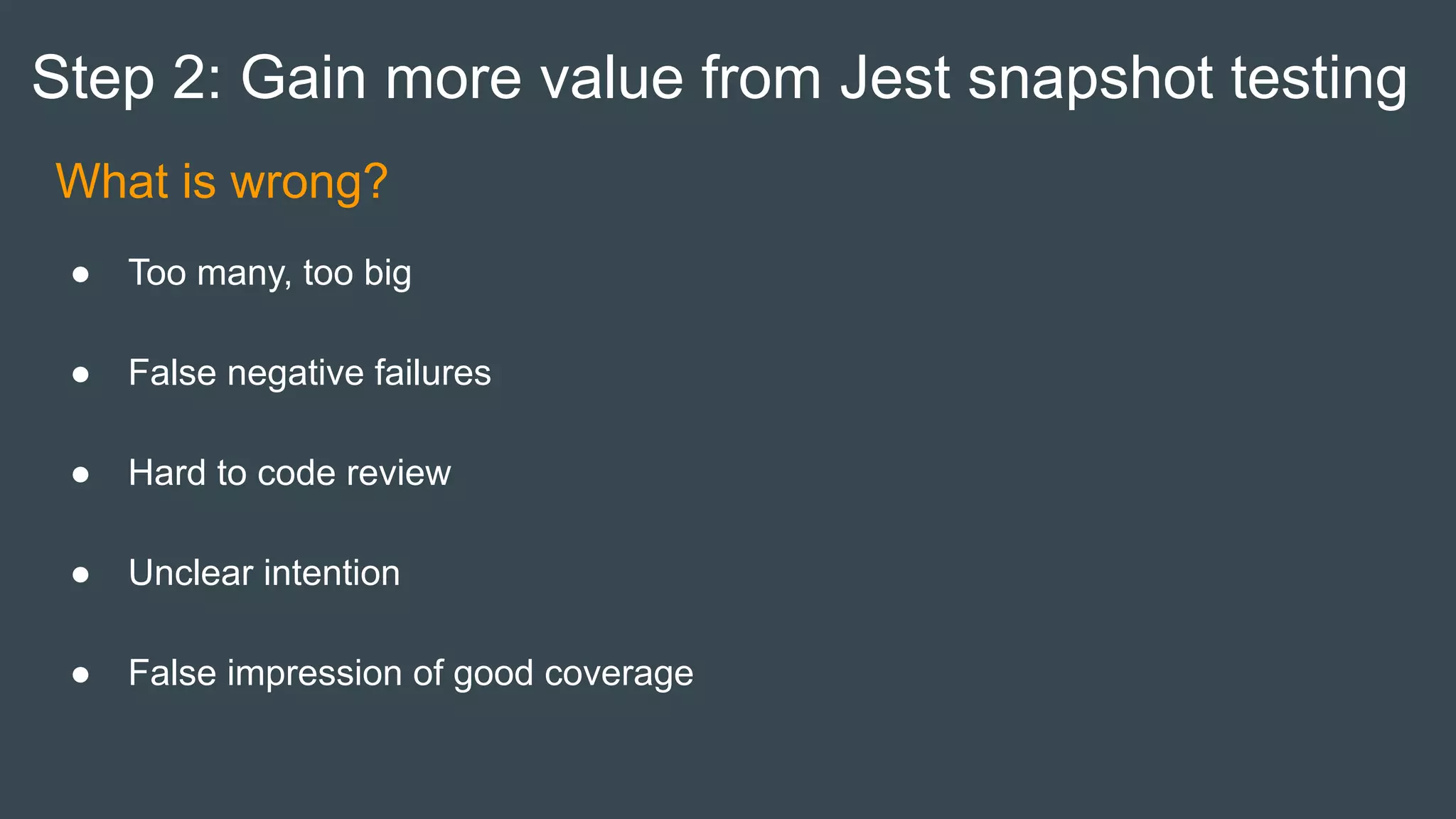
Step 2: Gain more value from Jest snapshot testing
What is wrong?
● Too many, too big
● False negative failures
● Hard to code review
● Unclear intention
● False impression of good coverage
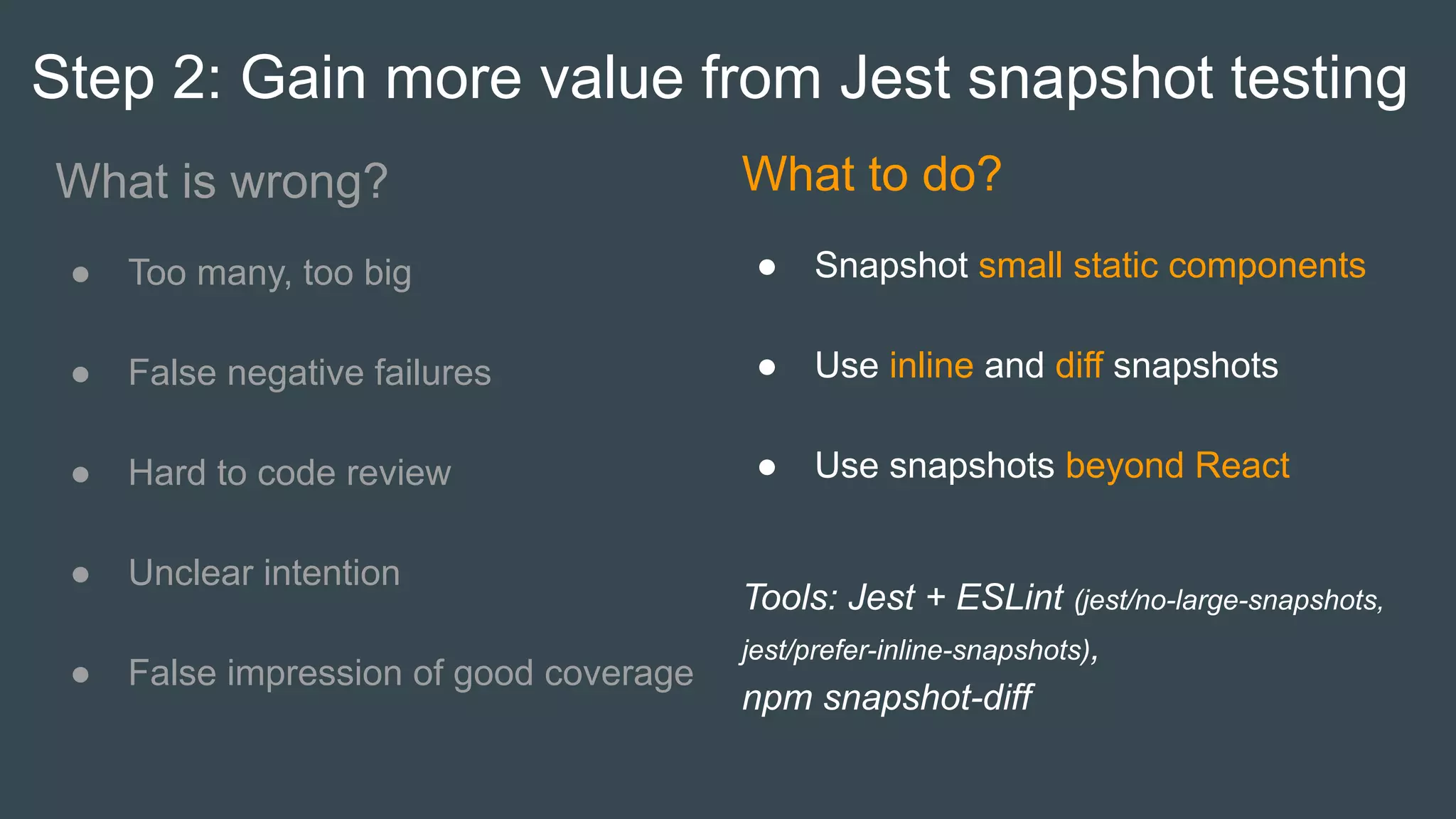
Step 2: Gain more value from Jest snapshot testing
What is wrong?
● Too many, too big
● False negative failures
● Hard to code review
● Unclear intention
● False impression of good coverage
What to do?
● Snapshot small static components
● Use inline and diff snapshots
● Use snapshots beyond React
Tools: Jest + ESLint (jest/no-large-snapshots,
jest/prefer-inline-snapshots),
npm snapshot-diff
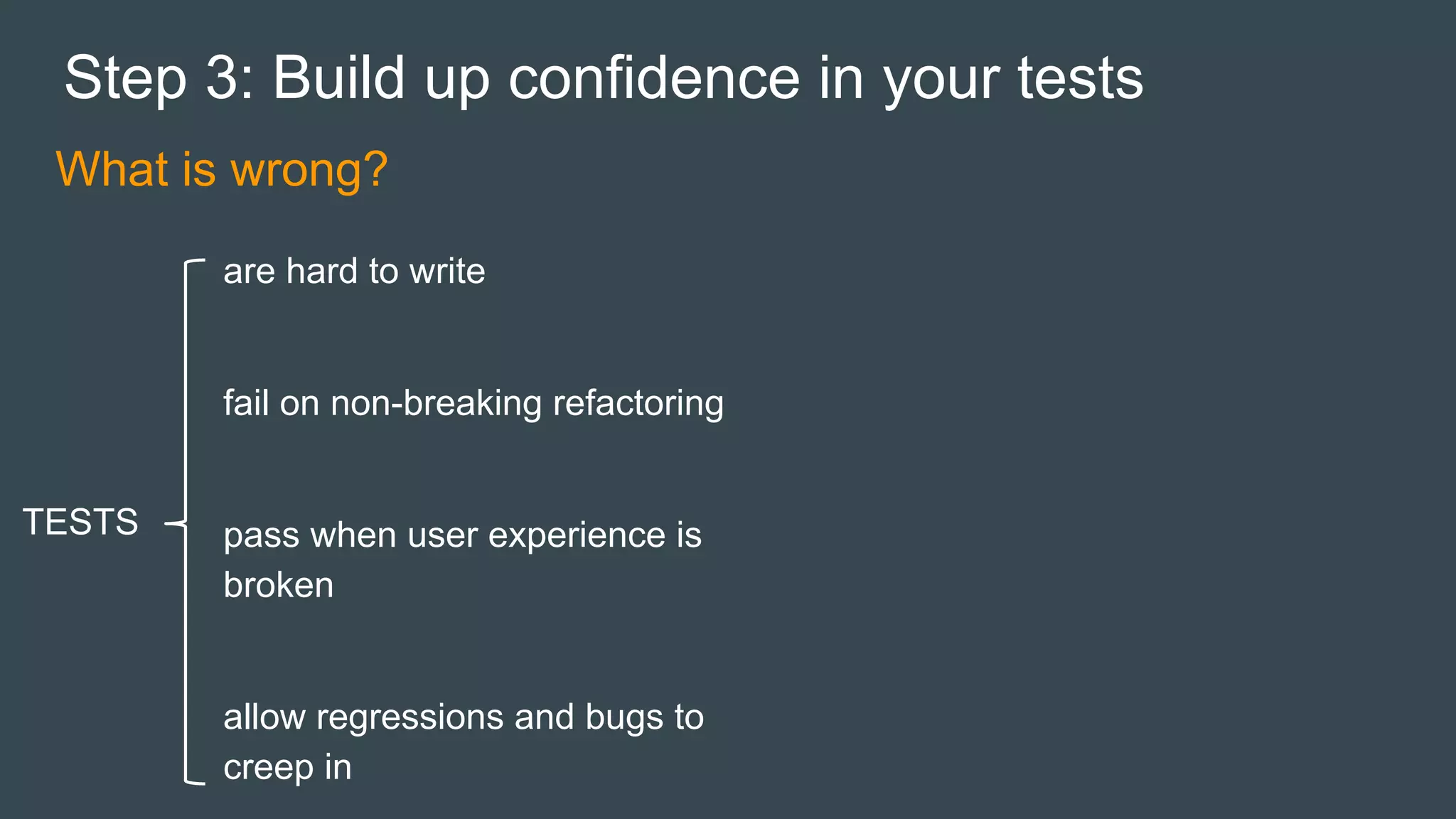
What is wrong?
Step 3: Build up confidence in your tests
are hard to write
fail on non-breaking refactoring
pass when user experience is
broken
allow regressions and bugs to
creep in
TESTS
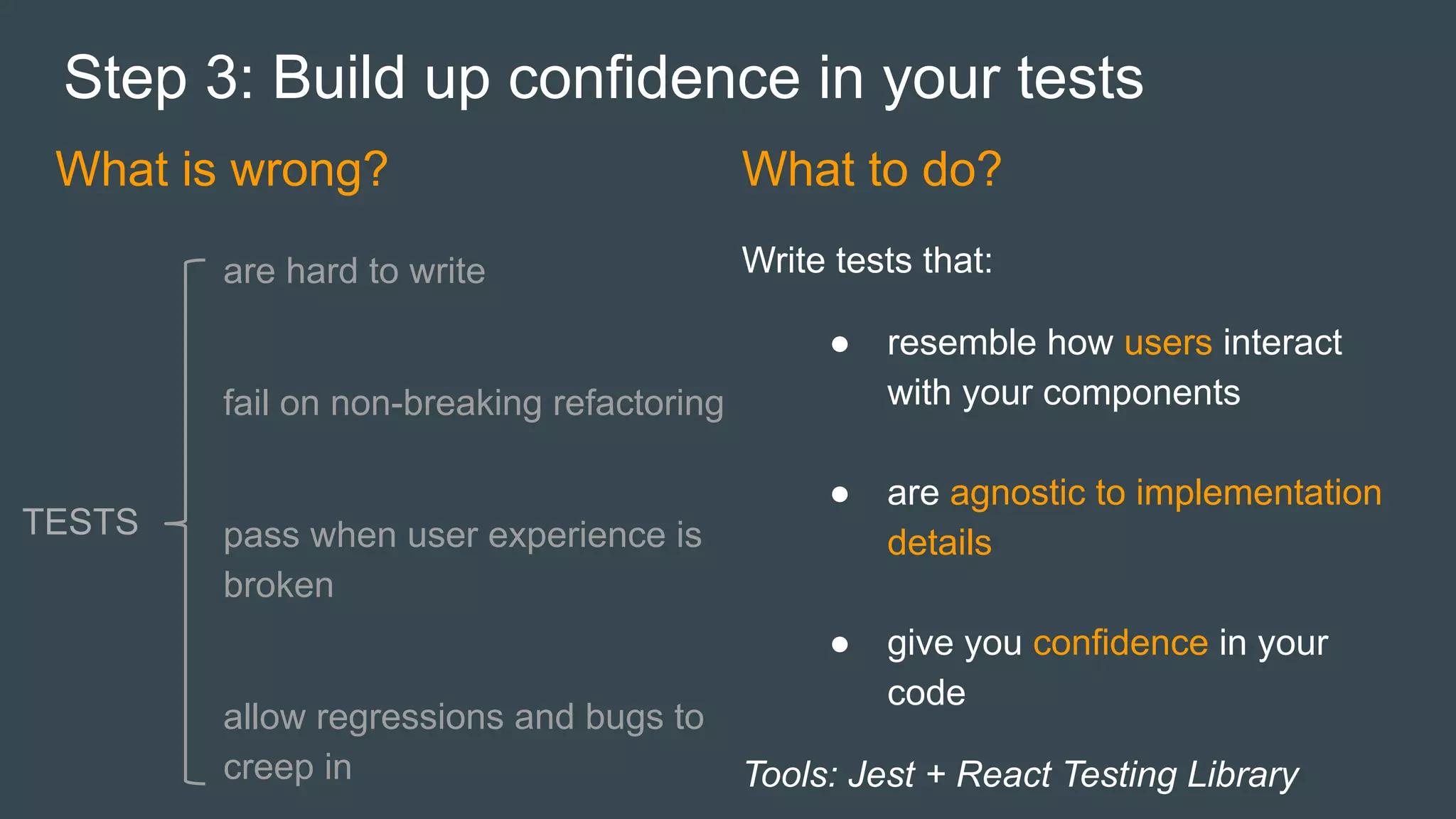
What is wrong?
Step 3: Build up confidence in your tests
are hard to write
fail on non-breaking refactoring
pass when user experience is
broken
allow regressions and bugs to
creep in
TESTS
What to do?
Write tests that:
● resemble how users interact
with your components
● are agnostic to implementation
details
● give you confidence in your
code
Tools: Jest + React Testing Library
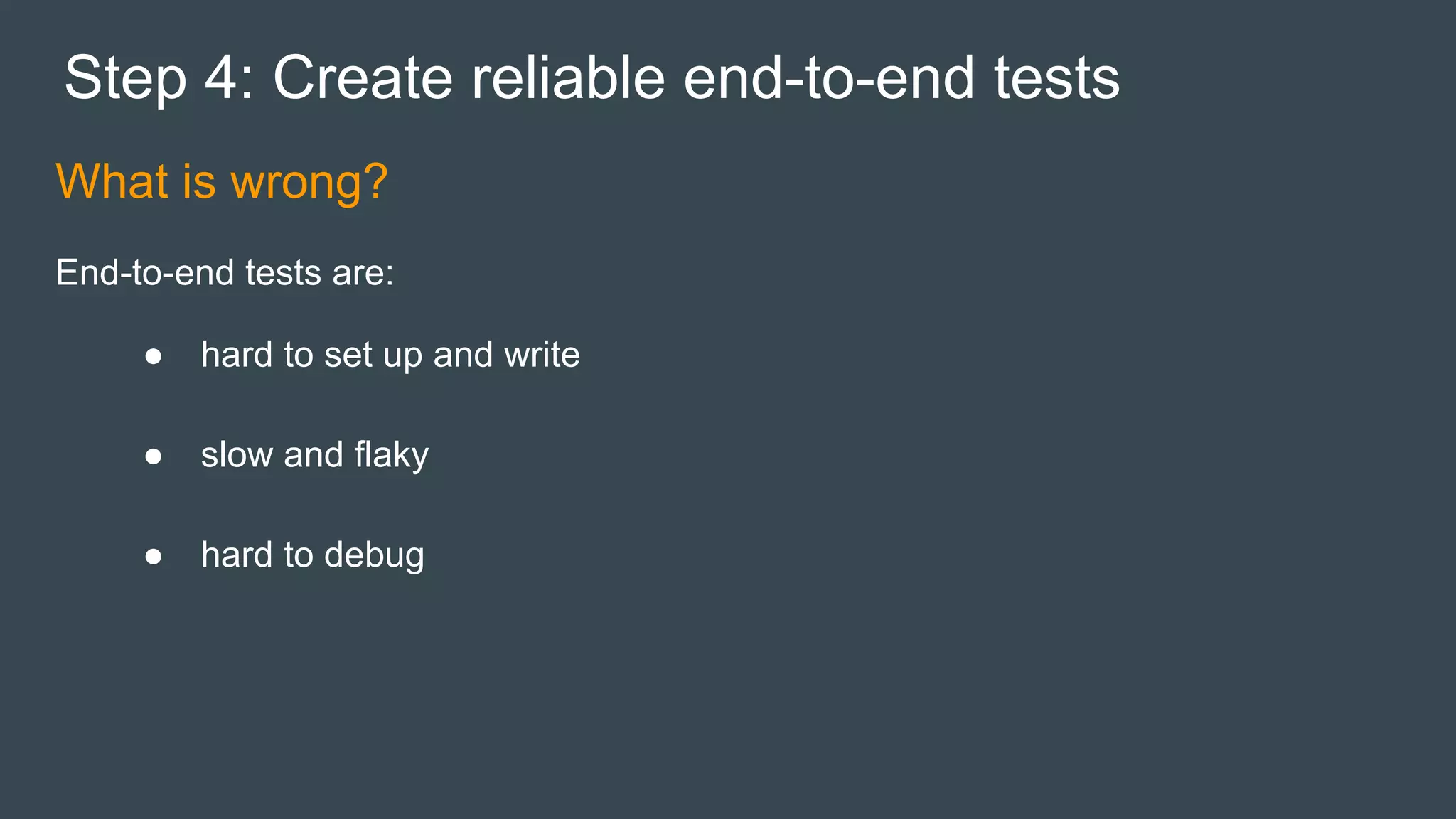
What is wrong?
End-to-end tests are:
● hard to set up and write
● slow and flaky
● hard to debug
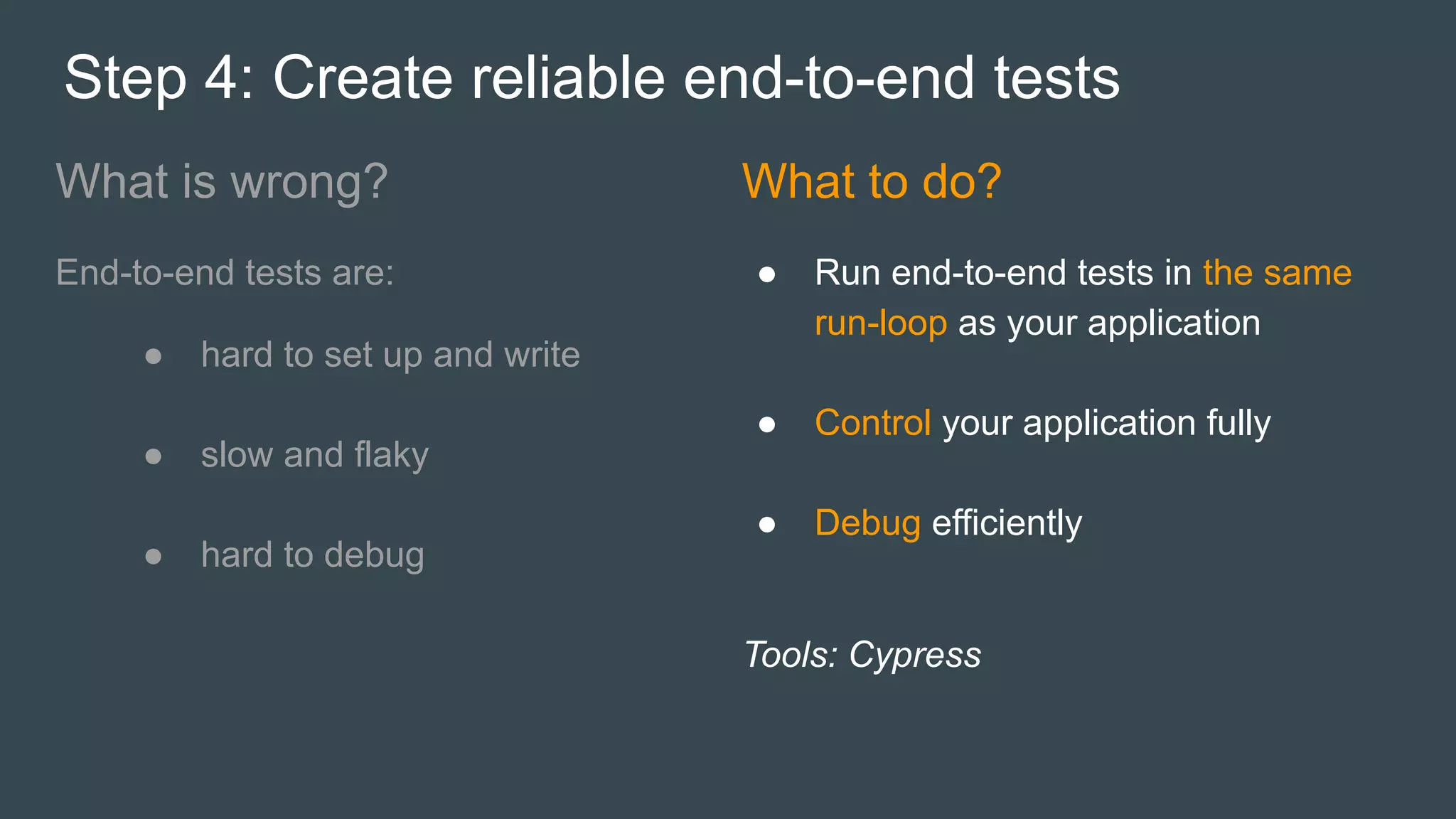
Step 4: Create reliable end-to-end tests
What to do?
● Run end-to-end tests in the same
run-loop as your application
● Control your application fully
● Debug efficiently
Tools: Cypress
What is wrong?
End-to-end tests are:
● hard to set up and write
● slow and flaky
● hard to debug
Step 5: Focus on what works for your project and
your team
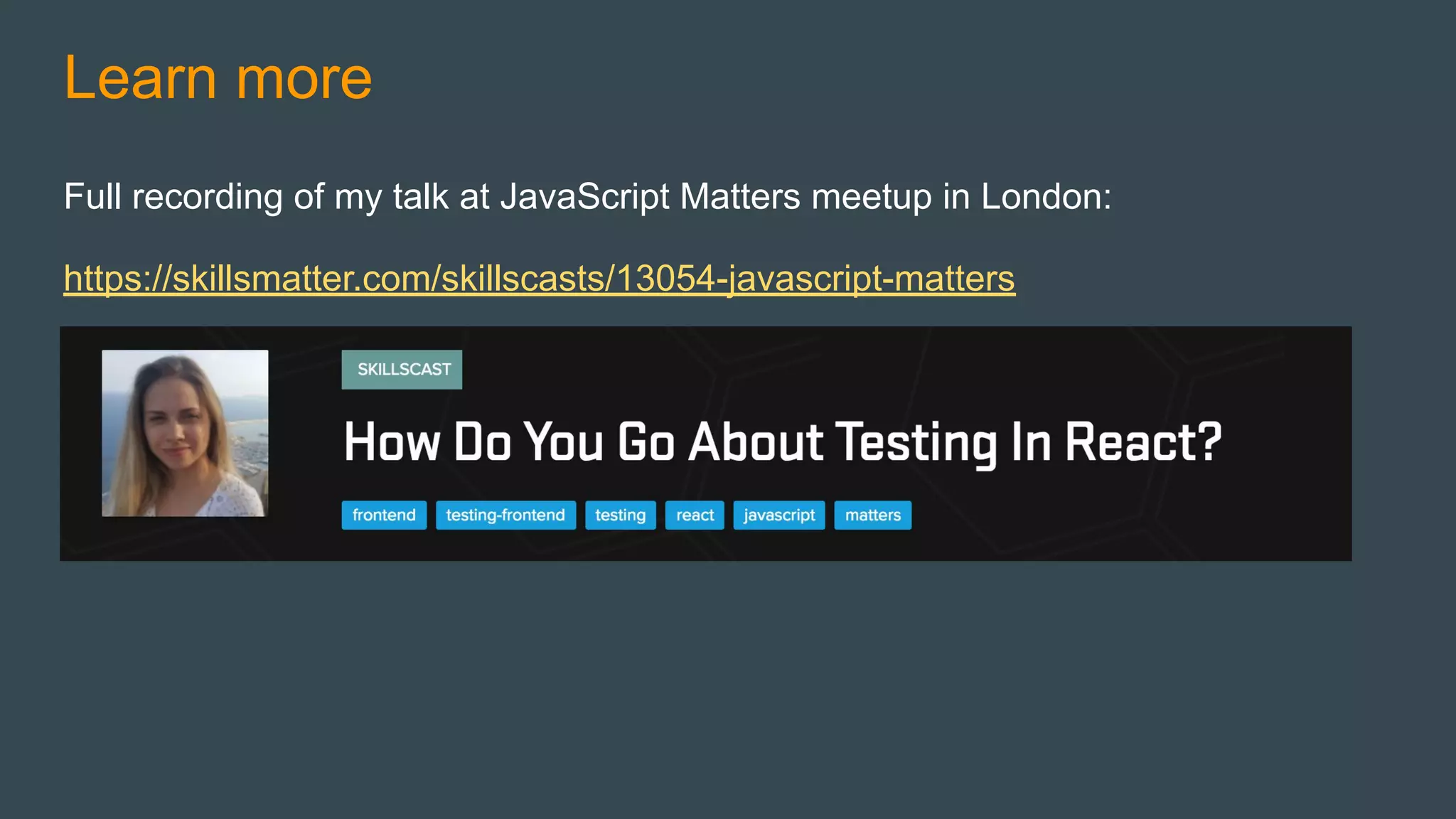
Full recording of my talk at JavaScript Matters meetup in London:
https://skillsmatter.com/skillscasts/13054-javascript-matters
Learn more
● Kent C. Dodds: Write tests. Not too many. Mostly integration.
● Kent C. Dodds: Why I Never Use Shallow Rendering
● Kent C. Dodds: Testing JavaScript
● Lyudmil Latinov: Cypress vs. Selenium, is this the end of an era?
● Cypress: Key Differences
● Artem Sapegin: What’s wrong with snapshot tests
Learn more
Thank you
Lisa Gagarina
@lisa_gagarina
JPMorgan Chase & Co.
ReactEurope
Paris, 23-24th
May 2019

Five steps towards your testing dream

  • 1.
    Five Steps TowardsYour Testing Dream Lisa Gagarina @lisa_gagarina JPMorgan Chase & Co. ReactEurope Paris, 23-24th May 2019
  • 2.
    Step 1: Usestatic code analysis tools What is wrong? ● Syntax and type errors at runtime ● Inconsistent code style ● Noisy, unnecessary unit tests
  • 3.
    Step 1: Usestatic code analysis tools What is wrong? ● Syntax and type errors at runtime ● Inconsistent code style ● Noisy, unnecessary unit tests What to do? ● Use linter and static typing to discover problems with your code before you run it ● Use code formatter to automatically style your code Tools: ESLint, Prettier, TypeScript
  • 4.
    Step 2: Gainmore value from Jest snapshot testing What is wrong? ● Too many, too big ● False negative failures ● Hard to code review ● Unclear intention ● False impression of good coverage
  • 5.
    Step 2: Gainmore value from Jest snapshot testing What is wrong? ● Too many, too big ● False negative failures ● Hard to code review ● Unclear intention ● False impression of good coverage What to do? ● Snapshot small static components ● Use inline and diff snapshots ● Use snapshots beyond React Tools: Jest + ESLint (jest/no-large-snapshots, jest/prefer-inline-snapshots), npm snapshot-diff
  • 6.
    What is wrong? Step3: Build up confidence in your tests are hard to write fail on non-breaking refactoring pass when user experience is broken allow regressions and bugs to creep in TESTS
  • 7.
    What is wrong? Step3: Build up confidence in your tests are hard to write fail on non-breaking refactoring pass when user experience is broken allow regressions and bugs to creep in TESTS What to do? Write tests that: ● resemble how users interact with your components ● are agnostic to implementation details ● give you confidence in your code Tools: Jest + React Testing Library
  • 8.
    What is wrong? End-to-endtests are: ● hard to set up and write ● slow and flaky ● hard to debug Step 4: Create reliable end-to-end tests
  • 9.
    Step 4: Createreliable end-to-end tests What to do? ● Run end-to-end tests in the same run-loop as your application ● Control your application fully ● Debug efficiently Tools: Cypress What is wrong? End-to-end tests are: ● hard to set up and write ● slow and flaky ● hard to debug
  • 10.
    Step 5: Focuson what works for your project and your team
  • 11.
    Full recording ofmy talk at JavaScript Matters meetup in London: https://skillsmatter.com/skillscasts/13054-javascript-matters Learn more
  • 12.
    ● Kent C.Dodds: Write tests. Not too many. Mostly integration. ● Kent C. Dodds: Why I Never Use Shallow Rendering ● Kent C. Dodds: Testing JavaScript ● Lyudmil Latinov: Cypress vs. Selenium, is this the end of an era? ● Cypress: Key Differences ● Artem Sapegin: What’s wrong with snapshot tests Learn more
  • 13.
    Thank you Lisa Gagarina @lisa_gagarina JPMorganChase & Co. ReactEurope Paris, 23-24th May 2019