Physical Structure
and
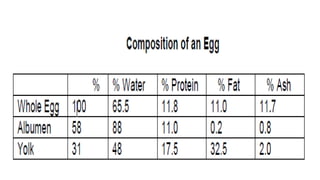
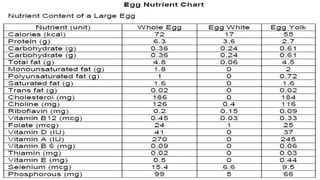
Composition of Eggs
Three (3) parts of an EGG
• Shell
• egg white
• egg yolk
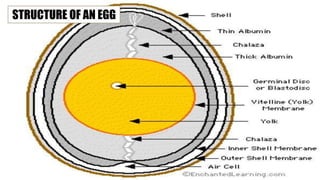
STRUCTURE OF AN EGG
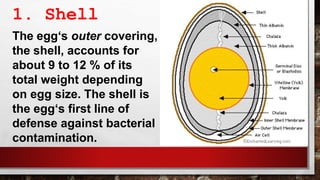
1. Shell
The egg‘s outer covering,
the shell, accounts for
about 9 to 12 % of its
total weight depending
on egg size. The shell is
the egg‘s first line of
defense against bacterial
contamination.
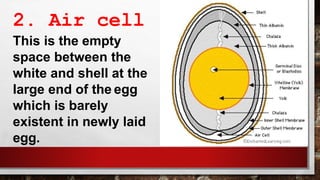
2. Air cell
This is the empty
space between the
white and shell at the
large end of the egg
which is barely
existent in newly laid
egg.
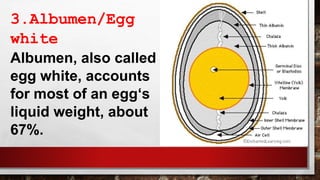
3.Albumen/Egg
white
Albumen, also called
egg white, accounts
for most of an egg‘s
liquid weight, about
67%.
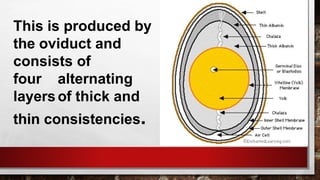
This is produced by
the oviduct and
consists of
four alternating
layersof thick and
thin consistencies.
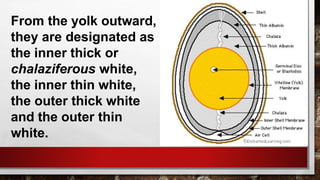
From the yolk outward,
they are designated as
the inner thick or
chalaziferous white,
the inner thin white,
the outer thick white
and the outer thin
white.
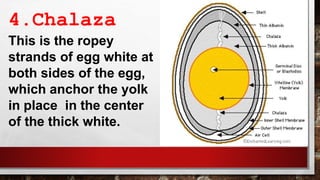
4.Chalaza
This is the ropey
strands of egg white at
both sides of the egg,
which anchor the yolk
in place in the center
of the thick white.
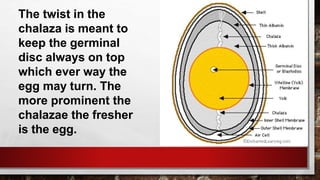
The twist in the
chalaza is meant to
keep the germinal
disc always on top
which ever way the
egg may turn. The
more prominent the
chalazae the fresher
is the egg.
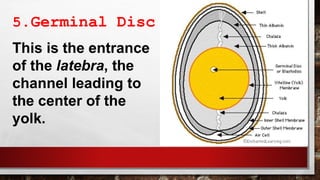
5.Germinal Disc
This is the entrance
of the latebra, the
channel leading to
the center of the
yolk.
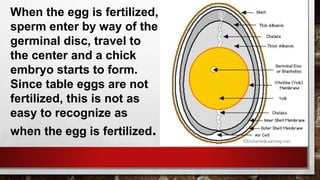
When the egg is fertilized,
sperm enter by way of the
germinal disc, travel to
the center and a chick
embryo starts to form.
Since table eggs are not
fertilized, this is not as
easy to recognize as
when the egg is fertilized.
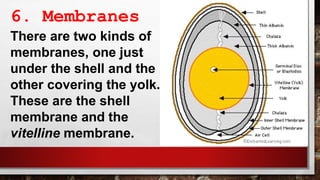
6. Membranes
There are two kinds of
membranes, one just
under the shell and the
other covering the yolk.
These are the shell
membrane and the
vitelline membrane.
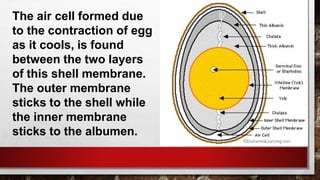
The air cell formed due
to the contraction of egg
as it cools, is found
between the two layers
of this shell membrane.
The outer membrane
sticks to the shell while
the inner membrane
sticks to the albumen.
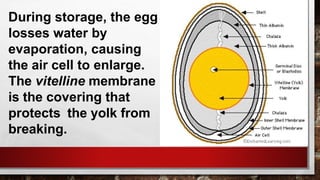
During storage, the egg
losses water by
evaporation, causing
the air cell to enlarge.
The vitelline membrane
is the covering that
protects the yolk from
breaking.
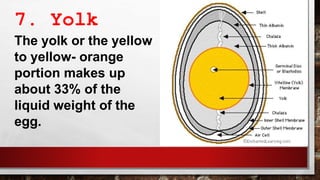
7. Yolk
The yolk or the yellow
to yellow- orange
portion makes up
about 33% of the
liquid weight of the
egg.
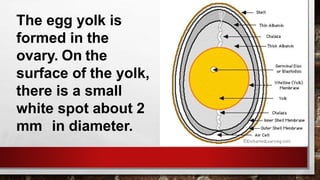
The egg yolk is
formed in the
ovary. On the
surface of the yolk,
there is a small
white spot about 2
mm in diameter.
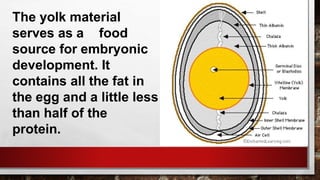
The yolk material
serves as a food
source for embryonic
development. It
contains all the fat in
the egg and a little less
than half of the
protein.
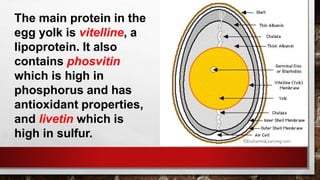
The main protein in the
egg yolk is vitelline, a
lipoprotein. It also
contains phosvitin
which is high in
phosphorus and has
antioxidant properties,
and livetin which is
high in sulfur.
NUTRITIVE VALUE
OF
EGGS
Egg
• indeed one of nature‘s complete
food;
• contains high quality protein with all
the essential amino acids, all of the
vitamins except vitamin C, and many
minerals.
• products are particularly good for
fortifying food low in protein quality.
• Except for mother‘s milk, eggs
provide the best protein naturally
available. Egg protein is often used
as a reference standard for biological
values of their proteins.
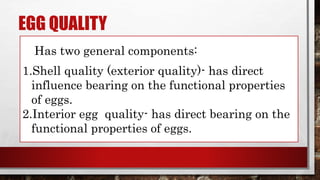
EGG QUALITY
Has two general components:
1.Shell quality (exterior quality)- has direct
influence bearing on the functional properties
of eggs.
2.Interior egg quality- has direct bearing on the
functional properties of eggs.
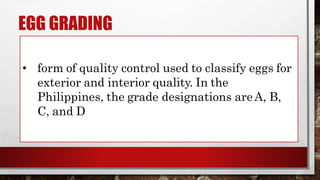
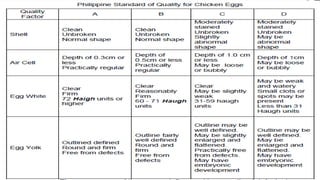
EGG GRADING
• form of quality control used to classify eggs for
exterior and interior quality. In the
Philippines, the grade designations areA, B,
C, and D
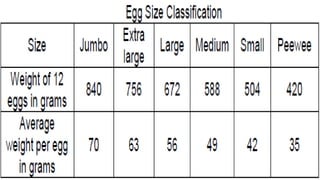
EGG SIZE
Several factors influence the size of the egg:
• Breed
• age of hen
• Weight
• Feed
• environmental factors
The egg sizes are Jumbo, Extra
Large, Large, Medium, Small and
Peewee. Medium, Large, and Extra
Large are the sizes commonly
available.
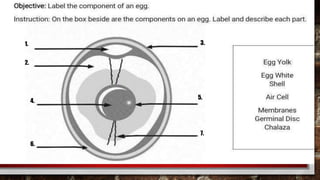
1. 3.
4.
2.
6.
5.
7.
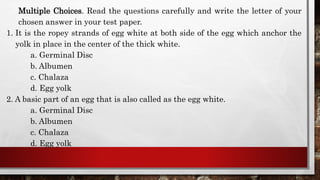
Multiple Choices. Read the questions carefully and write the letter of your
chosen answer in your test paper.
1. It is the ropey strands of egg white at both side of the egg which anchor the
yolk in place in the center of the thick white.
a. Germinal Disc
b. Albumen
c. Chalaza
d. Egg yolk
2. A basic part of an egg that is also called as the egg white.
a. Germinal Disc
b. Albumen
c. Chalaza
d. Egg yolk
3. It refers to the entrance, the channel leading to the center of the
yolk
a. Germinal Disc
b. Albumen
c. Chalaza
d. Egg yolk
4. It is the empty space between the white and shell at the large
end of the egg which barely existent in newly laid egg.
a. Germinal Disc
b. Air cell
c. Chalaza
d. Egg Cell
5. The part of an egg that is rich in protein.

a. Egg yolk a egg white
b. Membrane
c. Chalaza
d. Egg white

lesson6physicalstructureandcompositionofegg-190220011246 (1).pptx

  • 1.
  • 2.
    Three (3) partsof an EGG • Shell • egg white • egg yolk
  • 3.
  • 4.
    1. Shell The egg‘souter covering, the shell, accounts for about 9 to 12 % of its total weight depending on egg size. The shell is the egg‘s first line of defense against bacterial contamination.
  • 5.
    2. Air cell Thisis the empty space between the white and shell at the large end of the egg which is barely existent in newly laid egg.
  • 6.
    3.Albumen/Egg white Albumen, also called eggwhite, accounts for most of an egg‘s liquid weight, about 67%.
  • 7.
    This is producedby the oviduct and consists of four alternating layersof thick and thin consistencies.
  • 8.
    From the yolkoutward, they are designated as the inner thick or chalaziferous white, the inner thin white, the outer thick white and the outer thin white.
  • 9.
    4.Chalaza This is theropey strands of egg white at both sides of the egg, which anchor the yolk in place in the center of the thick white.
  • 10.
    The twist inthe chalaza is meant to keep the germinal disc always on top which ever way the egg may turn. The more prominent the chalazae the fresher is the egg.
  • 11.
    5.Germinal Disc This isthe entrance of the latebra, the channel leading to the center of the yolk.
  • 12.
    When the eggis fertilized, sperm enter by way of the germinal disc, travel to the center and a chick embryo starts to form. Since table eggs are not fertilized, this is not as easy to recognize as when the egg is fertilized.
  • 13.
    6. Membranes There aretwo kinds of membranes, one just under the shell and the other covering the yolk. These are the shell membrane and the vitelline membrane.
  • 14.
    The air cellformed due to the contraction of egg as it cools, is found between the two layers of this shell membrane. The outer membrane sticks to the shell while the inner membrane sticks to the albumen.
  • 15.
    During storage, theegg losses water by evaporation, causing the air cell to enlarge. The vitelline membrane is the covering that protects the yolk from breaking.
  • 16.
    7. Yolk The yolkor the yellow to yellow- orange portion makes up about 33% of the liquid weight of the egg.
  • 17.
    The egg yolkis formed in the ovary. On the surface of the yolk, there is a small white spot about 2 mm in diameter.
  • 18.
    The yolk material servesas a food source for embryonic development. It contains all the fat in the egg and a little less than half of the protein.
  • 19.
    The main proteinin the egg yolk is vitelline, a lipoprotein. It also contains phosvitin which is high in phosphorus and has antioxidant properties, and livetin which is high in sulfur.
  • 21.
  • 22.
    Egg • indeed oneof nature‘s complete food; • contains high quality protein with all the essential amino acids, all of the vitamins except vitamin C, and many minerals.
  • 23.
    • products areparticularly good for fortifying food low in protein quality. • Except for mother‘s milk, eggs provide the best protein naturally available. Egg protein is often used as a reference standard for biological values of their proteins.
  • 26.
    EGG QUALITY Has twogeneral components: 1.Shell quality (exterior quality)- has direct influence bearing on the functional properties of eggs. 2.Interior egg quality- has direct bearing on the functional properties of eggs.
  • 27.
    EGG GRADING • formof quality control used to classify eggs for exterior and interior quality. In the Philippines, the grade designations areA, B, C, and D
  • 29.
    EGG SIZE Several factorsinfluence the size of the egg: • Breed • age of hen • Weight • Feed • environmental factors
  • 30.
    The egg sizesare Jumbo, Extra Large, Large, Medium, Small and Peewee. Medium, Large, and Extra Large are the sizes commonly available.
  • 33.
  • 34.
    Multiple Choices. Readthe questions carefully and write the letter of your chosen answer in your test paper. 1. It is the ropey strands of egg white at both side of the egg which anchor the yolk in place in the center of the thick white. a. Germinal Disc b. Albumen c. Chalaza d. Egg yolk 2. A basic part of an egg that is also called as the egg white. a. Germinal Disc b. Albumen c. Chalaza d. Egg yolk
  • 35.
    3. It refersto the entrance, the channel leading to the center of the yolk a. Germinal Disc b. Albumen c. Chalaza d. Egg yolk 4. It is the empty space between the white and shell at the large end of the egg which barely existent in newly laid egg. a. Germinal Disc b. Air cell c. Chalaza d. Egg Cell
  • 36.
    5. The partof an egg that is rich in protein. a. Egg yolk a egg white b. Membrane c. Chalaza d. Egg white