THE CRISIS
MANAGEMENT
PLAN
Jeryle L. Saclag
Jamil Wayne A. Domingo
01 What is a Crisis?
02 Why is the tourism industry vulnerable to crises?
03
Identify the key principles of crisis management
in tourism.
LEARNING OBJECTIVES
04
Understand the components of a crisis
communication plan and why it's important
THE TOURISM
INDUSTRY AND CRISES
- Tourism is one of the fastest-growing industries, but it's very vulnerable
to different types of crises.
- Crises affect the economy, safety, and environmental aspects of
tourism.
Examples of Crises:
1. Natural Disasters - Earthquakes, floods, or hurricanes.
2. Health Emergencies - Pandemics like COVID-19.
3. Economic Crises - Recessions causing fewer people to travel.
4. Political Unrest - Terrorism or protests affecting travel safety.
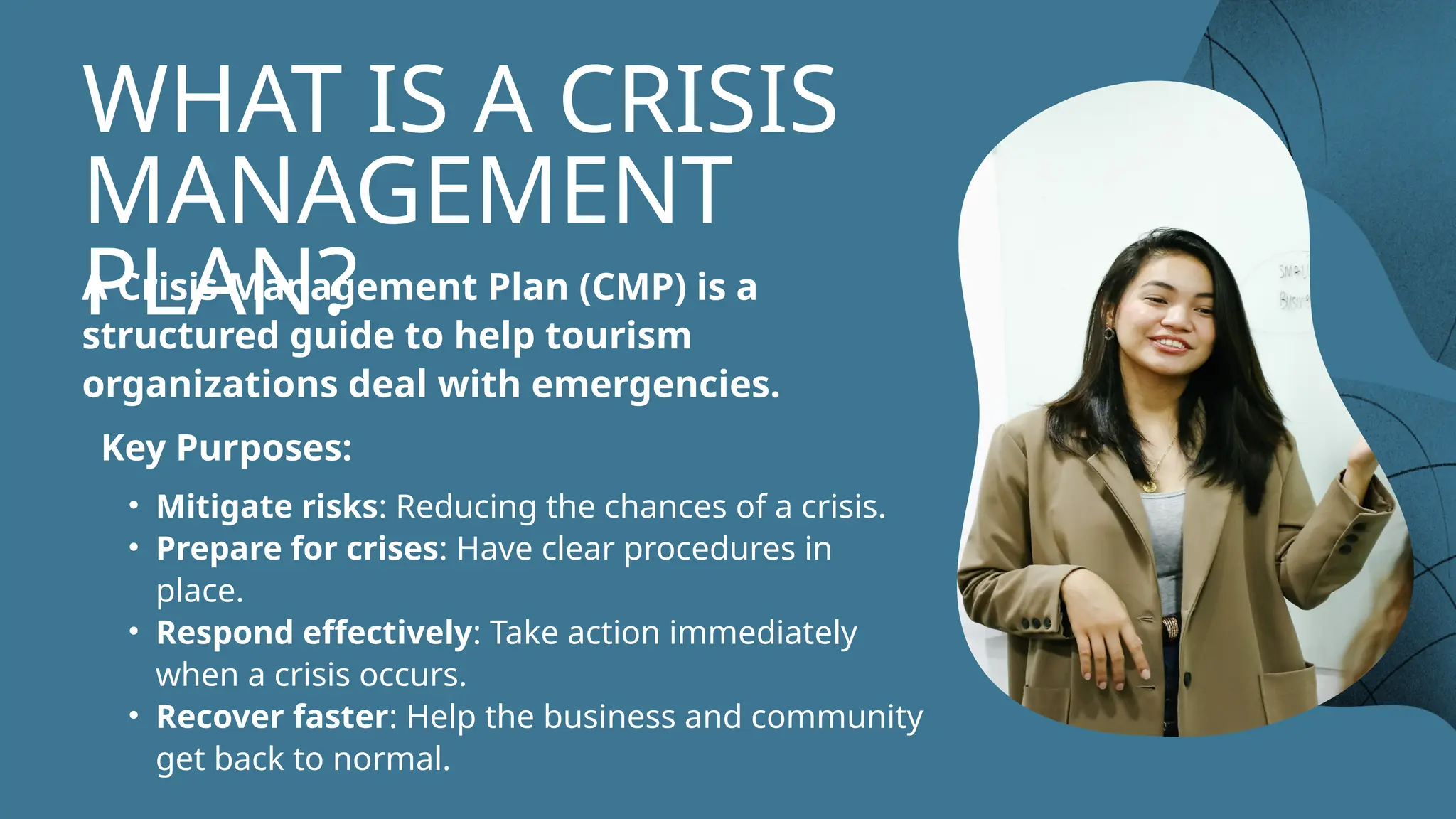
WHAT IS A CRISIS
MANAGEMENT
PLAN?
A Crisis Management Plan (CMP) is a
structured guide to help tourism
organizations deal with emergencies.
Key Purposes:
• Mitigate risks: Reducing the chances of a crisis.
• Prepare for crises: Have clear procedures in
place.
• Respond effectively: Take action immediately
when a crisis occurs.
• Recover faster: Help the business and community
get back to normal.
KEY PRINCIPLES OF
CRISIS MANAGEMENT
01. Mitigation/Prevention
- Reduce the likelihood of crises
02. Preparedness
- Train staff and create plans for emergencies
03. Response
- Act fast during a crisis
04. Recovery
- Return to normal operations and offer
support to affected people
CRISIS MANAGEMENT
PLAN - CHECKLIST
Make sure your crisis management plan includes:
01. Early warning systems - Tools to detect crises early (e.g., weather
monitoring).
02. Emergency contacts - Updated list of key contacts.
03. Training - Make sure all staff know their roles during a crisis.
04. Communication plans - Clearly communicate with guests,
employees, and stakeholders.
THE IMPORTANCE
OF CRISIS
MANAGEMENT
Why is a crisis management plan crucial
for the tourism industry?
• Be ready for anything
• Protect your assets
• Support stakeholders
KEY PRINCIPLES
OF CRISIS
MANAGEMENT IN
TOURISM
1. Whole of Nation Approach
2. Inter Agency Collaboration
3. Efficient Situation Awareness
4. Tiered Response to Incidents
5. Adaptability
6. Unity of Effort
7. Readiness to Act
8. Public Information Campaigns
Key Elements:
• Designate a spokesperson - A trained person
to speak on behalf of the organization.
• Clear messaging - Create clear and honest
updates for media, guests, and employees.
• Communication channels - Use social media,
emails, and websites to send out information.
• Help affected people - Provide assistance to
guests and staff who need it.
WHAT IS A CRISIS
COMMUNICATIO
N PLAN
SYNTHESIS
• A Crisis Management Plan helps businesses prepare,
respond, and recover from crises.
• Tourism is vulnerable to natural, economic, and social
disruptions, so having a plan is essential.
• Effective Crisis Communication ensures that the right
information reaches the right people at the right time.
THANK
YOU

Lesson - The Crisis Management Plan.pptx

  • 1.
    THE CRISIS MANAGEMENT PLAN Jeryle L.Saclag Jamil Wayne A. Domingo
  • 2.
    01 What isa Crisis? 02 Why is the tourism industry vulnerable to crises? 03 Identify the key principles of crisis management in tourism. LEARNING OBJECTIVES 04 Understand the components of a crisis communication plan and why it's important
  • 3.
    THE TOURISM INDUSTRY ANDCRISES - Tourism is one of the fastest-growing industries, but it's very vulnerable to different types of crises. - Crises affect the economy, safety, and environmental aspects of tourism. Examples of Crises: 1. Natural Disasters - Earthquakes, floods, or hurricanes. 2. Health Emergencies - Pandemics like COVID-19. 3. Economic Crises - Recessions causing fewer people to travel. 4. Political Unrest - Terrorism or protests affecting travel safety.
  • 4.
    WHAT IS ACRISIS MANAGEMENT PLAN? A Crisis Management Plan (CMP) is a structured guide to help tourism organizations deal with emergencies. Key Purposes: • Mitigate risks: Reducing the chances of a crisis. • Prepare for crises: Have clear procedures in place. • Respond effectively: Take action immediately when a crisis occurs. • Recover faster: Help the business and community get back to normal.
  • 5.
    KEY PRINCIPLES OF CRISISMANAGEMENT 01. Mitigation/Prevention - Reduce the likelihood of crises 02. Preparedness - Train staff and create plans for emergencies 03. Response - Act fast during a crisis 04. Recovery - Return to normal operations and offer support to affected people
  • 6.
    CRISIS MANAGEMENT PLAN -CHECKLIST Make sure your crisis management plan includes: 01. Early warning systems - Tools to detect crises early (e.g., weather monitoring). 02. Emergency contacts - Updated list of key contacts. 03. Training - Make sure all staff know their roles during a crisis. 04. Communication plans - Clearly communicate with guests, employees, and stakeholders.
  • 7.
    THE IMPORTANCE OF CRISIS MANAGEMENT Whyis a crisis management plan crucial for the tourism industry? • Be ready for anything • Protect your assets • Support stakeholders
  • 8.
    KEY PRINCIPLES OF CRISIS MANAGEMENTIN TOURISM 1. Whole of Nation Approach 2. Inter Agency Collaboration 3. Efficient Situation Awareness 4. Tiered Response to Incidents 5. Adaptability 6. Unity of Effort 7. Readiness to Act 8. Public Information Campaigns
  • 9.
    Key Elements: • Designatea spokesperson - A trained person to speak on behalf of the organization. • Clear messaging - Create clear and honest updates for media, guests, and employees. • Communication channels - Use social media, emails, and websites to send out information. • Help affected people - Provide assistance to guests and staff who need it. WHAT IS A CRISIS COMMUNICATIO N PLAN
  • 10.
    SYNTHESIS • A CrisisManagement Plan helps businesses prepare, respond, and recover from crises. • Tourism is vulnerable to natural, economic, and social disruptions, so having a plan is essential. • Effective Crisis Communication ensures that the right information reaches the right people at the right time.
  • 11.