Crises Communication: Guide and Best Practices
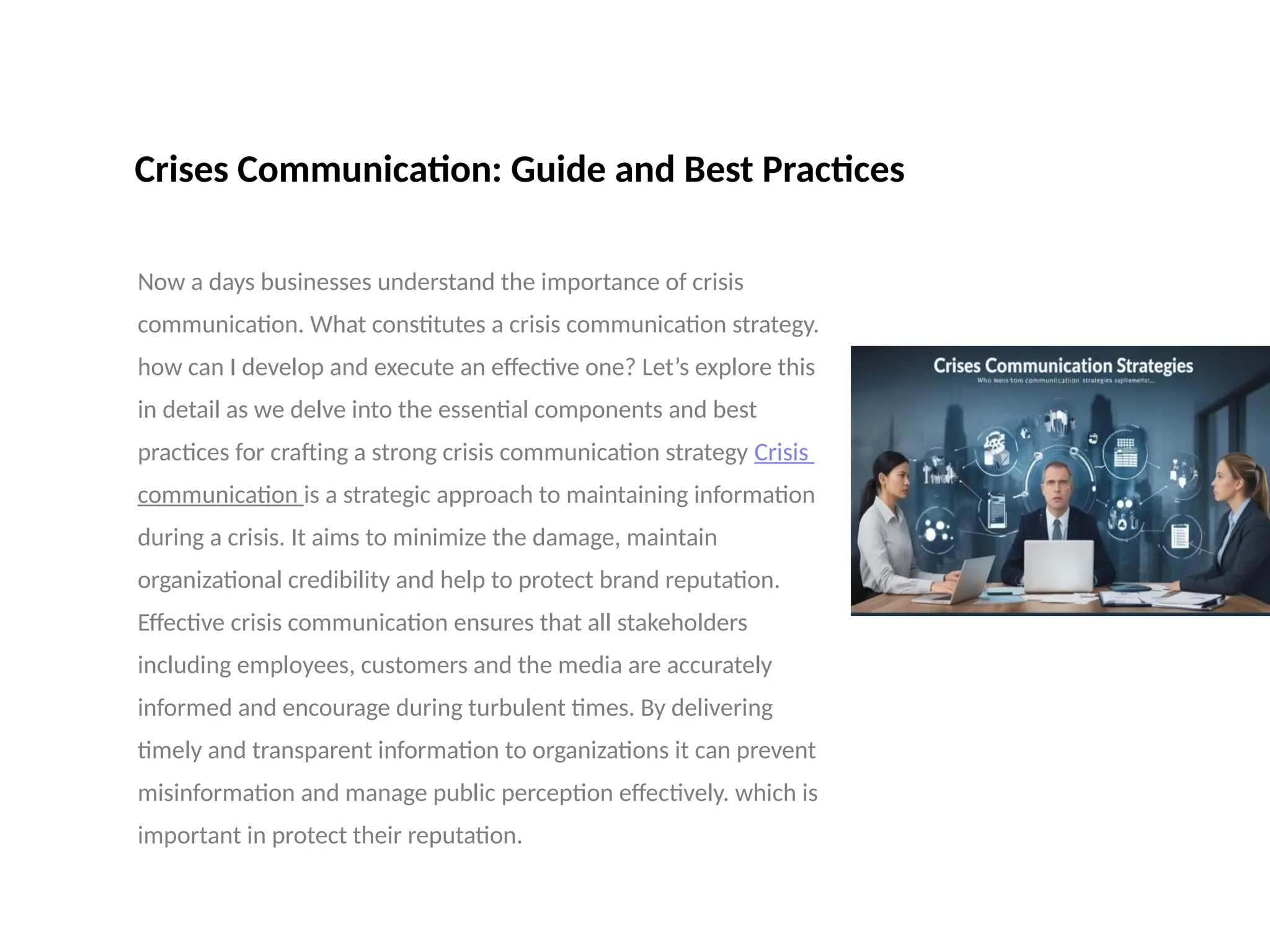
Now a days businesses understand the importance of crisis
communication. What constitutes a crisis communication strategy.
how can I develop and execute an effective one? Let’s explore this
in detail as we delve into the essential components and best
practices for crafting a strong crisis communication strategy Crisis
communication is a strategic approach to maintaining information
during a crisis. It aims to minimize the damage, maintain
organizational credibility and help to protect brand reputation.
Effective crisis communication ensures that all stakeholders
including employees, customers and the media are accurately
informed and encourage during turbulent times. By delivering
timely and transparent information to organizations it can prevent
misinformation and manage public perception effectively. which is
important in protect their reputation.
How to Build Crisis Communication Protocols
Building strong crisis communication protocols is fundamental
to a successful crisis management strategies.
The process begins with identifying key stakeholders who need
to be informed during a crisis. This includes employees,
customers, investors and the media. Understanding your
audience is critical to tailoring messages effectively.
Next develop a crisis communication team composed of experts
from corporate communications firms and strategic
communications consultants. This team should be well trained
and prepared to handle various crisis scenarios. Establish a
comprehensive communication plan that highlights procedures
for disseminating information, including roles and
responsibilities and communication channels.
.
Then Create key messages that will be communicated consistently throughout the crisis.
These messages should address the situation, provide updates and reassure stakeholders.
Drafting response templates for different types of crises. Crisis management ensures
timely and consistent communication. which can be customized as needed.
Test regularly and revising your crisis communication protocols through simulations and
feedback. it helps in filtering the strategy and improving response effectively.
Crisis management work on proactive approach ensures that the organization is prepared
for potential crises and can respond swiftly and efficiently.
Planning for Crisis Communication
Effective crisis communication planning is beneficial for
managing crises effectively. Begin with a thorough risk
assessment to identify potential crises that could impact your
organization. Crisis management helps in prioritizing and
preparing for various crisis situations.
Develop a crisis communication strategy in collaboration with
reputation management agencies. This strategy highlights how
to handle different crisis situations with media relations,
internal communications and stakeholder engagement.
Engaging with external experts provides additional insights
and support. enhance the overall crisis communication
strategy.
.
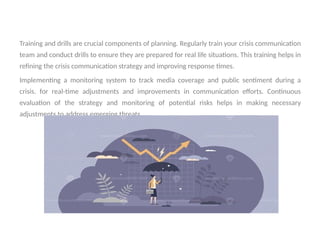
Training and drills are crucial components of planning. Regularly train your crisis communication
team and conduct drills to ensure they are prepared for real life situations. This training helps in
refining the crisis communication strategy and improving response times.
Implementing a monitoring system to track media coverage and public sentiment during a
crisis. for real-time adjustments and improvements in communication efforts. Continuous
evaluation of the strategy and monitoring of potential risks helps in making necessary
adjustments to address emerging threats.
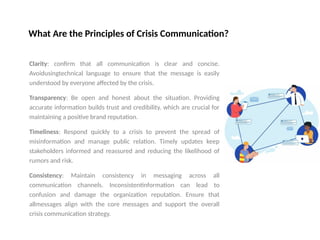
What Are the Principles of Crisis Communication?
Clarity: confirm that all communication is clear and concise.
Avoidusingtechnical language to ensure that the message is easily
understood by everyone affected by the crisis.
Transparency: Be open and honest about the situation. Providing
accurate information builds trust and credibility. which are crucial for
maintaining a positive brand reputation.
Timeliness: Respond quickly to a crisis to prevent the spread of
misinformation and manage public relation. Timely updates keep
stakeholders informed and reassured and reducing the likelihood of
rumors and risk.
Consistency: Maintain consistency in messaging across all
communication channels. Inconsistentinformation can lead to
confusion and damage the organization reputation. Ensure that
allmessages align with the core messages and support the overall
crisis communication strategy.
Build Effective Messages for Crisis Communication
Crafting effective messages is a basics of a successful crisis
communication strategy. Start by clearly addressing the
situation. Explain what happened, why it occurred and what
steps are being taken to address the issue. This transparency
helps manage expectations and reduce uncertainty.
Provide reassurance by highlighting the measures being
implemented to resolve the organization crisis or business
crisis. prevent future occurrences to encourage stakeholders
which helps to maintain their confidence in the organization.
Ensure that all information provided is honest and accurate
to avoid further complications and potential damage to the
brand reputation.
Moves to Build Strong Crisis Communication Strategy
Develop a Crisis Communication Plan: Create a detailed plan
that outlines how to handle various crisis scenarios. This plan
should include communication protocols, roles and
responsibilities, and response strategies. Engaging with
corporate communications firms and strategic
communications consultants can enhance the development of
a comprehensive plan.
Assemble a Crisis Communication Team: Gather a team of
experts from corporate communications firms or agency and
strategic communications consultants. This team should be
trained and ready to manage crises effectively. Their expertise
will be invaluable in crafting and executing the crisis
communication strategy.
.
Establish Communication Channels: Identify and set up communication channels that will be used during
a crisis. This includes social media, press releases, and internal communication platforms. Ensuring that
these channels are in place and operational helps in delivering timely and consistent messages.
Create a Monitoring System: Implement a system to monitor media coverage and public sentiment
during a crisis. This system helps track the effectiveness of your communication efforts and make
necessary adjustments. Monitoring tools and techniques can provide real-time insights into how the crisis
is being perceived.
Review and Refine: After a crisis, review the response and communication strategy to identify areas for
improvement. Use the crisis communication principless to refine your plan and better prepare for future
crises. Continuous improvement ensures that your organization is more resilient and better equipped to
handle future challenges.
What’s Crisis Communication Outcomes?
Maintained Brand Reputation: Properly managed crisis
communication helps preserve the organization’s brand
reputation. Transparency, empathy and consistency build trust
and credibility with stakeholders, which is crucial for maintaining
a positive public image.
Minimized Damage: Timely and accurate communication helps
minimize the damage caused by a crisis. Addressing issues
promptly prevents the situation from escalating and reduces the
overall impact on the organization.
Informed Stakeholders: Clear and consistent communication
keeps stakeholders informed and reassured. This helps manage
expectations and reduces uncertainty, which is essential for
maintaining stakeholder confidence.
conclusion
Crisis communication is a important aspect of managing and
mitigating the impact of crises on an organization.
understanding the principles of crisis communication. building
effective protocols and crafting clear messages, organizations
can navigate crises more effectively. Implementing a well
developed crisis communication strategy supported by
corporate communications firms and strategic
communications consultants helps in maintaining brand
reputation. ensuring positive outcomes during challenging
times. Effective crisis communication not only preserves an
organization’s credibility but also enhances its ability to
manage future crises with greater resilience and anticipation.

effectiveCrises Communication guide by newtonpr

  • 1.
    Crises Communication: Guideand Best Practices Now a days businesses understand the importance of crisis communication. What constitutes a crisis communication strategy. how can I develop and execute an effective one? Let’s explore this in detail as we delve into the essential components and best practices for crafting a strong crisis communication strategy Crisis communication is a strategic approach to maintaining information during a crisis. It aims to minimize the damage, maintain organizational credibility and help to protect brand reputation. Effective crisis communication ensures that all stakeholders including employees, customers and the media are accurately informed and encourage during turbulent times. By delivering timely and transparent information to organizations it can prevent misinformation and manage public perception effectively. which is important in protect their reputation.
  • 2.
    How to BuildCrisis Communication Protocols Building strong crisis communication protocols is fundamental to a successful crisis management strategies. The process begins with identifying key stakeholders who need to be informed during a crisis. This includes employees, customers, investors and the media. Understanding your audience is critical to tailoring messages effectively. Next develop a crisis communication team composed of experts from corporate communications firms and strategic communications consultants. This team should be well trained and prepared to handle various crisis scenarios. Establish a comprehensive communication plan that highlights procedures for disseminating information, including roles and responsibilities and communication channels.
  • 3.
    . Then Create keymessages that will be communicated consistently throughout the crisis. These messages should address the situation, provide updates and reassure stakeholders. Drafting response templates for different types of crises. Crisis management ensures timely and consistent communication. which can be customized as needed. Test regularly and revising your crisis communication protocols through simulations and feedback. it helps in filtering the strategy and improving response effectively. Crisis management work on proactive approach ensures that the organization is prepared for potential crises and can respond swiftly and efficiently.
  • 4.
    Planning for CrisisCommunication Effective crisis communication planning is beneficial for managing crises effectively. Begin with a thorough risk assessment to identify potential crises that could impact your organization. Crisis management helps in prioritizing and preparing for various crisis situations. Develop a crisis communication strategy in collaboration with reputation management agencies. This strategy highlights how to handle different crisis situations with media relations, internal communications and stakeholder engagement. Engaging with external experts provides additional insights and support. enhance the overall crisis communication strategy.
  • 5.
    . Training and drillsare crucial components of planning. Regularly train your crisis communication team and conduct drills to ensure they are prepared for real life situations. This training helps in refining the crisis communication strategy and improving response times. Implementing a monitoring system to track media coverage and public sentiment during a crisis. for real-time adjustments and improvements in communication efforts. Continuous evaluation of the strategy and monitoring of potential risks helps in making necessary adjustments to address emerging threats.
  • 6.
    What Are thePrinciples of Crisis Communication? Clarity: confirm that all communication is clear and concise. Avoidusingtechnical language to ensure that the message is easily understood by everyone affected by the crisis. Transparency: Be open and honest about the situation. Providing accurate information builds trust and credibility. which are crucial for maintaining a positive brand reputation. Timeliness: Respond quickly to a crisis to prevent the spread of misinformation and manage public relation. Timely updates keep stakeholders informed and reassured and reducing the likelihood of rumors and risk. Consistency: Maintain consistency in messaging across all communication channels. Inconsistentinformation can lead to confusion and damage the organization reputation. Ensure that allmessages align with the core messages and support the overall crisis communication strategy.
  • 7.
    Build Effective Messagesfor Crisis Communication Crafting effective messages is a basics of a successful crisis communication strategy. Start by clearly addressing the situation. Explain what happened, why it occurred and what steps are being taken to address the issue. This transparency helps manage expectations and reduce uncertainty. Provide reassurance by highlighting the measures being implemented to resolve the organization crisis or business crisis. prevent future occurrences to encourage stakeholders which helps to maintain their confidence in the organization. Ensure that all information provided is honest and accurate to avoid further complications and potential damage to the brand reputation.
  • 8.
    Moves to BuildStrong Crisis Communication Strategy Develop a Crisis Communication Plan: Create a detailed plan that outlines how to handle various crisis scenarios. This plan should include communication protocols, roles and responsibilities, and response strategies. Engaging with corporate communications firms and strategic communications consultants can enhance the development of a comprehensive plan. Assemble a Crisis Communication Team: Gather a team of experts from corporate communications firms or agency and strategic communications consultants. This team should be trained and ready to manage crises effectively. Their expertise will be invaluable in crafting and executing the crisis communication strategy.
  • 9.
    . Establish Communication Channels:Identify and set up communication channels that will be used during a crisis. This includes social media, press releases, and internal communication platforms. Ensuring that these channels are in place and operational helps in delivering timely and consistent messages. Create a Monitoring System: Implement a system to monitor media coverage and public sentiment during a crisis. This system helps track the effectiveness of your communication efforts and make necessary adjustments. Monitoring tools and techniques can provide real-time insights into how the crisis is being perceived. Review and Refine: After a crisis, review the response and communication strategy to identify areas for improvement. Use the crisis communication principless to refine your plan and better prepare for future crises. Continuous improvement ensures that your organization is more resilient and better equipped to handle future challenges.
  • 10.
    What’s Crisis CommunicationOutcomes? Maintained Brand Reputation: Properly managed crisis communication helps preserve the organization’s brand reputation. Transparency, empathy and consistency build trust and credibility with stakeholders, which is crucial for maintaining a positive public image. Minimized Damage: Timely and accurate communication helps minimize the damage caused by a crisis. Addressing issues promptly prevents the situation from escalating and reduces the overall impact on the organization. Informed Stakeholders: Clear and consistent communication keeps stakeholders informed and reassured. This helps manage expectations and reduces uncertainty, which is essential for maintaining stakeholder confidence.
  • 11.
    conclusion Crisis communication isa important aspect of managing and mitigating the impact of crises on an organization. understanding the principles of crisis communication. building effective protocols and crafting clear messages, organizations can navigate crises more effectively. Implementing a well developed crisis communication strategy supported by corporate communications firms and strategic communications consultants helps in maintaining brand reputation. ensuring positive outcomes during challenging times. Effective crisis communication not only preserves an organization’s credibility but also enhances its ability to manage future crises with greater resilience and anticipation.