Lesson
Planning
November 5th, 2020 Beginning Teacher Professional Development
A lesson plan is a guide
which helps execute a
mission that is to be
accomplished in the
classroom with the children.
A lesson plan can also be
defined as a creative process
which provides a framework
for purposeful learning.
What is a
Lesson
Plan?
Credit: YouTube – NIOSSeniorSecondaryCourses
Components
Video
Title & Date
Although there are times that recycling an old
lesson plan may be appropriate, we ask that you
NOT make that your routine. Just changing the date
on a previously used plan isn’t good practice. What
worked for one set of students may not work for
another. Any old lesson plans that are “reused”
need to be updated and revised to reflect current
standards and to address the learning styles and
needs of all students.
Objective &
Standards
● Focus the purpose of your lesson and subsequent planning
● Give you an outcome or goal
● Can help students understand the lesson purpose
● Combined with success criteria, objectives let you know when
learning has happened
● Set the foundation for student-led academic discussion
Standard Statements
How well students learn what is set out in the
content standards, often called the "be able to
do" or "what students should know and be able
to do” and specify "how good is good enough."
They are the indicators of quality that specify
how adept or competent a student
demonstration must be.
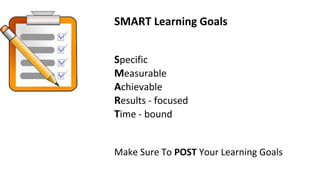
SMART Learning Goals
Specific
Measurable
Achievable
Results - focused
Time - bound
Make Sure To POST Your Learning Goals
Plan
Your plan:
● Should have a beginning, middle and end
● Should be well written in a logical, sequential
order
● Should involve collaboration through your
Professional Learning Community (PLC)
Assessment
& Homework
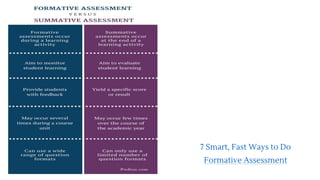
7 Smart, Fast Ways to Do
Formative Assessment
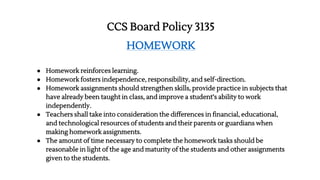
CCS Board Policy 3135
HOMEWORK
● Homework reinforces learning.
● Homework fosters independence, responsibility, and self-direction.
● Homework assignments should strengthen skills, provide practice in subjects that
have already been taught in class, and improve a student’s ability to work
independently.
● Teachers shall take into consideration the differences in financial, educational,
and technological resources of students and their parents or guardians when
making homework assignments.
● The amount of time necessary to complete the homework tasks should be
reasonable in light of the age and maturity of the students and other assignments
given to the students.
Cross-Curricular
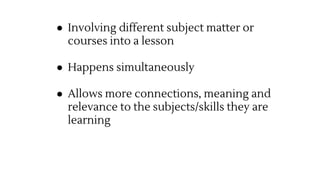
● Involving different subject matter or
courses into a lesson
● Happens simultaneously
● Allows more connections, meaning and
relevance to the subjects/skills they are
learning
Differentiation
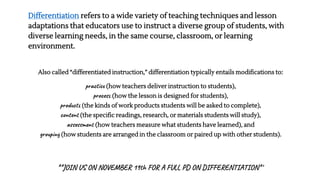
Differentiation refers to a wide variety of teaching techniques and lesson
adaptations that educators use to instruct a diverse group of students, with
diverse learning needs, in the same course, classroom, or learning
environment.
Also called “differentiated instruction,” differentiation typically entails modifications to:
practice (how teachers deliver instruction to students),
process (how the lesson is designed for students),
products (the kinds of work products students will be asked to complete),
content (the specific readings, research, or materials students will study),
assessment (how teachers measure what students have learned), and
grouping (how students are arranged in the classroom or paired up with other students).
**JOIN US ON NOVEMBER 19th FOR A FULL PD ON DIFFERENTIATION**
Technology
● Incorporate technology skills and
standards into your lessons if possible.
● All lessons do NOT have to include
technology.
Writing
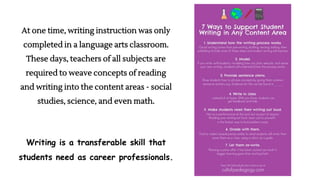
At one time, writing instruction was only
completed in a language arts classroom.
These days, teachers of all subjects are
required to weave concepts of reading
and writing into the content areas - social
studies, science, and even math.
Writing is a transferable skill that
students need as career professionals.
Career Skills
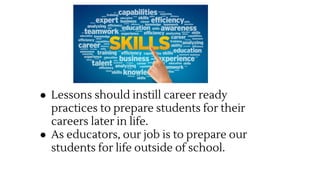
● Lessons should instill career ready
practices to prepare students for their
careers later in life.
● As educators, our job is to prepare our
students for life outside of school.
Additional
Resources
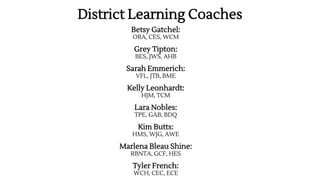
District Learning Coaches
Betsy Gatchel:
ORA, CES, WCM
Grey Tipton:
BES, JWS, AHB
Sarah Emmerich:
VFL, JTB, BME
Kelly Leonhardt:
HJM, TCM
Lara Nobles:
TPE, GAB, BDQ
Kim Butts:
HMS, WJG, AWE
Marlena Bleau Shine:
RBNTA, GCF, HES
Tyler French:
WCH, CEC, ECE
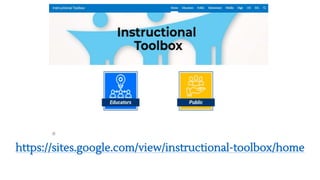
https://sites.google.com/view/instructional-toolbox/home
Lesson Planning Powerpoint - FINAL COPY.pptx

Lesson Planning Powerpoint - FINAL COPY.pptx

  • 1.
    Lesson Planning November 5th, 2020Beginning Teacher Professional Development
  • 2.
    A lesson planis a guide which helps execute a mission that is to be accomplished in the classroom with the children. A lesson plan can also be defined as a creative process which provides a framework for purposeful learning. What is a Lesson Plan? Credit: YouTube – NIOSSeniorSecondaryCourses
  • 3.
  • 4.
  • 5.
    Although there aretimes that recycling an old lesson plan may be appropriate, we ask that you NOT make that your routine. Just changing the date on a previously used plan isn’t good practice. What worked for one set of students may not work for another. Any old lesson plans that are “reused” need to be updated and revised to reflect current standards and to address the learning styles and needs of all students.
  • 6.
  • 7.
    ● Focus thepurpose of your lesson and subsequent planning ● Give you an outcome or goal ● Can help students understand the lesson purpose ● Combined with success criteria, objectives let you know when learning has happened ● Set the foundation for student-led academic discussion
  • 8.
    Standard Statements How wellstudents learn what is set out in the content standards, often called the "be able to do" or "what students should know and be able to do” and specify "how good is good enough." They are the indicators of quality that specify how adept or competent a student demonstration must be.
  • 9.
    SMART Learning Goals Specific Measurable Achievable Results- focused Time - bound Make Sure To POST Your Learning Goals
  • 10.
  • 11.
    Your plan: ● Shouldhave a beginning, middle and end ● Should be well written in a logical, sequential order ● Should involve collaboration through your Professional Learning Community (PLC)
  • 12.
  • 13.
    7 Smart, FastWays to Do Formative Assessment
  • 14.
    CCS Board Policy3135 HOMEWORK ● Homework reinforces learning. ● Homework fosters independence, responsibility, and self-direction. ● Homework assignments should strengthen skills, provide practice in subjects that have already been taught in class, and improve a student’s ability to work independently. ● Teachers shall take into consideration the differences in financial, educational, and technological resources of students and their parents or guardians when making homework assignments. ● The amount of time necessary to complete the homework tasks should be reasonable in light of the age and maturity of the students and other assignments given to the students.
  • 15.
  • 16.
    ● Involving differentsubject matter or courses into a lesson ● Happens simultaneously ● Allows more connections, meaning and relevance to the subjects/skills they are learning
  • 17.
  • 18.
    Differentiation refers toa wide variety of teaching techniques and lesson adaptations that educators use to instruct a diverse group of students, with diverse learning needs, in the same course, classroom, or learning environment. Also called “differentiated instruction,” differentiation typically entails modifications to: practice (how teachers deliver instruction to students), process (how the lesson is designed for students), products (the kinds of work products students will be asked to complete), content (the specific readings, research, or materials students will study), assessment (how teachers measure what students have learned), and grouping (how students are arranged in the classroom or paired up with other students). **JOIN US ON NOVEMBER 19th FOR A FULL PD ON DIFFERENTIATION**
  • 19.
  • 20.
    ● Incorporate technologyskills and standards into your lessons if possible. ● All lessons do NOT have to include technology.
  • 21.
  • 22.
    At one time,writing instruction was only completed in a language arts classroom. These days, teachers of all subjects are required to weave concepts of reading and writing into the content areas - social studies, science, and even math. Writing is a transferable skill that students need as career professionals.
  • 23.
  • 24.
    ● Lessons shouldinstill career ready practices to prepare students for their careers later in life. ● As educators, our job is to prepare our students for life outside of school.
  • 25.
  • 26.
    District Learning Coaches BetsyGatchel: ORA, CES, WCM Grey Tipton: BES, JWS, AHB Sarah Emmerich: VFL, JTB, BME Kelly Leonhardt: HJM, TCM Lara Nobles: TPE, GAB, BDQ Kim Butts: HMS, WJG, AWE Marlena Bleau Shine: RBNTA, GCF, HES Tyler French: WCH, CEC, ECE
  • 27.