Classes of Computers
Microcomputers (personal computers)
Microcomputers are the most common
type of computers used by people today,
whether in a workplace, at school or on the
desk at home. The term “microcomputer”
was introduced with the advent of single
chip microprocessors. The term
"microcomputer" itself is now practically an
anachronism.
These computers include:
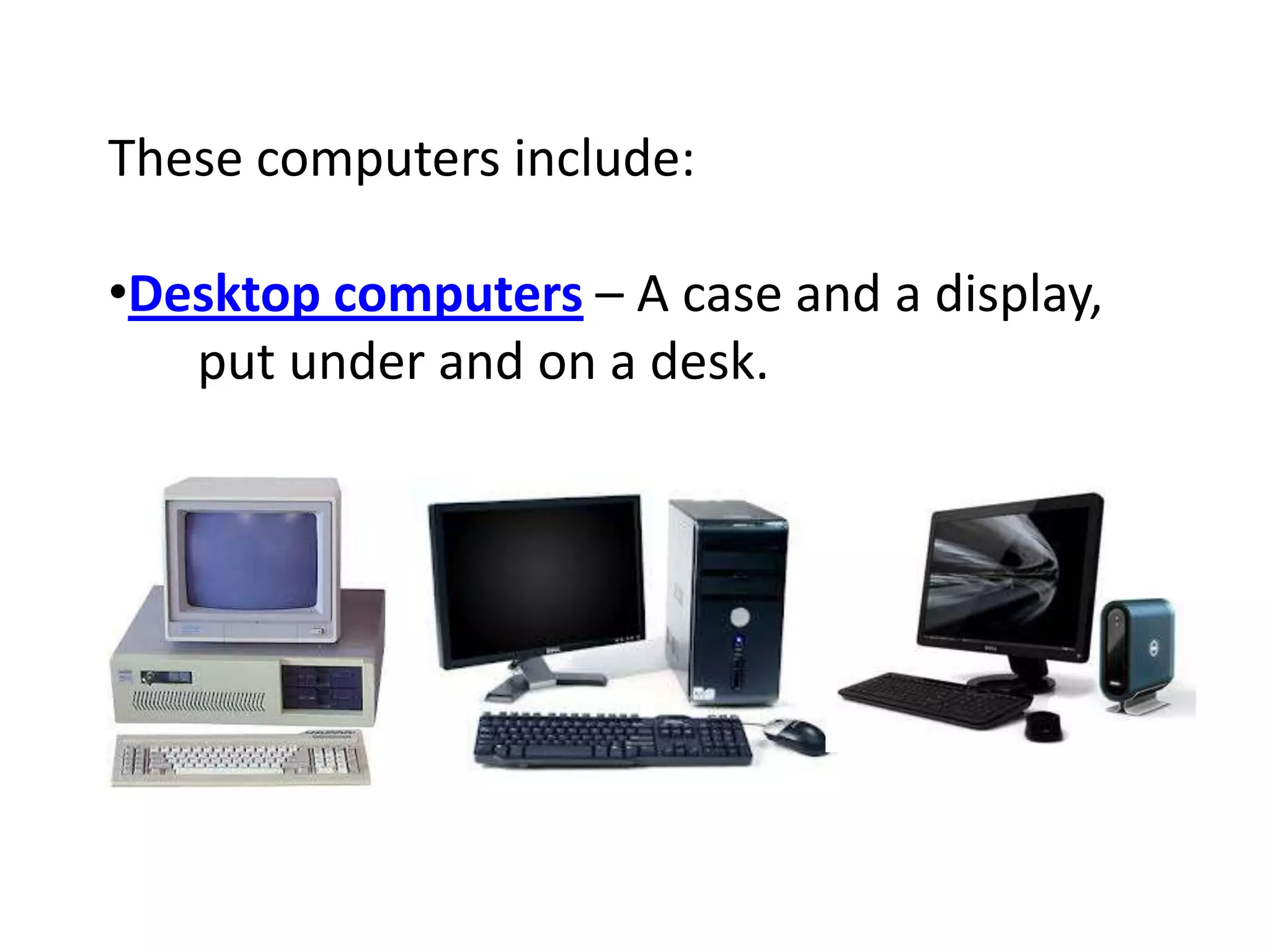
•Desktop computers – A case and a display,
put under and on a desk.
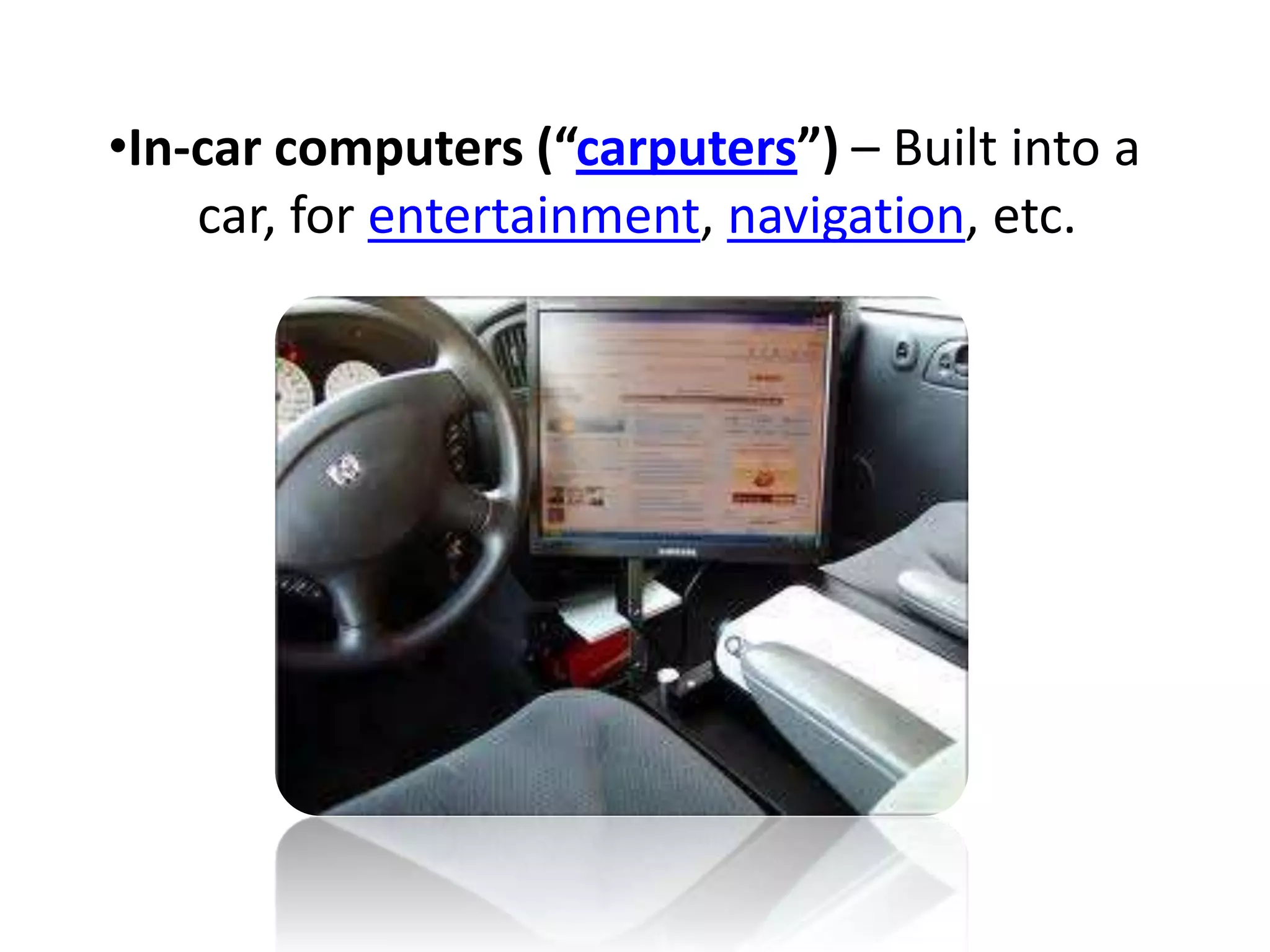
•In-car computers (“carputers”) – Built into a
car, for entertainment, navigation, etc.
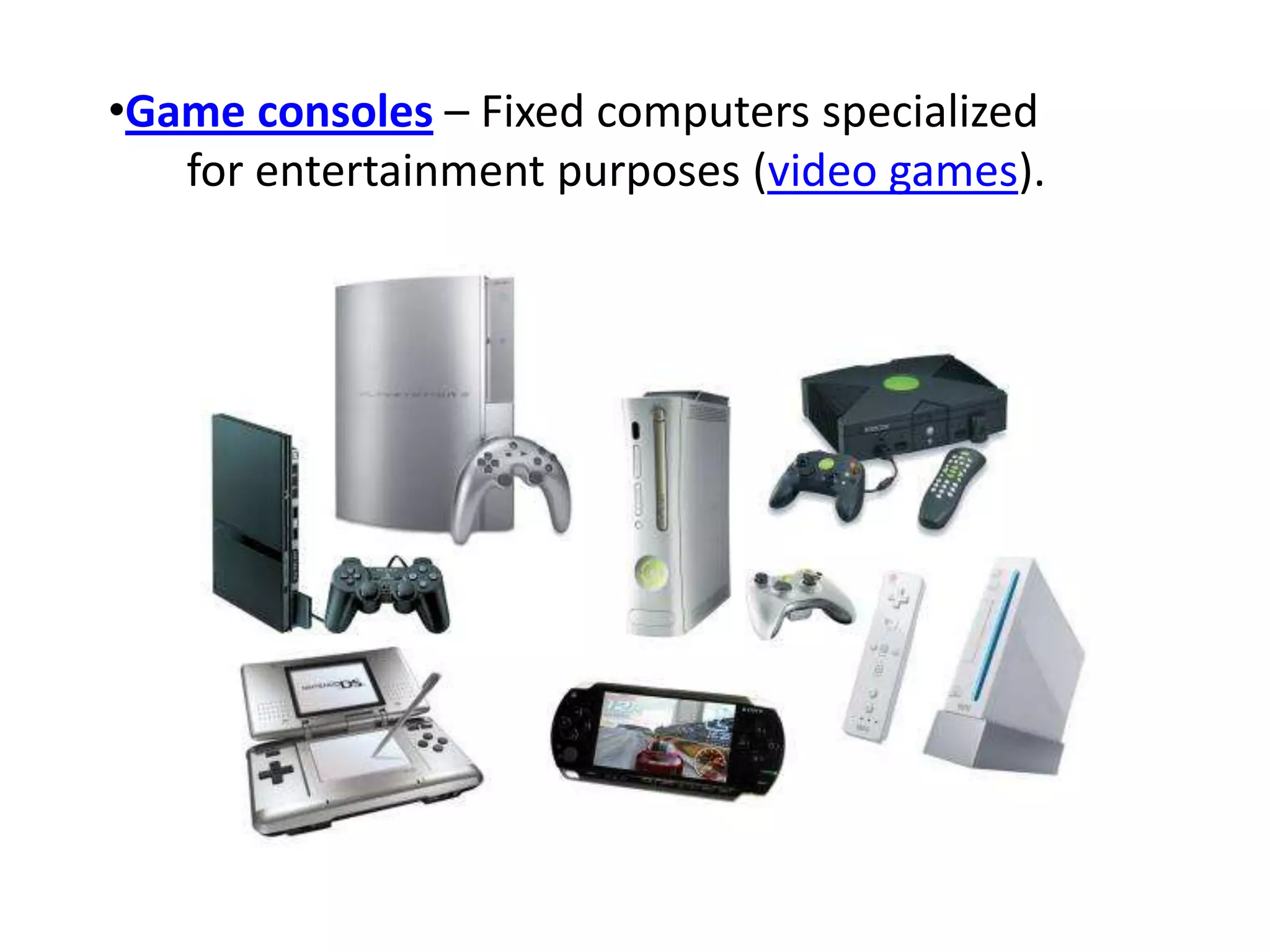
•Game consoles – Fixed computers specialized
for entertainment purposes (video games).
A separate class is that of mobile devices:
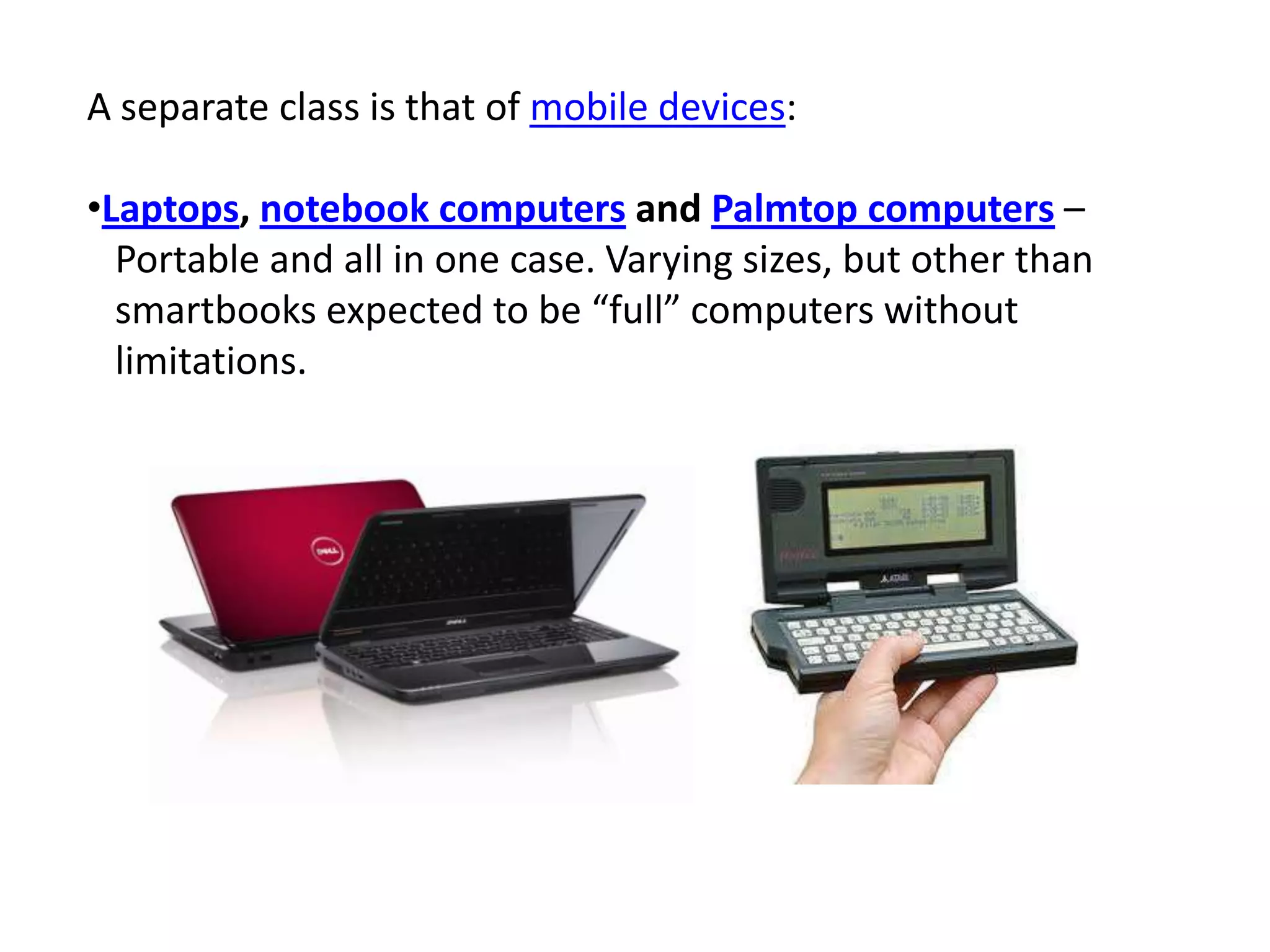
•Laptops, notebook computers and Palmtop computers –
Portable and all in one case. Varying sizes, but other than
smartbooks expected to be “full” computers without
limitations.
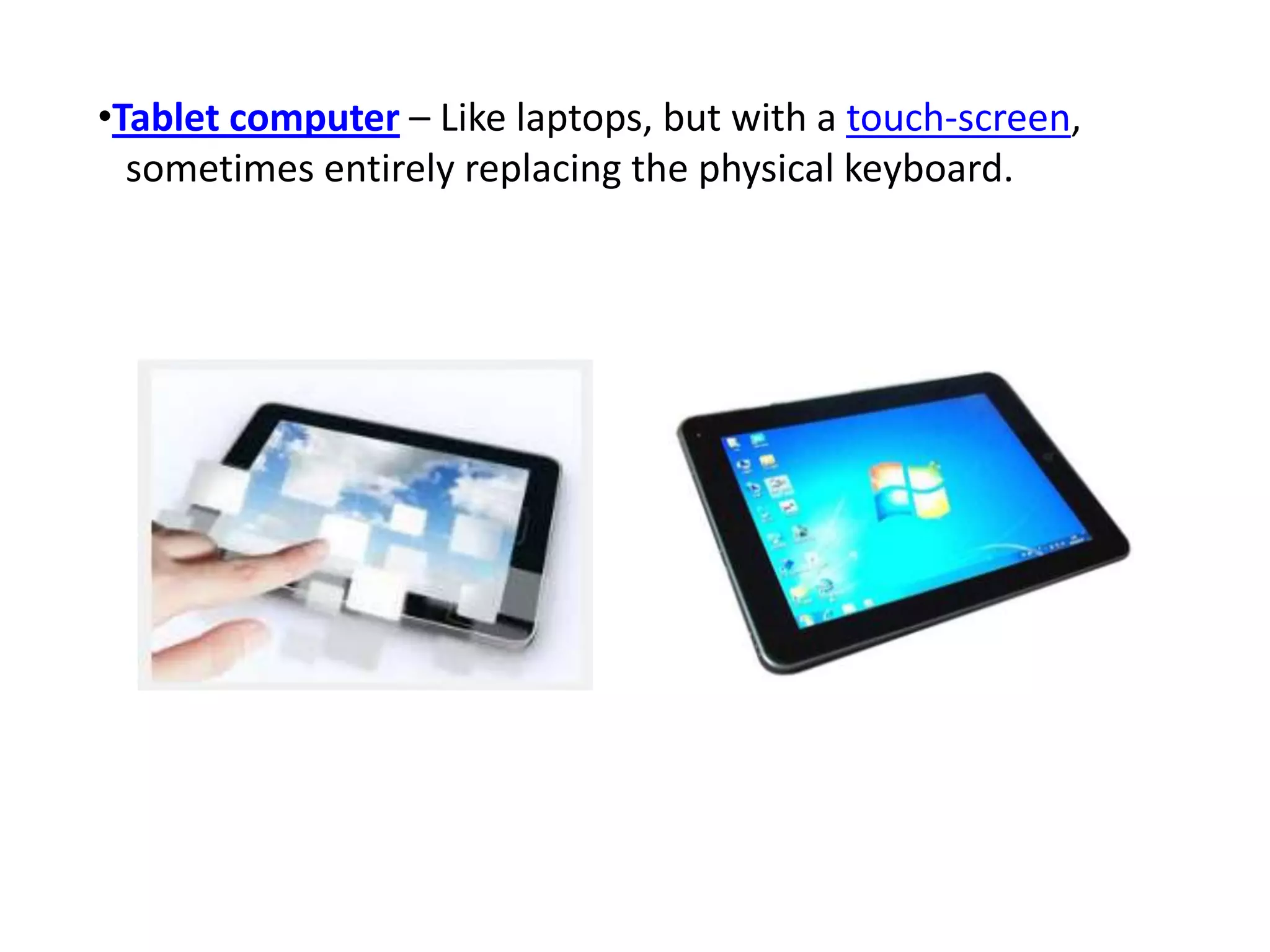
•Tablet computer – Like laptops, but with a touch-screen,
sometimes entirely replacing the physical keyboard.
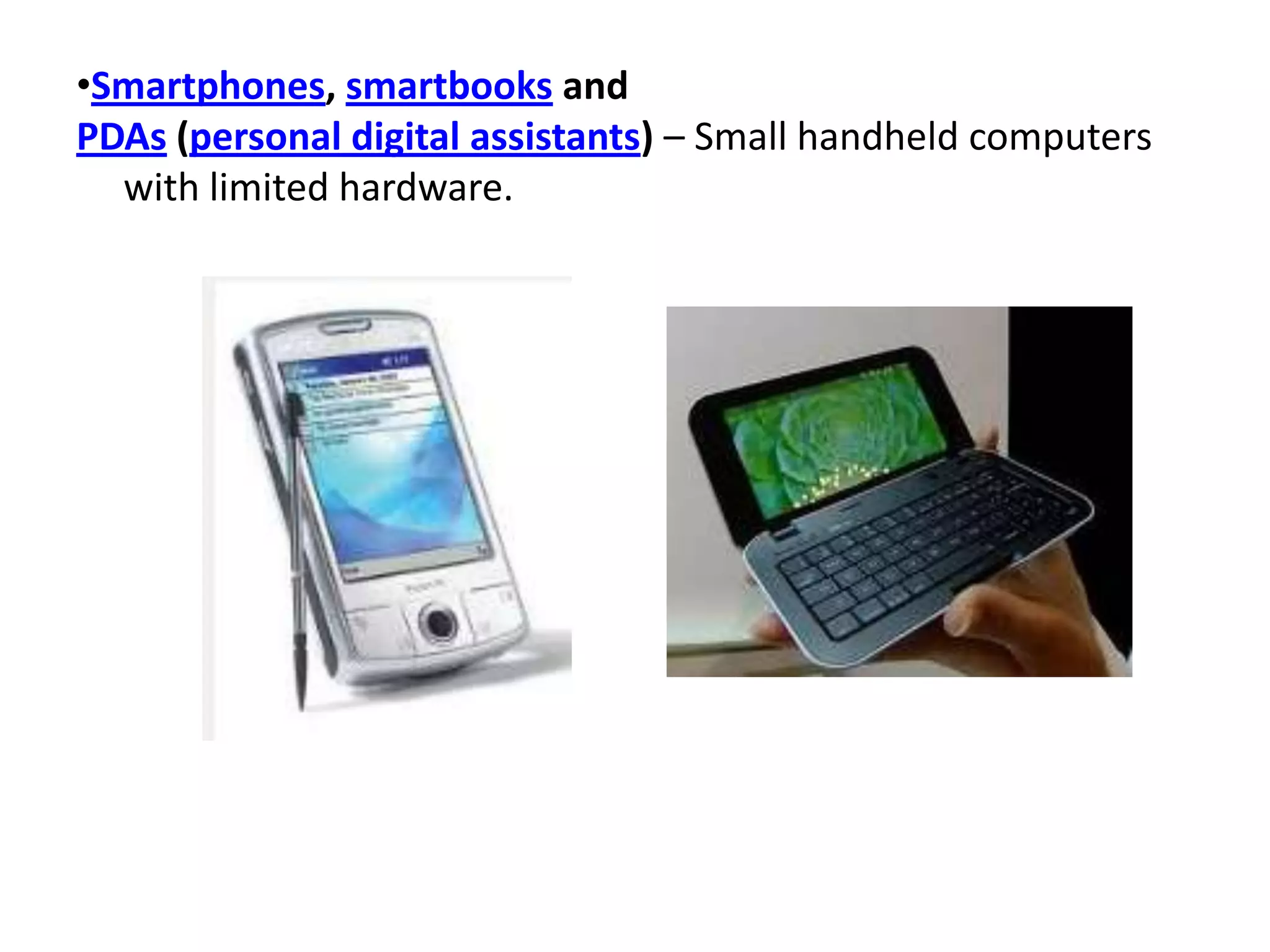
•Smartphones, smartbooks and
PDAs (personal digital assistants) – Small handheld computers
with limited hardware.
•Programmable calculator– Like small handhelds, but
specialized on mathematical work.
•Handheld game consoles – The same as game consoles, but
small and portable.
Minicomputers (midrange computers)
A minicomputer (colloquially, mini) is a class of multi-
user computers that lies in the middle range of the
computing spectrum, in between the smallest multi-
user systems (mainframe computers) and the largest
single-user systems (microcomputers or personal
computers). The contemporary term for this class of
system is midrange computer, such as the higher-end
SPARC, POWER and Itanium -based systems from
Oracle Corporation, IBM and Hewlett-Packard. E.g.-
Laboratory computers
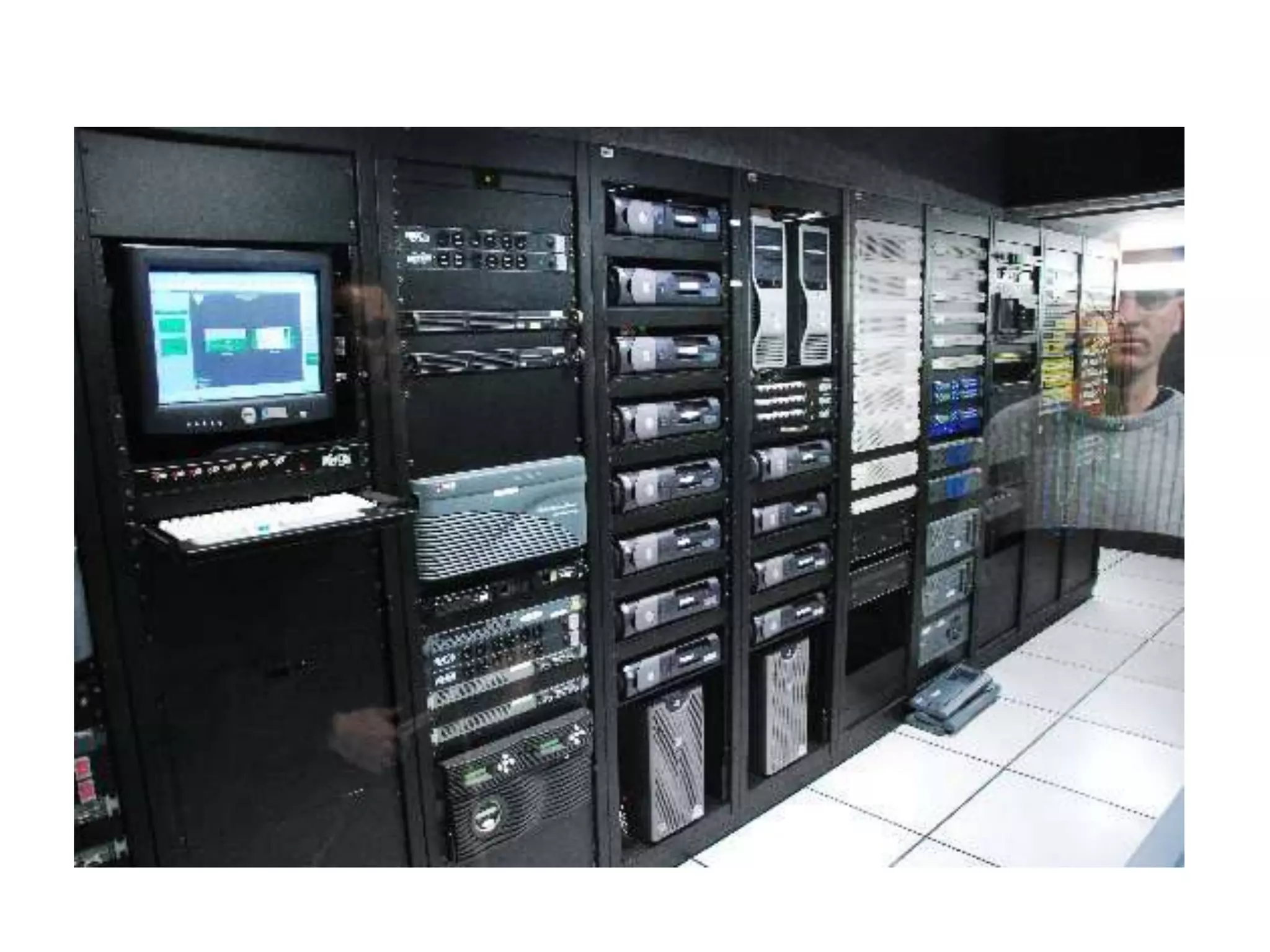
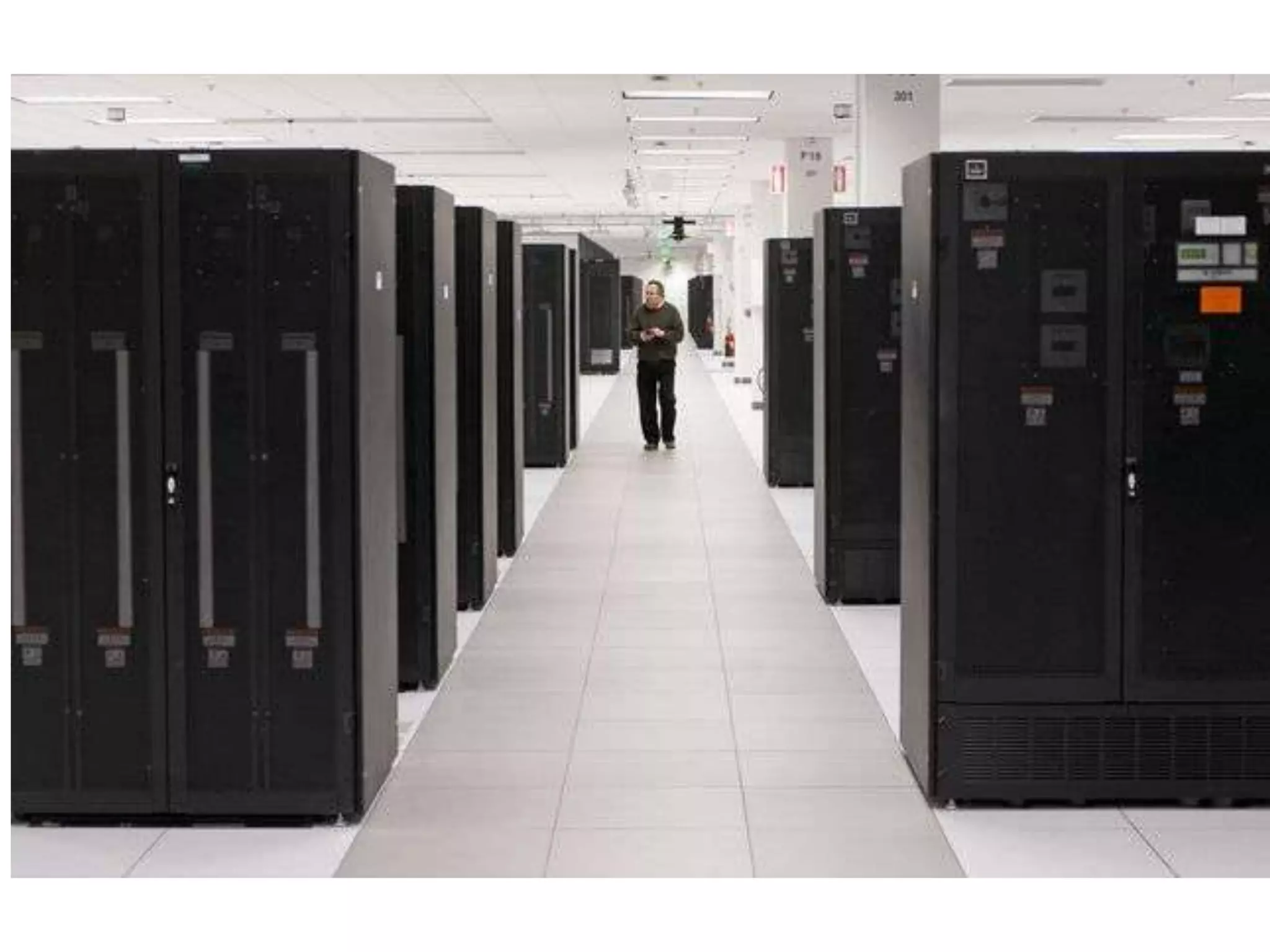
Mainframe computers
The term mainframe computer was created to
distinguish the traditional, large, institutional
computer intended to service multiple users from the
smaller, single user machines. These computers are
capable of handling and processing very large
amounts of data quickly. Mainframe computers are
used in large institutions such as government, banks
and large corporations. They are measured in MIPS
(million instructions per second) and respond to up to
100s of millions of users at a time.
Embedded computers
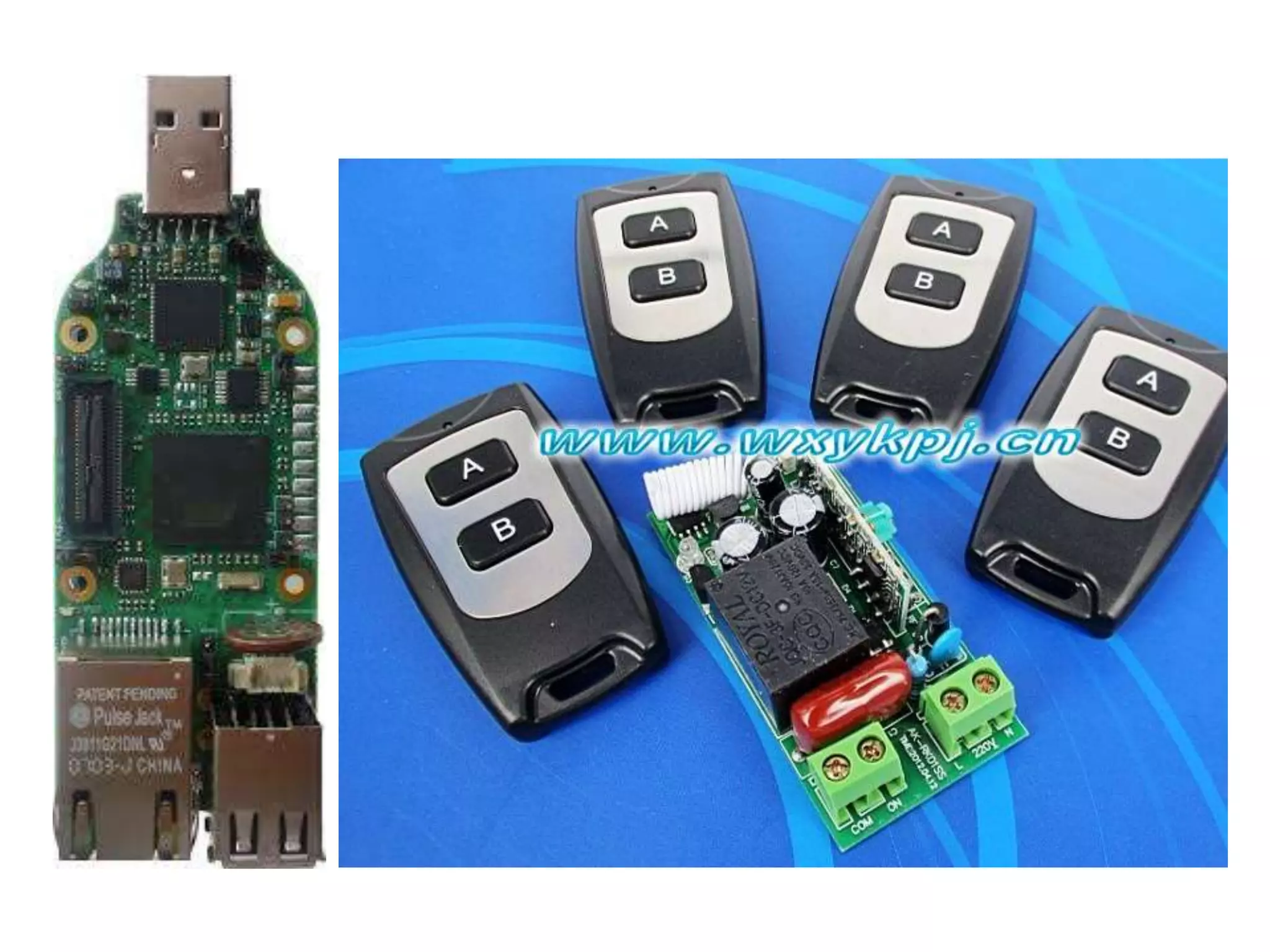
Embedded computers are computers that are a part of a
machine or device. Embedded computers generally execute a
program that is stored in non-volatile memory and is only
intended to operate a specific machine or device. Embedded
computers are very common. Embedded computers are
typically required to operate continuously without being reset
or rebooted, and once employed in their task the software
usually cannot be modified. An automobile may contain a
number of embedded computers; however, a washing machine
and a DVD player would contain only one. The central
processing units (CPUs) used in embedded computers are often
sufficient only for the computational requirements of the
specific application and may be slower and cheaper than CPUs
found in a personal computer.
Supercomputer
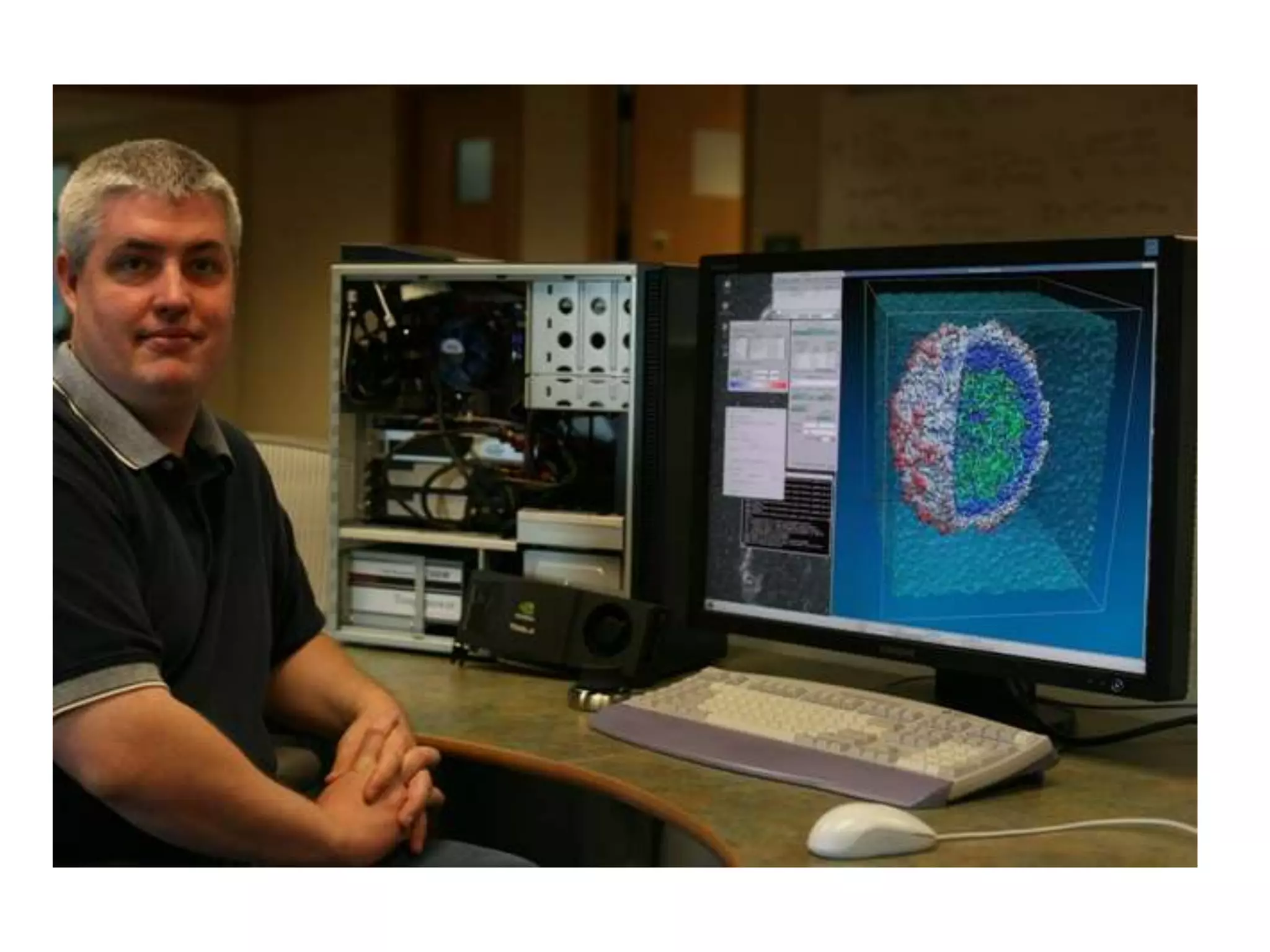
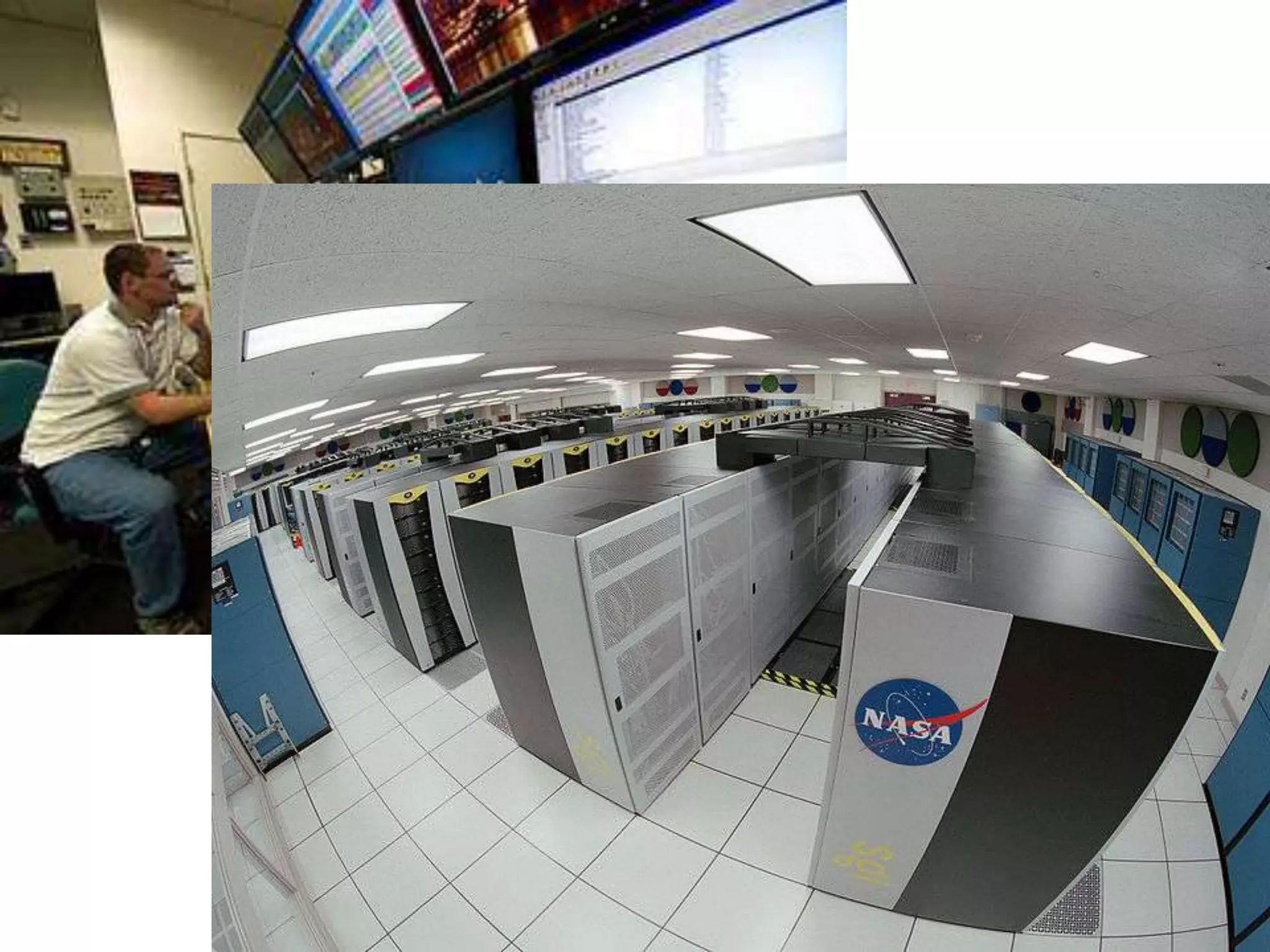
A supercomputer is focused on performing tasks involving intense
numerical calculations such as weather forecasting, fluid
dynamics, nuclear simulations, theoretical astrophysics, and
complex scientific computations. A supercomputer is a computer
that is at the frontline of current processing capacity, particularly
speed of calculation. The term supercomputer itself is rather
fluid, and the speed of today's supercomputers tends to become
typical of tomorrow's ordinary computer.
Lesson 5 types of computers

Lesson 5 types of computers

  • 1.
  • 2.
    Microcomputers (personal computers) Microcomputersare the most common type of computers used by people today, whether in a workplace, at school or on the desk at home. The term “microcomputer” was introduced with the advent of single chip microprocessors. The term "microcomputer" itself is now practically an anachronism.
  • 3.
    These computers include: •Desktopcomputers – A case and a display, put under and on a desk.
  • 4.
    •In-car computers (“carputers”)– Built into a car, for entertainment, navigation, etc.
  • 5.
    •Game consoles –Fixed computers specialized for entertainment purposes (video games).
  • 6.
    A separate classis that of mobile devices: •Laptops, notebook computers and Palmtop computers – Portable and all in one case. Varying sizes, but other than smartbooks expected to be “full” computers without limitations.
  • 7.
    •Tablet computer –Like laptops, but with a touch-screen, sometimes entirely replacing the physical keyboard.
  • 8.
    •Smartphones, smartbooks and PDAs(personal digital assistants) – Small handheld computers with limited hardware.
  • 9.
    •Programmable calculator– Likesmall handhelds, but specialized on mathematical work. •Handheld game consoles – The same as game consoles, but small and portable.
  • 10.
    Minicomputers (midrange computers) Aminicomputer (colloquially, mini) is a class of multi- user computers that lies in the middle range of the computing spectrum, in between the smallest multi- user systems (mainframe computers) and the largest single-user systems (microcomputers or personal computers). The contemporary term for this class of system is midrange computer, such as the higher-end SPARC, POWER and Itanium -based systems from Oracle Corporation, IBM and Hewlett-Packard. E.g.- Laboratory computers
  • 12.
    Mainframe computers The termmainframe computer was created to distinguish the traditional, large, institutional computer intended to service multiple users from the smaller, single user machines. These computers are capable of handling and processing very large amounts of data quickly. Mainframe computers are used in large institutions such as government, banks and large corporations. They are measured in MIPS (million instructions per second) and respond to up to 100s of millions of users at a time.
  • 15.
    Embedded computers Embedded computersare computers that are a part of a machine or device. Embedded computers generally execute a program that is stored in non-volatile memory and is only intended to operate a specific machine or device. Embedded computers are very common. Embedded computers are typically required to operate continuously without being reset or rebooted, and once employed in their task the software usually cannot be modified. An automobile may contain a number of embedded computers; however, a washing machine and a DVD player would contain only one. The central processing units (CPUs) used in embedded computers are often sufficient only for the computational requirements of the specific application and may be slower and cheaper than CPUs found in a personal computer.
  • 17.
    Supercomputer A supercomputer isfocused on performing tasks involving intense numerical calculations such as weather forecasting, fluid dynamics, nuclear simulations, theoretical astrophysics, and complex scientific computations. A supercomputer is a computer that is at the frontline of current processing capacity, particularly speed of calculation. The term supercomputer itself is rather fluid, and the speed of today's supercomputers tends to become typical of tomorrow's ordinary computer.