Understanding our Shared Generational Lens Module
                                Lesson IV | Diversity
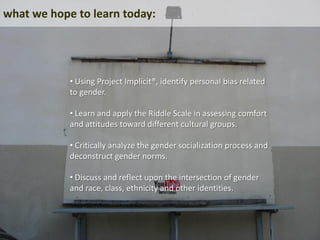
what we hope to learn today:


            • Using Project Implicit®, identify personal bias related
            to gender.

            • Learn and apply the Riddle Scale in assessing comfort
            and attitudes toward different cultural groups.

            • Critically analyze the gender socialization process and
            deconstruct gender norms.

            • Discuss and reflect upon the intersection of gender
            and race, class, ethnicity and other identities.
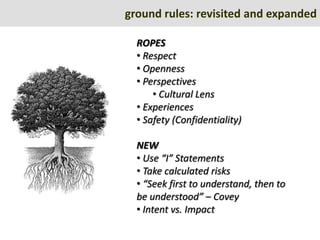
ground rules: revisited and expanded

  ROPES
  • Respect
  • Openness
  • Perspectives
      • Cultural Lens
  • Experiences
  • Safety (Confidentiality)

  NEW
  • Use “I” Statements
  • Take calculated risks
  • “Seek first to understand, then to
  be understood” – Covey
  • Intent vs. Impact
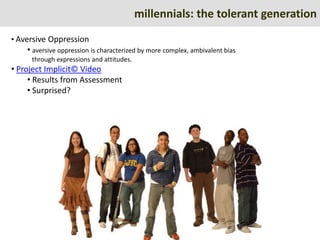
millennials: the tolerant generation
• Aversive Oppression
    • aversive oppression is characterized by more complex, ambivalent bias
     through expressions and attitudes.
• Project Implicit© Video
     • Results from Assessment
     • Surprised?
riddle scale: attitudes toward difference

Negative Levels of Attitudes:
1. Repulsion: Homosexuality is seen as a “crime against nature.” Gay/lesbians are sick, crazy,
immoral, sinful, wicked, etc.
2. Pity: Heterosexual chauvinism. Heterosexuality is more mature and certainly to be preferred.
3. Tolerance: Homosexuality is just a phase of adolescent development that many people go
through and most people “grow out of”. Thus lesbians/gays are less mature than “straights” and
should be treated with the protectiveness and indulgence one uses with a child.
4. Acceptance: Still implies there is something to accept. Characterized by such statements as
“You’re not a lesbian to me, you’re a person!” or “What you do in bed is your own business”

Positive Levels of Attitudes:
1. Support: Work to safeguard the rights of lesbians and gays. People at this level may be
uncomfortable themselves, but they are aware of homophobic climate and the irrational
unfairness.
2. Admiration: Acknowledges that being lesbian/gay in our society takes strength. People at this
level are willing to truly examine their homophobic attitudes, values, and behaviors.
3. Appreciation: Value the diversity of people and see lesbian/gays as a valid part of that
diversity. These people are willing to combat homophobia in themselves and others.
4. Nurturance: Assumes that gay/lesbian people are indispensable in our society. They view
lesbians/gays with genuine affection and delight, and are willing to be allies and advocates.
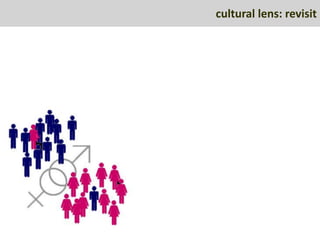
cultural lens: revisit
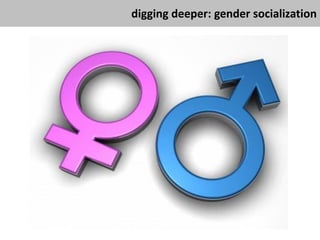
digging deeper: gender socialization
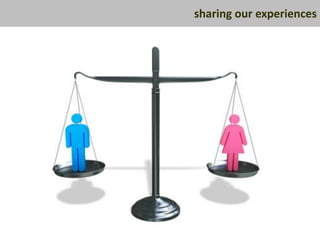
sharing our experiences
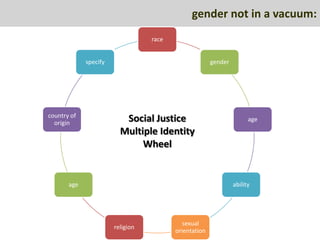
gender not in a vacuum:
                                  race


             specify                                   gender


country of
  origin
                          Social Justice                              age
                         Multiple Identity
                              Wheel


       age                                                      ability


                                            sexual
                       religion
                                         orientation
closing:

Homework

    1. Pick one of two prompts:
               • “Where I come from…”
               • “I am…”
    Keep in mind the Social Justice Wheel when
    writing this – at least one - page reflection on your
    holistic identity.

    2. What I learned and what I am going to do with
       it… (Action Plan Questions)

Closing

1. Explain Mentor Family Gender Activities

2. Next Lesson

Lesson 4 Diversity

  • 1.
    Understanding our SharedGenerational Lens Module Lesson IV | Diversity
  • 2.
    what we hopeto learn today: • Using Project Implicit®, identify personal bias related to gender. • Learn and apply the Riddle Scale in assessing comfort and attitudes toward different cultural groups. • Critically analyze the gender socialization process and deconstruct gender norms. • Discuss and reflect upon the intersection of gender and race, class, ethnicity and other identities.
  • 3.
    ground rules: revisitedand expanded ROPES • Respect • Openness • Perspectives • Cultural Lens • Experiences • Safety (Confidentiality) NEW • Use “I” Statements • Take calculated risks • “Seek first to understand, then to be understood” – Covey • Intent vs. Impact
  • 4.
    millennials: the tolerantgeneration • Aversive Oppression • aversive oppression is characterized by more complex, ambivalent bias through expressions and attitudes. • Project Implicit© Video • Results from Assessment • Surprised?
  • 5.
    riddle scale: attitudestoward difference Negative Levels of Attitudes: 1. Repulsion: Homosexuality is seen as a “crime against nature.” Gay/lesbians are sick, crazy, immoral, sinful, wicked, etc. 2. Pity: Heterosexual chauvinism. Heterosexuality is more mature and certainly to be preferred. 3. Tolerance: Homosexuality is just a phase of adolescent development that many people go through and most people “grow out of”. Thus lesbians/gays are less mature than “straights” and should be treated with the protectiveness and indulgence one uses with a child. 4. Acceptance: Still implies there is something to accept. Characterized by such statements as “You’re not a lesbian to me, you’re a person!” or “What you do in bed is your own business” Positive Levels of Attitudes: 1. Support: Work to safeguard the rights of lesbians and gays. People at this level may be uncomfortable themselves, but they are aware of homophobic climate and the irrational unfairness. 2. Admiration: Acknowledges that being lesbian/gay in our society takes strength. People at this level are willing to truly examine their homophobic attitudes, values, and behaviors. 3. Appreciation: Value the diversity of people and see lesbian/gays as a valid part of that diversity. These people are willing to combat homophobia in themselves and others. 4. Nurturance: Assumes that gay/lesbian people are indispensable in our society. They view lesbians/gays with genuine affection and delight, and are willing to be allies and advocates.
  • 6.
  • 7.
  • 8.
  • 9.
    gender not ina vacuum: race specify gender country of origin Social Justice age Multiple Identity Wheel age ability sexual religion orientation
  • 10.
    closing: Homework 1. Pick one of two prompts: • “Where I come from…” • “I am…” Keep in mind the Social Justice Wheel when writing this – at least one - page reflection on your holistic identity. 2. What I learned and what I am going to do with it… (Action Plan Questions) Closing 1. Explain Mentor Family Gender Activities 2. Next Lesson