POWER and
ACCOUNTABILITY
MR. KENNY L. AUXILIO
The Nature and Dimensions of Power
•It is generally defined as the ability of a person
to carry out his or her will.
•In politics, it refers to the ability to exercise
control or impose restrictions over individuals,
as well as compel other people to do certain
tasks.
•It is closely tied to the concept of authority,
which is the right to exercise power in society.
P
O
W
E
R
FORMS OF POWER
(French & Raven)
Social psychologists John French and Bertram
Raven view power as based on the perception and
understanding of the various participants in society.
Each member of a group or society recognizes that
certain individuals in their group posses a degree of
power based on the nature of their relationships
with other member of the group.
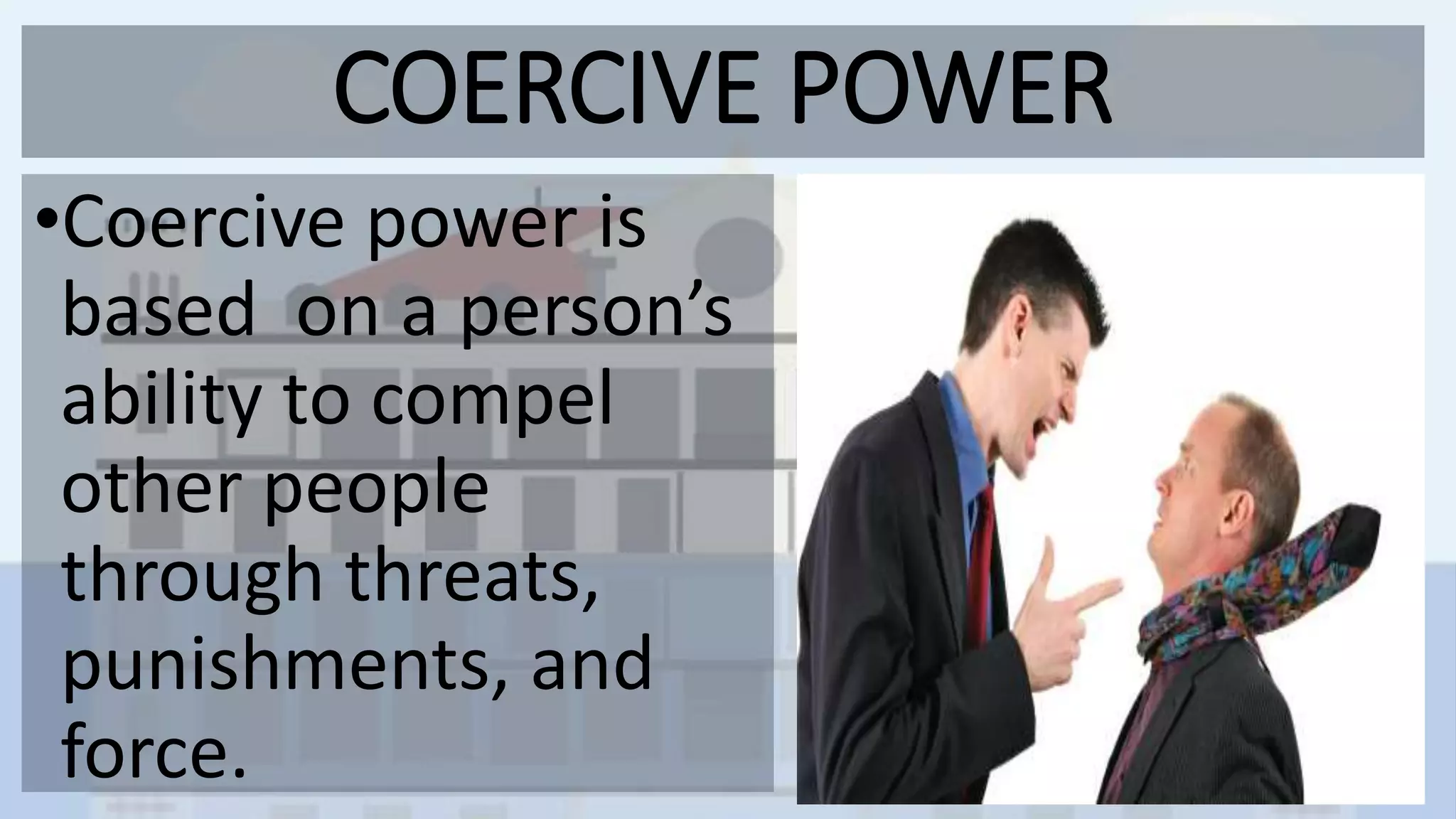
COERCIVE POWER
•Coercive power is
based on a person’s
ability to compel
other people
through threats,
punishments, and
force.
REWARD POWER
•Reward power is based on
the ability to give rewards
and benefits.
•It is the power of the manager
to give some type of reward
to an employee as a means to
influence the employee to
act. Rewards could be
tangible and intangible.
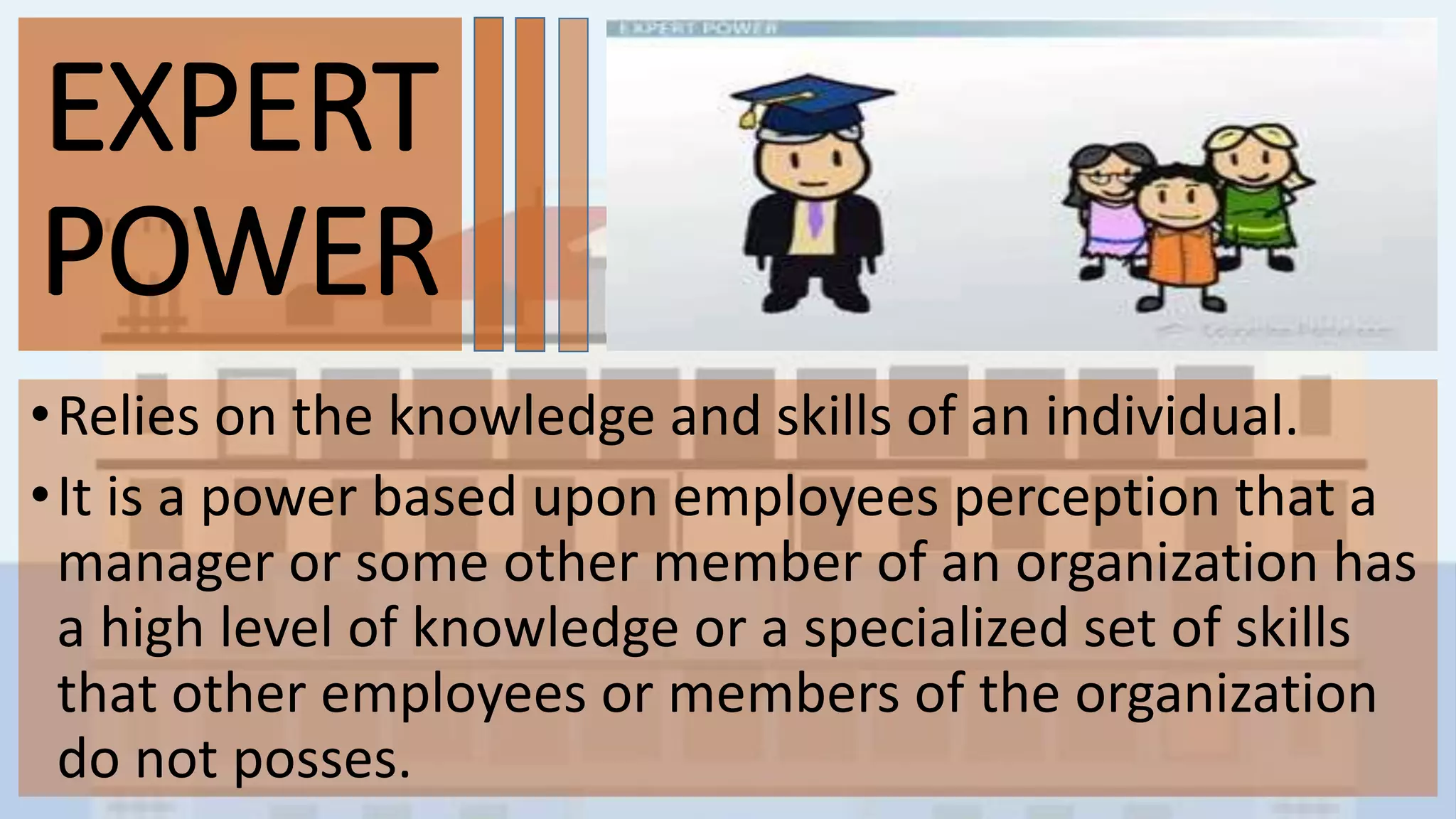
EXPERT
POWER
•Relies on the knowledge and skills of an individual.
•It is a power based upon employees perception that a
manager or some other member of an organization has
a high level of knowledge or a specialized set of skills
that other employees or members of the organization
do not posses.
EXPERT
POWER
LEGITIMATE
POWER
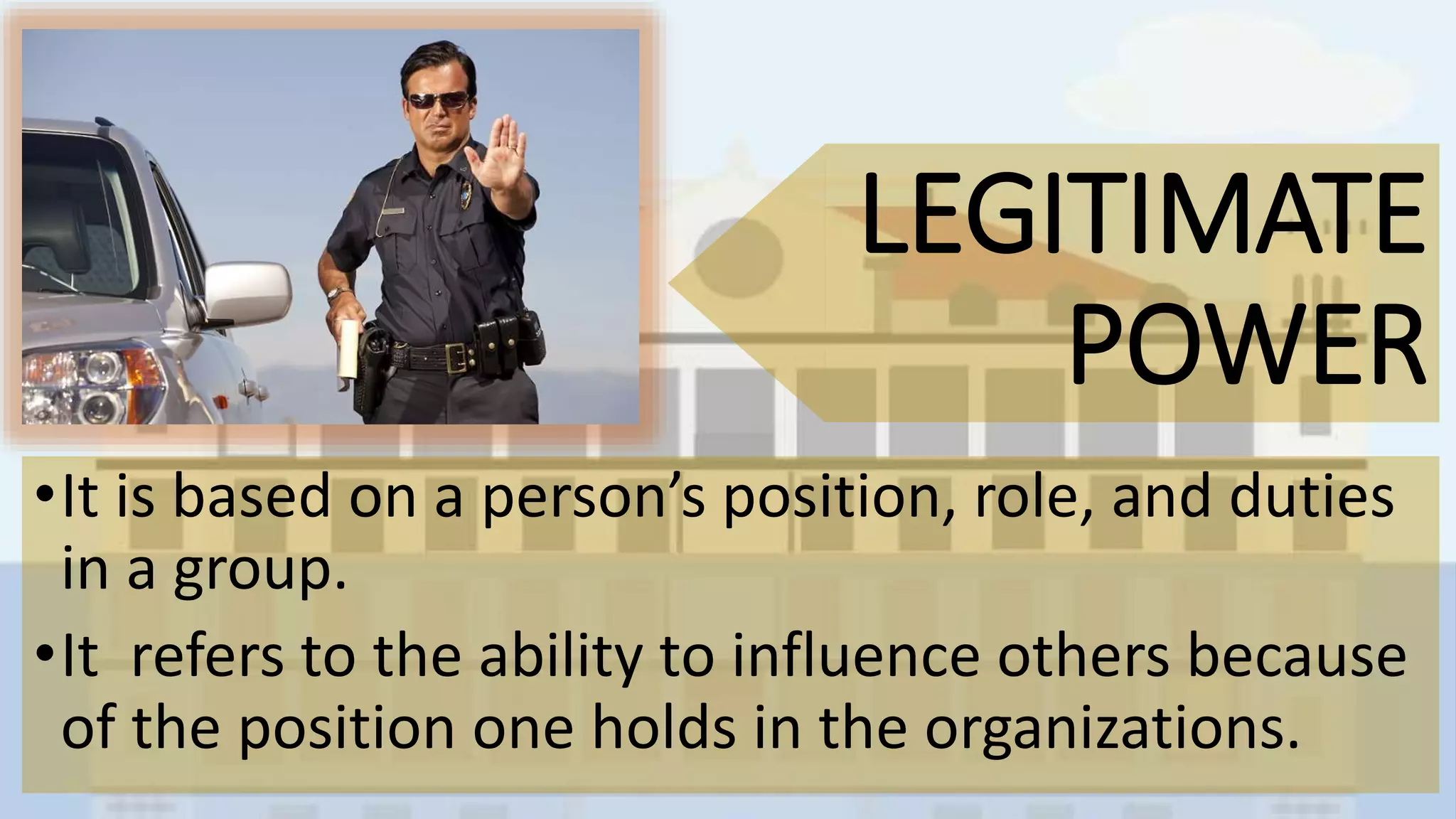
•It is based on a person’s position, role, and duties
in a group.
•It refers to the ability to influence others because
of the position one holds in the organizations.
REFERENT
POWER
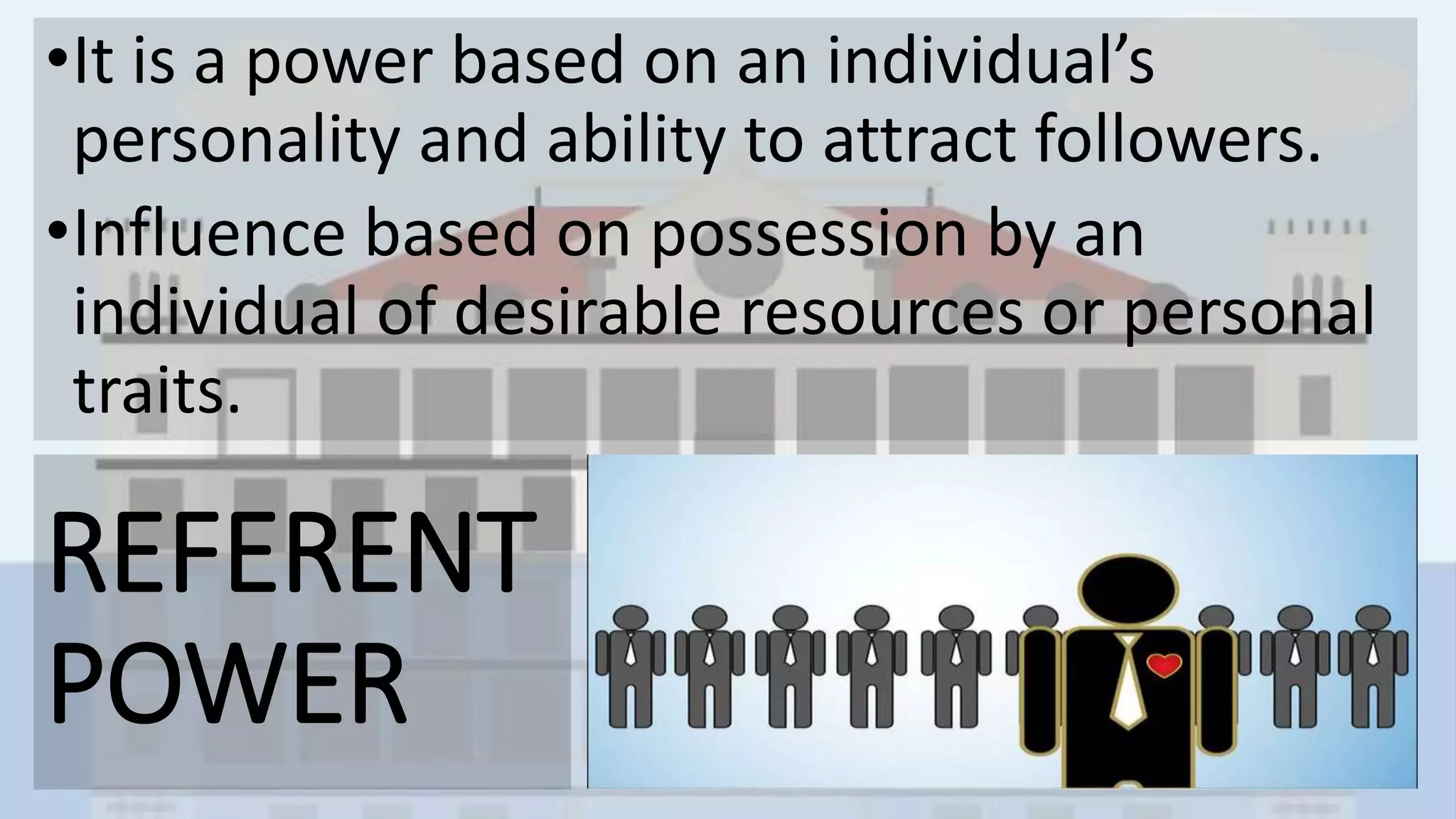
•It is a power based on an individual’s
personality and ability to attract followers.
•Influence based on possession by an
individual of desirable resources or personal
traits.
CLASSIFICATION OF POWER
(Max Weber)
•Charismatic authority
•Traditional authority
•Legal-rational authority
CHARISMATIC AUTHORITY
• s
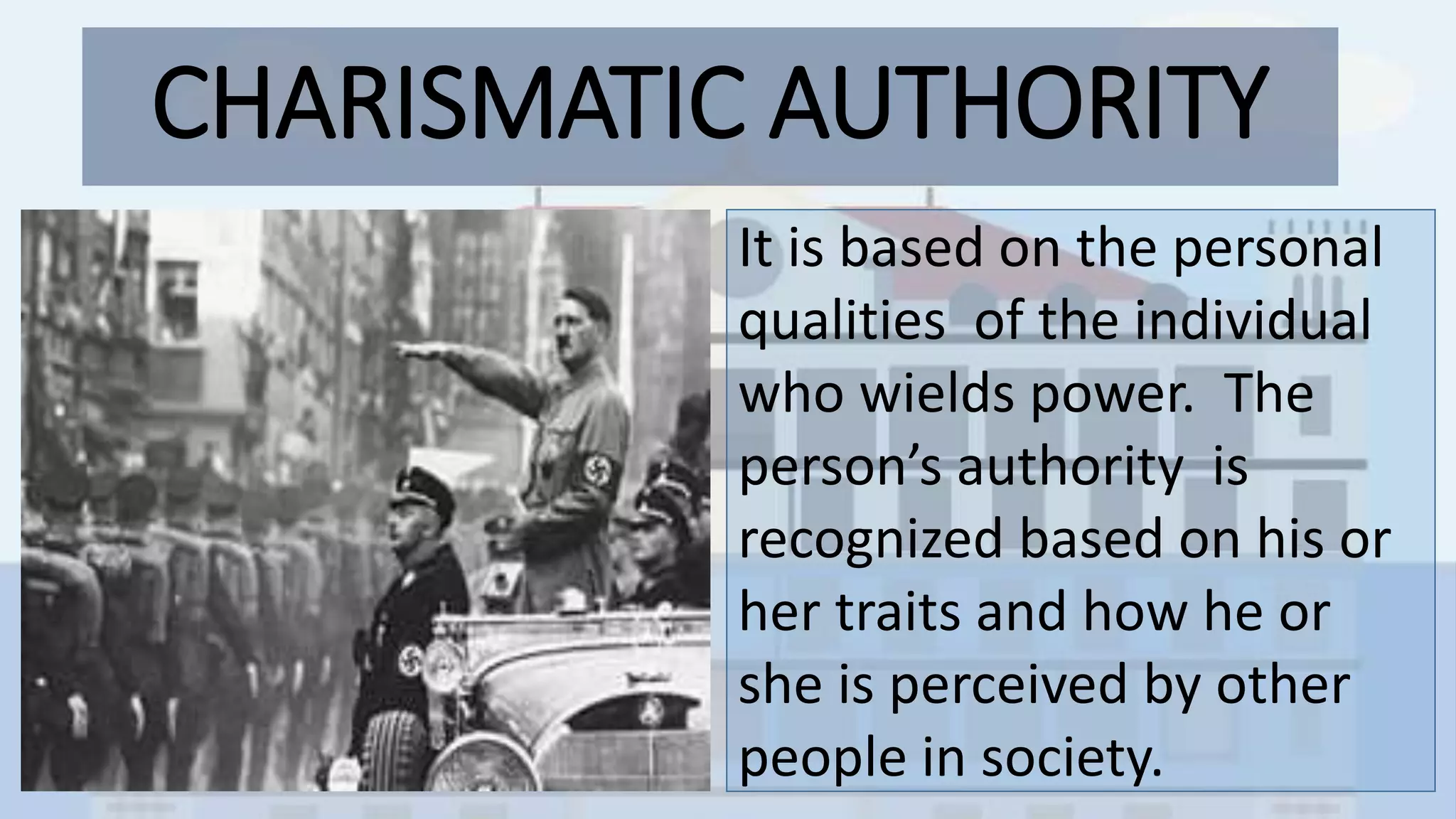
It is based on the personal
qualities of the individual
who wields power. The
person’s authority is
recognized based on his or
her traits and how he or
she is perceived by other
people in society.
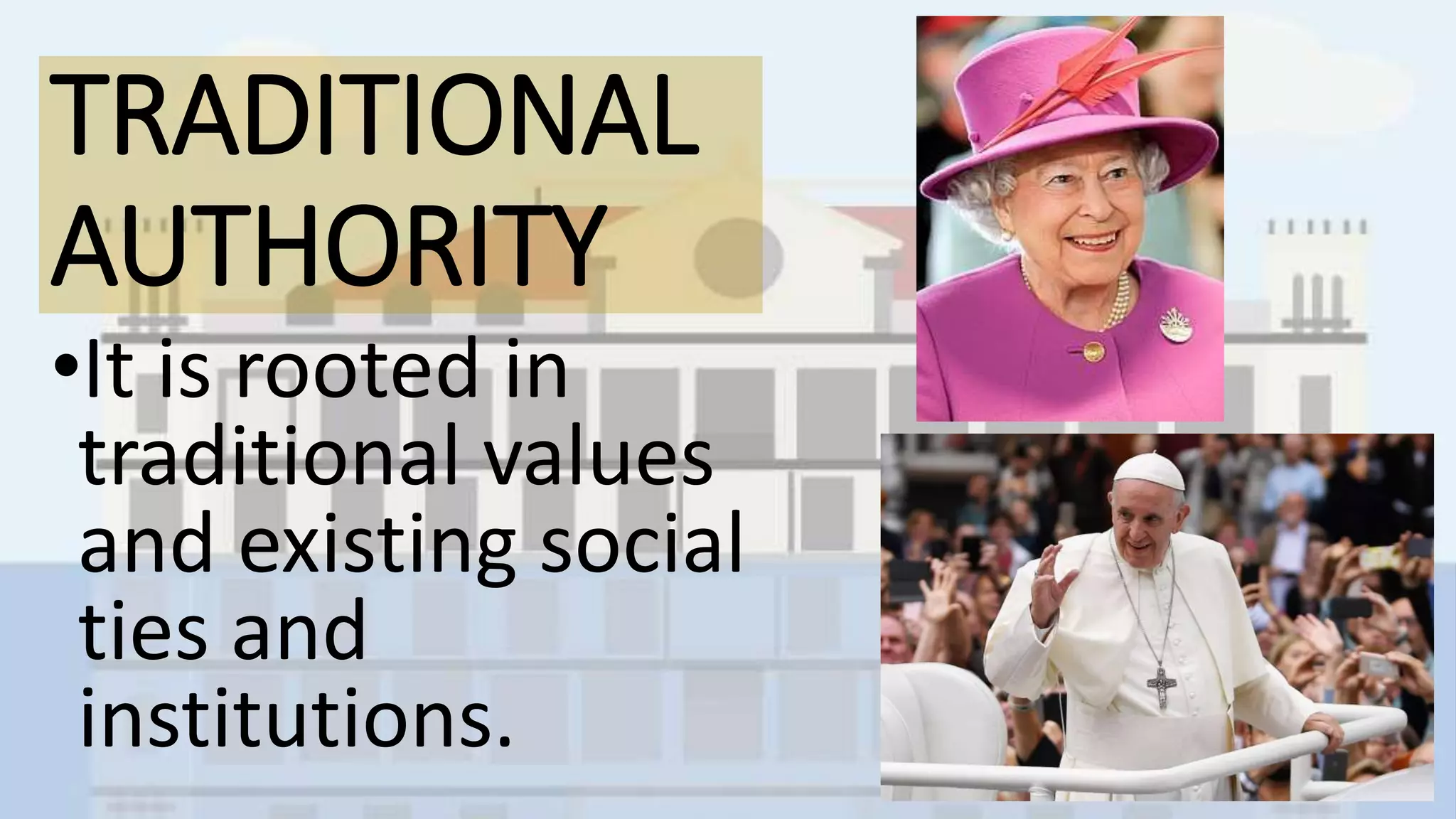
TRADITIONAL
AUTHORITY
•It is rooted in
traditional values
and existing social
ties and
institutions.
LEGAL-RATIONAL AUTHORITY
•It is based on a system of laws and
regulations, and an established bureaucracy.
A person is able to exercise because he or
she has been empowered by law. Power, in
this context, depends on an individual’s
position in the social hierarchy, and the
roles and responsibilities that come with
this position.
Power, Legitimacy and the Government
• In politics, the concept of power is closely related to
the state, government, governance, and citizenship.
• Political power is understood to refer to sovereignty
which is the power of the government to perform its
function and conduct affairs without interference
from outside forces.
• Sovereignty also refers to the authority to exercise
control over a group or society.
•Sovereignty resides in the individuals that
compose society. This became the basis
for the democratic ideal of a government
“of the people, by the people, and for the
people”.
•Participation in a direct democracy,
election, initiatives, plebiscite, referendum
and organization of advocacy group.
LEGITIMACY
•Authority within a political context is closely tied
to concept of legitimacy, which is the
acceptance or recognition of the right to exercise
power.
•Legitimacy is generally based on existing laws,
customs, and traditions that are prevalent to a
certain society.
GOVERNMENT
•Whatever the form of government that
is implemented in a state, democracy
assumes that the elected
representatives in the government and
the appointed officials borrow power
from the sovereign people.
POWER and GOVERNANCE
•POLICE POWER
•EMINENT DOMAIN
•POWER OF TAXATION
•MILITARY POWER
•ECONOMIC POWER
•PSYCHOLOGICAL POWER
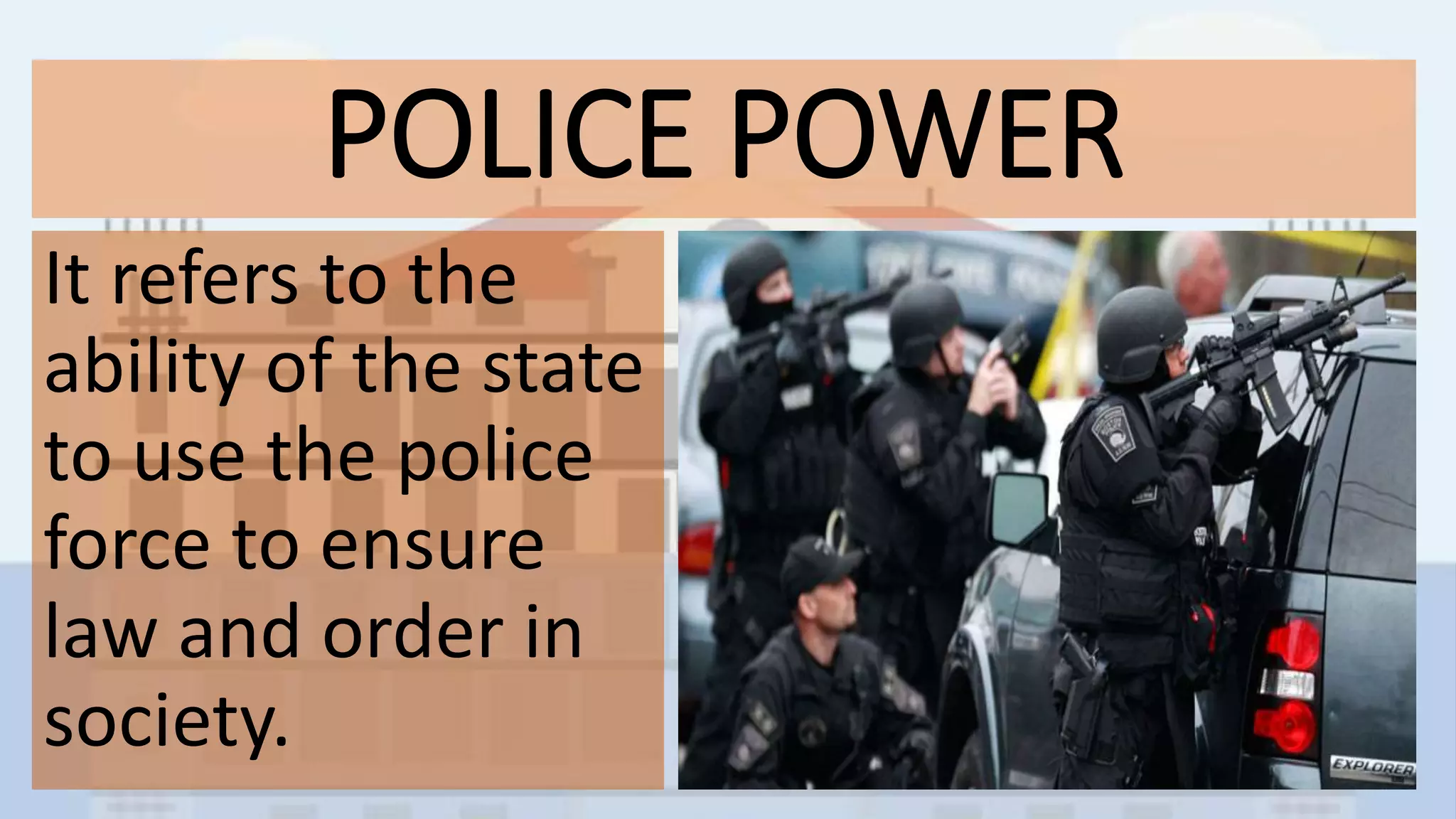
POLICE POWER
It refers to the
ability of the state
to use the police
force to ensure
law and order in
society.
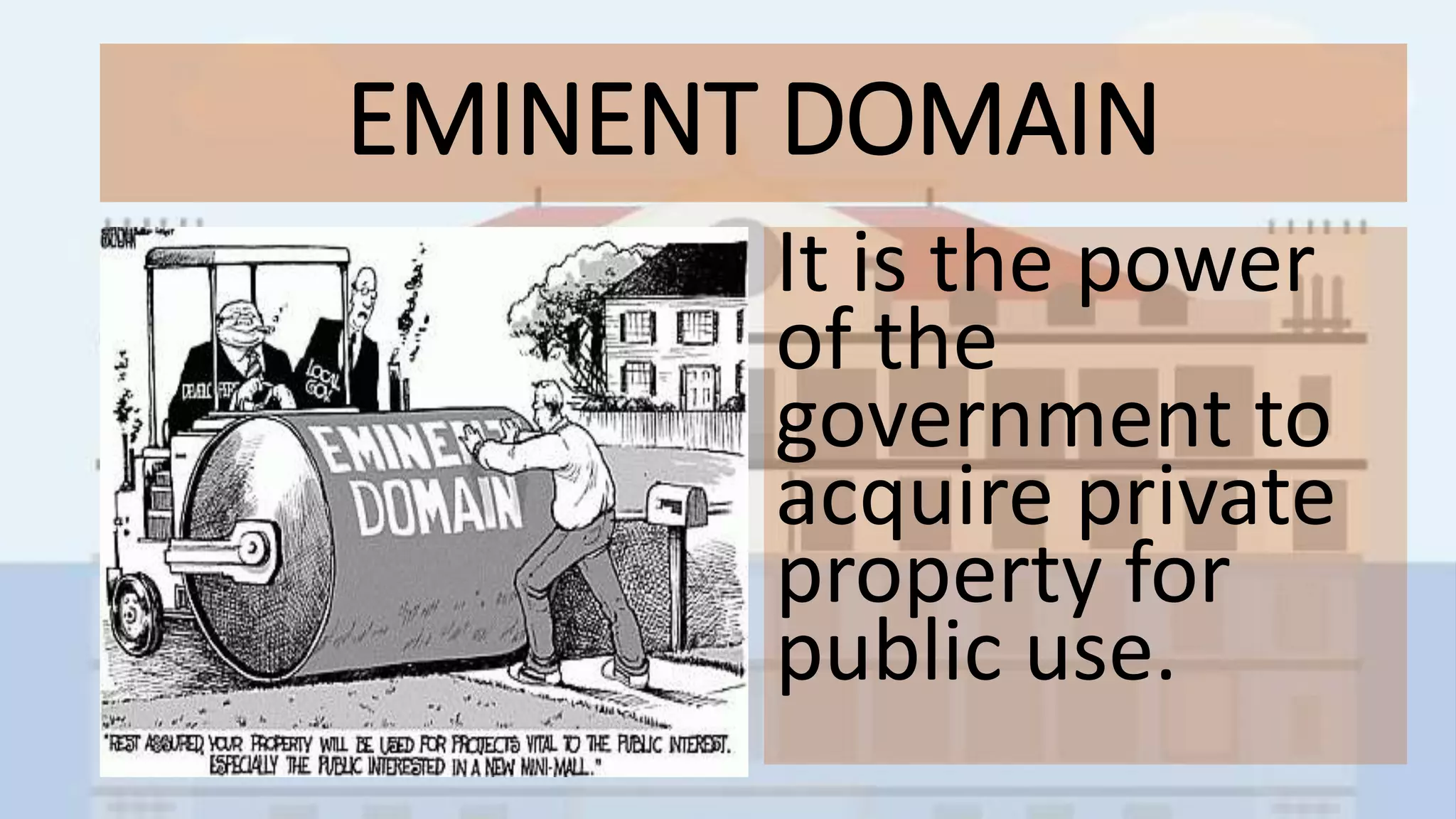
EMINENT DOMAIN
It is the power
of the
government to
acquire private
property for
public use.
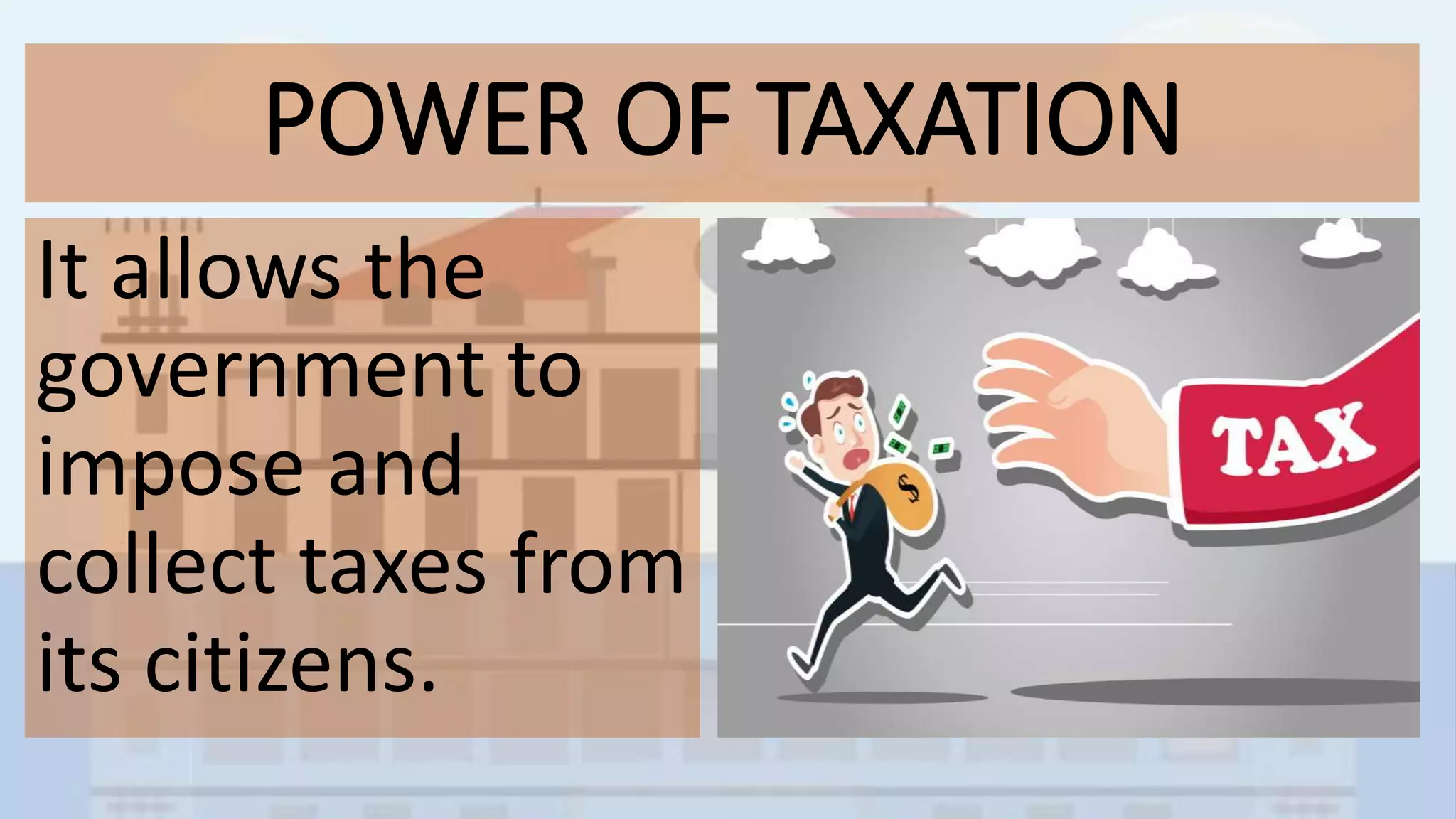
POWER OF TAXATION
It allows the
government to
impose and
collect taxes from
its citizens.
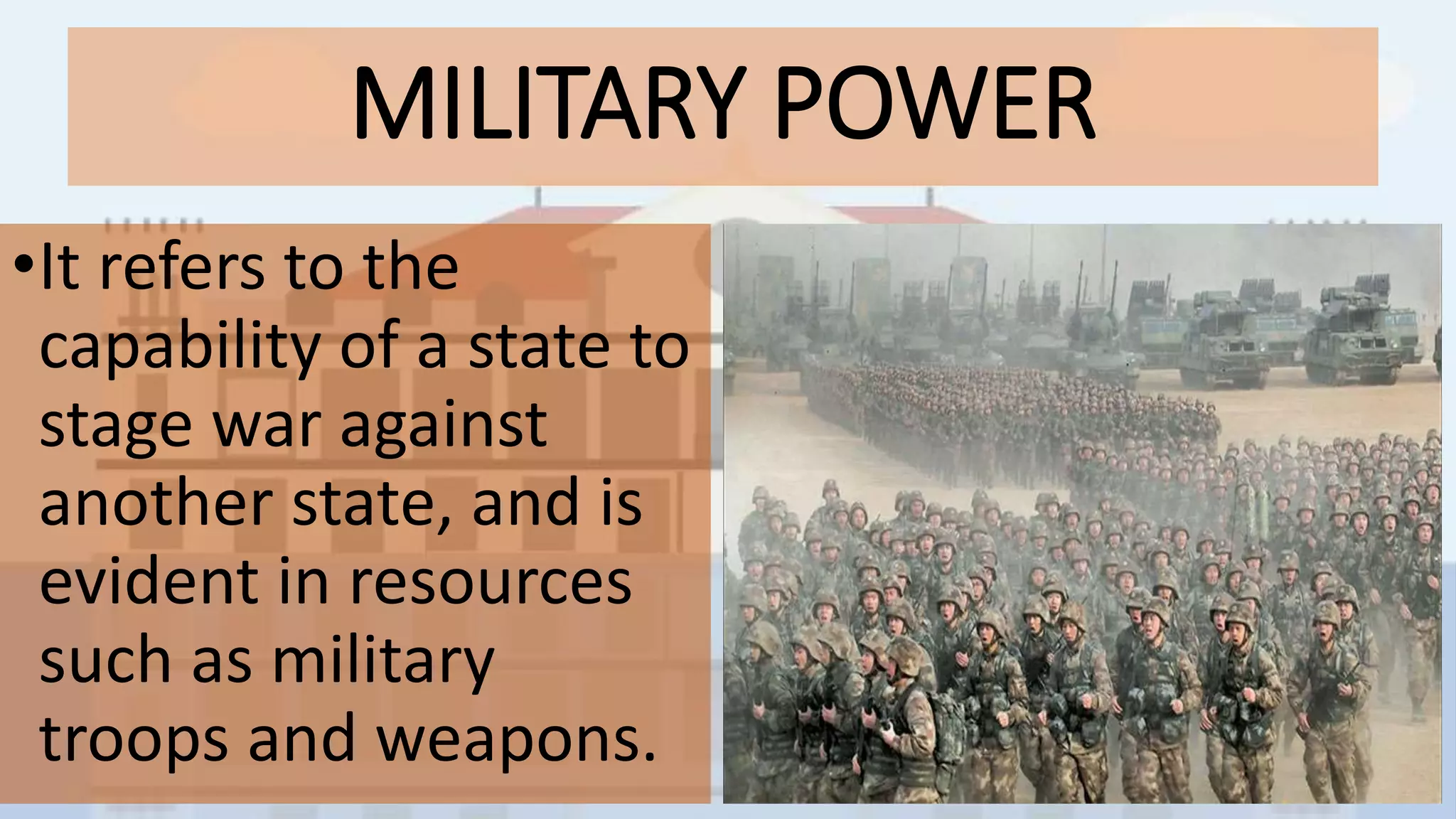
MILITARY POWER
•It refers to the
capability of a state to
stage war against
another state, and is
evident in resources
such as military
troops and weapons.
ECONOMIC POWER
•It refers to the use of
economic resources and
finances, and the ability
of states to influence
other nations by denying
or giving them access to
certain resources.
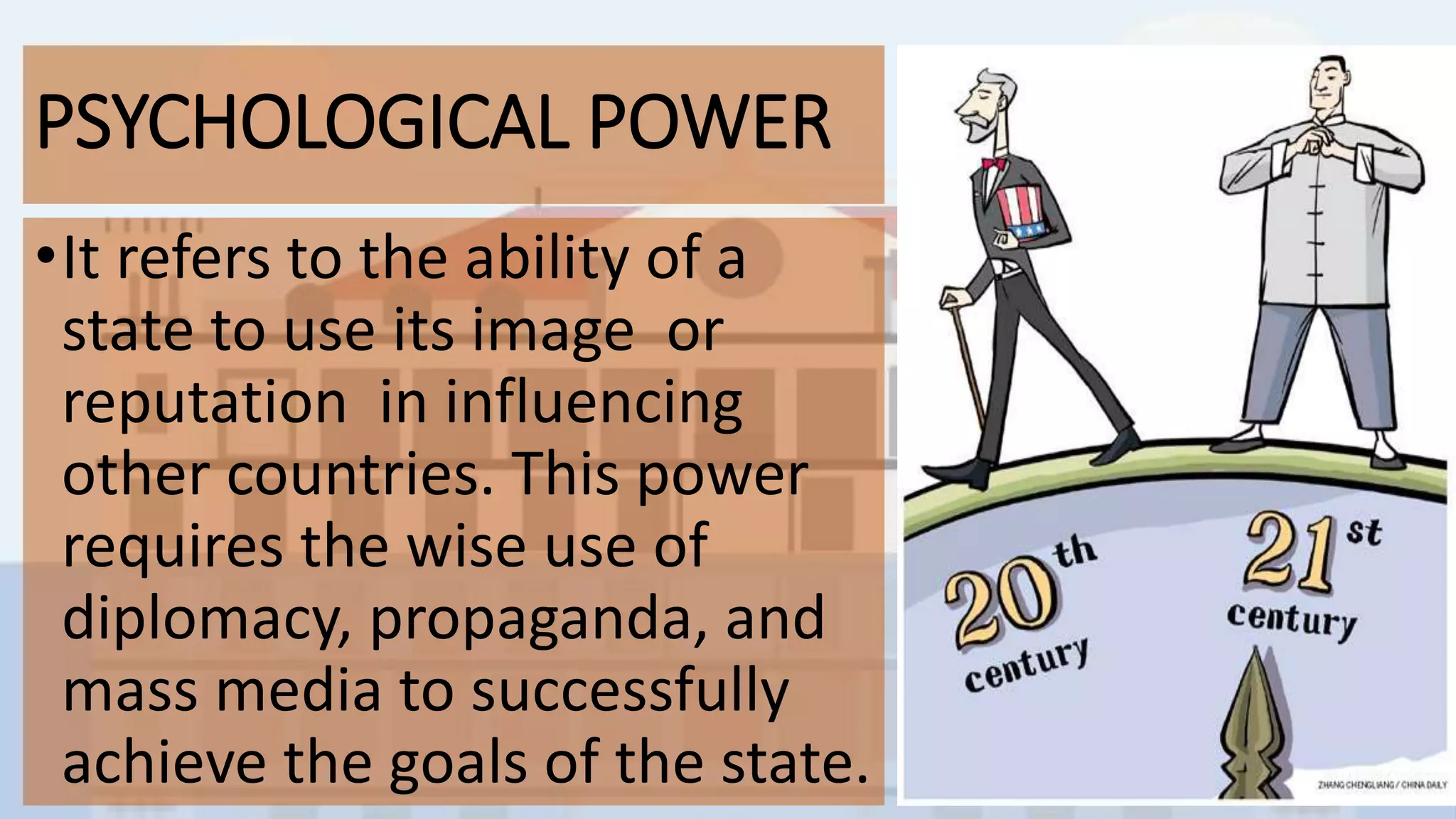
PSYCHOLOGICAL POWER
•It refers to the ability of a
state to use its image or
reputation in influencing
other countries. This power
requires the wise use of
diplomacy, propaganda, and
mass media to successfully
achieve the goals of the state.
POWER and CITIZENSHIP
• Power and citizenship are two intertwined concept within
the context of a democratic society. As sovereignty resides in
people that compose the states, the government provides
the people with the means to exercise power.
•The Bill of Rights (Article III of the 1987 Philippine
Constitution)
• It enumerates the various political, social, and economic
rights that citizens enjoy. These rights, in turn, come with a
set of responsibility which citizens must fulfill in order to
exercise power and participate fully within democracy.
Lesson 2 power and accountability

Lesson 2 power and accountability

  • 1.
  • 2.
    The Nature andDimensions of Power •It is generally defined as the ability of a person to carry out his or her will. •In politics, it refers to the ability to exercise control or impose restrictions over individuals, as well as compel other people to do certain tasks. •It is closely tied to the concept of authority, which is the right to exercise power in society. P O W E R
  • 3.
    FORMS OF POWER (French& Raven) Social psychologists John French and Bertram Raven view power as based on the perception and understanding of the various participants in society. Each member of a group or society recognizes that certain individuals in their group posses a degree of power based on the nature of their relationships with other member of the group.
  • 4.
    COERCIVE POWER •Coercive poweris based on a person’s ability to compel other people through threats, punishments, and force.
  • 5.
    REWARD POWER •Reward poweris based on the ability to give rewards and benefits. •It is the power of the manager to give some type of reward to an employee as a means to influence the employee to act. Rewards could be tangible and intangible.
  • 6.
    EXPERT POWER •Relies on theknowledge and skills of an individual. •It is a power based upon employees perception that a manager or some other member of an organization has a high level of knowledge or a specialized set of skills that other employees or members of the organization do not posses. EXPERT POWER
  • 7.
    LEGITIMATE POWER •It is basedon a person’s position, role, and duties in a group. •It refers to the ability to influence others because of the position one holds in the organizations.
  • 8.
    REFERENT POWER •It is apower based on an individual’s personality and ability to attract followers. •Influence based on possession by an individual of desirable resources or personal traits.
  • 9.
    CLASSIFICATION OF POWER (MaxWeber) •Charismatic authority •Traditional authority •Legal-rational authority
  • 10.
    CHARISMATIC AUTHORITY • s Itis based on the personal qualities of the individual who wields power. The person’s authority is recognized based on his or her traits and how he or she is perceived by other people in society.
  • 11.
    TRADITIONAL AUTHORITY •It is rootedin traditional values and existing social ties and institutions.
  • 12.
    LEGAL-RATIONAL AUTHORITY •It isbased on a system of laws and regulations, and an established bureaucracy. A person is able to exercise because he or she has been empowered by law. Power, in this context, depends on an individual’s position in the social hierarchy, and the roles and responsibilities that come with this position.
  • 13.
    Power, Legitimacy andthe Government • In politics, the concept of power is closely related to the state, government, governance, and citizenship. • Political power is understood to refer to sovereignty which is the power of the government to perform its function and conduct affairs without interference from outside forces. • Sovereignty also refers to the authority to exercise control over a group or society.
  • 14.
    •Sovereignty resides inthe individuals that compose society. This became the basis for the democratic ideal of a government “of the people, by the people, and for the people”. •Participation in a direct democracy, election, initiatives, plebiscite, referendum and organization of advocacy group.
  • 15.
    LEGITIMACY •Authority within apolitical context is closely tied to concept of legitimacy, which is the acceptance or recognition of the right to exercise power. •Legitimacy is generally based on existing laws, customs, and traditions that are prevalent to a certain society.
  • 16.
    GOVERNMENT •Whatever the formof government that is implemented in a state, democracy assumes that the elected representatives in the government and the appointed officials borrow power from the sovereign people.
  • 17.
    POWER and GOVERNANCE •POLICEPOWER •EMINENT DOMAIN •POWER OF TAXATION •MILITARY POWER •ECONOMIC POWER •PSYCHOLOGICAL POWER
  • 18.
    POLICE POWER It refersto the ability of the state to use the police force to ensure law and order in society.
  • 19.
    EMINENT DOMAIN It isthe power of the government to acquire private property for public use.
  • 20.
    POWER OF TAXATION Itallows the government to impose and collect taxes from its citizens.
  • 21.
    MILITARY POWER •It refersto the capability of a state to stage war against another state, and is evident in resources such as military troops and weapons.
  • 22.
    ECONOMIC POWER •It refersto the use of economic resources and finances, and the ability of states to influence other nations by denying or giving them access to certain resources.
  • 23.
    PSYCHOLOGICAL POWER •It refersto the ability of a state to use its image or reputation in influencing other countries. This power requires the wise use of diplomacy, propaganda, and mass media to successfully achieve the goals of the state.
  • 24.
    POWER and CITIZENSHIP •Power and citizenship are two intertwined concept within the context of a democratic society. As sovereignty resides in people that compose the states, the government provides the people with the means to exercise power. •The Bill of Rights (Article III of the 1987 Philippine Constitution) • It enumerates the various political, social, and economic rights that citizens enjoy. These rights, in turn, come with a set of responsibility which citizens must fulfill in order to exercise power and participate fully within democracy.