2
3
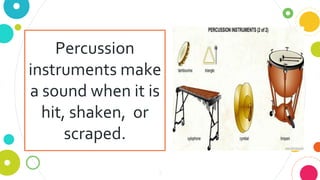
Percussion
instruments make
a sound when it is
hit, shaken, or
scraped.
4
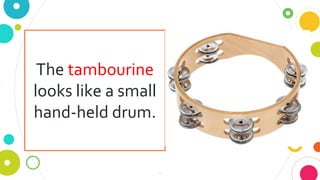
The tambourine
looks like a small
hand-held drum.
5
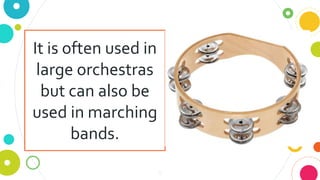
It is often used in
large orchestras
but can also be
used in marching
bands.
6
7
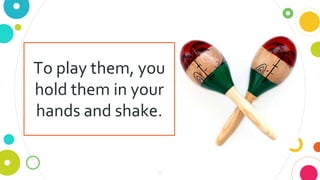
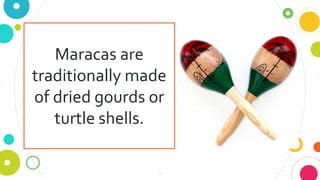
Maracas come
from Mexico.
8
To play them, you
hold them in your
hands and shake.
9
Maracas are
traditionally made
of dried gourds or
turtle shells.
10
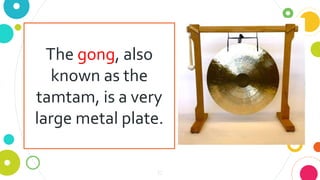
The gong, also
known as the
tamtam, is a very
large metal plate.
11
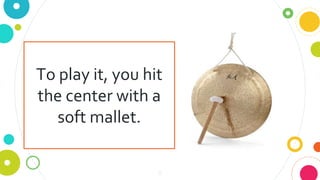
To play it, you hit
the center with a
soft mallet.
12
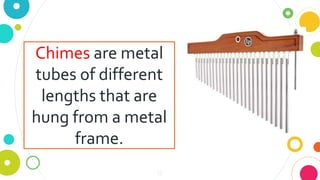
Chimes are metal
tubes of different
lengths that are
hung from a metal
frame.
13
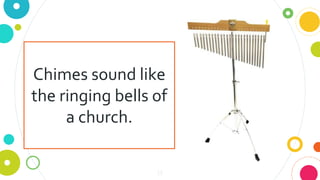
Chimes sound like
the ringing bells of
a church.
14
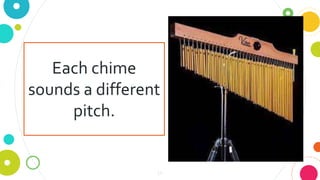
Each chime
sounds a different
pitch.
15
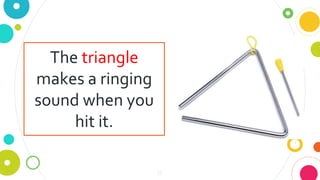
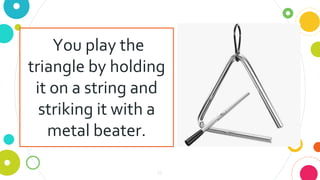
The triangle
makes a ringing
sound when you
hit it.
16
You play the
triangle by holding
it on a string and
striking it with a
metal beater.
17
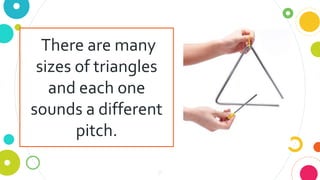
There are many
sizes of triangles
and each one
sounds a different
pitch.
18
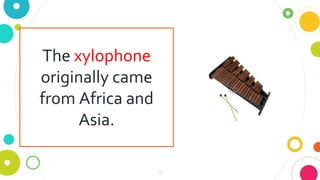
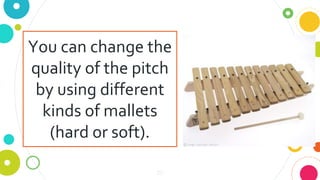
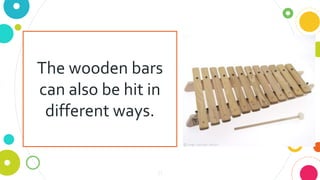
The xylophone
originally came
from Africa and
Asia.
19
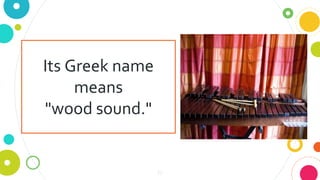
Its Greek name
means
"wood sound."
20
You can change the
quality of the pitch
by using different
kinds of mallets
(hard or soft).
21
The wooden bars
can also be hit in
different ways.
22
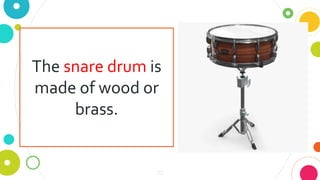
The snare drum is
made of wood or
brass.
23
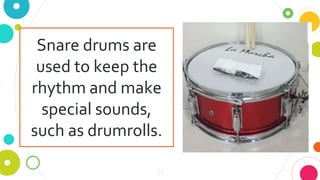
Snare drums are
used to keep the
rhythm and make
special sounds,
such as drumrolls.
24
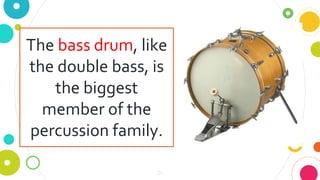
The bass drum, like
the double bass, is
the biggest
member of the
percussion family.
25
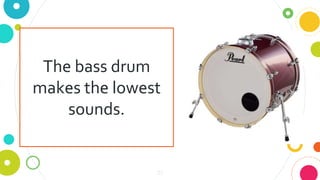
The bass drum
makes the lowest
sounds.
26
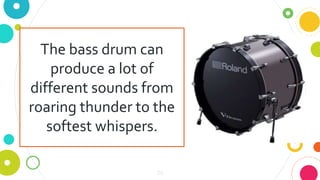
The bass drum can
produce a lot of
different sounds from
roaring thunder to the
softest whispers.
27
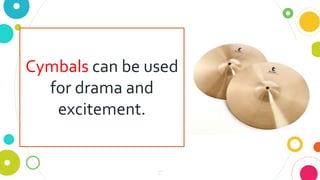
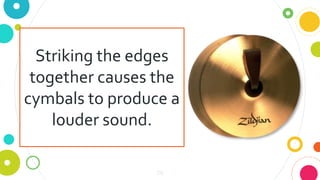
Cymbals can be used
for drama and
excitement.
28
Striking the edges
together causes the
cymbals to produce a
louder sound.

LESSON 2 - Percussion.pptx