QUARTER 1 MOD 1
What is Plate Tectonics?
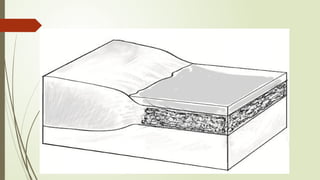
Lithosphere- consist of crust and the upper
portion of mantle
2 Types of Crust:
1. Continental Crust
2. Oceanic Crust
-Continental crust is thicker but less dense
than the oceanic crust.
Continental crust floats higher than the
oceanic
Plate Tectonics- theory which
suggest that the lithosphere is said
to be in constant but slow motion.
Ex. Arctic Ridge-slowest rate(less
than 2.5 cm/yr)
East Pacific Rise-fastest rate( more
than 15 cm/yr)
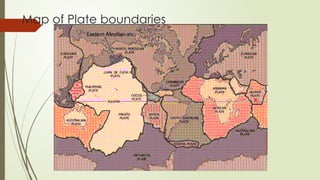
Map of Plate boundaries
Triangulation Method-
locating the epicenter of an
earthquake with the use of
time intervals between the
arrivals of P and S waves
from three seismic stations.
Plates- are large pieces of
the upper few hundred
kilometers of Earth that
move as a single unit as it
floats above the mantle.
-these plates are in constant
motion.
-as they interact along their
margins, important geological
processes takes place such as the
formation of mountain belts,
earthquakes, and volcanoes.
Ass per group:
Bring the ffg materials:
bubble gums/clay
bond papers
LESSON-1-TRIANGULATION-METHOD.pmmmmmptxnaj

LESSON-1-TRIANGULATION-METHOD.pmmmmmptxnaj

  • 1.
  • 2.
    What is PlateTectonics? Lithosphere- consist of crust and the upper portion of mantle 2 Types of Crust: 1. Continental Crust 2. Oceanic Crust -Continental crust is thicker but less dense than the oceanic crust. Continental crust floats higher than the oceanic
  • 4.
    Plate Tectonics- theorywhich suggest that the lithosphere is said to be in constant but slow motion. Ex. Arctic Ridge-slowest rate(less than 2.5 cm/yr) East Pacific Rise-fastest rate( more than 15 cm/yr)
  • 5.
    Map of Plateboundaries
  • 6.
    Triangulation Method- locating theepicenter of an earthquake with the use of time intervals between the arrivals of P and S waves from three seismic stations.
  • 7.
    Plates- are largepieces of the upper few hundred kilometers of Earth that move as a single unit as it floats above the mantle.
  • 8.
    -these plates arein constant motion. -as they interact along their margins, important geological processes takes place such as the formation of mountain belts, earthquakes, and volcanoes.
  • 9.
    Ass per group: Bringthe ffg materials: bubble gums/clay bond papers