Lecture No 62
Long Combo
Rohan Sharma (Coach)
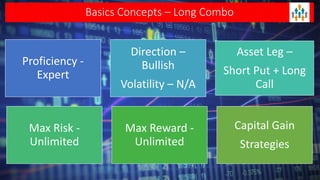
Basics Concepts – Long Combo
Proficiency -
Expert
Direction –
Bullish
Volatility – N/A
Asset Leg –
Short Put + Long
Call
Max Risk -
Unlimited
Max Reward -
Unlimited
Capital Gain
Strategies
Description – Long Combo
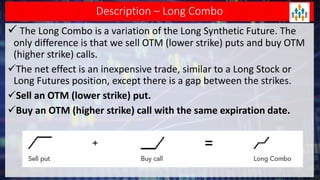
 The Long Combo is a variation of the Long Synthetic Future. The
only difference is that we sell OTM (lower strike) puts and buy OTM
(higher strike) calls.
The net effect is an inexpensive trade, similar to a Long Stock or
Long Futures position, except there is a gap between the strikes.
Sell an OTM (lower strike) put.
Buy an OTM (higher strike) call with the same expiration date.
Steps to Trading a Long Combo
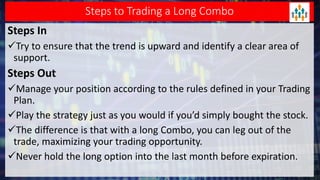
Steps In
Try to ensure that the trend is upward and identify a clear area of
support.
Steps Out
Manage your position according to the rules defined in your Trading
Plan.
Play the strategy just as you would if you’d simply bought the stock.
The difference is that with a long Combo, you can leg out of the
trade, maximizing your trading opportunity.
Never hold the long option into the last month before expiration.
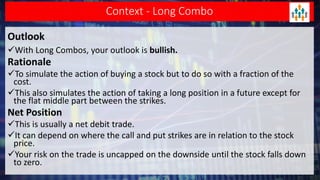
Context - Long Combo
Outlook
With Long Combos, your outlook is bullish.
Rationale
To simulate the action of buying a stock but to do so with a fraction of the
cost.
This also simulates the action of taking a long position in a future except for
the flat middle part between the strikes.
Net Position
This is usually a net debit trade.
It can depend on where the call and put strikes are in relation to the stock
price.
Your risk on the trade is uncapped on the downside until the stock falls down
to zero.
Context – Long Combo
Effect of Time Decay
Time decay is harmful to your Long Combo trade, but with this strategy,
you are hedging time decay by buying and selling near the money
options, so the effect is minimal.
What you lose from the Long Call time value, you benefit from the Short
Put position.
Appropriate Time Period to Trade
 you will be using this strategy in conjunction with another trade.
It is generally more sensible to use this as a longer -term trade.
Breakeven
• With net debits: [higher strike + net debit]
• With net credits: [lower strike - net credit]
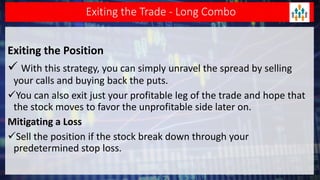
Exiting the Trade - Long Combo
Exiting the Position
 With this strategy, you can simply unravel the spread by selling
your calls and buying back the puts.
You can also exit just your profitable leg of the trade and hope that
the stock moves to favor the unprofitable side later on.
Mitigating a Loss
Sell the position if the stock break down through your
predetermined stop loss.
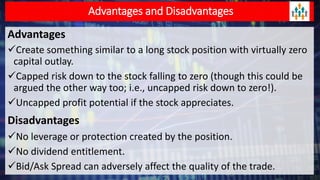
Advantages and Disadvantages
Advantages
Create something similar to a long stock position with virtually zero
capital outlay.
Capped risk down to the stock falling to zero (though this could be
argued the other way too; i.e., uncapped risk down to zero!).
Uncapped profit potential if the stock appreciates.
Disadvantages
No leverage or protection created by the position.
No dividend entitlement.
Bid/Ask Spread can adversely affect the quality of the trade.
Real Time Example
Rohan Sharma (Coach)
Price Movement
Position on Charts
Rohan Sharma (Coach)
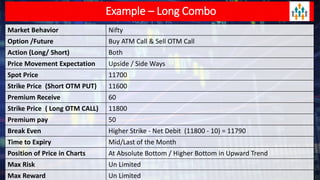
Example – Long Combo
Market Behavior Nifty
Option /Future Buy ATM Call & Sell OTM Call
Action (Long/ Short) Both
Price Movement Expectation Upside / Side Ways
Spot Price 11700
Strike Price (Short OTM PUT) 11600
Premium Receive 60
Strike Price ( Long OTM CALL) 11800
Premium pay 50
Break Even Higher Strike - Net Debit (11800 - 10) = 11790
Time to Expiry Mid/Last of the Month
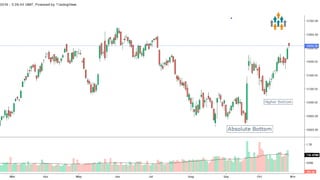
Position of Price in Charts At Absolute Bottom / Higher Bottom in Upward Trend
Max Risk Un Limited
Max Reward Un Limited
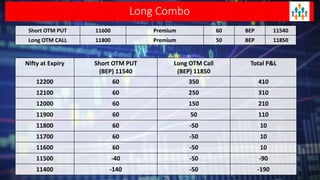
Long Combo
Short OTM PUT 11600 Premium 60 BEP 11540
Long OTM CALL 11800 Premium 50 BEP 11850
Nifty at Expiry Short OTM PUT
(BEP) 11540
Long OTM Call
(BEP) 11850
Total P&L
12200 60 350 410
12100 60 250 310
12000 60 150 210
11900 60 50 110
11800 60 -50 10
11700 60 -50 10
11600 60 -50 10
11500 -40 -50 -90
11400 -140 -50 -190

Lecture no 62 long combo

  • 1.
    Lecture No 62 LongCombo Rohan Sharma (Coach)
  • 2.
    Basics Concepts –Long Combo Proficiency - Expert Direction – Bullish Volatility – N/A Asset Leg – Short Put + Long Call Max Risk - Unlimited Max Reward - Unlimited Capital Gain Strategies
  • 3.
    Description – LongCombo  The Long Combo is a variation of the Long Synthetic Future. The only difference is that we sell OTM (lower strike) puts and buy OTM (higher strike) calls. The net effect is an inexpensive trade, similar to a Long Stock or Long Futures position, except there is a gap between the strikes. Sell an OTM (lower strike) put. Buy an OTM (higher strike) call with the same expiration date.
  • 4.
    Steps to Tradinga Long Combo Steps In Try to ensure that the trend is upward and identify a clear area of support. Steps Out Manage your position according to the rules defined in your Trading Plan. Play the strategy just as you would if you’d simply bought the stock. The difference is that with a long Combo, you can leg out of the trade, maximizing your trading opportunity. Never hold the long option into the last month before expiration.
  • 5.
    Context - LongCombo Outlook With Long Combos, your outlook is bullish. Rationale To simulate the action of buying a stock but to do so with a fraction of the cost. This also simulates the action of taking a long position in a future except for the flat middle part between the strikes. Net Position This is usually a net debit trade. It can depend on where the call and put strikes are in relation to the stock price. Your risk on the trade is uncapped on the downside until the stock falls down to zero.
  • 6.
    Context – LongCombo Effect of Time Decay Time decay is harmful to your Long Combo trade, but with this strategy, you are hedging time decay by buying and selling near the money options, so the effect is minimal. What you lose from the Long Call time value, you benefit from the Short Put position. Appropriate Time Period to Trade  you will be using this strategy in conjunction with another trade. It is generally more sensible to use this as a longer -term trade. Breakeven • With net debits: [higher strike + net debit] • With net credits: [lower strike - net credit]
  • 7.
    Exiting the Trade- Long Combo Exiting the Position  With this strategy, you can simply unravel the spread by selling your calls and buying back the puts. You can also exit just your profitable leg of the trade and hope that the stock moves to favor the unprofitable side later on. Mitigating a Loss Sell the position if the stock break down through your predetermined stop loss.
  • 8.
    Advantages and Disadvantages Advantages Createsomething similar to a long stock position with virtually zero capital outlay. Capped risk down to the stock falling to zero (though this could be argued the other way too; i.e., uncapped risk down to zero!). Uncapped profit potential if the stock appreciates. Disadvantages No leverage or protection created by the position. No dividend entitlement. Bid/Ask Spread can adversely affect the quality of the trade.
  • 9.
  • 10.
    Price Movement Position onCharts Rohan Sharma (Coach)
  • 12.
    Example – LongCombo Market Behavior Nifty Option /Future Buy ATM Call & Sell OTM Call Action (Long/ Short) Both Price Movement Expectation Upside / Side Ways Spot Price 11700 Strike Price (Short OTM PUT) 11600 Premium Receive 60 Strike Price ( Long OTM CALL) 11800 Premium pay 50 Break Even Higher Strike - Net Debit (11800 - 10) = 11790 Time to Expiry Mid/Last of the Month Position of Price in Charts At Absolute Bottom / Higher Bottom in Upward Trend Max Risk Un Limited Max Reward Un Limited
  • 13.
    Long Combo Short OTMPUT 11600 Premium 60 BEP 11540 Long OTM CALL 11800 Premium 50 BEP 11850 Nifty at Expiry Short OTM PUT (BEP) 11540 Long OTM Call (BEP) 11850 Total P&L 12200 60 350 410 12100 60 250 310 12000 60 150 210 11900 60 50 110 11800 60 -50 10 11700 60 -50 10 11600 60 -50 10 11500 -40 -50 -90 11400 -140 -50 -190