Dr. Eng. Ismail .I. Hajani
Date : 18th Nov. 2024 1
Course name:
URBAN DESIGN STUDIO II
Semester: 7
University of Duhok
College of City & regional Planning
Department of Spatial Planning
URBAN BLOCKS & STREETSCAPE
2
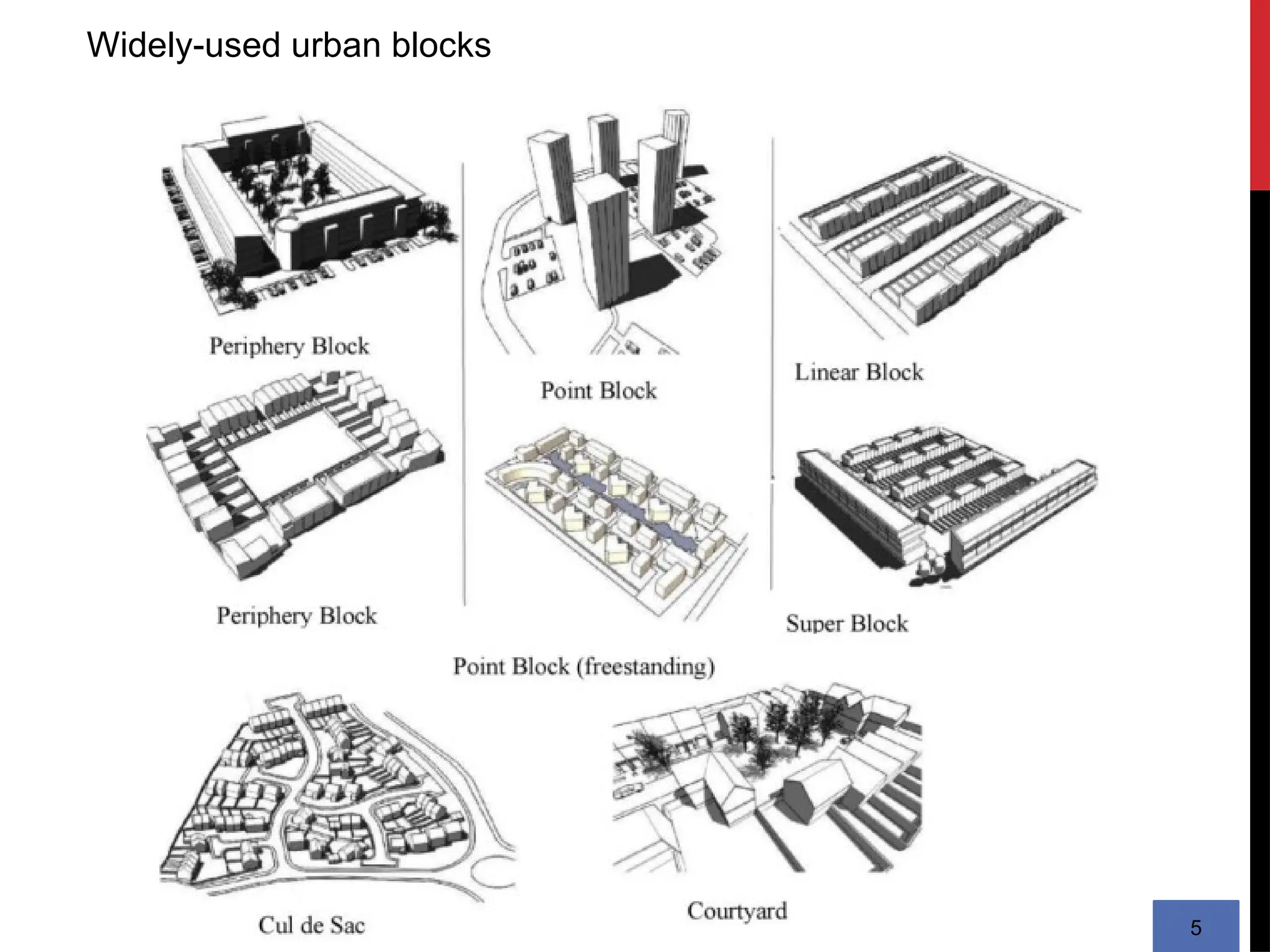
- Urban block is a primary element of urbanism in cities, and a unit of
developable lands. The block as an element in urban hierarchy
associated with ever growing cities and a most important feature of the
cities’ form. Admittedly, block constitutes a single or group of buildings
in regardless to their size, shape which in turn defines the layout.
- There are many terms, synonyms and phrases used to describe
blocks like building block, urban block and city block (Kostof, 2004) or
community block (Oikonomou, 2015) or development block (Llewelyn-
Davies, 2007). The terms, block, super-block and mega-block imply a
changin in size and capacity of urban form over time.
3
AN OVERVIEW
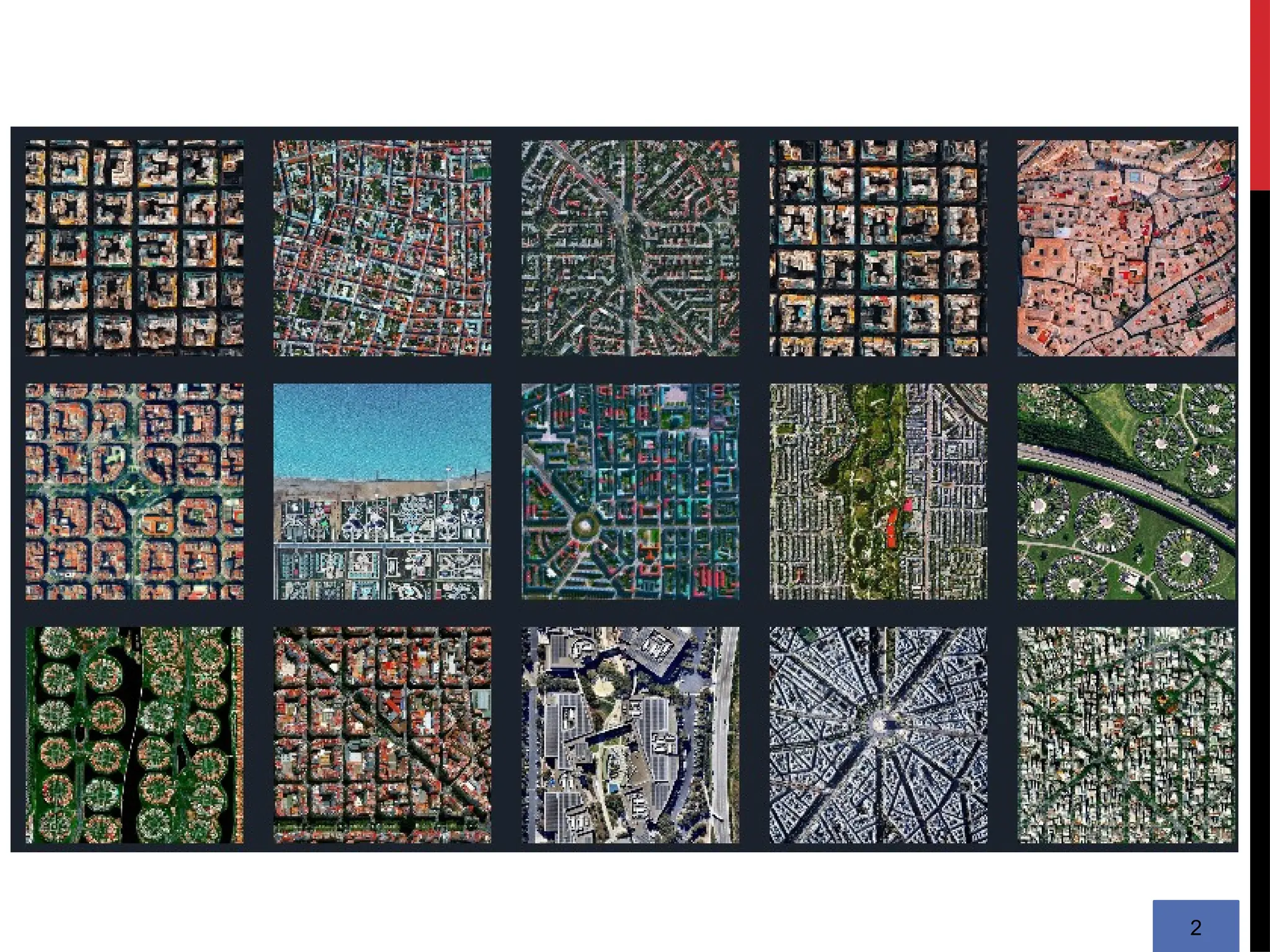
• A city block, urban block or simply block is a central element of urban
planning and urban design.
• A city block is the smallest area that is surrounded by streets.
• City blocks are the space for buildings within the street pattern of a city,
and form the basic unit of a city's urban fabric.
4
5
Widely-used urban blocks
6
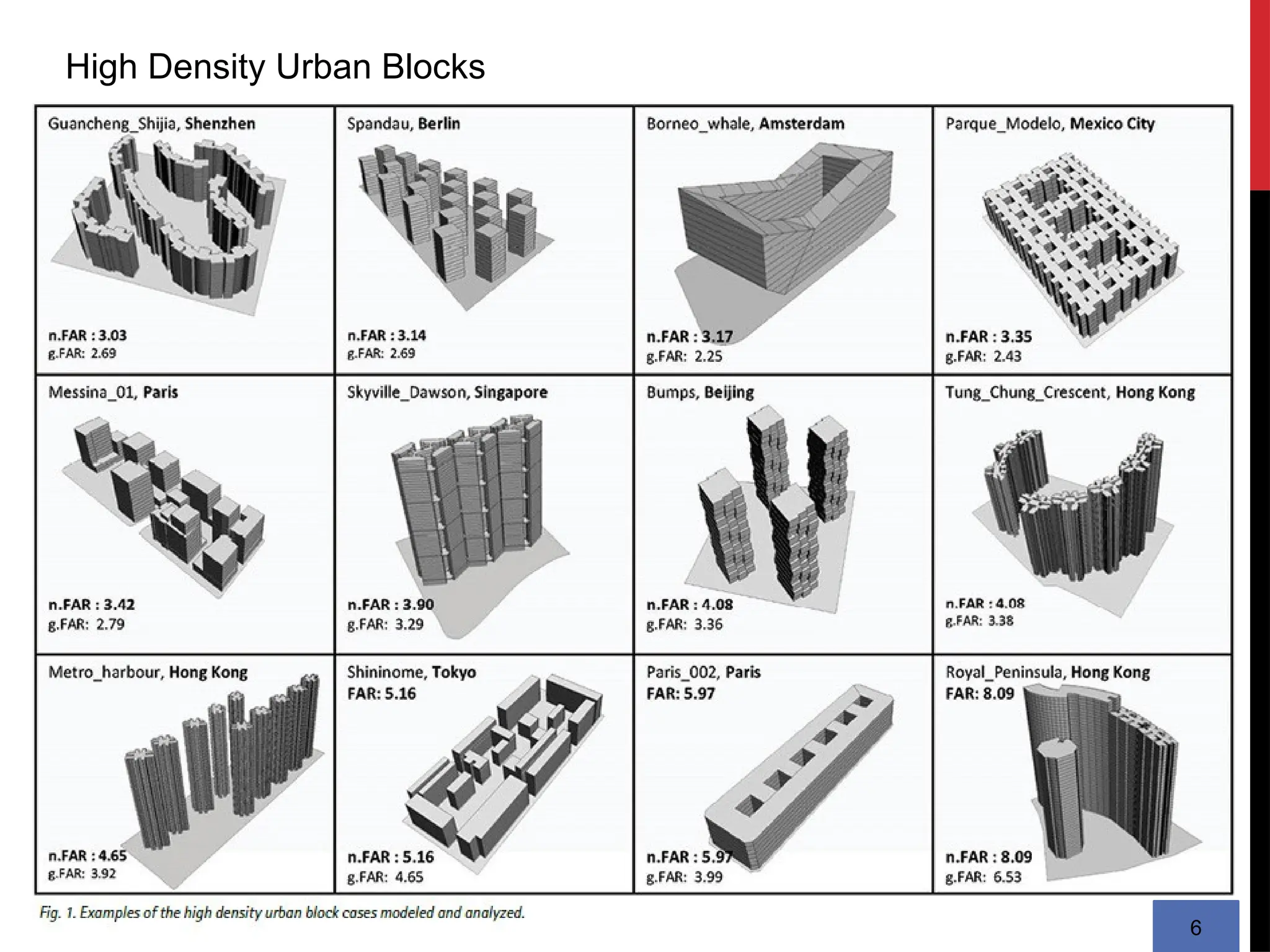
High Density Urban Blocks
RELATED ISSUES :
7
1. Density
2. Diversity
3. Permeability
4. Solar Orientation
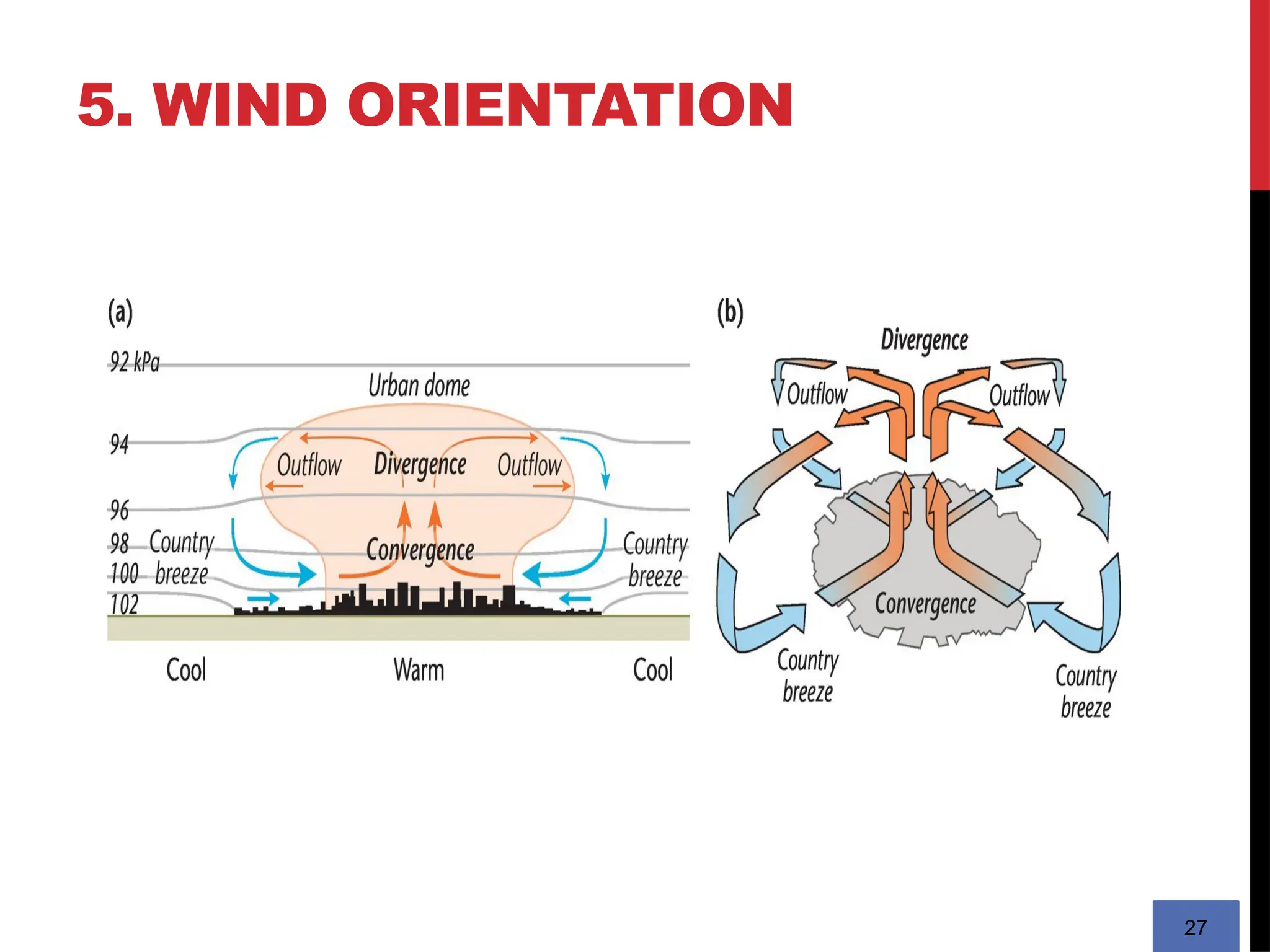
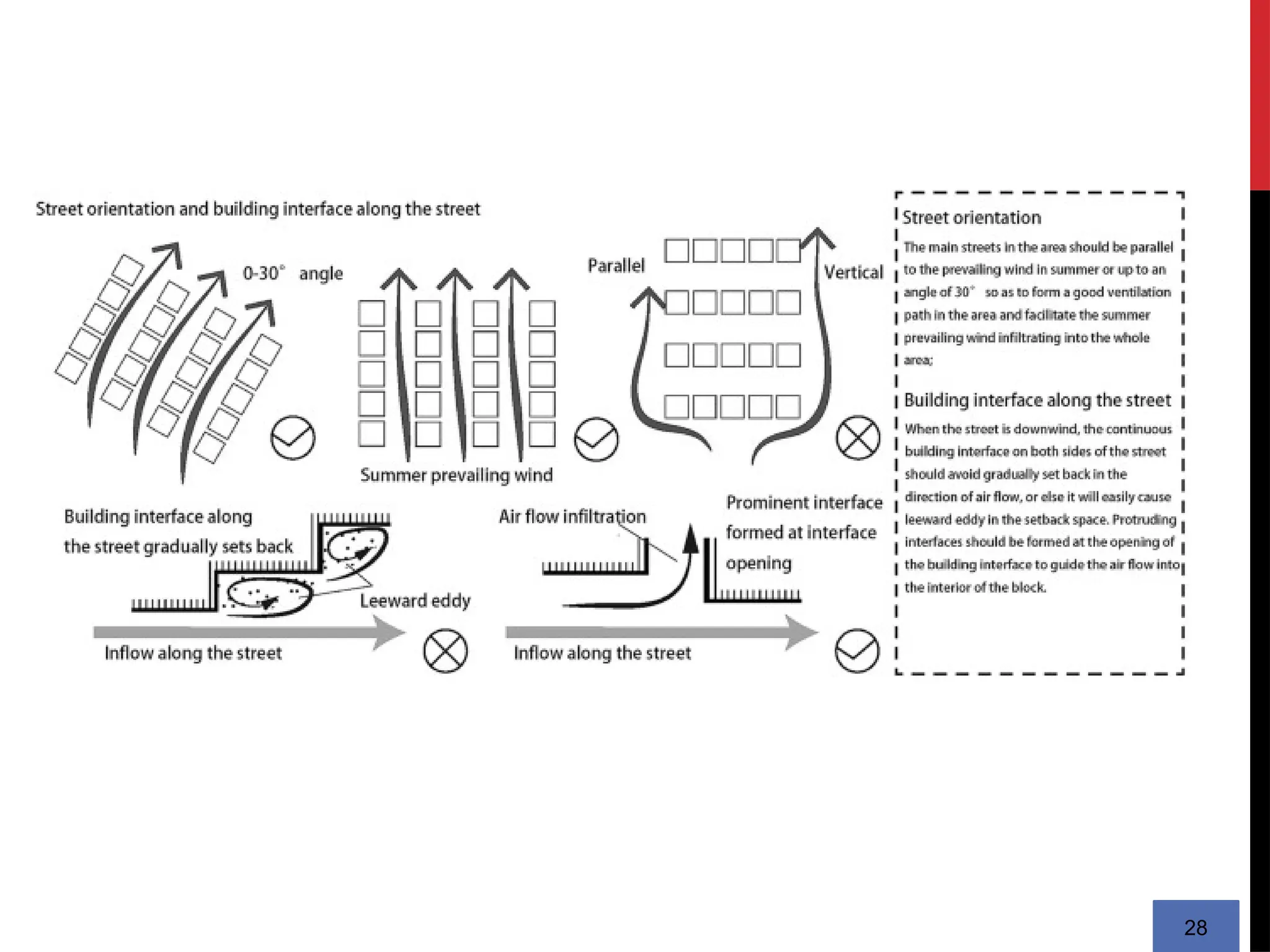
5. Wind Orientation
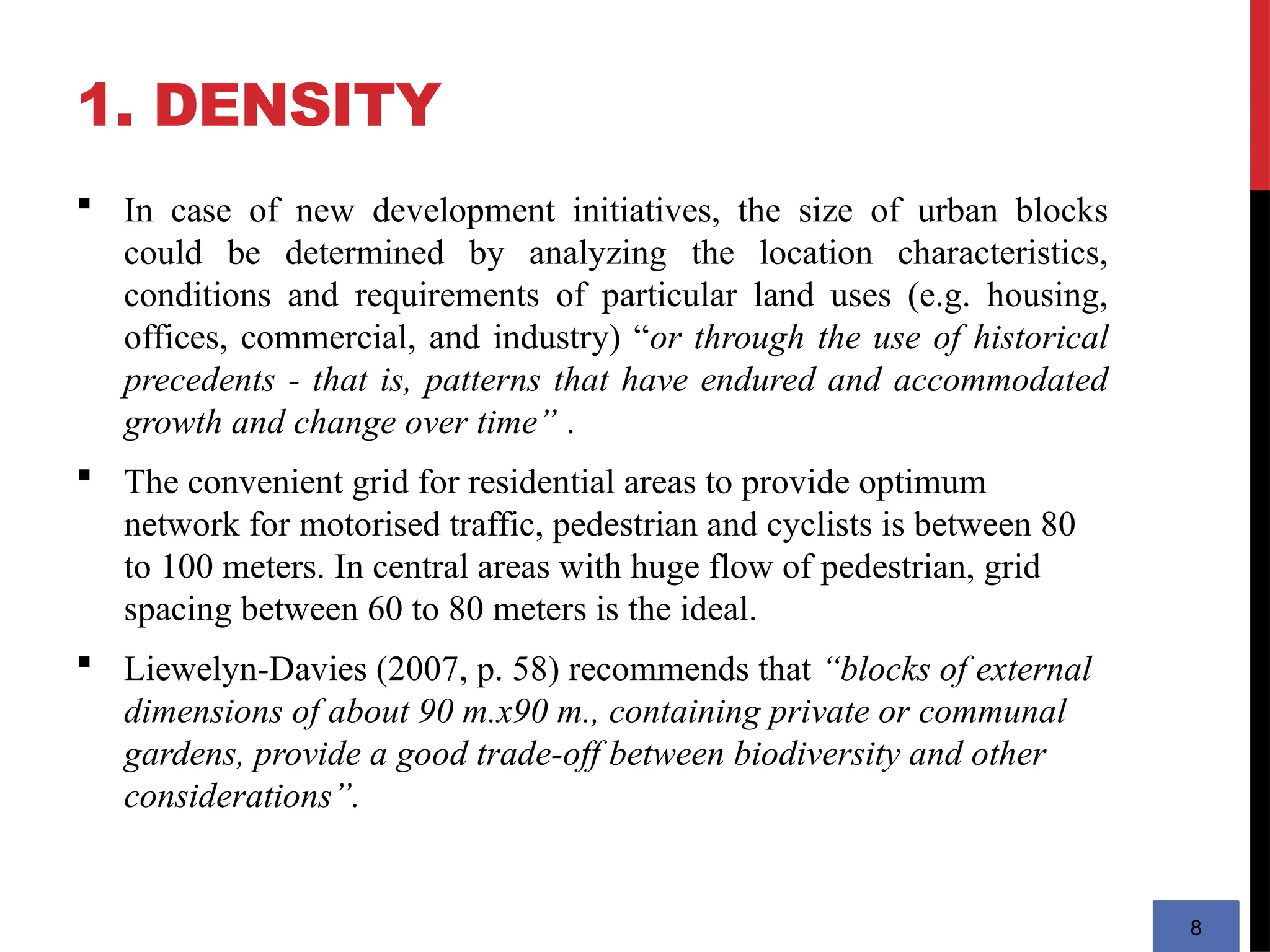
1. DENSITY
8
 In case of new development initiatives, the size of urban blocks
could be determined by analyzing the location characteristics,
conditions and requirements of particular land uses (e.g. housing,
offices, commercial, and industry) “or through the use of historical
precedents - that is, patterns that have endured and accommodated
growth and change over time” .
 The convenient grid for residential areas to provide optimum
network for motorised traffic, pedestrian and cyclists is between 80
to 100 meters. In central areas with huge flow of pedestrian, grid
spacing between 60 to 80 meters is the ideal.
 Liewelyn-Davies (2007, p. 58) recommends that “blocks of external
dimensions of about 90 m.x90 m., containing private or communal
gardens, provide a good trade-off between biodiversity and other
considerations”.
9
 Montgomery approves these dimensions for a new city and confirms
that the blocks dimension should not exceed 91x91 meters.
“Building would not tend to be set back from the street or positioned
centrally within a plot but rather around central courtyards” .
 The block size should be small to respect human scale and provide
walk-able neighborhood, therefore block perimeter should not
exceed 400 m.
10
 There are many factors affecting the shape of the block layout and street pattern
which provide different spatial configurations. These factors are:
• The shape and form of urban block, divided into two patterns; organic and
planned blocks.
• The size of urban block, characterized by small or large blocks which
define block layout and street pattern.
• The plot characteristics which define the property of block structure layout
and street patterns.
• The orientation and topography of the area.
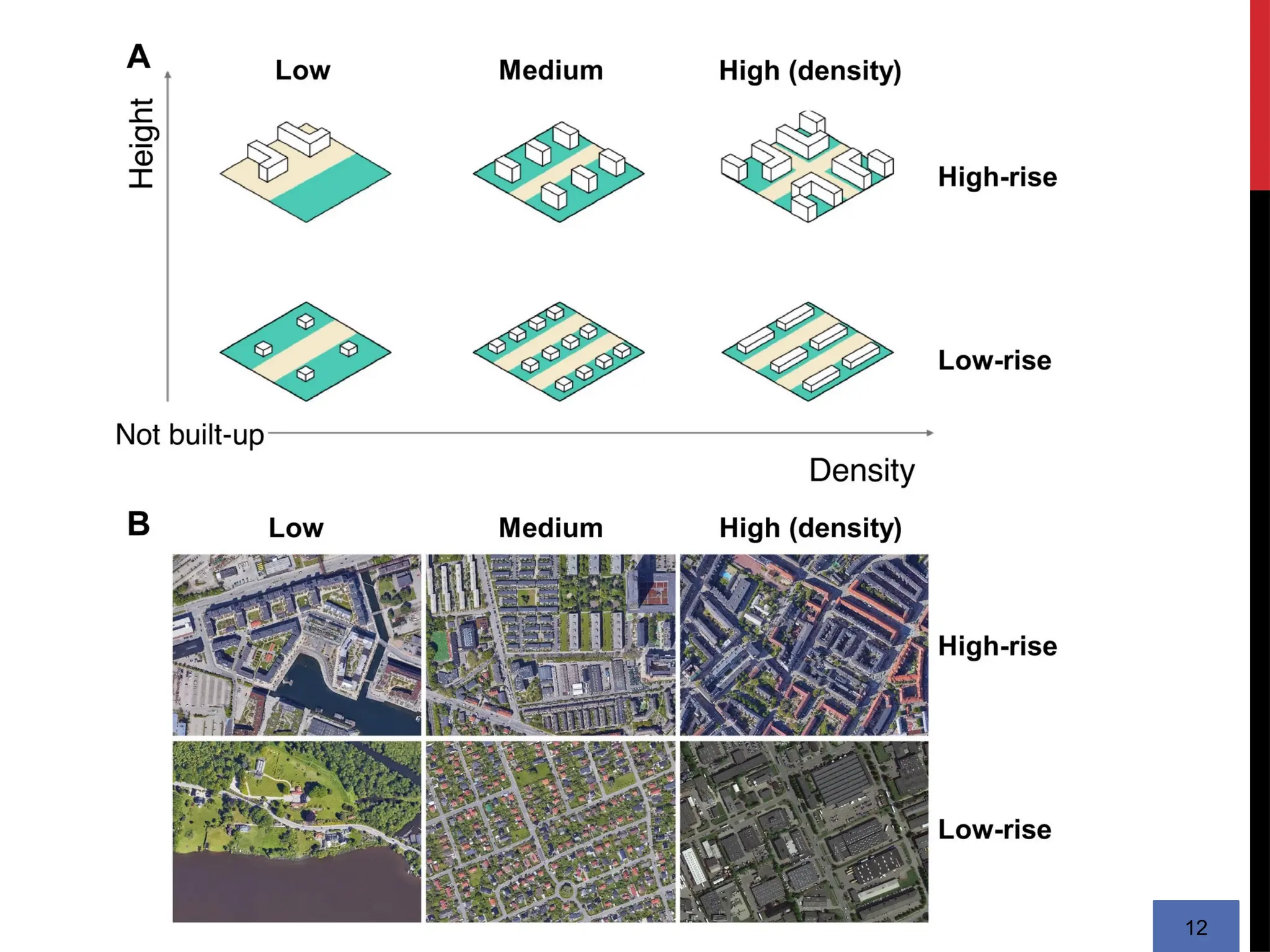
• The density of urban blocks in term of built-up area and population
density.
• Land use categorization affects the type of social life that creates in the
street and alleys.
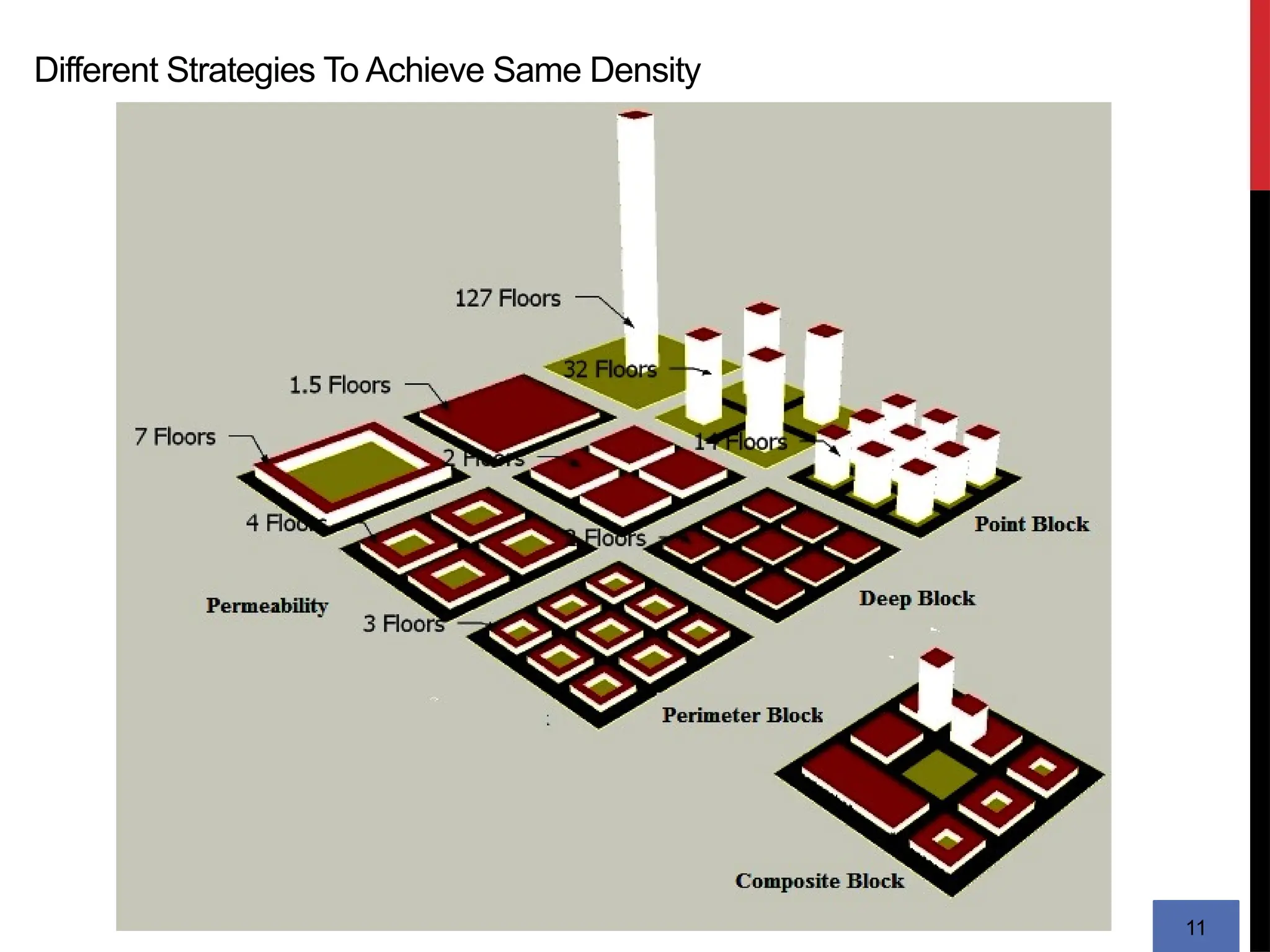
Different Strategies To Achieve Same Density
11
12
2. DIVERSITY
13
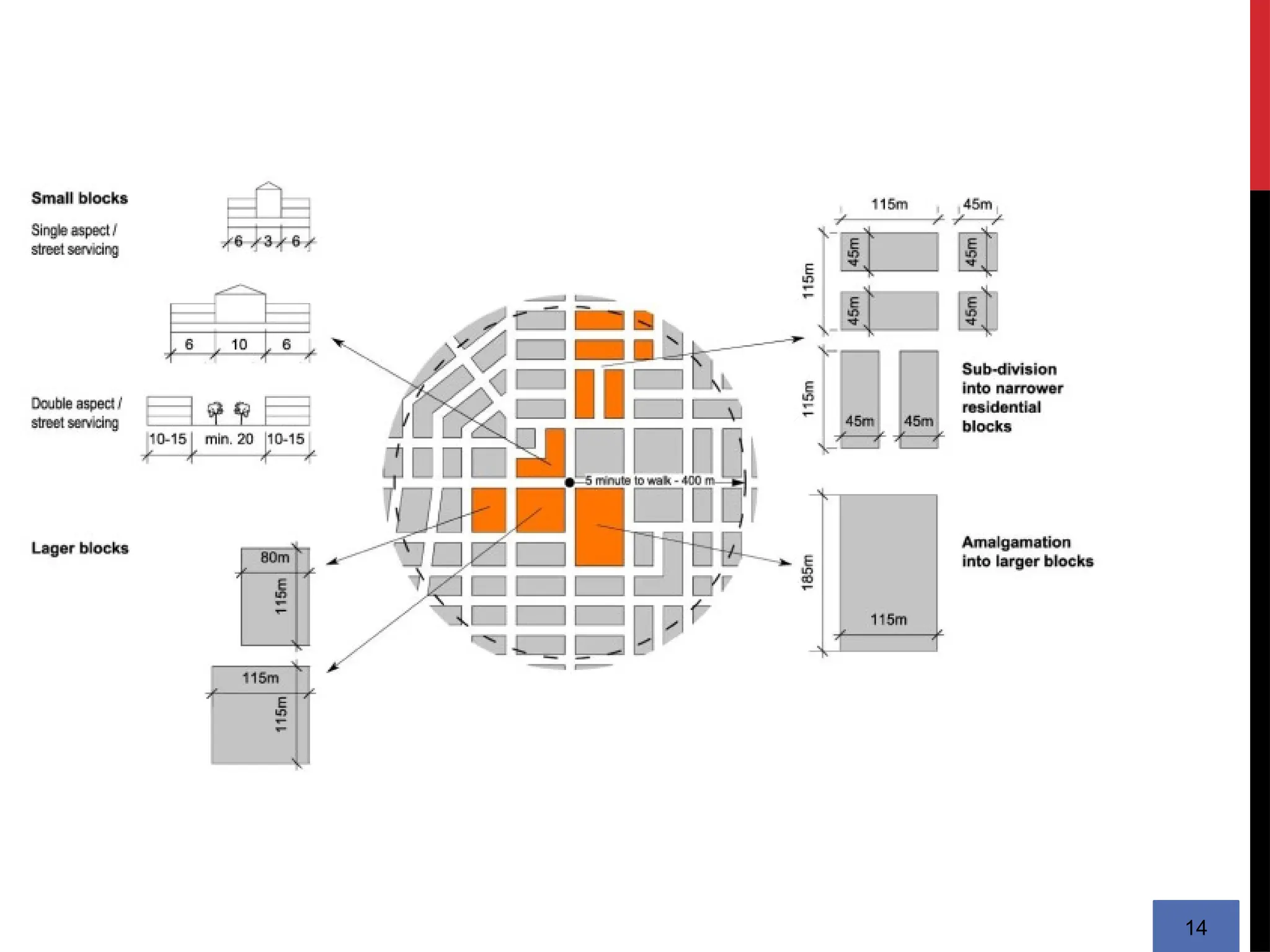
 Many proposals and design criteria have been suggested by
scholars to reach the optimum size of urban block which are
viable spatially, environmentally and economically. But the
context and the uses have their effects on shaping and
determining the size and form of the urban blocks.
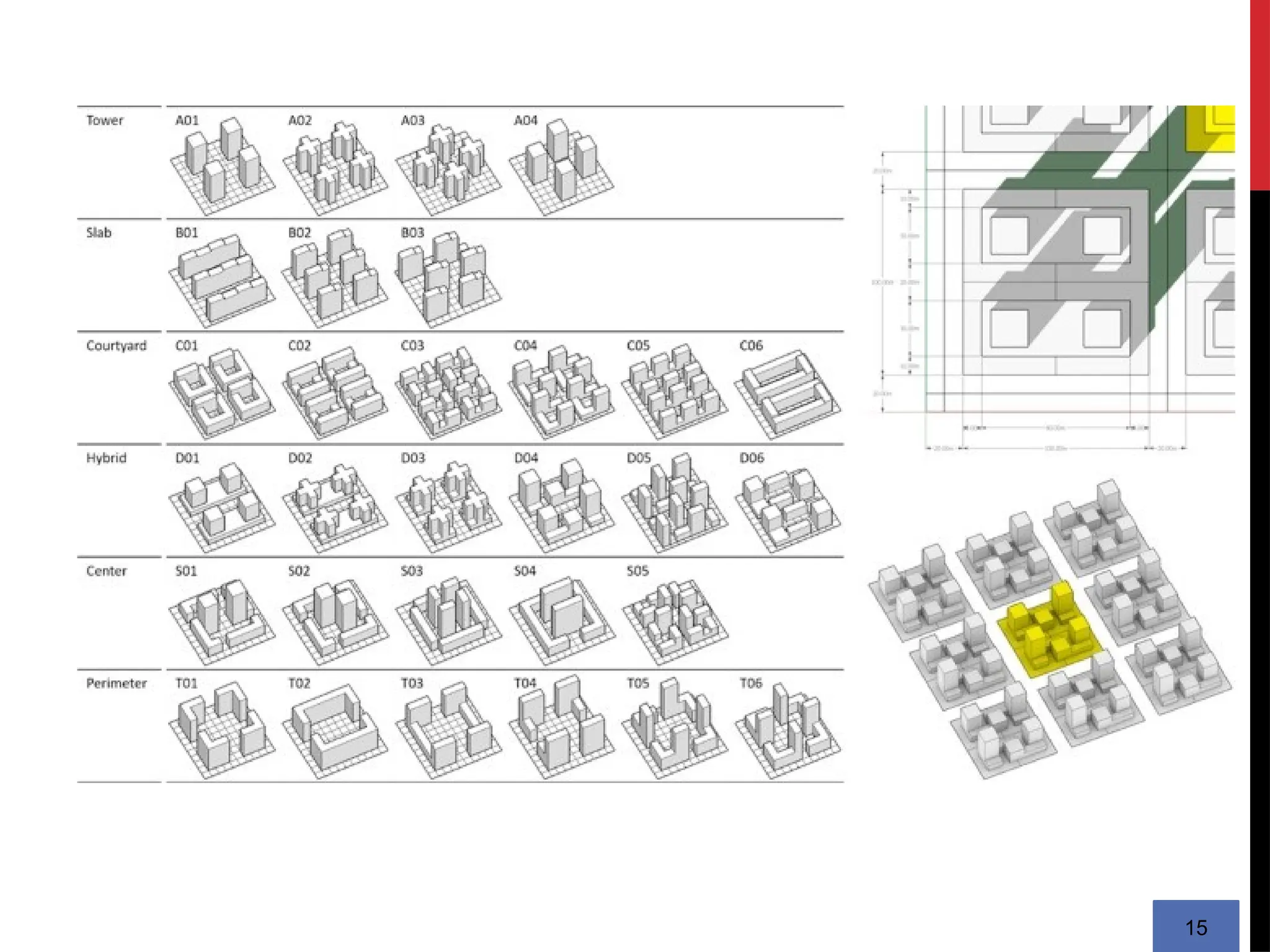
 A range of block sizes encourage diversity of building types
and land uses and offer more chances for mixed uses,
pedestrian accessibility.
 The ideal size of urban blocks can be determined through
'comparison and experience' and more appropriate sizes of
urban blocks can be deduced to form a 'complex urban
pattern.
14
15
3. PERMEABILITY & ACCESSIBILLITY
16
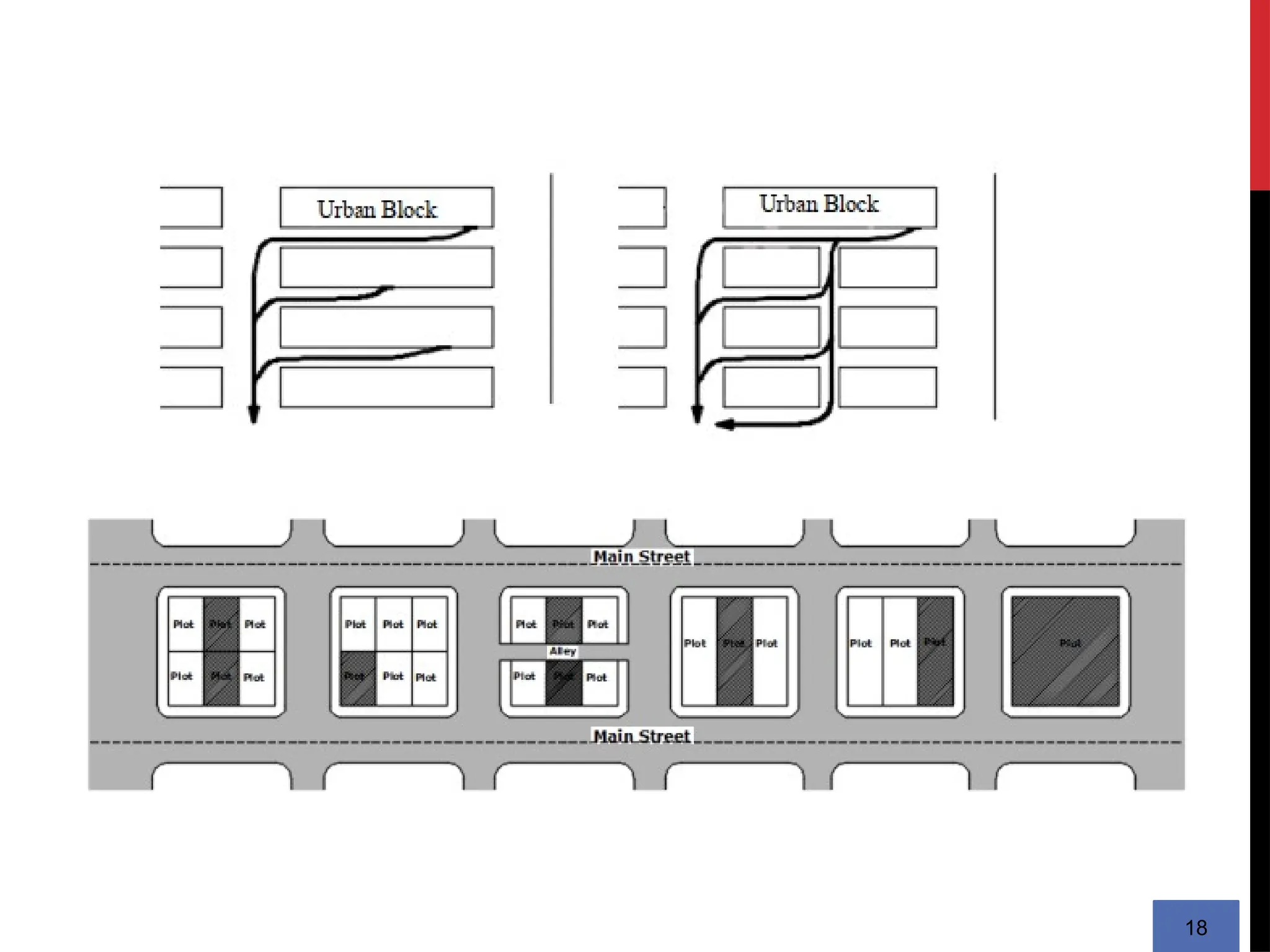
 Permeability is one of the essential concepts in urban design. It refers to the ease
of movement of people and vehicles within an urban environment. Permeability
measures how easily people and vehicles can move from one point to another.
Lynch (1961) emphasized the importance of street network management in
urban development. T
 In case of large urban blocks, to increase permeability the using of minor roads
and footpaths through blocks is the best solution to increase walkability.
 The layout identifies the spatial configuration and arrangement of block
structure at the scale of street, block and building. The layout and configuration
of urban block structure plays crucial role in defining the pattern of movement
and designating parameters for subsequent initiatives development. Layout has a
significant role in determining the accessibility on pedestrian movement and
connectivity of different space and places to each other.
17
18
19
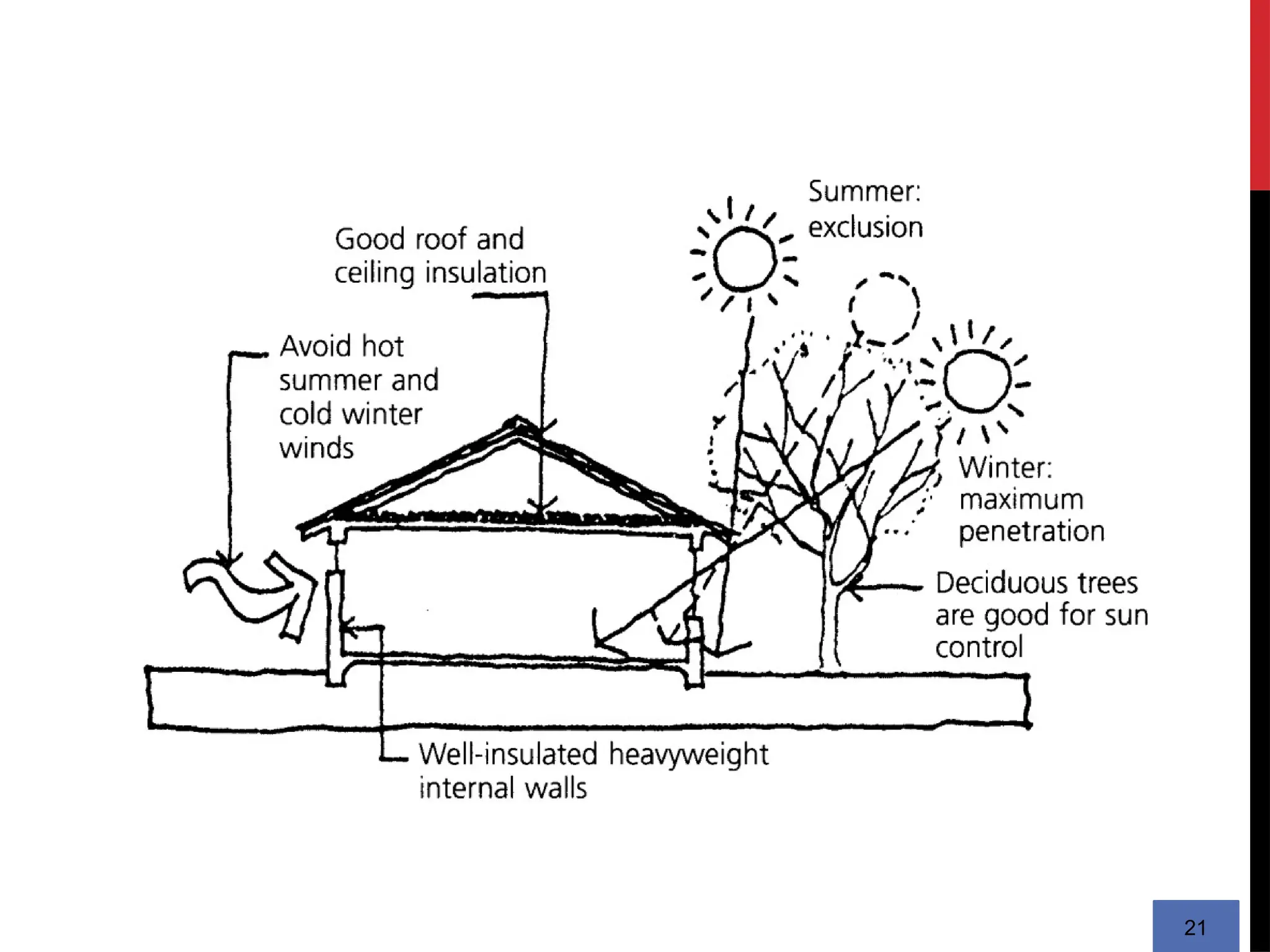
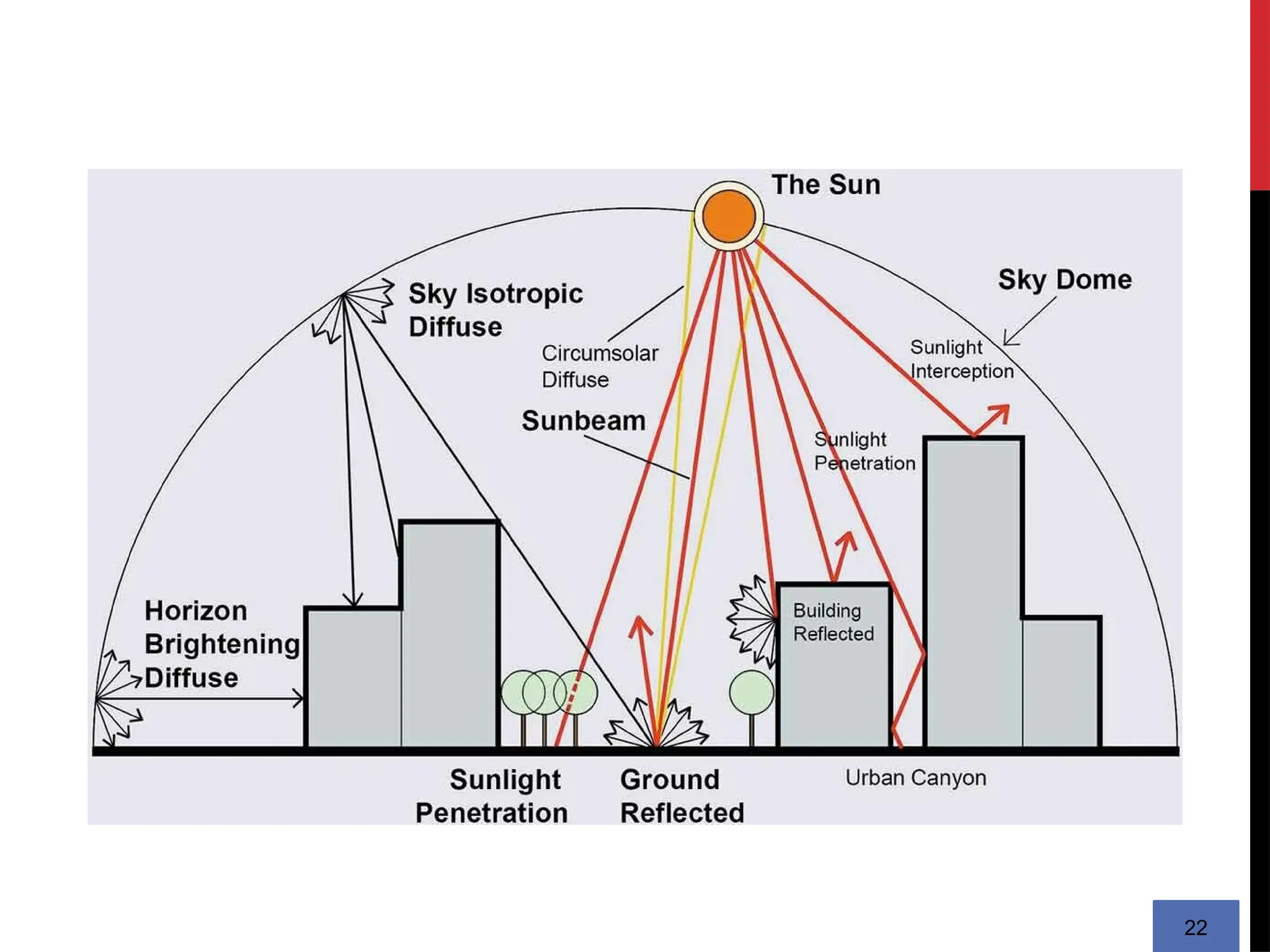
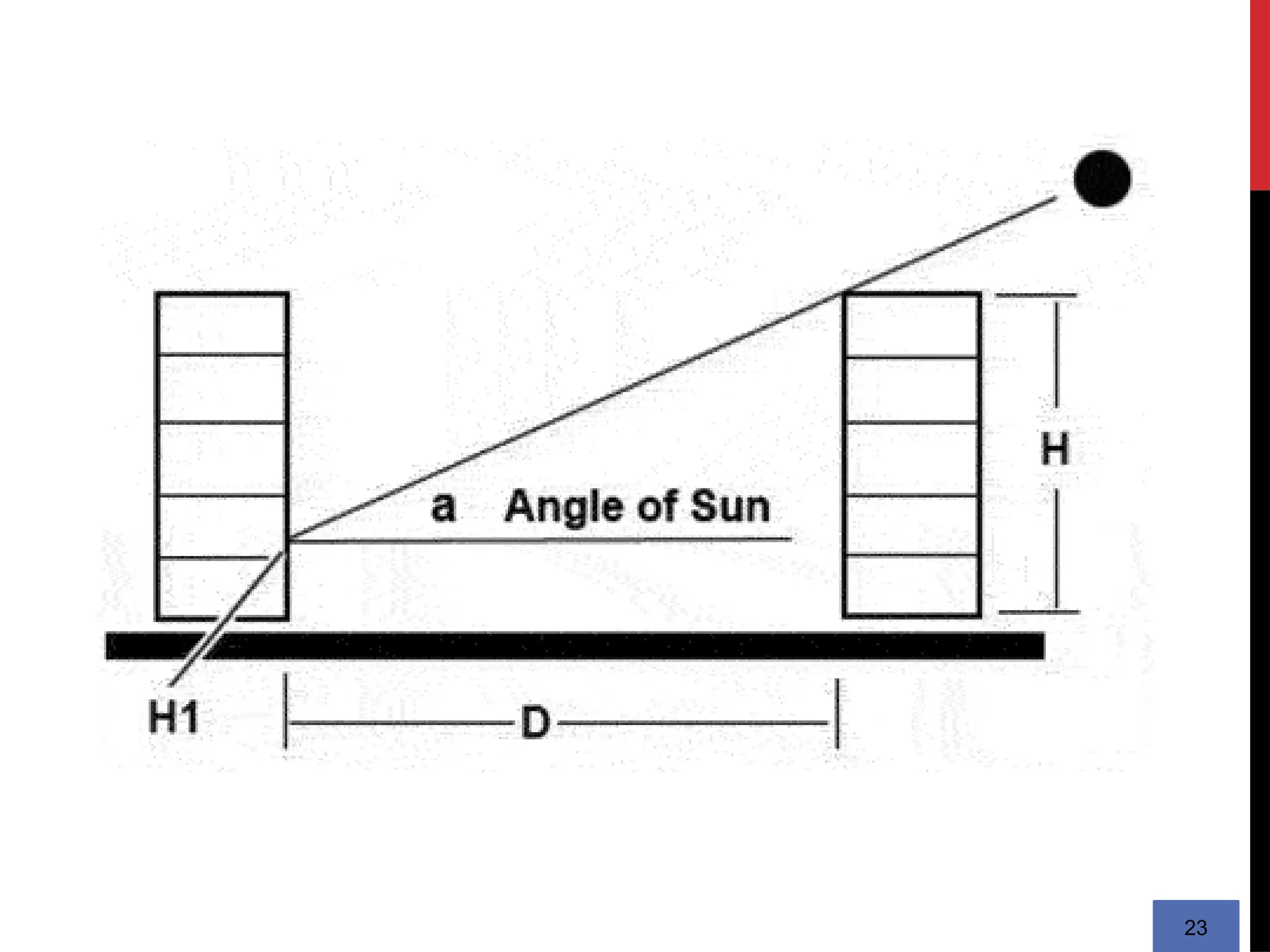
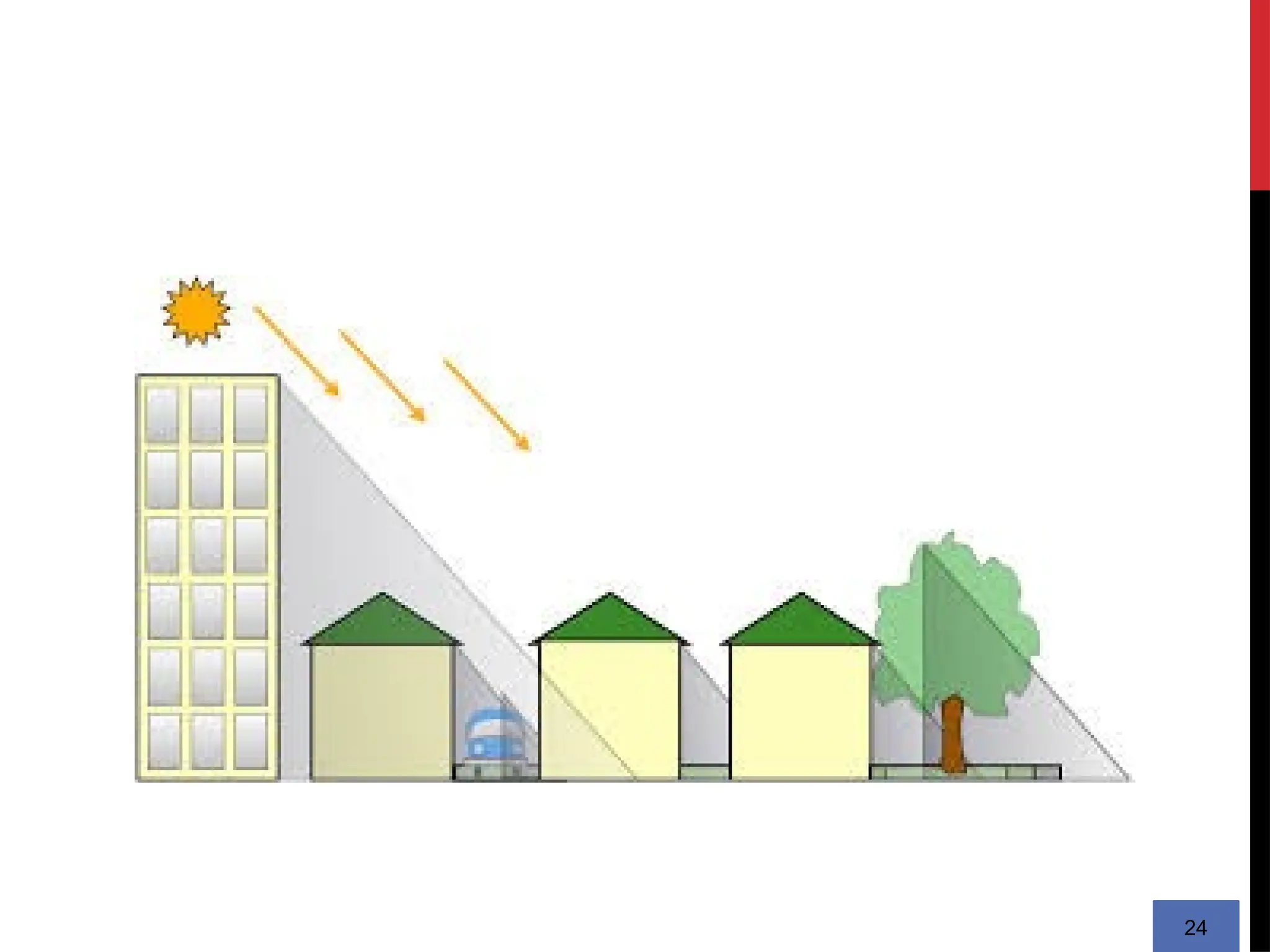
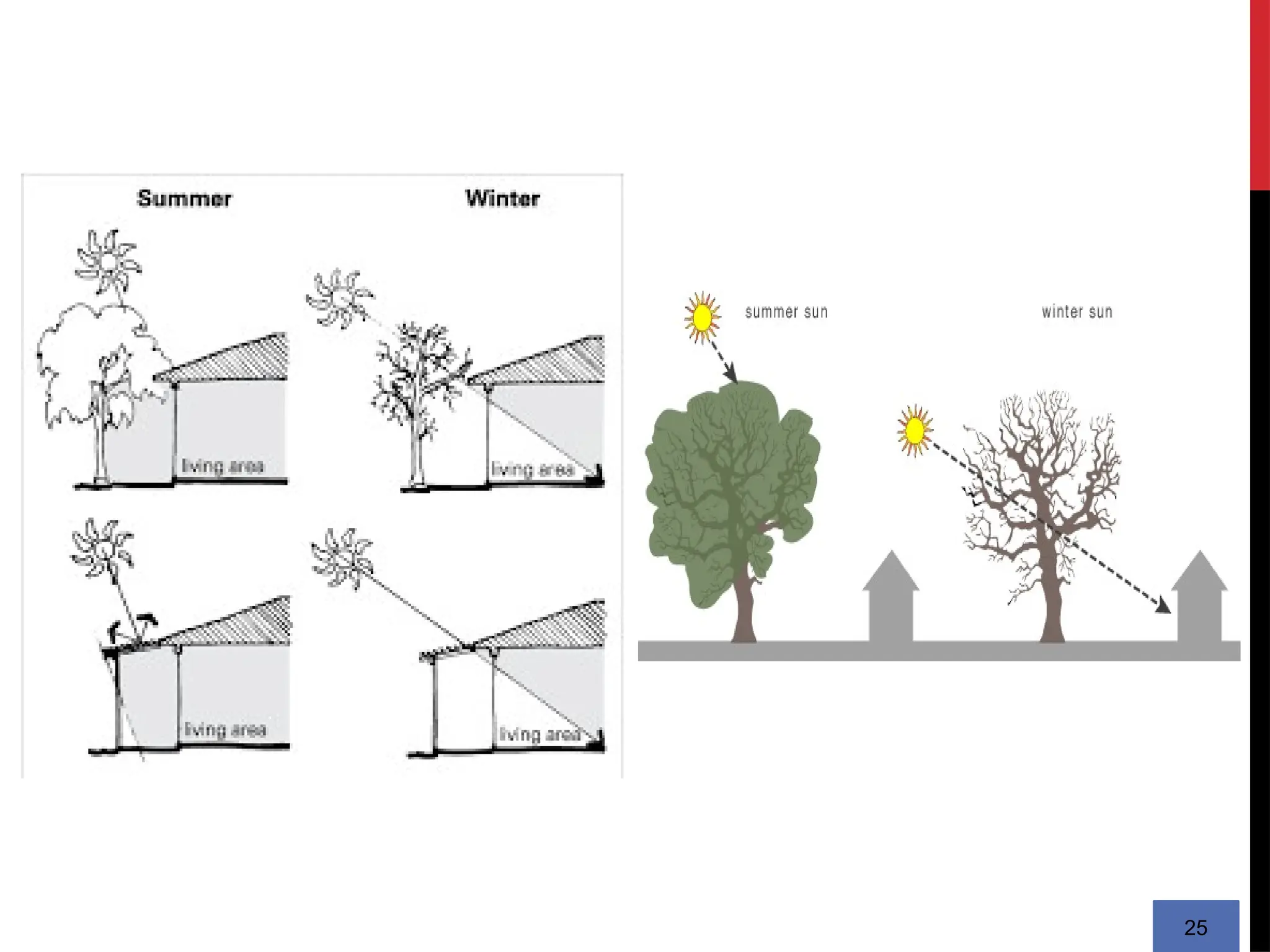
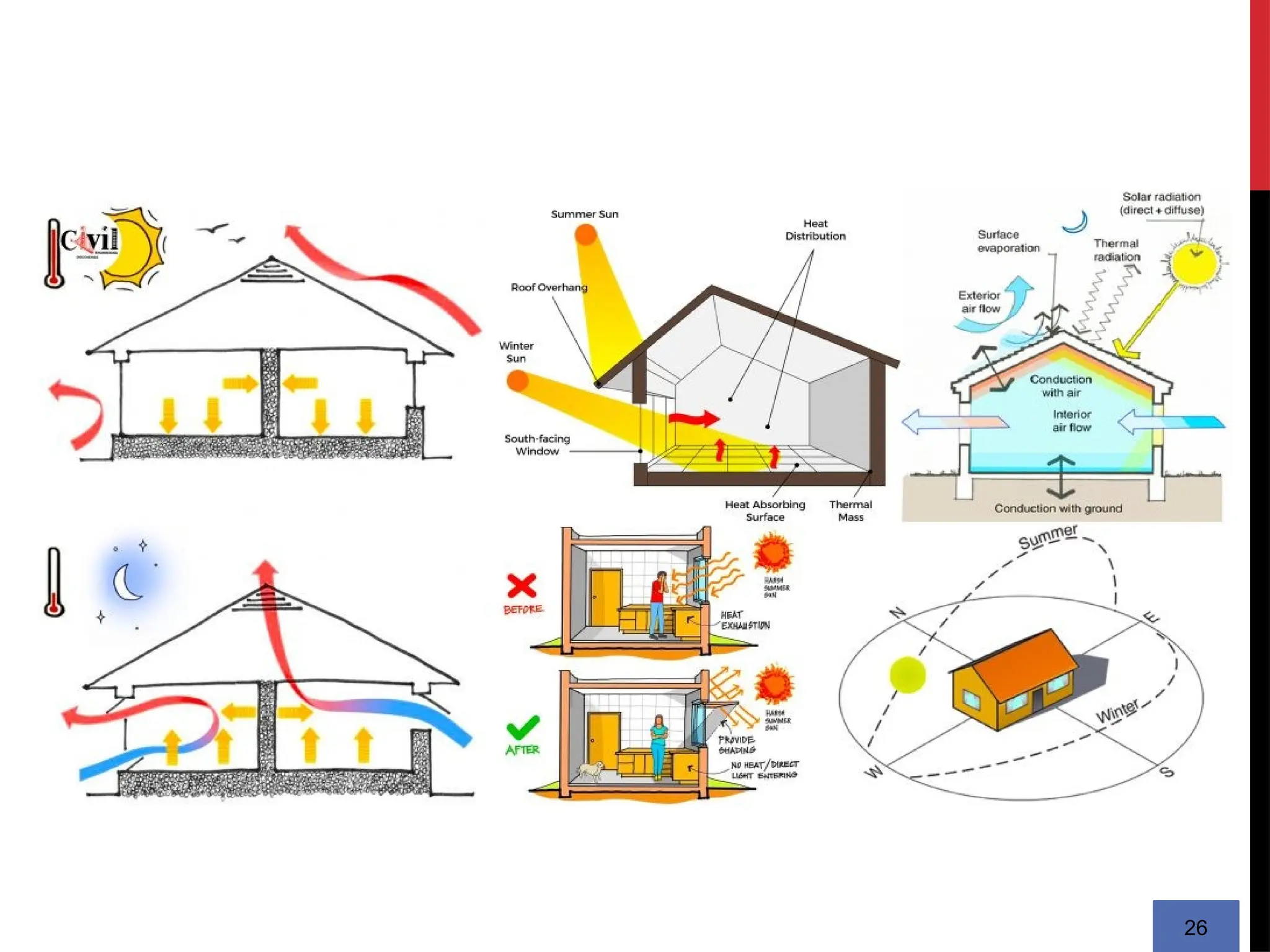
4. SOLAR ORIENTATION
20
21
22
23
24
25
26
27
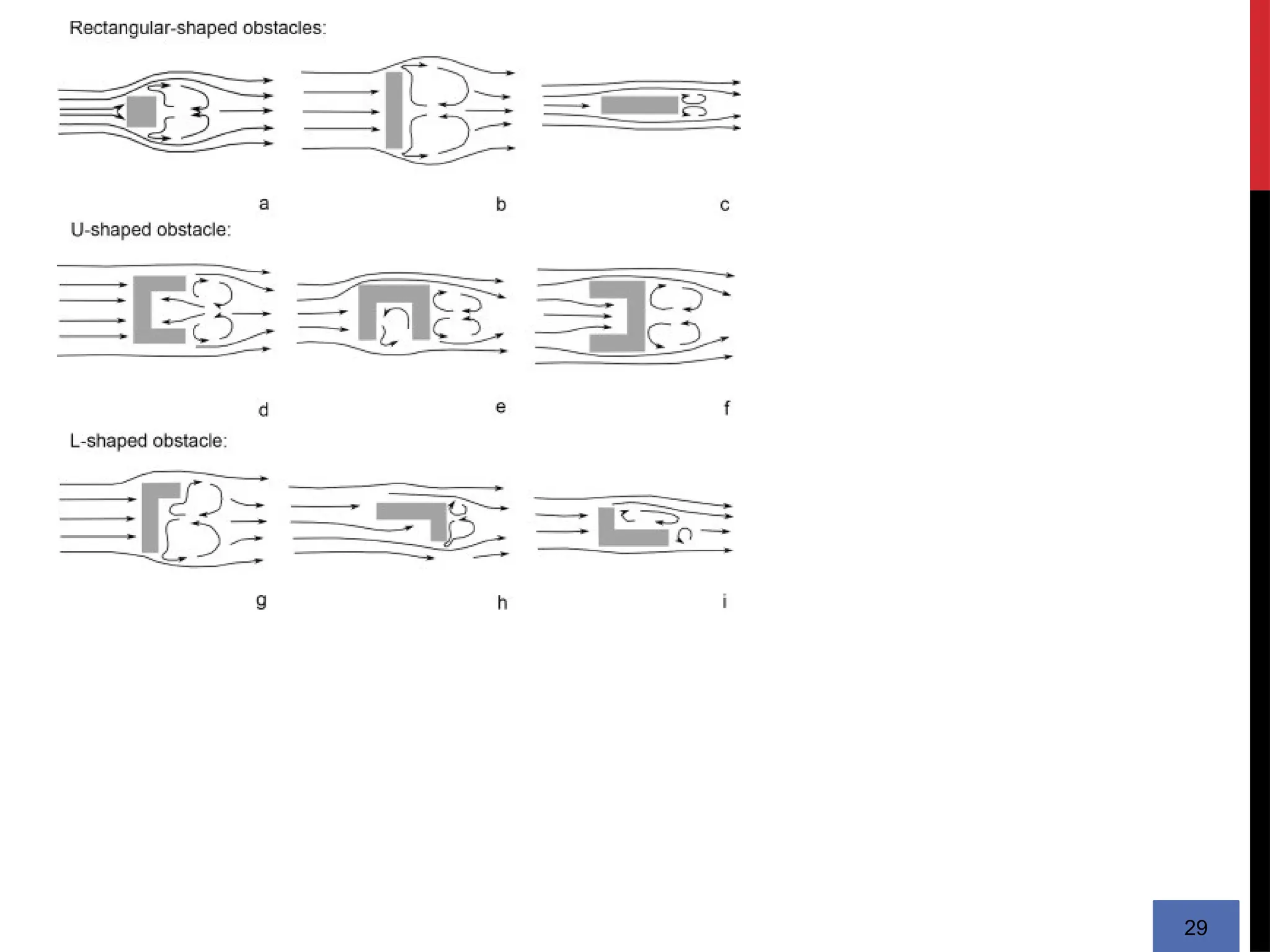
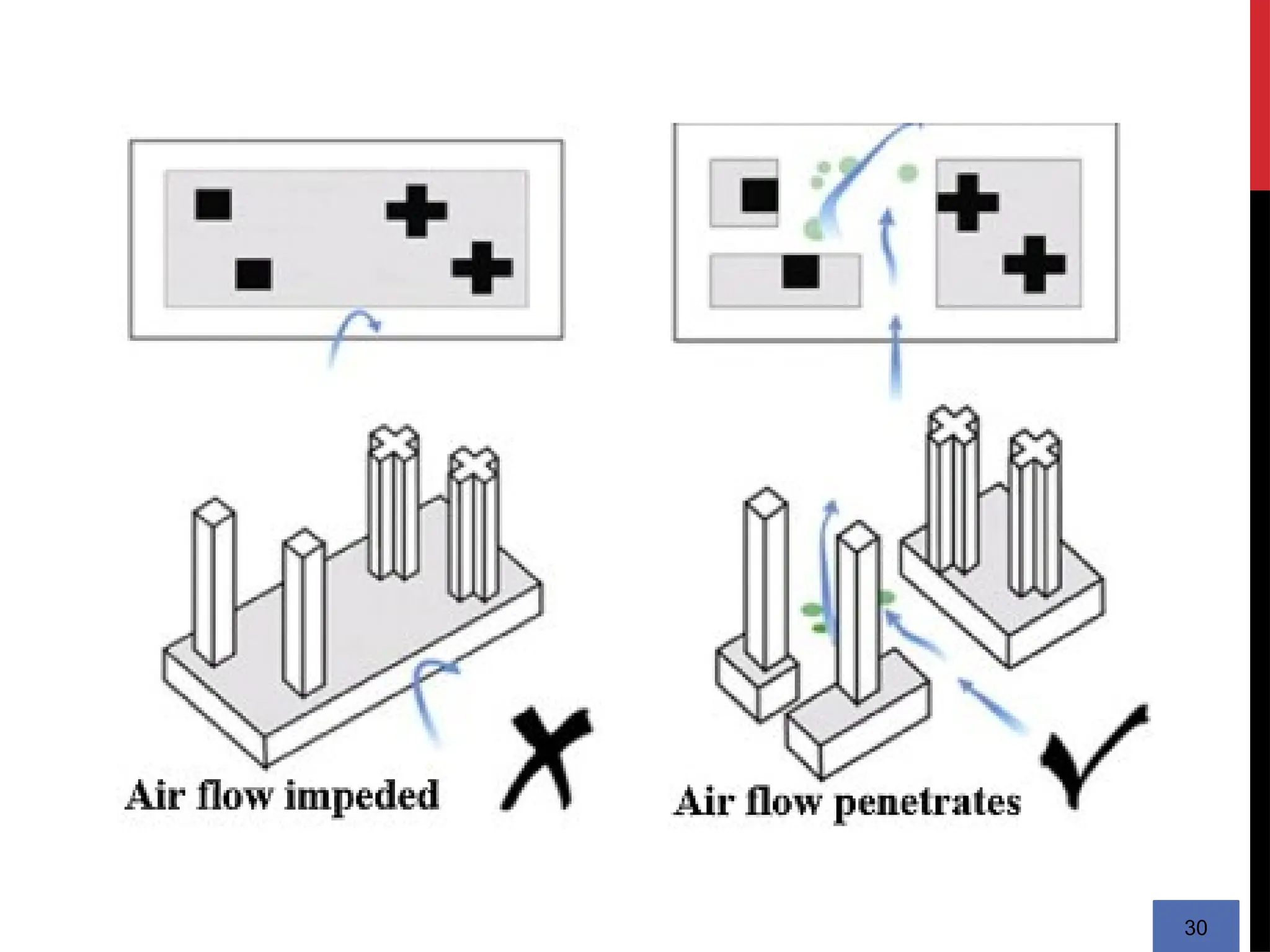
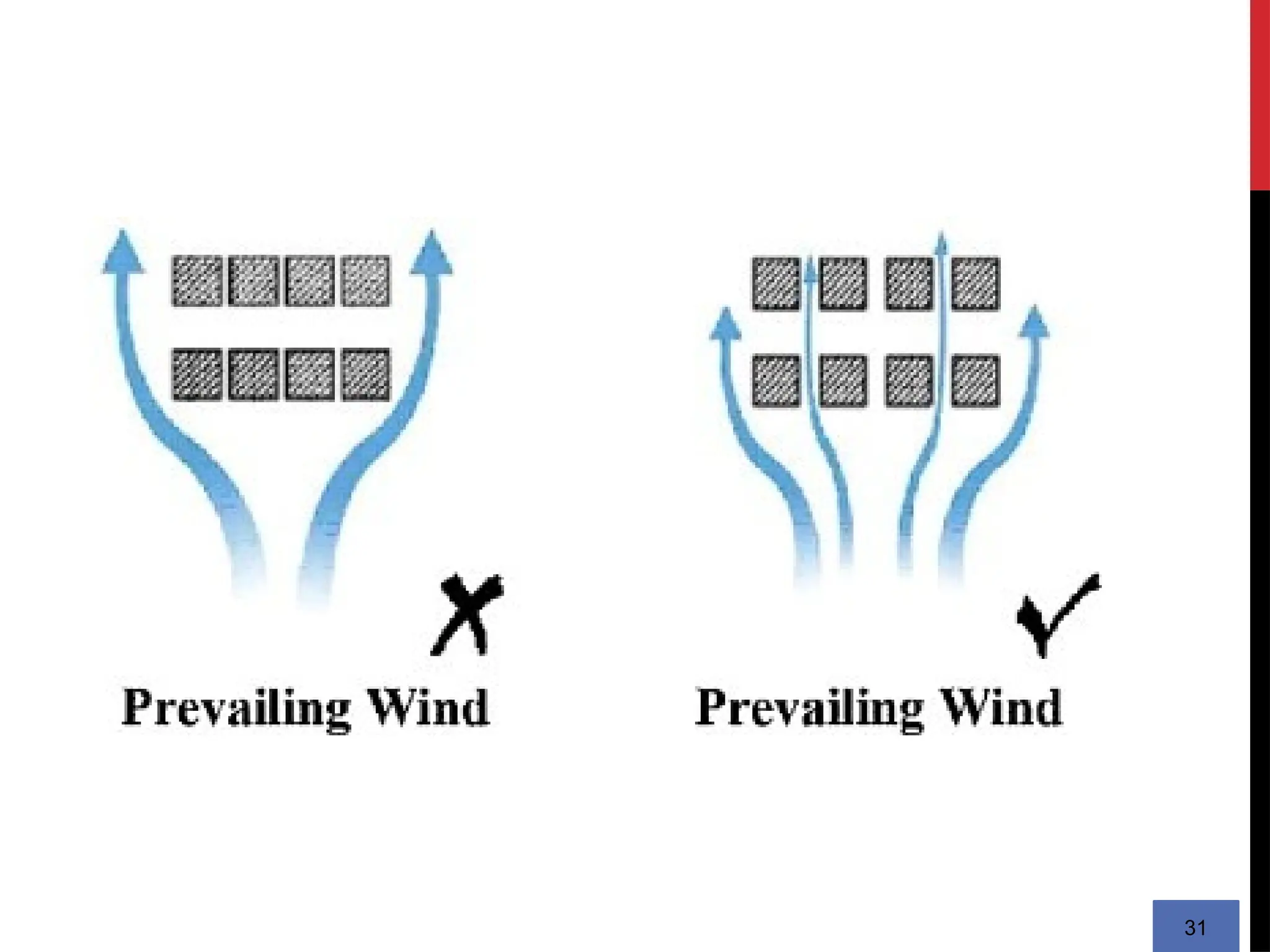
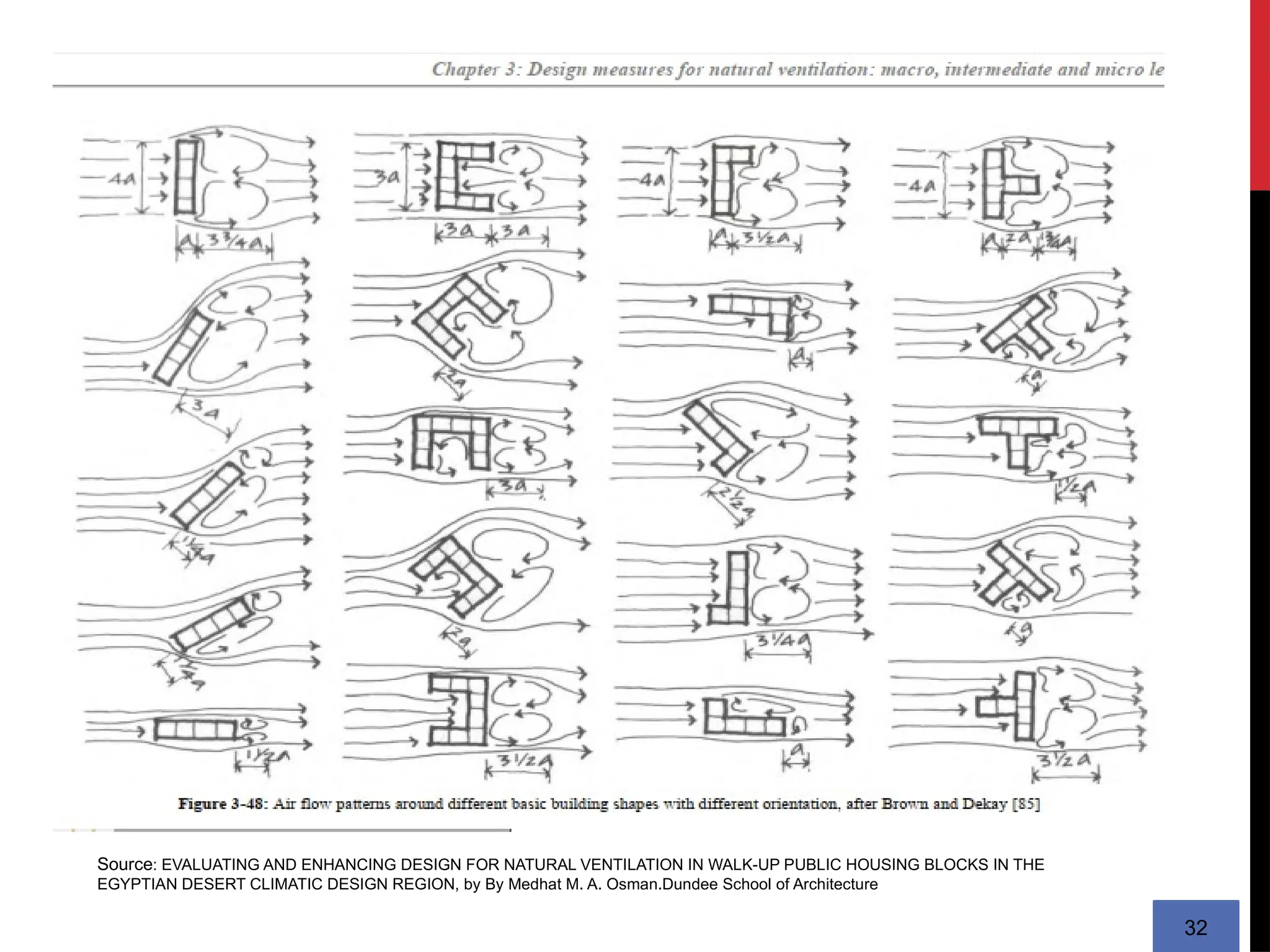
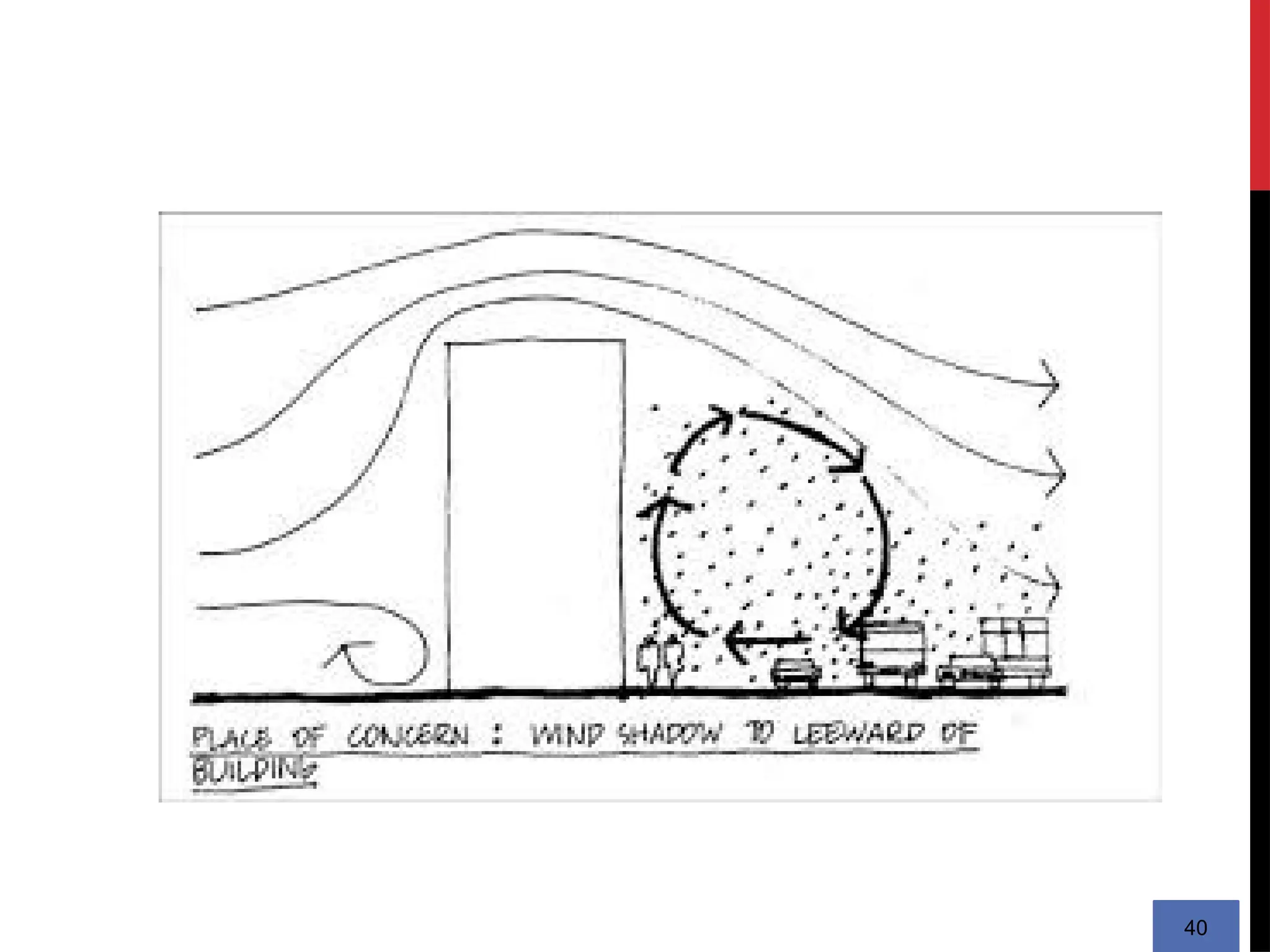
5. WIND ORIENTATION
28
29
30
31
Source: EVALUATING AND ENHANCING DESIGN FOR NATURAL VENTILATION IN WALK-UP PUBLIC HOUSING BLOCKS IN THE
EGYPTIAN DESERT CLIMATIC DESIGN REGION, by By Medhat M. A. Osman.Dundee School of Architecture
32
33
34
35
36
37
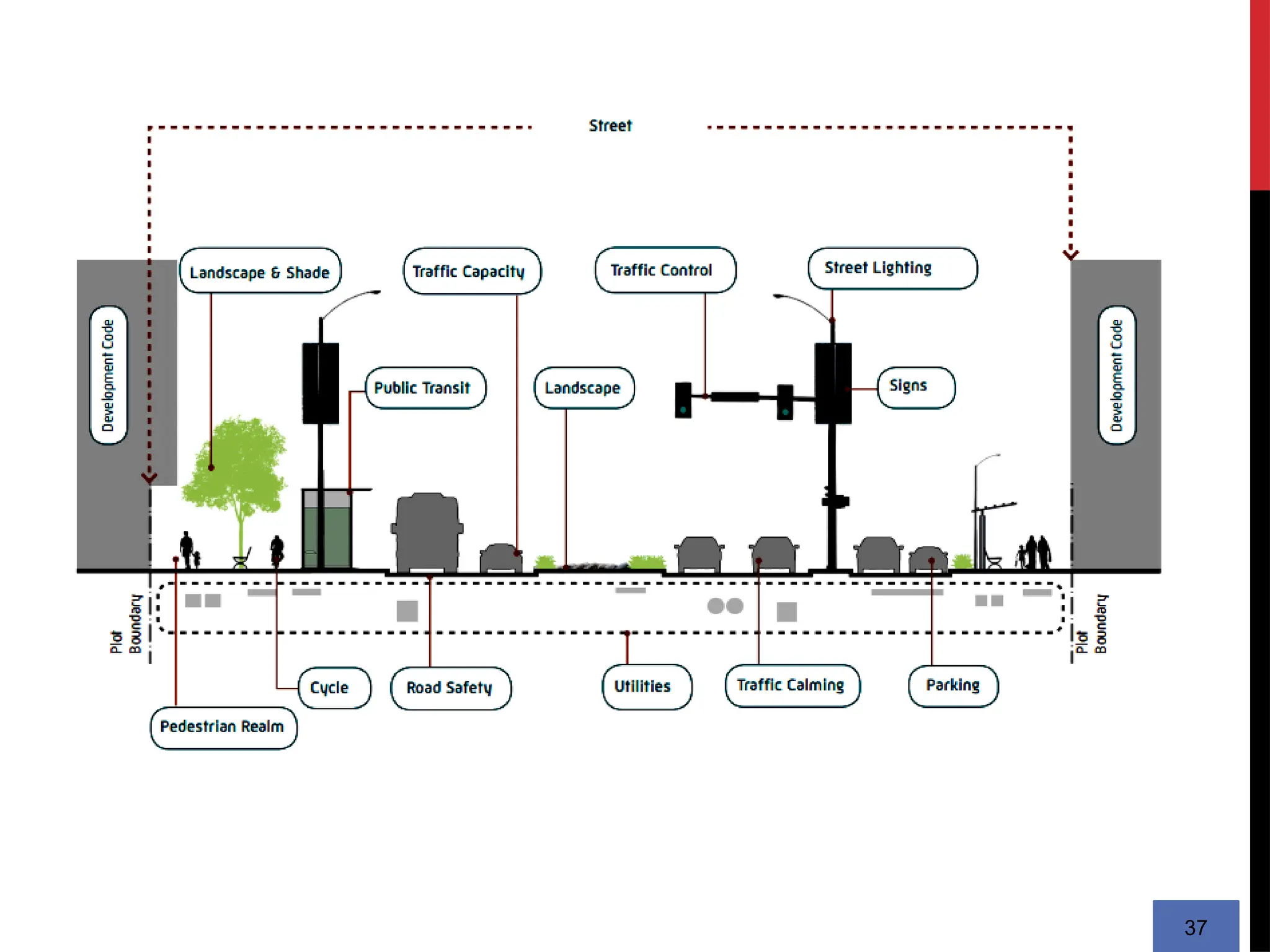
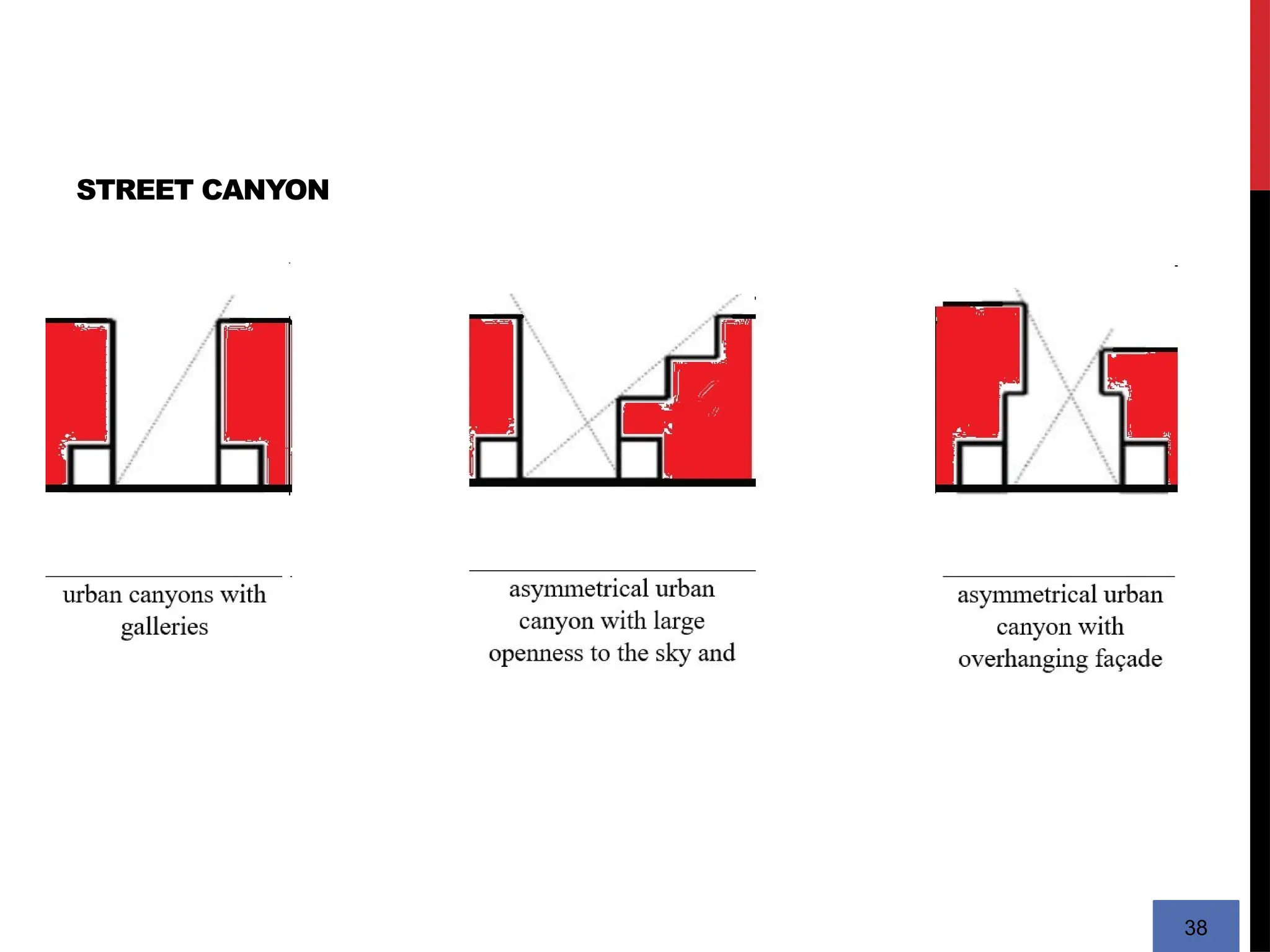
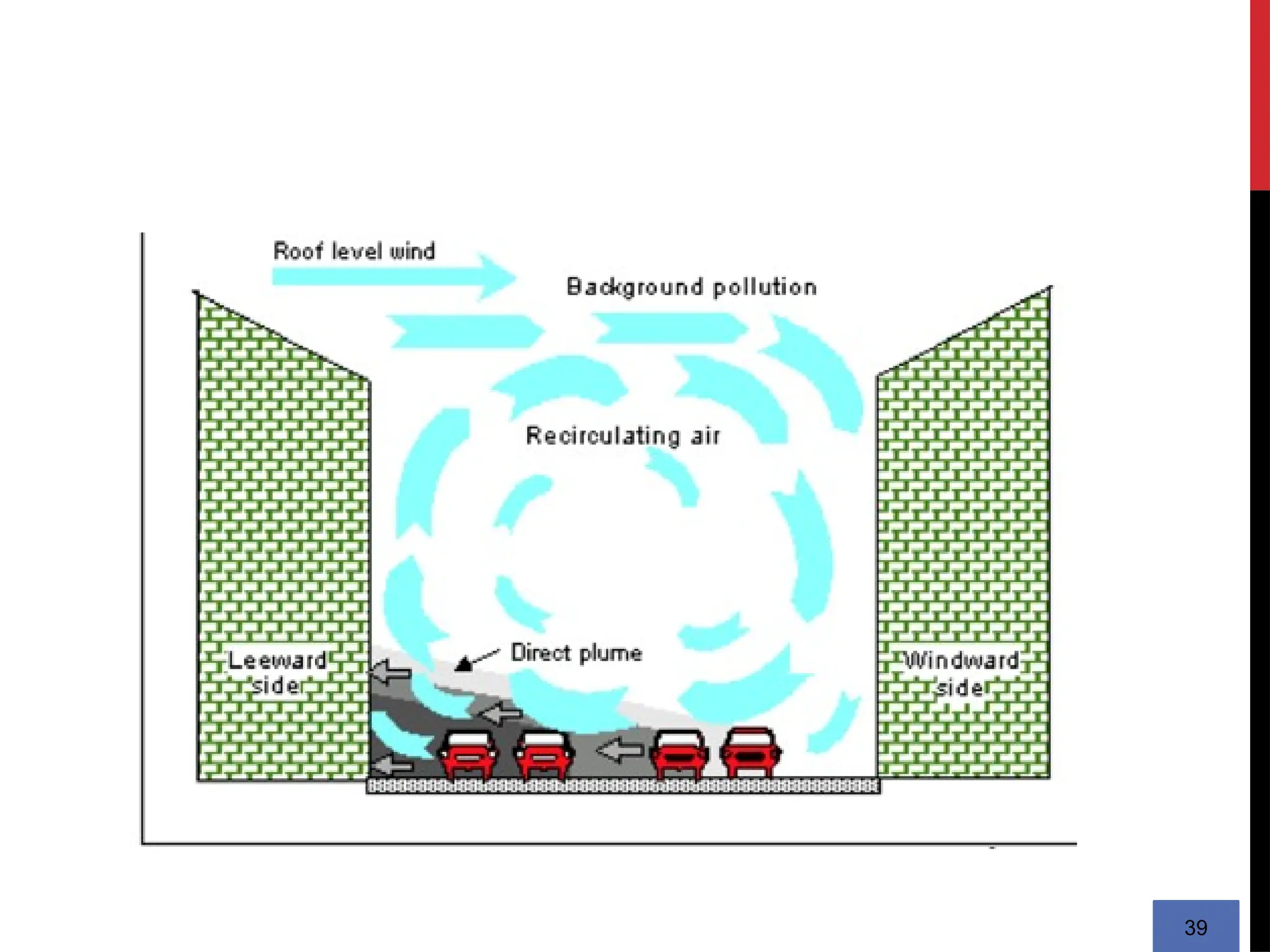
STREET CANYON
38
39
40
41
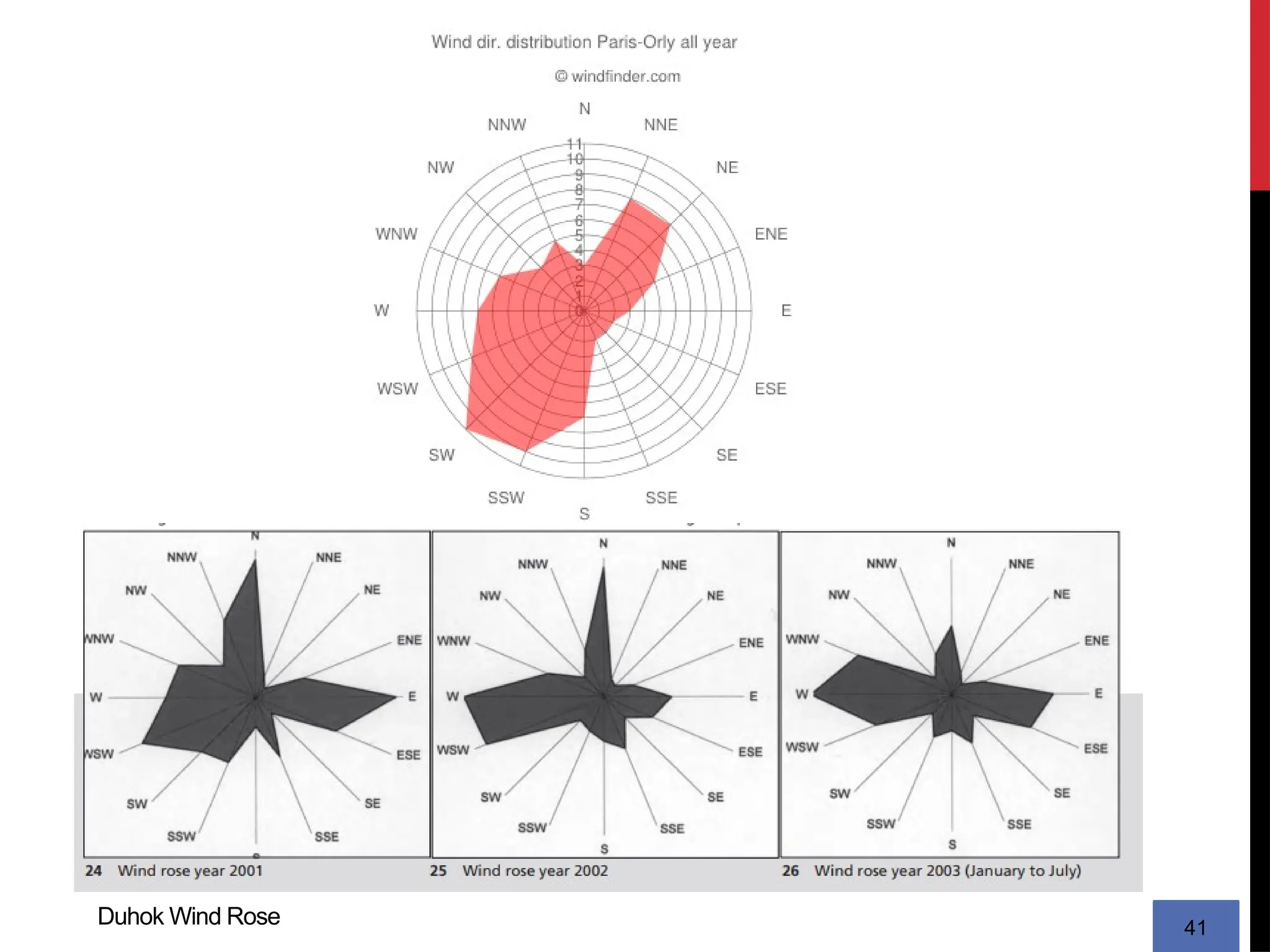
Duhok Wind Rose
42
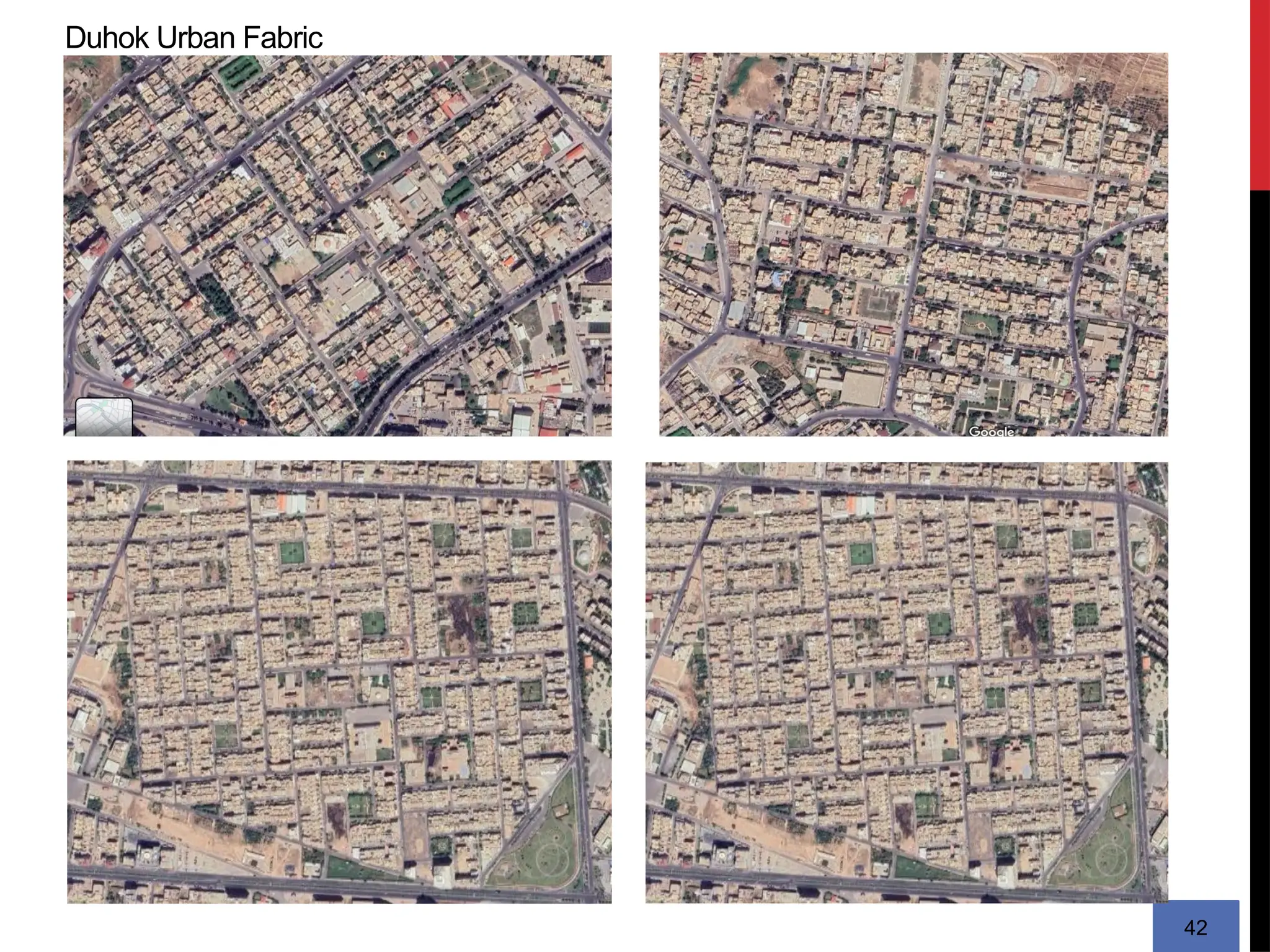
Duhok Urban Fabric
43
ANY QUESTION?

Lecture-06-Block structure & Orientation 18-11-2024.pptx

  • 1.
    Dr. Eng. Ismail.I. Hajani Date : 18th Nov. 2024 1 Course name: URBAN DESIGN STUDIO II Semester: 7 University of Duhok College of City & regional Planning Department of Spatial Planning URBAN BLOCKS & STREETSCAPE
  • 2.
  • 3.
    - Urban blockis a primary element of urbanism in cities, and a unit of developable lands. The block as an element in urban hierarchy associated with ever growing cities and a most important feature of the cities’ form. Admittedly, block constitutes a single or group of buildings in regardless to their size, shape which in turn defines the layout. - There are many terms, synonyms and phrases used to describe blocks like building block, urban block and city block (Kostof, 2004) or community block (Oikonomou, 2015) or development block (Llewelyn- Davies, 2007). The terms, block, super-block and mega-block imply a changin in size and capacity of urban form over time. 3 AN OVERVIEW
  • 4.
    • A cityblock, urban block or simply block is a central element of urban planning and urban design. • A city block is the smallest area that is surrounded by streets. • City blocks are the space for buildings within the street pattern of a city, and form the basic unit of a city's urban fabric. 4
  • 5.
  • 6.
  • 7.
    RELATED ISSUES : 7 1.Density 2. Diversity 3. Permeability 4. Solar Orientation 5. Wind Orientation
  • 8.
    1. DENSITY 8  Incase of new development initiatives, the size of urban blocks could be determined by analyzing the location characteristics, conditions and requirements of particular land uses (e.g. housing, offices, commercial, and industry) “or through the use of historical precedents - that is, patterns that have endured and accommodated growth and change over time” .  The convenient grid for residential areas to provide optimum network for motorised traffic, pedestrian and cyclists is between 80 to 100 meters. In central areas with huge flow of pedestrian, grid spacing between 60 to 80 meters is the ideal.  Liewelyn-Davies (2007, p. 58) recommends that “blocks of external dimensions of about 90 m.x90 m., containing private or communal gardens, provide a good trade-off between biodiversity and other considerations”.
  • 9.
    9  Montgomery approvesthese dimensions for a new city and confirms that the blocks dimension should not exceed 91x91 meters. “Building would not tend to be set back from the street or positioned centrally within a plot but rather around central courtyards” .  The block size should be small to respect human scale and provide walk-able neighborhood, therefore block perimeter should not exceed 400 m.
  • 10.
    10  There aremany factors affecting the shape of the block layout and street pattern which provide different spatial configurations. These factors are: • The shape and form of urban block, divided into two patterns; organic and planned blocks. • The size of urban block, characterized by small or large blocks which define block layout and street pattern. • The plot characteristics which define the property of block structure layout and street patterns. • The orientation and topography of the area. • The density of urban blocks in term of built-up area and population density. • Land use categorization affects the type of social life that creates in the street and alleys.
  • 11.
    Different Strategies ToAchieve Same Density 11
  • 12.
  • 13.
    2. DIVERSITY 13  Manyproposals and design criteria have been suggested by scholars to reach the optimum size of urban block which are viable spatially, environmentally and economically. But the context and the uses have their effects on shaping and determining the size and form of the urban blocks.  A range of block sizes encourage diversity of building types and land uses and offer more chances for mixed uses, pedestrian accessibility.  The ideal size of urban blocks can be determined through 'comparison and experience' and more appropriate sizes of urban blocks can be deduced to form a 'complex urban pattern.
  • 14.
  • 15.
  • 16.
    3. PERMEABILITY &ACCESSIBILLITY 16  Permeability is one of the essential concepts in urban design. It refers to the ease of movement of people and vehicles within an urban environment. Permeability measures how easily people and vehicles can move from one point to another. Lynch (1961) emphasized the importance of street network management in urban development. T  In case of large urban blocks, to increase permeability the using of minor roads and footpaths through blocks is the best solution to increase walkability.  The layout identifies the spatial configuration and arrangement of block structure at the scale of street, block and building. The layout and configuration of urban block structure plays crucial role in defining the pattern of movement and designating parameters for subsequent initiatives development. Layout has a significant role in determining the accessibility on pedestrian movement and connectivity of different space and places to each other.
  • 17.
  • 18.
  • 19.
  • 20.
  • 21.
  • 22.
  • 23.
  • 24.
  • 25.
  • 26.
  • 27.
  • 28.
  • 29.
  • 30.
  • 31.
  • 32.
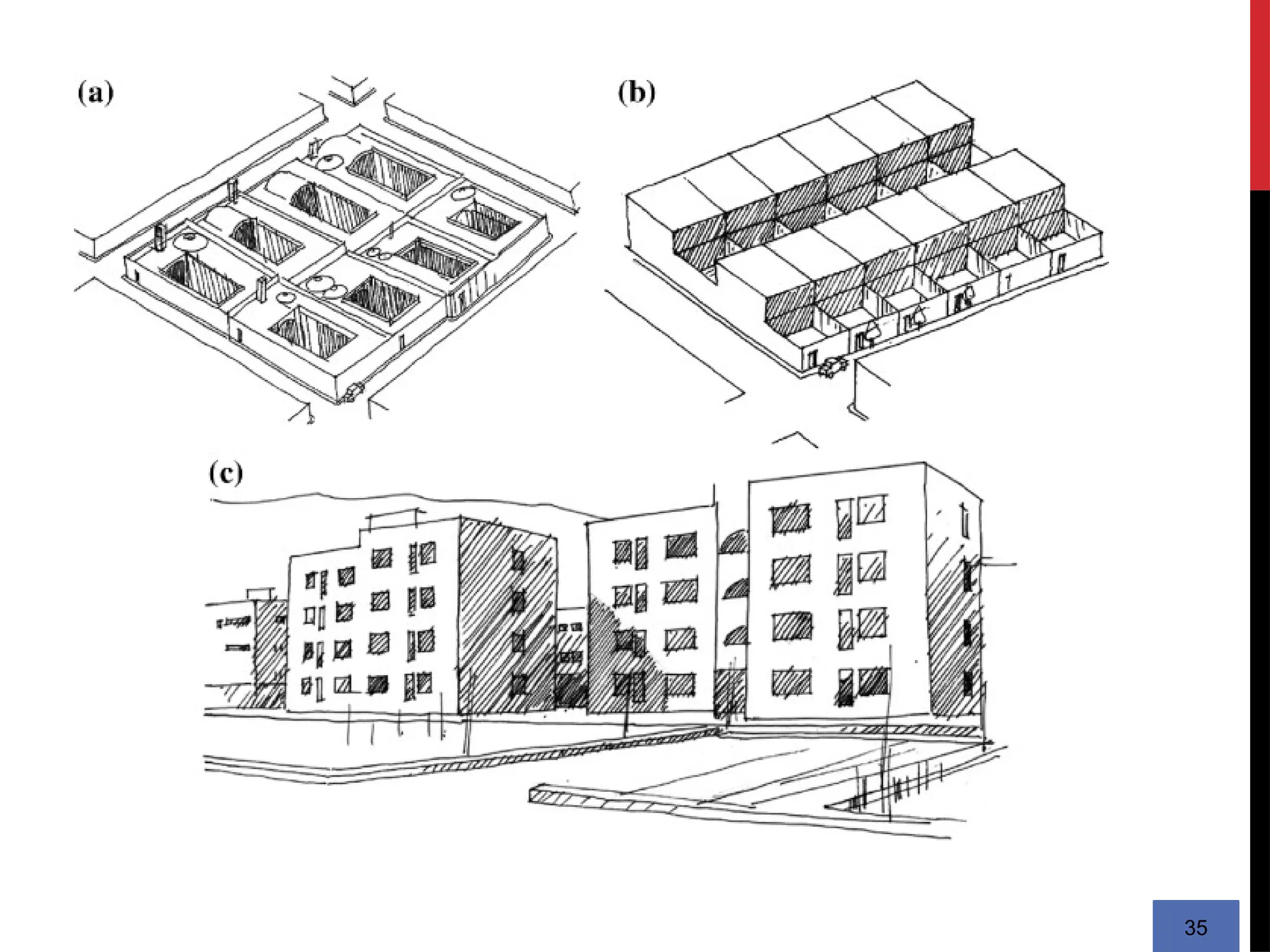
    Source: EVALUATING ANDENHANCING DESIGN FOR NATURAL VENTILATION IN WALK-UP PUBLIC HOUSING BLOCKS IN THE EGYPTIAN DESERT CLIMATIC DESIGN REGION, by By Medhat M. A. Osman.Dundee School of Architecture 32
  • 33.
  • 34.
  • 35.
  • 36.
  • 37.
  • 38.
  • 39.
  • 40.
  • 41.
  • 42.
  • 43.