1
CS414:
Computer Center
Management
Lecture #2: Computer Applications
Dr. Ghada Abdelhady
‫الوعلىهات‬ ‫نظن‬ ‫و‬ ‫الحاسب‬ ‫لعلىم‬ ‫العالى‬ ‫الوعهد‬
High Institute for Computer and information system
2
Objectives
 John Von Neuman's Concepts
 Current Computer Applications
 Types of Computer Applications
 Computer Programming Languages
John Von Neuman's Concepts of Computing
3
 Memory is to contain data & instructions together
 Only one instruction is to be executed at a time
Current Computer Applications
4
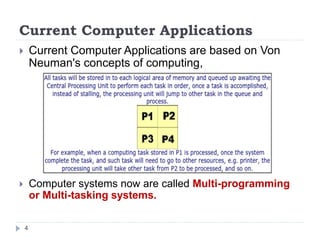
 Current Computer Applications are based on Von
Neuman's concepts of computing,
 Computer systems now are called Multi-programming
or Multi-tasking systems.
5
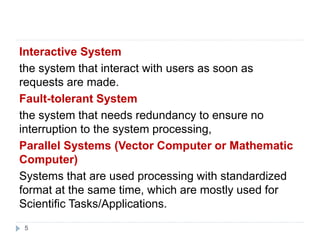
Interactive System
the system that interact with users as soon as
requests are made.
Fault-tolerant System
the system that needs redundancy to ensure no
interruption to the system processing,
Parallel Systems (Vector Computer or Mathematic
Computer)
Systems that are used processing with standardized
format at the same time, which are mostly used for
Scientific Tasks/Applications.
6
 Clustered Computers
 Supercomputer
(Cray Research Lab &Silicon Graphic Institution
(SGI).
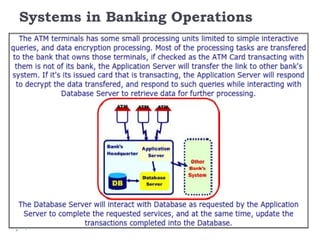
Systems in Banking Operations
7
Types of Computer Applications
8
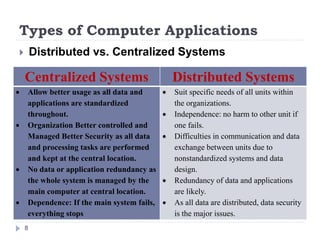
 Distributed vs. Centralized Systems
Centralized Systems Distributed Systems
 Allow better usage as all data and
applications are standardized
throughout.
 Organization Better controlled and
Managed Better Security as all data
and processing tasks are performed
and kept at the central location.
 No data or application redundancy as
the whole system is managed by the
main computer at central location.
 Dependence: If the main system fails,
everything stops
 Suit specific needs of all units within
the organizations.
 Independence: no harm to other unit if
one fails.
 Difficulties in communication and data
exchange between units due to
nonstandardized systems and data
design.
 Redundancy of data and applications
are likely.
 As all data are distributed, data security
is the major issues.
Computer Programing Languages
9
Generation Discussion
First Generation Machine Language - directly executable by the computer
Second Generation Assembly Language - low-level language similar to
machine language but more understandable by humans, is
transformed to machine language by an assembler program
Third Generation High-level language, which is procedural in format, is
transformed into machine language by a compiler,
examples include COBOL, FORTRAN, Pascal
Forth Generation High-level language, which is non-procedural, meaning
that the programmer specifies what to do, not how to do it;
most fourth generation languages are interpreted where
source code is changed to machine code on a line-by-line
interactive basis
Fifth Generation The evolving languages that are based on natural
languages such as English; the user can "talk" to the
computer as one would to another person
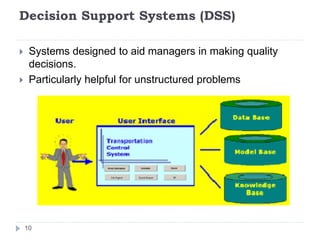
Decision Support Systems (DSS)
10
 Systems designed to aid managers in making quality
decisions.
 Particularly helpful for unstructured problems
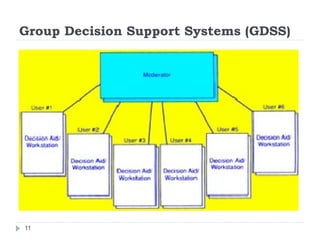
Group Decision Support Systems (GDSS)
11
Thank you for listening.
Dr. Ghada Abdelhady

Lec2

  • 1.
    1 CS414: Computer Center Management Lecture #2:Computer Applications Dr. Ghada Abdelhady ‫الوعلىهات‬ ‫نظن‬ ‫و‬ ‫الحاسب‬ ‫لعلىم‬ ‫العالى‬ ‫الوعهد‬ High Institute for Computer and information system
  • 2.
    2 Objectives  John VonNeuman's Concepts  Current Computer Applications  Types of Computer Applications  Computer Programming Languages
  • 3.
    John Von Neuman'sConcepts of Computing 3  Memory is to contain data & instructions together  Only one instruction is to be executed at a time
  • 4.
    Current Computer Applications 4 Current Computer Applications are based on Von Neuman's concepts of computing,  Computer systems now are called Multi-programming or Multi-tasking systems.
  • 5.
    5 Interactive System the systemthat interact with users as soon as requests are made. Fault-tolerant System the system that needs redundancy to ensure no interruption to the system processing, Parallel Systems (Vector Computer or Mathematic Computer) Systems that are used processing with standardized format at the same time, which are mostly used for Scientific Tasks/Applications.
  • 6.
    6  Clustered Computers Supercomputer (Cray Research Lab &Silicon Graphic Institution (SGI).
  • 7.
    Systems in BankingOperations 7
  • 8.
    Types of ComputerApplications 8  Distributed vs. Centralized Systems Centralized Systems Distributed Systems  Allow better usage as all data and applications are standardized throughout.  Organization Better controlled and Managed Better Security as all data and processing tasks are performed and kept at the central location.  No data or application redundancy as the whole system is managed by the main computer at central location.  Dependence: If the main system fails, everything stops  Suit specific needs of all units within the organizations.  Independence: no harm to other unit if one fails.  Difficulties in communication and data exchange between units due to nonstandardized systems and data design.  Redundancy of data and applications are likely.  As all data are distributed, data security is the major issues.
  • 9.
    Computer Programing Languages 9 GenerationDiscussion First Generation Machine Language - directly executable by the computer Second Generation Assembly Language - low-level language similar to machine language but more understandable by humans, is transformed to machine language by an assembler program Third Generation High-level language, which is procedural in format, is transformed into machine language by a compiler, examples include COBOL, FORTRAN, Pascal Forth Generation High-level language, which is non-procedural, meaning that the programmer specifies what to do, not how to do it; most fourth generation languages are interpreted where source code is changed to machine code on a line-by-line interactive basis Fifth Generation The evolving languages that are based on natural languages such as English; the user can "talk" to the computer as one would to another person
  • 10.
    Decision Support Systems(DSS) 10  Systems designed to aid managers in making quality decisions.  Particularly helpful for unstructured problems
  • 11.
    Group Decision SupportSystems (GDSS) 11
  • 12.
    Thank you forlistening. Dr. Ghada Abdelhady