Modern Academy FOR Computer Science &
Management Technology in Maadi
Department of Computer Science
• Subject: (CS 101) Introduction to Computer Science
• Professors: Prof. Mahmoud Gadallah, and Dr. Mohamed Elnabawy
• Tutorial and Lab Coordinator: Instructor Teams
• CONTACT: ( LMS-MOODLE) & (WhatsApp: 01005586337).
E-Mail: m.elnabawy@eng.modern-academy.edu.eg
• COURSE RULES: GRADES/ LATE HW/ ATTENDANCE.
CS 101 Dr. Mohamed M. Elnabawy Fall 2025
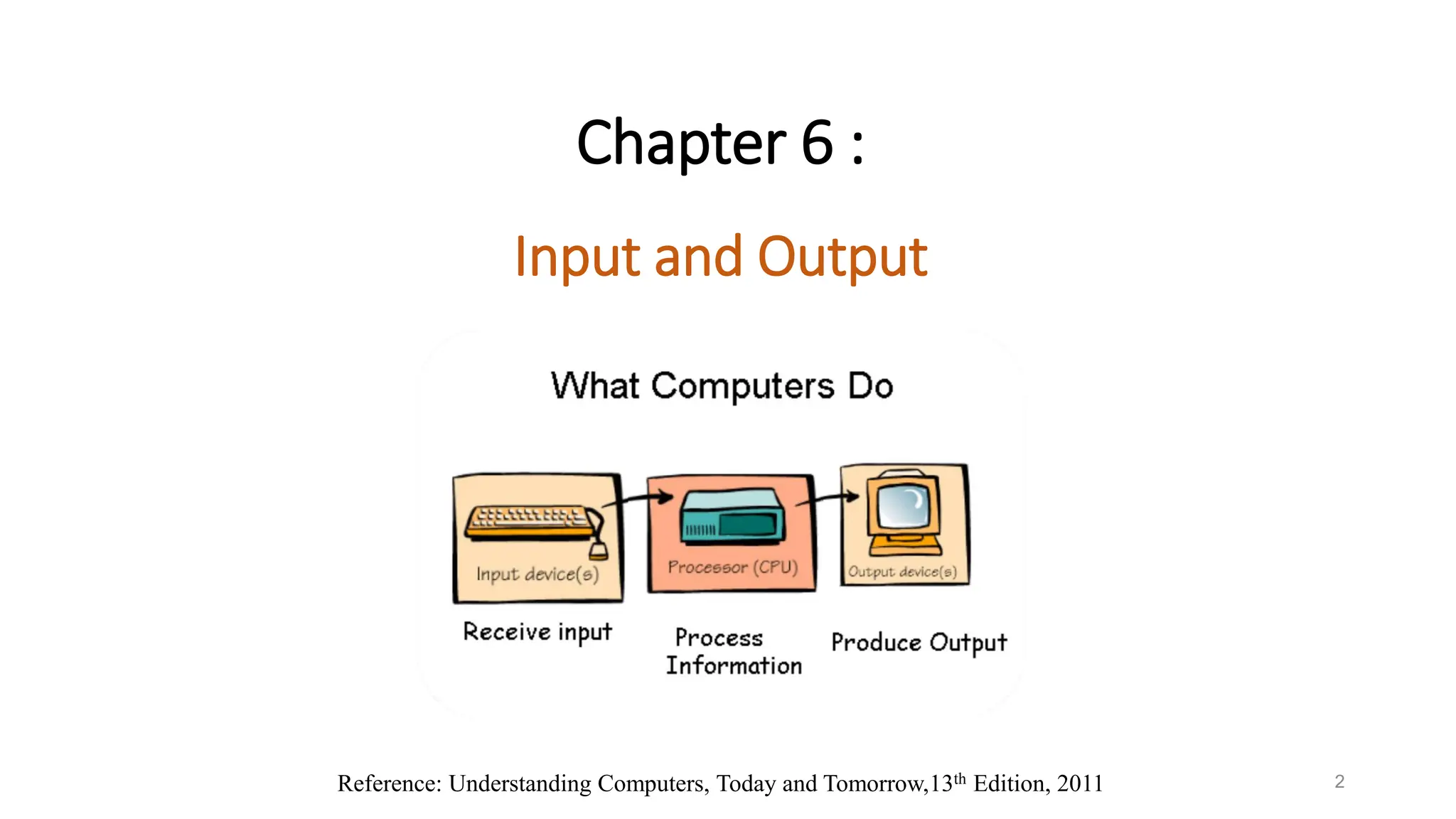
Chapter 6 :
Input and Output
Reference: Understanding Computers, Today and Tomorrow,13th Edition, 2011 2
• Explain different types of keyboards and pointing devices.
• Describe scanners, readers, and digital cameras.
• Understand the audio as an input and output.
• Explain the display devices and how they work.
• Describe printers and how they work.
Learning Outcomes
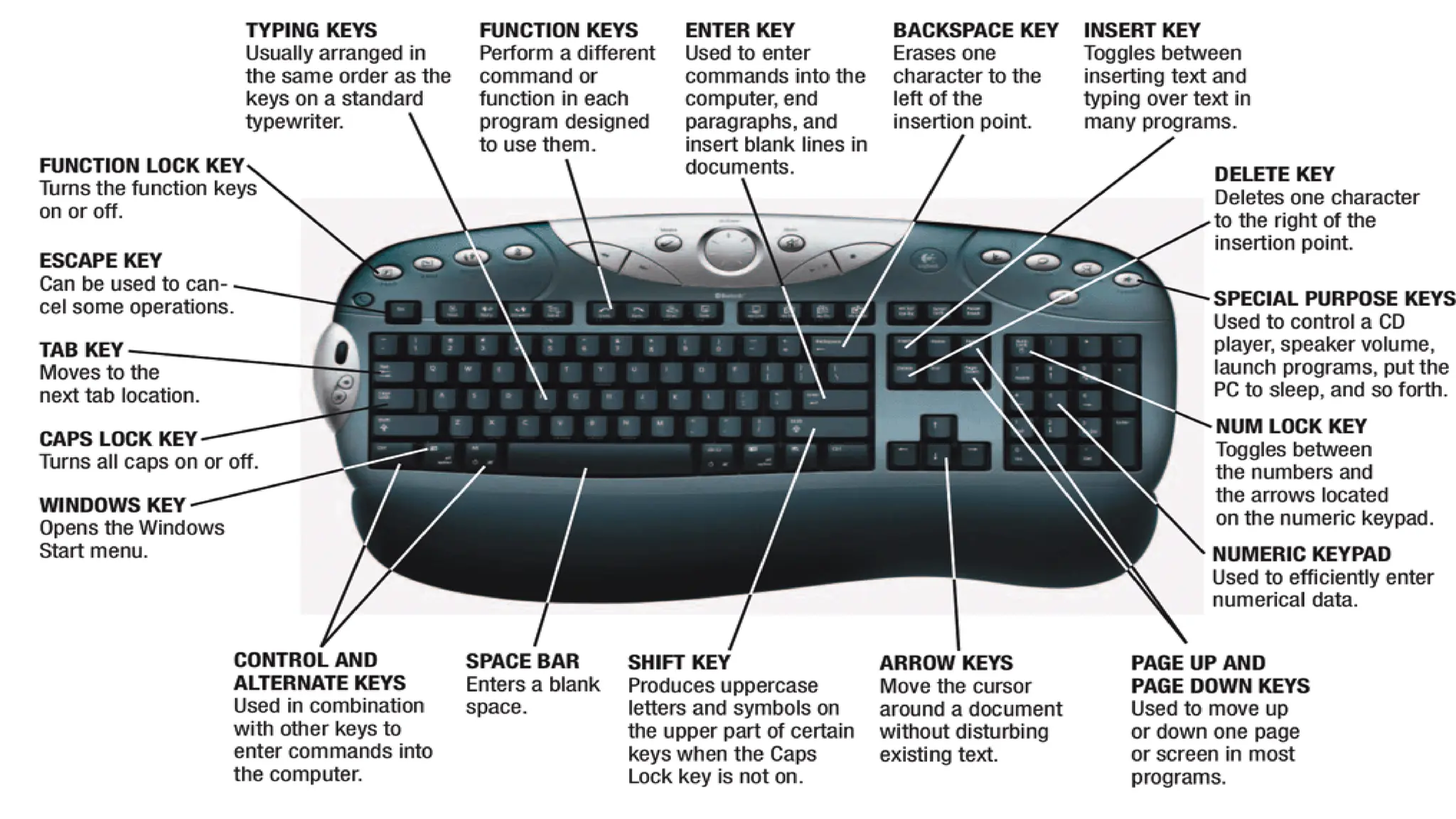
• Keyboard: input device containing keys, arranged in a typewriter type of
configuration, that can be used to input letters, numbers, and other
symbols
• Keyboard Contains:
• Standard alphanumeric keys.
• Numeric keypad.
• Function keys.
• Directional keys and special keys.
Keyboards
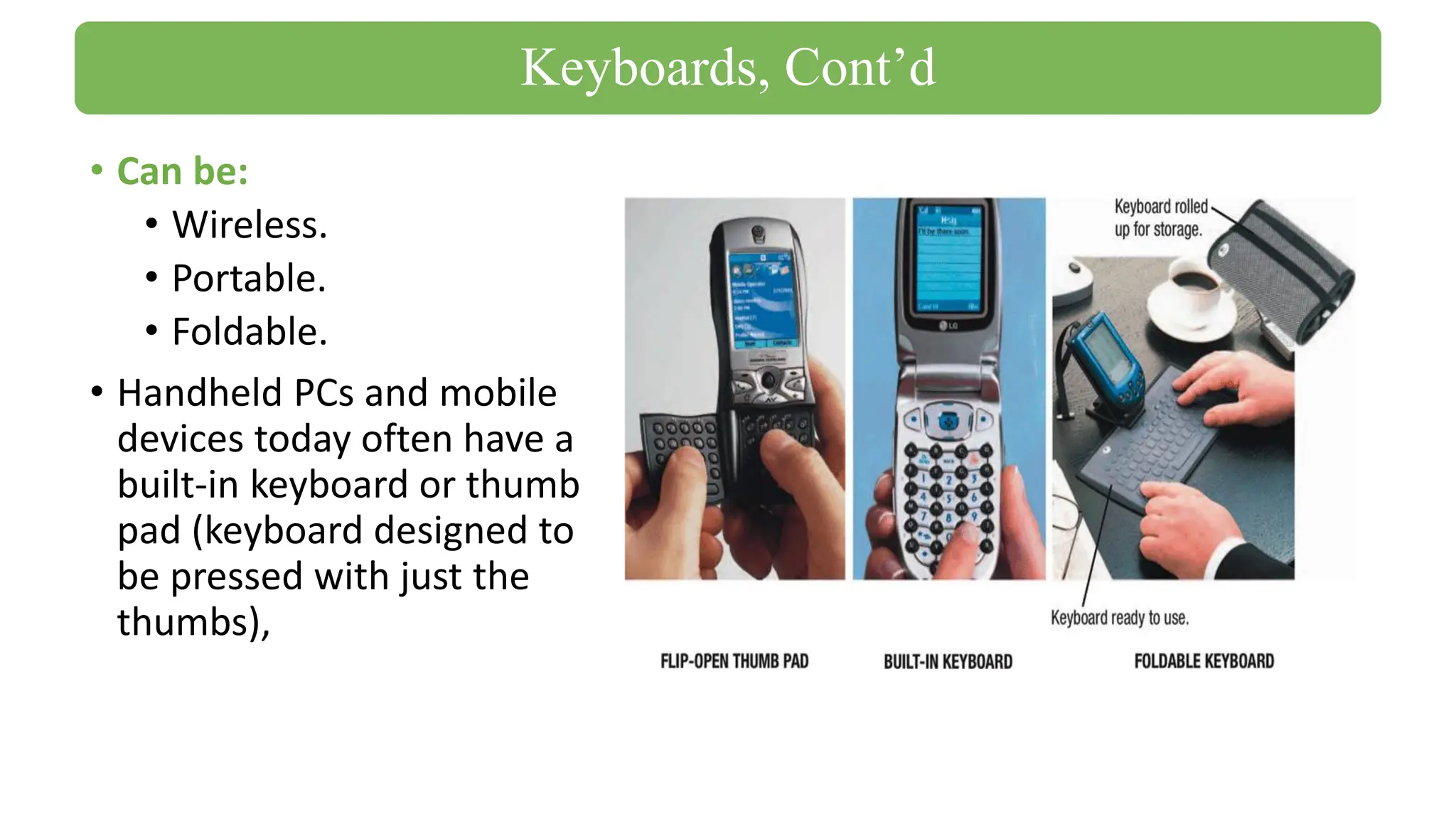
• Can be:
• Wireless.
• Portable.
• Foldable.
• Handheld PCs and mobile
devices today often have a
built-in keyboard or thumb
pad (keyboard designed to
be pressed with just the
thumbs),
Keyboards, Cont’d
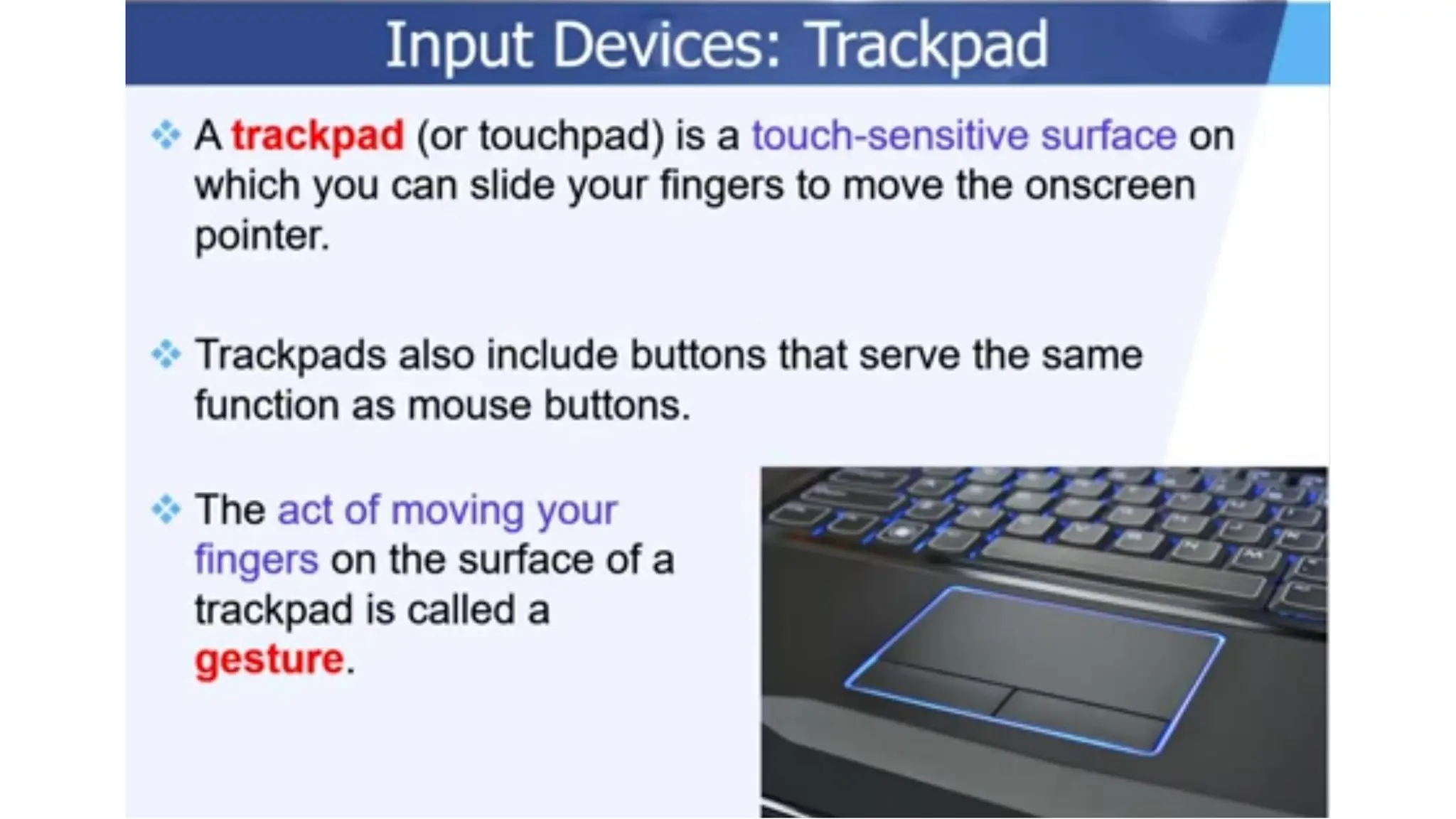
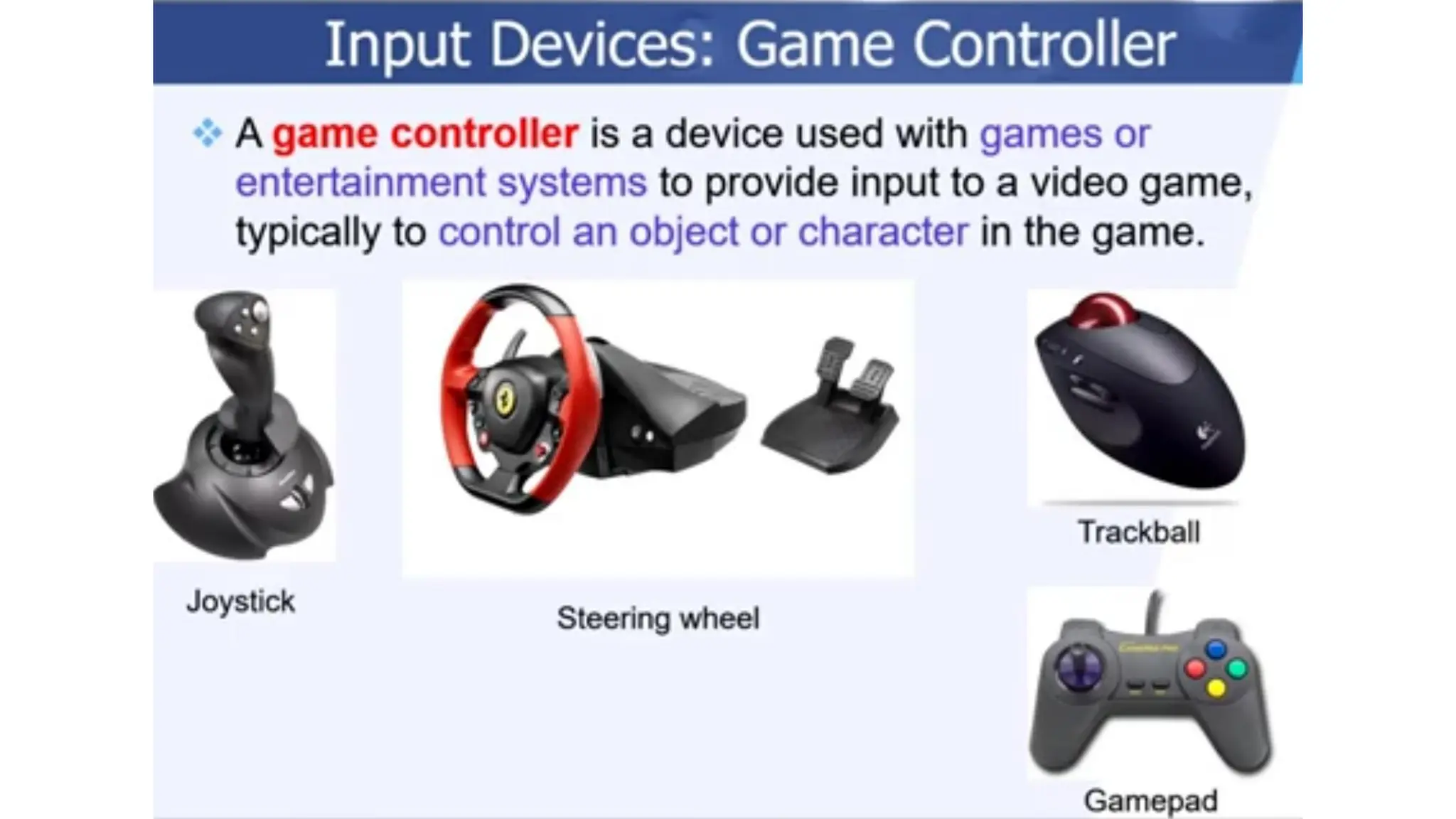
• Pointing device: input device that moves an onscreen pointer (arrow
or insertion point) to allow the user to select objects on the screen.
• Usually buttons on the device are used to select objects.
• Common types of pointing devices:
• Mouse.
• Electronic pen.
• Touch screen.
Pointing Devices
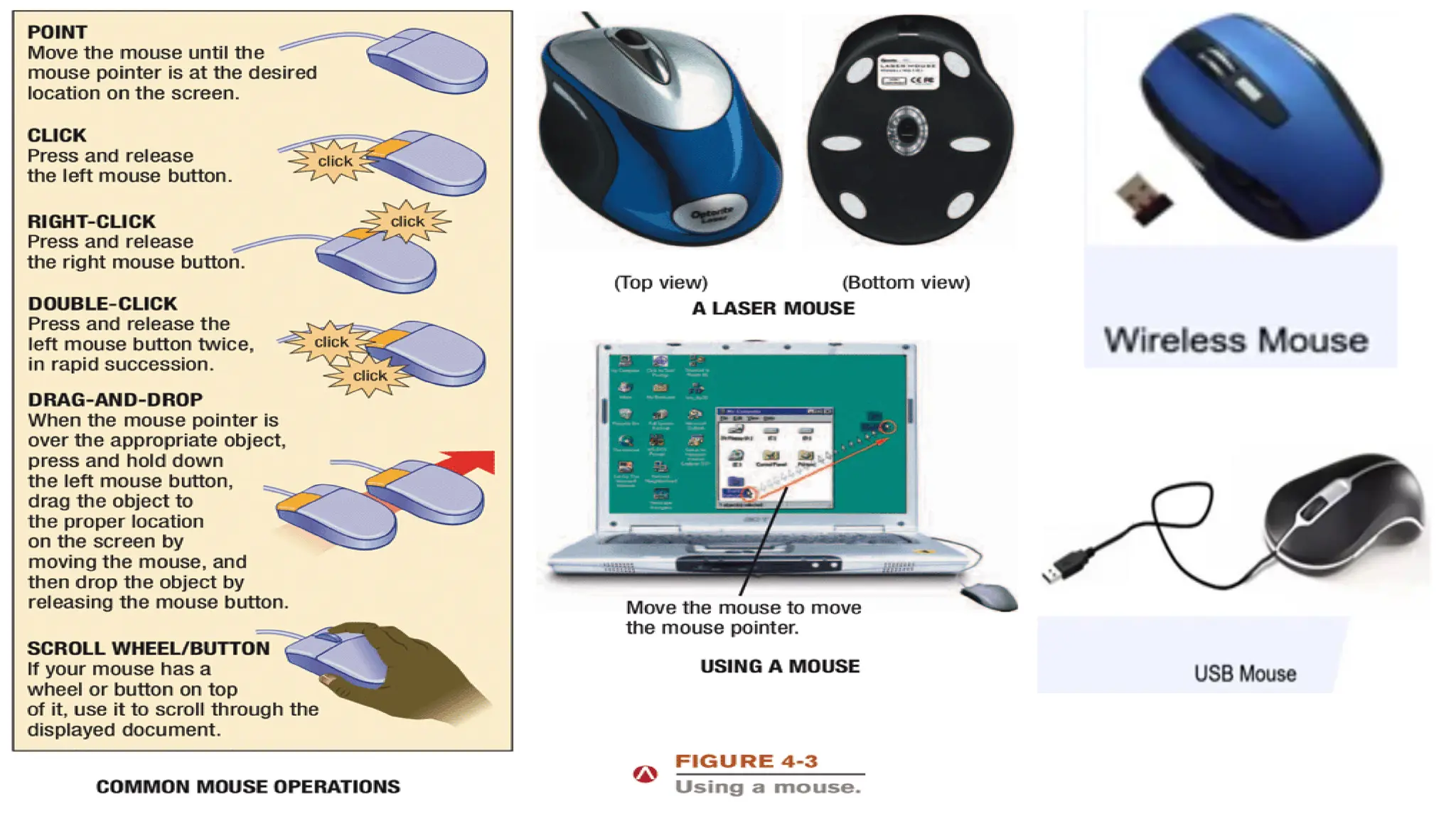
• A Mouse is an input device designed to manipulate graphical objects
and controls onscreen.
• Most desktop computer systems include a mouse as the primary
pointing device.
• common pointing device that the user slides along a flat surface to
move a pointer around the screen and clicks its buttons to make
selections:
• Rests on the desk or other flat surface close to the user’s PC.
• Older mechanical mice have a ball exposed on the bottom surface.
• Most mice today are optical mice that track movements with light.
• Can be wireless.
The Mouse
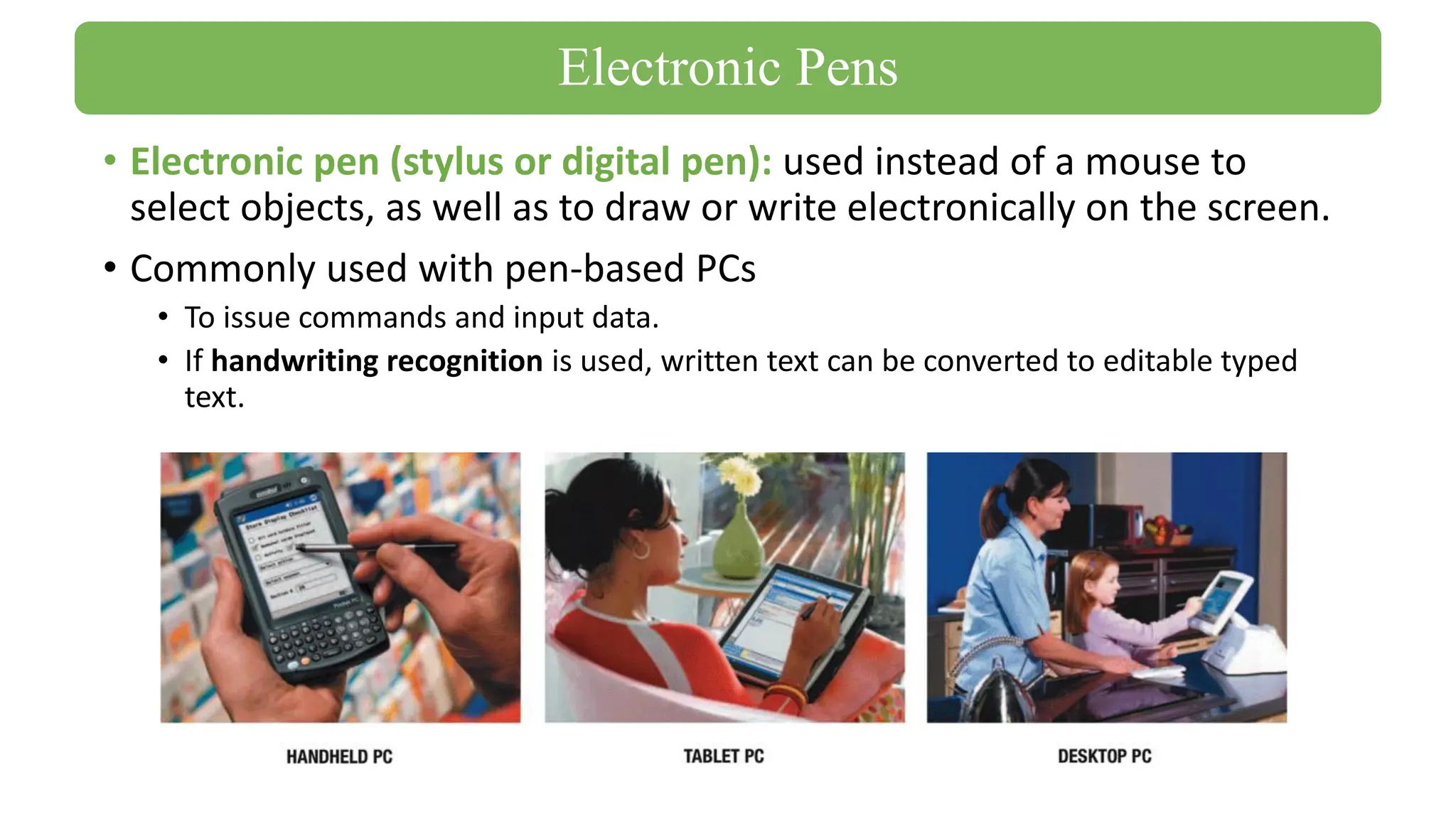
• Electronic pen (stylus or digital pen): used instead of a mouse to
select objects, as well as to draw or write electronically on the screen.
• Commonly used with pen-based PCs
• To issue commands and input data.
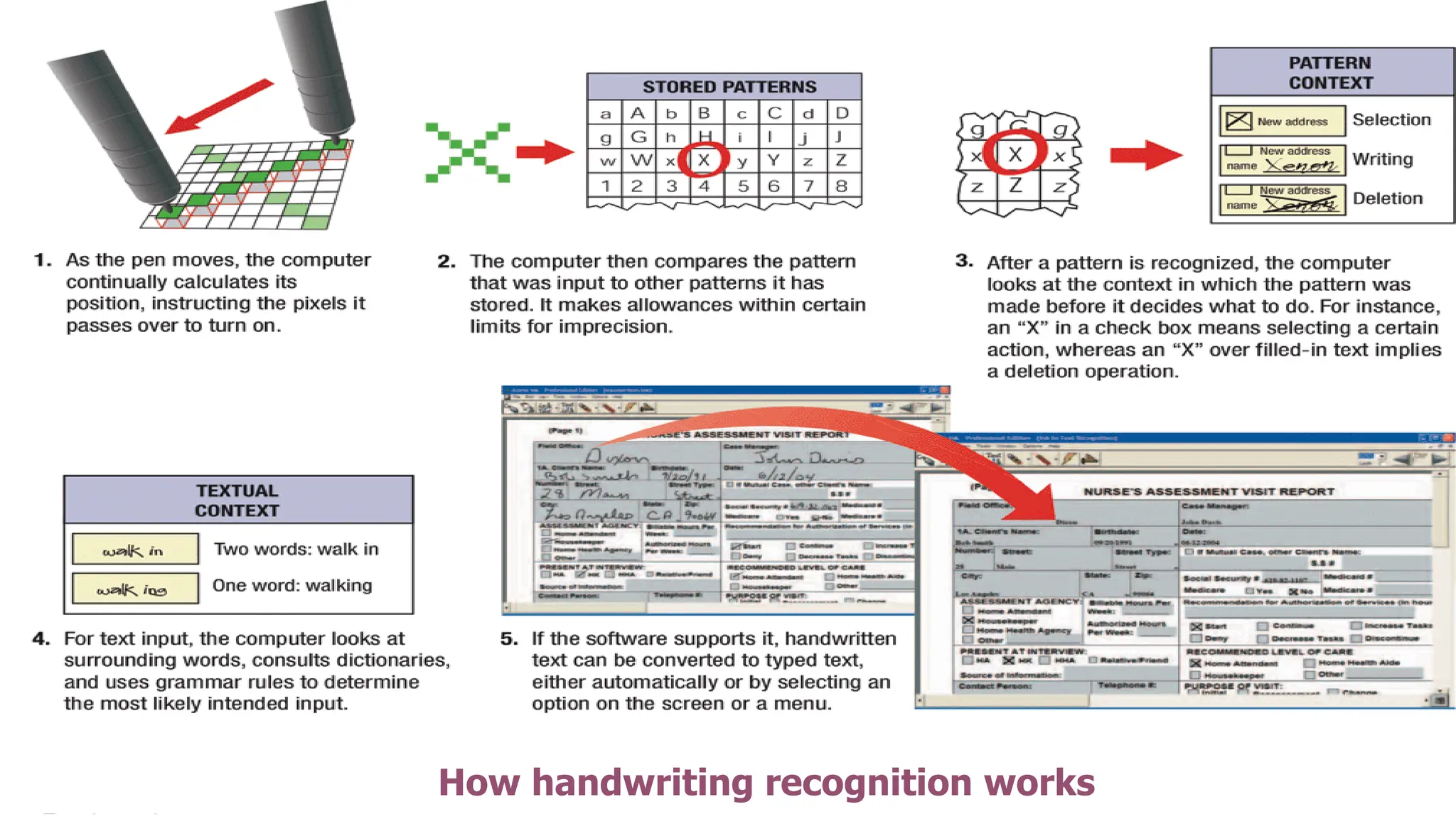
• If handwriting recognition is used, written text can be converted to editable typed
text.
Electronic Pens
How handwriting recognition works
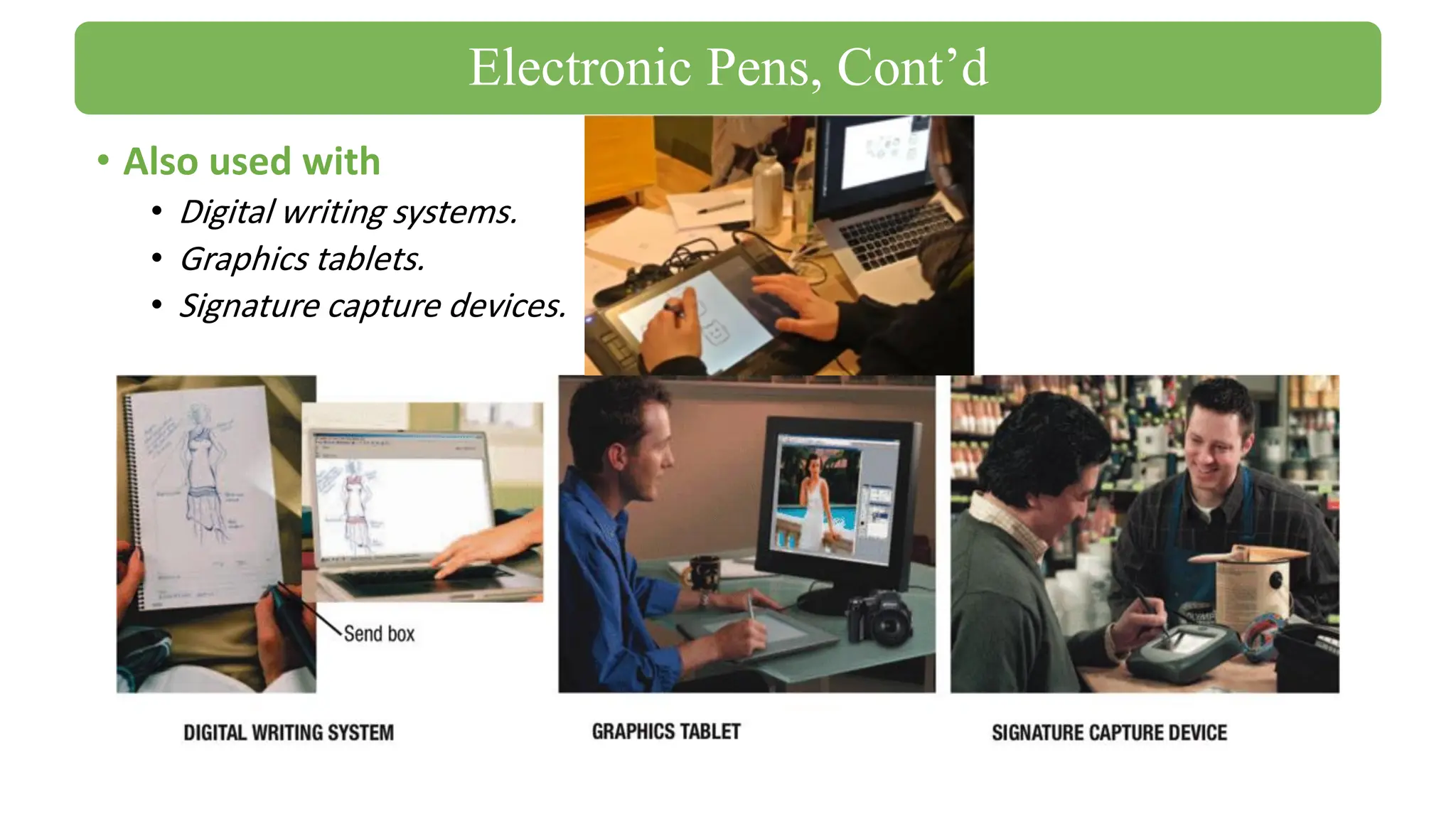
• Also used with
• Digital writing systems.
• Graphics tablets.
• Signature capture devices.
Electronic Pens, Cont’d
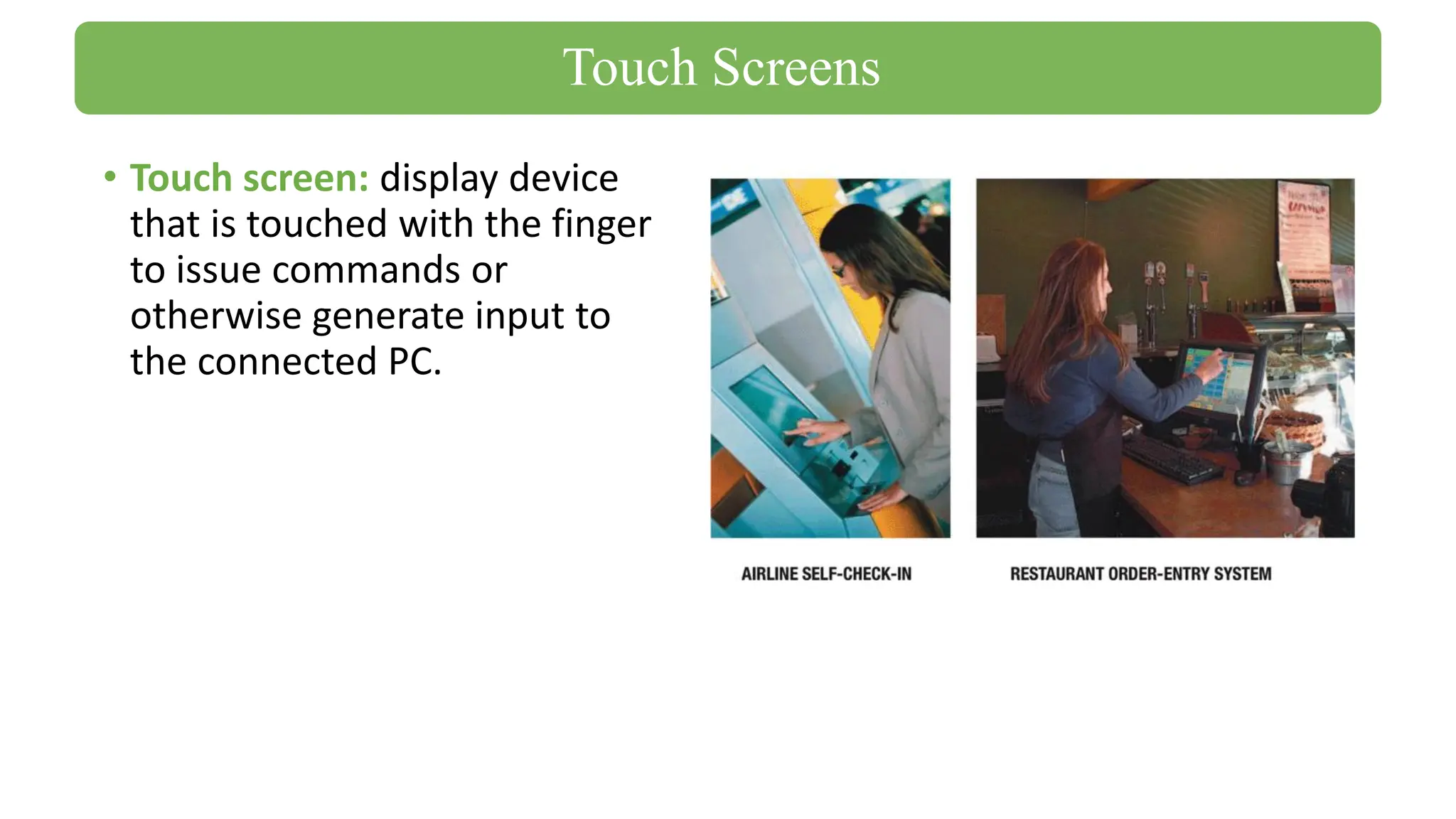
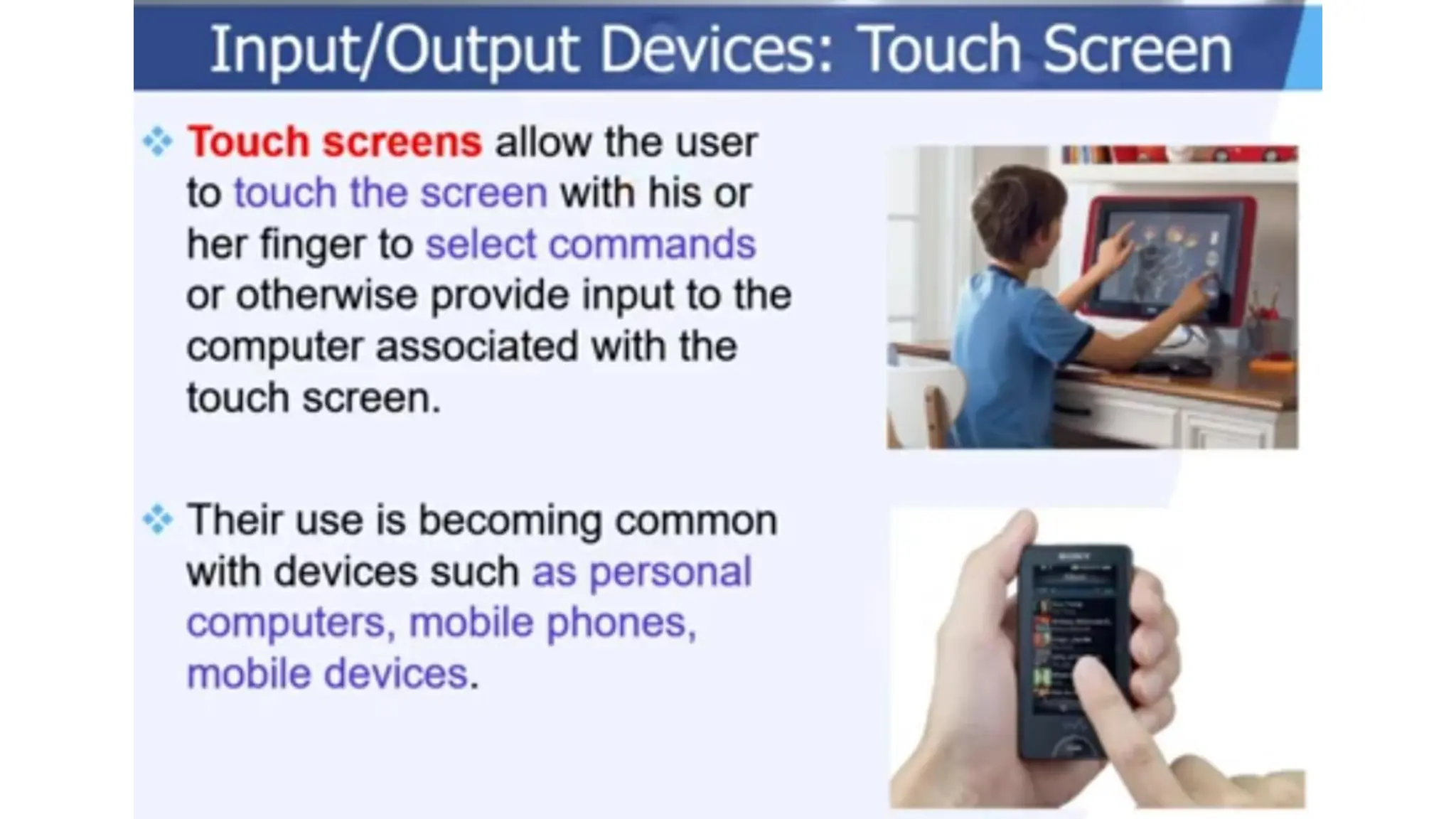
• Touch screen: display device
that is touched with the finger
to issue commands or
otherwise generate input to
the connected PC.
Touch Screens
• Source documents:
documents containing data that
already exists in physical form (order
form, photograph, invoice, check, or
price label)
• Source data automation:
capturing data directly from a
source document
• Most common devices used in source
data automation:
scanning or reading device
Scanners, Readers, and Digital Cameras
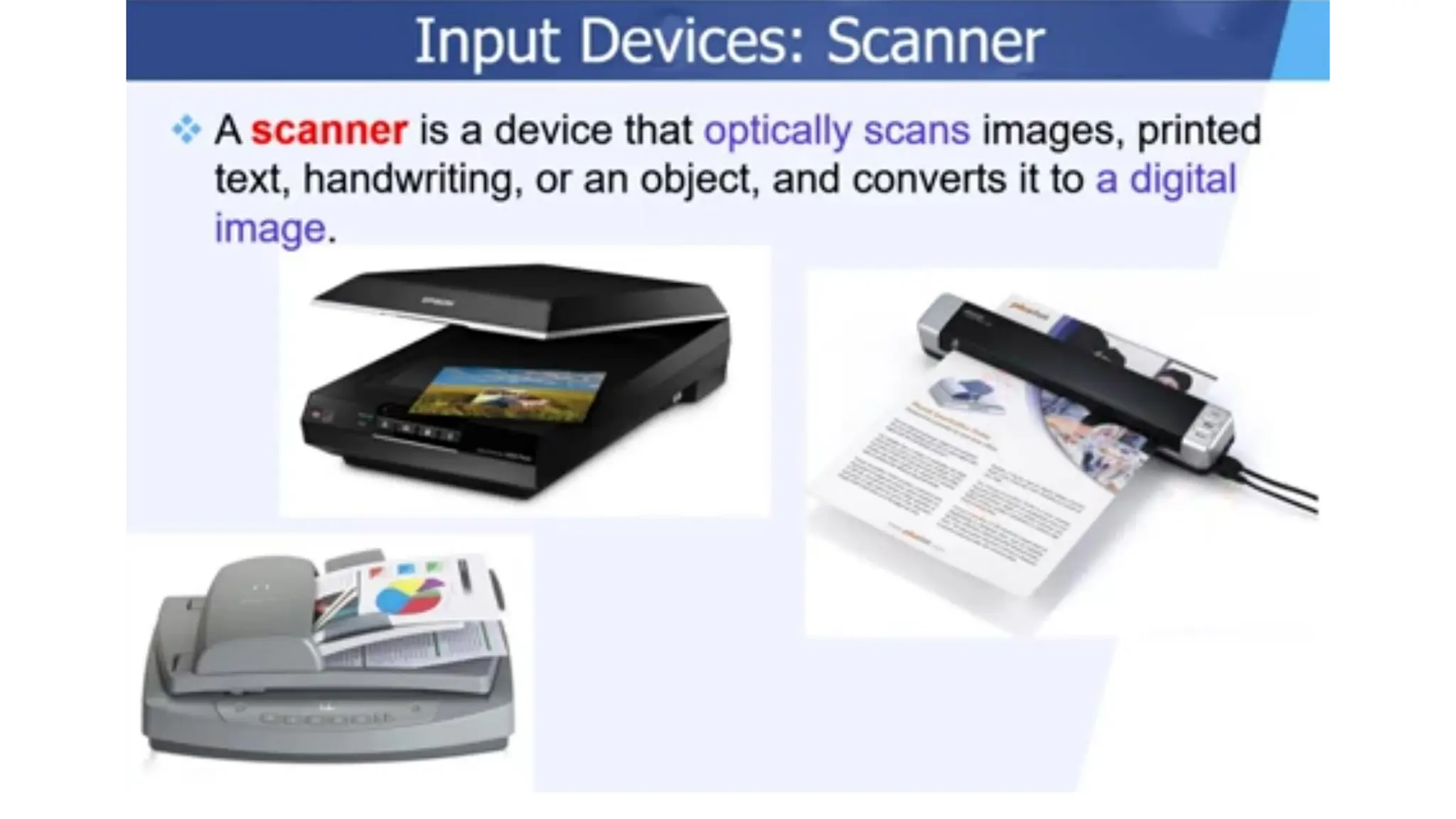
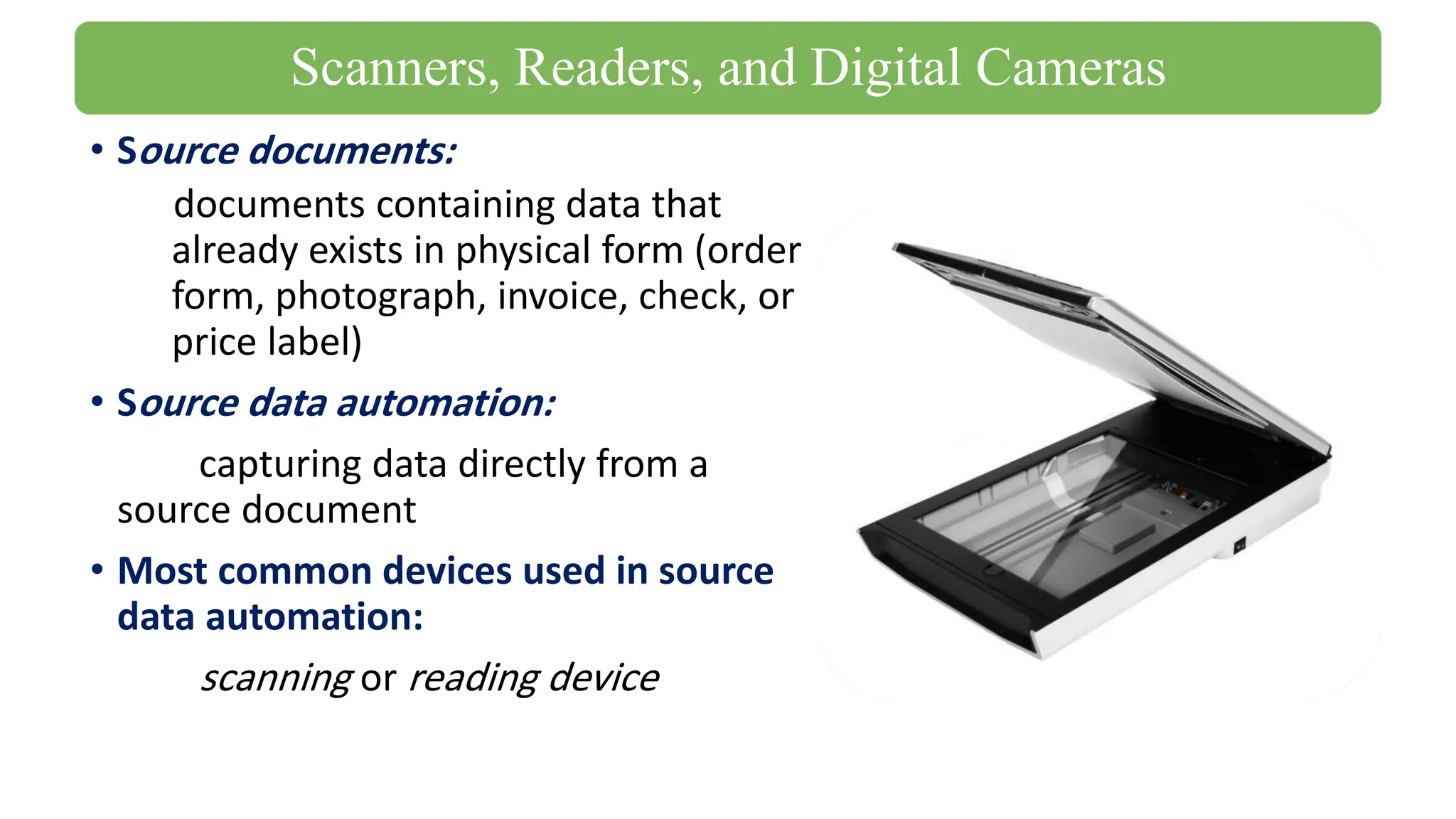
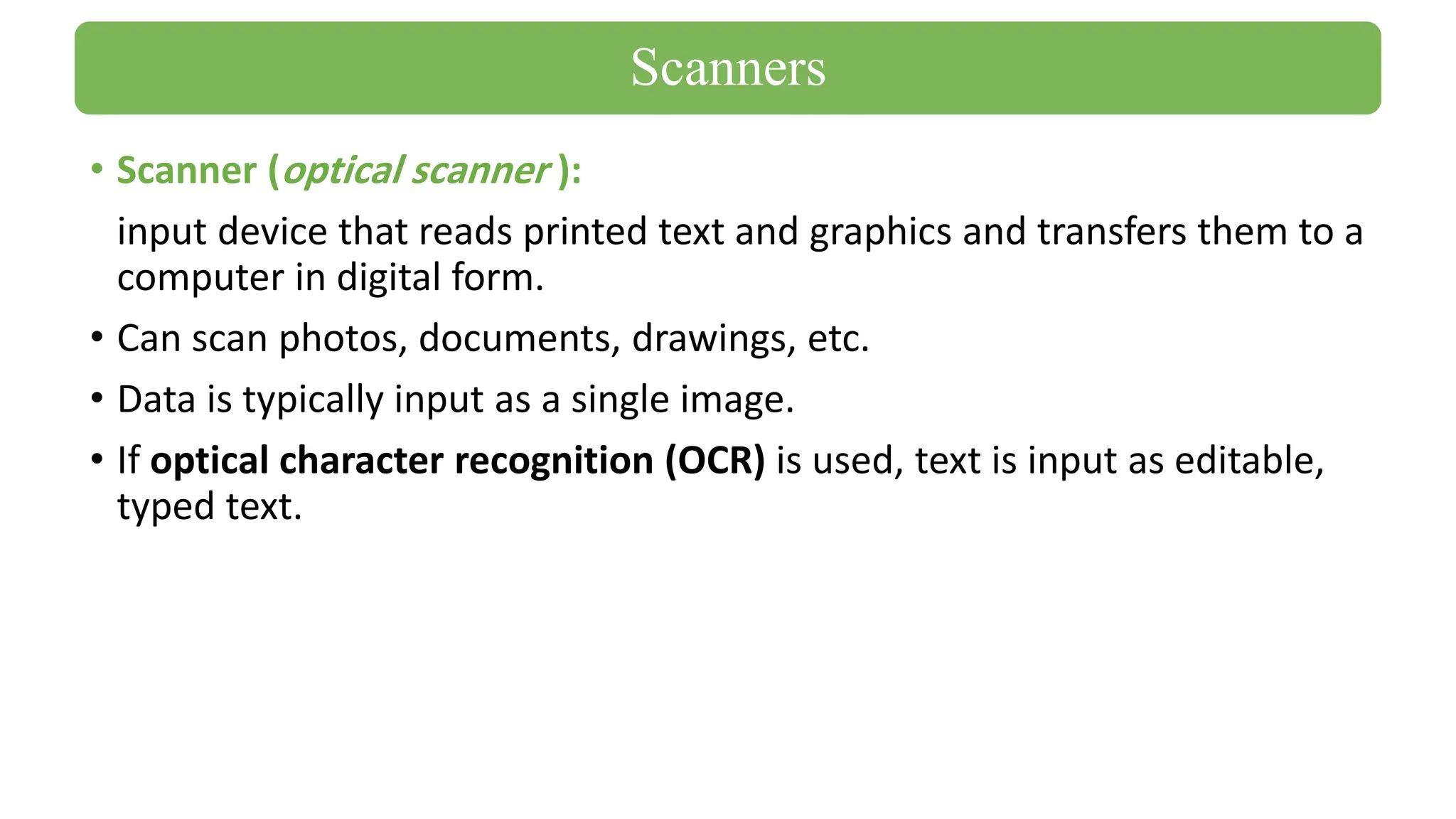
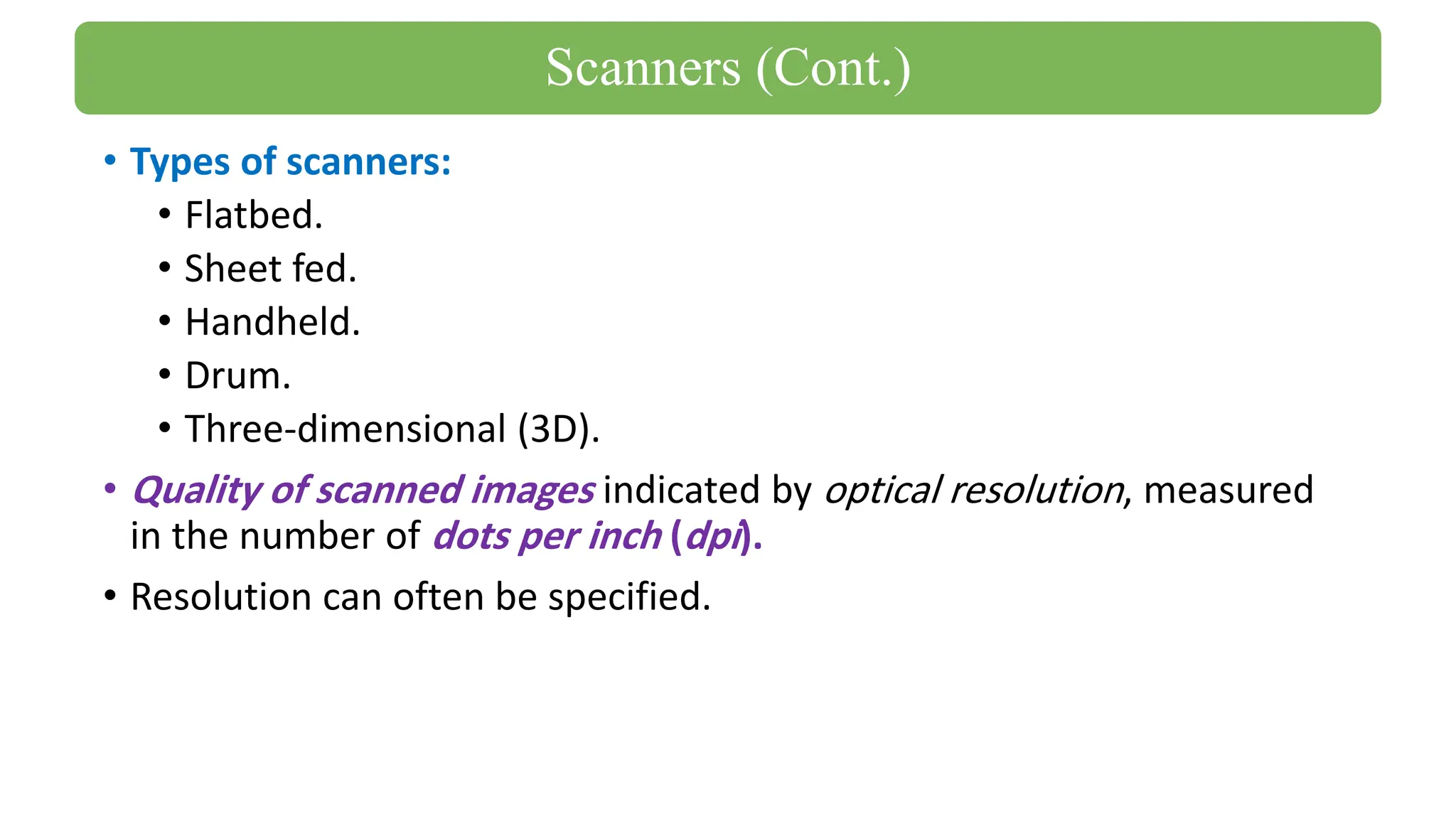
• Scanner (optical scanner ):
input device that reads printed text and graphics and transfers them to a
computer in digital form.
• Can scan photos, documents, drawings, etc.
• Data is typically input as a single image.
• If optical character recognition (OCR) is used, text is input as editable,
typed text.
Scanners
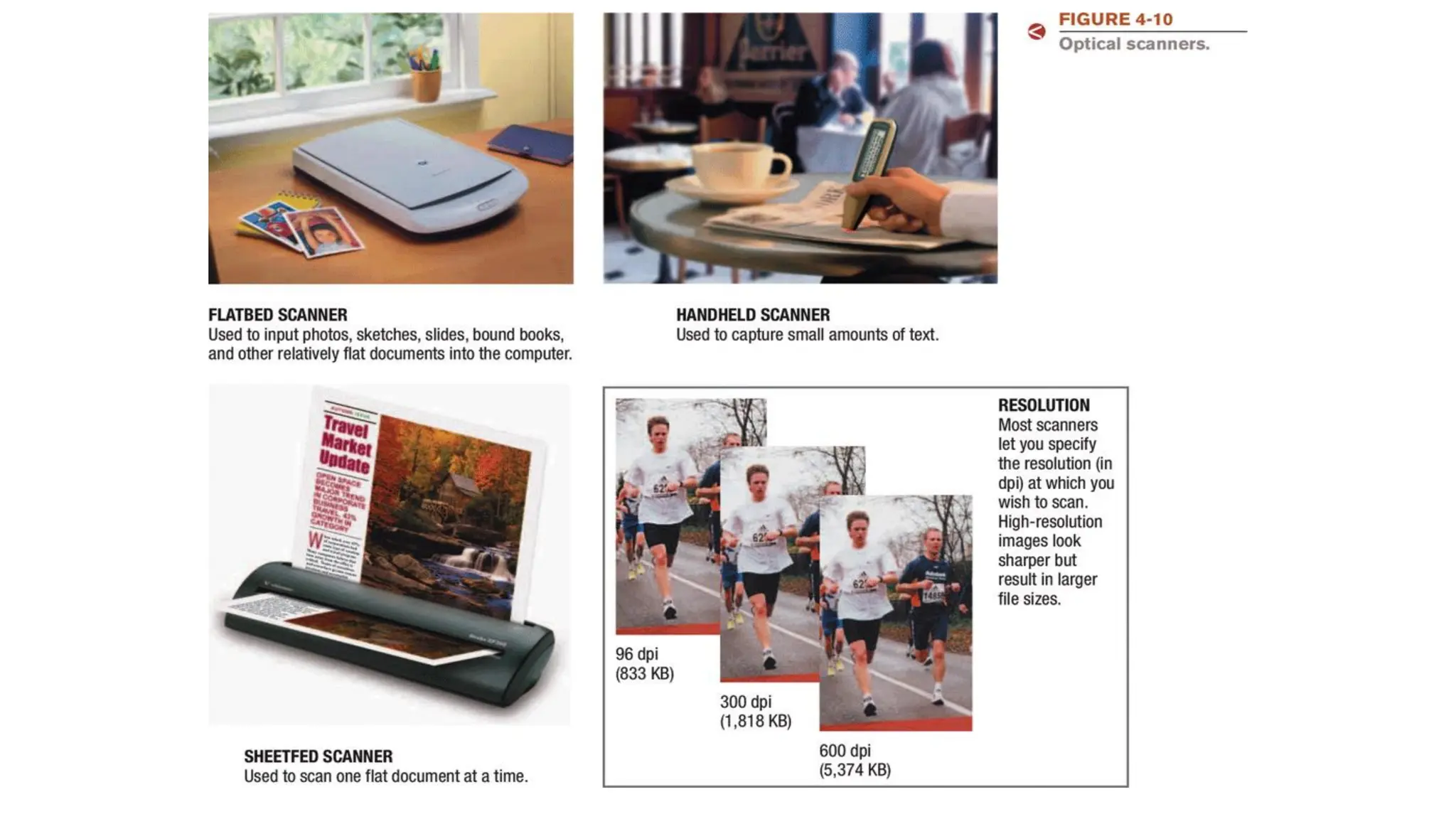
• Types of scanners:
• Flatbed.
• Sheet fed.
• Handheld.
• Drum.
• Three-dimensional (3D).
• Quality of scanned images indicated by optical resolution, measured
in the number of dots per inch (dpi).
• Resolution can often be specified.
Scanners (Cont.)
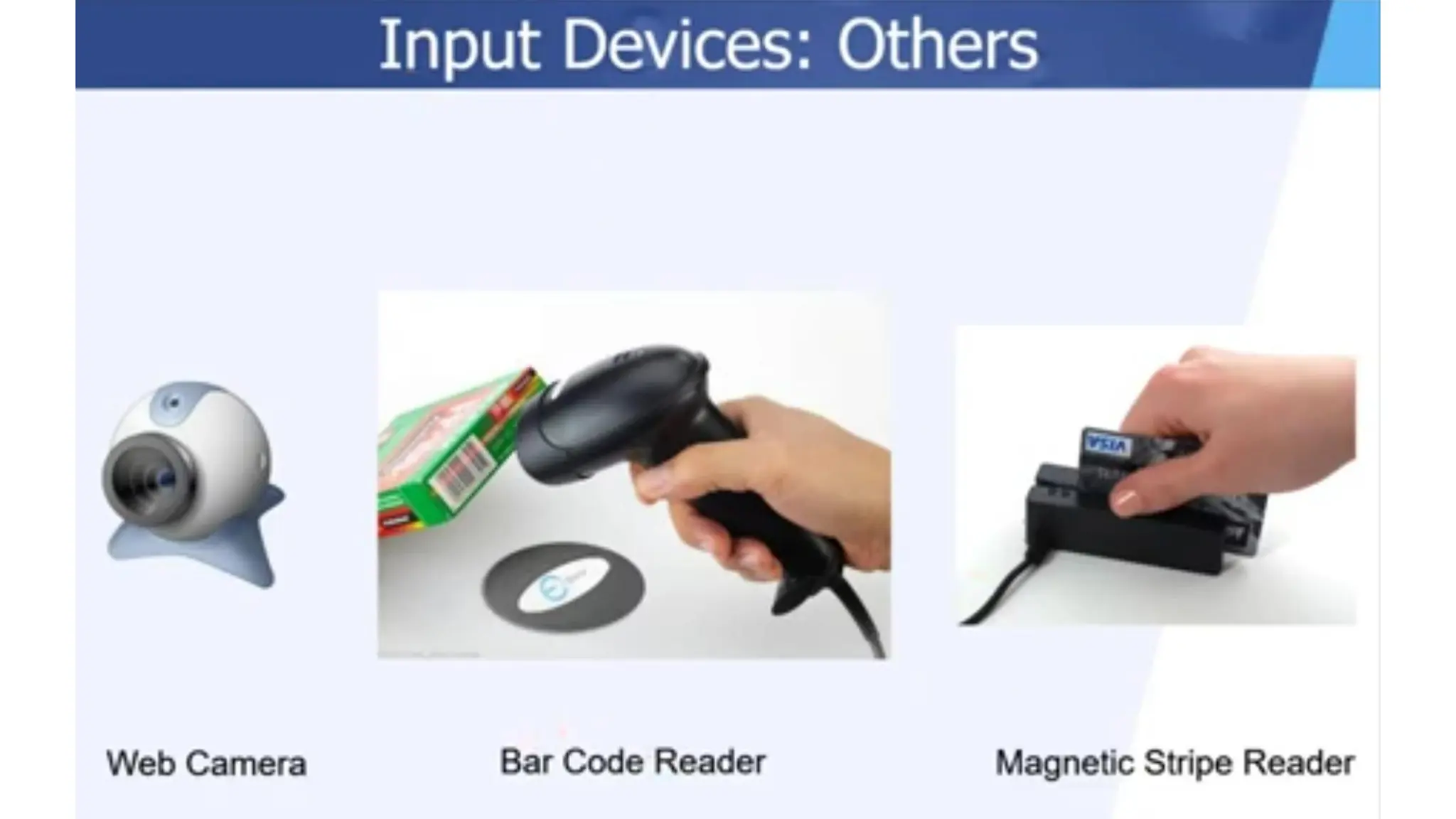
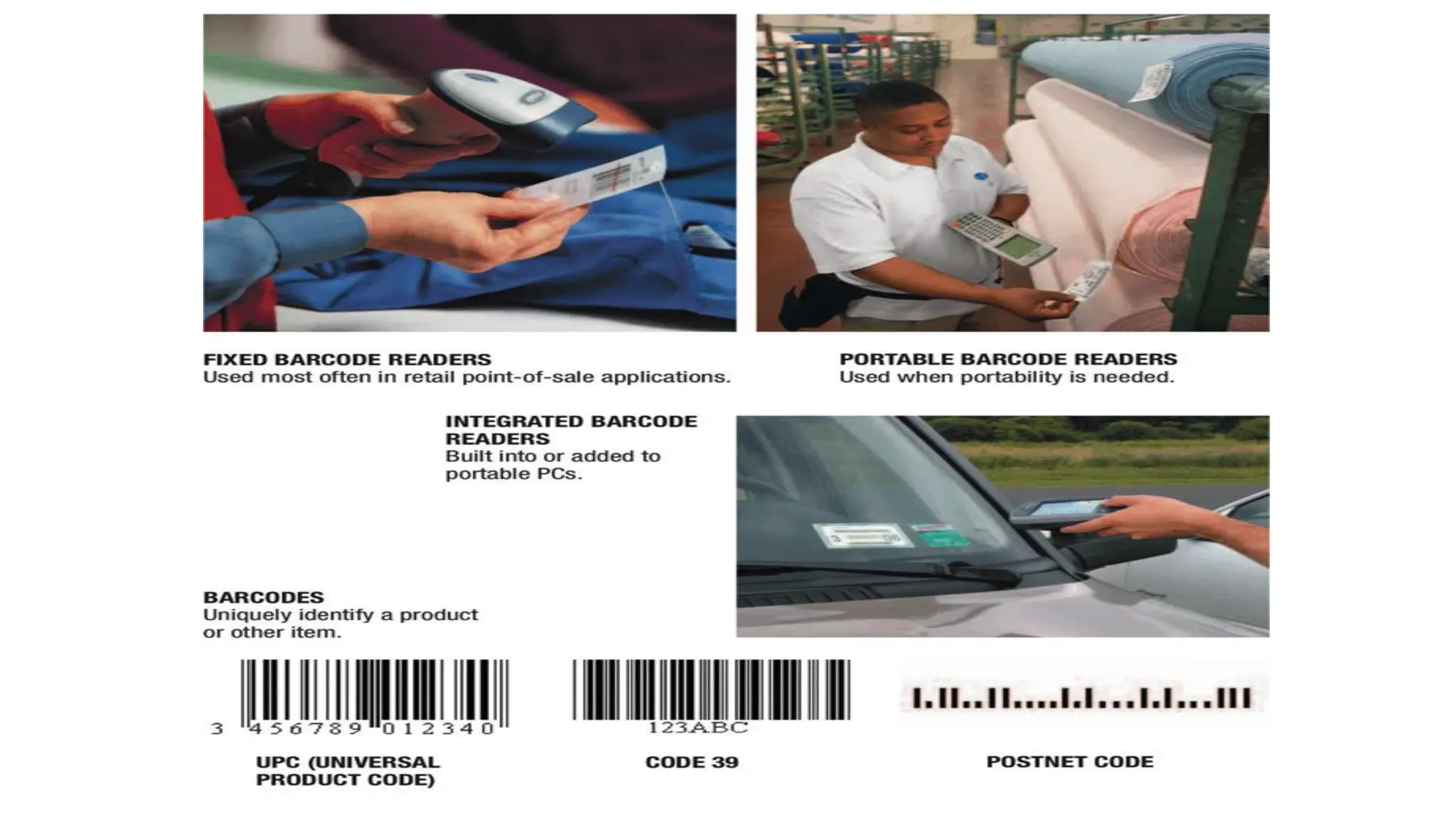
• Barcode readers: input devices that read barcodes.
• Barcode: machine-readable code that represents data as a set of
bars.
• Common types:
• Universal Product Code (UPC).
• Code 39.
• POSTNET code.
Readers
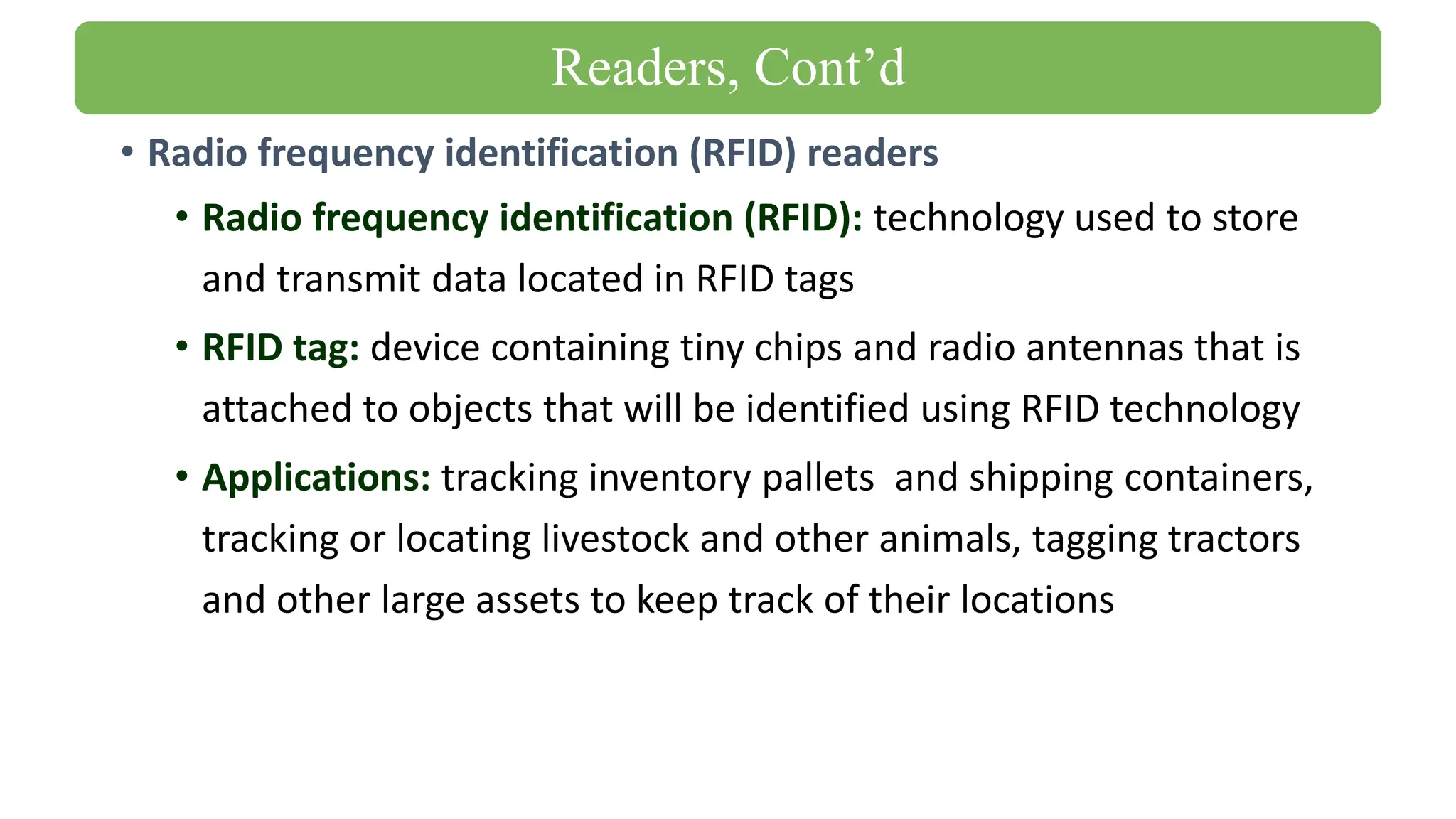
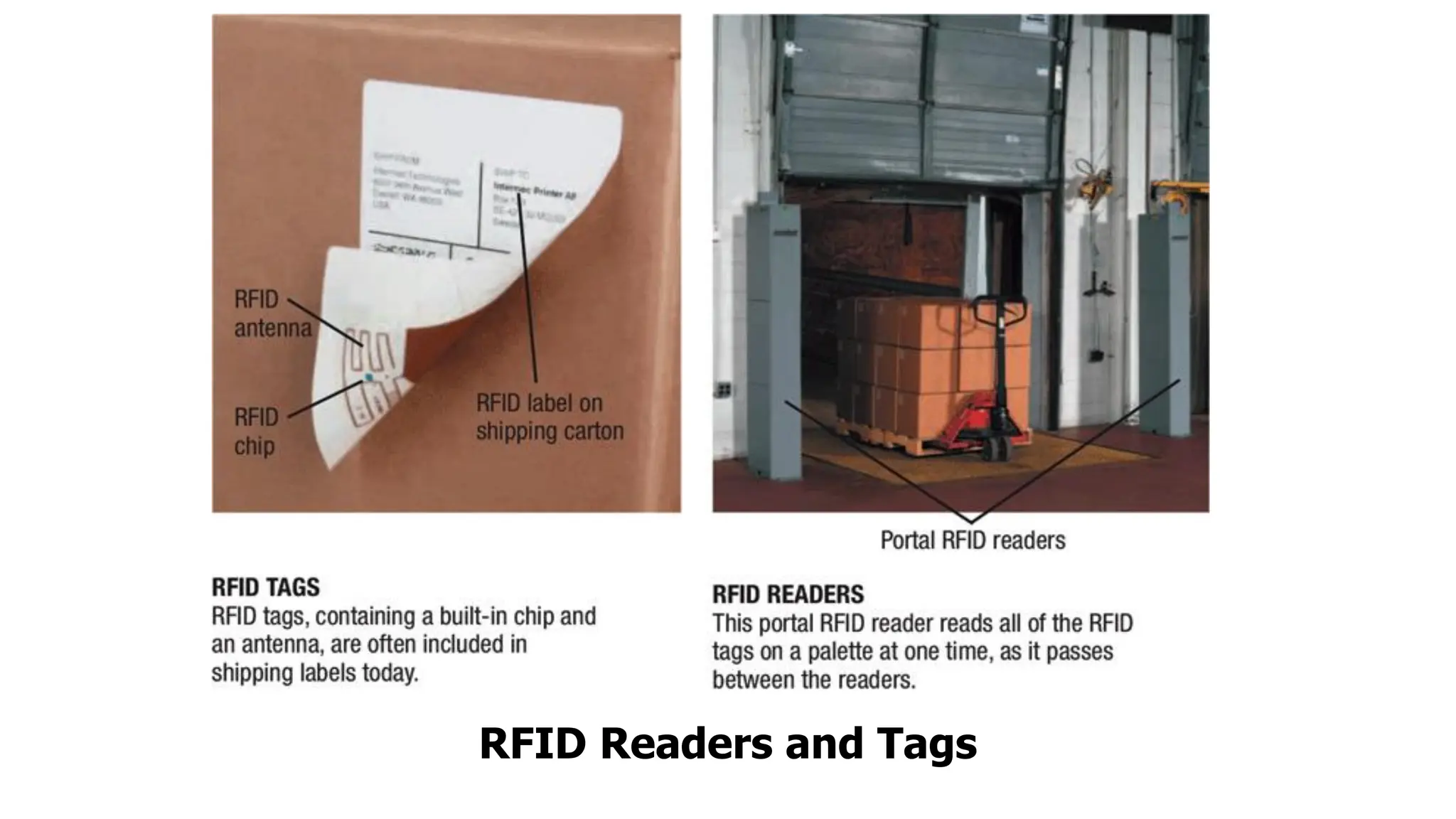
• Radio frequency identification (RFID) readers
• Radio frequency identification (RFID): technology used to store
and transmit data located in RFID tags
• RFID tag: device containing tiny chips and radio antennas that is
attached to objects that will be identified using RFID technology
• Applications: tracking inventory pallets and shipping containers,
tracking or locating livestock and other animals, tagging tractors
and other large assets to keep track of their locations
Readers, Cont’d
RFID Readers and Tags
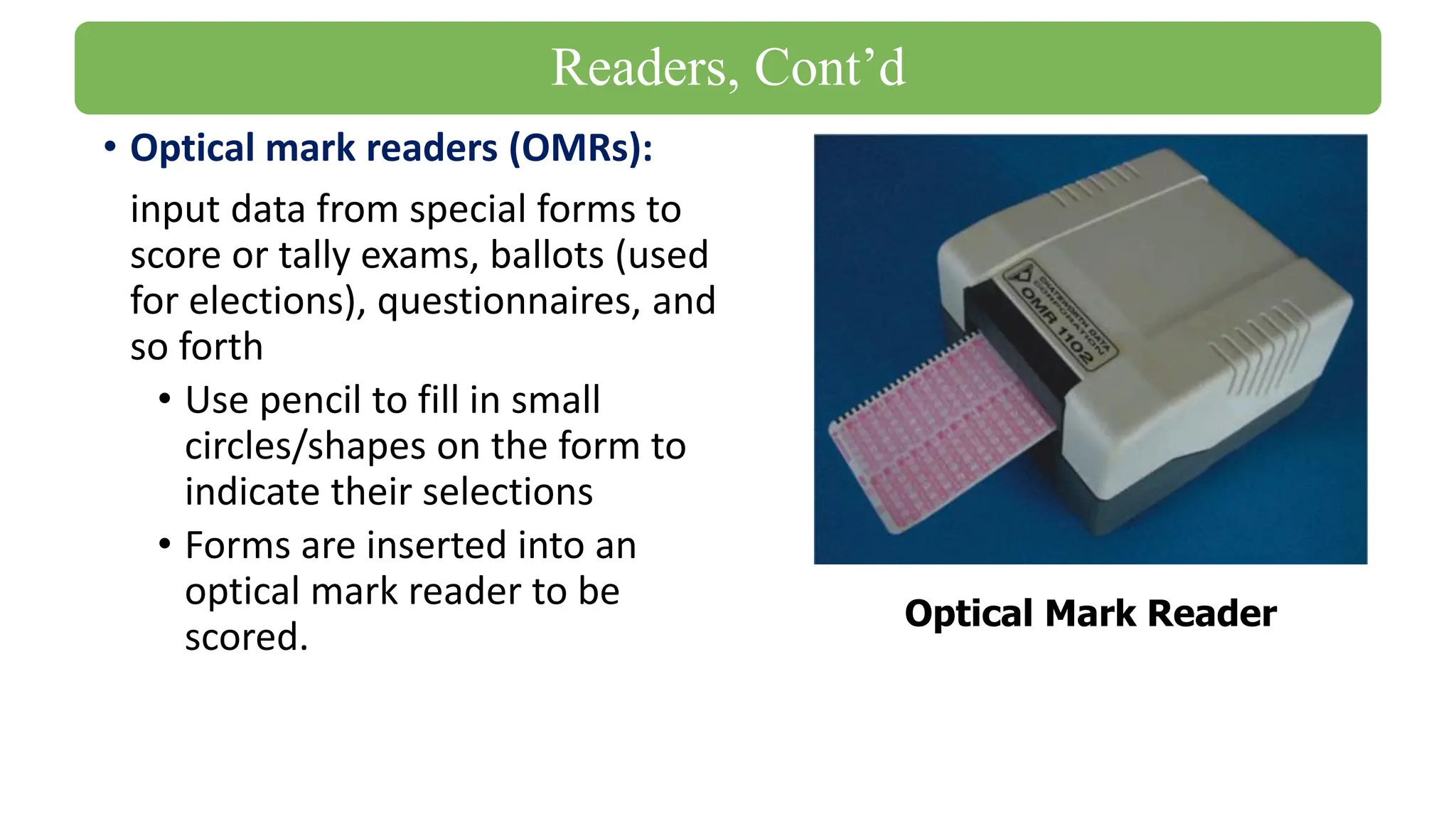
• Optical mark readers (OMRs):
input data from special forms to
score or tally exams, ballots (used
for elections), questionnaires, and
so forth
• Use pencil to fill in small
circles/shapes on the form to
indicate their selections
• Forms are inserted into an
optical mark reader to be
scored.
Optical Mark Reader
Readers, Cont’d
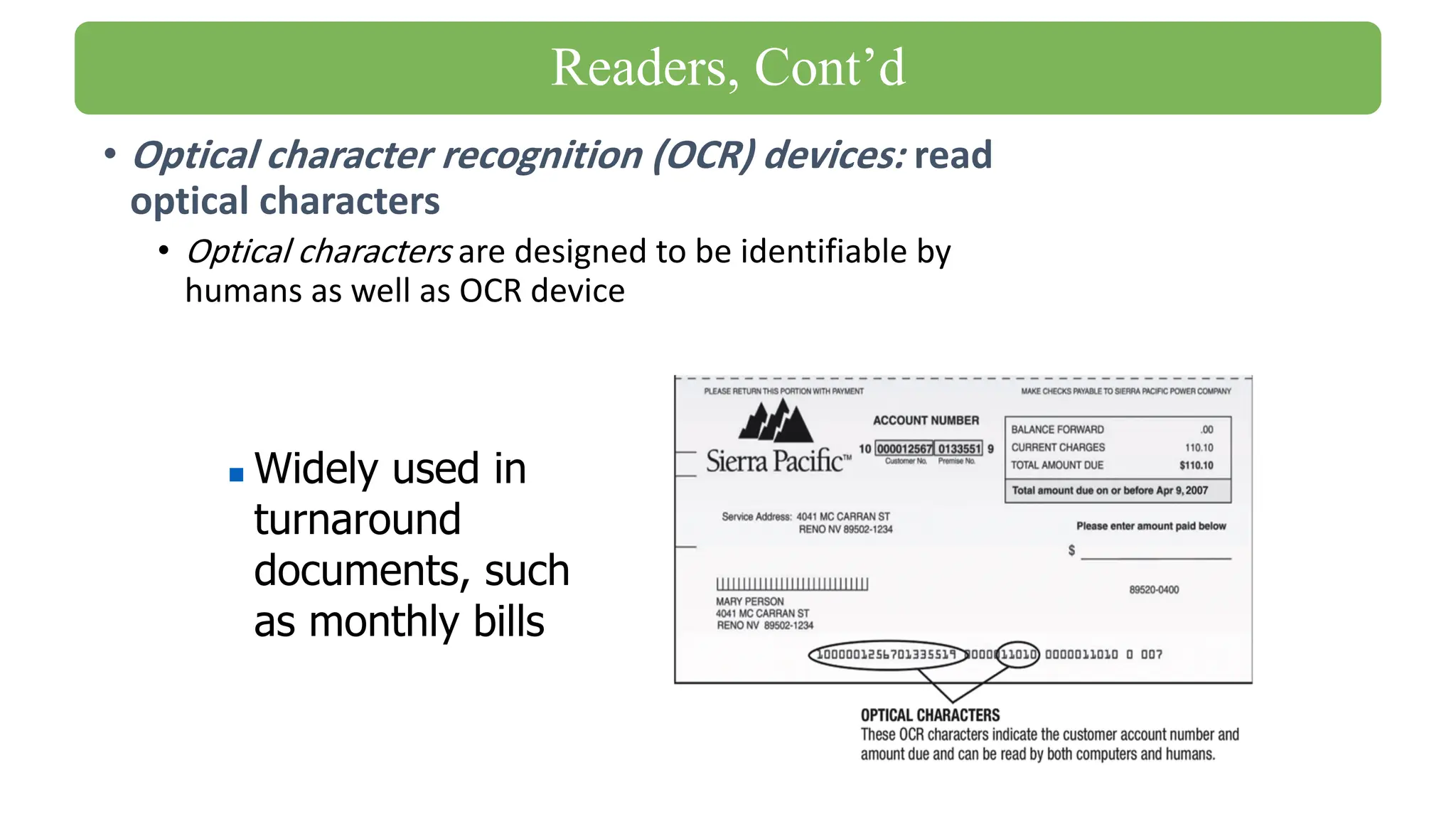
• Optical character recognition (OCR) devices: read
optical characters
• Optical characters are designed to be identifiable by
humans as well as OCR device
◼ Widely used in
turnaround
documents, such
as monthly bills
Readers, Cont’d
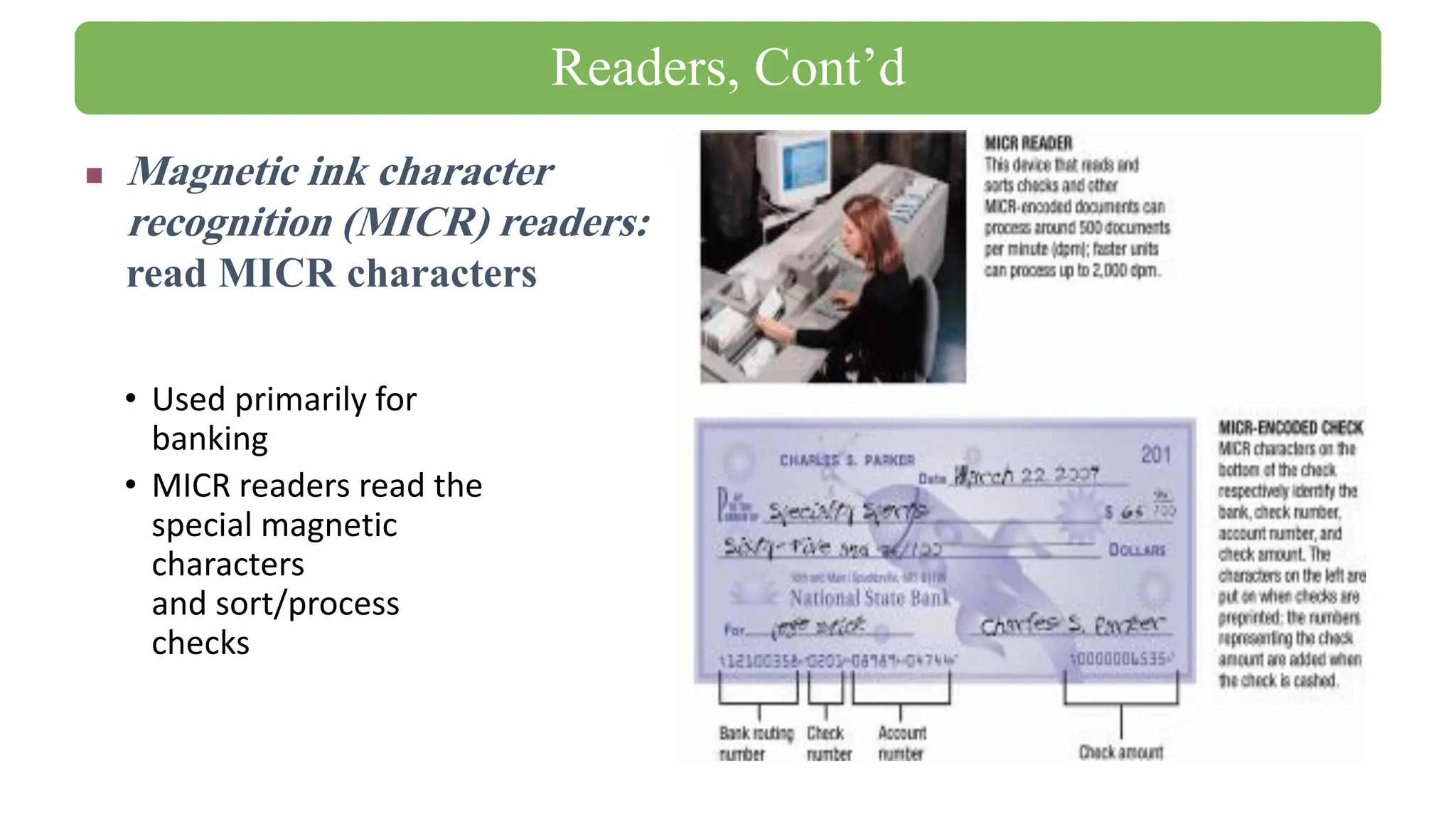
• Used primarily for
banking
• MICR readers read the
special magnetic
characters
and sort/process
checks
◼ Magnetic ink character
recognition (MICR) readers:
read MICR characters
Readers, Cont’d
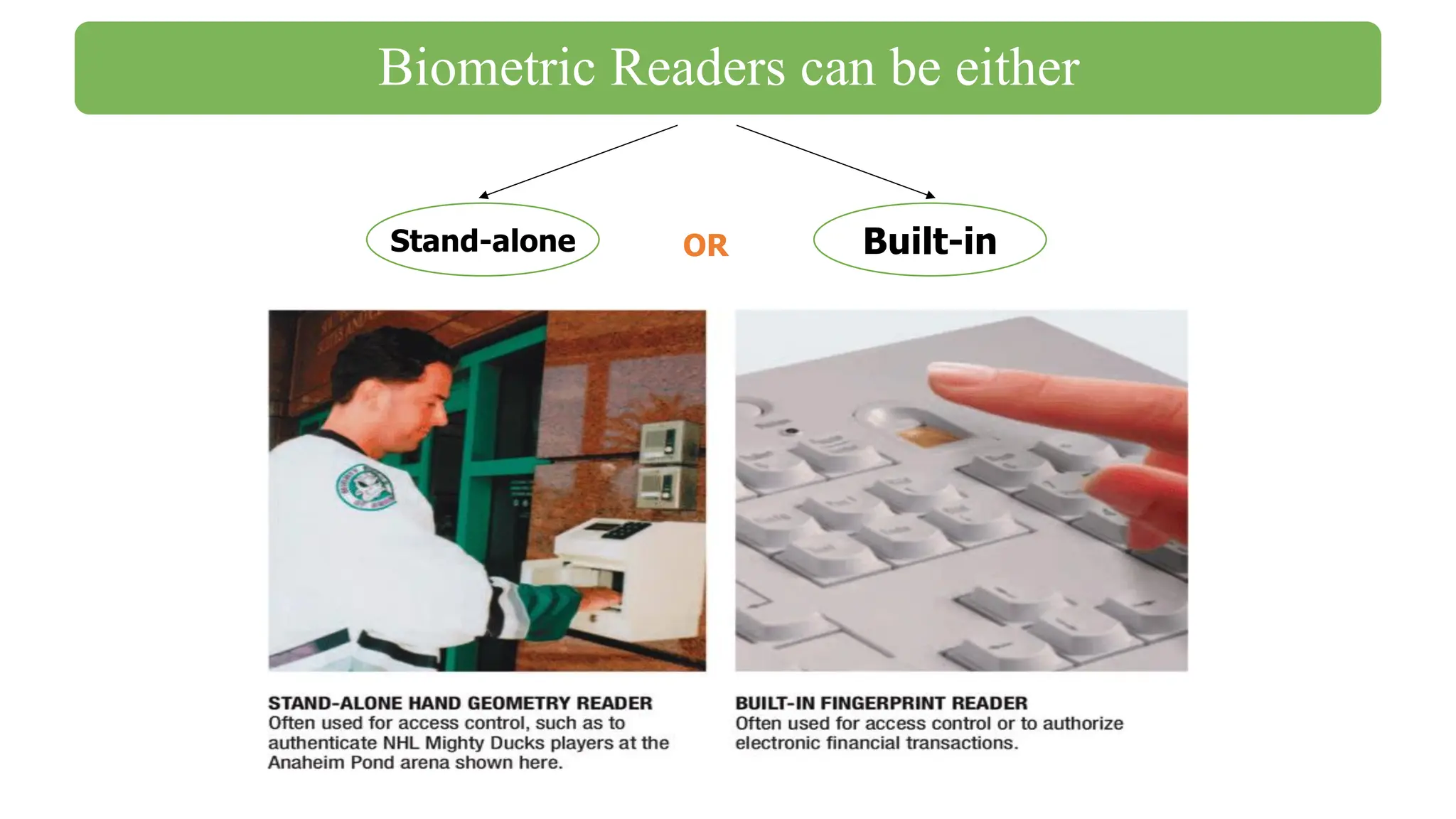
• Biometric readers: used to input biometric data.
• Biometric data is based on unique physiological characteristics
(fingerprint, hand geometry, face, iris of the eye) or personal traits
(voice, signature).
• Readers can be stand-alone or built into another piece of hardware
(keyboard, mouse).
• Also being built into computers and storage devices to allow access
only by authorized individuals.
• Most often used for access control and to verify transactions.
Readers, Cont’d
Stand-alone Built-in
OR
Biometric Readers can be either
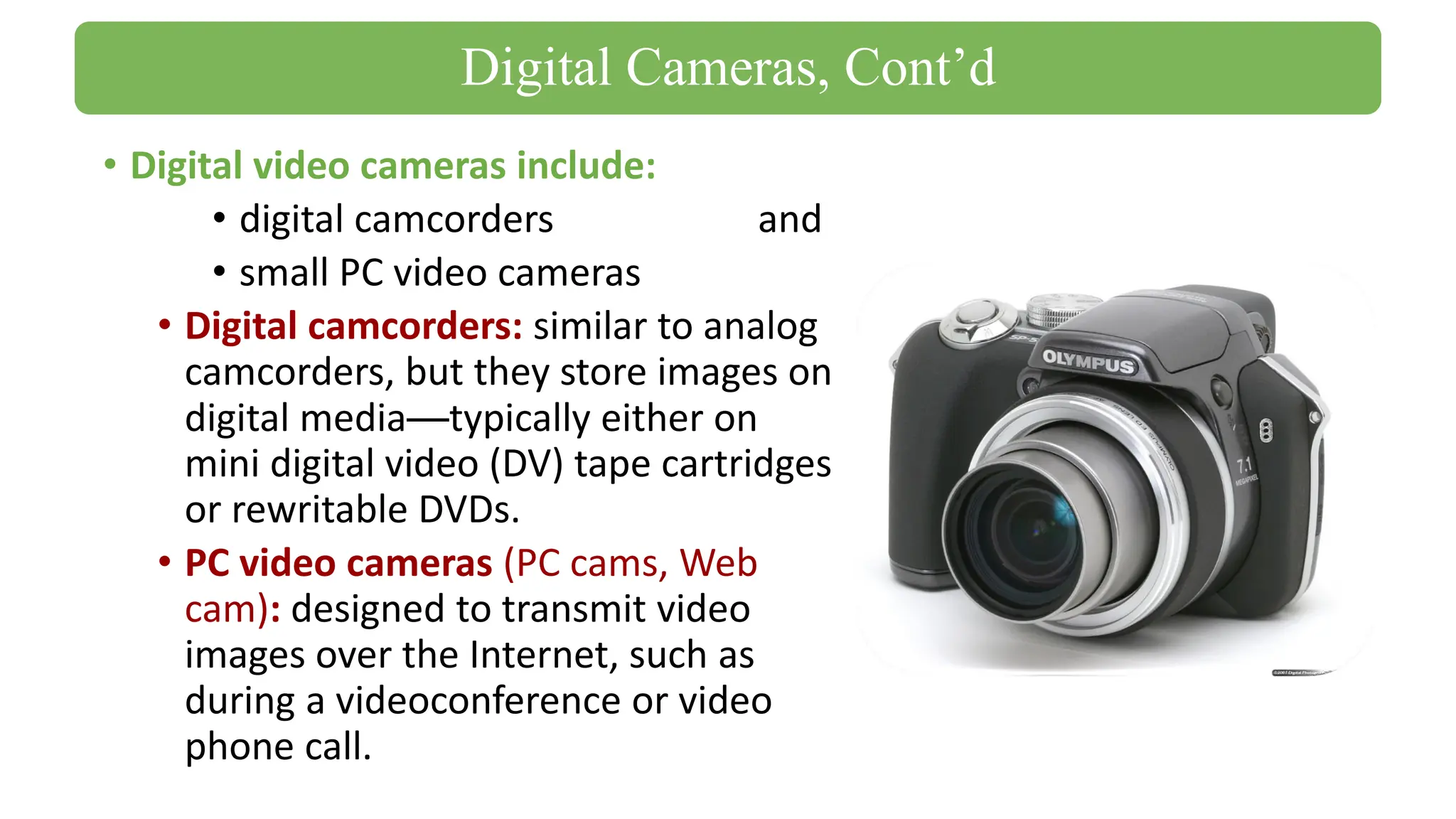
• Digital camera: input device that takes pictures and records them as
digital data (instead of film or videotaped) images
• Usually designated as:
• Still cameras (take individual still photos).
• Video cameras (capture moving video images).
Digital Cameras
• Digital still cameras:
• Available in a wide variety of sizes and capabilities.
• Images are immediately available for viewing or printing.
• Typically use flash memory for storage.
• Photos can be transferred to a PC or printer.
• Digital photos can be retouched with image editing software, posted
to a Web page, or burned onto a CD or DVD disc.
• Camera quality is measured in megapixels.
Digital Cameras, Cont’d
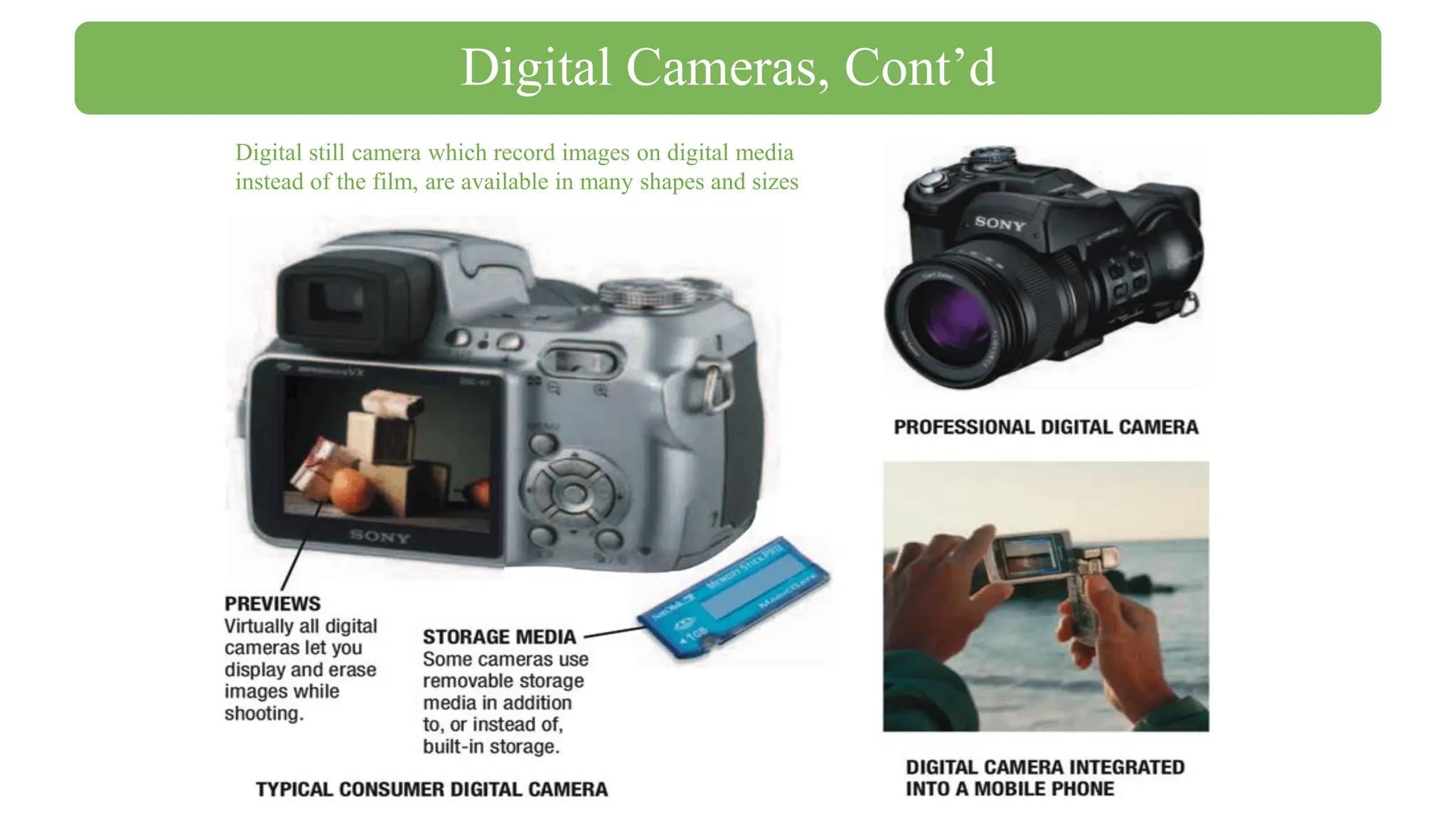
Digital still camera which record images on digital media
instead of the film, are available in many shapes and sizes
Digital Cameras, Cont’d
• Digital video cameras include:
• digital camcorders and
• small PC video cameras
• Digital camcorders: similar to analog
camcorders, but they store images on
digital media—typically either on
mini digital video (DV) tape cartridges
or rewritable DVDs.
• PC video cameras (PC cams, Web
cam): designed to transmit video
images over the Internet, such as
during a videoconference or video
phone call.
Digital Cameras, Cont’d
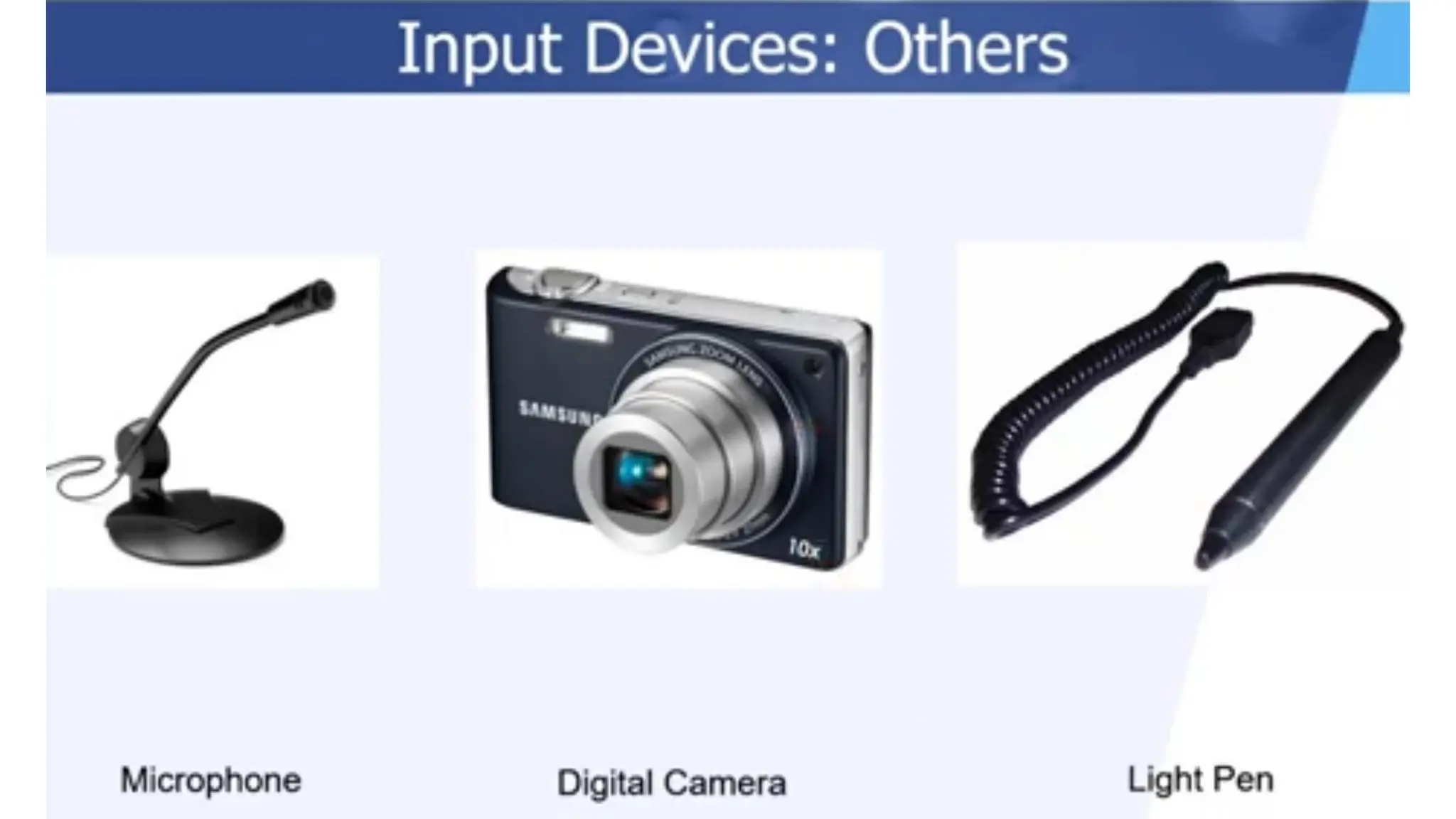
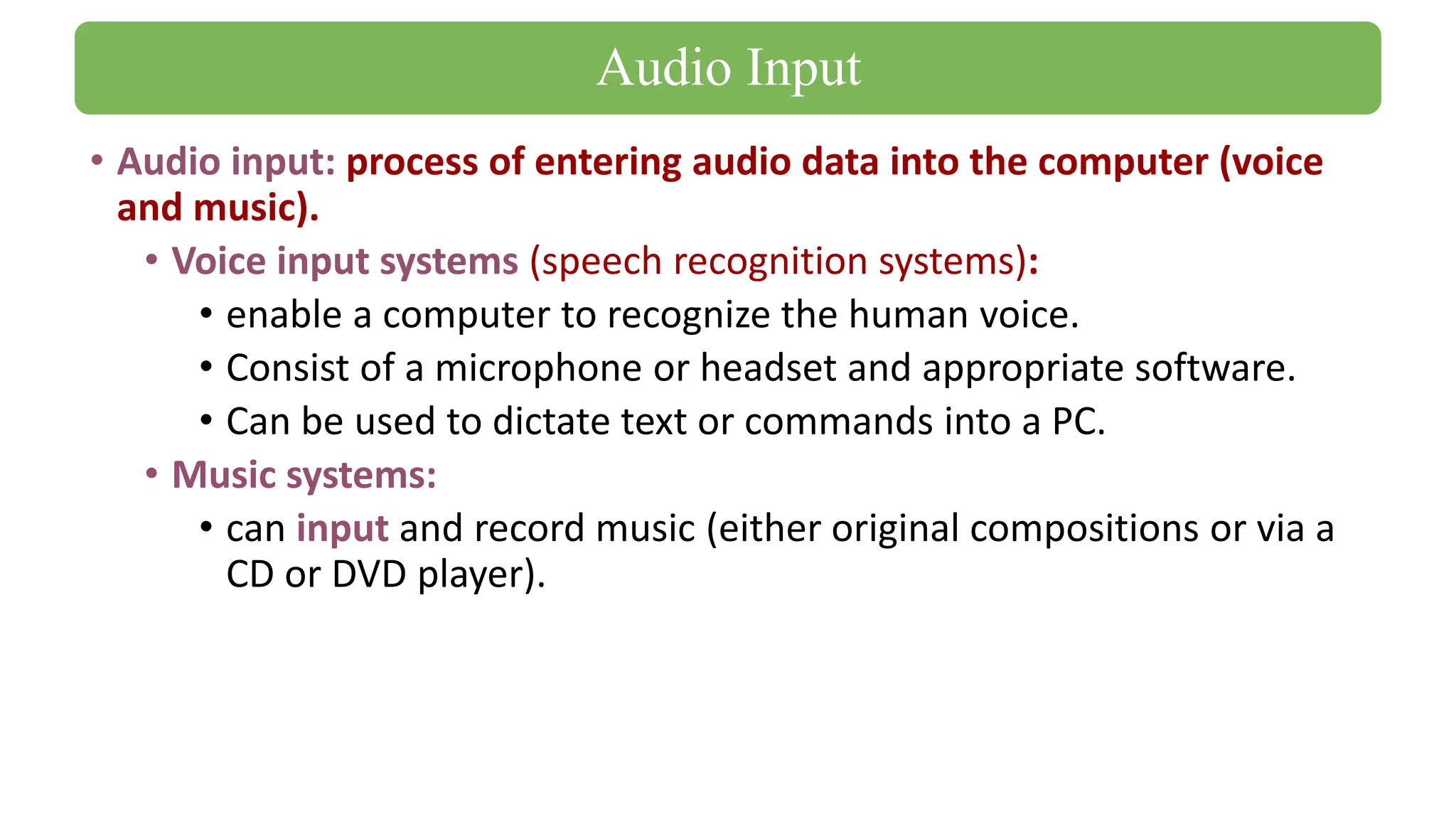
• Audio input: process of entering audio data into the computer (voice
and music).
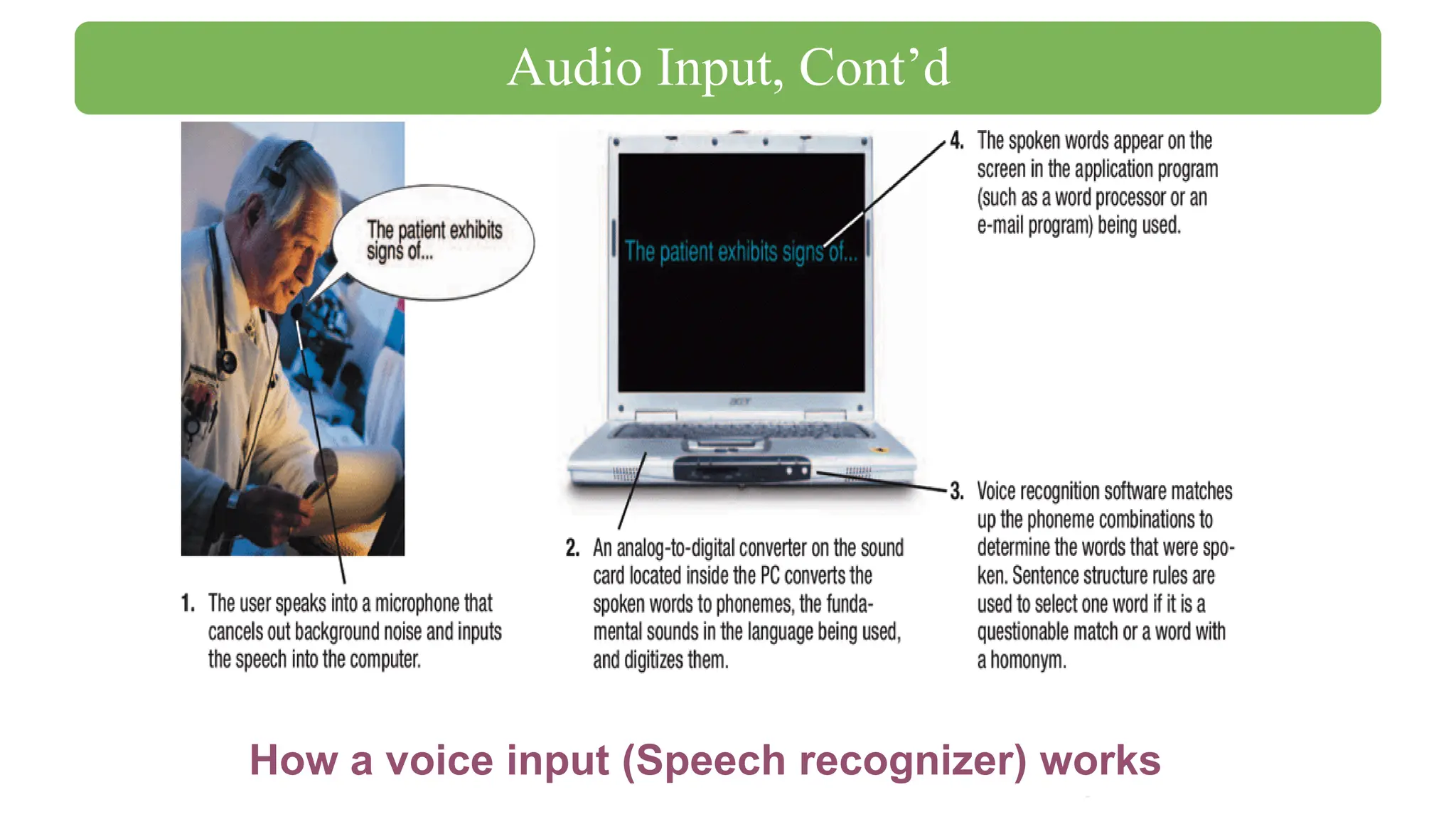
• Voice input systems (speech recognition systems):
• enable a computer to recognize the human voice.
• Consist of a microphone or headset and appropriate software.
• Can be used to dictate text or commands into a PC.
• Music systems:
• can input and record music (either original compositions or via a
CD or DVD player).
Audio Input
How a voice input (Speech recognizer) works
Audio Input, Cont’d
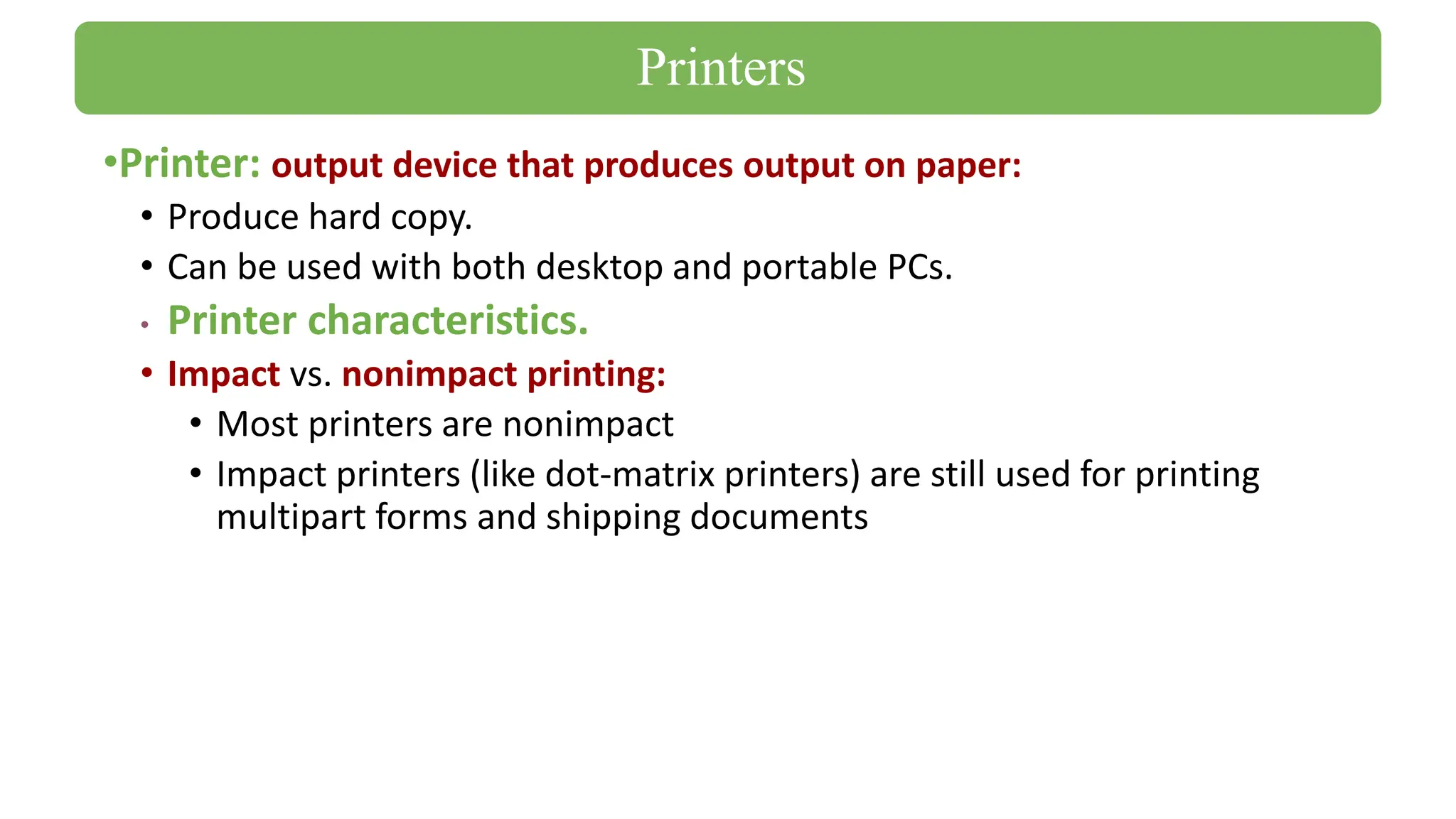
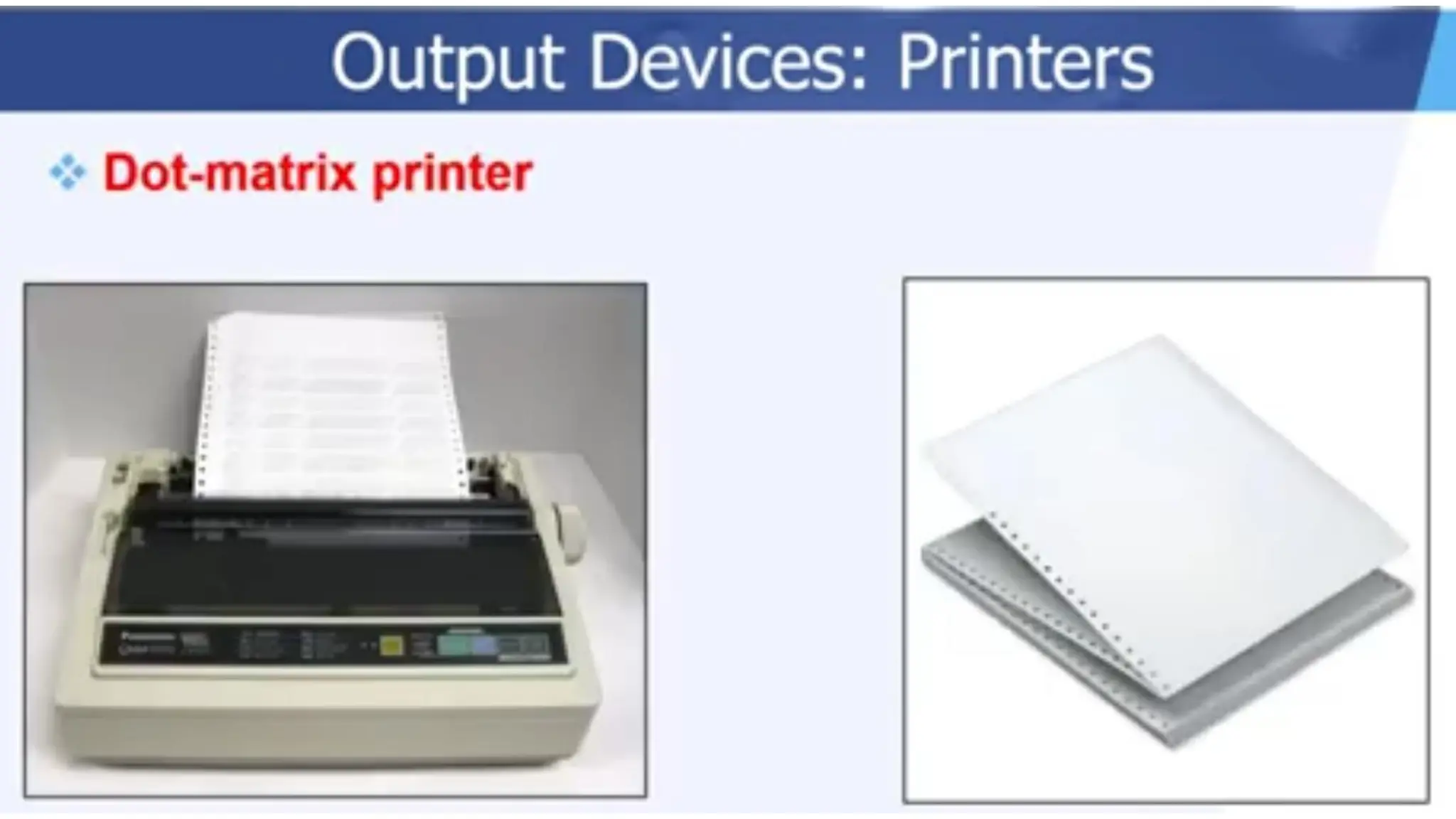
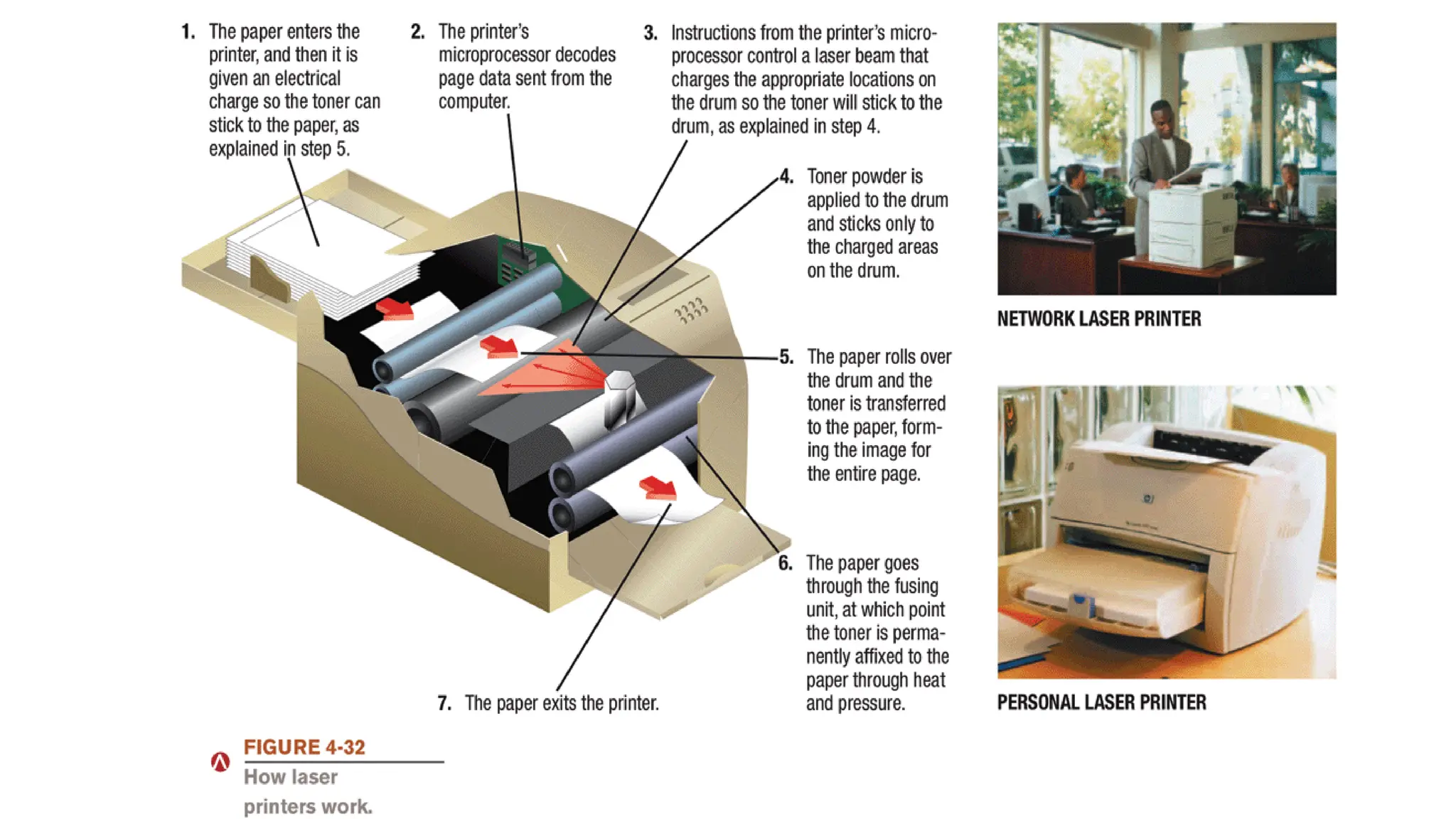
•Printer: output device that produces output on paper:
• Produce hard copy.
• Can be used with both desktop and portable PCs.
• Printer characteristics.
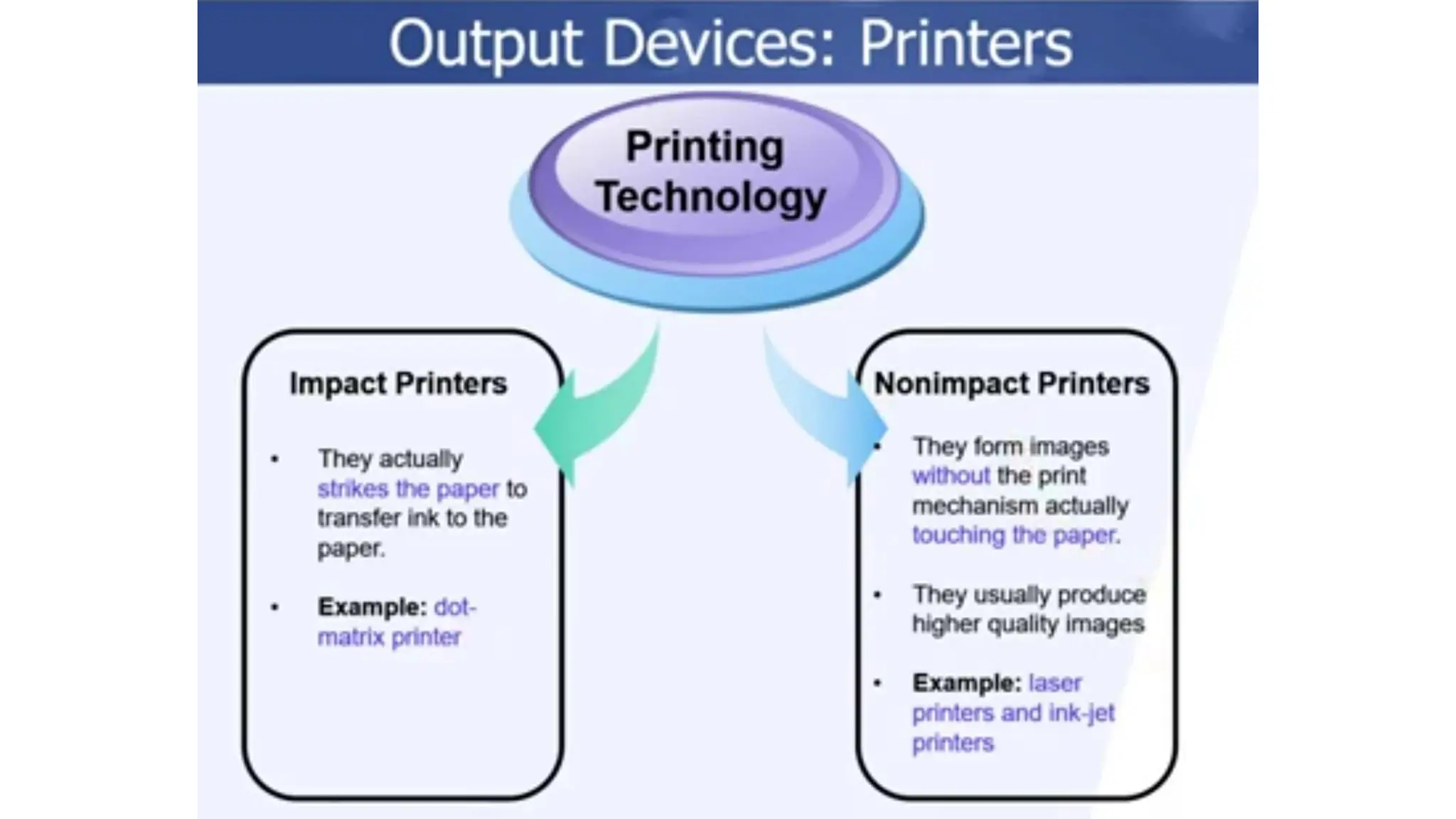
• Impact vs. nonimpact printing:
• Most printers are nonimpact
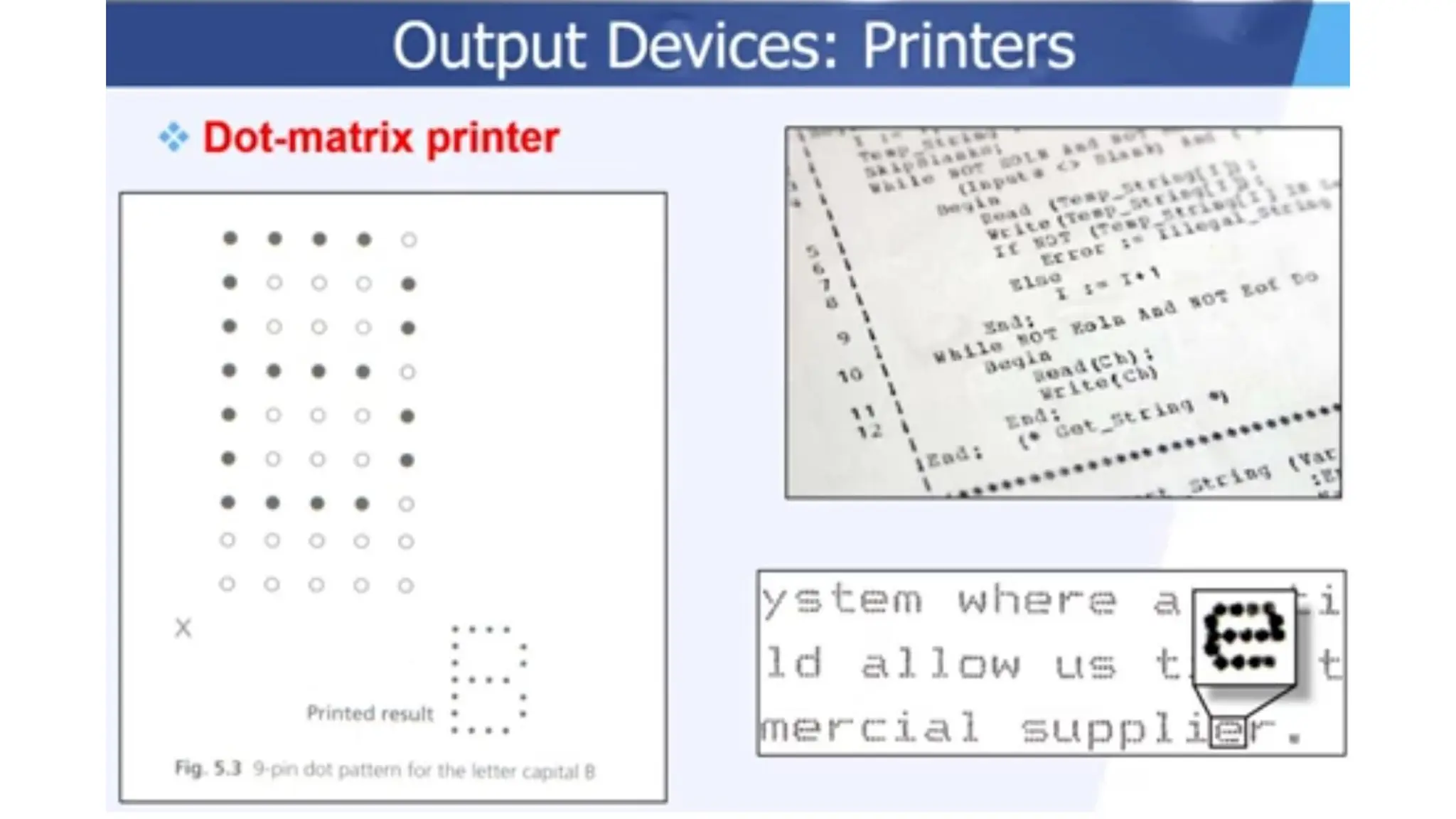
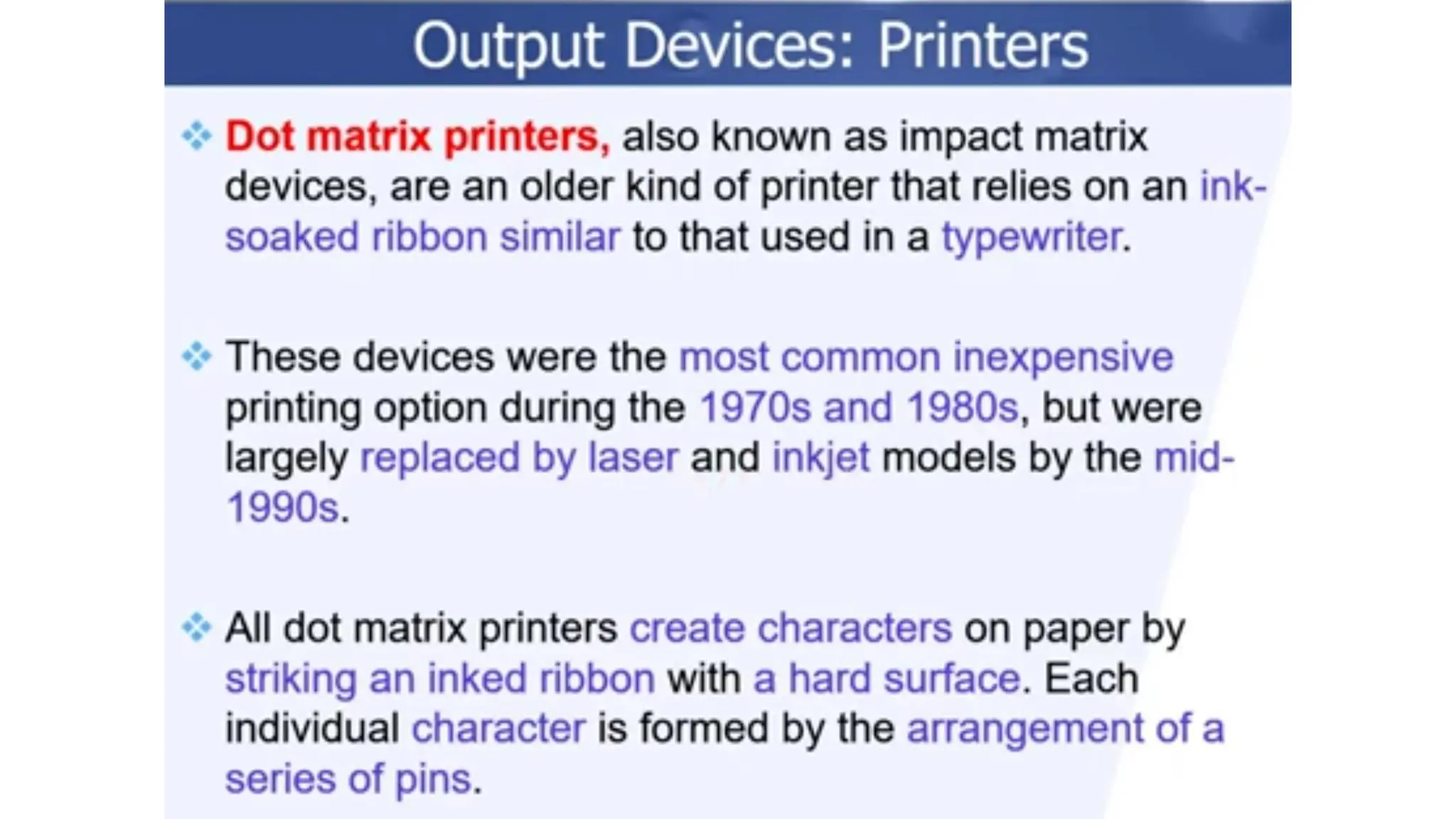
• Impact printers (like dot-matrix printers) are still used for printing
multipart forms and shipping documents
Printers
• Printer characteristics, cont’d
• Can print in color or black-and white only.
• Can be a personal or network printer.
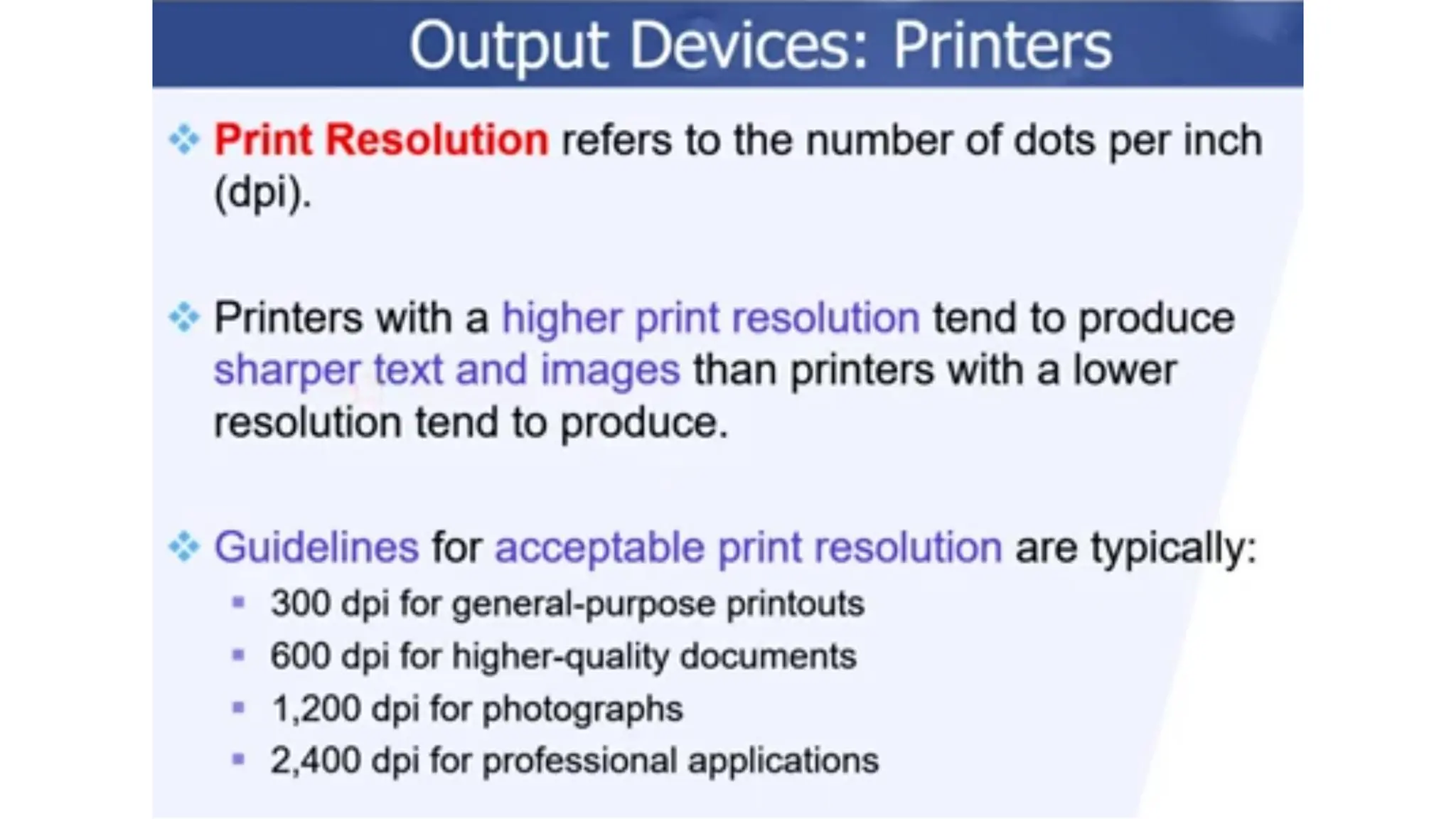
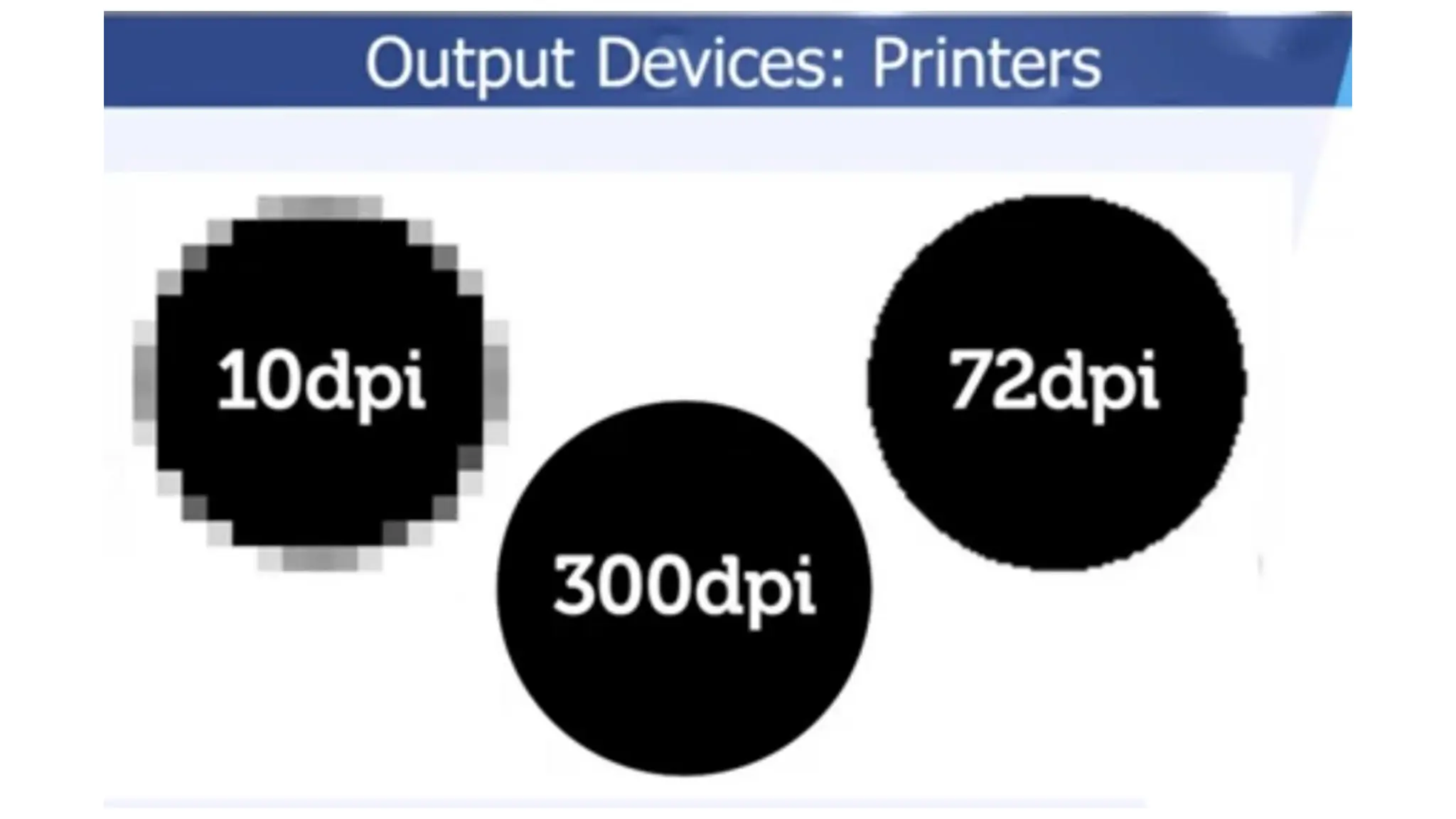
• Quality is called print resolution and measured in dots per inch (dpi).
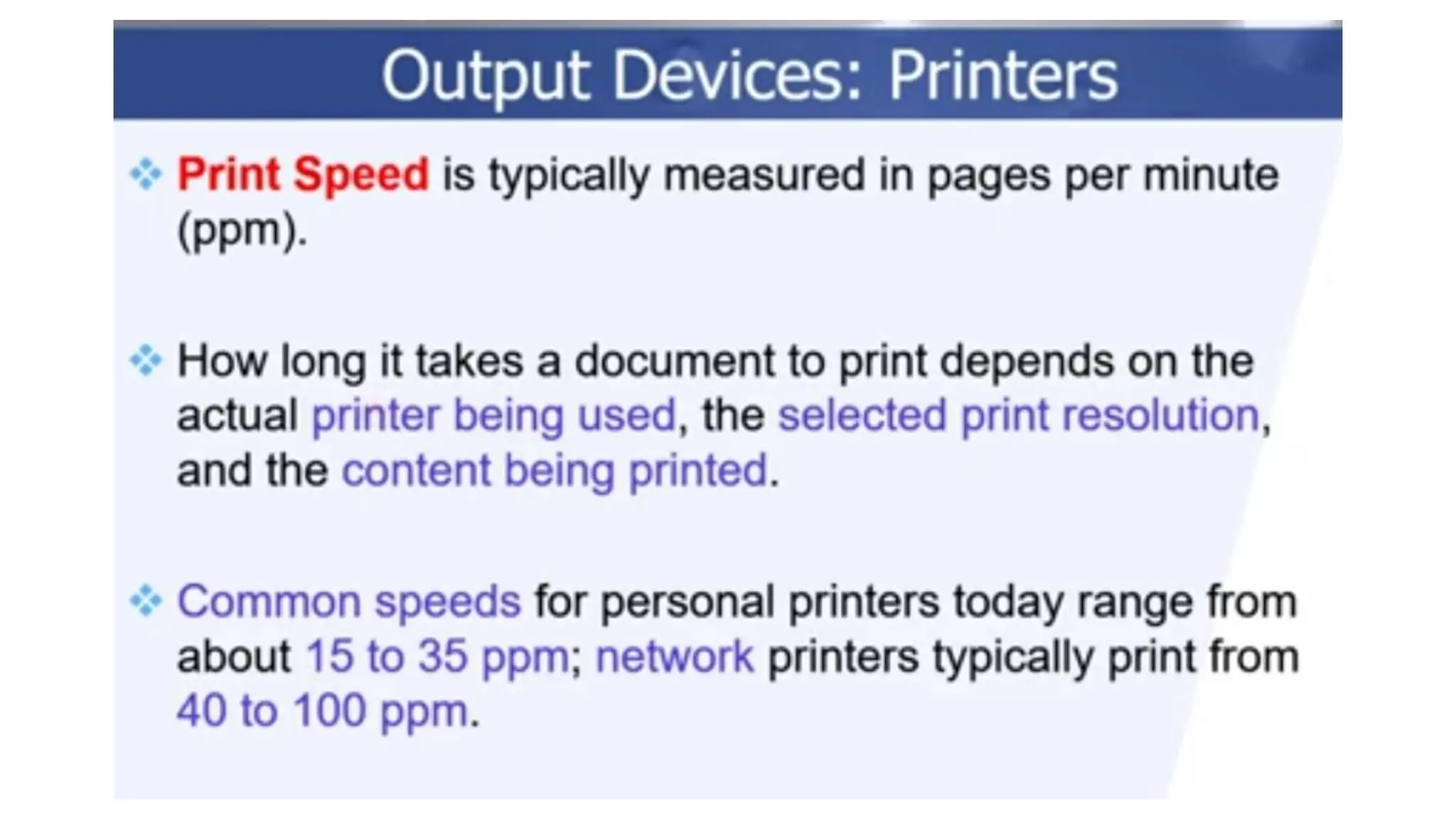
• Print speed is measured in pages per minute (ppm).
Printers (Cont.)
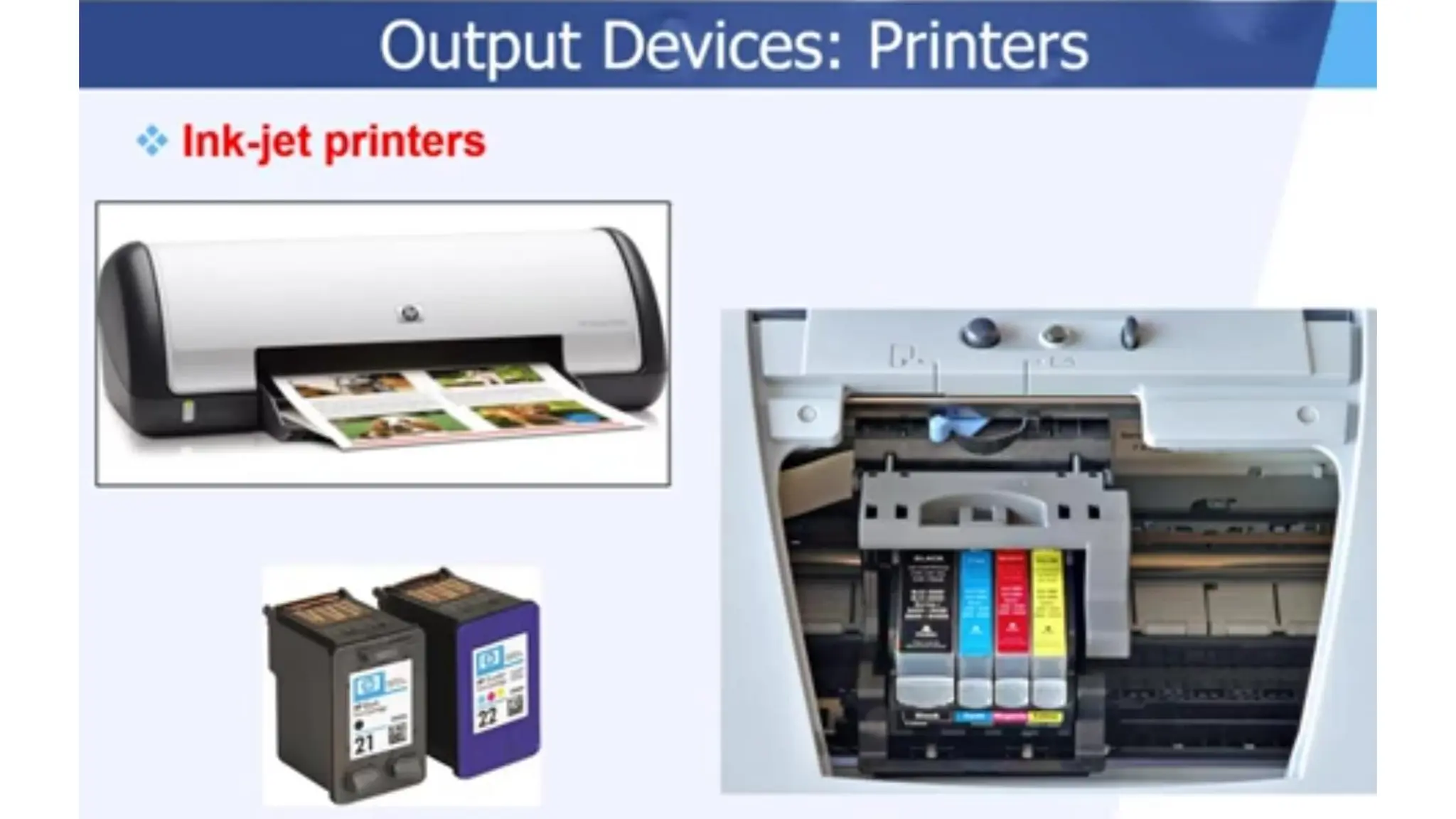
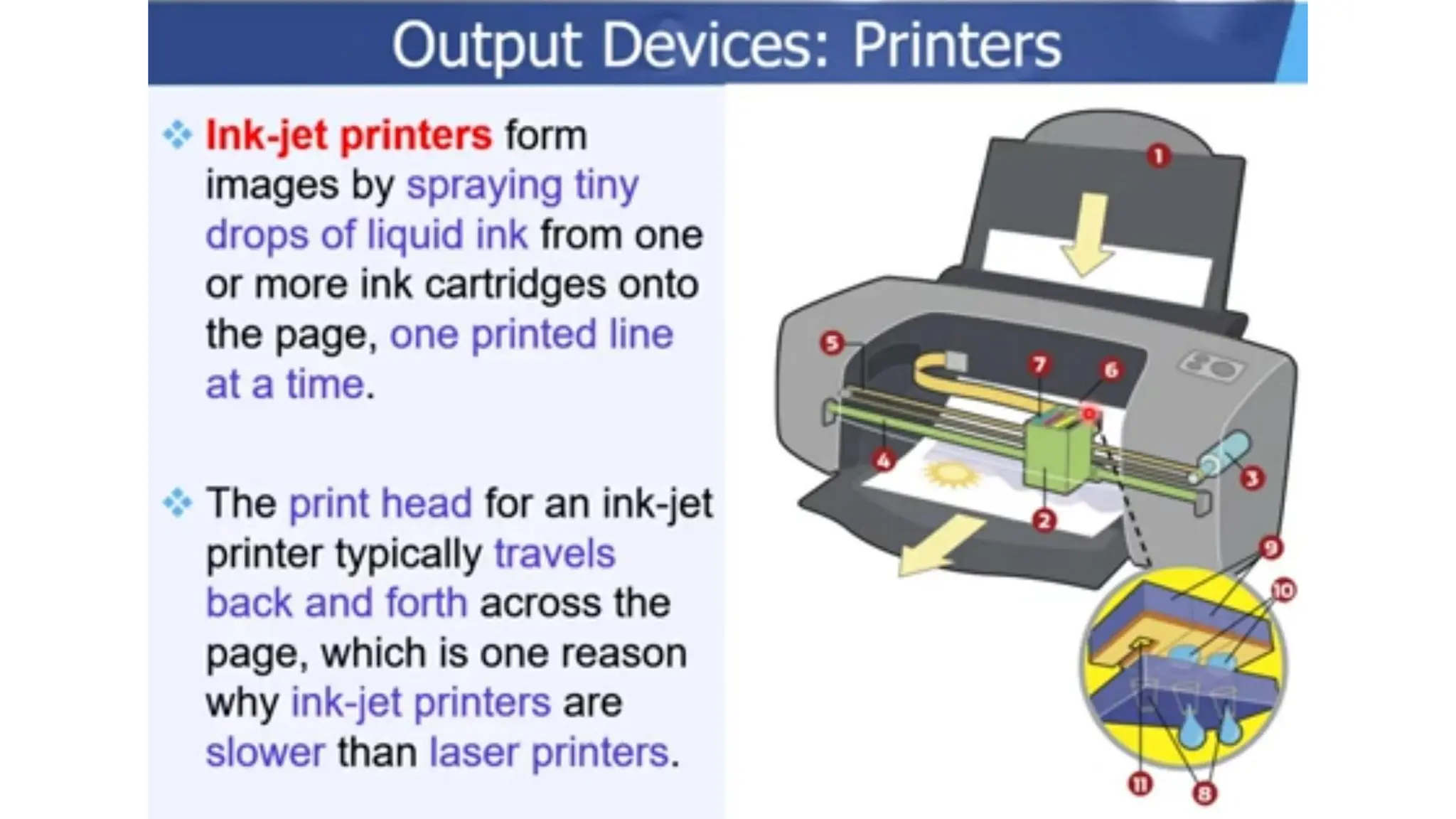
• Ink-jet printer: output device that sprays droplets of ink to produce
images on paper.
• Typically print in color.
• Often the choice for home use.
• Print fairly slowly, one line at a time.
• Quality not quite as good as a laser printer.
Ink-Jet Printers
Thanks
61
CS 101 Dr. Mohamed M. Elnabawy Fall 2025

LEC 11 [CS 101] Introduction to computer science.pdf

  • 1.
    Modern Academy FORComputer Science & Management Technology in Maadi Department of Computer Science • Subject: (CS 101) Introduction to Computer Science • Professors: Prof. Mahmoud Gadallah, and Dr. Mohamed Elnabawy • Tutorial and Lab Coordinator: Instructor Teams • CONTACT: ( LMS-MOODLE) & (WhatsApp: 01005586337). E-Mail: m.elnabawy@eng.modern-academy.edu.eg • COURSE RULES: GRADES/ LATE HW/ ATTENDANCE. CS 101 Dr. Mohamed M. Elnabawy Fall 2025
  • 2.
    Chapter 6 : Inputand Output Reference: Understanding Computers, Today and Tomorrow,13th Edition, 2011 2
  • 3.
    • Explain differenttypes of keyboards and pointing devices. • Describe scanners, readers, and digital cameras. • Understand the audio as an input and output. • Explain the display devices and how they work. • Describe printers and how they work. Learning Outcomes
  • 4.
    • Keyboard: inputdevice containing keys, arranged in a typewriter type of configuration, that can be used to input letters, numbers, and other symbols • Keyboard Contains: • Standard alphanumeric keys. • Numeric keypad. • Function keys. • Directional keys and special keys. Keyboards
  • 6.
    • Can be: •Wireless. • Portable. • Foldable. • Handheld PCs and mobile devices today often have a built-in keyboard or thumb pad (keyboard designed to be pressed with just the thumbs), Keyboards, Cont’d
  • 7.
    • Pointing device:input device that moves an onscreen pointer (arrow or insertion point) to allow the user to select objects on the screen. • Usually buttons on the device are used to select objects. • Common types of pointing devices: • Mouse. • Electronic pen. • Touch screen. Pointing Devices
  • 8.
    • A Mouseis an input device designed to manipulate graphical objects and controls onscreen. • Most desktop computer systems include a mouse as the primary pointing device. • common pointing device that the user slides along a flat surface to move a pointer around the screen and clicks its buttons to make selections: • Rests on the desk or other flat surface close to the user’s PC. • Older mechanical mice have a ball exposed on the bottom surface. • Most mice today are optical mice that track movements with light. • Can be wireless. The Mouse
  • 10.
    • Electronic pen(stylus or digital pen): used instead of a mouse to select objects, as well as to draw or write electronically on the screen. • Commonly used with pen-based PCs • To issue commands and input data. • If handwriting recognition is used, written text can be converted to editable typed text. Electronic Pens
  • 11.
  • 12.
    • Also usedwith • Digital writing systems. • Graphics tablets. • Signature capture devices. Electronic Pens, Cont’d
  • 13.
    • Touch screen:display device that is touched with the finger to issue commands or otherwise generate input to the connected PC. Touch Screens
  • 19.
    • Source documents: documentscontaining data that already exists in physical form (order form, photograph, invoice, check, or price label) • Source data automation: capturing data directly from a source document • Most common devices used in source data automation: scanning or reading device Scanners, Readers, and Digital Cameras
  • 20.
    • Scanner (opticalscanner ): input device that reads printed text and graphics and transfers them to a computer in digital form. • Can scan photos, documents, drawings, etc. • Data is typically input as a single image. • If optical character recognition (OCR) is used, text is input as editable, typed text. Scanners
  • 21.
    • Types ofscanners: • Flatbed. • Sheet fed. • Handheld. • Drum. • Three-dimensional (3D). • Quality of scanned images indicated by optical resolution, measured in the number of dots per inch (dpi). • Resolution can often be specified. Scanners (Cont.)
  • 23.
    • Barcode readers:input devices that read barcodes. • Barcode: machine-readable code that represents data as a set of bars. • Common types: • Universal Product Code (UPC). • Code 39. • POSTNET code. Readers
  • 25.
    • Radio frequencyidentification (RFID) readers • Radio frequency identification (RFID): technology used to store and transmit data located in RFID tags • RFID tag: device containing tiny chips and radio antennas that is attached to objects that will be identified using RFID technology • Applications: tracking inventory pallets and shipping containers, tracking or locating livestock and other animals, tagging tractors and other large assets to keep track of their locations Readers, Cont’d
  • 26.
  • 27.
    • Optical markreaders (OMRs): input data from special forms to score or tally exams, ballots (used for elections), questionnaires, and so forth • Use pencil to fill in small circles/shapes on the form to indicate their selections • Forms are inserted into an optical mark reader to be scored. Optical Mark Reader Readers, Cont’d
  • 28.
    • Optical characterrecognition (OCR) devices: read optical characters • Optical characters are designed to be identifiable by humans as well as OCR device ◼ Widely used in turnaround documents, such as monthly bills Readers, Cont’d
  • 29.
    • Used primarilyfor banking • MICR readers read the special magnetic characters and sort/process checks ◼ Magnetic ink character recognition (MICR) readers: read MICR characters Readers, Cont’d
  • 30.
    • Biometric readers:used to input biometric data. • Biometric data is based on unique physiological characteristics (fingerprint, hand geometry, face, iris of the eye) or personal traits (voice, signature). • Readers can be stand-alone or built into another piece of hardware (keyboard, mouse). • Also being built into computers and storage devices to allow access only by authorized individuals. • Most often used for access control and to verify transactions. Readers, Cont’d
  • 31.
  • 32.
    • Digital camera:input device that takes pictures and records them as digital data (instead of film or videotaped) images • Usually designated as: • Still cameras (take individual still photos). • Video cameras (capture moving video images). Digital Cameras
  • 33.
    • Digital stillcameras: • Available in a wide variety of sizes and capabilities. • Images are immediately available for viewing or printing. • Typically use flash memory for storage. • Photos can be transferred to a PC or printer. • Digital photos can be retouched with image editing software, posted to a Web page, or burned onto a CD or DVD disc. • Camera quality is measured in megapixels. Digital Cameras, Cont’d
  • 34.
    Digital still camerawhich record images on digital media instead of the film, are available in many shapes and sizes Digital Cameras, Cont’d
  • 35.
    • Digital videocameras include: • digital camcorders and • small PC video cameras • Digital camcorders: similar to analog camcorders, but they store images on digital media—typically either on mini digital video (DV) tape cartridges or rewritable DVDs. • PC video cameras (PC cams, Web cam): designed to transmit video images over the Internet, such as during a videoconference or video phone call. Digital Cameras, Cont’d
  • 36.
    • Audio input:process of entering audio data into the computer (voice and music). • Voice input systems (speech recognition systems): • enable a computer to recognize the human voice. • Consist of a microphone or headset and appropriate software. • Can be used to dictate text or commands into a PC. • Music systems: • can input and record music (either original compositions or via a CD or DVD player). Audio Input
  • 37.
    How a voiceinput (Speech recognizer) works Audio Input, Cont’d
  • 43.
    •Printer: output devicethat produces output on paper: • Produce hard copy. • Can be used with both desktop and portable PCs. • Printer characteristics. • Impact vs. nonimpact printing: • Most printers are nonimpact • Impact printers (like dot-matrix printers) are still used for printing multipart forms and shipping documents Printers
  • 48.
    • Printer characteristics,cont’d • Can print in color or black-and white only. • Can be a personal or network printer. • Quality is called print resolution and measured in dots per inch (dpi). • Print speed is measured in pages per minute (ppm). Printers (Cont.)
  • 54.
    • Ink-jet printer:output device that sprays droplets of ink to produce images on paper. • Typically print in color. • Often the choice for home use. • Print fairly slowly, one line at a time. • Quality not quite as good as a laser printer. Ink-Jet Printers
  • 61.
    Thanks 61 CS 101 Dr.Mohamed M. Elnabawy Fall 2025