Learning Styles
Learning Styles
Reported By:
Ms..GRACEL L.
ELLAZO
What is learning style?
Your learning style is your
learning preference.
How do
How do
you like to
you like to
learn?
learn?
Knowing about Your Learning
Style Helps You to:
Style Helps You to:
Be more productive
Be more productive
Increase achievement
Be more creative
Be more creative
Improve problem solving
Make better decisions
Learn more effectively
Learning Style
Learning Style
Visual
Visual
Auditory
Auditory
Kinesthetic/Tactile
Kinesthetic/Tactile
Visual Learners
Visual Learners
Learn through seeing and reading
Prefer written directions
Often good readers
Often good readers
Visual Learners Learn Best
With:
With:
pictures
pictures
illustrations
illustrations
photos
photos
graphs
graphs
diagrams
diagrams
maps
maps
Auditory Learners
Auditory Learners
Learn through listening and talking
Remember what they hear better than
what they see
what they see
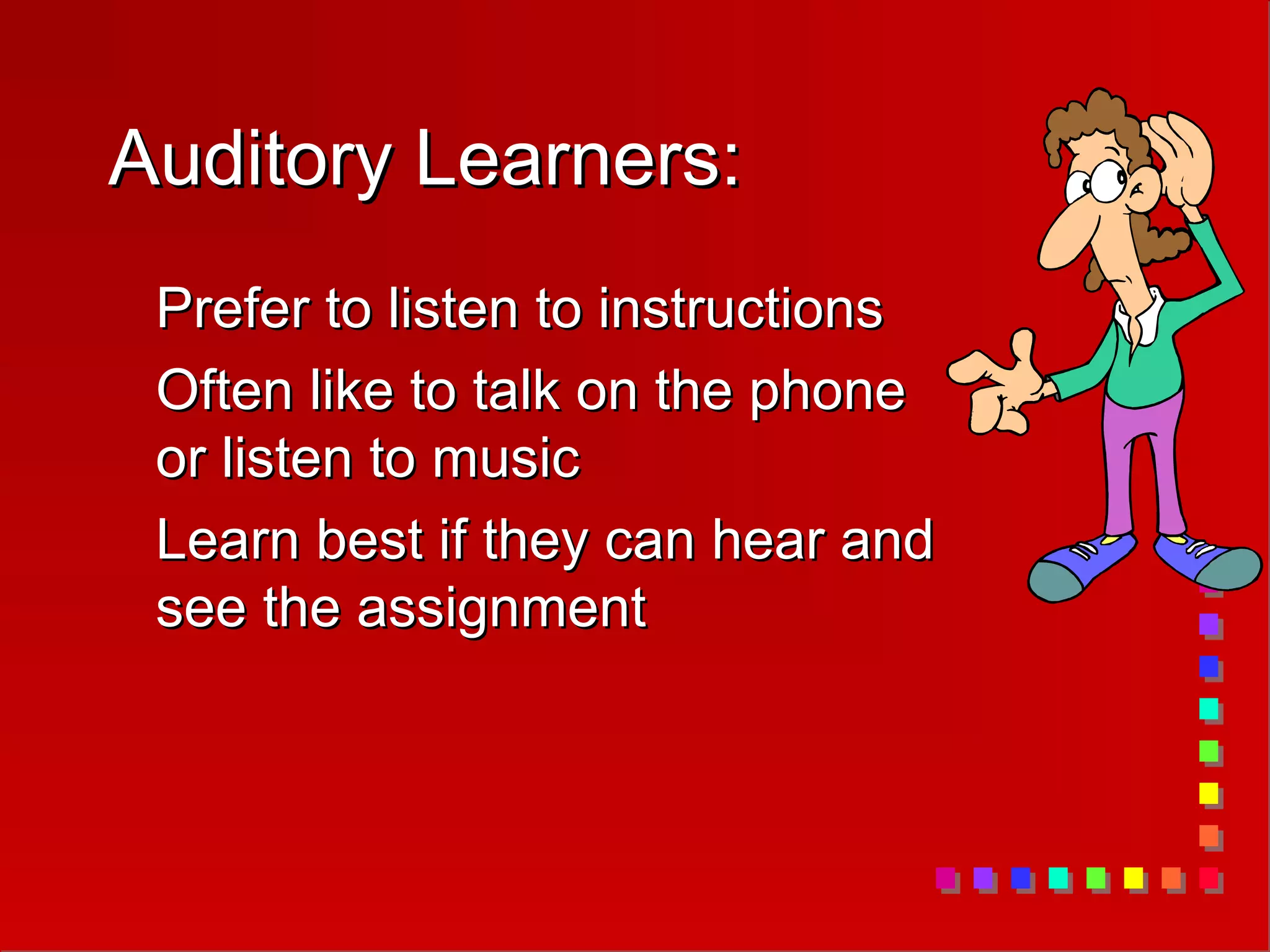
Auditory Learners:
Auditory Learners:
Prefer to listen to instructions
Often like to talk on the phone
or listen to music
or listen to music
Learn best if they can hear and
see the assignment
see the assignment
Kinesthetic/Tactile Learners
Learn through doing
Learn through doing
Remember hands on activities
Use their hands to build, create, plant,
draw or decorate
draw or decorate
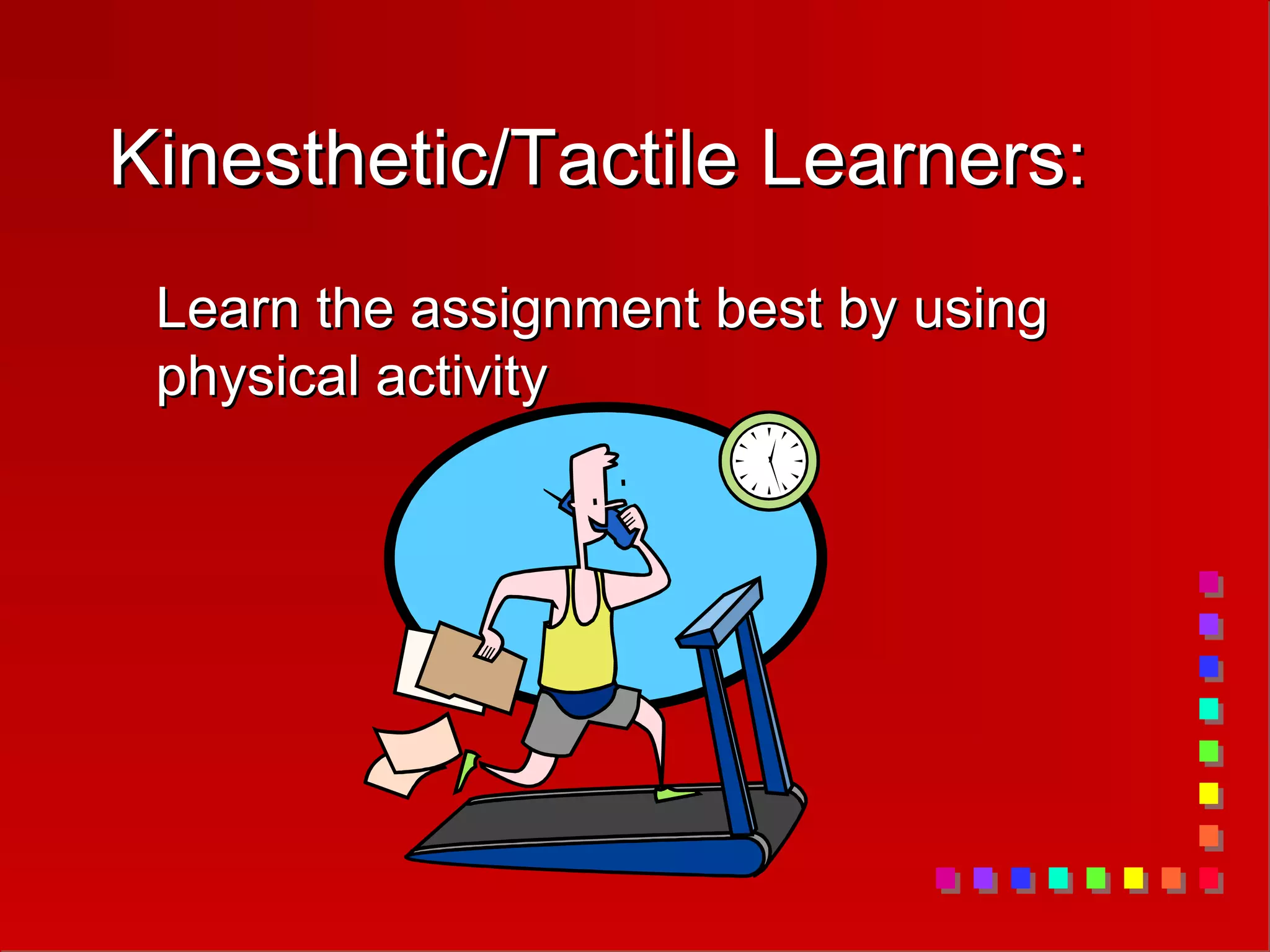
Kinesthetic/Tactile Learners:
Learn the assignment best by using
physical activity
physical activity
Learning Style Memory Exercise
20 items will be passed around. Can
you remember them?
you remember them?
How did you remember the
items?
items?
Did you remember what you could see,
feel, hear or touch?
What is your strongest preference?
Visual Learning Techniques
Mental photograph or video
Flash cards
Flash cards
Highlighting
Highlighting
Draw pictures to remember
Use pictures or symbols in the margin
to remember
to remember
Draw a map or outline
Auditory Learning Techniques
Discuss what you have learned
with others
with others
Participate in study groups
Recite aloud
Recite aloud
Teach others what you have learned
Use flash cards and say the items
Use music in the background if it does
not distract you or use it as a break
from studying
from studying
Kinesthetic/Tactile Learning
Techniques
Techniques
Read while walking or pacing
Study outside when practical
Take notes on lectures
Highlight or underline
Write summaries
Write summaries
Outline chapters
Outline chapters
Think of practical applications

learningstyleppt-130217202358-phpapp02-1.pdf

  • 1.
  • 2.
    What is learningstyle? What is learning style?
  • 3.
    Your learning styleis your Your learning style is your learning preference. learning preference. How do How do you like to you like to learn? learn?
  • 4.
    Knowing about YourLearning Knowing about Your Learning Style Helps You to: Style Helps You to: Be more productive Be more productive Increase achievement Increase achievement Be more creative Be more creative Improve problem solving Improve problem solving Make better decisions Make better decisions Learn more effectively Learn more effectively
  • 5.
  • 6.
    Visual Learners Visual Learners Learnthrough seeing and reading Learn through seeing and reading Prefer written directions Prefer written directions Often good readers Often good readers
  • 7.
    Visual Learners LearnBest Visual Learners Learn Best With: With: pictures pictures illustrations illustrations photos photos graphs graphs diagrams diagrams maps maps
  • 8.
    Auditory Learners Auditory Learners Learnthrough listening and talking Learn through listening and talking Remember what they hear better than Remember what they hear better than what they see what they see
  • 9.
    Auditory Learners: Auditory Learners: Preferto listen to instructions Prefer to listen to instructions Often like to talk on the phone Often like to talk on the phone or listen to music or listen to music Learn best if they can hear and Learn best if they can hear and see the assignment see the assignment
  • 10.
    Kinesthetic/Tactile Learners Kinesthetic/Tactile Learners Learnthrough doing Learn through doing Remember hands on activities Remember hands on activities Use their hands to build, create, plant, Use their hands to build, create, plant, draw or decorate draw or decorate
  • 11.
    Kinesthetic/Tactile Learners: Kinesthetic/Tactile Learners: Learnthe assignment best by using Learn the assignment best by using physical activity physical activity
  • 12.
    Learning Style MemoryExercise Learning Style Memory Exercise 20 items will be passed around. Can 20 items will be passed around. Can you remember them? you remember them?
  • 13.
    How did youremember the How did you remember the items? items? Did you remember what you could see, Did you remember what you could see, feel, hear or touch? feel, hear or touch? What is your strongest preference? What is your strongest preference?
  • 14.
    Visual Learning Techniques VisualLearning Techniques Mental photograph or video Mental photograph or video Flash cards Flash cards Highlighting Highlighting Draw pictures to remember Draw pictures to remember Use pictures or symbols in the margin Use pictures or symbols in the margin to remember to remember Draw a map or outline Draw a map or outline
  • 15.
    Auditory Learning Techniques AuditoryLearning Techniques Discuss what you have learned Discuss what you have learned with others with others Participate in study groups Participate in study groups Recite aloud Recite aloud Teach others what you have learned Teach others what you have learned Use flash cards and say the items Use flash cards and say the items Use music in the background if it does Use music in the background if it does not distract you or use it as a break not distract you or use it as a break from studying from studying
  • 16.
    Kinesthetic/Tactile Learning Kinesthetic/Tactile Learning Techniques Techniques Readwhile walking or pacing Read while walking or pacing Study outside when practical Study outside when practical Take notes on lectures Take notes on lectures Highlight or underline Highlight or underline Write summaries Write summaries Outline chapters Outline chapters Think of practical applications Think of practical applications