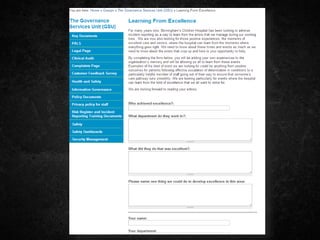




Learning from Excellence
Adrian Plunkett, Birmingham UK
SMACC
June 16th 2016
@adrianplunkett
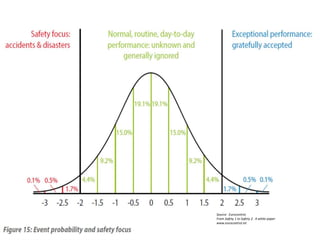
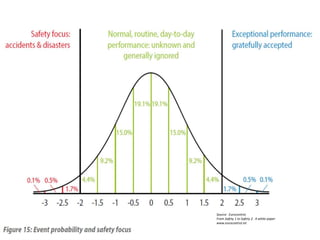
Source: Eurocontrol.
From Safety 1 to Safety 2. A white paper
www.eurocontrol.int
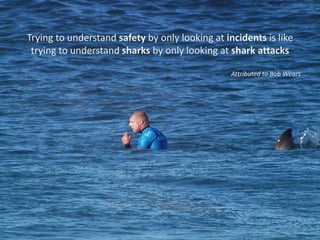
Trying to understand safety by only looking at incidents is like
trying to understand sharks by only looking at shark attacks
Attributed to Bob Wears
Theirs nothing worse than misplaced apostropheโ€™s
1 + 1 = 2
2 + 2 = 4
3 + 3 = 7
4 + 4 = 8
5 + 5 = 10
Rieger at en.wikipedia derivative work: JohnKiat (talk) derivative work: JohnKiat [CC-BY-SA-3.0 (http://creativecommons.org/licenses/by-sa/3.0/) or GFDL], via Wikimedia Commons
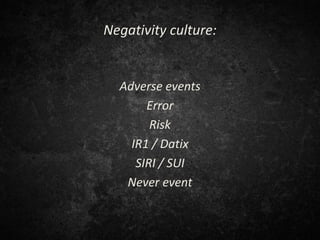
Negativity culture:
Adverse events
Error
Risk
IR1 / Datix
SIRI / SUI
Never event
Second victim effect
Third victim?
Fourth victim?
Source: Eurocontrol.
From Safety 1 to Safety 2. A white paper
www.eurocontrol.int
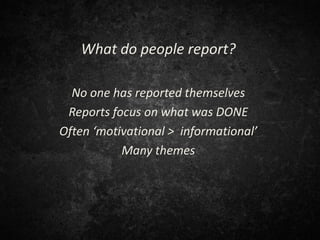
What do people report?
No one has reported themselves
Reports focus on what was DONE
Often โ€˜motivational > informationalโ€™
Many themes
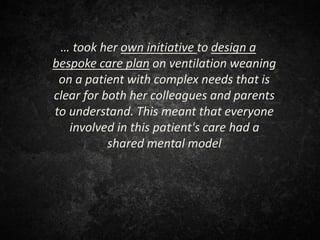
โ€ฆ took her own initiative to design a
bespoke care plan on ventilation weaning
on a patient with complex needs that is
clear for both her colleagues and parents
to understand. This meant that everyone
involved in this patient's care had a
shared mental model
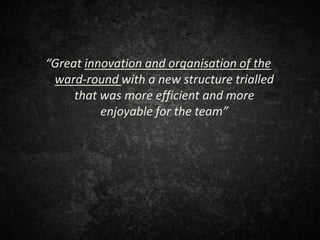
โ€œGreat innovation and organisation of the
ward-round with a new structure trialled
that was more efficient and more
enjoyable for the teamโ€
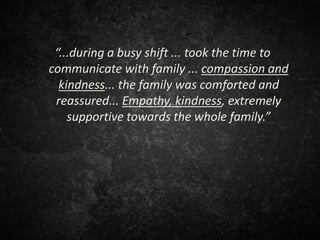
โ€œ...during a busy shift ... took the time to
communicate with family ... compassion and
kindness... the family was comforted and
reassured... Empathy, kindness, extremely
supportive towards the whole family.โ€
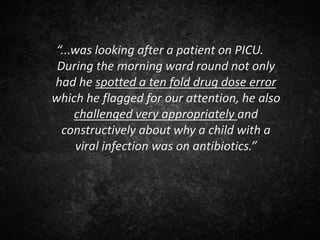
โ€œ...was looking after a patient on PICU.
During the morning ward round not only
had he spotted a ten fold drug dose error
which he flagged for our attention, he also
challenged very appropriately and
constructively about why a child with a
viral infection was on antibiotics.โ€
0
10
20
30
40
50
60
70
80
90
100
Apr-14
May-14
Jun-14
Jul-14
Aug-14
Sep-14
Oct-14
Nov-14
Dec-14
Jan-15
Feb-15
Mar-15
Apr-15
May-15
Jun-15
Jul-15
Aug-15
Sep-15
Oct-15
Nov-15
Dec-15
Jan-16
Feb-16
Mar-16
Apr-16
May-16
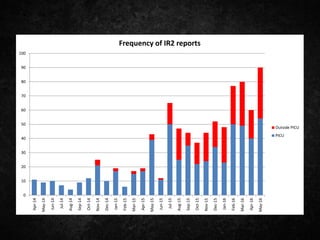
Frequency of IR2 reports
Outside PICU
PICU
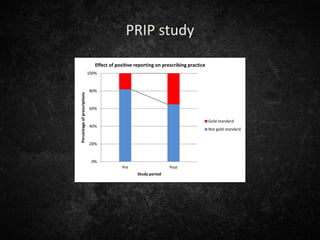
PRIP study
0%
20%
40%
60%
80%
100%
Pre Post
Percentageofprescriptions
Study period
Effect of positive reporting on prescribing practice
Gold standard
Not gold standard
Imagine you had three wishes...
โ€œ... The two most powerful words in the English
language are โ€˜well doneโ€™โ€
Sir Alex Ferguson
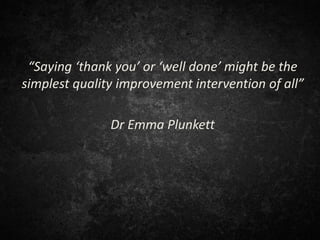
โ€œSaying โ€˜thank youโ€™ or โ€˜well doneโ€™ might be the
simplest quality improvement intervention of allโ€
Dr Emma Plunkett

Learning from excellence in critical care

Editor's Notes

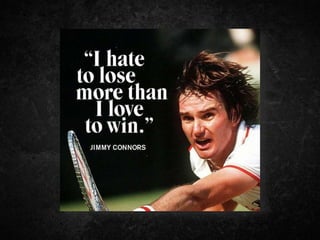
  • #9ย Prospect theory We value loss more than gain
  • #10ย Prospect theory We value loss more than gain
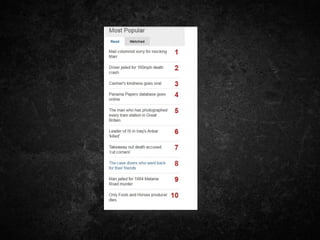
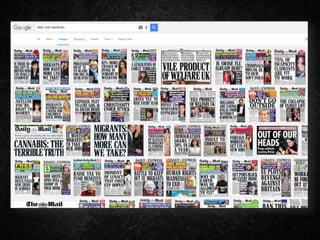
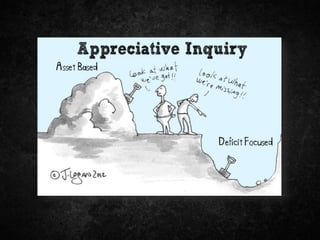
  • #11ย Negative effects of looking at the negative pervades our wider society... See the top 10 most read What use are these? These are most read Entertainment... We are attracted to it, good at spotting. Doesnโ€™t it help in healthcare?
  • #14ย Contrary to popular belief and their widespread use in headlines, positive superlatives (i.e., โ€œbestโ€, โ€œalwaysโ€) do not appear to be compelling to readers. In fact, our data shows just the opposite. For our headline analysis, we drew a sample of approximately 65,000 paid link titles from the pool of all English language paid links that ran in Outbrainโ€™s network between the months of April and July 2012 and measured the impact of superlative use on engagement (click-through rate). As you can see in the graph below, the results were very interesting! ย  Compared with headlines that contained neither positive (โ€œalwaysโ€ or โ€œbestโ€) nor negative (โ€œneverโ€ or โ€œworstโ€) superlatives, headlines with positive superlatives performed 29% worse and headlines with negative superlatives performed 30% better.ย The average click-through rate on headlines with negative superlatives was a staggering 63% higherย than that of their positive counterparts. These results were replicated in a subsequent headline study that included data from the months of August โ€“ September 2012. So why the attraction to the negative and the distaste for the positive? Audience aversion to positive superlatives may simply be a product of overuse, or it could be because readers are skeptical of sourcesโ€™ motives for endorsement. On the flip side, sources of negative information may be more likely to be perceived as impartial and authentic. Whereas positive superlatives may have become clichรฉd through overuse, negative superlatives may be more unexpected and intriguing. Want to put these findings to the test? If youโ€™re amplifying your content with Outbrain, try testing out some headlines with negative superlatives inย your campaign. Donโ€™t have an Outbrain campaign? Check out ourย Amplify DIYplatform to see how you can start growing your audience!
  • #16ย Trouble is it generates a negative culture: The language of negativity. IR1 story Why is this?
  • #23ย Common theme.
  • #24ย Innovations are difficult to capture unless you look for them Weโ€™ve captured quite a few now via IR2. Workarounds and safety-II
  • #25ย Is this actionable intellgence? Just nice? Show appreciation, more likely to increase motivation. Motivational vs. Informational.
  • #26ย Near miss โ€“ positive reporting of near miss, rather than negative reporting Challenge authority gradient Used a example of communication within the unit
  • #29ย Story about name and shame Positive reporting can also be used to improve quality as a driver, rather than negative targets... Good practice increases; error (or bad practice) necessarily decreases. In contrast to the usual approach to QI or safety...