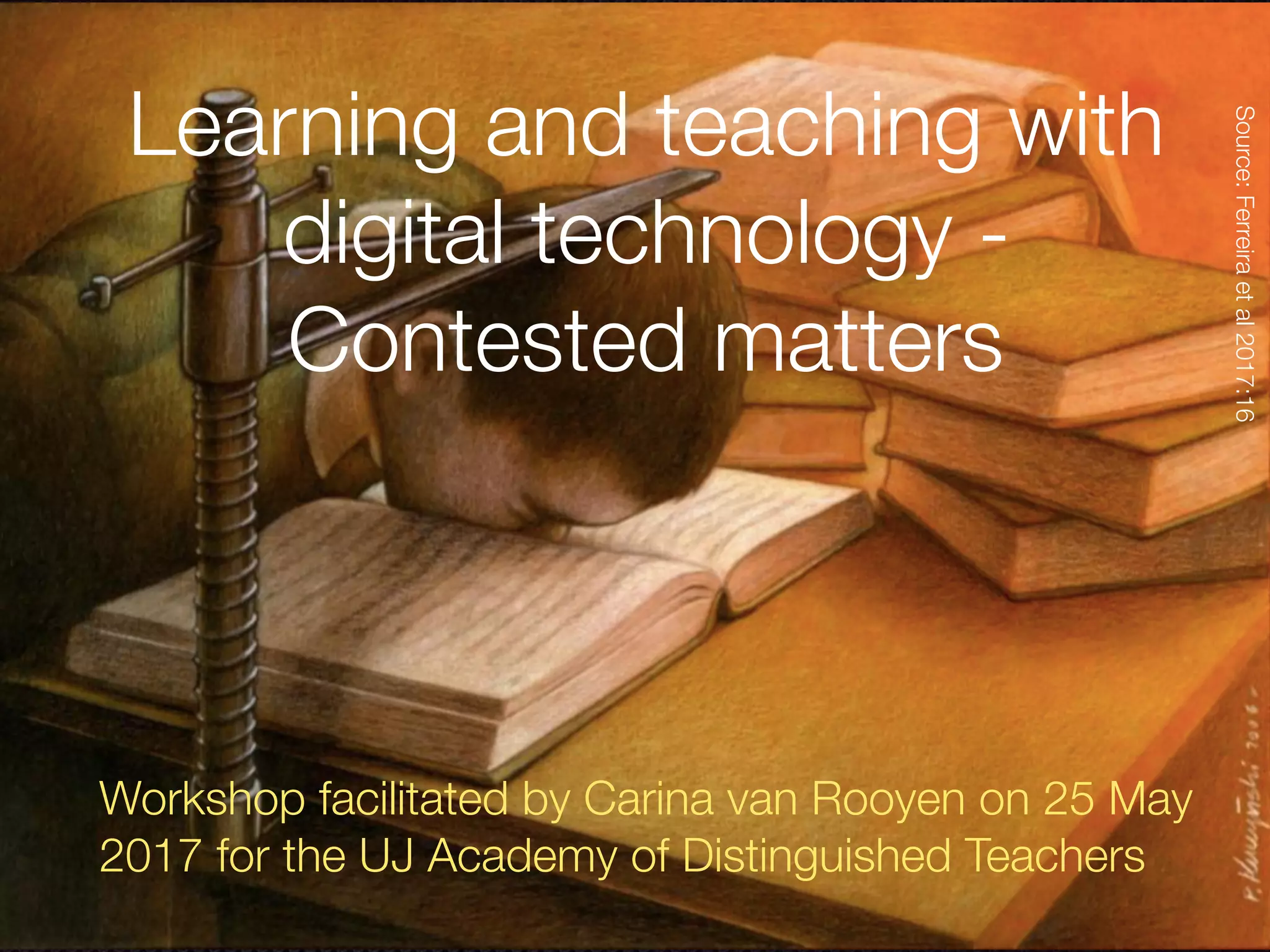


Learning and teaching with
digital technology -
Contested matters
Workshop facilitated by Carina van Rooyen on 25 May
2017 for the UJ Academy of Distinguished Teachers
Source:Ferreiraetal2017:16
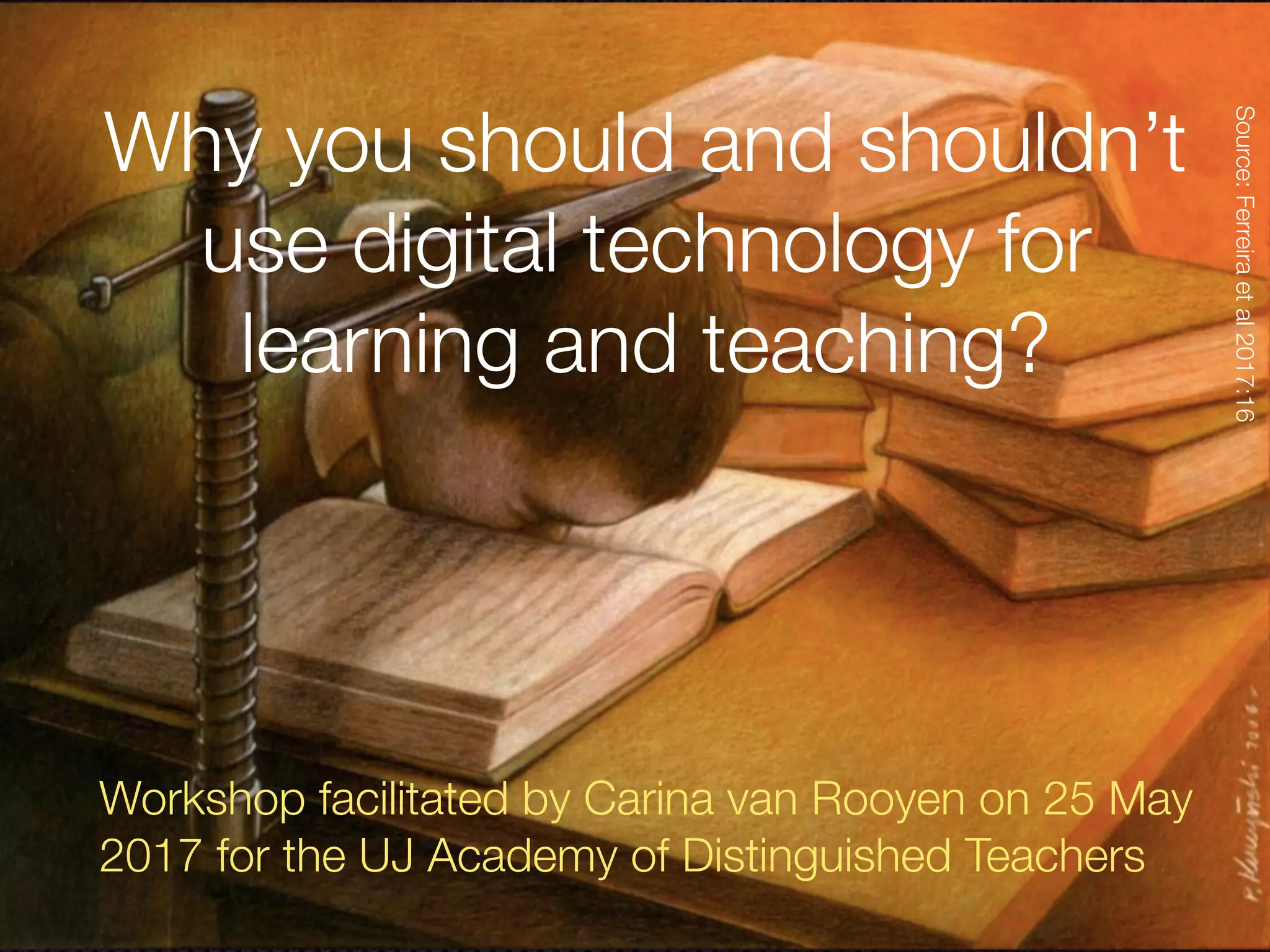
Why you should and shouldn’t
use digital technology for
learning and teaching?
Workshop facilitated by Carina van Rooyen on 25 May
2017 for the UJ Academy of Distinguished Teachers
Source:Ferreiraetal2017:16
About myself
https://www.slideshare.net/carinavr
https://carinavr.wordpress.com/
Source:http://scienceleadership.org/thumbnail/24857/400×400
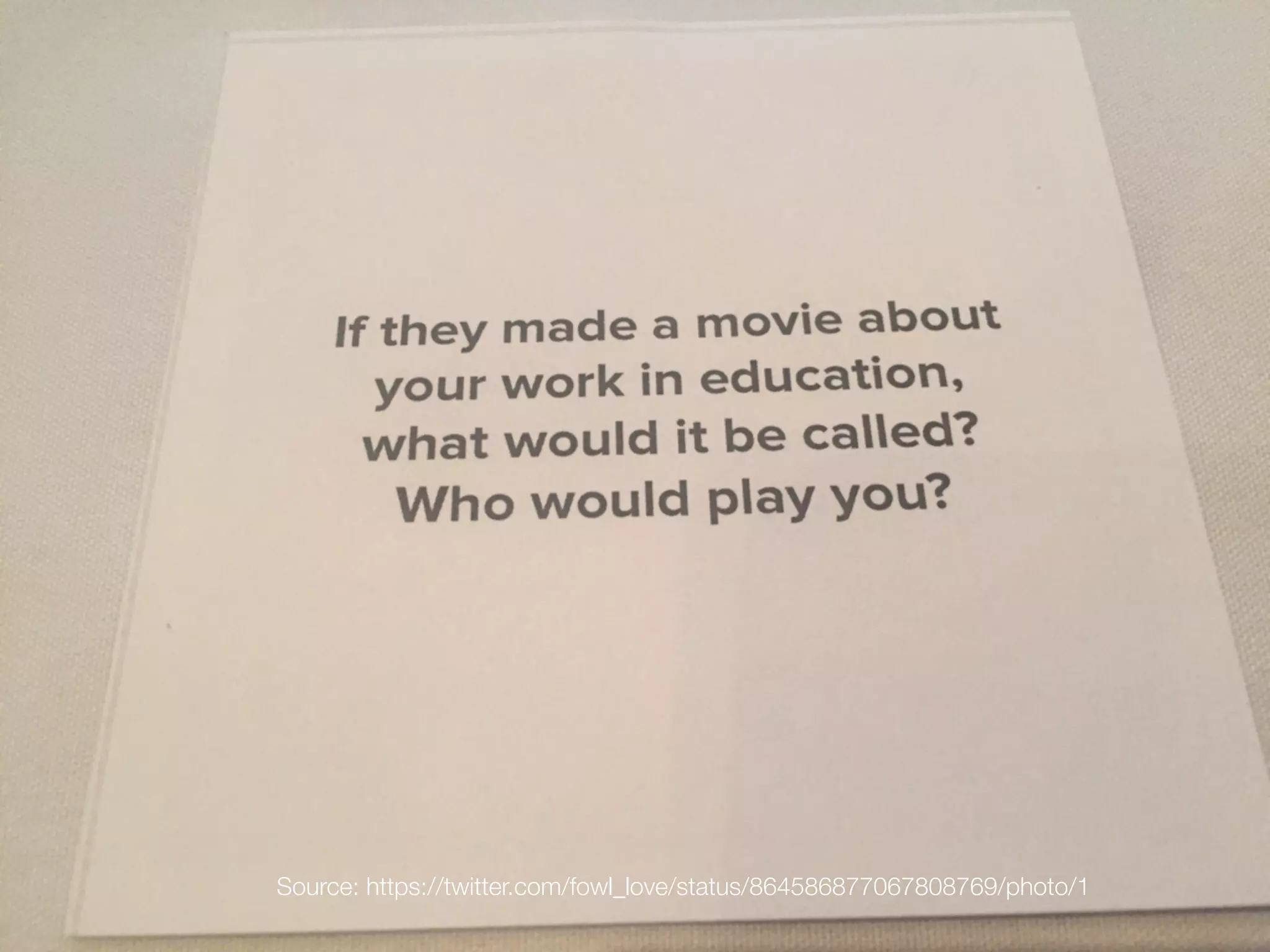
Source: https://twitter.com/fowl_love/status/864586877067808769/photo/1
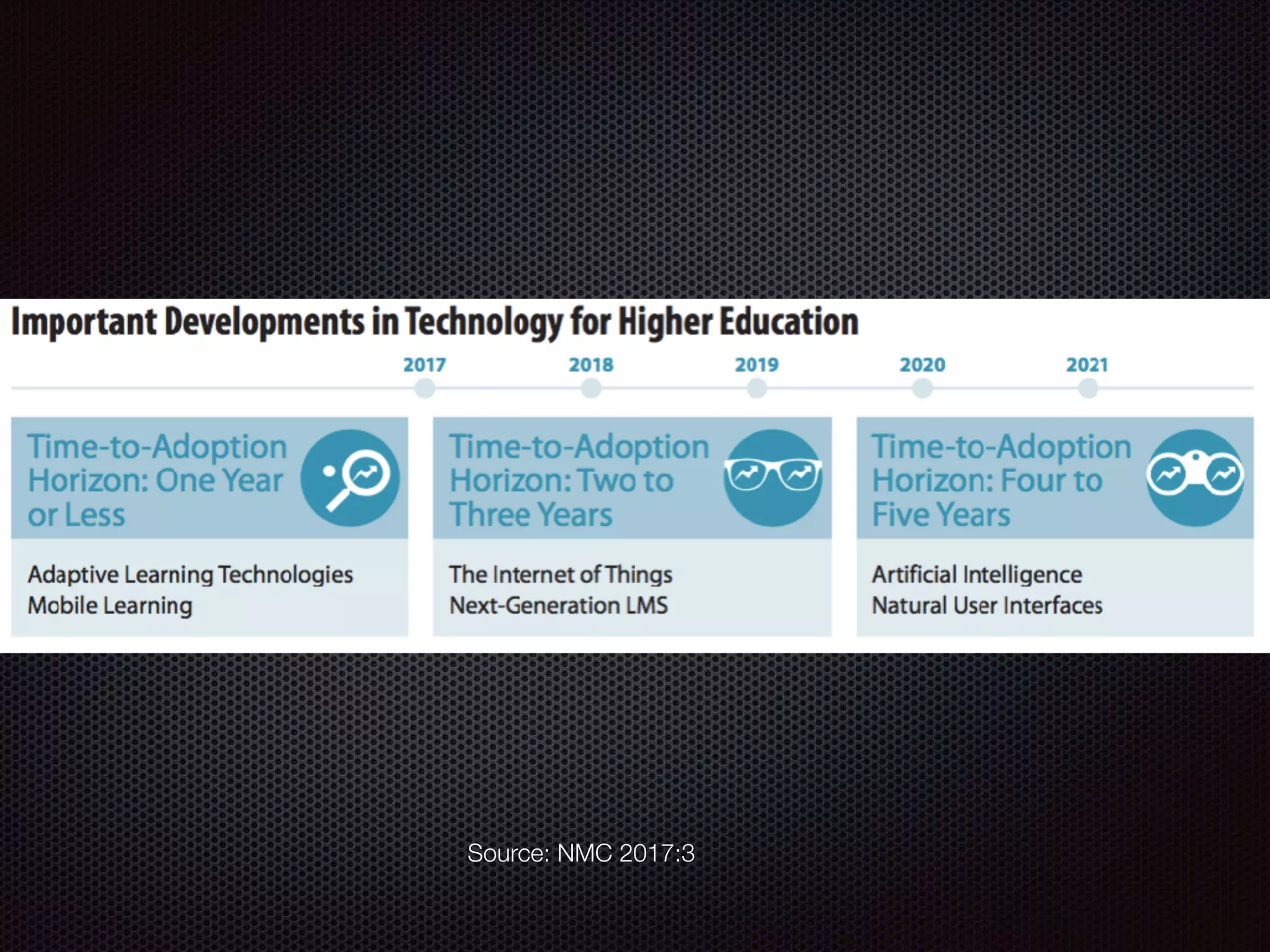
Source: NMC 2017:3
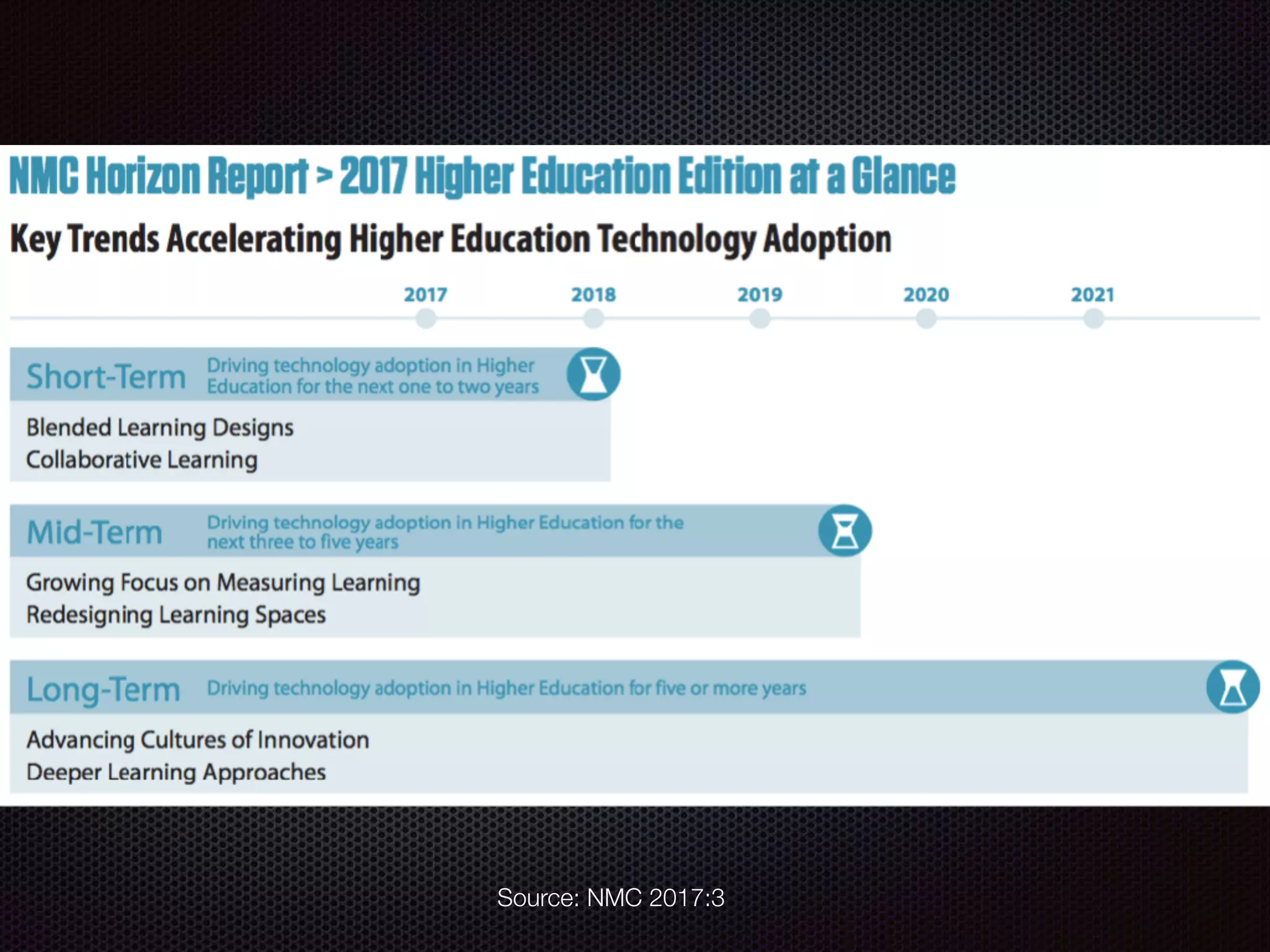
Source: NMC 2017:3
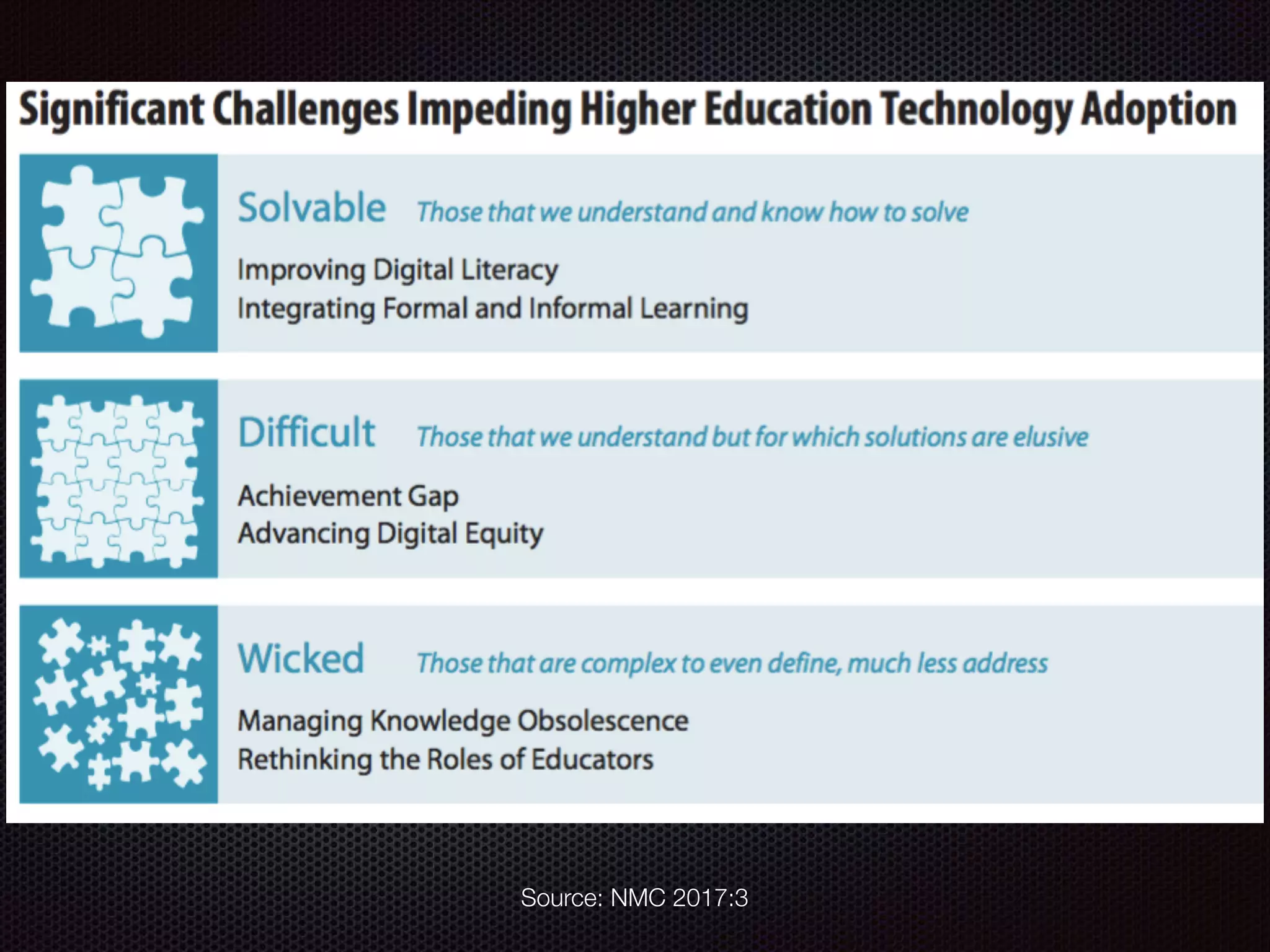
Source: NMC 2017:3
Changes in L&T related to tech
Changes in the outcomes of L&T
Changes in the packages of L&T
Changes in the actors in L&T
Changes in the delivery medium of L&T
Changes in pedagogical approaches to L&T
Some false contestations /
myths
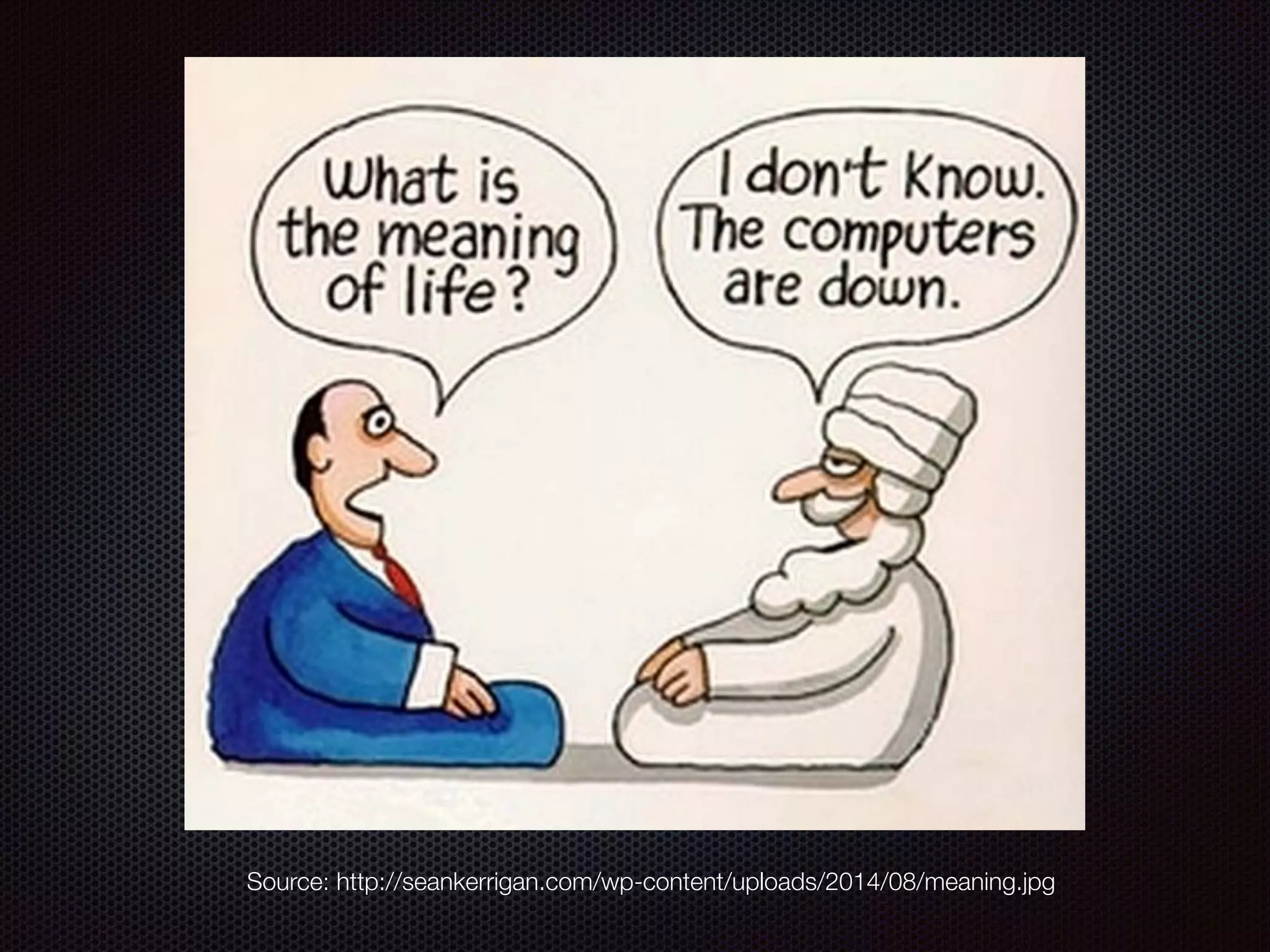
Source: http://seankerrigan.com/wp-content/uploads/2014/08/meaning.jpg
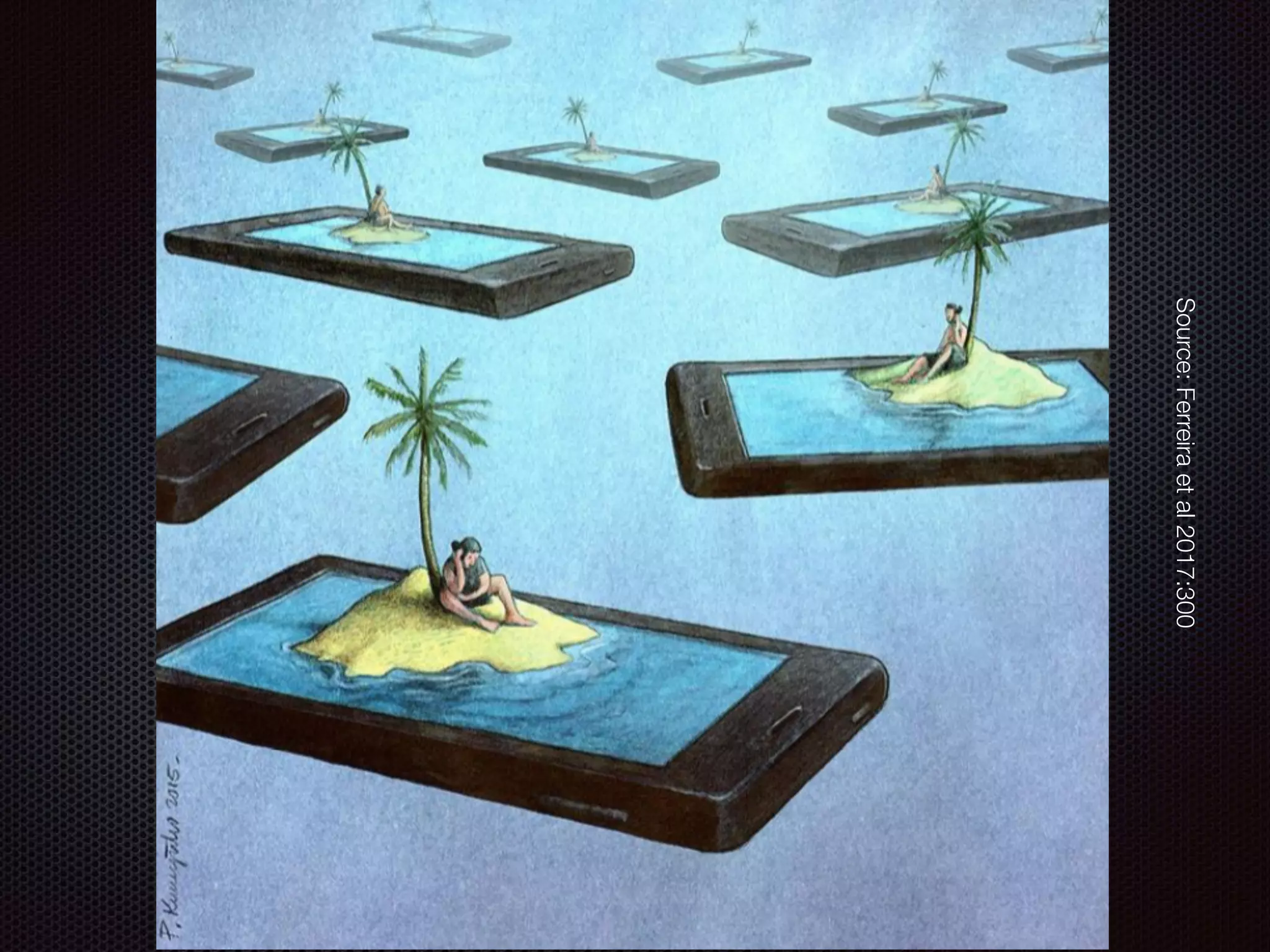
Source:Ferreiraetal2017:300
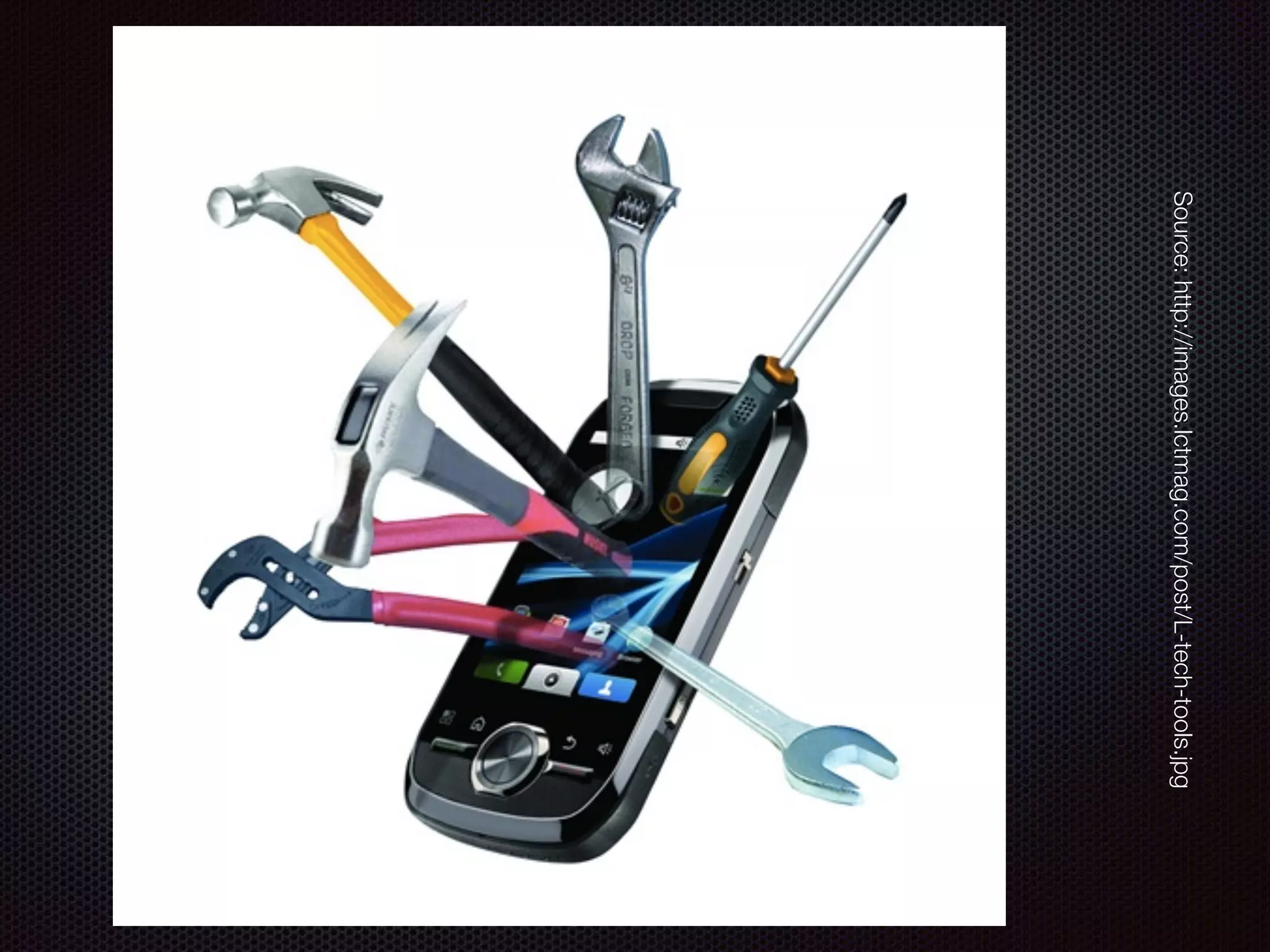
Source:http://images.lctmag.com/post/L-tech-tools.jpg
Some people talk in the
sleep.
Lecturers talk while other
people sleep.
~ Albert Camus
What are the issues?
Source:Ferreiraetal2017:123
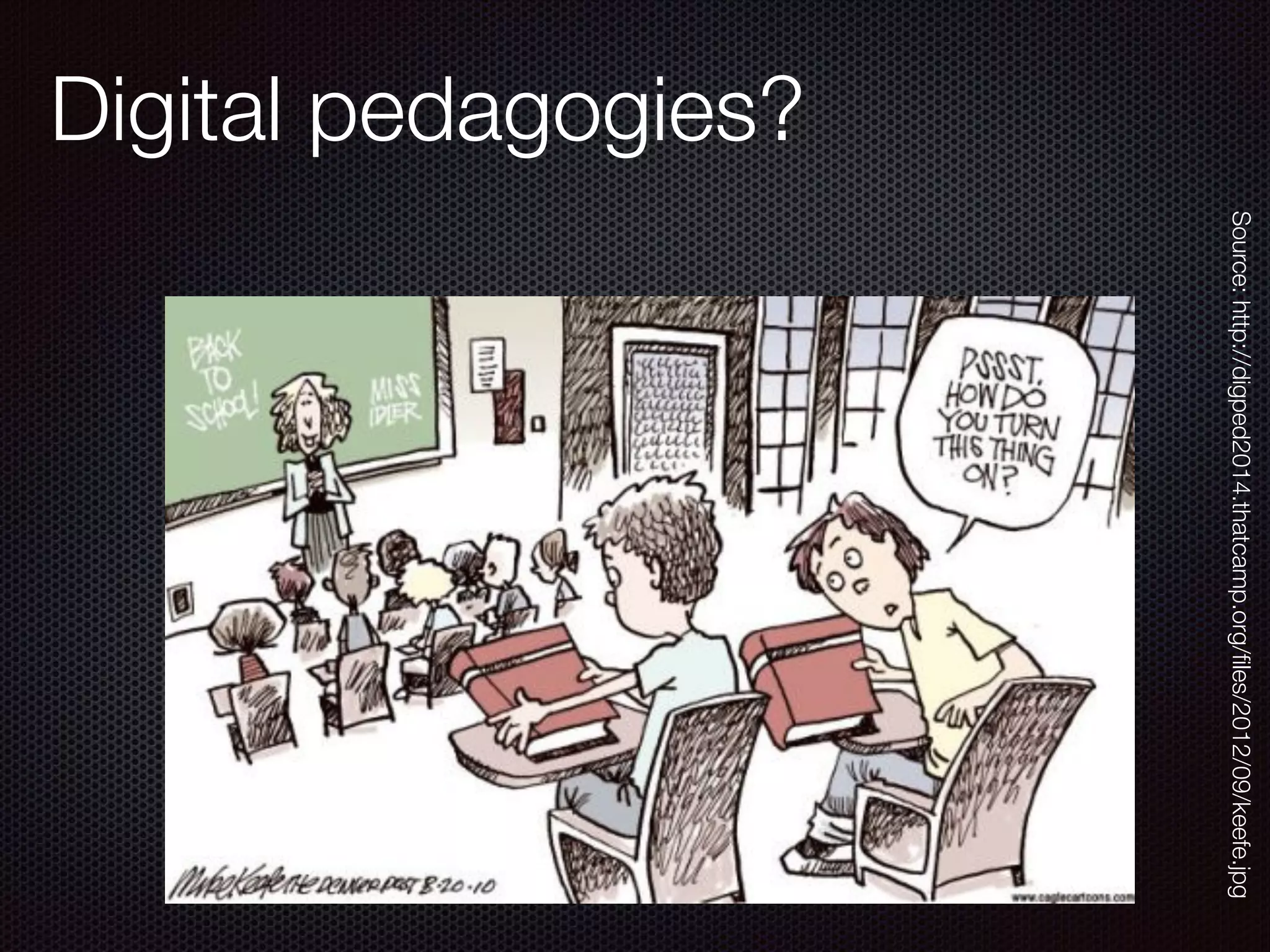
Digital pedagogies?
Source:http://digped2014.thatcamp.org/files/2012/09/keefe.jpg
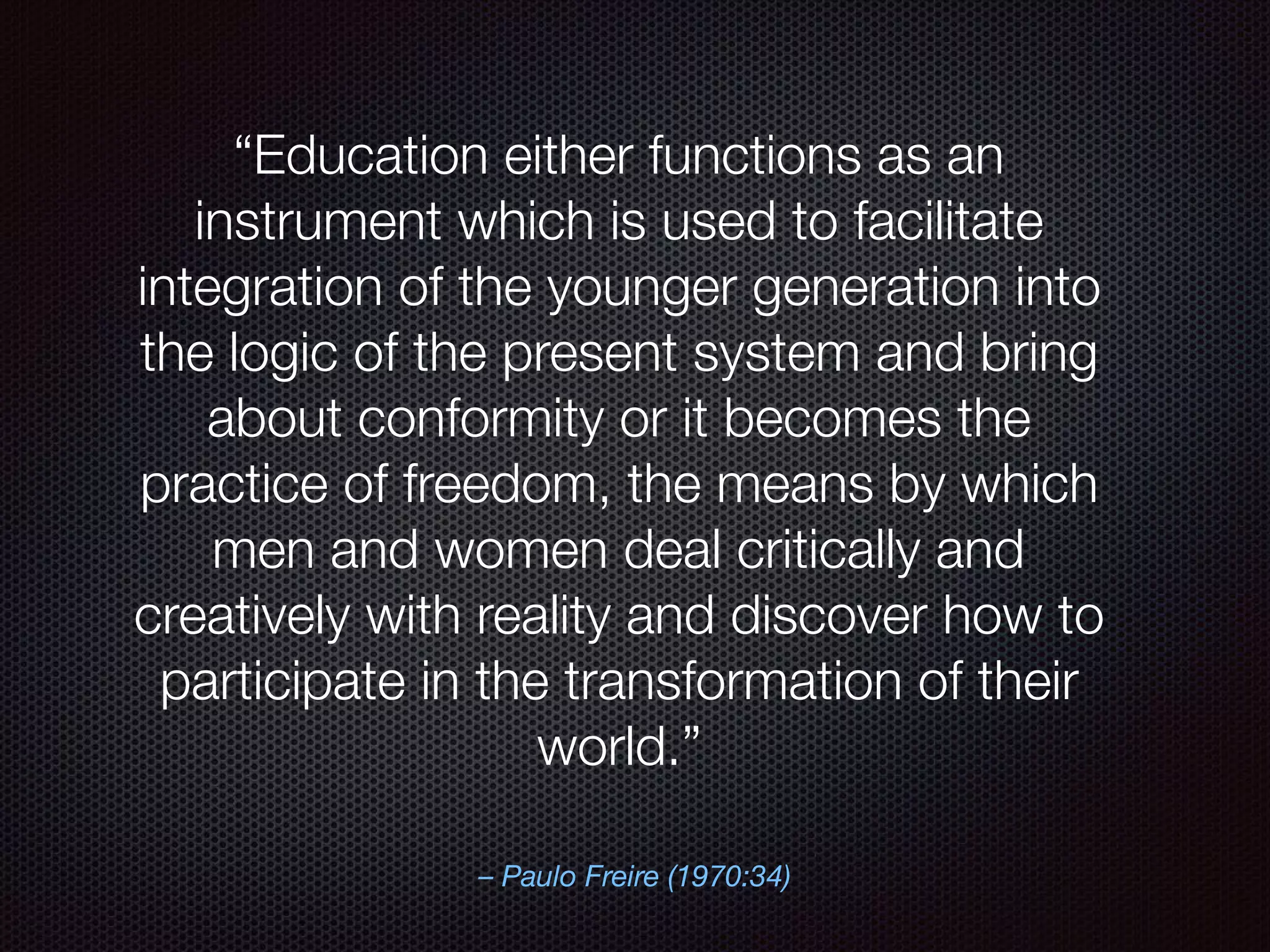
– Paulo Freire (1970:34)
“Education either functions as an
instrument which is used to facilitate
integration of the younger generation into
the logic of the present system and bring
about conformity or it becomes the
practice of freedom, the means by which
men and women deal critically and
creatively with reality and discover how to
participate in the transformation of their
world.”
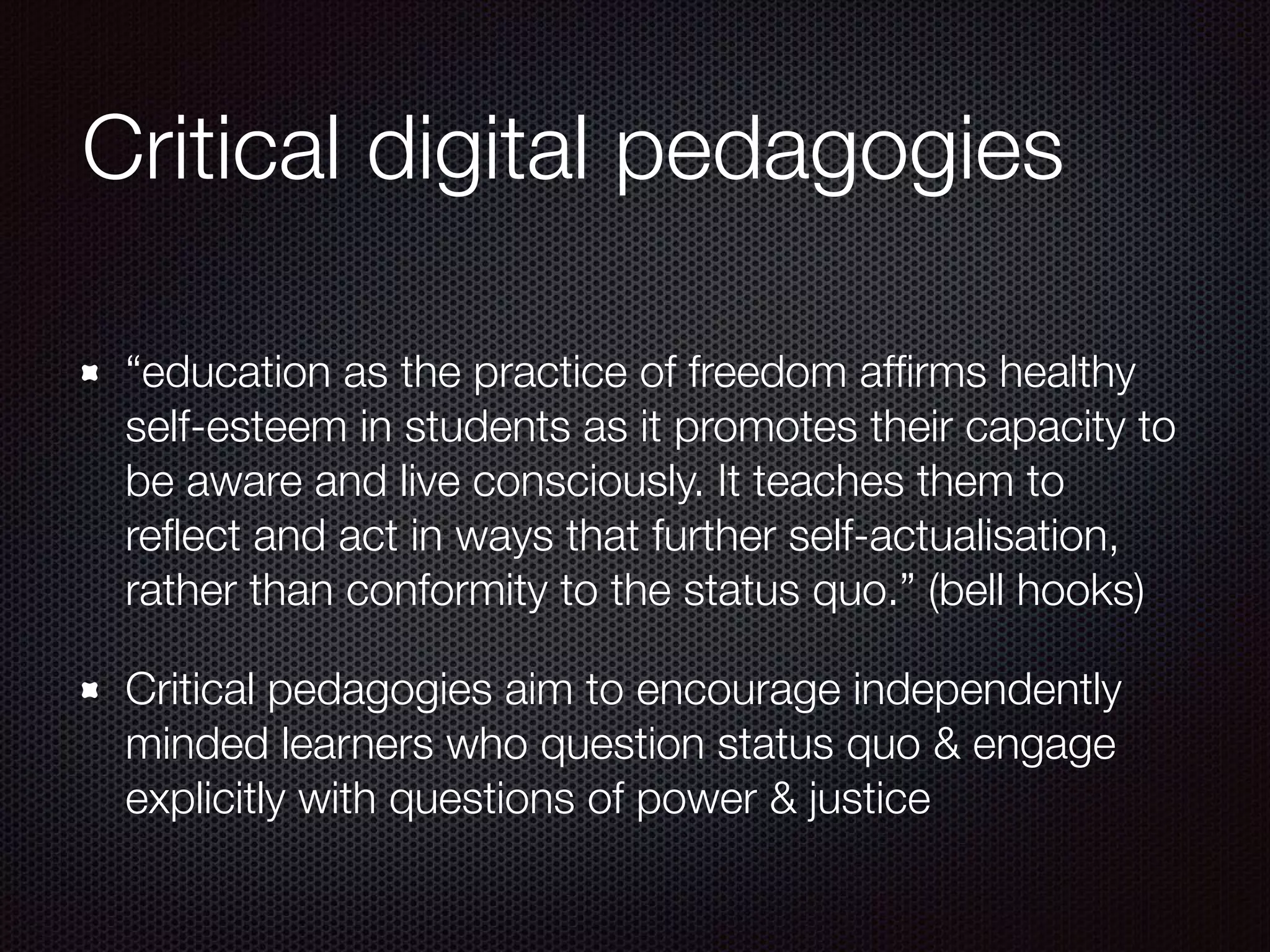
Critical digital pedagogies
“education as the practice of freedom affirms healthy
self-esteem in students as it promotes their capacity to
be aware and live consciously. It teaches them to
reflect and act in ways that further self-actualisation,
rather than conformity to the status quo.” (bell hooks)
Critical pedagogies aim to encourage independently
minded learners who question status quo & engage
explicitly with questions of power & justice
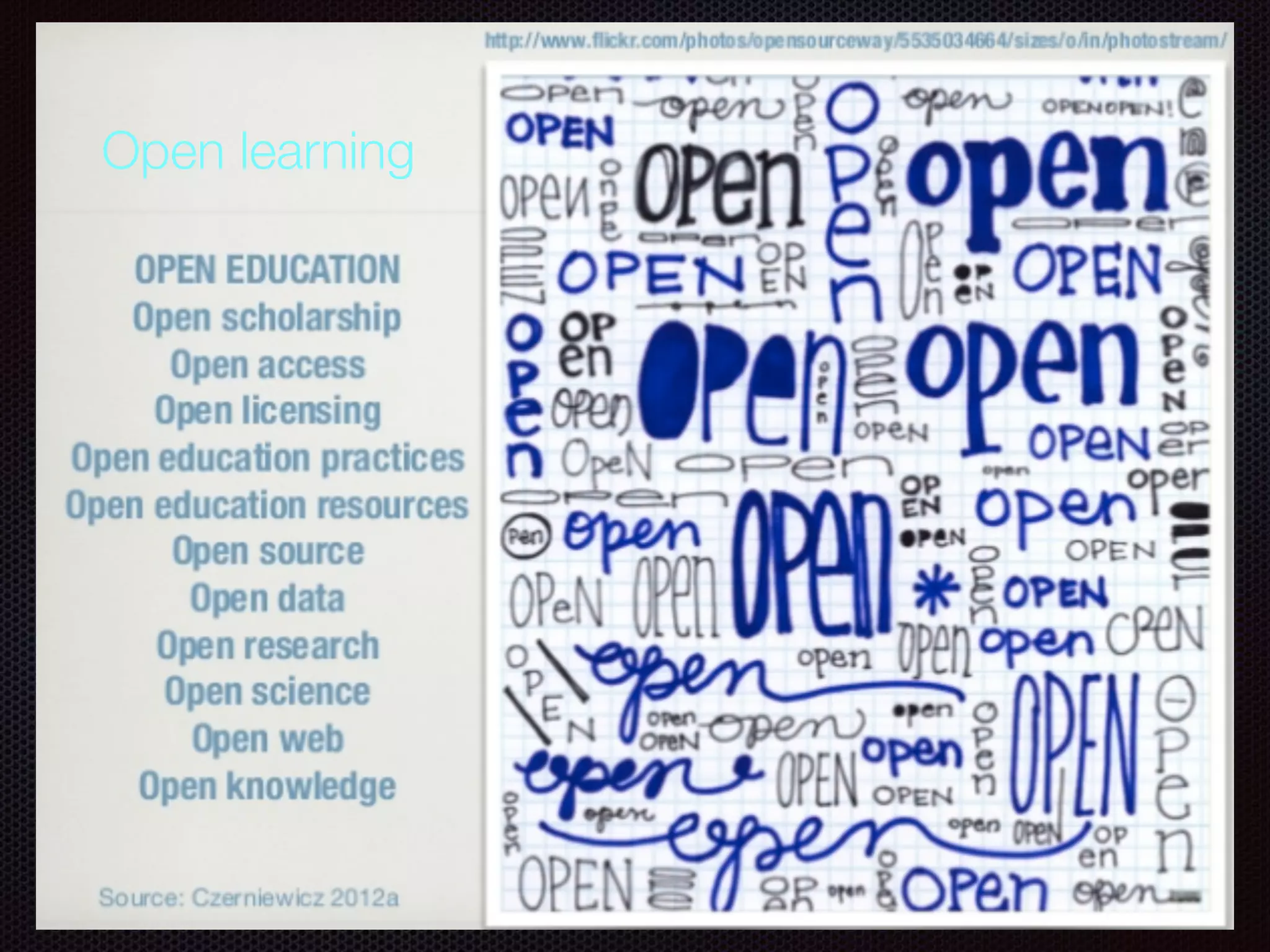
Open learning
–Audrey Watters (2014)
“Does ‘open’ mean ‘made public’? Does
‘open’ mean shared? Does ‘open’ mean
‘accessible’? Accessible how? To whom?
Does ‘open’ mean editable? Negotiable?
Does ‘open’ mean ‘free’? Does ‘open’
mean ‘open-ended’? Does ‘open’ mean
transparent? Does ‘open’ mean ‘open-
minded’? …Does ‘open’ mean open to
participation – by everyone equally?”
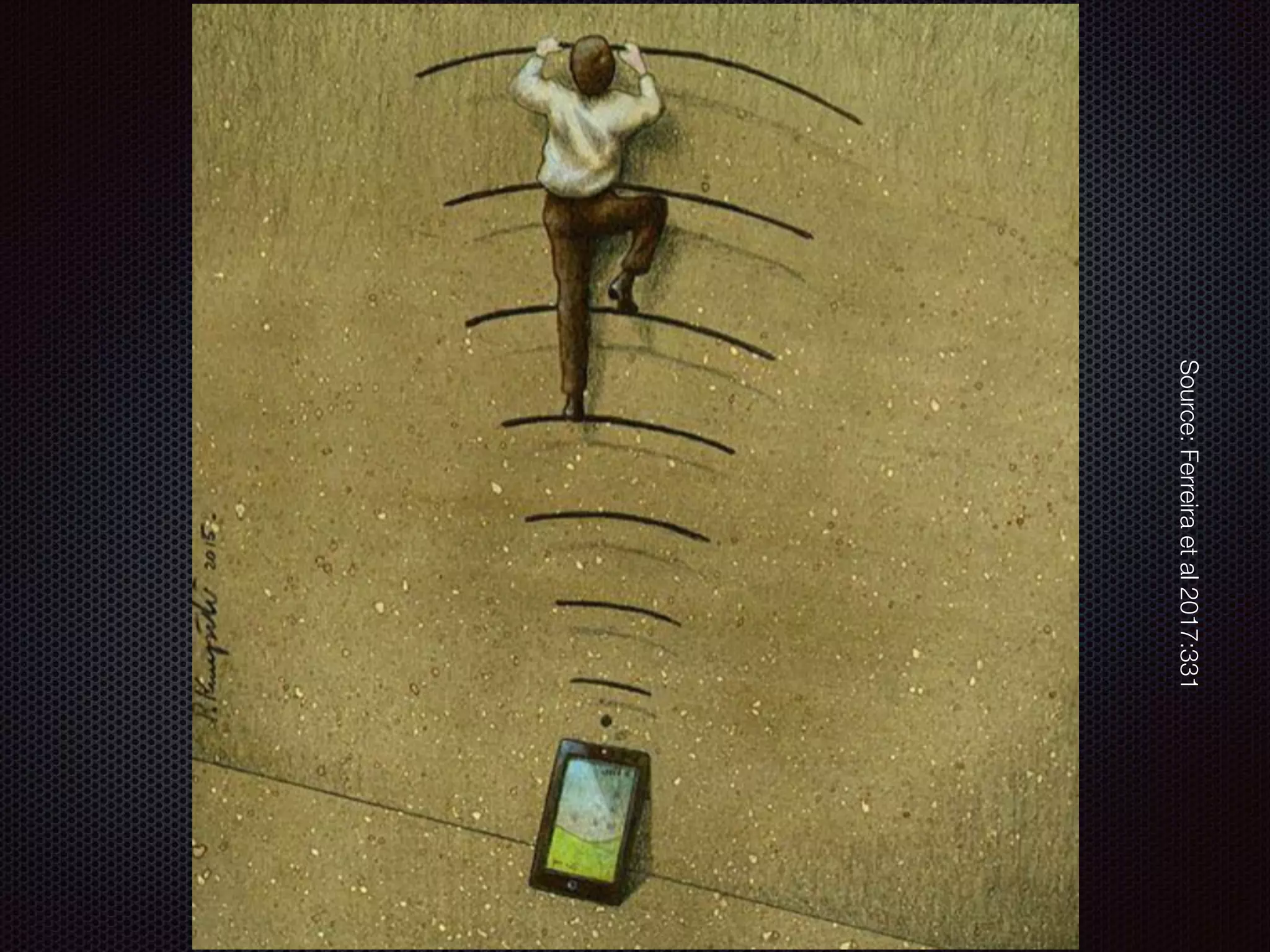
Source:Ferreiraetal2017:331
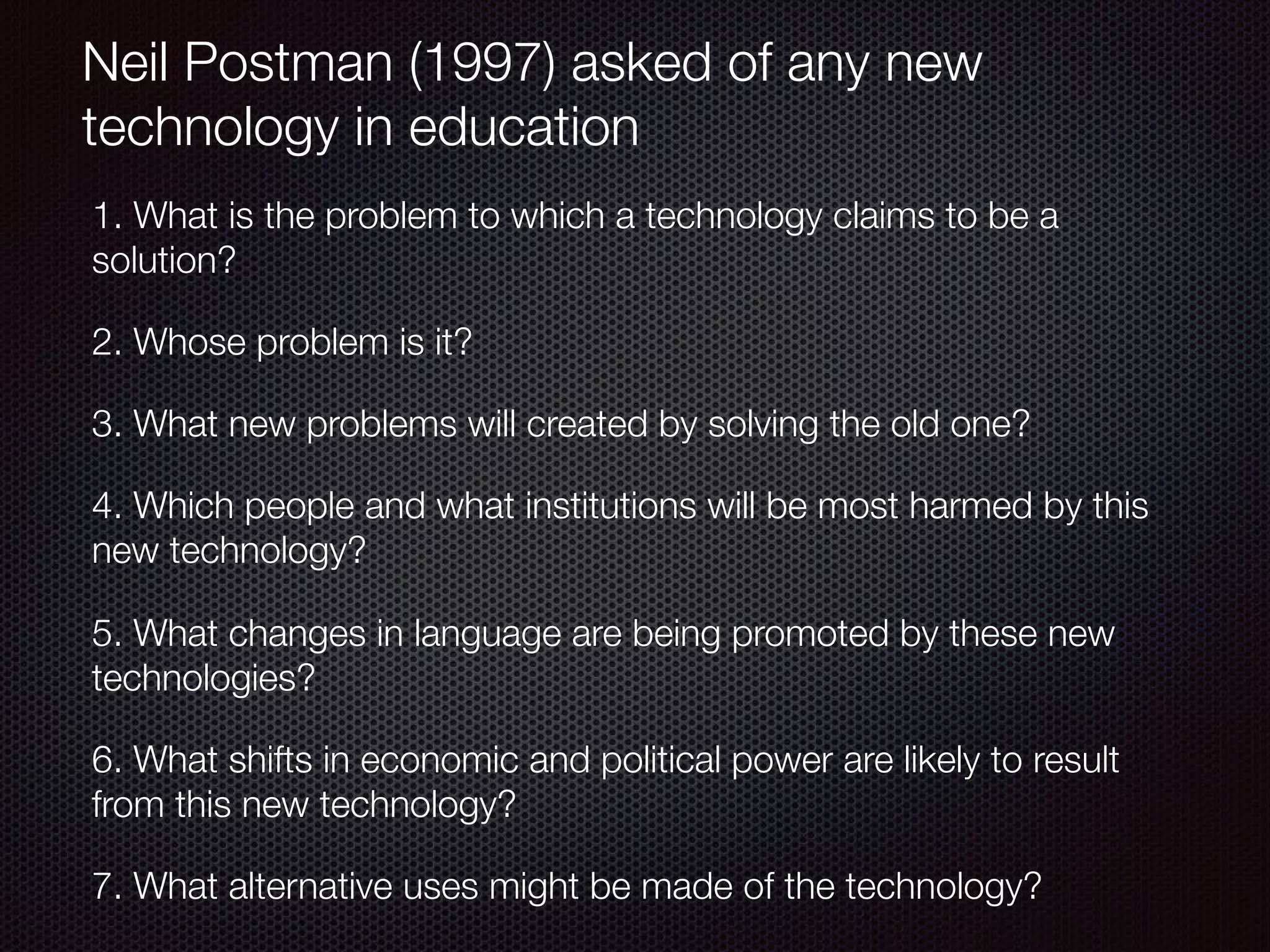
Neil Postman (1997) asked of any new
technology in education
1. What is the problem to which a technology claims to be a
solution?
2. Whose problem is it?
3. What new problems will created by solving the old one?
4. Which people and what institutions will be most harmed by this
new technology?
5. What changes in language are being promoted by these new
technologies?
6. What shifts in economic and political power are likely to result
from this new technology?
7. What alternative uses might be made of the technology?
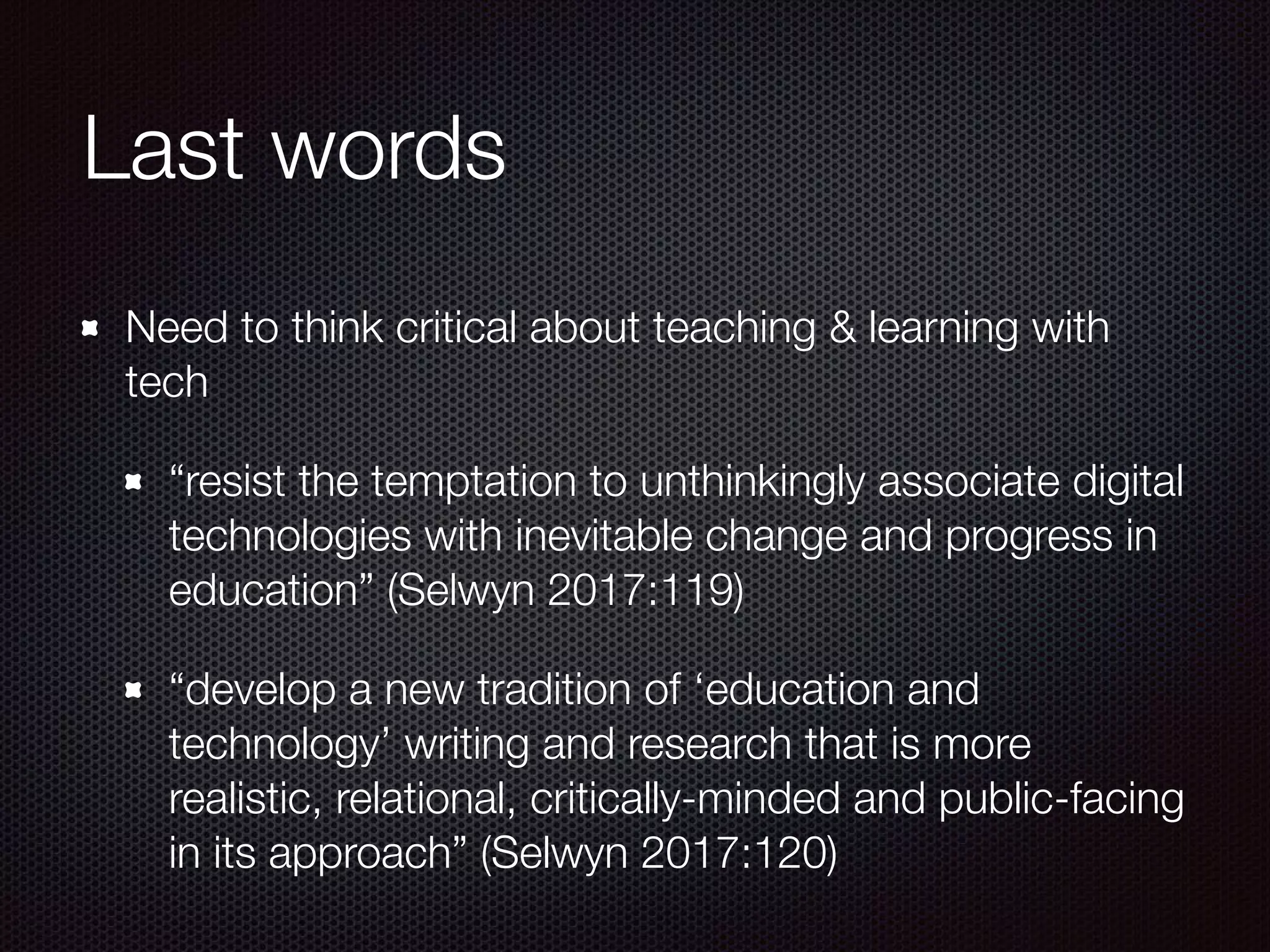
Last words
Need to think critical about teaching & learning with
tech
“resist the temptation to unthinkingly associate digital
technologies with inevitable change and progress in
education” (Selwyn 2017:119)
“develop a new tradition of ‘education and
technology’ writing and research that is more
realistic, relational, critically-minded and public-facing
in its approach” (Selwyn 2017:120)
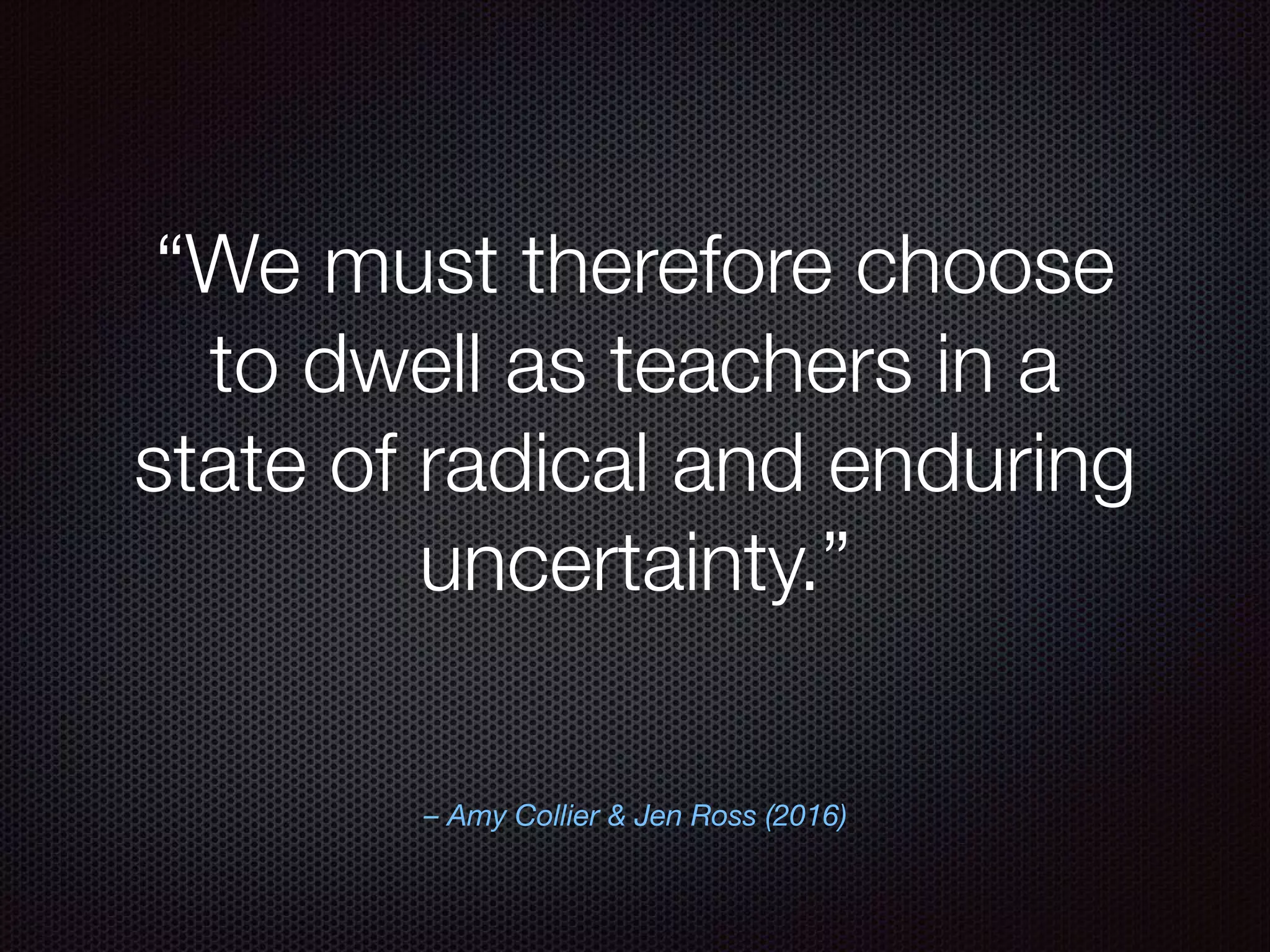
– Amy Collier & Jen Ross (2016)
“We must therefore choose
to dwell as teachers in a
state of radical and enduring
uncertainty.”
List of references
Alevizou G 2017 From mediation to datafication: Theorising evolving trends in media, technology
and learning. In Ferreira GM, Rosado LA & Carvalho J (eds) 2017 Education and technology:
Critical approaches. Rio de Janeiro: Universidade Estacio De SÁ: 332-356
Bannell RI 2017 A double-edged sword. In Ferreira GM, Rosado LA & Carvalho J (eds) 2017
Education and technology: Critical approaches. Rio de Janeiro: Universidade Estacio De SÁ:
52-81
Collier A 2017 Reclaiming impact: Not-yetness as a lens for resisting de-complexification
[#INNOVATEOSU]. Blog posting on Red pincushion on 18 May. http://redpincushion.us/blog/
teaching-and-learning/reclaiming-impact/
Ferreira GM, Rosado LA & Carvalho J (eds) 2017 Education and technology: Critical approaches.
Rio de Janeiro: Universidade Estacio De SÁ
Farrow R 2017 Open education and critical pedagogy, Learning, Media and Technology 42(2):
130-146, DOI: 10.1080/17439884.2016.1113991
NMC (New Media Consortium) 2017 Horizon report 2017 Higher education edition.
Selwyn N 2017 Education and technology: Critical questions. In Ferreira GM, Rosado LA &
Carvalho J (eds) 2017 Education and technology: Critical approaches. Rio de Janeiro:
Universidade Estacio De SÁ: 105-121
Learning and teaching with
technology at UJ - what
matters?
Workshop facilitated by Carina van Rooyen on 25 May
2017 for the UJ Academy of Distinguished Teachers
– Mishra & Koehler (2007)
“Teaching with technology
is a wicked problem.”
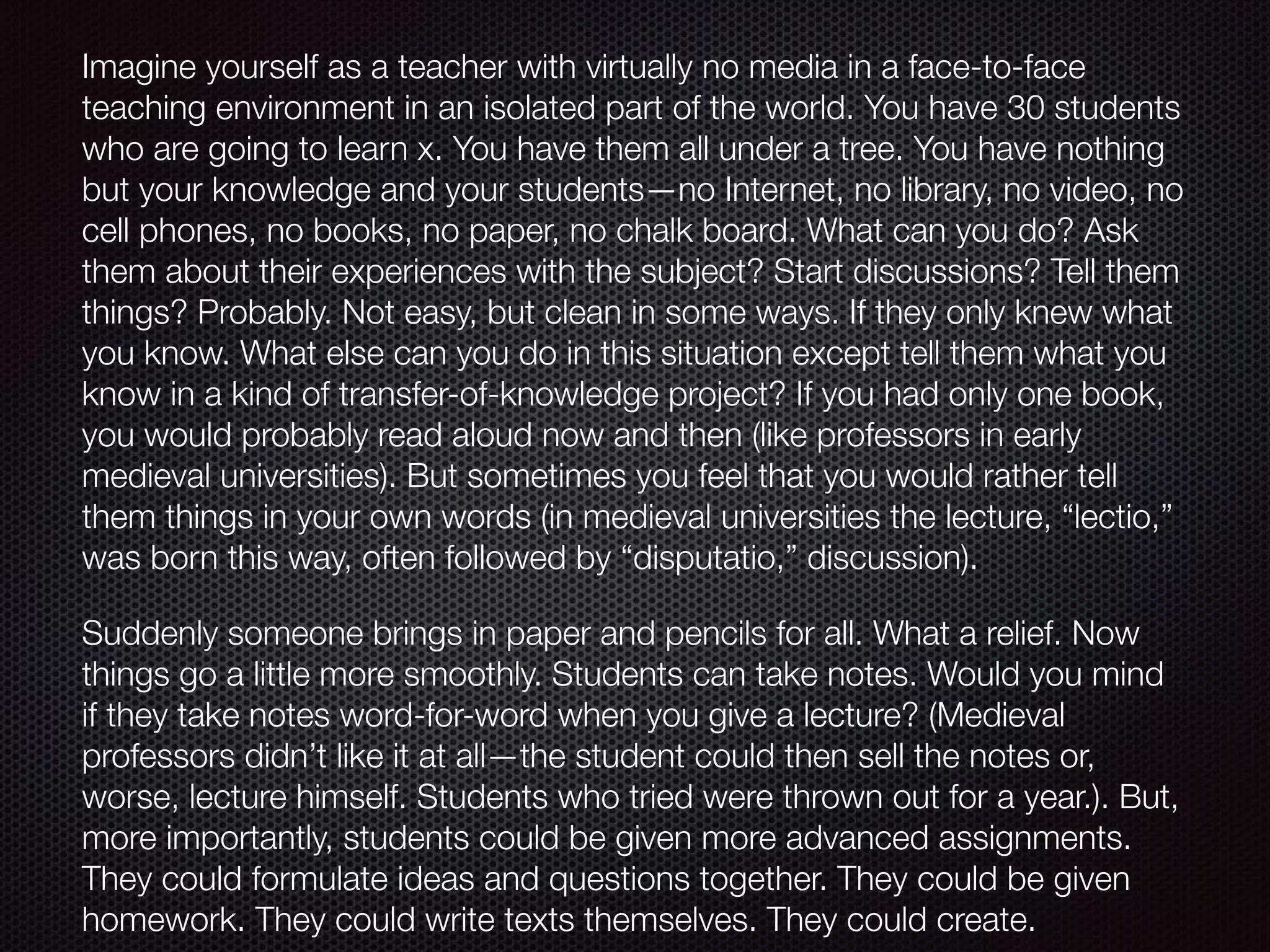
Imagine yourself as a teacher with virtually no media in a face-to-face
teaching environment in an isolated part of the world. You have 30 students
who are going to learn x. You have them all under a tree. You have nothing
but your knowledge and your students—no Internet, no library, no video, no
cell phones, no books, no paper, no chalk board. What can you do? Ask
them about their experiences with the subject? Start discussions? Tell them
things? Probably. Not easy, but clean in some ways. If they only knew what
you know. What else can you do in this situation except tell them what you
know in a kind of transfer-of-knowledge project? If you had only one book,
you would probably read aloud now and then (like professors in early
medieval universities). But sometimes you feel that you would rather tell
them things in your own words (in medieval universities the lecture, “lectio,”
was born this way, often followed by “disputatio,” discussion).
Suddenly someone brings in paper and pencils for all. What a relief. Now
things go a little more smoothly. Students can take notes. Would you mind
if they take notes word-for-word when you give a lecture? (Medieval
professors didn’t like it at all—the student could then sell the notes or,
worse, lecture himself. Students who tried were thrown out for a year.). But,
more importantly, students could be given more advanced assignments.
They could formulate ideas and questions together. They could be given
homework. They could write texts themselves. They could create.
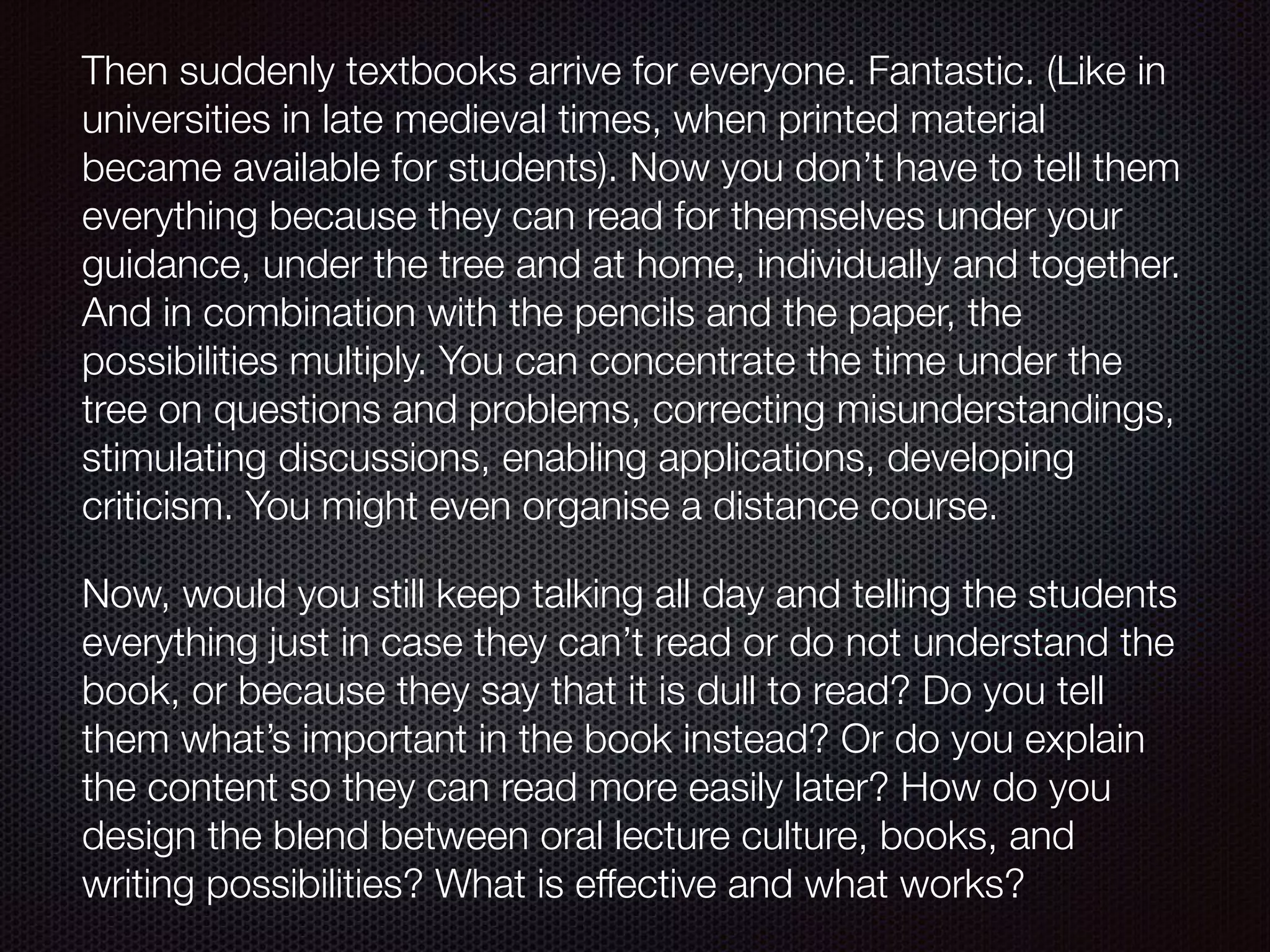
Then suddenly textbooks arrive for everyone. Fantastic. (Like in
universities in late medieval times, when printed material
became available for students). Now you don’t have to tell them
everything because they can read for themselves under your
guidance, under the tree and at home, individually and together.
And in combination with the pencils and the paper, the
possibilities multiply. You can concentrate the time under the
tree on questions and problems, correcting misunderstandings,
stimulating discussions, enabling applications, developing
criticism. You might even organise a distance course.
Now, would you still keep talking all day and telling the students
everything just in case they can’t read or do not understand the
book, or because they say that it is dull to read? Do you tell
them what’s important in the book instead? Or do you explain
the content so they can read more easily later? How do you
design the blend between oral lecture culture, books, and
writing possibilities? What is effective and what works?
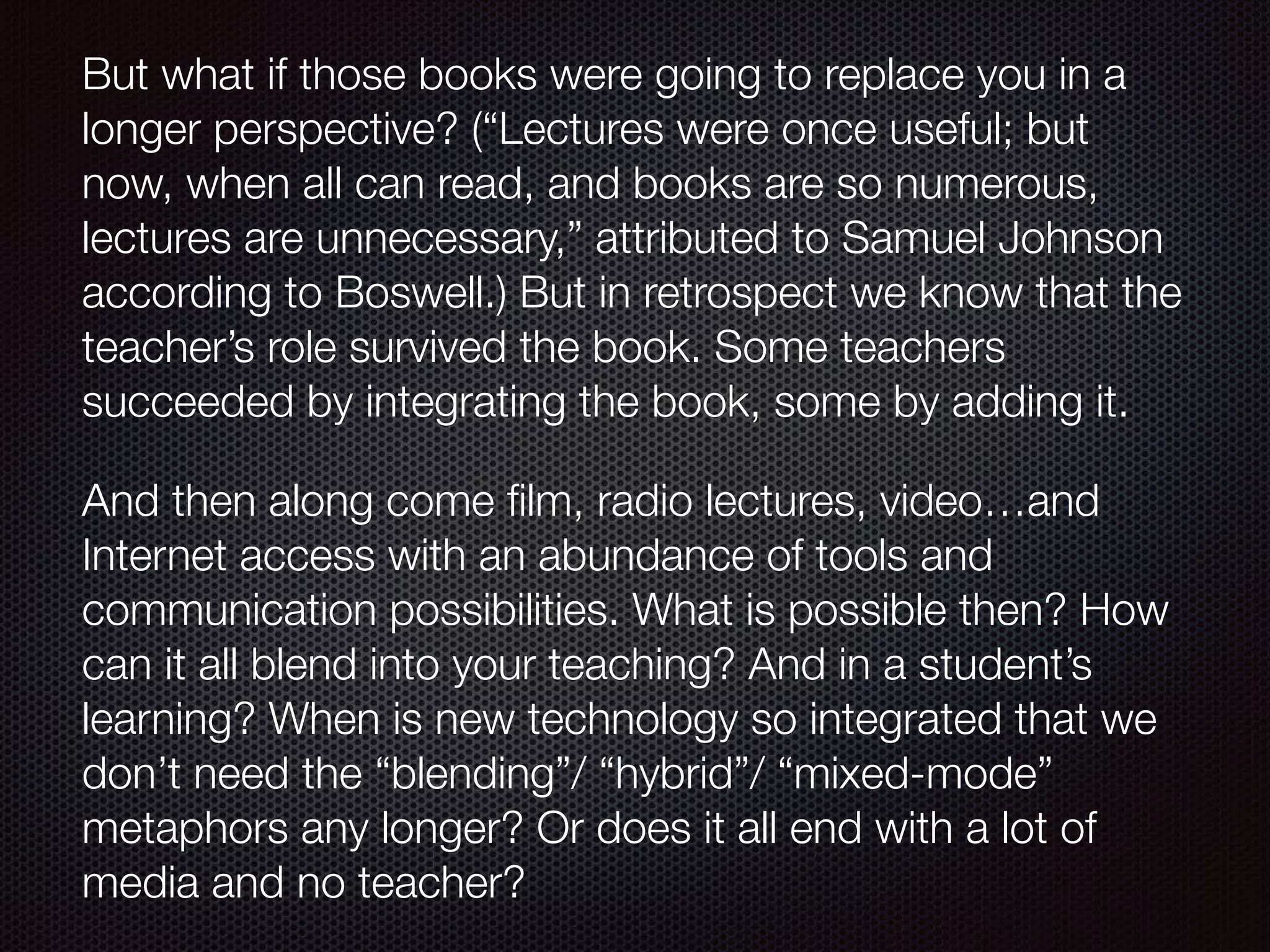
But what if those books were going to replace you in a
longer perspective? (“Lectures were once useful; but
now, when all can read, and books are so numerous,
lectures are unnecessary,” attributed to Samuel Johnson
according to Boswell.) But in retrospect we know that the
teacher’s role survived the book. Some teachers
succeeded by integrating the book, some by adding it.
And then along come film, radio lectures, video…and
Internet access with an abundance of tools and
communication possibilities. What is possible then? How
can it all blend into your teaching? And in a student’s
learning? When is new technology so integrated that we
don’t need the “blending”/ “hybrid”/ “mixed-mode”
metaphors any longer? Or does it all end with a lot of
media and no teacher?
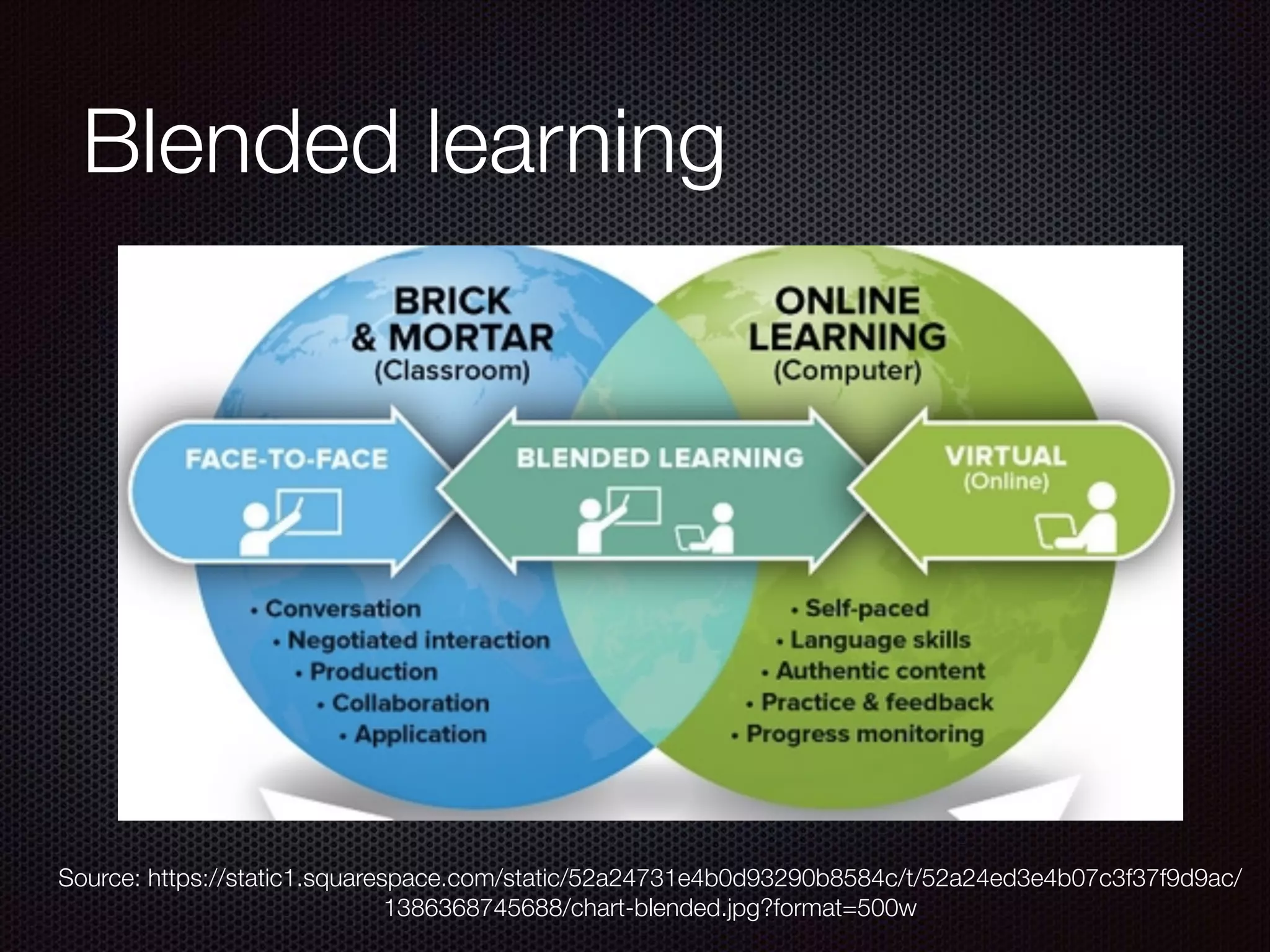
Blended learning
Source: https://static1.squarespace.com/static/52a24731e4b0d93290b8584c/t/52a24ed3e4b07c3f37f9d9ac/
1386368745688/chart-blended.jpg?format=500w
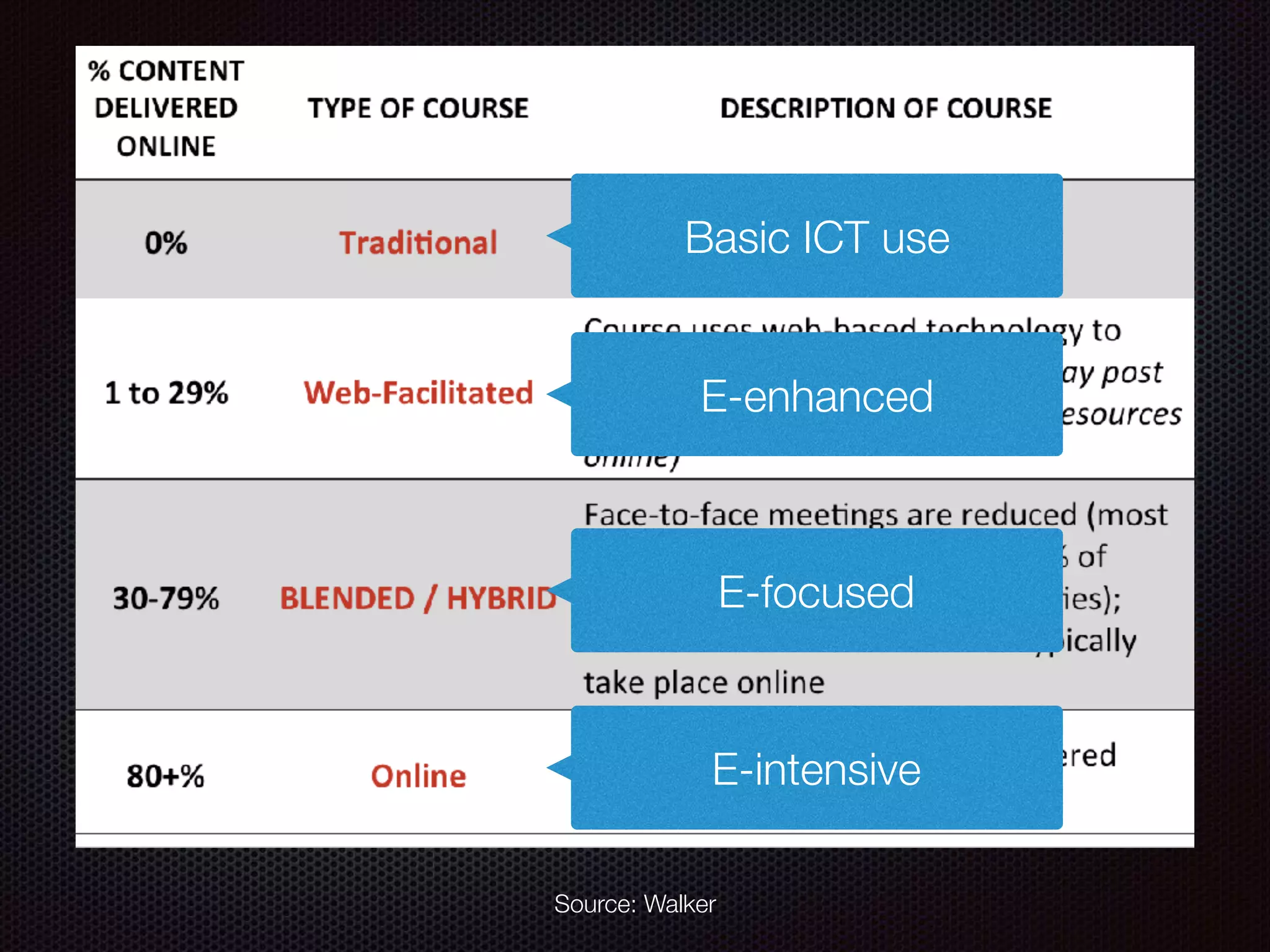
Source: Walker
Basic ICT use
E-enhanced
E-focused
E-intensive
Source: Walker
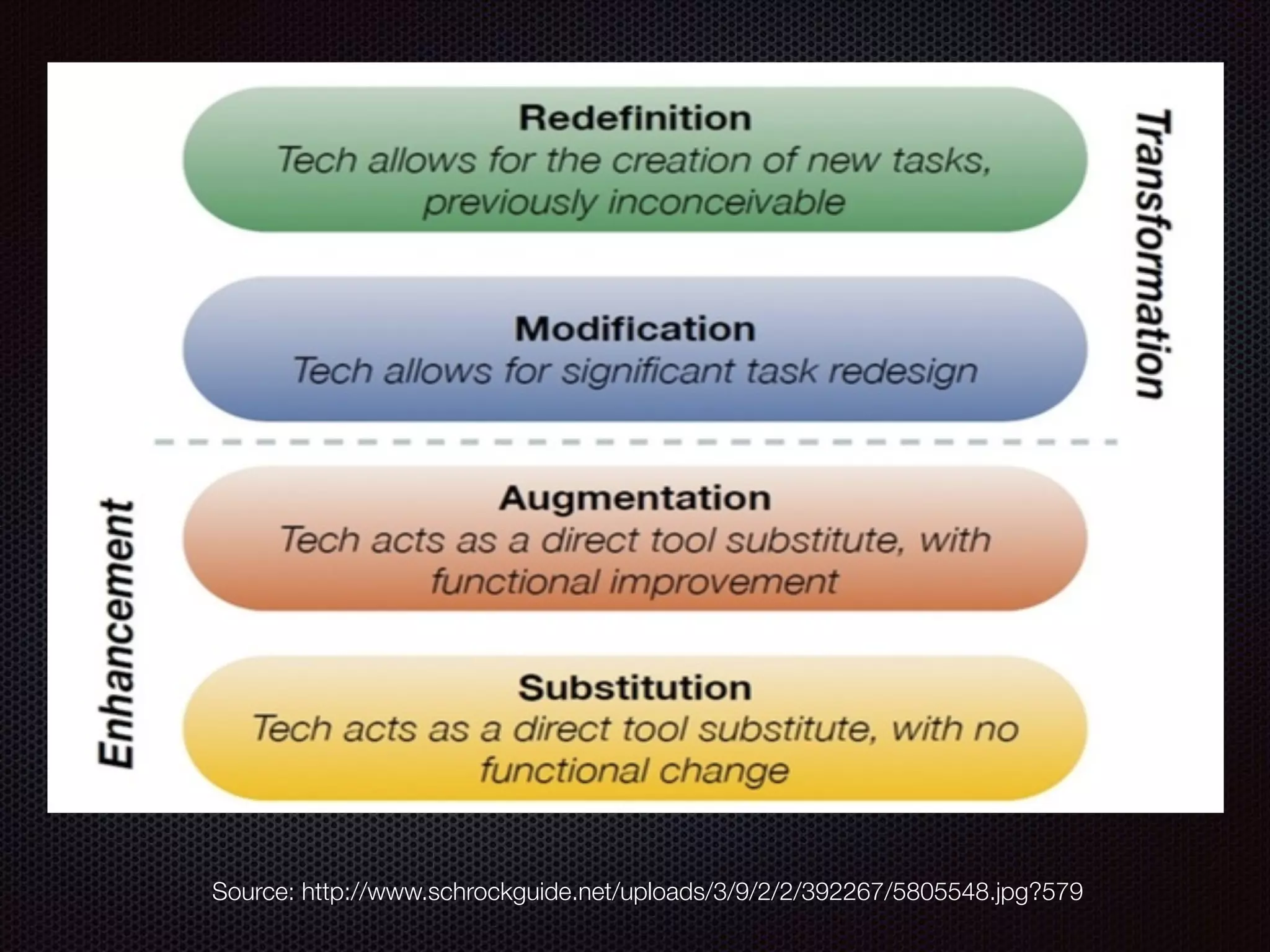
Source: http://www.schrockguide.net/uploads/3/9/2/2/392267/5805548.jpg?579
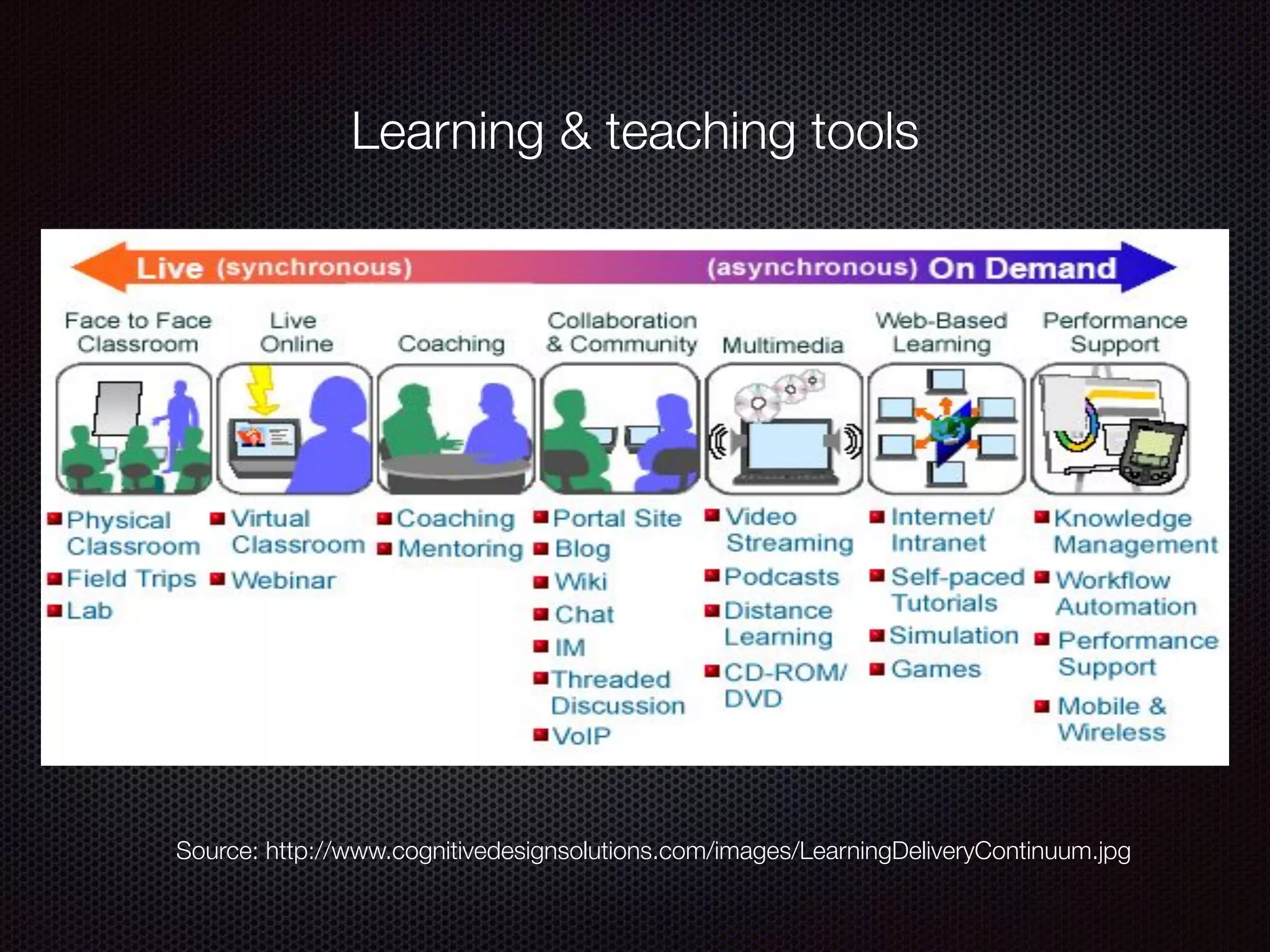
Learning & teaching tools
Source: http://www.cognitivedesignsolutions.com/images/LearningDeliveryContinuum.jpg
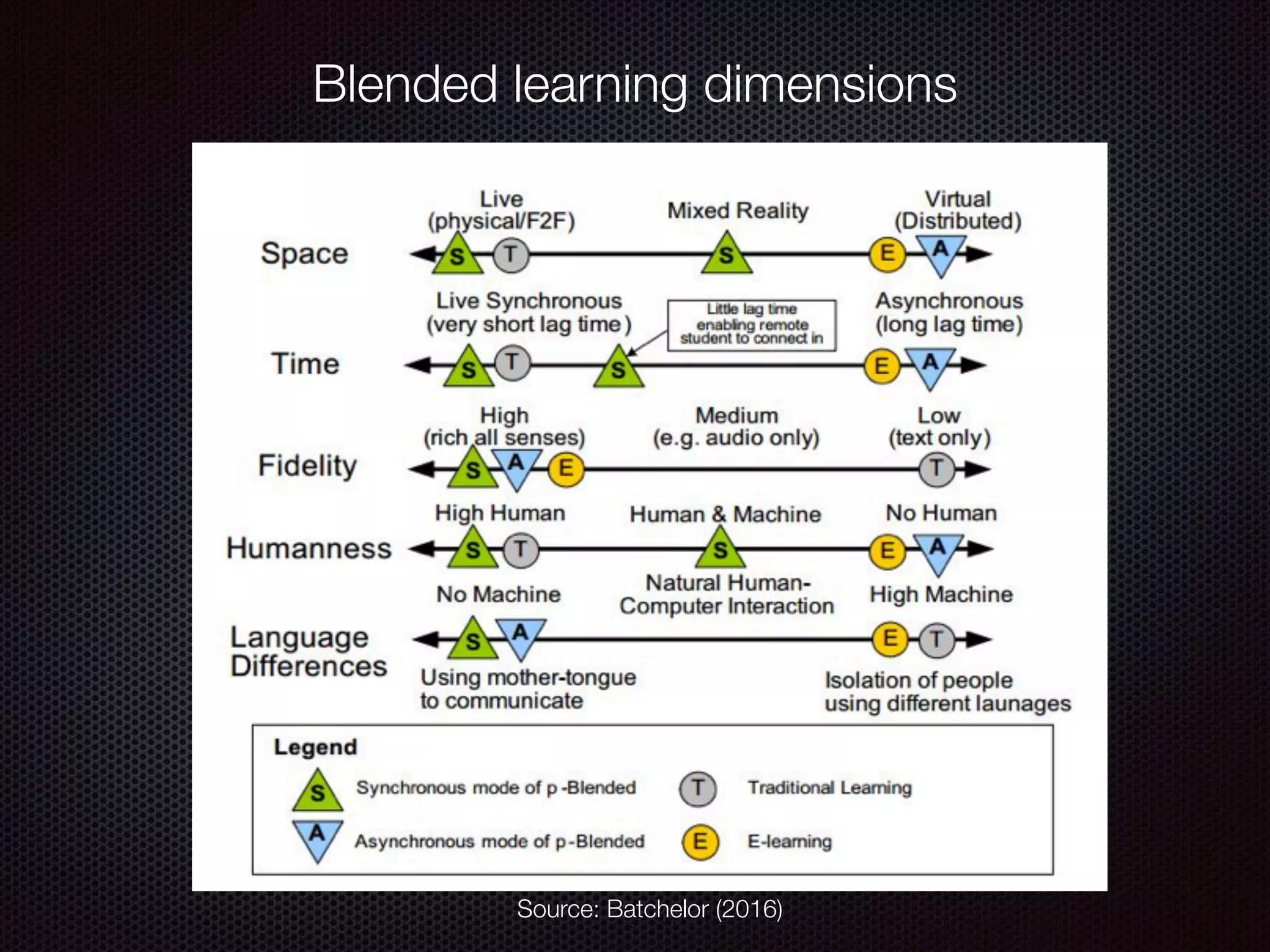
Blended learning dimensions
Source: Batchelor (2016)
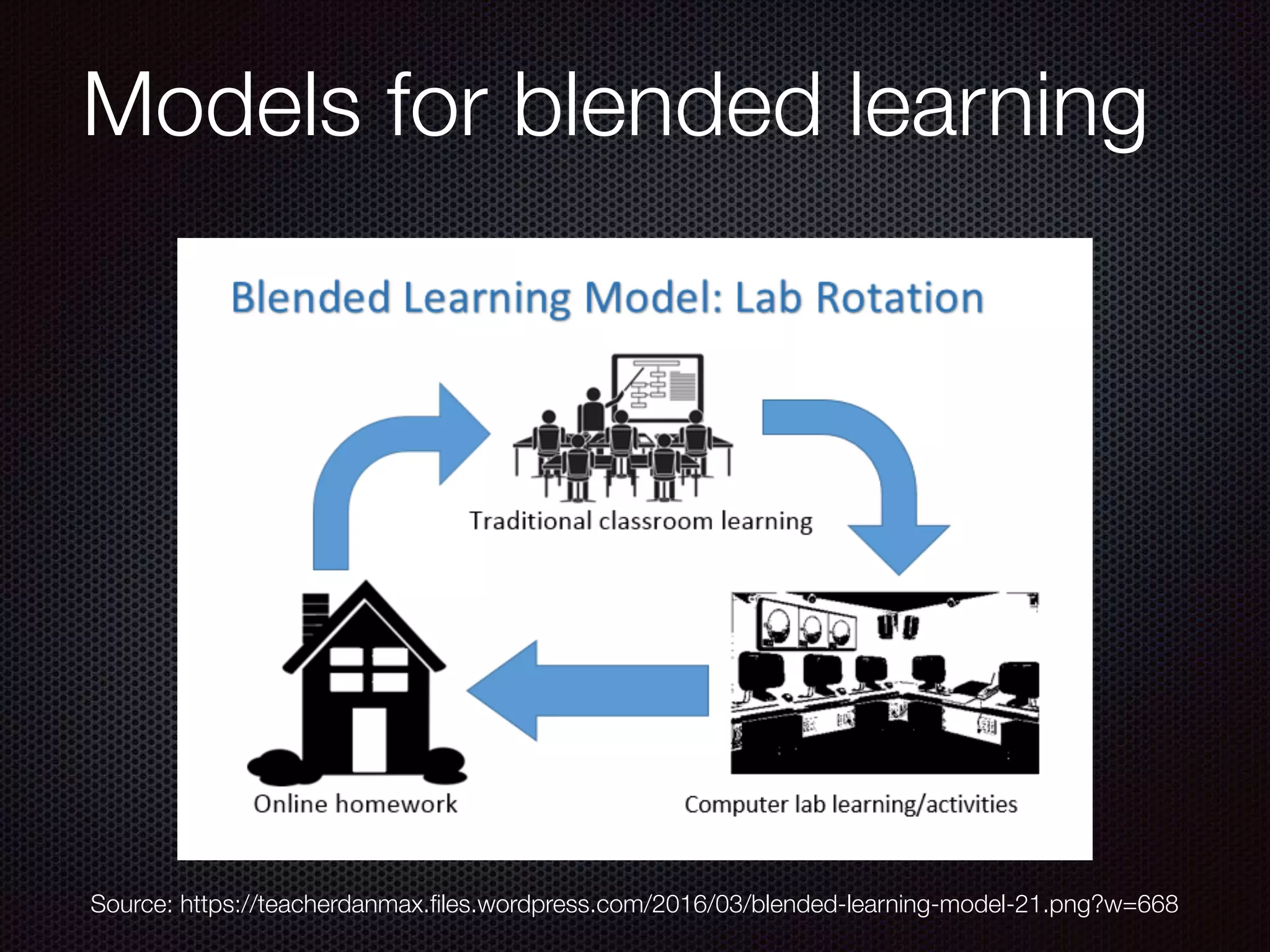
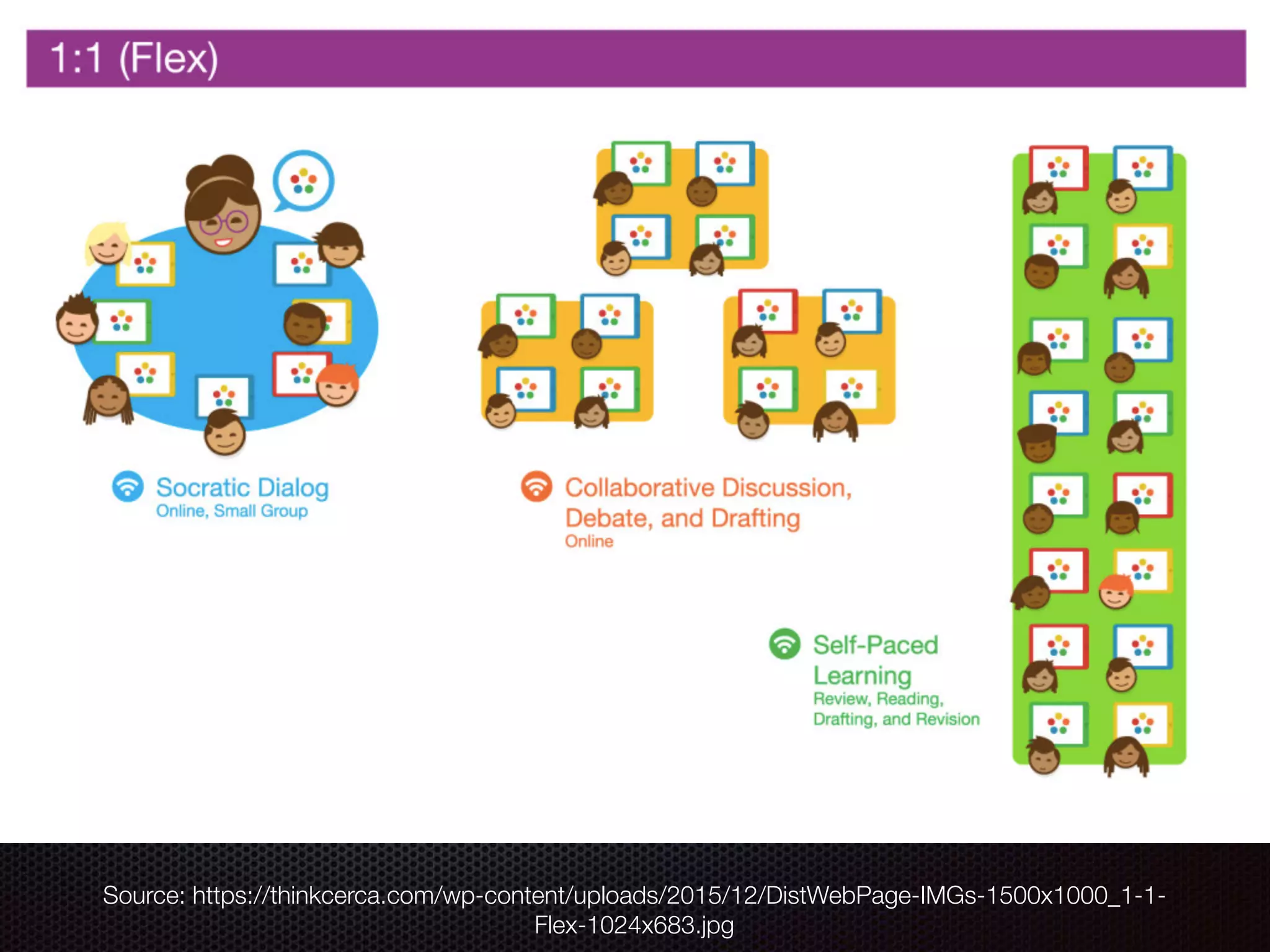
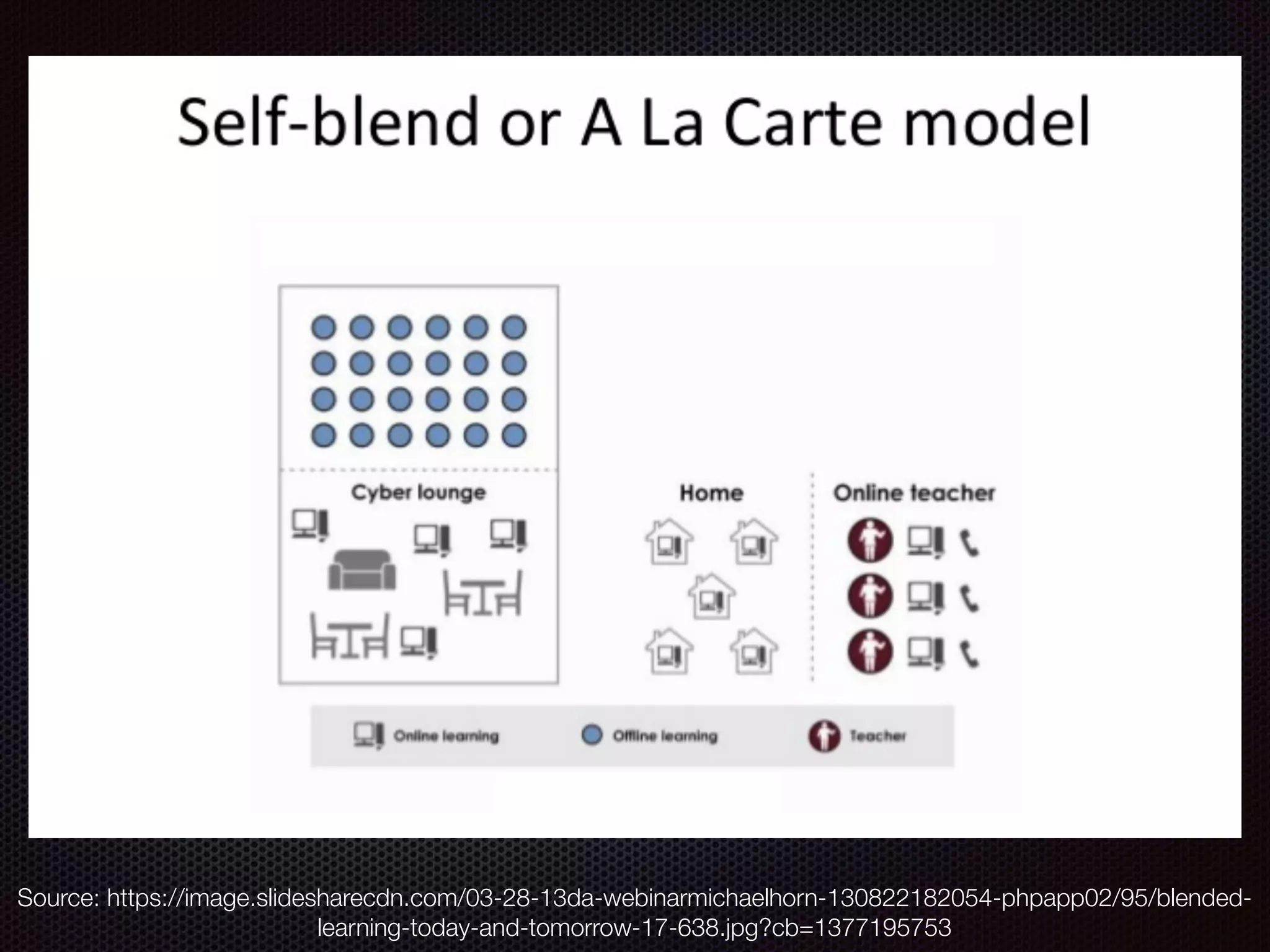
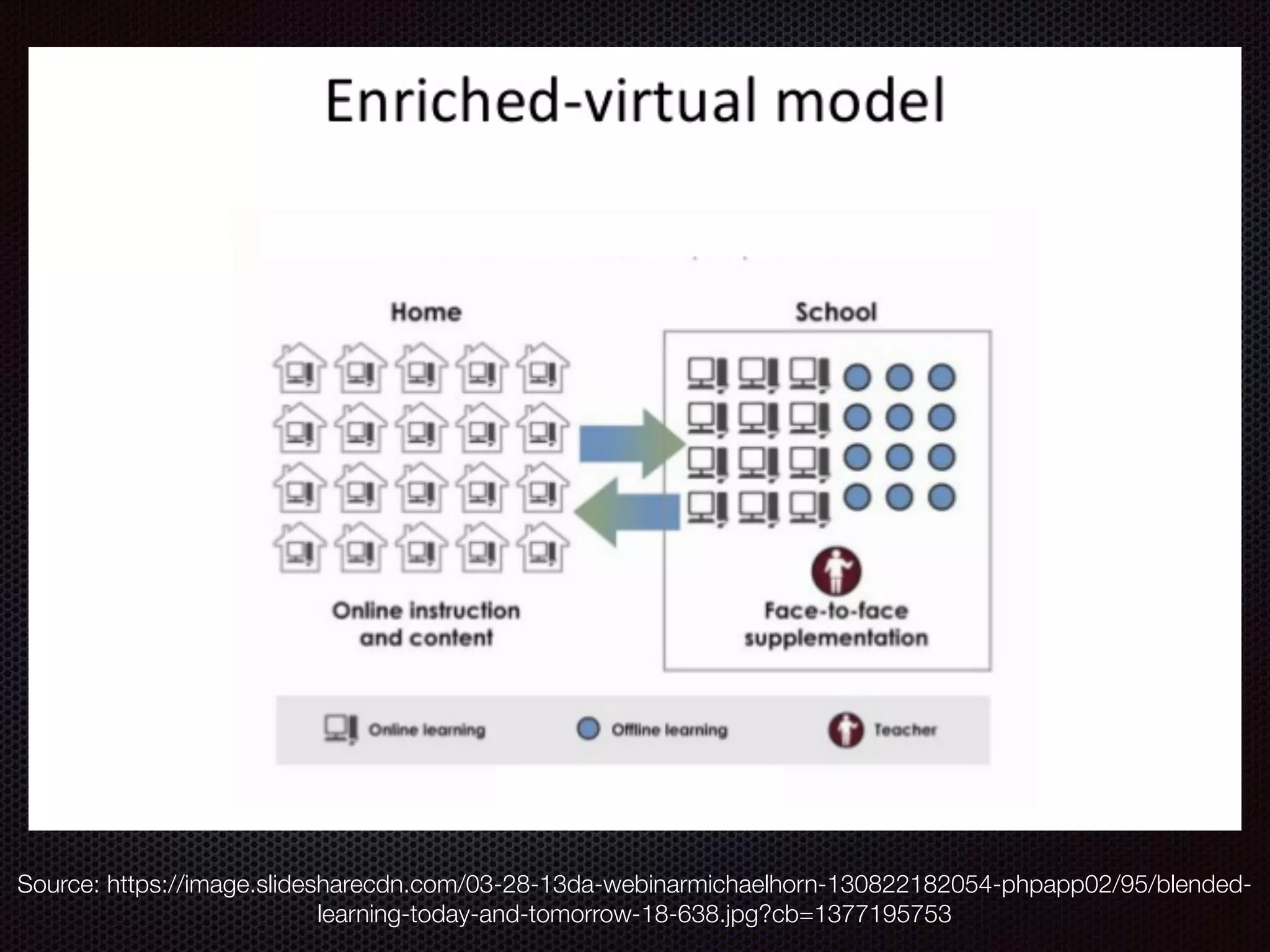
Models for blended learning
Source: https://teacherdanmax.files.wordpress.com/2016/03/blended-learning-model-21.png?w=668
Source: https://thinkcerca.com/wp-content/uploads/2015/12/DistWebPage-IMGs-1500x1000_1-1-
Flex-1024x683.jpg
Source: https://image.slidesharecdn.com/03-28-13da-webinarmichaelhorn-130822182054-phpapp02/95/blended-
learning-today-and-tomorrow-17-638.jpg?cb=1377195753
Source: https://image.slidesharecdn.com/03-28-13da-webinarmichaelhorn-130822182054-phpapp02/95/blended-
learning-today-and-tomorrow-18-638.jpg?cb=1377195753
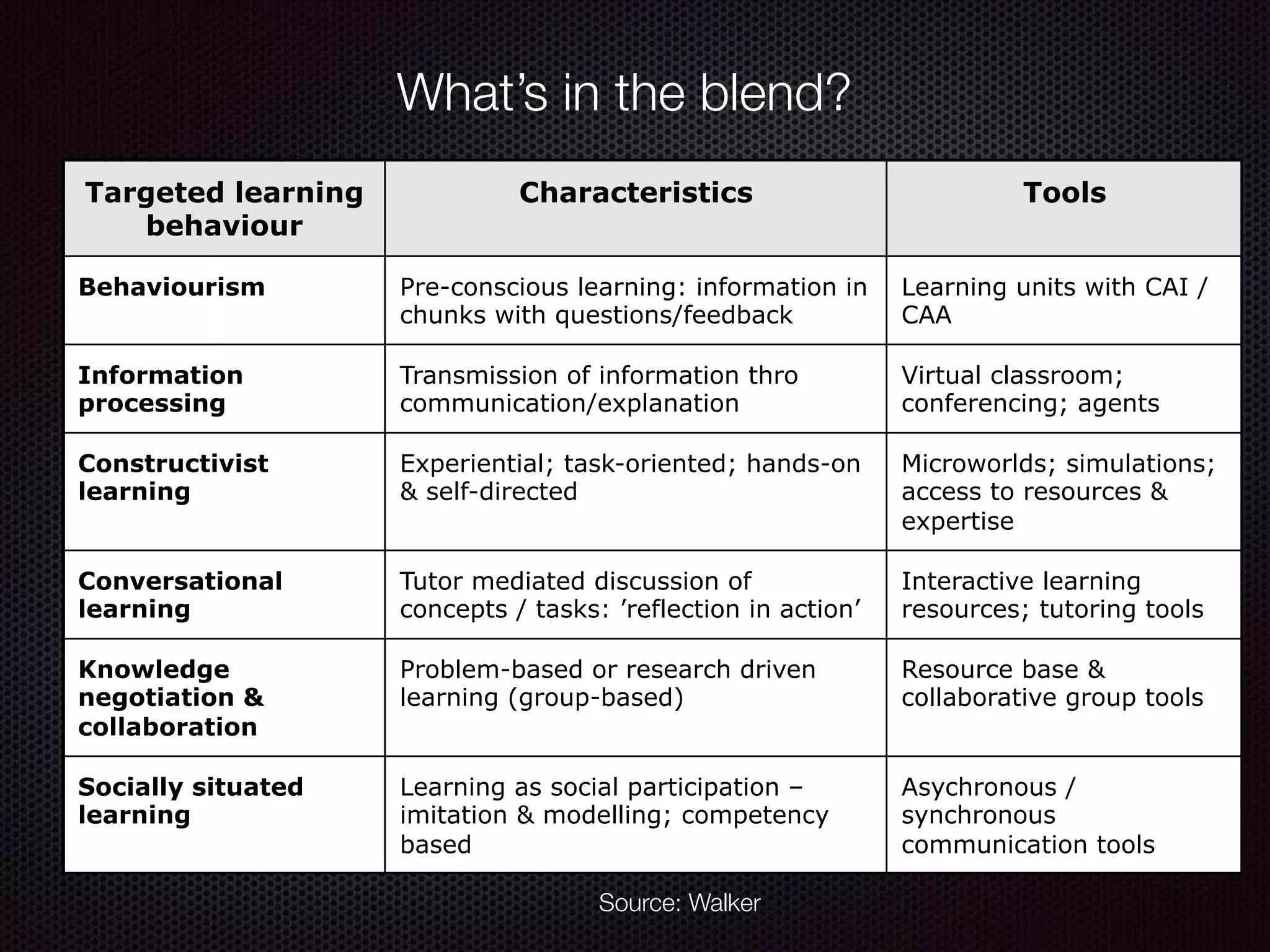
Targeted learning
behaviour
Characteristics Tools
Behaviourism Pre-conscious learning: information in
chunks with questions/feedback
Learning units with CAI /
CAA
Information
processing
Transmission of information thro
communication/explanation
Virtual classroom;
conferencing; agents
Constructivist
learning
Experiential; task-oriented; hands-on
& self-directed
Microworlds; simulations;
access to resources &
expertise
Conversational
learning
Tutor mediated discussion of
concepts / tasks: ’reflection in action’
Interactive learning
resources; tutoring tools
Knowledge
negotiation &
collaboration
Problem-based or research driven
learning (group-based)
Resource base &
collaborative group tools
Socially situated
learning
Learning as social participation –
imitation & modelling; competency
based
Asychronous /
synchronous
communication tools
What’s in the blend?
Source: Walker
What is blended learning at
UJ?
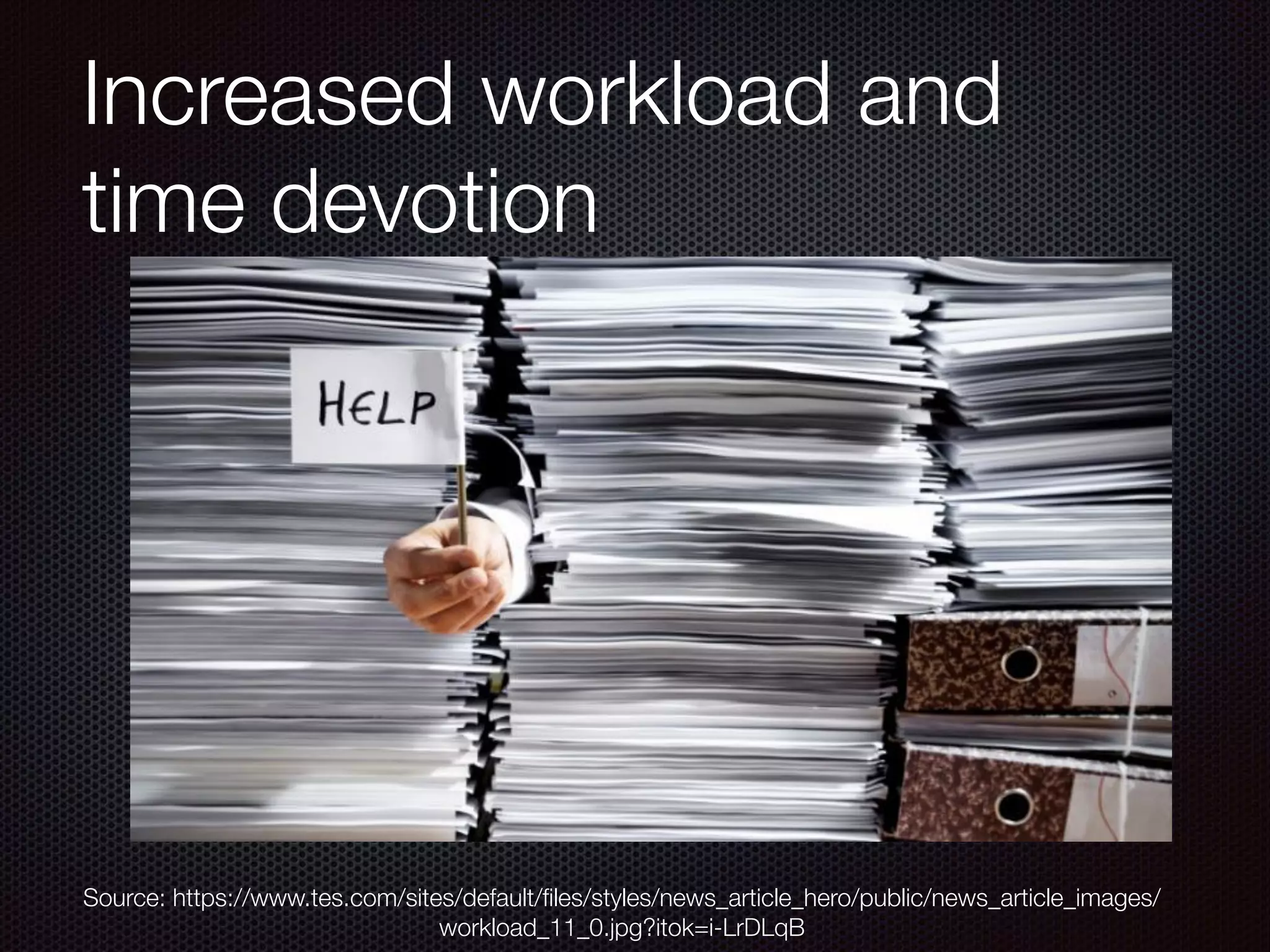
Increased workload and
time devotion
Source: https://www.tes.com/sites/default/files/styles/news_article_hero/public/news_article_images/
workload_11_0.jpg?itok=i-LrDLqB
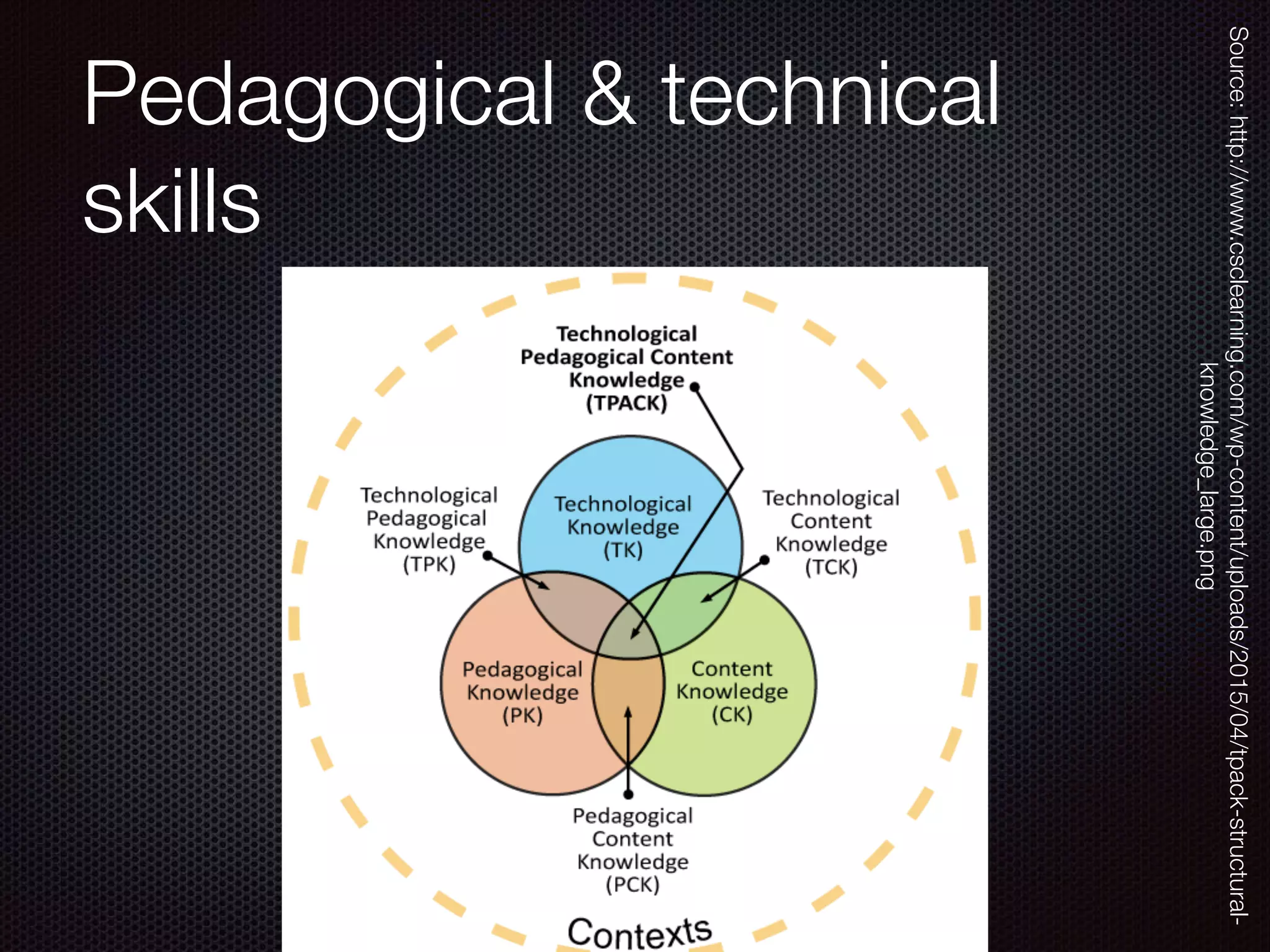
Pedagogical & technical
skills
Source:http://www.csclearning.com/wp-content/uploads/2015/04/tpack-structural-
knowledge_large.png
Source: https://s3.amazonaws.com/lowres.cartoonstock.com/education-teaching-college-uni-university-student-
college_student-jco0205_low.jpg
(in)conclusion
Source: https://www.fitnyc.edu/images/tech-ed.png
List of references
Batchelor J 2016 Blended learning defined for the Faculty of Education
Garrison DR & Vaughan ND 2008 Blended learning in higher education: Frameworks, principles and guidelines.
San Fransisco: John Wiley & Sons
Goucher College Blended learning: Recipes for success. https://www.goucher.edu/.../
Blended%20Learning%20Recipes%20for%20Success%20
Horn MB & Staker H 2014 Blended: Using disruptive innovation to improve schools. San Francisco: Jossey-Bass
Mishra P & Koehler MJ Technological Pedagogical Content Knowledge (TPCK): Confronting the wicked problems
of teaching with technology. In Carlsen R, McFerrin K, Price J, Weber R & Willis D (eds) Proceedings of Society
for Information Technology & Teacher Education International Conference 2007. Chesapeake, VA: Association for
the Advancement of Computing in Education (AACE): 2214-2226
Norberg A 2011 A back to basics thought experiment about blended learning. https://blended.online.ucf.edu/
morning-blend/a-back-to-basics-thought-experiment-about-blended-learning/
Porter WW, Graham CR, Bodily RG & Sandberg DS 2016 A qualitative analysis of institutional drivers and barriers
to blended learning adoption in higher education. Internet and Higher Education 18: 17-27
Smit SU, Hayes S & Shea P 2017 A critical review of the use of Wenger's Community of Practice (CoP)
theoretical framework in online and blended learning research, 2000-2014. Online Learning 21(1): 209-237
Walker R Blended learning workshop: Design principles and planing tools. https://vle.york.ac.uk/bbcswebdav/
xid-600803_4

Learning and teaching with digital technology: Part 1 - Contested matters Part 2 - Blended learning at UJ

  • 1.
    Learning and teachingwith digital technology - Contested matters Workshop facilitated by Carina van Rooyen on 25 May 2017 for the UJ Academy of Distinguished Teachers Source:Ferreiraetal2017:16
  • 2.
    Why you shouldand shouldn’t use digital technology for learning and teaching? Workshop facilitated by Carina van Rooyen on 25 May 2017 for the UJ Academy of Distinguished Teachers Source:Ferreiraetal2017:16
  • 3.
  • 5.
  • 6.
  • 7.
  • 8.
  • 9.
    Changes in L&Trelated to tech Changes in the outcomes of L&T Changes in the packages of L&T Changes in the actors in L&T Changes in the delivery medium of L&T Changes in pedagogical approaches to L&T
  • 10.
  • 11.
  • 12.
  • 18.
  • 19.
    Some people talkin the sleep. Lecturers talk while other people sleep. ~ Albert Camus
  • 20.
    What are theissues?
  • 21.
  • 22.
  • 23.
    – Paulo Freire(1970:34) “Education either functions as an instrument which is used to facilitate integration of the younger generation into the logic of the present system and bring about conformity or it becomes the practice of freedom, the means by which men and women deal critically and creatively with reality and discover how to participate in the transformation of their world.”
  • 24.
    Critical digital pedagogies “educationas the practice of freedom affirms healthy self-esteem in students as it promotes their capacity to be aware and live consciously. It teaches them to reflect and act in ways that further self-actualisation, rather than conformity to the status quo.” (bell hooks) Critical pedagogies aim to encourage independently minded learners who question status quo & engage explicitly with questions of power & justice
  • 27.
  • 28.
    –Audrey Watters (2014) “Does‘open’ mean ‘made public’? Does ‘open’ mean shared? Does ‘open’ mean ‘accessible’? Accessible how? To whom? Does ‘open’ mean editable? Negotiable? Does ‘open’ mean ‘free’? Does ‘open’ mean ‘open-ended’? Does ‘open’ mean transparent? Does ‘open’ mean ‘open- minded’? …Does ‘open’ mean open to participation – by everyone equally?”
  • 30.
  • 31.
    Neil Postman (1997)asked of any new technology in education 1. What is the problem to which a technology claims to be a solution? 2. Whose problem is it? 3. What new problems will created by solving the old one? 4. Which people and what institutions will be most harmed by this new technology? 5. What changes in language are being promoted by these new technologies? 6. What shifts in economic and political power are likely to result from this new technology? 7. What alternative uses might be made of the technology?
  • 32.
    Last words Need tothink critical about teaching & learning with tech “resist the temptation to unthinkingly associate digital technologies with inevitable change and progress in education” (Selwyn 2017:119) “develop a new tradition of ‘education and technology’ writing and research that is more realistic, relational, critically-minded and public-facing in its approach” (Selwyn 2017:120)
  • 33.
    – Amy Collier& Jen Ross (2016) “We must therefore choose to dwell as teachers in a state of radical and enduring uncertainty.”
  • 34.
    List of references AlevizouG 2017 From mediation to datafication: Theorising evolving trends in media, technology and learning. In Ferreira GM, Rosado LA & Carvalho J (eds) 2017 Education and technology: Critical approaches. Rio de Janeiro: Universidade Estacio De SÁ: 332-356 Bannell RI 2017 A double-edged sword. In Ferreira GM, Rosado LA & Carvalho J (eds) 2017 Education and technology: Critical approaches. Rio de Janeiro: Universidade Estacio De SÁ: 52-81 Collier A 2017 Reclaiming impact: Not-yetness as a lens for resisting de-complexification [#INNOVATEOSU]. Blog posting on Red pincushion on 18 May. http://redpincushion.us/blog/ teaching-and-learning/reclaiming-impact/ Ferreira GM, Rosado LA & Carvalho J (eds) 2017 Education and technology: Critical approaches. Rio de Janeiro: Universidade Estacio De SÁ Farrow R 2017 Open education and critical pedagogy, Learning, Media and Technology 42(2): 130-146, DOI: 10.1080/17439884.2016.1113991 NMC (New Media Consortium) 2017 Horizon report 2017 Higher education edition. Selwyn N 2017 Education and technology: Critical questions. In Ferreira GM, Rosado LA & Carvalho J (eds) 2017 Education and technology: Critical approaches. Rio de Janeiro: Universidade Estacio De SÁ: 105-121
  • 36.
    Learning and teachingwith technology at UJ - what matters? Workshop facilitated by Carina van Rooyen on 25 May 2017 for the UJ Academy of Distinguished Teachers
  • 37.
    – Mishra &Koehler (2007) “Teaching with technology is a wicked problem.”
  • 38.
    Imagine yourself asa teacher with virtually no media in a face-to-face teaching environment in an isolated part of the world. You have 30 students who are going to learn x. You have them all under a tree. You have nothing but your knowledge and your students—no Internet, no library, no video, no cell phones, no books, no paper, no chalk board. What can you do? Ask them about their experiences with the subject? Start discussions? Tell them things? Probably. Not easy, but clean in some ways. If they only knew what you know. What else can you do in this situation except tell them what you know in a kind of transfer-of-knowledge project? If you had only one book, you would probably read aloud now and then (like professors in early medieval universities). But sometimes you feel that you would rather tell them things in your own words (in medieval universities the lecture, “lectio,” was born this way, often followed by “disputatio,” discussion). Suddenly someone brings in paper and pencils for all. What a relief. Now things go a little more smoothly. Students can take notes. Would you mind if they take notes word-for-word when you give a lecture? (Medieval professors didn’t like it at all—the student could then sell the notes or, worse, lecture himself. Students who tried were thrown out for a year.). But, more importantly, students could be given more advanced assignments. They could formulate ideas and questions together. They could be given homework. They could write texts themselves. They could create.
  • 39.
    Then suddenly textbooksarrive for everyone. Fantastic. (Like in universities in late medieval times, when printed material became available for students). Now you don’t have to tell them everything because they can read for themselves under your guidance, under the tree and at home, individually and together. And in combination with the pencils and the paper, the possibilities multiply. You can concentrate the time under the tree on questions and problems, correcting misunderstandings, stimulating discussions, enabling applications, developing criticism. You might even organise a distance course. Now, would you still keep talking all day and telling the students everything just in case they can’t read or do not understand the book, or because they say that it is dull to read? Do you tell them what’s important in the book instead? Or do you explain the content so they can read more easily later? How do you design the blend between oral lecture culture, books, and writing possibilities? What is effective and what works?
  • 40.
    But what ifthose books were going to replace you in a longer perspective? (“Lectures were once useful; but now, when all can read, and books are so numerous, lectures are unnecessary,” attributed to Samuel Johnson according to Boswell.) But in retrospect we know that the teacher’s role survived the book. Some teachers succeeded by integrating the book, some by adding it. And then along come film, radio lectures, video…and Internet access with an abundance of tools and communication possibilities. What is possible then? How can it all blend into your teaching? And in a student’s learning? When is new technology so integrated that we don’t need the “blending”/ “hybrid”/ “mixed-mode” metaphors any longer? Or does it all end with a lot of media and no teacher?
  • 41.
  • 42.
    Source: Walker Basic ICTuse E-enhanced E-focused E-intensive
  • 43.
  • 44.
  • 45.
    Learning & teachingtools Source: http://www.cognitivedesignsolutions.com/images/LearningDeliveryContinuum.jpg
  • 46.
  • 47.
    Models for blendedlearning Source: https://teacherdanmax.files.wordpress.com/2016/03/blended-learning-model-21.png?w=668
  • 48.
  • 49.
  • 50.
  • 51.
    Targeted learning behaviour Characteristics Tools BehaviourismPre-conscious learning: information in chunks with questions/feedback Learning units with CAI / CAA Information processing Transmission of information thro communication/explanation Virtual classroom; conferencing; agents Constructivist learning Experiential; task-oriented; hands-on & self-directed Microworlds; simulations; access to resources & expertise Conversational learning Tutor mediated discussion of concepts / tasks: ’reflection in action’ Interactive learning resources; tutoring tools Knowledge negotiation & collaboration Problem-based or research driven learning (group-based) Resource base & collaborative group tools Socially situated learning Learning as social participation – imitation & modelling; competency based Asychronous / synchronous communication tools What’s in the blend? Source: Walker
  • 52.
    What is blendedlearning at UJ?
  • 53.
    Increased workload and timedevotion Source: https://www.tes.com/sites/default/files/styles/news_article_hero/public/news_article_images/ workload_11_0.jpg?itok=i-LrDLqB
  • 54.
  • 55.
  • 56.
  • 57.
    List of references BatchelorJ 2016 Blended learning defined for the Faculty of Education Garrison DR & Vaughan ND 2008 Blended learning in higher education: Frameworks, principles and guidelines. San Fransisco: John Wiley & Sons Goucher College Blended learning: Recipes for success. https://www.goucher.edu/.../ Blended%20Learning%20Recipes%20for%20Success%20 Horn MB & Staker H 2014 Blended: Using disruptive innovation to improve schools. San Francisco: Jossey-Bass Mishra P & Koehler MJ Technological Pedagogical Content Knowledge (TPCK): Confronting the wicked problems of teaching with technology. In Carlsen R, McFerrin K, Price J, Weber R & Willis D (eds) Proceedings of Society for Information Technology & Teacher Education International Conference 2007. Chesapeake, VA: Association for the Advancement of Computing in Education (AACE): 2214-2226 Norberg A 2011 A back to basics thought experiment about blended learning. https://blended.online.ucf.edu/ morning-blend/a-back-to-basics-thought-experiment-about-blended-learning/ Porter WW, Graham CR, Bodily RG & Sandberg DS 2016 A qualitative analysis of institutional drivers and barriers to blended learning adoption in higher education. Internet and Higher Education 18: 17-27 Smit SU, Hayes S & Shea P 2017 A critical review of the use of Wenger's Community of Practice (CoP) theoretical framework in online and blended learning research, 2000-2014. Online Learning 21(1): 209-237 Walker R Blended learning workshop: Design principles and planing tools. https://vle.york.ac.uk/bbcswebdav/ xid-600803_4