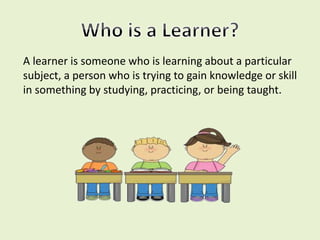
A learner is someone who is learning about a particular
subject, a person who is trying to gain knowledge or skill
in something by studying, practicing, or being taught.
 Differences in abilities and characteristics among
students at a particular age.
 The personal attributes that vary from one learner to
another.
 They can be physical, psychological or emotional.
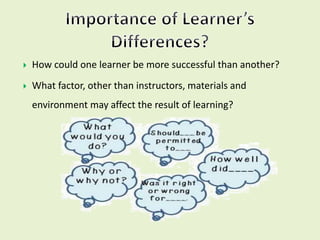
 How could one learner be more successful than another?
 What factor, other than instructors, materials and
environment may affect the result of learning?
 Heredity (Nature)
• What occurs naturally as a function of the genes.
 Environment (Nurture)
• What is learned and communicated in different cultures or
other social groups includes family, socio-economic status,
culture, previous knowledge, experience and gender
differences.
• https://youtu.be/NgANaAhoNis
 Physical Differences
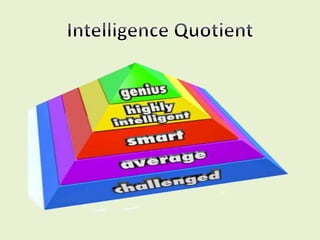
 Intelligence Quotient
 Emotional Quotient
 Aptitude
 Social Development
 Socioeconomic Status
 Thinking/Learning Style
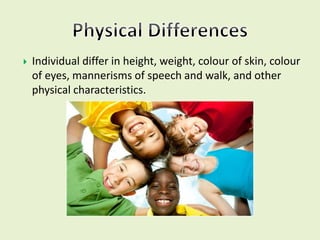
 Individual differ in height, weight, colour of skin, colour
of eyes, mannerisms of speech and walk, and other
physical characteristics.
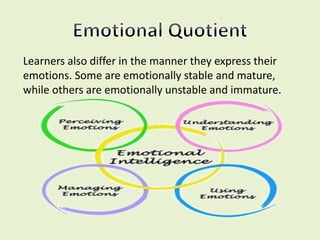
Learners also differ in the manner they express their
emotions. Some are emotionally stable and mature,
while others are emotionally unstable and immature.
 Variations occur among the learners in relation to the specific
tastes and interests.
 Learners have different aptitudes. Some have mechanical
aptitude, while the others have scholastic, musical or artistic
aptitudes.
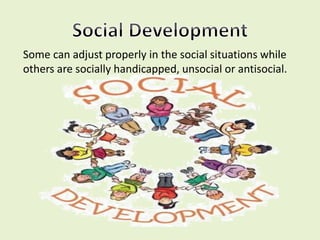
Some can adjust properly in the social situations while
others are socially handicapped, unsocial or antisocial.
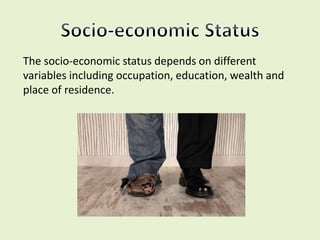
The socio-economic status depends on different
variables including occupation, education, wealth and
place of residence.
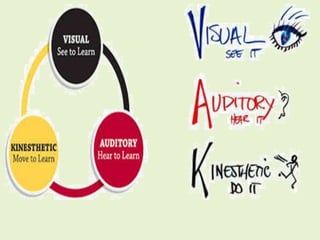
Some learn better by seeing something; others by just
listening and still others best learn by doing things.
“The more teachers can involve all the modalities and learning styles, the
more chances they have of engaging learners in using their whole brains”
-GAYLE GREGORY & CAROLYN CHAPMAN (2006)
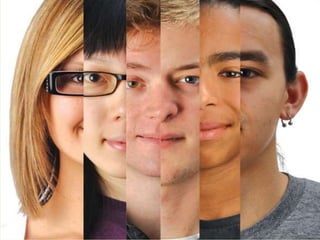
To sum up, in the classroom, teachers aren’t simply teaching
students with twenty different faces; they are teaching twenty
different students, each with distinctive needs and talents, and
different levels of motivation, attention, knowledge, social
background, and maturity. Understanding learner differences is a
must for teachers to create and implement flexible instruction that
would meet the needs of all kinds of learners.
https://youtu.be/rP6swqE2yqg
https://youtu.be/_2TEeU7irR4
Learner's differences

Learner's differences

  • 2.
    A learner issomeone who is learning about a particular subject, a person who is trying to gain knowledge or skill in something by studying, practicing, or being taught.
  • 3.
     Differences inabilities and characteristics among students at a particular age.  The personal attributes that vary from one learner to another.  They can be physical, psychological or emotional.
  • 4.
     How couldone learner be more successful than another?  What factor, other than instructors, materials and environment may affect the result of learning?
  • 5.
     Heredity (Nature) •What occurs naturally as a function of the genes.  Environment (Nurture) • What is learned and communicated in different cultures or other social groups includes family, socio-economic status, culture, previous knowledge, experience and gender differences. • https://youtu.be/NgANaAhoNis
  • 6.
     Physical Differences Intelligence Quotient  Emotional Quotient  Aptitude  Social Development  Socioeconomic Status  Thinking/Learning Style
  • 7.
     Individual differin height, weight, colour of skin, colour of eyes, mannerisms of speech and walk, and other physical characteristics.
  • 9.
    Learners also differin the manner they express their emotions. Some are emotionally stable and mature, while others are emotionally unstable and immature.
  • 10.
     Variations occuramong the learners in relation to the specific tastes and interests.  Learners have different aptitudes. Some have mechanical aptitude, while the others have scholastic, musical or artistic aptitudes.
  • 11.
    Some can adjustproperly in the social situations while others are socially handicapped, unsocial or antisocial.
  • 12.
    The socio-economic statusdepends on different variables including occupation, education, wealth and place of residence.
  • 13.
    Some learn betterby seeing something; others by just listening and still others best learn by doing things. “The more teachers can involve all the modalities and learning styles, the more chances they have of engaging learners in using their whole brains” -GAYLE GREGORY & CAROLYN CHAPMAN (2006)
  • 15.
    To sum up,in the classroom, teachers aren’t simply teaching students with twenty different faces; they are teaching twenty different students, each with distinctive needs and talents, and different levels of motivation, attention, knowledge, social background, and maturity. Understanding learner differences is a must for teachers to create and implement flexible instruction that would meet the needs of all kinds of learners. https://youtu.be/rP6swqE2yqg https://youtu.be/_2TEeU7irR4