


Approaching Lean Manufacturing
with Warehouse Execution Systems
Software, Hardware and Business
Concepts
Presented by:
Michael Armanious
Retrospective
• Has your company implemented lean
technology based concepts?
• Are you getting all you expected from it?
• Do you see other organizations achieving
greater productivity, profitability and market
share from their strategies?
• Do you perceive room for improvement?
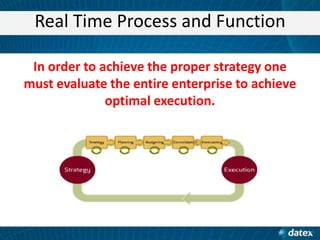
Real Time Process and Function
In order to achieve the proper strategy one
must evaluate the entire enterprise to achieve
optimal execution.
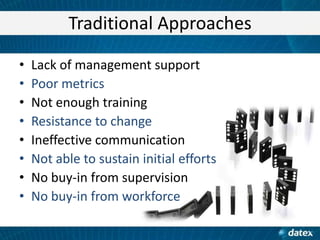
Traditional Approaches
•
•
•
•
•
•
•
•

Lack of management support
Poor metrics
Not enough training
Resistance to change
Ineffective communication
Not able to sustain initial efforts
No buy-in from supervision
No buy-in from workforce
Traditional Approaches
• Not involving stakeholders in the
planning process (primary cause of
resistance)
• Not considering the entire organization
as a system
• Not understanding the real purposes for
the initiative
Root Causes for Lean Gap
•
•
•
•

Reactionary Decisions
Uncertain workforces looking for leadership
Shifting supply chains
No clear direction, fuzzy and changing targets
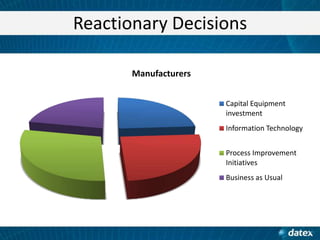
Reactionary Decisions
• The need to hit quarterly numbers
• The need to appease shareholders’ current
expectations
• The need to hit analyst targets
• Focusing on short term goals
Reactionary Decisions
Manufacturers
Capital Equipment
investment
Information Technology
Process Improvement
Initiatives
Business as Usual
Uncertain Workforce
• Coaching and communication hit rock bottom
with downsizing
• Relationships are severed between employee
and management
• Employee becoming more anxious
• Undefined or unclear roles for employees
Shifting Supply Chains
• Key vendor failure of critical raw materials or
components
• Major customers cancel or slash orders
• Cash flow management as only measurements
• Main problem becomes a glut of inventory
No Clear Direction
• Reactionary, short term decisions that
do not consider what might lie
beyond the horizon
• Employees without guidance
• Supply chain without collaboration
• Main problem becomes a glut of
inventory
NO CLEAR DIRECTION

Regardless of current
conditions, manufacturers need the
ability to see, react, and change
instantly– while adhering to the goals
and objectives that guides them.
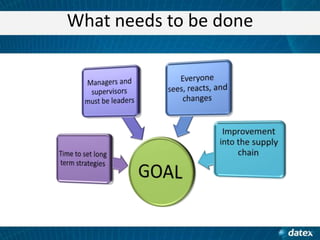
What needs to be done
Lean through Performance Management
Methods, systems and personnel that
enable an organization to set goals and
the assess progress toward those goals on
an individual, department, and
companywide basis.
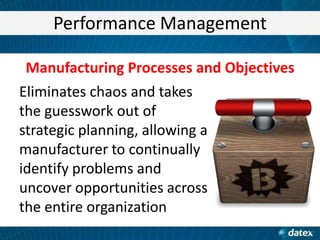
Performance Management
Manufacturing Processes and Objectives
Eliminates chaos and takes
the guesswork out of
strategic planning, allowing a
manufacturer to continually
identify problems and
uncover opportunities across
the entire organization
Lean Checklist
• Strategic vision in place
• Performance management readied
• Process and functional targets monitored and
acted upon
• Companywide goals and objectives monitored
and acted upon
Real Time Information Systems

•
•
•
•
•

Operations management
Customer demand management
Supply chain management
Workforce management
Logistics management
Operations Management
How are operations performing, day-in, day-out, hour
by hour?
• Computer based customized dashboard tracking key
performance indicators (KPIs)
–
–
–
–

Historical KPI analysis
Links to reports
Day to day tasks
Standardized work instructions

• Pushing the right information in front of the right
managers at the right moment
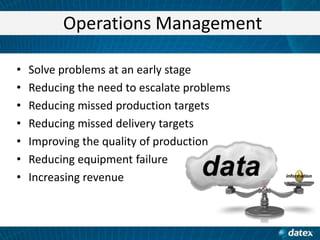
Operations Management
•
•
•
•
•
•
•

Solve problems at an early stage
Reducing the need to escalate problems
Reducing missed production targets
Reducing missed delivery targets
Improving the quality of production
Reducing equipment failure
Increasing revenue
Customer Demand Management
Manufacturers need real-time customer information
such as:
• Accessing customer histories
• Accessing customer buying patterns
• Aligning sales efforts to current production
capabilities
• Efficiently translate demand into level production
schedule
Real time information can only be accomplished by
capturing the data as transactions occur
Supply Chain Management
Manufacturers monitor their supply base for
productivity improvements and hidden costs:
• Identifying supplier risks as early as possible
• Deliverability of raw/component materials on time
• Maintaining consistent raw/component quality
• Assessing financial stability of suppliers
EDI or an electronic integration with your suppliers
would increase visibility for both the supplier and the
manufacturer allowing for proactive responses
Workforce Management
Manufacturers recognize that they must develop people
in order to develop better products and processes:
• Provide necessary training for the technology and
software being implemented
• Placement of the correct resource for the proper task
• Strive for productivity improvement through incentives
• Foster the right amount of pressure and urgency
Workforce management can only be achieved with proper
tracking software with flexible process mapping making
the business and product flow second nature to the
workforce.
Logistics Management
Manufacturers can damage customer satisfaction and
profits if logistics performance is poorly managed
• Efficient design of a warehouse and distribution network
• Freeing up cash by better coordinating inventories from
suppliers through to customer
• Accurately hitting lead times and avoiding late-delivery
charges
• Reducing transportation costs
• Flawless compliance with customers, suppliers and
regulating agencies such as FDA, USDA
Monitory of your logistics process requires the capture of
real time data translated into useful information
Implementing Lean Manufacturing
Lean on the plant floor through flow manufacturing
using technology:
• Work moves through the plant in predetermined
quantities (lots or batches)
– Arriving at the work area
– Waiting for other work to complete
– Moving on as a unit to the next work area

Work is scheduled through production lines that
contain a variety of resources arranged efficiently and
tracked using hardware and software technologies.
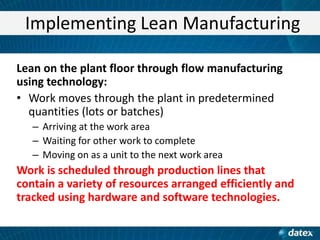
RFID Implementation
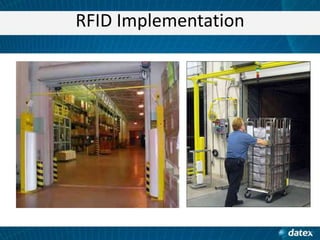
Wireless Mobile Computers
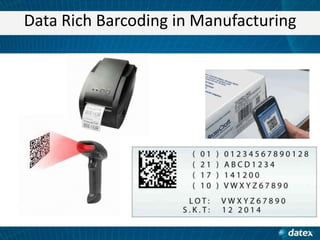
Data Rich Barcoding in Manufacturing
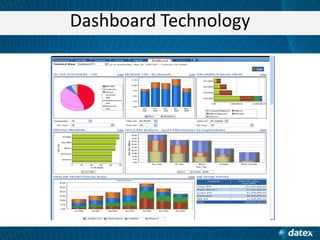
Dashboard Technology
Summary
• Focus on identifying your own goals—one that articulates
the value your company provides to customers and its
competitive advantages in today’s volatile markets
• Cascade those few, key objectives that support the goals
throughout the organization, translating them into
meaningful goals for every function, department, and
employee.
• Monitor and manage performance vertically within
processes and functions and horizontally across the
organization.
• Do it all again, over and over, recalibrating the organization
based on the latest planning, goal-setting, failures, and
achievements
Contact us today
Demo

800.933.2839

marketing@datexcorp.com

Web Chat

Datex Corporation

@Datexcorp

Lean Manufacturing Process

  • 1.
    Approaching Lean Manufacturing withWarehouse Execution Systems Software, Hardware and Business Concepts
  • 2.
  • 3.
    Retrospective • Has yourcompany implemented lean technology based concepts? • Are you getting all you expected from it? • Do you see other organizations achieving greater productivity, profitability and market share from their strategies? • Do you perceive room for improvement?
  • 4.
    Real Time Processand Function In order to achieve the proper strategy one must evaluate the entire enterprise to achieve optimal execution.
  • 5.
    Traditional Approaches • • • • • • • • Lack ofmanagement support Poor metrics Not enough training Resistance to change Ineffective communication Not able to sustain initial efforts No buy-in from supervision No buy-in from workforce
  • 6.
    Traditional Approaches • Notinvolving stakeholders in the planning process (primary cause of resistance) • Not considering the entire organization as a system • Not understanding the real purposes for the initiative
  • 7.
    Root Causes forLean Gap • • • • Reactionary Decisions Uncertain workforces looking for leadership Shifting supply chains No clear direction, fuzzy and changing targets
  • 8.
    Reactionary Decisions • Theneed to hit quarterly numbers • The need to appease shareholders’ current expectations • The need to hit analyst targets • Focusing on short term goals
  • 9.
    Reactionary Decisions Manufacturers Capital Equipment investment InformationTechnology Process Improvement Initiatives Business as Usual
  • 10.
    Uncertain Workforce • Coachingand communication hit rock bottom with downsizing • Relationships are severed between employee and management • Employee becoming more anxious • Undefined or unclear roles for employees
  • 11.
    Shifting Supply Chains •Key vendor failure of critical raw materials or components • Major customers cancel or slash orders • Cash flow management as only measurements • Main problem becomes a glut of inventory
  • 12.
    No Clear Direction •Reactionary, short term decisions that do not consider what might lie beyond the horizon • Employees without guidance • Supply chain without collaboration • Main problem becomes a glut of inventory
  • 13.
    NO CLEAR DIRECTION Regardlessof current conditions, manufacturers need the ability to see, react, and change instantly– while adhering to the goals and objectives that guides them.
  • 14.
  • 15.
    Lean through PerformanceManagement Methods, systems and personnel that enable an organization to set goals and the assess progress toward those goals on an individual, department, and companywide basis.
  • 16.
    Performance Management Manufacturing Processesand Objectives Eliminates chaos and takes the guesswork out of strategic planning, allowing a manufacturer to continually identify problems and uncover opportunities across the entire organization
  • 17.
    Lean Checklist • Strategicvision in place • Performance management readied • Process and functional targets monitored and acted upon • Companywide goals and objectives monitored and acted upon
  • 18.
    Real Time InformationSystems • • • • • Operations management Customer demand management Supply chain management Workforce management Logistics management
  • 19.
    Operations Management How areoperations performing, day-in, day-out, hour by hour? • Computer based customized dashboard tracking key performance indicators (KPIs) – – – – Historical KPI analysis Links to reports Day to day tasks Standardized work instructions • Pushing the right information in front of the right managers at the right moment
  • 20.
    Operations Management • • • • • • • Solve problemsat an early stage Reducing the need to escalate problems Reducing missed production targets Reducing missed delivery targets Improving the quality of production Reducing equipment failure Increasing revenue
  • 21.
    Customer Demand Management Manufacturersneed real-time customer information such as: • Accessing customer histories • Accessing customer buying patterns • Aligning sales efforts to current production capabilities • Efficiently translate demand into level production schedule Real time information can only be accomplished by capturing the data as transactions occur
  • 22.
    Supply Chain Management Manufacturersmonitor their supply base for productivity improvements and hidden costs: • Identifying supplier risks as early as possible • Deliverability of raw/component materials on time • Maintaining consistent raw/component quality • Assessing financial stability of suppliers EDI or an electronic integration with your suppliers would increase visibility for both the supplier and the manufacturer allowing for proactive responses
  • 23.
    Workforce Management Manufacturers recognizethat they must develop people in order to develop better products and processes: • Provide necessary training for the technology and software being implemented • Placement of the correct resource for the proper task • Strive for productivity improvement through incentives • Foster the right amount of pressure and urgency Workforce management can only be achieved with proper tracking software with flexible process mapping making the business and product flow second nature to the workforce.
  • 24.
    Logistics Management Manufacturers candamage customer satisfaction and profits if logistics performance is poorly managed • Efficient design of a warehouse and distribution network • Freeing up cash by better coordinating inventories from suppliers through to customer • Accurately hitting lead times and avoiding late-delivery charges • Reducing transportation costs • Flawless compliance with customers, suppliers and regulating agencies such as FDA, USDA Monitory of your logistics process requires the capture of real time data translated into useful information
  • 25.
    Implementing Lean Manufacturing Leanon the plant floor through flow manufacturing using technology: • Work moves through the plant in predetermined quantities (lots or batches) – Arriving at the work area – Waiting for other work to complete – Moving on as a unit to the next work area Work is scheduled through production lines that contain a variety of resources arranged efficiently and tracked using hardware and software technologies.
  • 26.
  • 27.
  • 28.
    Data Rich Barcodingin Manufacturing
  • 29.
  • 30.
    Summary • Focus onidentifying your own goals—one that articulates the value your company provides to customers and its competitive advantages in today’s volatile markets • Cascade those few, key objectives that support the goals throughout the organization, translating them into meaningful goals for every function, department, and employee. • Monitor and manage performance vertically within processes and functions and horizontally across the organization. • Do it all again, over and over, recalibrating the organization based on the latest planning, goal-setting, failures, and achievements
  • 31.

Editor's Notes

  • #5 Source: Next generation manufacturing Study