






Leadership
Step by Step #1
Hugo Macedo
http://about.me/hugohenriquemacedo
How do you know you’ve become a Leader?
We better start by defining the goal!
so, what is the
Goal of the Leader?
The Goal of Leader is to:
Create Sustainable,
Positive Impact
(greater than he/she can achieve alone)
How?
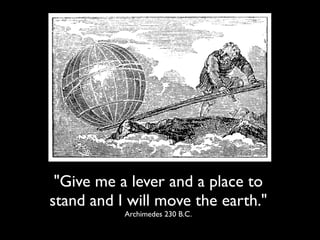
"Give me a lever and a place to
stand and I will move the earth."
Archimedes 230 B.C.
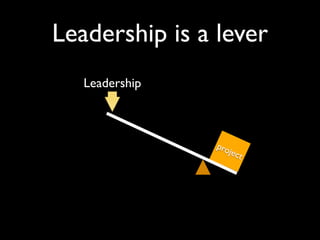
Leadership is a lever
project
Leadership
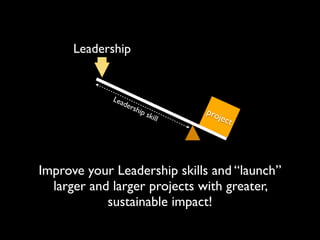
project
Leadership
Leadership skill
Improve your Leadership skills and “launch”
larger and larger projects with greater,
sustainable impact!
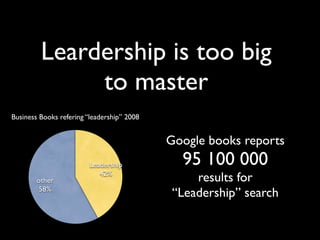
Leardership is too big
to master
other
58%
Leadership
42%
Business Books refering “leadership” 2008
Google books reports
95 100 000
results for
“Leadership” search
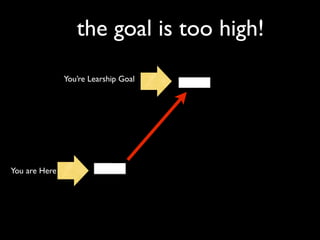
the goal is too high!
You are Here
You’re Learship Goal
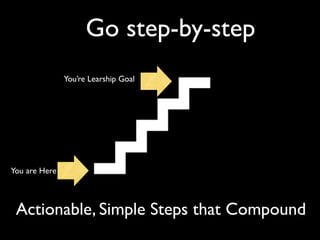
Go step-by-step
You are Here
You’re Learship Goal
Actionable, Simple Steps that Compound
#1 Step
Leading with Questions
Why Questions?
You do not know all
the answers
Need additional input
and perspectives
Increase your
knowledge and
understanding
Involve others in the
solution
To understand the
problem before you
jump into the solution
Value Others
Reduce resistance for
change
But...
Questions are risky!
You might get answers
that you do not expect
show that you do not
know the answer
it takes time
You cannot Question
if you are not Self-Confident
and
if you do not believe in Others
Ok I have that!
so what Questions
should I ask?
Why?
Let’s start with....
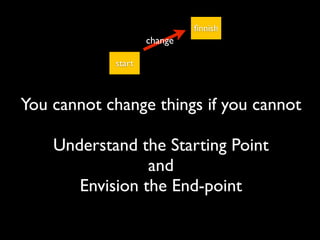
You cannot change things if you cannot
Understand the Starting Point
and
Envision the End-point
start
finnish
change
Question Why?
to understand the
environment:
the starting point
“Why are we doing this?”
“Why are Others doing that?”
“Why are people
Behaving like that?”
“Why am I
doing/thinking
like this?”
Question “Why?”
to set the vision
“Why?”
“What is the purpose?”
my purpose
the team’s
the organization’s
“Why do we exist?”
“Why should anyone
care about
our organization
or our team?”
Now that we know
Why...
the 3 What’s
for day-to-day
leadership
the 3 What’s
Have meaningful, regular, conversations
with your people just based on this
3 questions
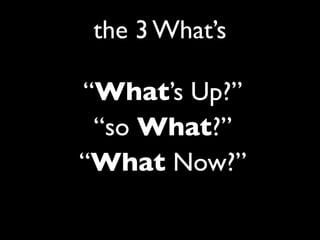
“What’s Up?”
“so What?”
“What Now?”
the 3 What’s
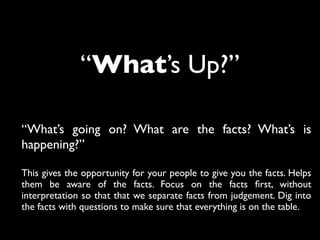
“What’s Up?”
“What’s going on? What are the facts? What’s is
happening?”
This gives the opportunity for your people to give you the facts. Helps
them be aware of the facts. Focus on the facts first, without
interpretation so that that we separate facts from judgement. Dig into
the facts with questions to make sure that everything is on the table.
“So What?”
“What does that fact means? What is your interpretation?”
Now that we both know the facts, let them give you their interpretation and
try to understand Why they interpreted that way - what is affecting their
judgement?
This gives them the responsibility to interpret what’s going on instead of being
only the messenger.They (must) have an opinion, so let’s put it on the table.
Make additional questions to make sure you both explore different possibilities
- What other interpretations would you give besides that one? What are you
assuming that affects your judgement? Let’s talk about that and see if I can help
“What Now?”
“So, What you want to do about it? What are the next
steps?”
Again, this gives them the responsibility and ownership for the
solution. Make sure you understand their decision process - why are
they taking that decision? - help them to consider alternative solutions
- What other solutions/steps could be an option?
Offer your help - How can I help you?
But...
“But...I have
Facts
Interpretations
and Ideas
of my own!”
“What do I do with that if I’m
only asking questions?!”
Your Facts, Interpretations and Ideas
are welcomed, of course!
(I know that you are at least as
bright as I am!)
But be aware that...
Your voice kills your
people’s voice
(you’re the boss, right?!)
so never talk first!
Your people are also
very bright!
(and the better you are, the more bright
people you’ll attract)
Remember:
They talk to people
that you do not talk to
Remember:
They see things that
you do not see
(from your corner office!)
Remember:
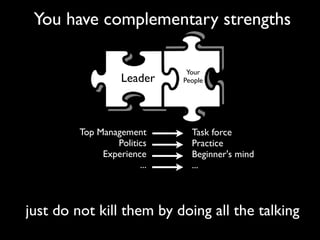
You have complementary strengths
just do not kill them by doing all the talking
Top Management
Politics
Experience
...
Task force
Practice
Beginner's mind
...
Leader
Your
People
If you Talk, you don't Listen; 
if you don't listen, you're Alone; 
if you are alone, you aren't a Leader;
if you aren't a leader, you don't Leverage;
if you don't leverage you do not have IMPACT!
conclusion:
If you TALK you do NOT have IMPACT!
Later you can have a
conversation, a dialog,
but you have to first
master the
3 What’s
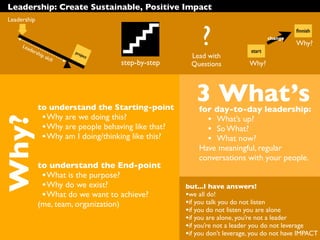
in 1 Page
project
Leadership
Leadership skill
step-by-step
Leadership: Create Sustainable, Positive Impact
?Lead with
Questions
start
finnish
change
Why?
Why?
but...I have answers!
•we all do!
•if you talk you do not listen
•if you do not listen you are alone
•if you are alone, you’re not a leader
•if you’re not a leader you do not leverage
•if you don’t leverage, you do not have IMPACT
to understand the Starting-point
•Why are we doing this?
•Why are people behaving like that?
•Why am I doing/thinking like this?
to understand the End-point
•What is the purpose?
•Why do we exist?
•What do we want to achieve?
(me, team, organization)
Why?
for day-to-day leadership:
• What’s up?
• So What?
• What now?
Have meaningful, regular
conversations with your people.
3 What’s
Credits
Most of the concepts in this presentation came to
my mind. They came from the cross-over of
experience, reflection, discussions and extensive
reading - too many and scattered to be able to name
them precisely. But, the 3 What’s I learned from
Steven Sonsino (stevensonsino.com).
Your more than welcomed to reach me out to
discuss or share your experience in your leadership
journey.
you can find my profiles or contact me here:
http://about.me/hugohenriquemacedo
Thanks for watching!
Now, Share this!

Leadership Step-by-Step #1

  • 1.
    Leadership Step by Step#1 Hugo Macedo http://about.me/hugohenriquemacedo
  • 2.
    How do youknow you’ve become a Leader? We better start by defining the goal! so, what is the Goal of the Leader?
  • 3.
    The Goal ofLeader is to: Create Sustainable, Positive Impact (greater than he/she can achieve alone)
  • 4.
  • 5.
    "Give me alever and a place to stand and I will move the earth." Archimedes 230 B.C.
  • 6.
    Leadership is alever project Leadership
  • 7.
    project Leadership Leadership skill Improve yourLeadership skills and “launch” larger and larger projects with greater, sustainable impact!
  • 8.
    Leardership is toobig to master other 58% Leadership 42% Business Books refering “leadership” 2008 Google books reports 95 100 000 results for “Leadership” search
  • 9.
    the goal istoo high! You are Here You’re Learship Goal
  • 10.
    Go step-by-step You areHere You’re Learship Goal Actionable, Simple Steps that Compound
  • 11.
  • 12.
  • 13.
    You do notknow all the answers
  • 14.
  • 15.
  • 16.
    Involve others inthe solution
  • 17.
    To understand the problembefore you jump into the solution
  • 18.
  • 19.
  • 20.
  • 21.
  • 22.
    You might getanswers that you do not expect
  • 23.
    show that youdo not know the answer
  • 24.
  • 25.
    You cannot Question ifyou are not Self-Confident and if you do not believe in Others
  • 26.
    Ok I havethat! so what Questions should I ask?
  • 27.
  • 28.
    You cannot changethings if you cannot Understand the Starting Point and Envision the End-point start finnish change
  • 29.
    Question Why? to understandthe environment: the starting point
  • 30.
    “Why are wedoing this?”
  • 31.
    “Why are Othersdoing that?”
  • 32.
  • 33.
  • 34.
  • 35.
    “Why?” “What is thepurpose?” my purpose the team’s the organization’s
  • 36.
    “Why do weexist?”
  • 37.
    “Why should anyone careabout our organization or our team?”
  • 38.
    Now that weknow Why...
  • 39.
    the 3 What’s forday-to-day leadership
  • 40.
    the 3 What’s Havemeaningful, regular, conversations with your people just based on this 3 questions
  • 41.
  • 42.
    “What’s Up?” “What’s goingon? What are the facts? What’s is happening?” This gives the opportunity for your people to give you the facts. Helps them be aware of the facts. Focus on the facts first, without interpretation so that that we separate facts from judgement. Dig into the facts with questions to make sure that everything is on the table.
  • 43.
    “So What?” “What doesthat fact means? What is your interpretation?” Now that we both know the facts, let them give you their interpretation and try to understand Why they interpreted that way - what is affecting their judgement? This gives them the responsibility to interpret what’s going on instead of being only the messenger.They (must) have an opinion, so let’s put it on the table. Make additional questions to make sure you both explore different possibilities - What other interpretations would you give besides that one? What are you assuming that affects your judgement? Let’s talk about that and see if I can help
  • 44.
    “What Now?” “So, Whatyou want to do about it? What are the next steps?” Again, this gives them the responsibility and ownership for the solution. Make sure you understand their decision process - why are they taking that decision? - help them to consider alternative solutions - What other solutions/steps could be an option? Offer your help - How can I help you?
  • 45.
  • 46.
    “But...I have Facts Interpretations and Ideas ofmy own!” “What do I do with that if I’m only asking questions?!”
  • 47.
    Your Facts, Interpretationsand Ideas are welcomed, of course! (I know that you are at least as bright as I am!) But be aware that...
  • 48.
    Your voice killsyour people’s voice (you’re the boss, right?!) so never talk first!
  • 49.
    Your people arealso very bright! (and the better you are, the more bright people you’ll attract) Remember:
  • 50.
    They talk topeople that you do not talk to Remember:
  • 51.
    They see thingsthat you do not see (from your corner office!) Remember:
  • 52.
    You have complementarystrengths just do not kill them by doing all the talking Top Management Politics Experience ... Task force Practice Beginner's mind ... Leader Your People
  • 53.
    If you Talk,you don't Listen;  if you don't listen, you're Alone;  if you are alone, you aren't a Leader; if you aren't a leader, you don't Leverage; if you don't leverage you do not have IMPACT! conclusion: If you TALK you do NOT have IMPACT!
  • 54.
    Later you canhave a conversation, a dialog, but you have to first master the 3 What’s
  • 55.
  • 56.
    project Leadership Leadership skill step-by-step Leadership: CreateSustainable, Positive Impact ?Lead with Questions start finnish change Why? Why? but...I have answers! •we all do! •if you talk you do not listen •if you do not listen you are alone •if you are alone, you’re not a leader •if you’re not a leader you do not leverage •if you don’t leverage, you do not have IMPACT to understand the Starting-point •Why are we doing this? •Why are people behaving like that? •Why am I doing/thinking like this? to understand the End-point •What is the purpose? •Why do we exist? •What do we want to achieve? (me, team, organization) Why? for day-to-day leadership: • What’s up? • So What? • What now? Have meaningful, regular conversations with your people. 3 What’s
  • 57.
    Credits Most of theconcepts in this presentation came to my mind. They came from the cross-over of experience, reflection, discussions and extensive reading - too many and scattered to be able to name them precisely. But, the 3 What’s I learned from Steven Sonsino (stevensonsino.com). Your more than welcomed to reach me out to discuss or share your experience in your leadership journey. you can find my profiles or contact me here: http://about.me/hugohenriquemacedo Thanks for watching! Now, Share this!