Introduction (Cont.)
• Keyelements
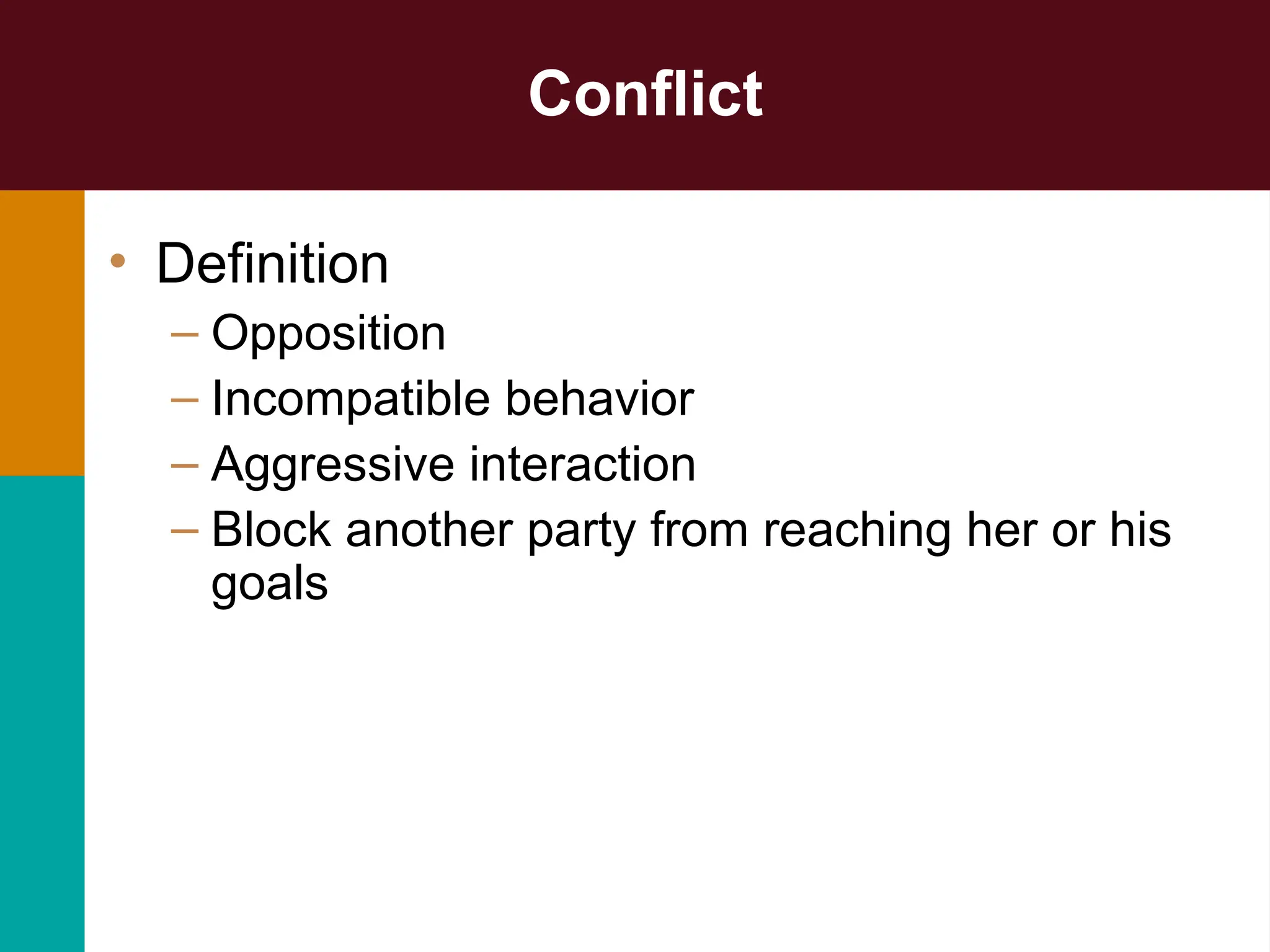
– Interdependence with another party
– Perception of incompatible goals
• Conflict events
– Disagreements
– Debates
– Disputes
– Preventing someone from reaching valued
goals
4.
Functional and DysfunctionalConflict
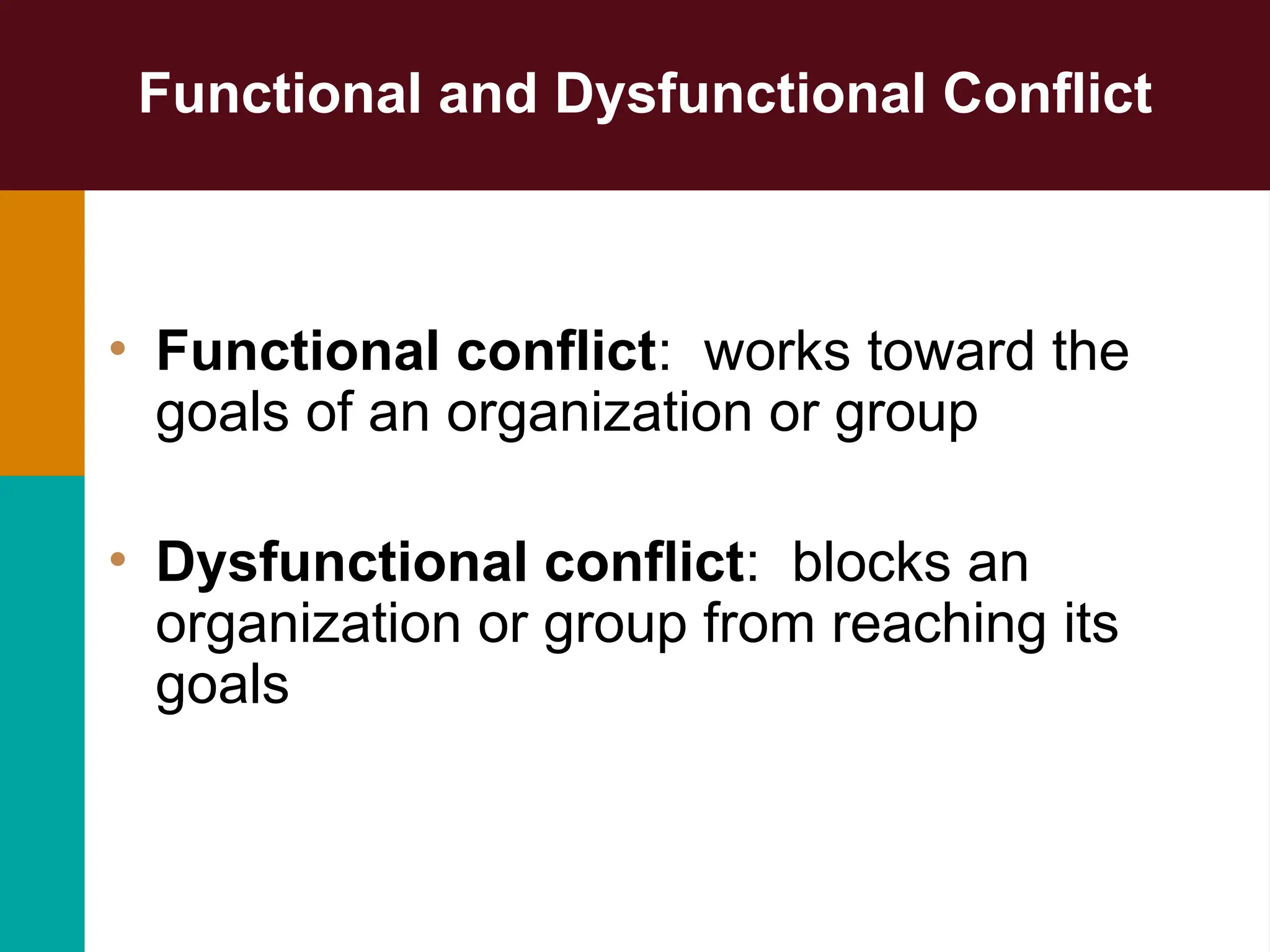
• Functional conflict: works toward the
goals of an organization or group
• Dysfunctional conflict: blocks an
organization or group from reaching its
goals
5.
Levels and Types
ofConflict
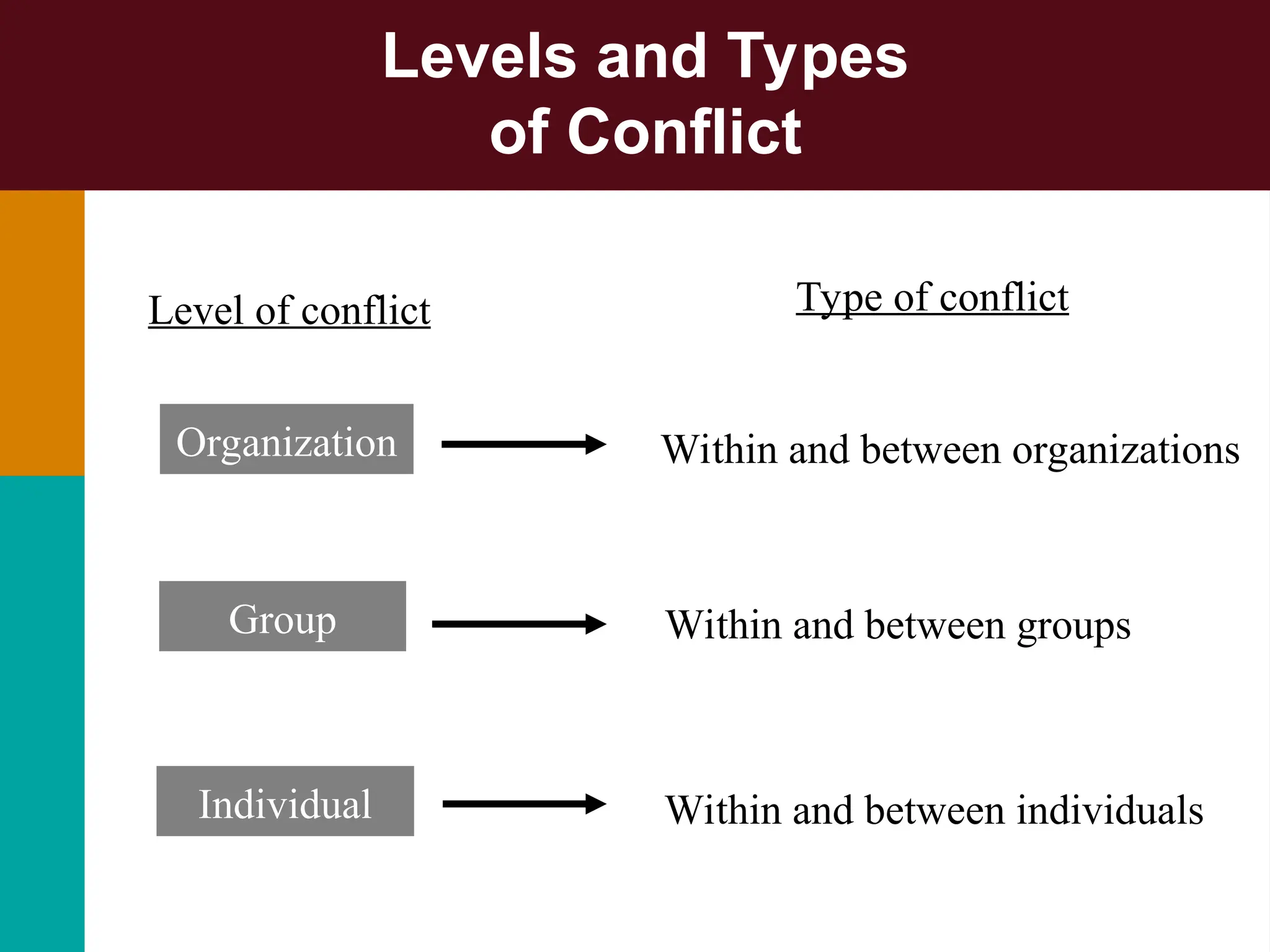
Level of conflict Type of conflict
Organization Within and between organizations
Group Within and between groups
Individual Within and between individuals
Types of Conflict
•Interpersonal Conflict
– Conflict between individuals due to
differences in their goals or values.
• Intragroup Conflict
– Conflict within a
group or team.
8.
Types of Conflict
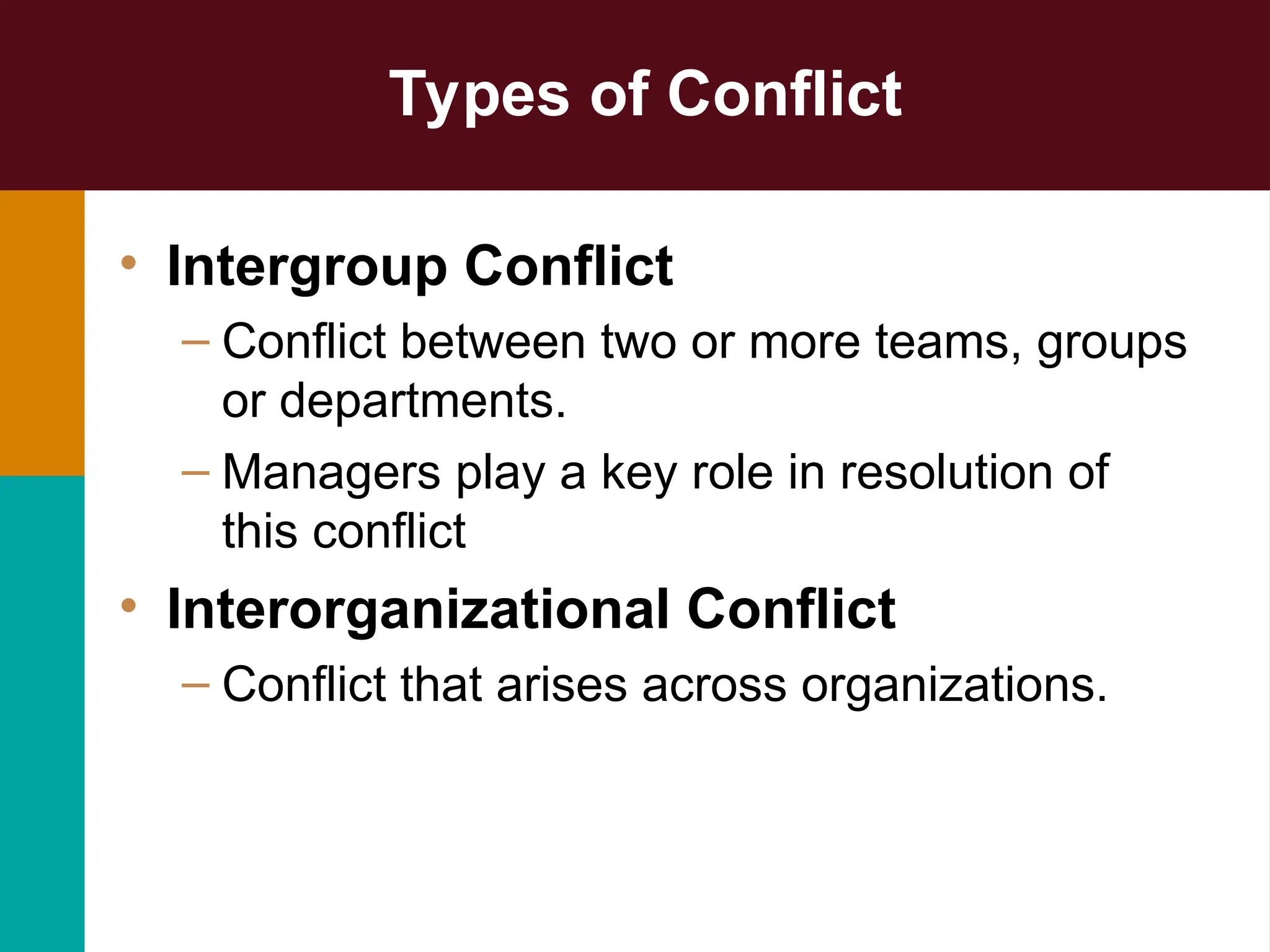
•Intergroup Conflict
– Conflict between two or more teams, groups
or departments.
– Managers play a key role in resolution of
this conflict
• Interorganizational Conflict
– Conflict that arises across organizations.
Sources of Conflict
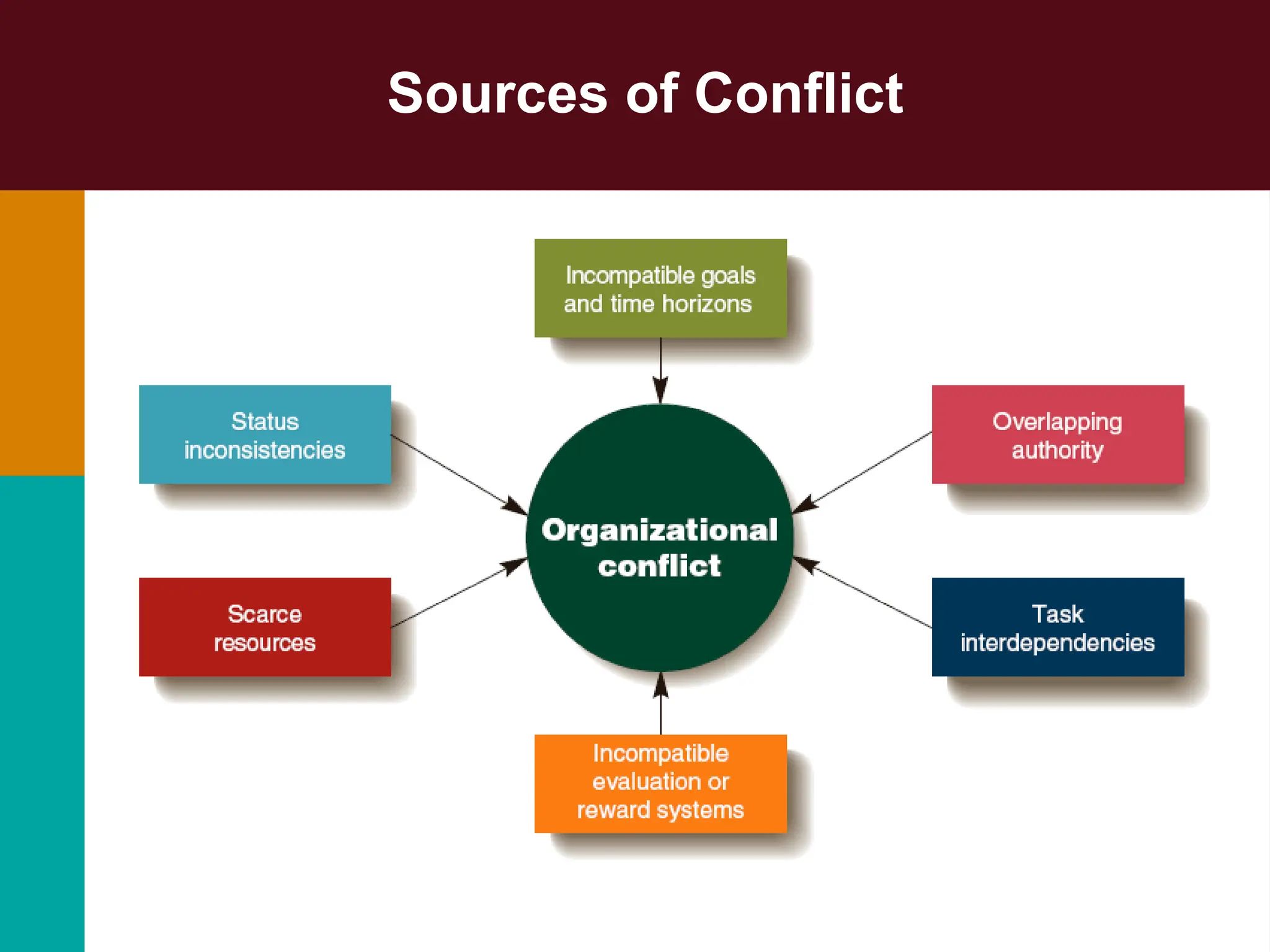
•Different Goals and Time Horizons
– Different groups have differing goals and
focus.
• Overlapping Authority
– Two or more managers claim authority for
the same activities which leads to conflict
between the managers and workers.
11.
Sources of Conflict
•Task Interdependencies
– One member of a group or a group fails to
finish a task that another member or group
depends on, causing the waiting worker or
group to fall behind.
• Different Evaluation or Reward
Systems
– A group is rewarded for achieving a goal, but
another interdependent group is not
rewarded for achieving a goal that conflicts
with the first group.
12.
Sources of Conflict
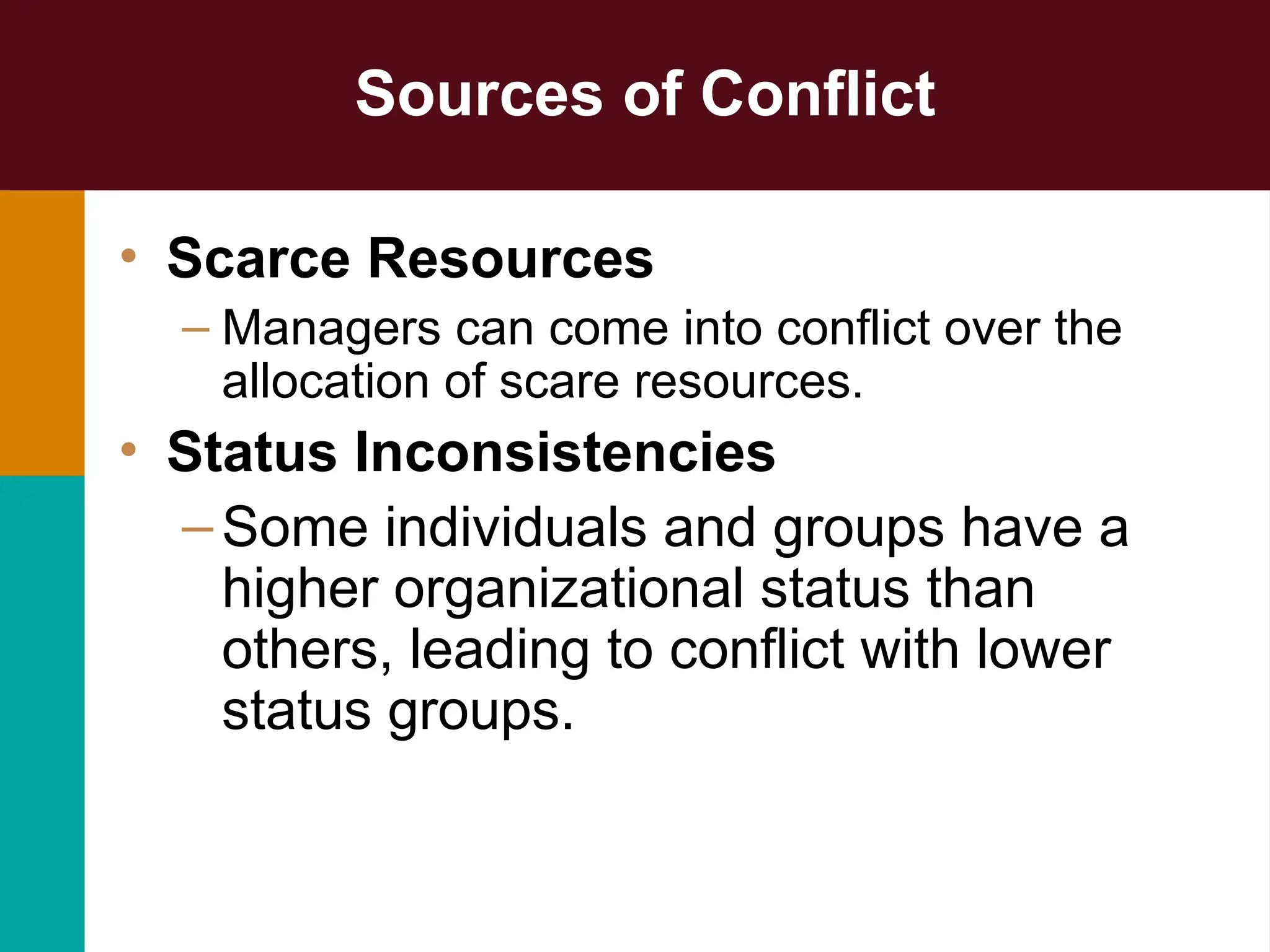
•Scarce Resources
– Managers can come into conflict over the
allocation of scare resources.
• Status Inconsistencies
–Some individuals and groups have a
higher organizational status than
others, leading to conflict with lower
status groups.
13.
Conflict Management Strategies
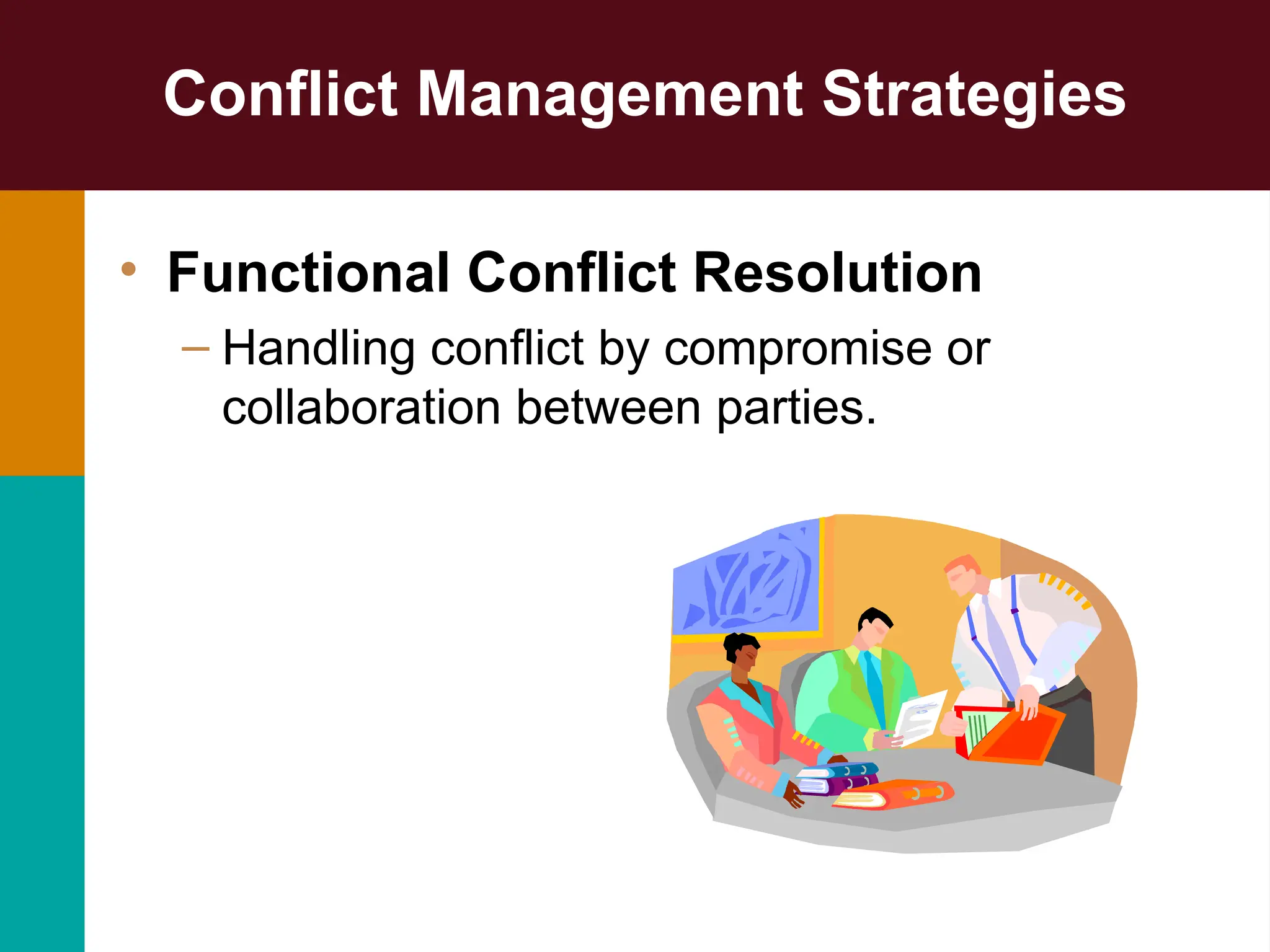
•Functional Conflict Resolution
– Handling conflict by compromise or
collaboration between parties.
14.
Conflict Management Strategies
•Compromise
– each party is concerned about their goal
accomplishment and is willing to engage in
give-and-take exchange to reach a
reasonable solution.
• Collaboration
– parties try to handle the conflict without
making concessions by coming up with a
new way to resolve their differences that
leaves them both better off.
15.
Conflict Management Strategies
•Accommodation
– one party simply gives in to the other party
• Avoidance
– two parties try to ignore the problem and do
nothing to resolve the disagreement
16.
Conflict Management Strategies
•Competition
– each party tries to maximize its own gain
and has little interest in understanding the
other’s position
• Source -Person that begins or
initiates message
• Message - Information or the meaning
• Channel - Medium through which
message is transmitted
• Receiver - Person who is targeted for
the message
Elements of Communication
19.
Conflict Resolution Skills
•Getting the facts
• Active Listening
• Defusing/managing anger
• Understanding skills
• Negotiating outcomes
20.
Conflict Resolution Process
•Find a good time and place to talk.
• Discuss the problem - Clarify issues
– Get all the facts
– Use active listening
– Focus on the problem, not the person
– Avoid communication blockers
21.
Conflict Resolution Process
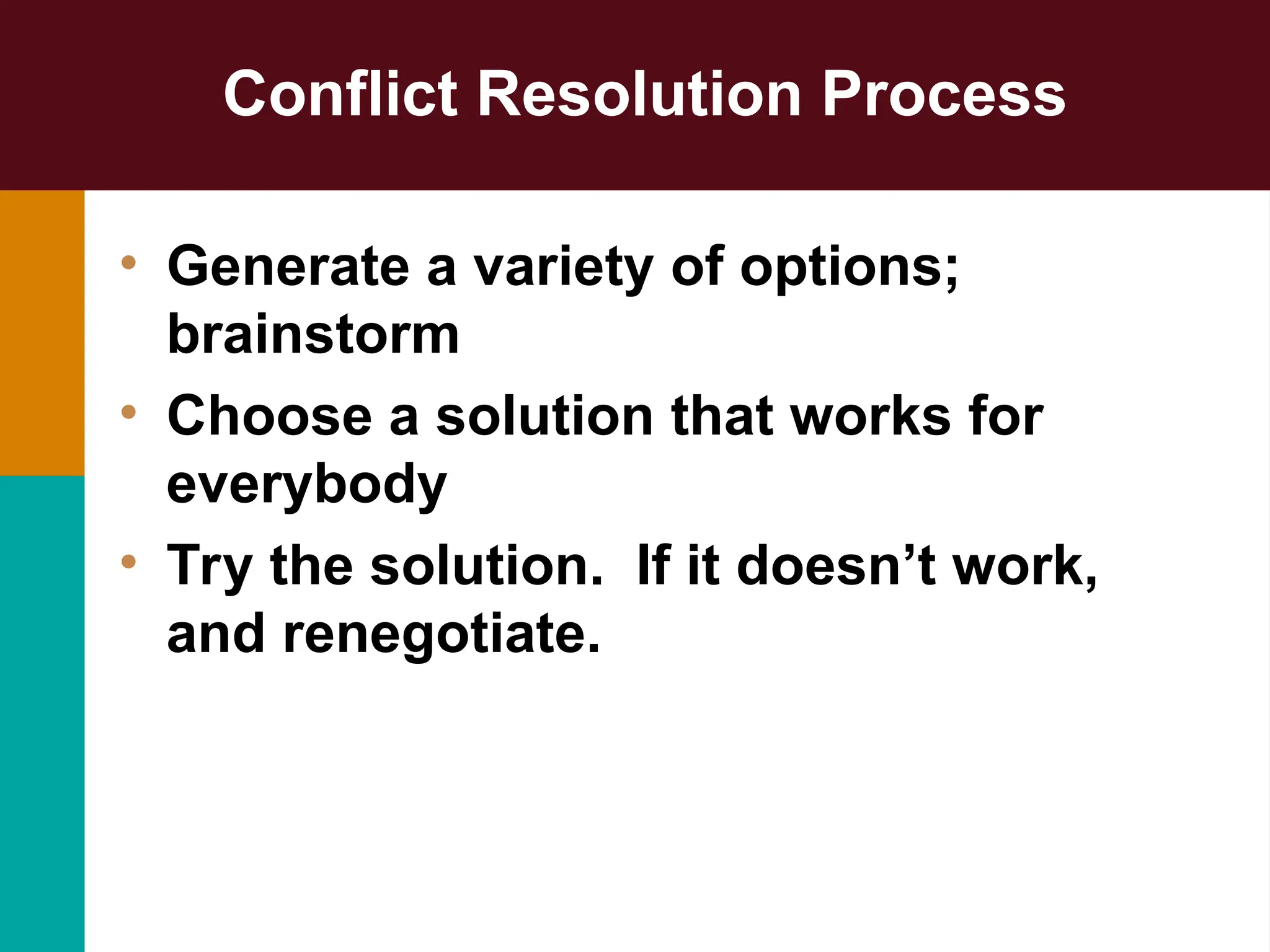
•Generate a variety of options;
brainstorm
• Choose a solution that works for
everybody
• Try the solution. If it doesn’t work,
and renegotiate.
22.
Active Listening
• Lookat the person speaking
• Maintain an open mind
• Pay attention
• Ask questions
• Repeat what the speaker says
• Listen for the feelings of the speaker
• Don’t: Interrupt, change the subject,
make up your mind before the person
finishes speaking
17-22