Best Practices in the Use of Proactive 
Influence Tactics by Leaders 
Supervisor: 
Dr. Kusdi Rahardjo, DEA 
Prepared by: 
Abdullah Al Ansi
Introduction 
leader must influence people to: 
 carry out requests, 
 support proposals, 
 implement decisions, 
 exert influence on superiors, peers, subordinates. 
 Influence in one direction tends to enhance influence in 
other directions.
influence tactic. 
 (the “agent”) - (the “target”) 
 Proactive tactics: (carry out new task, provide 
resources, assistance on project) 
 rational persuasion: (using facts and logic). 
 inspirational appeals: 
(linking a request to target values and ideals). 
 resist unwanted influence.
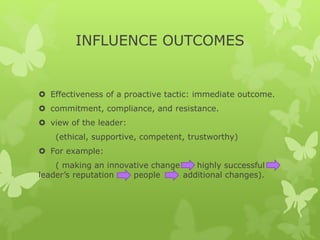
INFLUENCE OUTCOMES 
 Effectiveness of a proactive tactic: immediate outcome. 
 commitment, compliance, and resistance. 
 view of the leader: 
(ethical, supportive, competent, trustworthy) 
 For example: 
( making an innovative change highly successful 
leader’s reputation people additional changes).
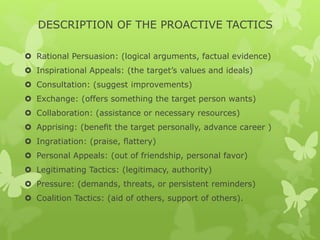
DESCRIPTION OF THE PROACTIVE TACTICS 
 Rational Persuasion: (logical arguments, factual evidence) 
 Inspirational Appeals: (the target’s values and ideals) 
 Consultation: (suggest improvements) 
 Exchange: (offers something the target person wants) 
 Collaboration: (assistance or necessary resources) 
 Apprising: (benefit the target personally, advance career ) 
 Ingratiation: (praise, flattery) 
 Personal Appeals: (out of friendship, personal favor) 
 Legitimating Tactics: (legitimacy, authority) 
 Pressure: (demands, threats, or persistent reminders) 
 Coalition Tactics: (aid of others, support of others).
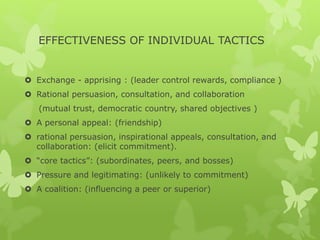
EFFECTIVENESS OF INDIVIDUAL TACTICS 
 Exchange - apprising : (leader control rewards, compliance ) 
 Rational persuasion, consultation, and collaboration 
(mutual trust, democratic country, shared objectives ) 
 A personal appeal: (friendship) 
 rational persuasion, inspirational appeals, consultation, and 
collaboration: (elicit commitment). 
 “core tactics”: (subordinates, peers, and bosses) 
 Pressure and legitimating: (unlikely to commitment) 
 A coalition: (influencing a peer or superior)
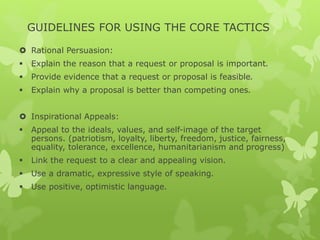
GUIDELINES FOR USING THE CORE TACTICS 
 Rational Persuasion: 
 Explain the reason that a request or proposal is important. 
 Provide evidence that a request or proposal is feasible. 
 Explain why a proposal is better than competing ones. 
 Inspirational Appeals: 
 Appeal to the ideals, values, and self-image of the target 
persons. (patriotism, loyalty, liberty, freedom, justice, fairness, 
equality, tolerance, excellence, humanitarianism and progress) 
 Link the request to a clear and appealing vision. 
 Use a dramatic, expressive style of speaking. 
 Use positive, optimistic language.
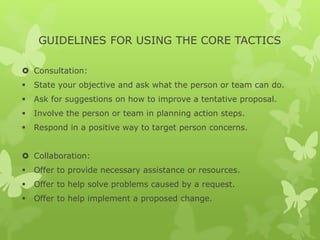
GUIDELINES FOR USING THE CORE TACTICS 
 Consultation: 
 State your objective and ask what the person or team can do. 
 Ask for suggestions on how to improve a tentative proposal. 
 Involve the person or team in planning action steps. 
 Respond in a positive way to target person concerns. 
 Collaboration: 
 Offer to provide necessary assistance or resources. 
 Offer to help solve problems caused by a request. 
 Offer to help implement a proposed change.
OTHER DETERMINANTS OF INFLUENCE SUCCESS 
 Combining Tactics: 
for example (rational persuasion- why change important, 
consultation- acceptable way to implement the change) 
 Sequencing of Influence Tactics: (select tactics ) 
 Trust and Credibility: 
(interpersonal relationship between the agent and target). 
 The proactive tactics should be used in ethical ways to accomplish 
shared objectives, not to exploit others for the leader’s personal 
gain.
RESISTING UNWANTED INFLUENCE ATTEMPTS 
 leaders must also be able to: 
 respond in appropriate ways to an unwanted influence attempt 
initiated by someone else. 
 deal effectively with a request that is irrelevant, impractical, or 
unethical. 
 Legitimating can be an effective resistance tactic when the 
agent’s request is inconsistent with company rules or a formal 
contract. 
 Most of the tactics used for proactive influence attempts can also 
be used for resistance.
EXECUTIVE SUMMARY 
 Understanding the attitudes, values, and emotions of the persons you 
need to influence. 
 Selecting influence tactics that are appropriate for relationship with the 
target person and nature of the requested task . 
 Acquire the information and expertise to support the use of tactics. 
 Maintain a good relationship with people for cooperation or assistance. 
 Combine tactics that are compatible and complementary. 
 Sequence tactics in a way that will maximize the positive effects. 
 Always maintain credibility and personal integrity.
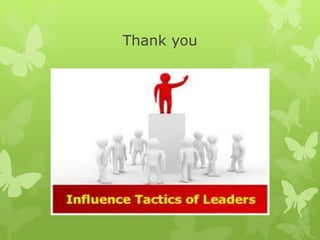
Thank you

Leadership : Best Practices in the Use of Proactive Influence Tactics by Leaders

  • 1.
    Best Practices inthe Use of Proactive Influence Tactics by Leaders Supervisor: Dr. Kusdi Rahardjo, DEA Prepared by: Abdullah Al Ansi
  • 2.
    Introduction leader mustinfluence people to:  carry out requests,  support proposals,  implement decisions,  exert influence on superiors, peers, subordinates.  Influence in one direction tends to enhance influence in other directions.
  • 3.
    influence tactic. (the “agent”) - (the “target”)  Proactive tactics: (carry out new task, provide resources, assistance on project)  rational persuasion: (using facts and logic).  inspirational appeals: (linking a request to target values and ideals).  resist unwanted influence.
  • 4.
    INFLUENCE OUTCOMES Effectiveness of a proactive tactic: immediate outcome.  commitment, compliance, and resistance.  view of the leader: (ethical, supportive, competent, trustworthy)  For example: ( making an innovative change highly successful leader’s reputation people additional changes).
  • 5.
    DESCRIPTION OF THEPROACTIVE TACTICS  Rational Persuasion: (logical arguments, factual evidence)  Inspirational Appeals: (the target’s values and ideals)  Consultation: (suggest improvements)  Exchange: (offers something the target person wants)  Collaboration: (assistance or necessary resources)  Apprising: (benefit the target personally, advance career )  Ingratiation: (praise, flattery)  Personal Appeals: (out of friendship, personal favor)  Legitimating Tactics: (legitimacy, authority)  Pressure: (demands, threats, or persistent reminders)  Coalition Tactics: (aid of others, support of others).
  • 6.
    EFFECTIVENESS OF INDIVIDUALTACTICS  Exchange - apprising : (leader control rewards, compliance )  Rational persuasion, consultation, and collaboration (mutual trust, democratic country, shared objectives )  A personal appeal: (friendship)  rational persuasion, inspirational appeals, consultation, and collaboration: (elicit commitment).  “core tactics”: (subordinates, peers, and bosses)  Pressure and legitimating: (unlikely to commitment)  A coalition: (influencing a peer or superior)
  • 7.
    GUIDELINES FOR USINGTHE CORE TACTICS  Rational Persuasion:  Explain the reason that a request or proposal is important.  Provide evidence that a request or proposal is feasible.  Explain why a proposal is better than competing ones.  Inspirational Appeals:  Appeal to the ideals, values, and self-image of the target persons. (patriotism, loyalty, liberty, freedom, justice, fairness, equality, tolerance, excellence, humanitarianism and progress)  Link the request to a clear and appealing vision.  Use a dramatic, expressive style of speaking.  Use positive, optimistic language.
  • 8.
    GUIDELINES FOR USINGTHE CORE TACTICS  Consultation:  State your objective and ask what the person or team can do.  Ask for suggestions on how to improve a tentative proposal.  Involve the person or team in planning action steps.  Respond in a positive way to target person concerns.  Collaboration:  Offer to provide necessary assistance or resources.  Offer to help solve problems caused by a request.  Offer to help implement a proposed change.
  • 9.
    OTHER DETERMINANTS OFINFLUENCE SUCCESS  Combining Tactics: for example (rational persuasion- why change important, consultation- acceptable way to implement the change)  Sequencing of Influence Tactics: (select tactics )  Trust and Credibility: (interpersonal relationship between the agent and target).  The proactive tactics should be used in ethical ways to accomplish shared objectives, not to exploit others for the leader’s personal gain.
  • 10.
    RESISTING UNWANTED INFLUENCEATTEMPTS  leaders must also be able to:  respond in appropriate ways to an unwanted influence attempt initiated by someone else.  deal effectively with a request that is irrelevant, impractical, or unethical.  Legitimating can be an effective resistance tactic when the agent’s request is inconsistent with company rules or a formal contract.  Most of the tactics used for proactive influence attempts can also be used for resistance.
  • 11.
    EXECUTIVE SUMMARY Understanding the attitudes, values, and emotions of the persons you need to influence.  Selecting influence tactics that are appropriate for relationship with the target person and nature of the requested task .  Acquire the information and expertise to support the use of tactics.  Maintain a good relationship with people for cooperation or assistance.  Combine tactics that are compatible and complementary.  Sequence tactics in a way that will maximize the positive effects.  Always maintain credibility and personal integrity.
  • 12.