6 Steps to Creating Your Strategy
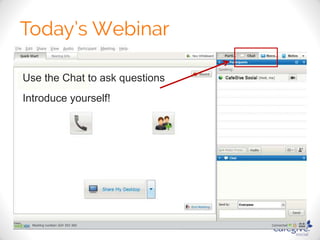
Use the Chat to ask questions 
Introduce yourself!
• Why lead with social impact 
• Connecting with Moms & Millennials 
• 6 Steps for creating & measuring a strategy 
• Good (& not so good) campaigns & lessons
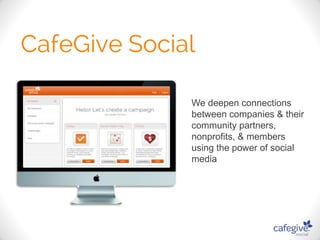
We deepen connections 
between companies & their 
community partners, 
nonprofits, & members 
using the power of social 
media
Sandra Morris is a marketing 
strategist, product specialist, 
nonprofit board member, and a 
seasoned speaker on topics including 
corporate social responsibility, 
leadership, and social media. 
Prior to founding CafeGive, her roles 
including CIO for Intel Corporation 
and Senior Executive and VP of 
Consumer Images Services for 
Kodak.
 
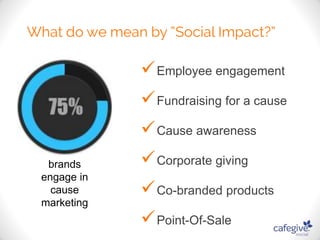
Employee engagement 
 
Fundraising for a cause 
 
Cause awareness 
 
Corporate giving 
 
Co-branded products 
 
Point-Of-Sale 
brands 
engage in 
cause 
marketing
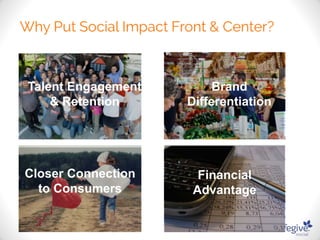
Brand 
Differentiation 
Talent Engagement 
& Retention 
Financial 
Advantage 
Closer Connection 
to Consumers
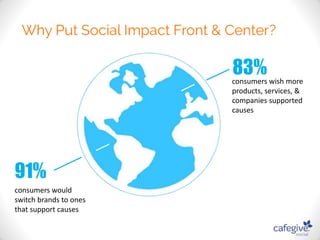
consumers wish more 
products, services, & 
companies supported 
causes 
consumers would 
switch brands to ones 
that support causes 
83% 
91%
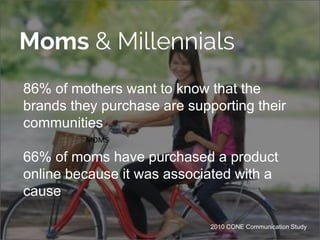
86% of mothers want to know that the 
brands they purchase are supporting their 
communities 
MOMS 
66% of moms have purchased a product 
online because it was associated with a 
cause 
2010 CONE Communication Study
Make your social impact 
part of marketing umbrella
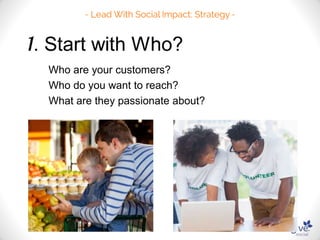
Who are your customers? 
Who do you want to reach? 
What are they passionate about?
How & where can this align with business goals? 
Photo Contest  new product launch 
Social Impact Reporting  compliance, 
CSR reporting
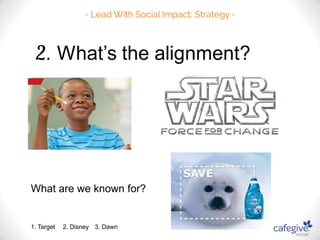
What are we known for? 
1. Target 2. Disney 3. Dawn
3. Set Goals 
Make them SMART 
SPECIFIC 
MEASURABLE 
ACHEVABLE 
REALISTIC 
TIME-BOUND
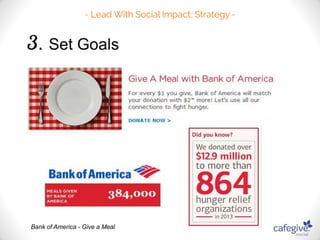
Bank of America - Give a Meal
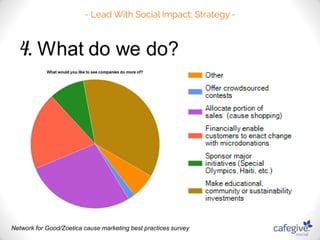
Network for Good/Zoetica cause marketing best practices survey
4. What do we do? 
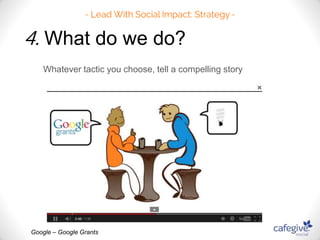
Whatever tactic you choose, tell a compelling story 
Google – Google Grants
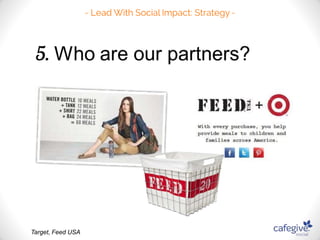
Target, Feed USA
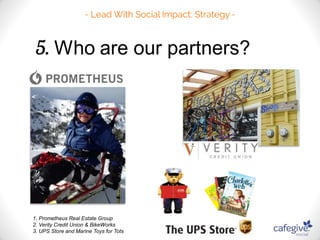
1. Prometheus Real Estate Group 
2. Verity Credit Union & BikeWorks 
3. UPS Store and Marine Toys for Tots
How will you know when you’re successful? 
How will you know when you’re not? 
What’s good enough? 
What’s great?
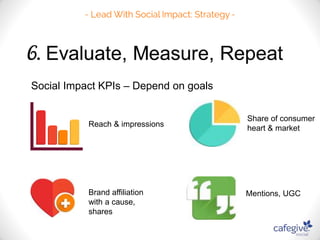
Social Impact KPIs – Depend on goals 
Reach & impressions 
Share of consumer 
heart & market 
Brand affiliation Mentions, UGC 
with a cause, 
shares
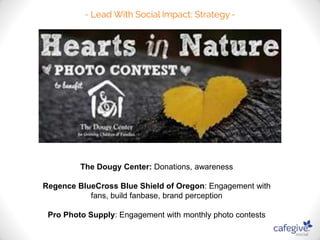
The Dougy Center: Donations, awareness 
Regence BlueCross Blue Shield of Oregon: Engagement with 
fans, build fanbase, brand perception 
Pro Photo Supply: Engagement with monthly photo contests
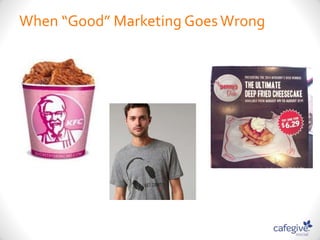
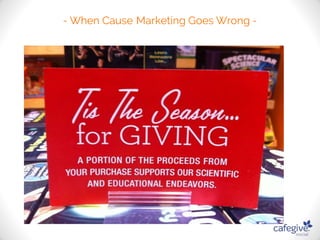
Strategy Fail 
Or when “good” marketing 
goes wrong
When “Good” Marketing Goes Wrong
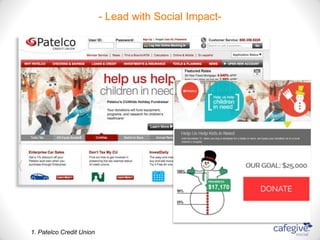
- Lead with Social Impact- 
1. Patelco Credit Union
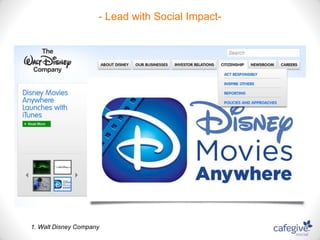
- Lead with Social Impact- 
1. Walt Disney Company
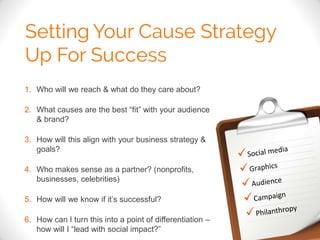
1. Who will we reach & what do they care about? 
2. What causes are the best “fit” with your audience 
& brand? 
3. How will this align with your business strategy & 
goals? 
4. Who makes sense as a partner? (nonprofits, 
businesses, celebrities) 
5. How will we know if it’s successful? 
6. How can I turn this into a point of differentiation – 
how will I “lead with social impact?”
Questions? Feedback? 
Contact Sandra at sandra@cafegive.com 
@cafegive 
CafeGiveSocial

Lead With Social Impact: 6 Steps to a Powerful Social Impact Marketing Strategy

  • 1.
    6 Steps toCreating Your Strategy
  • 2.
    Use the Chatto ask questions Introduce yourself!
  • 3.
    • Why leadwith social impact • Connecting with Moms & Millennials • 6 Steps for creating & measuring a strategy • Good (& not so good) campaigns & lessons
  • 4.
    We deepen connections between companies & their community partners, nonprofits, & members using the power of social media
  • 5.
    Sandra Morris isa marketing strategist, product specialist, nonprofit board member, and a seasoned speaker on topics including corporate social responsibility, leadership, and social media. Prior to founding CafeGive, her roles including CIO for Intel Corporation and Senior Executive and VP of Consumer Images Services for Kodak.
  • 7.
     Employee engagement  Fundraising for a cause  Cause awareness  Corporate giving  Co-branded products  Point-Of-Sale brands engage in cause marketing
  • 8.
    Brand Differentiation TalentEngagement & Retention Financial Advantage Closer Connection to Consumers
  • 9.
    consumers wish more products, services, & companies supported causes consumers would switch brands to ones that support causes 83% 91%
  • 10.
    86% of motherswant to know that the brands they purchase are supporting their communities MOMS 66% of moms have purchased a product online because it was associated with a cause 2010 CONE Communication Study
  • 11.
  • 12.
    Make your socialimpact part of marketing umbrella
  • 14.
    Who are yourcustomers? Who do you want to reach? What are they passionate about?
  • 16.
    How & wherecan this align with business goals? Photo Contest  new product launch Social Impact Reporting  compliance, CSR reporting
  • 17.
    What are weknown for? 1. Target 2. Disney 3. Dawn
  • 18.
    3. Set Goals Make them SMART SPECIFIC MEASURABLE ACHEVABLE REALISTIC TIME-BOUND
  • 19.
    Bank of America- Give a Meal
  • 20.
    Network for Good/Zoeticacause marketing best practices survey
  • 21.
    4. What dowe do? Whatever tactic you choose, tell a compelling story Google – Google Grants
  • 22.
  • 23.
    1. Prometheus RealEstate Group 2. Verity Credit Union & BikeWorks 3. UPS Store and Marine Toys for Tots
  • 24.
    How will youknow when you’re successful? How will you know when you’re not? What’s good enough? What’s great?
  • 25.
    Social Impact KPIs– Depend on goals Reach & impressions Share of consumer heart & market Brand affiliation Mentions, UGC with a cause, shares
  • 26.
    The Dougy Center:Donations, awareness Regence BlueCross Blue Shield of Oregon: Engagement with fans, build fanbase, brand perception Pro Photo Supply: Engagement with monthly photo contests
  • 27.
    Strategy Fail Orwhen “good” marketing goes wrong
  • 28.
  • 30.
    - Lead withSocial Impact- 1. Patelco Credit Union
  • 31.
    - Lead withSocial Impact- 1. Walt Disney Company
  • 32.
    1. Who willwe reach & what do they care about? 2. What causes are the best “fit” with your audience & brand? 3. How will this align with your business strategy & goals? 4. Who makes sense as a partner? (nonprofits, businesses, celebrities) 5. How will we know if it’s successful? 6. How can I turn this into a point of differentiation – how will I “lead with social impact?”
  • 34.
    Questions? Feedback? ContactSandra at sandra@cafegive.com @cafegive CafeGiveSocial

Editor's Notes

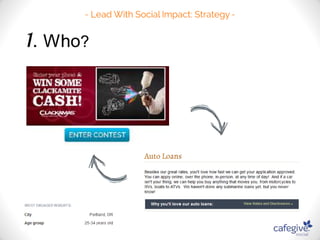
  • #16 Example of a client going through this process: Clackamas Credit Union: Giving back to the community is part of their mission and credo as a credit union, but they wanted a more direct connection to their business goals. Clackamas used a photo contest app, themed around auto and vehicle equity loans, and leveraged their cause campaign as a vehicle to raise awareness of the new loan program, and increase signups. So the “who” in this case is the 25-34 year olds in Portland, OR, that make up the majority of their online fanbase, grow this base more, and mobilize them to engage with the brand. They chose to run a photo contest with their partners because that age group demographic responds very positively to incentivized photo contests, and used messaing and imaging that they thought would speak to this audience. If you ever want to know what this group is for your company page, you can use a combination of social tools, but clicking your “Insights” button will give you a great “at a glance” overview. Different people often engage with brands online & offline and through different channels – good to know who, when, where, etc.
  • #17 The big thing that most business strategists and marketers miss out on is the ability to strategically connect your company’s social good initiatives to your greater business goals. Ask the question: how does giving back help our other business goals?
  • #18 Think about: What are we known for? What’s our unique value proposition – what makes us unique as a company, and what causes align with that? When you thought about your customers and what they’re passionate about, and then thought about your core competencies and brand, there’s likely to be overlap. Target is a great example. Majority of Target’s core demographic is women, and more specifically moms. Education and child health are instant opportunities for focus. Dawn dishsoap, for example, has built a whole brand around it’s differentiator: Dawn differentiates itself as being “gentle on hands, tough on grease.” The realization in 2002 that Dawn was being used, among other dishsoap brands, in the Exxon Valdez oil spill offered Dawn an unparalleled opportunity, and one that they continue to build around.
  • #19 Now that you’ve identified your audience, it’s time to decide what you want them to do. When it comes to setting goals and expectations for your cause marketing initiatives, the key points are to be as methodical/logical as you would be with any marketing initiative. There is sometimes an approach of “we’ll run a campaign, see how it goes, and then share our success.” This is an ok starting point, but unless you have clearly defined what you’re trying to achieve, it’s really hard to tell whether you’ve been successful. Identifying goals up front helps you more objectively evaluate your initiative. Make sure your goals are achievable. If you’re new to cause marketing, or to community programs, or to social media, it will take time to get to your overarching goals. Make goals: Specific Measurable Achievable Realistic Timely
  • #20 The most successful cause initiatives are ones that are transparent, and that have SMART internal and external goals. Bank of America’s Give A Meal partnership with Feeding America is a great example. During holiday season last year, they had a stated goal in their messaging – Help us give over 200,000 meals to families in need this holiday season. It gives consumers and fans a specific goal to aim for, and enabled BofA to celebrate benchmarks, in this case: Certain amount raised Certain amount matched (this was a matching 2:1 campaign for every $1 donation) Campaign was “time-bound” – meaning it had a specific deadline in 2013 (Jan 10th) which drove urgency You don’t always have to make your goals public (although this does help drive engagement, especially during seasonal initiatives). But you should set expectations about outcomes, and think through the user experience. If your goals are to drive donations for a matching campaign, and increase marketing leads, for example, think about how you will connect one to the other (is it a special promotion or discount page after the donate page?), etc.