Main points:
• Definition
•What is a leach
•Purpose of leaching
•What types of leaches can be used for leaching
•What types of leaches should be avoided for
leaching
•Leach therapy (process of leaching)
•Removal of a leach
 Definition:
Leaching, the application of a living leach
to the skin in order to initiate blood flow, or deplete
blood from a localized area of the body.
Through the 19th century leaching was frequently
practiced in Europe, Asia and America to deplete the
body of quantities of blood , in a manner similar to
bloodletting.
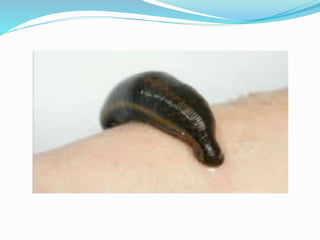
 What is a leach:
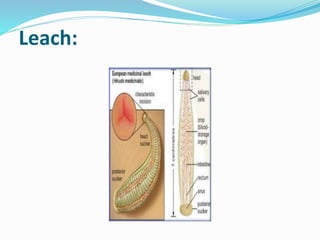
Leaches are segmented parasitic
or predatory worms that belong to phylum
Annelida comprises the subclass Hirudinea. They
are closely related to oligocheates, which include
the earth worm, and like them have soft, muscular,
segmented bodies that can lenghten and contract.
Leaches have 10 stomaches,
32 brains and 18 testicles.
Leach:
 Purpose of Leaching:
Basically leaching is used to
remove bad or excess of the blood from the body
.Application of leaches is better then cupping in
drawing the blood from deeper tissues. Leaching is
mainly used to treat following diseases:
• Skin diseases
• Hemorrhoids
• Vascular diseases
• Osteoarthritis, etc.
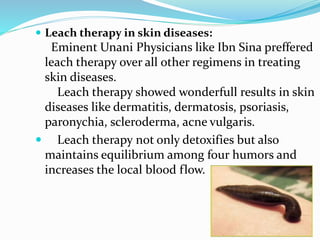
 Leach therapy in skin diseases:
Eminent Unani Physicians like Ibn Sina preffered
leach therapy over all other regimens in treating
skin diseases.
Leach therapy showed wonderfull results in skin
diseases like dermatitis, dermatosis, psoriasis,
paronychia, scleroderma, acne vulgaris.
 Leach therapy not only detoxifies but also
maintains equilibrium among four humors and
increases the local blood flow.
 Leach therapy in Hemorrhoids:
Engorgment of a hemorrhoidal vessel with acute swelling
may allow blood to pool and cloat ; this leads to the acutely
thrombosed external hemorrhoid (THE), a bluish-purplish
dicolorition often accompained by severe incapacitating
pain.
Leaches help reduce the ache and the swelling and heat
felt from haemorrhoids and varicose veins, and can also
dissolve blood clots that have formed before.
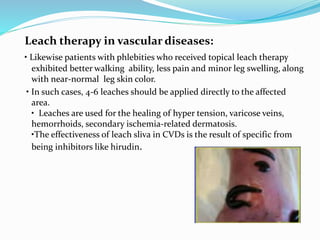
Leach therapy in vascular diseases:
• Likewise patients with phlebities who received topical leach therapy
exhibited better walking ability, less pain and minor leg swelling, along
with near-normal leg skin color.
• In such cases, 4-6 leaches should be applied directly to the affected
area.
• Leaches are used for the healing of hyper tension, varicose veins,
hemorrhoids, secondary ischemia-related dermatosis.
•The effectiveness of leach sliva in CVDs is the result of specific from
being inhibitors like hirudin.
What type of leaches should be used for leaching:
Leaches which can be used without fear are:
•Those from water covered with weeds and containing
live frog-no attention need be paid to the warning
given by some people that leaches from frog-infested
waters are dangerous.
• Emerald green leaches which are predominantly
green and posses two yellow stripes.
• Orange-red leaches with round rather than angular
sides.
•Leaches the colour of which is like that of liver and
those which are curled up look like locusts.
•Leaches which are thin and round like mouse tail
• Those which have tiny heads.
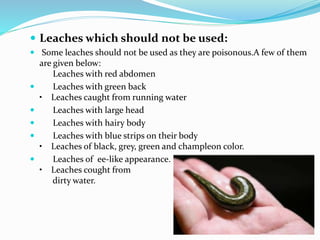
 Leaches which should not be used:
 Some leaches should not be used as they are poisonous.A few of them
are given below:
Leaches with red abdomen
 Leaches with green back
• Leaches caught from running water
 Leaches with large head
 Leaches with hairy body
 Leaches with blue strips on their body
• Leaches of black, grey, green and champleon color.
 Leaches of ee-like appearance.
• Leaches cought from
dirty water.
 Some side effects of using poisonous leaches:
Leaches of this type produce:
• Inflammation
• Heamorrhage
• Fever
• Syncope
• Paralysis
• Intractable ulcers
 Leach therapy (process of leaching) :
Leaches should be collected preferably a day earlier.
They should be held upside down to empty the
stomach and sponged clean of the dirty viscid slime.
Afterwards they are fed on a small quantity of blood
from a goat or some other animal.
The part to be treated should be washed with a
solution of borax and rubbed until red.
Leaches should be washed first and then applied.
A little clay or blood smeared on the part to be treated
encourages them to stick better.
 Detachment of the leaches:
When leaches get distended they should be detached
by dusting salt, borax or ashes of burnt flax, cloth,
wool, or sponge.
In order to render the bites harmless, the treated area
should be cupped to draw out some more blood.
If bleeding does not stop by itself, the bites should be
dusted with burnt galls, powdered lime or ashes of
powdered broken pottery, or some other syptic
applied.
Things of this nature must be kept handy for use.
Thank you all for your attention.

Leaching

  • 2.
    Main points: • Definition •Whatis a leach •Purpose of leaching •What types of leaches can be used for leaching •What types of leaches should be avoided for leaching •Leach therapy (process of leaching) •Removal of a leach
  • 3.
     Definition: Leaching, theapplication of a living leach to the skin in order to initiate blood flow, or deplete blood from a localized area of the body. Through the 19th century leaching was frequently practiced in Europe, Asia and America to deplete the body of quantities of blood , in a manner similar to bloodletting.
  • 4.
     What isa leach: Leaches are segmented parasitic or predatory worms that belong to phylum Annelida comprises the subclass Hirudinea. They are closely related to oligocheates, which include the earth worm, and like them have soft, muscular, segmented bodies that can lenghten and contract. Leaches have 10 stomaches, 32 brains and 18 testicles.
  • 5.
  • 6.
     Purpose ofLeaching: Basically leaching is used to remove bad or excess of the blood from the body .Application of leaches is better then cupping in drawing the blood from deeper tissues. Leaching is mainly used to treat following diseases: • Skin diseases • Hemorrhoids • Vascular diseases • Osteoarthritis, etc.
  • 7.
     Leach therapyin skin diseases: Eminent Unani Physicians like Ibn Sina preffered leach therapy over all other regimens in treating skin diseases. Leach therapy showed wonderfull results in skin diseases like dermatitis, dermatosis, psoriasis, paronychia, scleroderma, acne vulgaris.  Leach therapy not only detoxifies but also maintains equilibrium among four humors and increases the local blood flow.
  • 8.
     Leach therapyin Hemorrhoids: Engorgment of a hemorrhoidal vessel with acute swelling may allow blood to pool and cloat ; this leads to the acutely thrombosed external hemorrhoid (THE), a bluish-purplish dicolorition often accompained by severe incapacitating pain. Leaches help reduce the ache and the swelling and heat felt from haemorrhoids and varicose veins, and can also dissolve blood clots that have formed before.
  • 9.
    Leach therapy invascular diseases: • Likewise patients with phlebities who received topical leach therapy exhibited better walking ability, less pain and minor leg swelling, along with near-normal leg skin color. • In such cases, 4-6 leaches should be applied directly to the affected area. • Leaches are used for the healing of hyper tension, varicose veins, hemorrhoids, secondary ischemia-related dermatosis. •The effectiveness of leach sliva in CVDs is the result of specific from being inhibitors like hirudin.
  • 10.
    What type ofleaches should be used for leaching: Leaches which can be used without fear are: •Those from water covered with weeds and containing live frog-no attention need be paid to the warning given by some people that leaches from frog-infested waters are dangerous. • Emerald green leaches which are predominantly green and posses two yellow stripes. • Orange-red leaches with round rather than angular sides. •Leaches the colour of which is like that of liver and those which are curled up look like locusts. •Leaches which are thin and round like mouse tail • Those which have tiny heads.
  • 12.
     Leaches whichshould not be used:  Some leaches should not be used as they are poisonous.A few of them are given below: Leaches with red abdomen  Leaches with green back • Leaches caught from running water  Leaches with large head  Leaches with hairy body  Leaches with blue strips on their body • Leaches of black, grey, green and champleon color.  Leaches of ee-like appearance. • Leaches cought from dirty water.
  • 13.
     Some sideeffects of using poisonous leaches: Leaches of this type produce: • Inflammation • Heamorrhage • Fever • Syncope • Paralysis • Intractable ulcers
  • 14.
     Leach therapy(process of leaching) : Leaches should be collected preferably a day earlier. They should be held upside down to empty the stomach and sponged clean of the dirty viscid slime. Afterwards they are fed on a small quantity of blood from a goat or some other animal. The part to be treated should be washed with a solution of borax and rubbed until red. Leaches should be washed first and then applied. A little clay or blood smeared on the part to be treated encourages them to stick better.
  • 15.
     Detachment ofthe leaches: When leaches get distended they should be detached by dusting salt, borax or ashes of burnt flax, cloth, wool, or sponge. In order to render the bites harmless, the treated area should be cupped to draw out some more blood. If bleeding does not stop by itself, the bites should be dusted with burnt galls, powdered lime or ashes of powdered broken pottery, or some other syptic applied. Things of this nature must be kept handy for use.
  • 16.
    Thank you allfor your attention.