LAUNCHING PROCEDURES,
LAUNCHING VEHICLES &
PROPULSION
• Launching is depends on the orbit of satellite to be launched.
• Satellites are directly injected into Lower Earth
Orbit(LEO) with the help of Launch Vehicles.
• Shuttle flying into an orbit are inclined at 28.5 degree to the
Equator of Earth Surface.
• Rockets have capabilities to put satellite into orbit which are
above 120 miles from earth surface
Introduction
Launch Vehicles are classified as
1. Expendable Launch Vehicle - Delta & Ariane
Rockets
2. Reusable Launch Vehicle - Space Shuttle or STS
Types
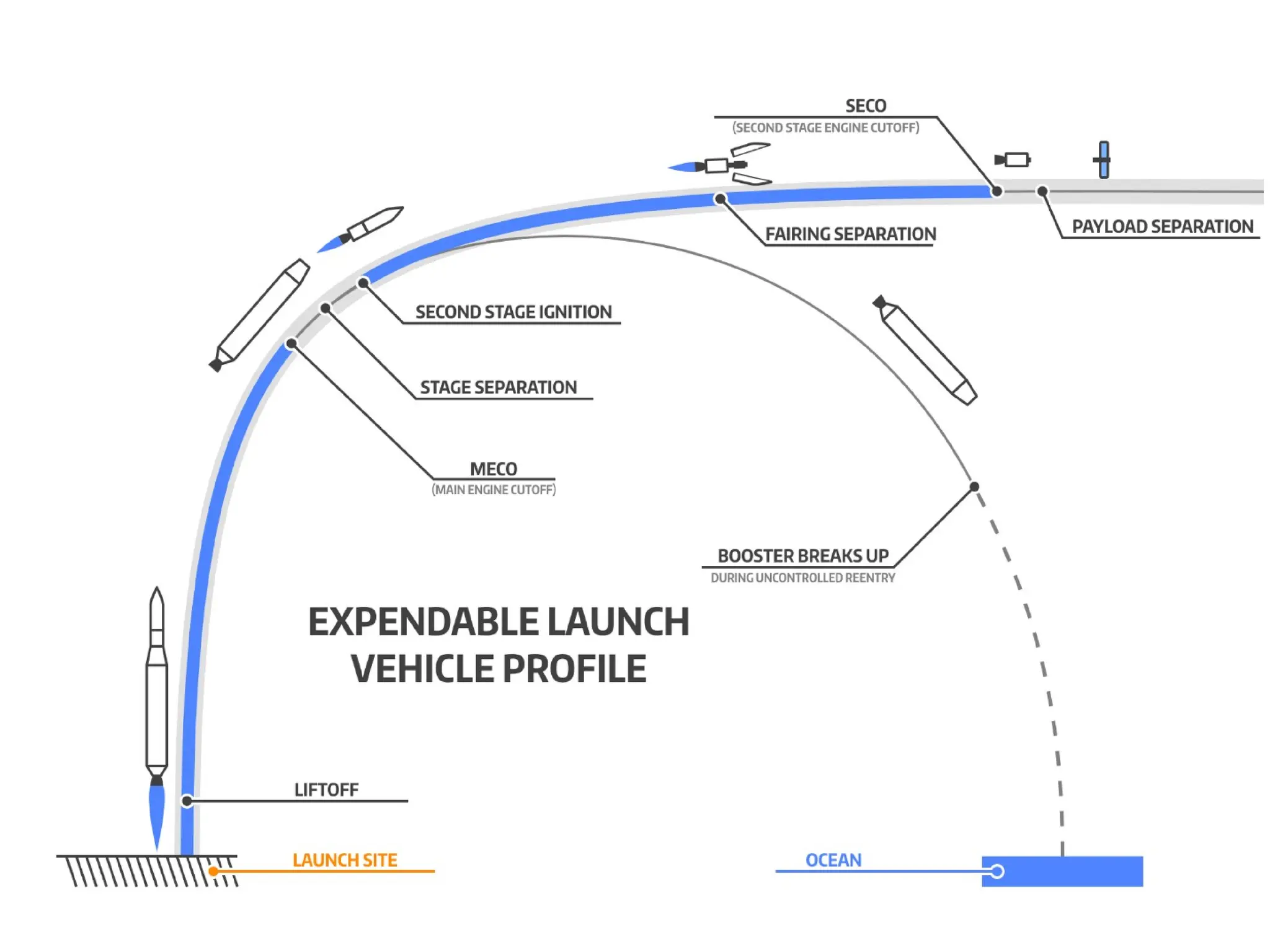
Expendable Launch Vehicle
An expendable launch system is uses to
carry a payload into space. The vehicles used in expendable
launch systems are designed to be used only once (i.e. they are
"expended" during a single flight), and their components are not
recovered for re-use after launch.
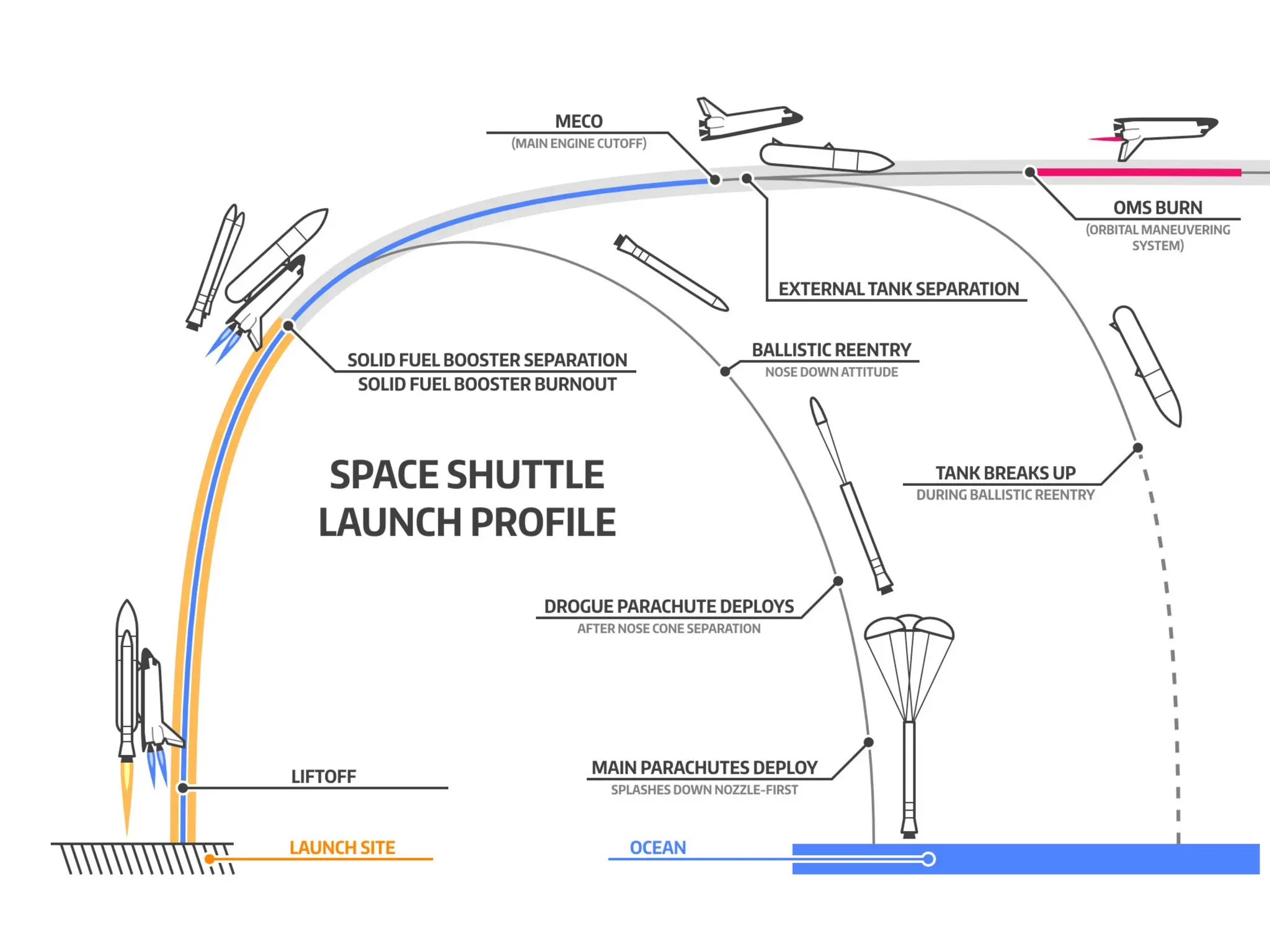
Reusable Launch Vehicle
A reusable launch system is capable of launching a payload
into space more than once. No completely reusable orbital launch
system .
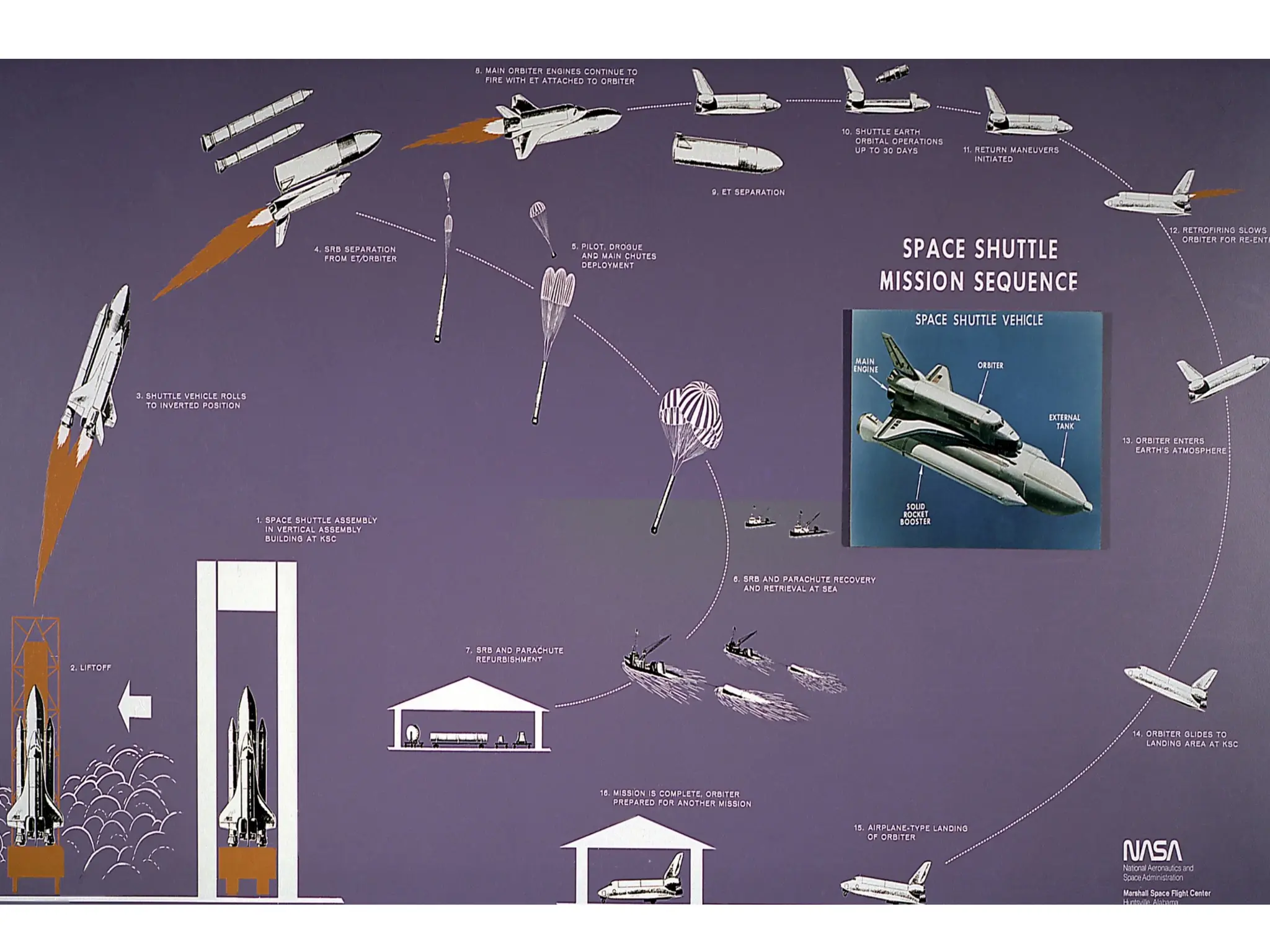
The Space Shuttle was partially reusable:
• Space Shuttle main engines
• two solid rocket boosters
were reused after several months of refitting work for each
launch. The external tank and launch vehicle load frame were
discarded after each flight
To launch satellite above 200 km direct injection by rocket is
not possible. In such cases ,the satellite is placed into transfer orbit
between destination orbit it is known as “Hohmann Transfer orbit”
Video -> https://www.youtube.com/watch?v=EDbWsBzfkiM
Hohmann transfer orbit is tangent at the perigee of LEO
and destination orbit. It carry
• Perigee kick motor
• Apogee kick motor
• Propulsion system
• Auto piloting
• System required for satellite
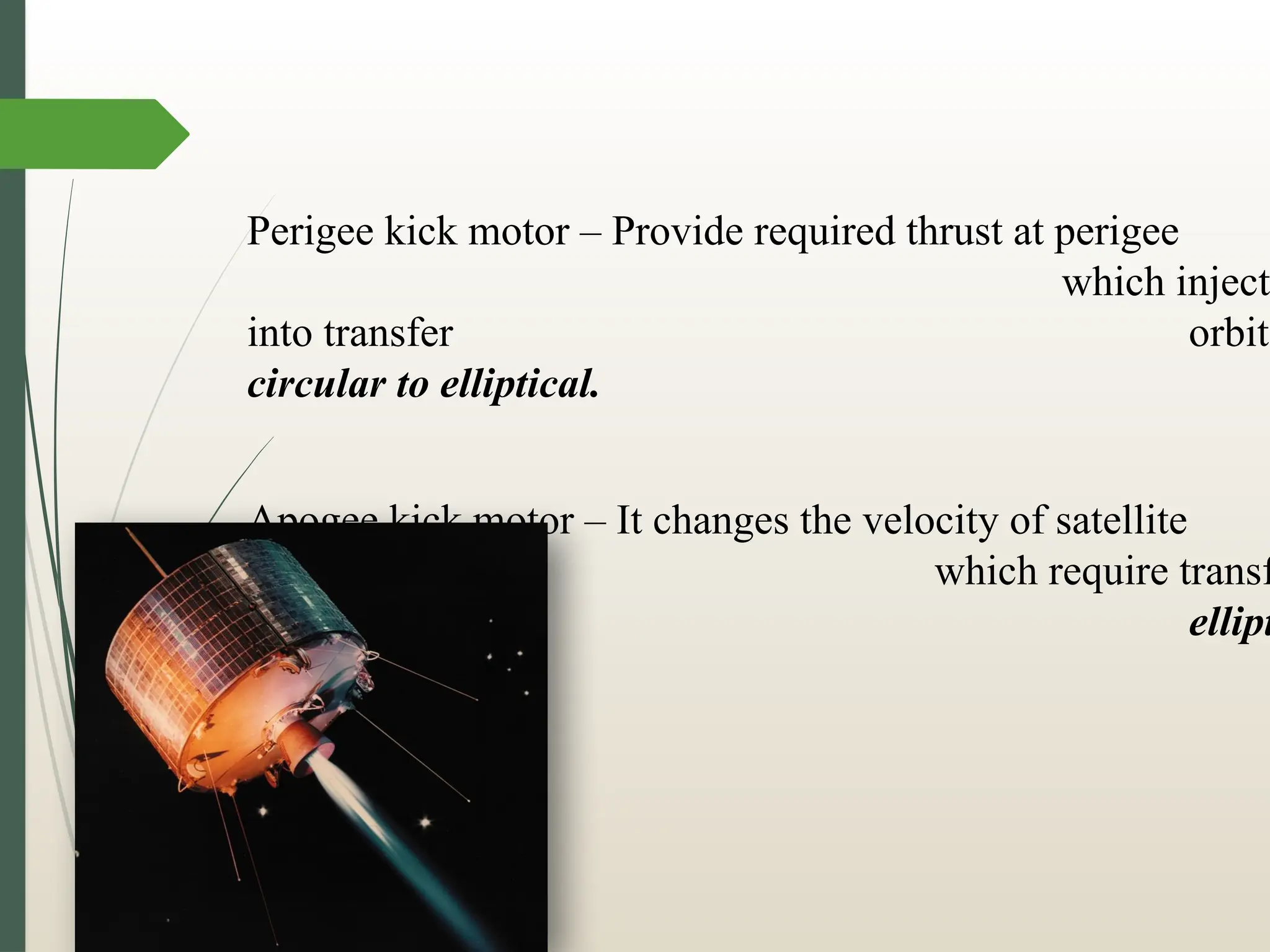
Perigee kick motor – Provide required thrust at perigee
which inject
into transfer orbit
circular to elliptical.
Apogee kick motor – It changes the velocity of satellite
which require transf
from ellipt
circular.
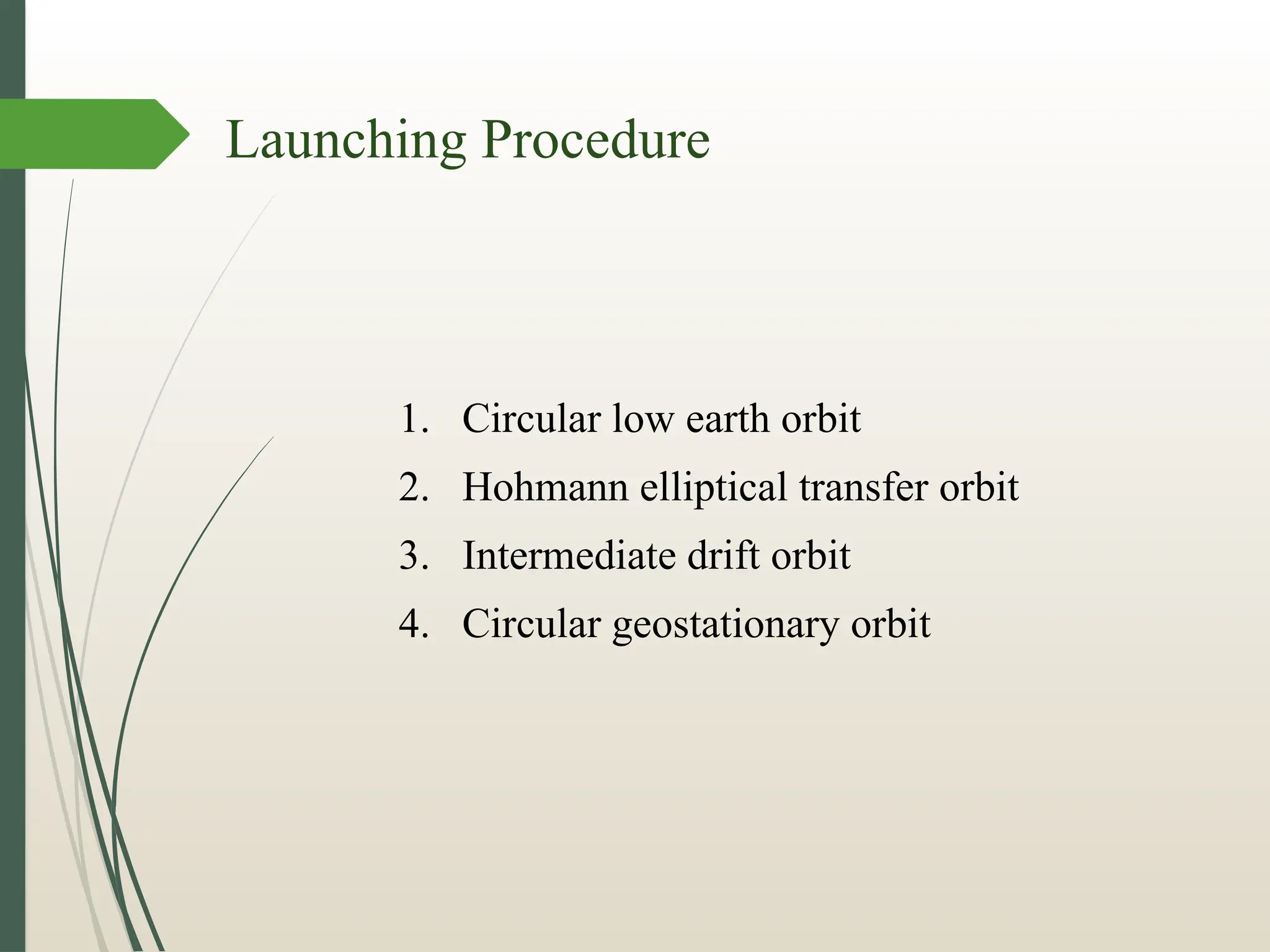
1. Circular low earth orbit
2. Hohmann elliptical transfer orbit
3. Intermediate drift orbit
4. Circular geostationary orbit
Launching Procedure
consider a satellite is made at the point A with an
altitude,
λ and Azimuth angle
From naiper rule,
cos i = cos λ sin Az
cos imin = cos λ
or
imin = λ
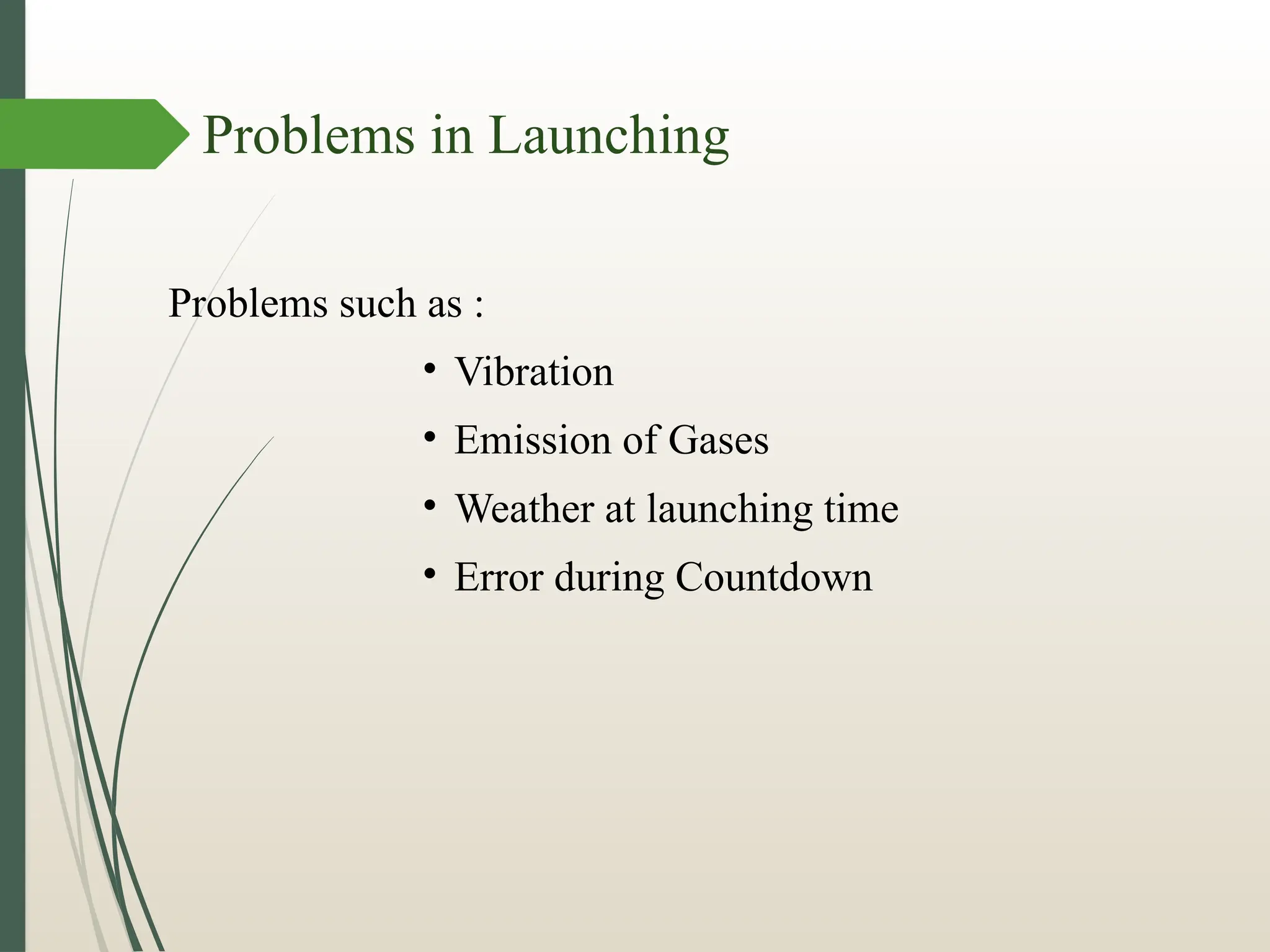
Problems in Launching
Problems such as :
• Vibration
• Emission of Gases
• Weather at launching time
• Error during Countdown
LAUNCHING VEHICLES
AND PROPULSION
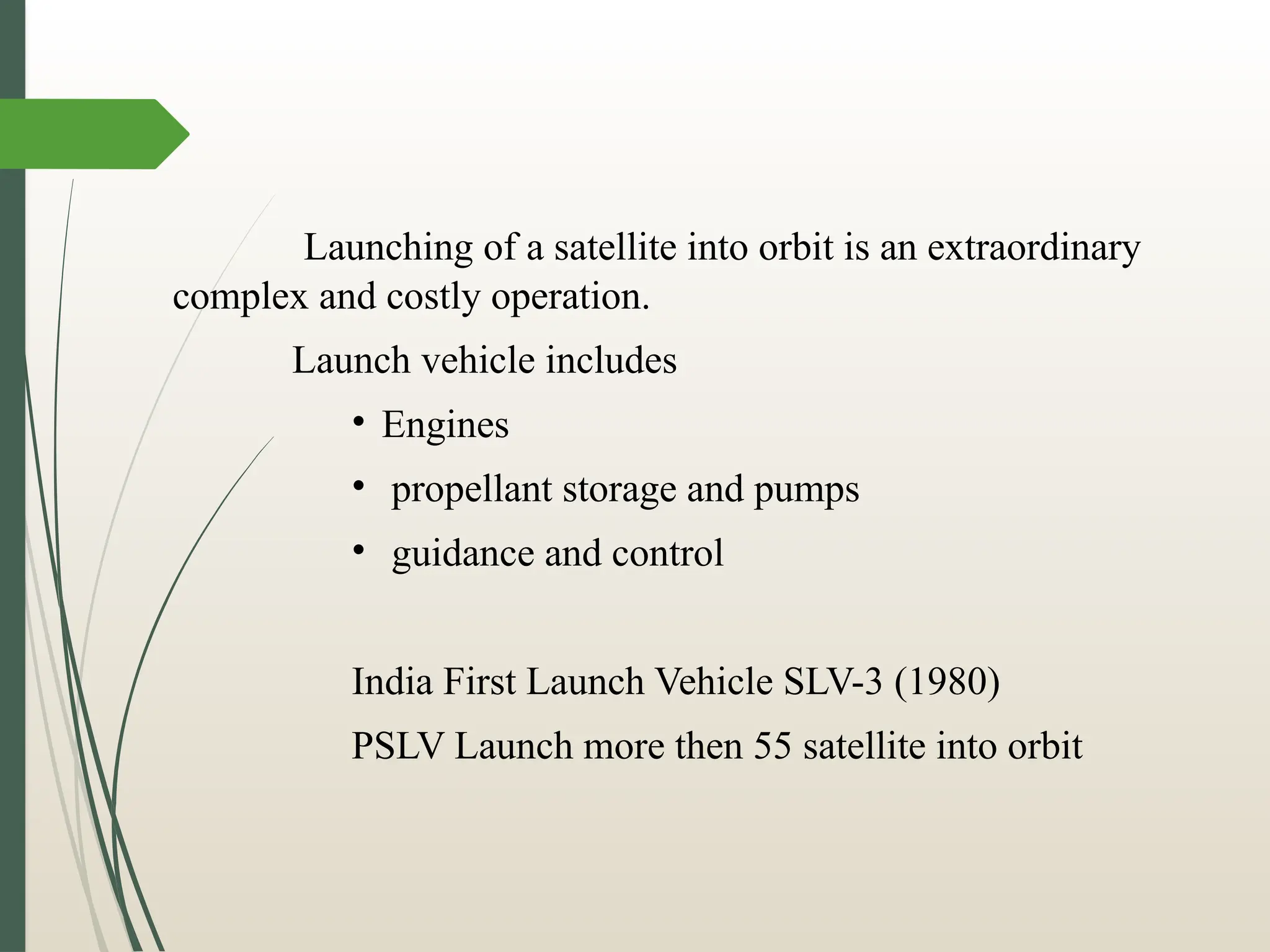
Launching of a satellite into orbit is an extraordinary
complex and costly operation.
Launch vehicle includes
• Engines
• propellant storage and pumps
• guidance and control
India First Launch Vehicle SLV-3 (1980)
PSLV Launch more then 55 satellite into orbit
SLV ASLV
Principle of rocket propulsion
Video -> https://www.youtube.com/watch?v=ebhOnf65N9Q
Space Shuttle Launch From Earth
Video -> https://www.youtube.com/watch?v=OnoNITE-CLc
Space Shuttle Return To Earth
Video -> https://www.youtube.com/watch?v=XCeukUsCodk
Life Cycle of Space Shuttle
Thank you

Launching Procedures LVP Propulsions sytems

  • 1.
  • 2.
    • Launching isdepends on the orbit of satellite to be launched. • Satellites are directly injected into Lower Earth Orbit(LEO) with the help of Launch Vehicles. • Shuttle flying into an orbit are inclined at 28.5 degree to the Equator of Earth Surface. • Rockets have capabilities to put satellite into orbit which are above 120 miles from earth surface Introduction
  • 3.
    Launch Vehicles areclassified as 1. Expendable Launch Vehicle - Delta & Ariane Rockets 2. Reusable Launch Vehicle - Space Shuttle or STS Types
  • 4.
    Expendable Launch Vehicle Anexpendable launch system is uses to carry a payload into space. The vehicles used in expendable launch systems are designed to be used only once (i.e. they are "expended" during a single flight), and their components are not recovered for re-use after launch.
  • 6.
    Reusable Launch Vehicle Areusable launch system is capable of launching a payload into space more than once. No completely reusable orbital launch system . The Space Shuttle was partially reusable: • Space Shuttle main engines • two solid rocket boosters were reused after several months of refitting work for each launch. The external tank and launch vehicle load frame were discarded after each flight
  • 8.
    To launch satelliteabove 200 km direct injection by rocket is not possible. In such cases ,the satellite is placed into transfer orbit between destination orbit it is known as “Hohmann Transfer orbit” Video -> https://www.youtube.com/watch?v=EDbWsBzfkiM
  • 9.
    Hohmann transfer orbitis tangent at the perigee of LEO and destination orbit. It carry • Perigee kick motor • Apogee kick motor • Propulsion system • Auto piloting • System required for satellite
  • 10.
    Perigee kick motor– Provide required thrust at perigee which inject into transfer orbit circular to elliptical. Apogee kick motor – It changes the velocity of satellite which require transf from ellipt circular.
  • 11.
    1. Circular lowearth orbit 2. Hohmann elliptical transfer orbit 3. Intermediate drift orbit 4. Circular geostationary orbit Launching Procedure
  • 12.
    consider a satelliteis made at the point A with an altitude, λ and Azimuth angle From naiper rule, cos i = cos λ sin Az cos imin = cos λ or imin = λ
  • 13.
    Problems in Launching Problemssuch as : • Vibration • Emission of Gases • Weather at launching time • Error during Countdown
  • 14.
  • 15.
    Launching of asatellite into orbit is an extraordinary complex and costly operation. Launch vehicle includes • Engines • propellant storage and pumps • guidance and control India First Launch Vehicle SLV-3 (1980) PSLV Launch more then 55 satellite into orbit
  • 16.
  • 17.
    Principle of rocketpropulsion Video -> https://www.youtube.com/watch?v=ebhOnf65N9Q
  • 20.
    Space Shuttle LaunchFrom Earth Video -> https://www.youtube.com/watch?v=OnoNITE-CLc Space Shuttle Return To Earth Video -> https://www.youtube.com/watch?v=XCeukUsCodk Life Cycle of Space Shuttle
  • 21.