ASIAN
CUISINE
 They are divided into 2 groups: Gulf countries and AL-SHAM
countries according to the similarity of foods kinds.

 In fact, All Arabic countries that are located in Asia share the same
types of foods

 Appetizers and salads are served usually in all meals

 Arabic unleavened bread, or Khubz          is eaten with almost all meals.

 Health Facts of Wheat Bread
 Main dishes that are made by bread mainly:

 (Arikah) and (marqoq) that are famous in KSA.

 lunch time mainly rice with chicken or lamb:

  (eg.Kabsah, Mandi, Hanith,mathbi and moftah) made mainly
by Gulf countries people.

Foods that are made mainly by Al-sham countries people

   (eg. kabab Halbi, shawrma, Vegetarian stuffed Grape
leaves and some sweets like Baqlawah)
CENTRAL ASIA

 Kazakhstan,Turkmenistan,Tajikistan,Uzbekistan,Kyrgyzstan
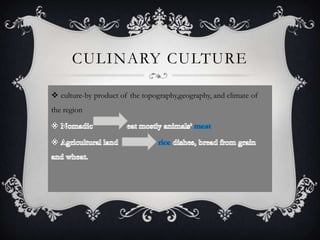
CULINARY CULTURE

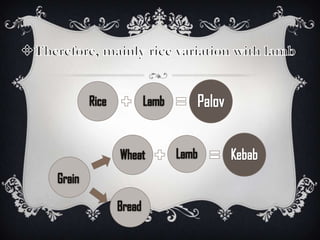
 culture-by product of the topography,geography, and climate of
the region
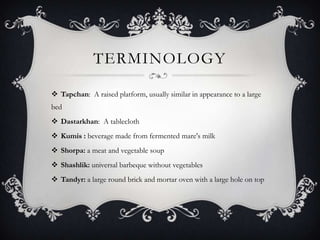
TERMINOLOGY

 Tapchan: A raised platform, usually similar in appearance to a large
bed
 Dastarkhan: A tablecloth
 Kumis : beverage made from fermented mare's milk
 Shorpa: a meat and vegetable soup
 Shashlik: universal barbeque without vegetables
 Tandyr: a large round brick and mortar oven with a large hole on top
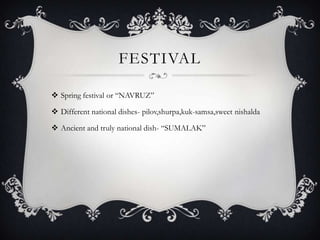
FESTIVAL

 Spring festival or “NAVRUZ”

 Different national dishes- pilov,shurpa,kuk-samsa,sweet nishalda

 Ancient and truly national dish- “SUMALAK”
EAST ASIAN CUISINE

 Country involved:

         China, Mongolia, Japan, Macau, South and

         North Korea, Hong Kong, Taiwan


 Focused on : Korea and Japan
1) JAPAN :

 Onigiri – Has many fillings :

=> umeboshi,takana,shiokara,salt,yakiniku etc.

 Sushi - Health Facts

          1-Mercury poisoning

          2-Risk infection of parasites

*So,it must be frozen at temperatures

 below −20 °C not less than 24 hours

*Types of sushi: nigiri,temaki,gunkan,

                         norimaki,oshi,inari
2) KOREA

 Bulgogi

-Consists of grilled marinated beef

-Cooks on its own juices (no fatty oils are used)

-also known as Neobiani (thinly spread meat)

 Kimchi

-Korea's national dish

-Traditional fermented Korean dish

-Top five "World's Healthiest Foods

-Main ingredient for many Korean dishes
SOUTH ASIAN CUISINE

 Also known as Desi cuisine.

 Influenced by Hindus and Islamic cultures, also by the tradition of
the neighboring countries such as Middle East countries and Central
Asia countries.
SOUTH ASIA CONSISTS OF 7
      COUNTRIES
   - India
   - Bangladesh
   - Pakistan
   - Nepal
   - Bhutan
   - Sri Lanka
   - Maldives Island
SPECIAL SNACKS & DRINKS

 India
          Rasgulla : made up of cheese & dough that soaked into sugar
syrup.
          Lassi : a healthy drink from yogurt, milk, water and some
spices
 Bangladesh
          Mishti Doi : yogurt with charred sugar
 Sri Lanka

          Konda Kavum : traditional rice flour made up of rice flour, coconut
and honey

          Passion fruit juice : a remarkable drink in Sri Lanka as the country is
one of the biggest exporter of this fruit

          Faluda : in English it is called as float and made up of fruit juice added
with jellies, cut fruits and also a scoop of ice cream on top of it.
 Pakistan

           Peshawari ice cream : Home made pistachio-flavored ice cream
that is a must for the tourists to try it.

           Chai :
           - Sabz chai or green tea

           - Kahwah is often served after every meals in some part of

           Pakistan

           - Kashmiri chai is a must in occasions and weddings
 Maldives Island

          Ban’bukeylu Bon’dibaiy : a thick and delicious pudding made up of
breadfruit, sugar, coconut cream and coconut milk with grated coconut on top.

 Bhutan

          Momos : a type of dumpling, that is originally a traditional delicacy of
Tibet, Bhutan and Nepal but evolved and became a very famous snack among
Bhutanese.

          Suja : Butter tea, a tea added with some butter and salt.
 Nepal

          Peda : made up of sugar and thickened milk added with cardamom,

          pistachio and also saffron.

          Tongba & Rakshi :

          -Millet based alcoholic drinks

          -With antiseptic qualities

          -Tongba : favourite drink during winter season

          -Rakshi : an important requirement during religious rituals and social

          events
DOMESTIC FOOD
               (MALAYSIAN)

 Names are not very familiar among some Malaysians, although eaten in
some parts of the country (eg. Umai in Sabah & Sarawak).
 Modified into different dishes to customize the Malaysian culture (eg.
Putu mayam  Putu piring).
 Derived from other influences as well (eg. Devil‟s curry)
 Signifies the uniqueness of Malaysian cuisine through the
incorporation of Malay, Chinese, Indian as well as Arabian cultures
together in a dish.
REGIONAL FOOD (OTHER
     SEA COUNTRIES)

 Unknown to some despite being recognized among the best dishes
internationally (eg. Kaeng Matsaman).
 Their names are quite attractive since it shares the pronunciation with
some Malay words [eg. „Lok Lak‟ (Cambodian dish) with „loqlaq‟
(unawareness in Malay)].
 Share similarities with Malaysian cuisine [eg. Lumpiang sariwa
(Philippines) with Popia (Malaysia), and Mohinga (Myanmar) with Laksa
(Malaysia)].

Asian cuisine

  • 1.
  • 2.
     They aredivided into 2 groups: Gulf countries and AL-SHAM countries according to the similarity of foods kinds.  In fact, All Arabic countries that are located in Asia share the same types of foods  Appetizers and salads are served usually in all meals  Arabic unleavened bread, or Khubz is eaten with almost all meals.  Health Facts of Wheat Bread
  • 3.
     Main dishesthat are made by bread mainly: (Arikah) and (marqoq) that are famous in KSA.  lunch time mainly rice with chicken or lamb: (eg.Kabsah, Mandi, Hanith,mathbi and moftah) made mainly by Gulf countries people. Foods that are made mainly by Al-sham countries people (eg. kabab Halbi, shawrma, Vegetarian stuffed Grape leaves and some sweets like Baqlawah)
  • 4.
  • 5.
    CULINARY CULTURE  culture-byproduct of the topography,geography, and climate of the region
  • 7.
    TERMINOLOGY  Tapchan: Araised platform, usually similar in appearance to a large bed  Dastarkhan: A tablecloth  Kumis : beverage made from fermented mare's milk  Shorpa: a meat and vegetable soup  Shashlik: universal barbeque without vegetables  Tandyr: a large round brick and mortar oven with a large hole on top
  • 8.
    FESTIVAL  Spring festivalor “NAVRUZ”  Different national dishes- pilov,shurpa,kuk-samsa,sweet nishalda  Ancient and truly national dish- “SUMALAK”
  • 9.
    EAST ASIAN CUISINE Country involved: China, Mongolia, Japan, Macau, South and North Korea, Hong Kong, Taiwan  Focused on : Korea and Japan
  • 10.
    1) JAPAN : Onigiri – Has many fillings : => umeboshi,takana,shiokara,salt,yakiniku etc.  Sushi - Health Facts 1-Mercury poisoning 2-Risk infection of parasites *So,it must be frozen at temperatures below −20 °C not less than 24 hours *Types of sushi: nigiri,temaki,gunkan, norimaki,oshi,inari
  • 11.
    2) KOREA  Bulgogi -Consistsof grilled marinated beef -Cooks on its own juices (no fatty oils are used) -also known as Neobiani (thinly spread meat)  Kimchi -Korea's national dish -Traditional fermented Korean dish -Top five "World's Healthiest Foods -Main ingredient for many Korean dishes
  • 12.
    SOUTH ASIAN CUISINE Also known as Desi cuisine.  Influenced by Hindus and Islamic cultures, also by the tradition of the neighboring countries such as Middle East countries and Central Asia countries.
  • 13.
    SOUTH ASIA CONSISTSOF 7 COUNTRIES - India - Bangladesh - Pakistan - Nepal - Bhutan - Sri Lanka - Maldives Island
  • 14.
    SPECIAL SNACKS &DRINKS  India Rasgulla : made up of cheese & dough that soaked into sugar syrup. Lassi : a healthy drink from yogurt, milk, water and some spices  Bangladesh Mishti Doi : yogurt with charred sugar
  • 15.
     Sri Lanka Konda Kavum : traditional rice flour made up of rice flour, coconut and honey Passion fruit juice : a remarkable drink in Sri Lanka as the country is one of the biggest exporter of this fruit Faluda : in English it is called as float and made up of fruit juice added with jellies, cut fruits and also a scoop of ice cream on top of it.
  • 16.
     Pakistan Peshawari ice cream : Home made pistachio-flavored ice cream that is a must for the tourists to try it. Chai : - Sabz chai or green tea - Kahwah is often served after every meals in some part of Pakistan - Kashmiri chai is a must in occasions and weddings
  • 17.
     Maldives Island Ban’bukeylu Bon’dibaiy : a thick and delicious pudding made up of breadfruit, sugar, coconut cream and coconut milk with grated coconut on top.  Bhutan Momos : a type of dumpling, that is originally a traditional delicacy of Tibet, Bhutan and Nepal but evolved and became a very famous snack among Bhutanese. Suja : Butter tea, a tea added with some butter and salt.
  • 18.
     Nepal Peda : made up of sugar and thickened milk added with cardamom, pistachio and also saffron. Tongba & Rakshi : -Millet based alcoholic drinks -With antiseptic qualities -Tongba : favourite drink during winter season -Rakshi : an important requirement during religious rituals and social events
  • 19.
    DOMESTIC FOOD (MALAYSIAN)  Names are not very familiar among some Malaysians, although eaten in some parts of the country (eg. Umai in Sabah & Sarawak).  Modified into different dishes to customize the Malaysian culture (eg. Putu mayam  Putu piring).  Derived from other influences as well (eg. Devil‟s curry)  Signifies the uniqueness of Malaysian cuisine through the incorporation of Malay, Chinese, Indian as well as Arabian cultures together in a dish.
  • 20.
    REGIONAL FOOD (OTHER SEA COUNTRIES)  Unknown to some despite being recognized among the best dishes internationally (eg. Kaeng Matsaman).  Their names are quite attractive since it shares the pronunciation with some Malay words [eg. „Lok Lak‟ (Cambodian dish) with „loqlaq‟ (unawareness in Malay)].  Share similarities with Malaysian cuisine [eg. Lumpiang sariwa (Philippines) with Popia (Malaysia), and Mohinga (Myanmar) with Laksa (Malaysia)].