


A case for academic language  or   why  sheltered instruction  is not enough Presentation by  Ruslana Westerlund
 
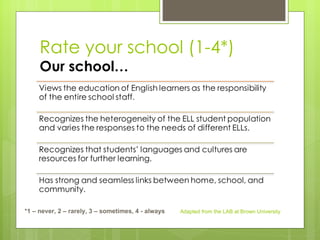
Rate your school (1-4*)  Our school… Adapted from the LAB at Brown University  *1 – never, 2 – rarely, 3 – sometimes, 4 - always
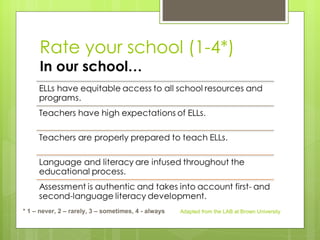
Rate your school (1-4*)  In our school… * 1 – never, 2 – rarely, 3 – sometimes, 4 - always Adapted from the LAB at Brown University
why all the fuss about academic language?
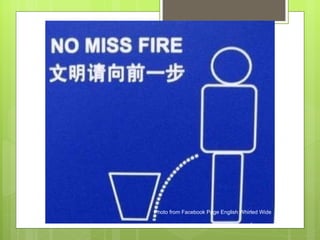
Photo from Facebook Page English Whirled Wide
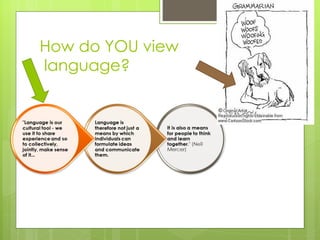
How do YOU view  language?
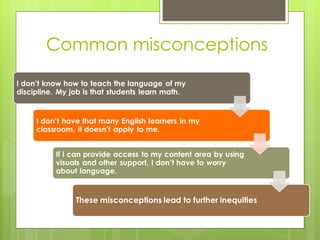
Common misconceptions
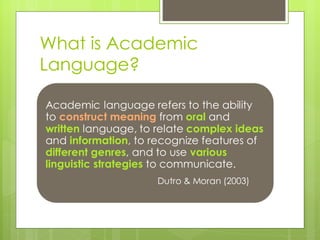
What is Academic Language?
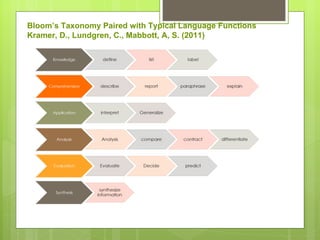
Bloom’s Taxonomy Paired with Typical Language Functions Kramer, D., Lundgren, C., Mabbott, A, S. (2011)
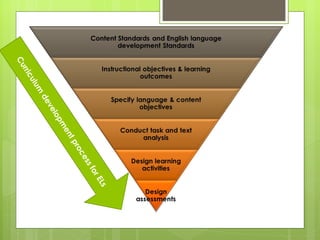
Curriculum development process for ELs
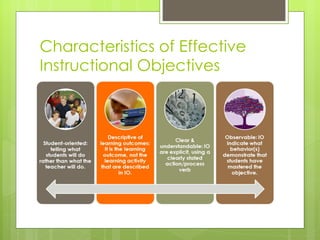
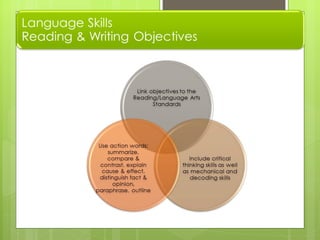
Characteristics of Effective Instructional Objectives
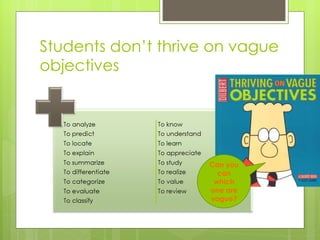
Students don’t thrive on vague objectives Can you can which one are vague?
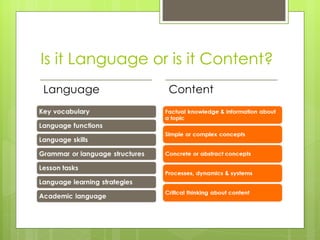
Is it Language or is it Content?
 
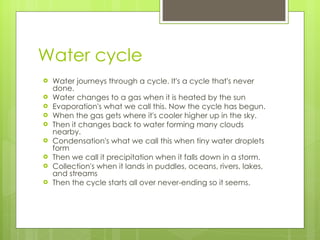
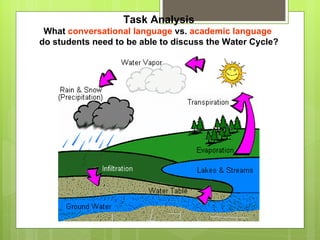
Water cycle Water journeys through a cycle. It's a cycle that's never done. Water changes to a gas when it is heated by the sun Evaporation's what we call this. Now the cycle has begun. When the gas gets where it's cooler higher up in the sky. Then it changes back to water forming many clouds nearby. Condensation's what we call this when tiny water droplets form  Then we call it precipitation when it falls down in a storm. Collection's when it lands in puddles, oceans, rivers, lakes, and streams Then the cycle starts all over never-ending so it seems.
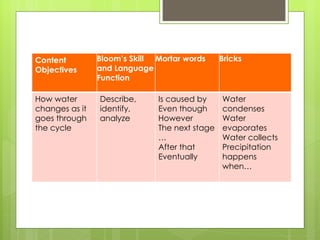
Content Objectives  Bloom’s Skill and Language Function Mortar words Bricks How water changes as it goes through the cycle Describe, identify, analyze Is caused by Even though However The next stage … After that Eventually Water condenses Water evaporates Water collects Precipitation happens when…
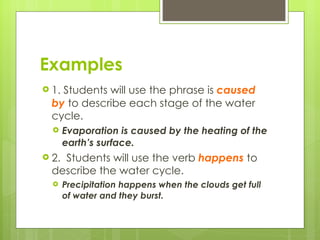
Examples 1. Students will use the phrase is  caused by  to describe each stage of the water cycle.  Evaporation is caused by the heating of the earth’s surface. 2.  Students will use the verb  happens  to describe the water cycle. Precipitation happens when the clouds get full of water and they burst.
Task Analysis What  conversational language  vs.  academic language   do students need to be able to discuss the Water Cycle?


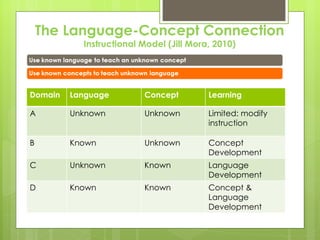
The Language-Concept Connection Instructional Model (Jill Mora, 2010) Domain Language Concept Learning A Unknown Unknown Limited: modify instruction B Known Unknown Concept Development C Unknown Known Language Development D Known Known Concept & Language Development
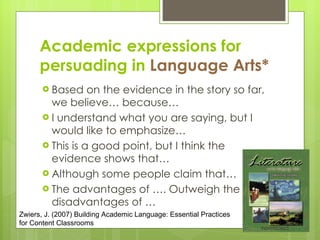
Academic expressions for persuading in  Language Arts* Based on the evidence in the story so far, we believe… because…  I understand what you are saying, but I would like to emphasize… This is a good point, but I think the evidence shows that… Although some people claim that…  The advantages of …. Outweigh the disadvantages of …  Zwiers, J. (2007) Building Academic Language: Essential Practices for Content Classrooms
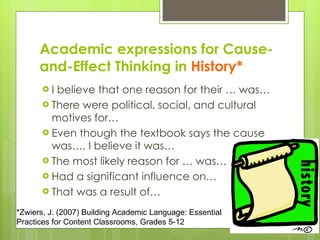
Academic expressions for Cause-and-Effect Thinking in  History* I believe that one reason for their … was… There were political, social, and cultural motives for… Even though the textbook says the cause was…, I believe it was… The most likely reason for … was… Had a significant influence on… That was a result of…  *Zwiers, J. (2007) Building Academic Language: Essential Practices for Content Classrooms, Grades 5-12
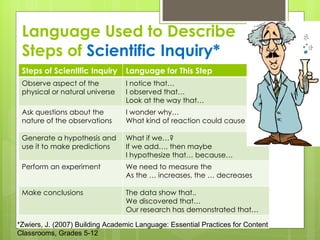
Language Used to Describe Steps of  Scientific Inquiry* *Zwiers, J. (2007) Building Academic Language: Essential Practices for Content Classrooms, Grades 5-12 Steps of Scientific Inquiry Language for This Step Observe aspect of the physical or natural universe I notice that… I observed that… Look at the way that… Ask questions about the nature of the observations I wonder why…  What kind of reaction could cause that? Generate a hypothesis and use it to make predictions  What if we…? If we add…, then maybe I hypothesize that… because… Perform an experiment We need to measure the As the … increases, the … decreases Make conclusions  The data show that..  We discovered that…  Our research has demonstrated that…
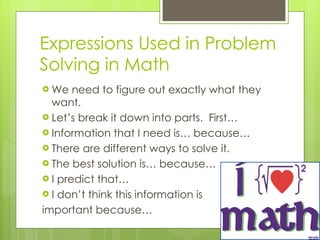
Expressions Used in Problem Solving in Math We need to figure out exactly what they want. Let’s break it down into parts.  First… Information that I need is… because… There are different ways to solve it. The best solution is… because…  I predict that… I don’t think this information is  important because…
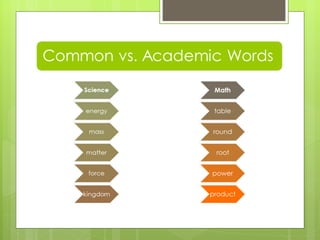
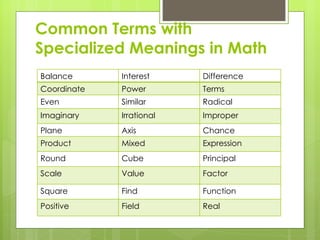
Common Terms with Specialized Meanings in Math Balance Interest Difference Coordinate Power Terms Even  Similar Radical Imaginary Irrational Improper Plane Axis Chance Product Mixed Expression Round Cube Principal Scale Value Factor Square Find Function Positive Field Real
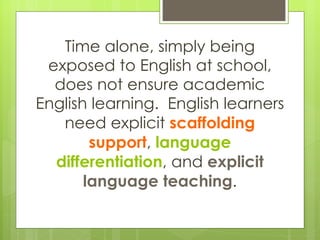
Time alone, simply being exposed to English at school, does not ensure academic English learning.  English learners need explicit  scaffolding support ,  language differentiation , and  explicit language teaching .
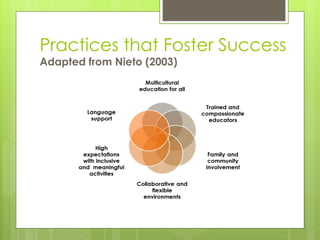
Practices that Foster Success Adapted from Nieto (2003)
References Cooper, J.M. (Ed.) (1994).Classroom Teaching Skills, 5 th  Edition. Lexington, MA: D.C. Heath & Co.  Echevarr ía, J., Vogt, M.  &  Short, D.J. (2010).  Making content comprehensible for secondary English learners: The SIOP model.  Boston, MA: Allyn & Bacon. Zwiers, J. (2007)  Building academic language.  Jossey-Bass

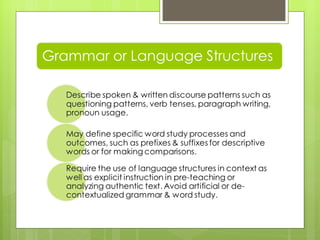
Language content objectives

  • 1.
    A case foracademic language or why sheltered instruction is not enough Presentation by Ruslana Westerlund
  • 2.
  • 3.
    Rate your school(1-4*) Our school… Adapted from the LAB at Brown University *1 – never, 2 – rarely, 3 – sometimes, 4 - always
  • 4.
    Rate your school(1-4*) In our school… * 1 – never, 2 – rarely, 3 – sometimes, 4 - always Adapted from the LAB at Brown University
  • 5.
    why all thefuss about academic language?
  • 6.
    Photo from FacebookPage English Whirled Wide
  • 7.
    How do YOUview language?
  • 8.
  • 9.
  • 10.
    Bloom’s Taxonomy Pairedwith Typical Language Functions Kramer, D., Lundgren, C., Mabbott, A, S. (2011)
  • 11.
  • 12.
    Characteristics of EffectiveInstructional Objectives
  • 13.
    Students don’t thriveon vague objectives Can you can which one are vague?
  • 14.
    Is it Languageor is it Content?
  • 15.
  • 16.
    Water cycle Waterjourneys through a cycle. It's a cycle that's never done. Water changes to a gas when it is heated by the sun Evaporation's what we call this. Now the cycle has begun. When the gas gets where it's cooler higher up in the sky. Then it changes back to water forming many clouds nearby. Condensation's what we call this when tiny water droplets form Then we call it precipitation when it falls down in a storm. Collection's when it lands in puddles, oceans, rivers, lakes, and streams Then the cycle starts all over never-ending so it seems.
  • 17.
    Content Objectives Bloom’s Skill and Language Function Mortar words Bricks How water changes as it goes through the cycle Describe, identify, analyze Is caused by Even though However The next stage … After that Eventually Water condenses Water evaporates Water collects Precipitation happens when…
  • 18.
    Examples 1. Studentswill use the phrase is caused by to describe each stage of the water cycle. Evaporation is caused by the heating of the earth’s surface. 2. Students will use the verb happens to describe the water cycle. Precipitation happens when the clouds get full of water and they burst.
  • 19.
    Task Analysis What conversational language vs. academic language do students need to be able to discuss the Water Cycle?
  • 20.
  • 21.
  • 22.
  • 23.
  • 24.
  • 25.
    The Language-Concept ConnectionInstructional Model (Jill Mora, 2010) Domain Language Concept Learning A Unknown Unknown Limited: modify instruction B Known Unknown Concept Development C Unknown Known Language Development D Known Known Concept & Language Development
  • 26.
    Academic expressions forpersuading in Language Arts* Based on the evidence in the story so far, we believe… because… I understand what you are saying, but I would like to emphasize… This is a good point, but I think the evidence shows that… Although some people claim that… The advantages of …. Outweigh the disadvantages of … Zwiers, J. (2007) Building Academic Language: Essential Practices for Content Classrooms
  • 27.
    Academic expressions forCause-and-Effect Thinking in History* I believe that one reason for their … was… There were political, social, and cultural motives for… Even though the textbook says the cause was…, I believe it was… The most likely reason for … was… Had a significant influence on… That was a result of… *Zwiers, J. (2007) Building Academic Language: Essential Practices for Content Classrooms, Grades 5-12
  • 28.
    Language Used toDescribe Steps of Scientific Inquiry* *Zwiers, J. (2007) Building Academic Language: Essential Practices for Content Classrooms, Grades 5-12 Steps of Scientific Inquiry Language for This Step Observe aspect of the physical or natural universe I notice that… I observed that… Look at the way that… Ask questions about the nature of the observations I wonder why… What kind of reaction could cause that? Generate a hypothesis and use it to make predictions What if we…? If we add…, then maybe I hypothesize that… because… Perform an experiment We need to measure the As the … increases, the … decreases Make conclusions The data show that.. We discovered that… Our research has demonstrated that…
  • 29.
    Expressions Used inProblem Solving in Math We need to figure out exactly what they want. Let’s break it down into parts. First… Information that I need is… because… There are different ways to solve it. The best solution is… because… I predict that… I don’t think this information is important because…
  • 30.
    Common Terms withSpecialized Meanings in Math Balance Interest Difference Coordinate Power Terms Even Similar Radical Imaginary Irrational Improper Plane Axis Chance Product Mixed Expression Round Cube Principal Scale Value Factor Square Find Function Positive Field Real
  • 31.
    Time alone, simplybeing exposed to English at school, does not ensure academic English learning. English learners need explicit scaffolding support , language differentiation , and explicit language teaching .
  • 32.
    Practices that FosterSuccess Adapted from Nieto (2003)
  • 33.
    References Cooper, J.M.(Ed.) (1994).Classroom Teaching Skills, 5 th Edition. Lexington, MA: D.C. Heath & Co. Echevarr ía, J., Vogt, M. & Short, D.J. (2010). Making content comprehensible for secondary English learners: The SIOP model. Boston, MA: Allyn & Bacon. Zwiers, J. (2007) Building academic language. Jossey-Bass

Editor's Notes

  • #4 These are some indicators of culturally responsive pedagogy for English learners.
  • #5 Reflect on these statements and think of where you school is now.
  • #7 Good Language can be very critical…
  • #11 It’s helpful to start with something we already know. Raise your hand if you know Bloom’s taxonomy. Just kidding, I forgot we are not in an AdobeConnect virtual webinar. You can’t do that in a static powerpoint. Never mind… If you don’t know Bloom’s taxonomy, you can google it… RELATING LANGUAGE OBJECTIVES TO BLOOM’S TAXONOMY: HOW TO TALK TO YOUR MAINSTREAM COLLEAGUES ABOUT LANGUAGE OBJECTIVES, MinneWITESOL
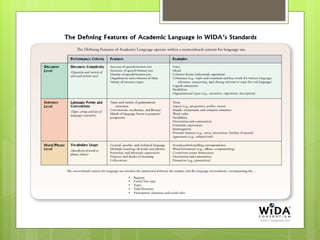
  • #16 Look at the Defining Features of Academic Language and think about how it applies at your grade level. If this hyperlink doesn’t work, try http://wida.us/standards/elp.aspx
  • #17 Look at this poem. What do English learners need to know to describe the water cycle? Yes, it’s easy at first. Students need to know these big words such as evaporation, condensation, precipitation, water collection, etc. What else do they need to know to form this discourse? Let’s look at Mortar words and Brick words on the next slide.
  • #20 Conversational language is different from academic language. Conversational language: The water goes into the river, and then it comes back into the clouds. Academic language: The heat causes the water to evaporate. Water vapor is collected in the clouds and comes down in the form of precipitation.