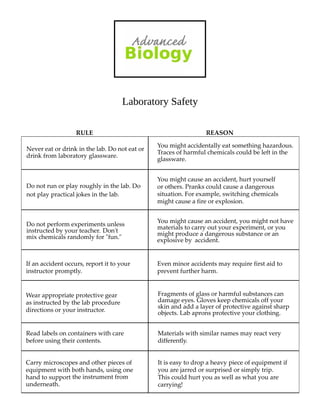
Laboratory Safety 
RULE REASON 
Never eat or drink in the lab. Do not eat or 
drink from laboratory glassware. 
You might accidentally eat something hazardous. 
Traces of harmful chemicals could be left in the 
glassware. 
Do not run or play roughly in the lab. Do 
not play practical jokes in the lab. 
You might cause an accident, hurt yourself 
or others. Pranks could cause a dangerous 
situation. For example, switching chemicals 
might cause a fire or explosion. 
Do not perform experiments unless 
instructed by your teacher. Don't 
mix chemicals randomly for "fun." 
You might cause an accident, you might not have 
materials to carry out your experiment, or you 
might produce a dangerous substance or an 
explosive by accident. 
If an accident occurs, report it to your 
instructor promptly. 
Even minor accidents may require first aid to 
prevent further harm. 
Wear appropriate protective gear 
as instructed by the lab procedure 
directions or your instructor. 
Fragments of glass or harmful substances can 
damage eyes. Gloves keep chemicals off your 
skin and add a layer of protective against sharp 
objects. Lab aprons protective your clothing. 
Read labels on containers with care 
before using their contents. 
Materials with similar names may react very 
differently. 
Carry microscopes and other pieces of 
equipment with both hands, using one 
hand to support the instrument from 
underneath. 
It is easy to drop a heavy piece of equipment if 
you are jarred or surprised or simply trip. 
This could hurt you as well as what you are 
carrying!
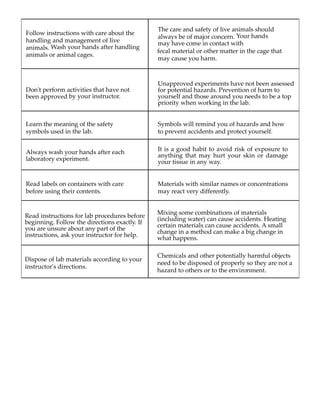
Follow instructions with care about the 
handling and management of live 
animals. Wash your hands after handling 
animals or animal cages. 
The care and safety of live animals should 
always be of major concern. Your hands 
may have come in contact with 
fecal material or other matter in the cage that 
may cause you harm. 
Don't perform activities that have not 
been approved by your instructor. 
Unapproved experiments have not been assessed 
for potential hazards. Prevention of harm to 
yourself and those around you needs to be a top 
priority when working in the lab. 
Learn the meaning of the safety 
symbols used in the lab. 
Symbols will remind you of hazards and how 
to prevent accidents and protect yourself. 
Always wash your hands after each 
laboratory experiment. 
It is a good habit to avoid risk of exposure to 
anything that may hurt your skin or damage 
your tissue in any way. 
Read labels on containers with care 
before using their contents. 
Materials with similar names or concentrations 
may react very differently. 
Read instructions for lab procedures before 
beginning. Follow the directions exactly. If 
you are unsure about any part of the 
instructions, ask your instructor for help. 
Mixing some combinations of materials 
(including water) can cause accidents. Heating 
certain materials can cause accidents. A small 
change in a method can make a big change in 
what happens. 
Dispose of lab materials according to your 
instructor's directions. 
Chemicals and other potentially harmful objects 
need to be disposed of properly so they are not a 
hazard to others or to the environment.
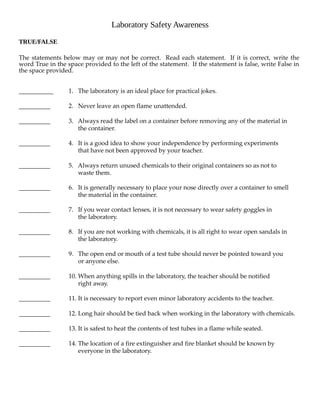
Laboratory Safety Awareness 
TRUE/FALSE 
The statements below may or may not be correct. Read each statement. If it is correct, write the 
word True in the space provided to the left of the statement. If the statement is false, write False in 
the space provided. 
1. The laboratory is an ideal place for practical jokes. 
2. Never leave an open flame unattended. 
3. Always read the label on a container before removing any of the material in 
the container. 
4. It is a good idea to show your independence by performing experiments 
that have not been approved by your teacher. 
5. Always return unused chemicals to their original containers so as not to 
waste them. 
6. It is generally necessary to place your nose directly over a container to smell 
the material in the container. 
7. If you wear contact lenses, it is not necessary to wear safety goggles in 
the laboratory. 
8. If you are not working with chemicals, it is all right to wear open sandals in 
the laboratory. 
9. The open end or mouth of a test tube should never be pointed toward you 
or anyone else. 
10. When anything spills in the laboratory, the teacher should be notified 
right away. 
11. It is necessary to report even minor laboratory accidents to the teacher. 
12. Long hair should be tied back when working in the laboratory with chemicals. 
13. It is safest to heat the contents of test tubes in a flame while seated. 
14. The location of a fire extinguisher and fire blanket should be known by 
everyone in the laboratory.
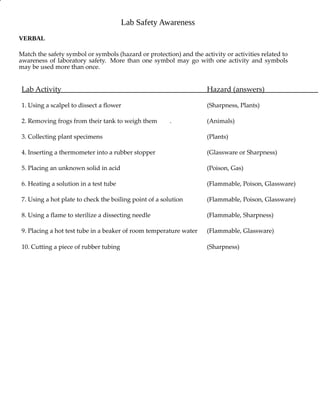
Lab Safety Awareness 
VERBAL 
Match the safety symbol or symbols (hazard or protection) and the activity or activities related to 
awareness of laboratory safety. More than one symbol may go with one activity and symbols 
may be used more than once. 
Lab Activity Hazard (answers) 
1. Using a scalpel to dissect a flower (Sharpness, Plants) 
2. Removing frogs from their tank to weigh them . (Animals) 
3. Collecting plant specimens (Plants) 
4. Inserting a thermometer into a rubber stopper (Glassware or Sharpness) 
5. Placing an unknown solid in acid (Poison, Gas) 
6. Heating a solution in a test tube (Flammable, Poison, Glassware) 
7. Using a hot plate to check the boiling point of a solution (Flammable, Poison, Glassware) 
8. Using a flame to sterilize a dissecting needle (Flammable, Sharpness) 
9. Placing a hot test tube in a beaker of room temperature water (Flammable, Glassware) 
10. Cutting a piece of rubber tubing (Sharpness)

Lab 0-A Handout - Lab Safety

  • 1.
    Laboratory Safety RULEREASON Never eat or drink in the lab. Do not eat or drink from laboratory glassware. You might accidentally eat something hazardous. Traces of harmful chemicals could be left in the glassware. Do not run or play roughly in the lab. Do not play practical jokes in the lab. You might cause an accident, hurt yourself or others. Pranks could cause a dangerous situation. For example, switching chemicals might cause a fire or explosion. Do not perform experiments unless instructed by your teacher. Don't mix chemicals randomly for "fun." You might cause an accident, you might not have materials to carry out your experiment, or you might produce a dangerous substance or an explosive by accident. If an accident occurs, report it to your instructor promptly. Even minor accidents may require first aid to prevent further harm. Wear appropriate protective gear as instructed by the lab procedure directions or your instructor. Fragments of glass or harmful substances can damage eyes. Gloves keep chemicals off your skin and add a layer of protective against sharp objects. Lab aprons protective your clothing. Read labels on containers with care before using their contents. Materials with similar names may react very differently. Carry microscopes and other pieces of equipment with both hands, using one hand to support the instrument from underneath. It is easy to drop a heavy piece of equipment if you are jarred or surprised or simply trip. This could hurt you as well as what you are carrying!
  • 2.
    Follow instructions withcare about the handling and management of live animals. Wash your hands after handling animals or animal cages. The care and safety of live animals should always be of major concern. Your hands may have come in contact with fecal material or other matter in the cage that may cause you harm. Don't perform activities that have not been approved by your instructor. Unapproved experiments have not been assessed for potential hazards. Prevention of harm to yourself and those around you needs to be a top priority when working in the lab. Learn the meaning of the safety symbols used in the lab. Symbols will remind you of hazards and how to prevent accidents and protect yourself. Always wash your hands after each laboratory experiment. It is a good habit to avoid risk of exposure to anything that may hurt your skin or damage your tissue in any way. Read labels on containers with care before using their contents. Materials with similar names or concentrations may react very differently. Read instructions for lab procedures before beginning. Follow the directions exactly. If you are unsure about any part of the instructions, ask your instructor for help. Mixing some combinations of materials (including water) can cause accidents. Heating certain materials can cause accidents. A small change in a method can make a big change in what happens. Dispose of lab materials according to your instructor's directions. Chemicals and other potentially harmful objects need to be disposed of properly so they are not a hazard to others or to the environment.
  • 3.
    Laboratory Safety Awareness TRUE/FALSE The statements below may or may not be correct. Read each statement. If it is correct, write the word True in the space provided to the left of the statement. If the statement is false, write False in the space provided. 1. The laboratory is an ideal place for practical jokes. 2. Never leave an open flame unattended. 3. Always read the label on a container before removing any of the material in the container. 4. It is a good idea to show your independence by performing experiments that have not been approved by your teacher. 5. Always return unused chemicals to their original containers so as not to waste them. 6. It is generally necessary to place your nose directly over a container to smell the material in the container. 7. If you wear contact lenses, it is not necessary to wear safety goggles in the laboratory. 8. If you are not working with chemicals, it is all right to wear open sandals in the laboratory. 9. The open end or mouth of a test tube should never be pointed toward you or anyone else. 10. When anything spills in the laboratory, the teacher should be notified right away. 11. It is necessary to report even minor laboratory accidents to the teacher. 12. Long hair should be tied back when working in the laboratory with chemicals. 13. It is safest to heat the contents of test tubes in a flame while seated. 14. The location of a fire extinguisher and fire blanket should be known by everyone in the laboratory.
  • 4.
    Lab Safety Awareness VERBAL Match the safety symbol or symbols (hazard or protection) and the activity or activities related to awareness of laboratory safety. More than one symbol may go with one activity and symbols may be used more than once. Lab Activity Hazard (answers) 1. Using a scalpel to dissect a flower (Sharpness, Plants) 2. Removing frogs from their tank to weigh them . (Animals) 3. Collecting plant specimens (Plants) 4. Inserting a thermometer into a rubber stopper (Glassware or Sharpness) 5. Placing an unknown solid in acid (Poison, Gas) 6. Heating a solution in a test tube (Flammable, Poison, Glassware) 7. Using a hot plate to check the boiling point of a solution (Flammable, Poison, Glassware) 8. Using a flame to sterilize a dissecting needle (Flammable, Sharpness) 9. Placing a hot test tube in a beaker of room temperature water (Flammable, Glassware) 10. Cutting a piece of rubber tubing (Sharpness)