Homework
YOU MUST write down what YOU have learnt in relation
to the scenes analysed.
‘The way the narrative is constructed forces you to
sympathise with the main character’
HOW far do you agree with this statement based on
the 2 scenes analysed today?
Title:
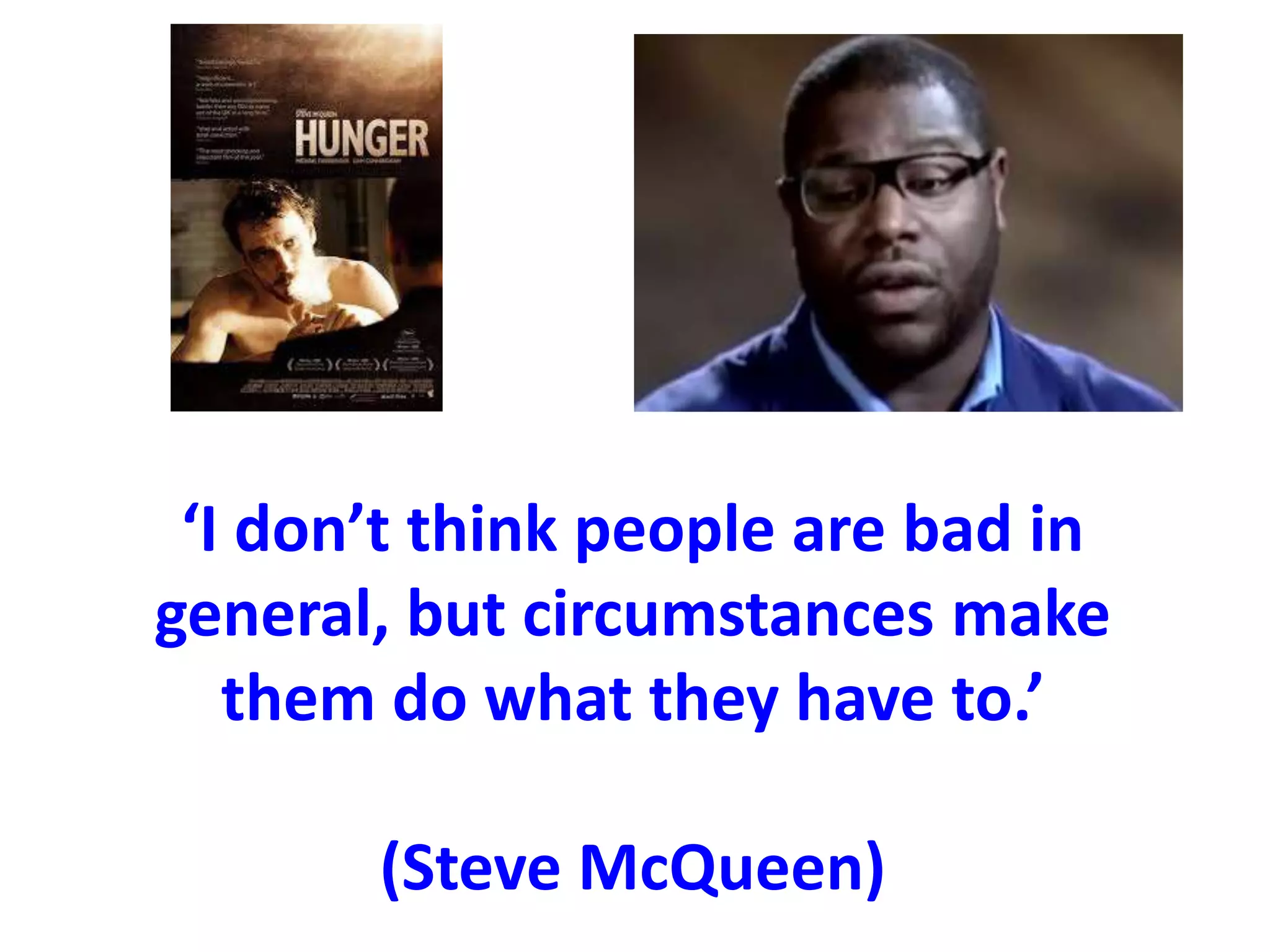
‘Hunger’ –
Introduction and Overview
Friday 27th February 2015
FM2 –
British and American Film (60%) of AS Level)
Section B –
British Film topics Identity Study –
‘In the Name of the Father’ and
‘Hunger’
Why?
Aims & Objectives
• YOU WILL re-cap prior learning.
• YOU WILL learn about the 2nd
Case Study Film ‘Hunger’ (2008
– Dir. Steve McQueen) and the
context(s) surrounding the film.
• YOU WILL establish HOW the
film will meet some of the
expectations of the Exam
Board.
• Review the Learning.
AO1
Demonstrate knowledge and
understanding of film as an
audio-visual form of creative
expression together and
AO2
Apply knowledge and
understanding, including
some of the common critical
approaches that characterise
the subject, when exploring
and analysing films.
Starter –
Re-cap Prior Learning
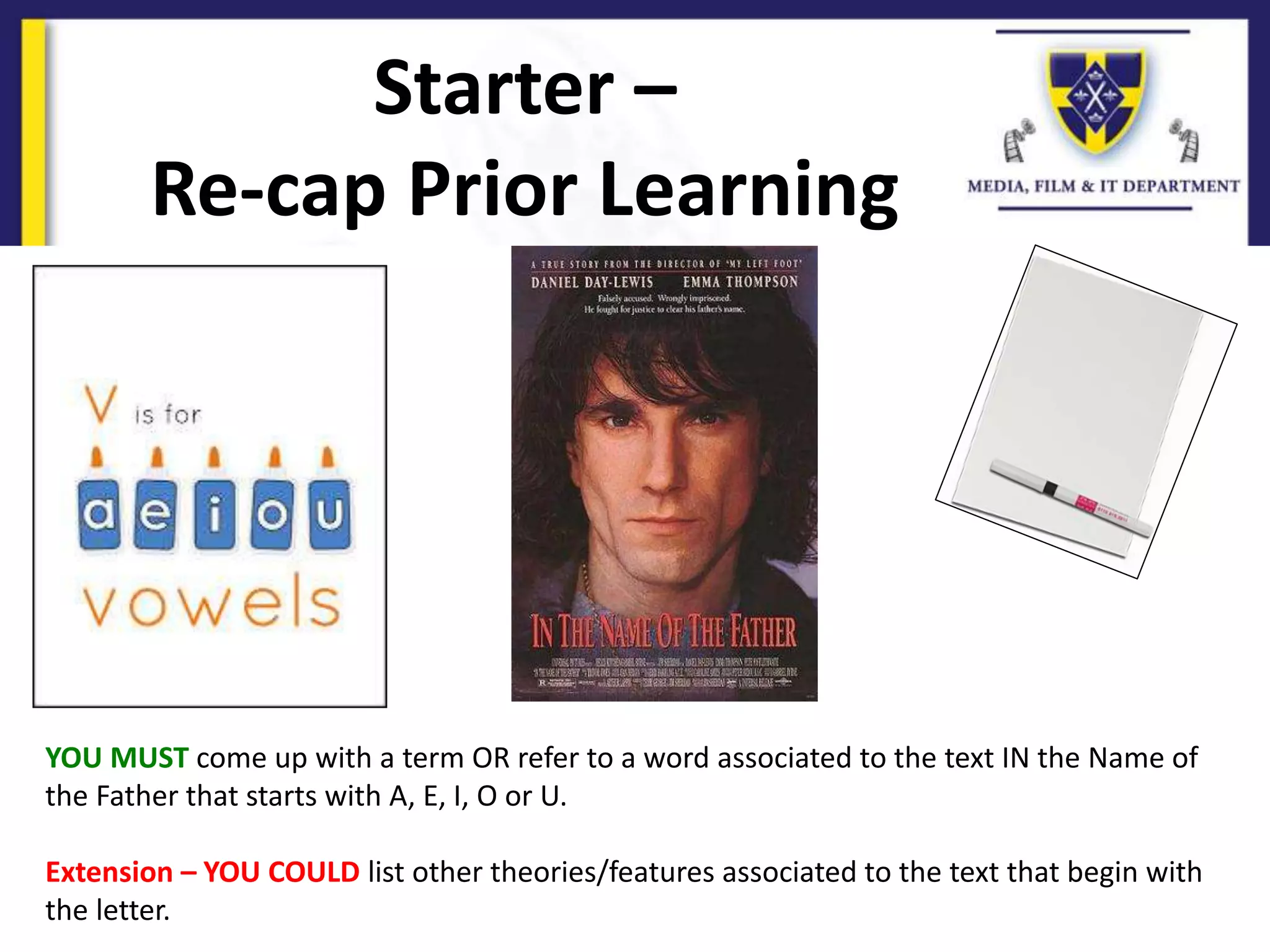
YOU MUST come up with a term OR refer to a word associated to the text IN the Name of
the Father that starts with A, E, I, O or U.
Extension – YOU COULD list other theories/features associated to the text that begin with
the letter.
FEEDBACK
FM2 –
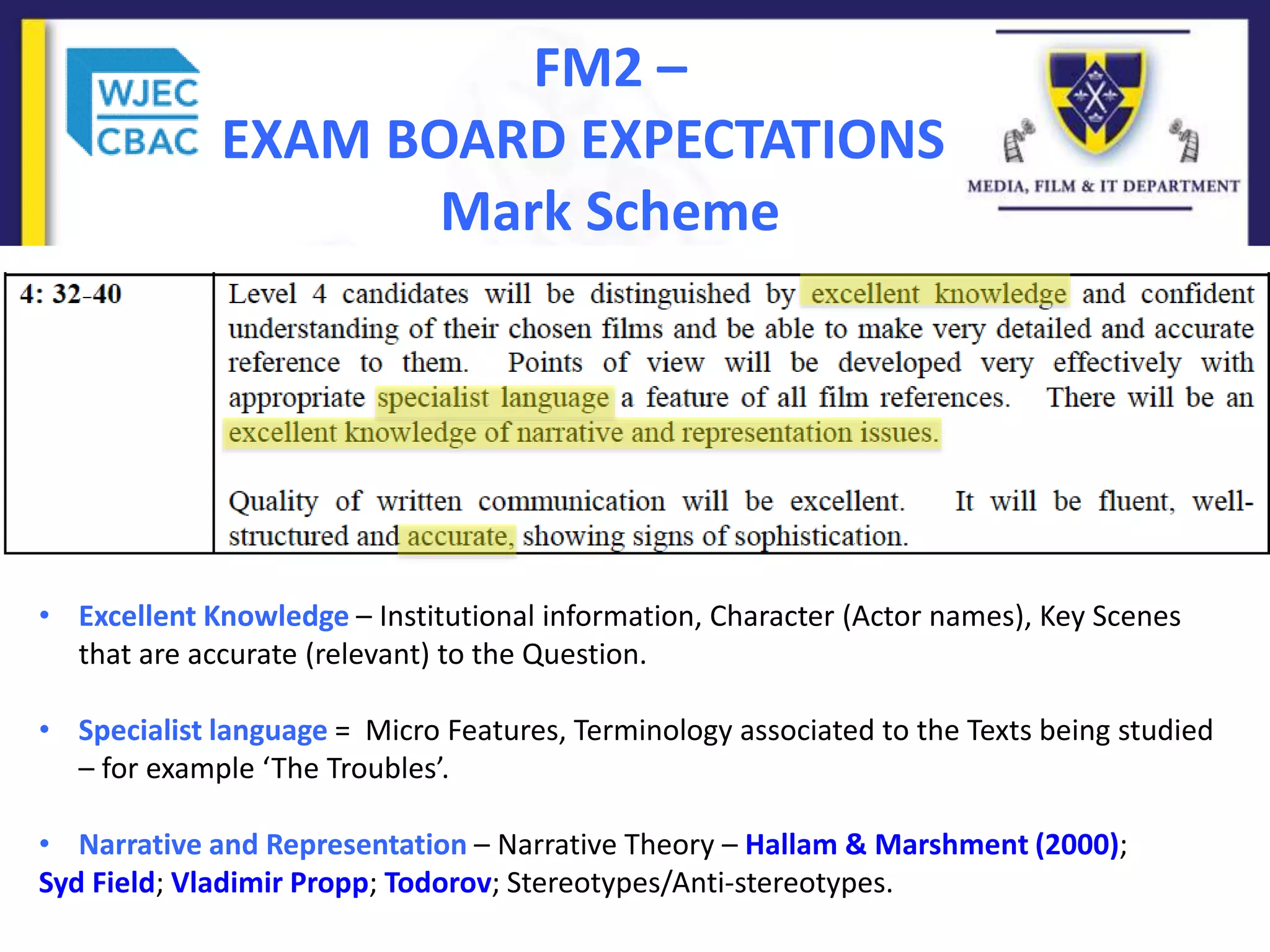
EXAM BOARD EXPECTATIONS
Mark Scheme
• Excellent Knowledge – Institutional information, Character (Actor names), Key Scenes
that are accurate (relevant) to the Question.
• Specialist language = Micro Features, Terminology associated to the Texts being studied
– for example ‘The Troubles’.
• Narrative and Representation – Narrative Theory – Hallam & Marshment (2000);
Syd Field; Vladimir Propp; Todorov; Stereotypes/Anti-stereotypes.
Political Context
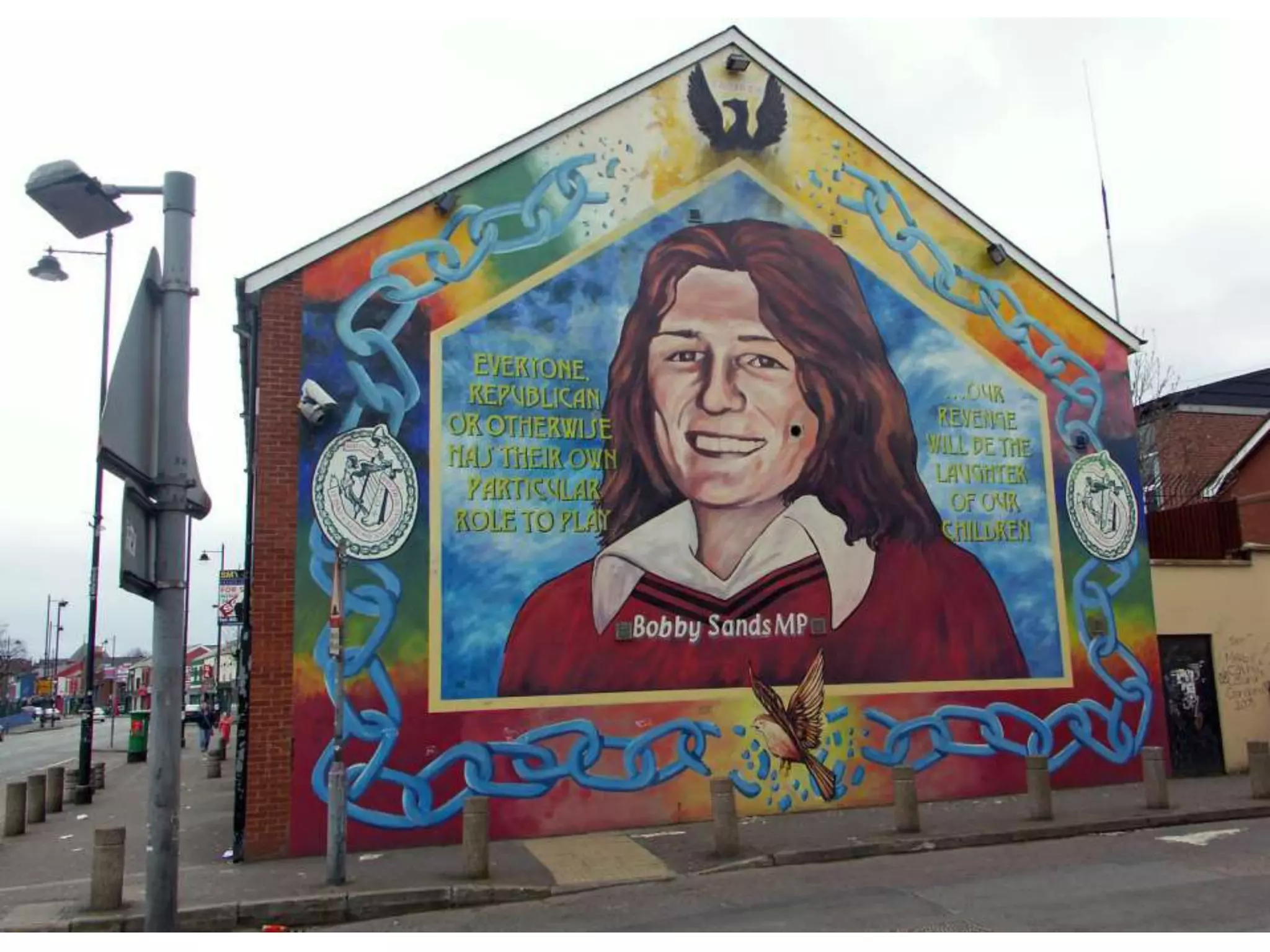
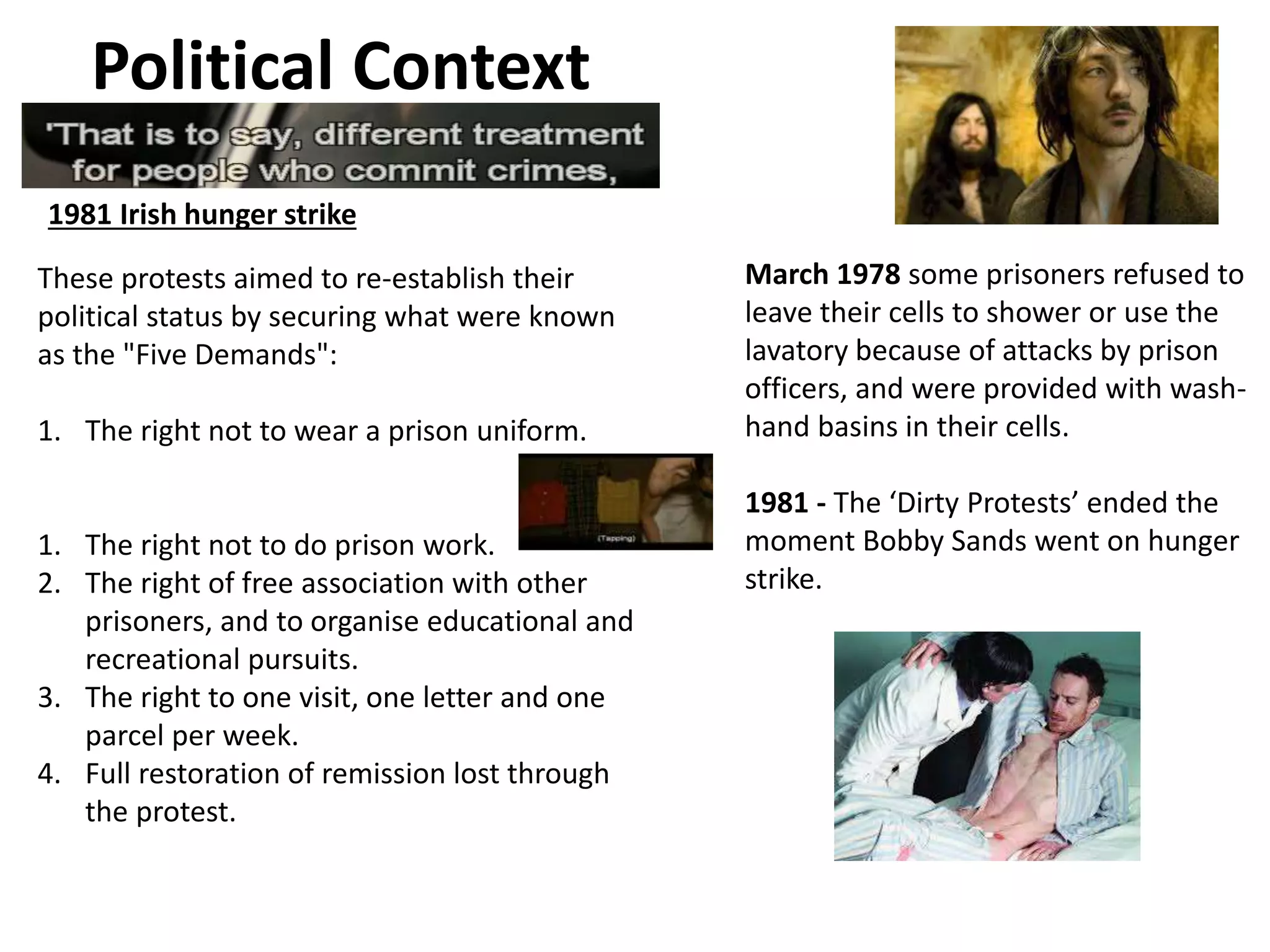
1981 Irish hunger strike
These protests aimed to re-establish their
political status by securing what were known
as the "Five Demands":
1. The right not to wear a prison uniform.
1. The right not to do prison work.
2. The right of free association with other
prisoners, and to organise educational and
recreational pursuits.
3. The right to one visit, one letter and one
parcel per week.
4. Full restoration of remission lost through
the protest.
March 1978 some prisoners refused to
leave their cells to shower or use the
lavatory because of attacks by prison
officers, and were provided with wash-
hand basins in their cells.
1981 - The ‘Dirty Protests’ ended the
moment Bobby Sands went on hunger
strike.
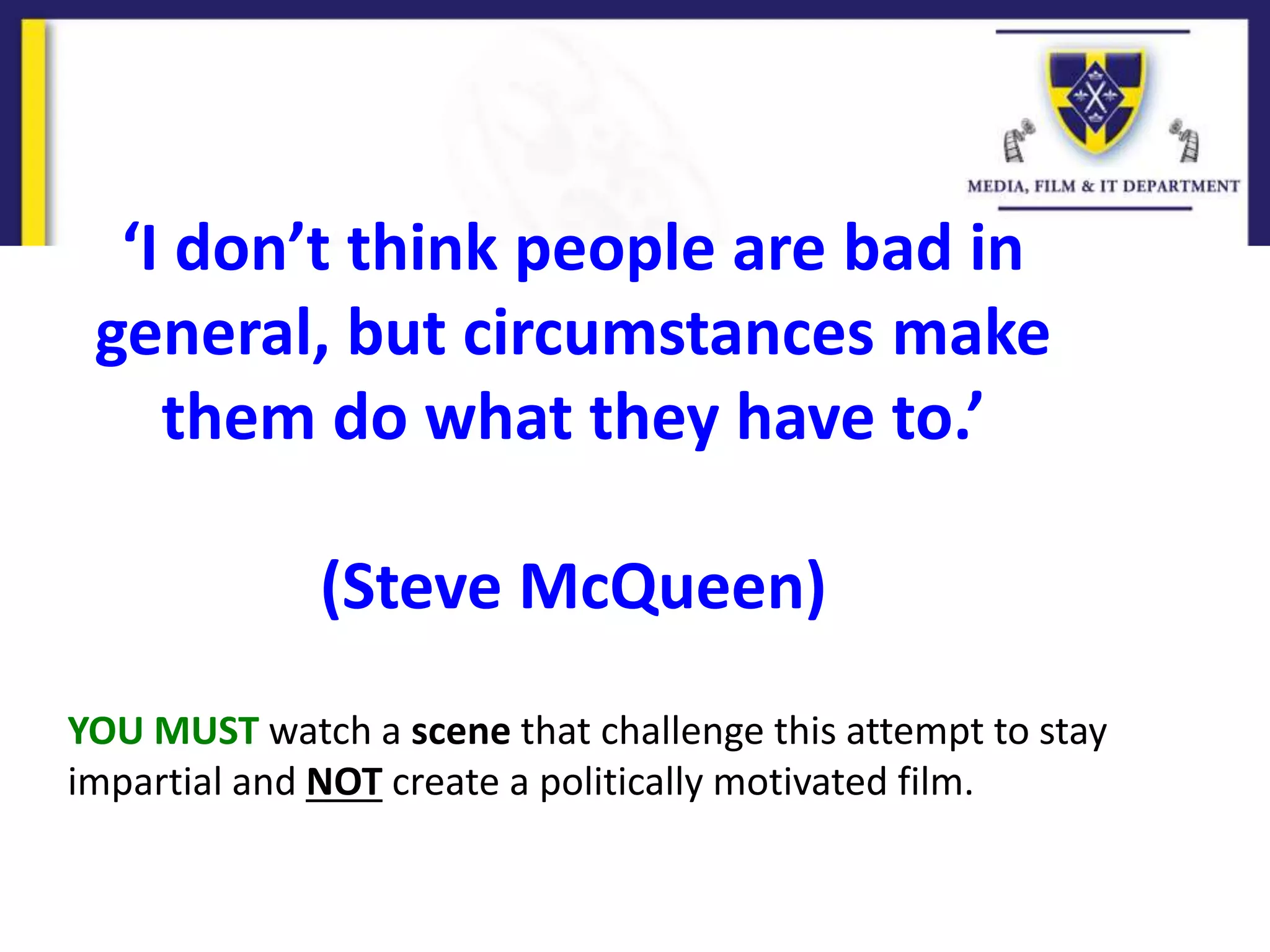
‘I don’t think people are bad in
general, but circumstances make
them do what they have to.’
(Steve McQueen)
YOU MUST watch a scene that challenge this attempt to stay
impartial and NOT create a politically motivated film.
‘I don’t think people are bad in
general, but circumstances make
them do what they have to.’
(Steve McQueen)
What have you learnt?
You need to Evaluate –
in 40 words – what you
have learnt about the
text today
.
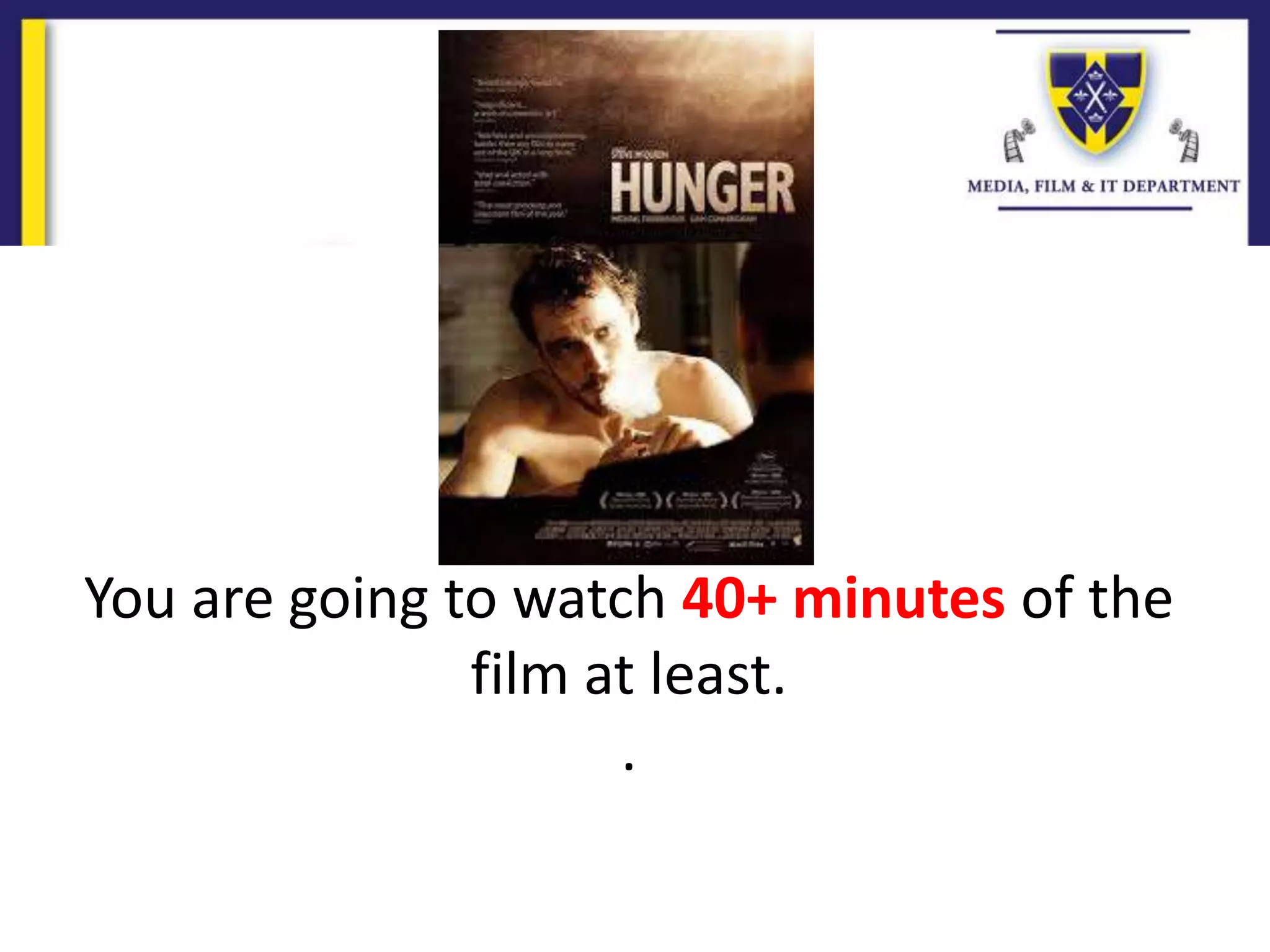
You are going to watch 40+ minutes of the
film at least.
.
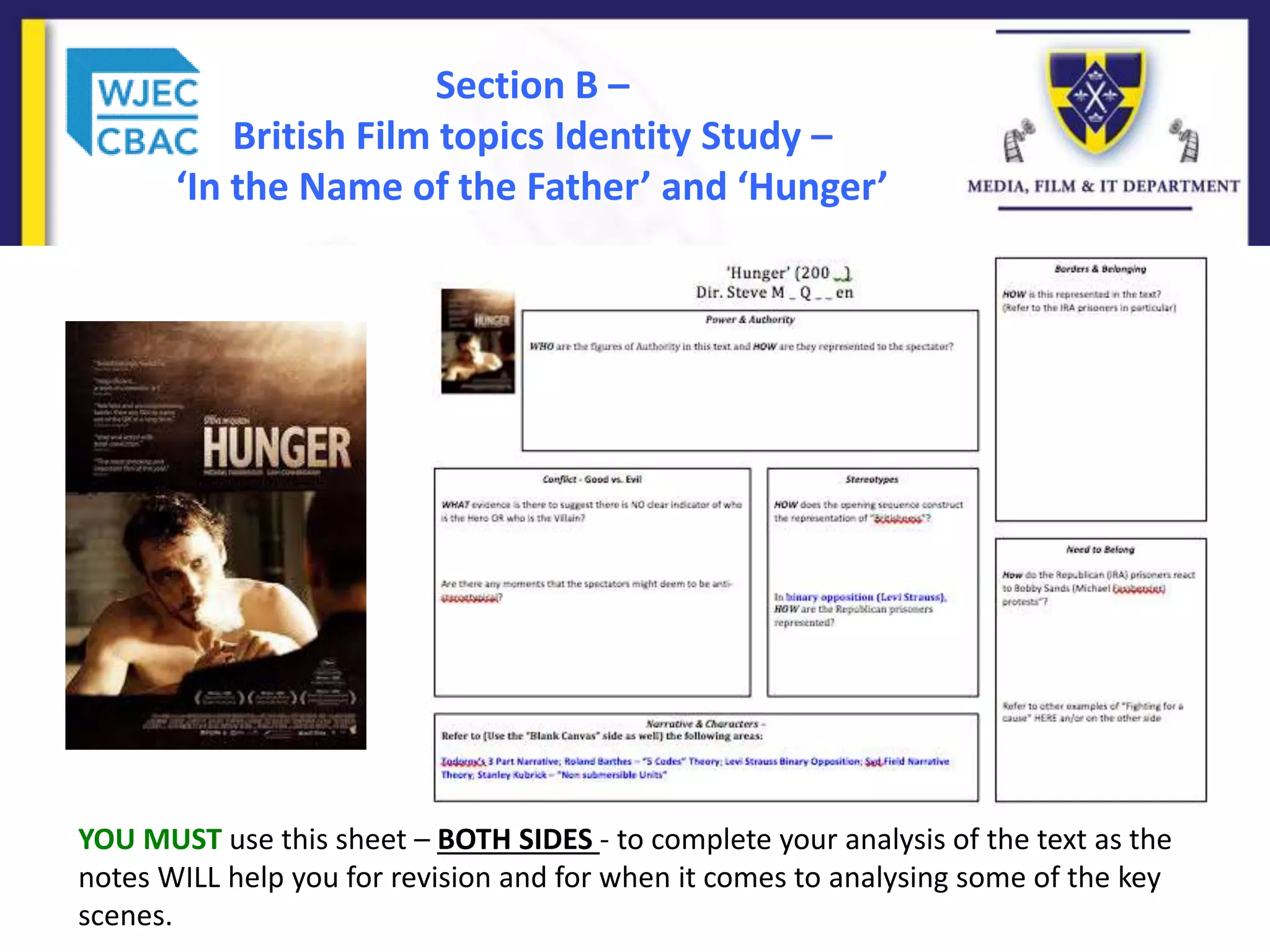
Section B –
British Film topics Identity Study –
‘In the Name of the Father’ and ‘Hunger’
YOU MUST use this sheet – BOTH SIDES - to complete your analysis of the text as the
notes WILL help you for revision and for when it comes to analysing some of the key
scenes.
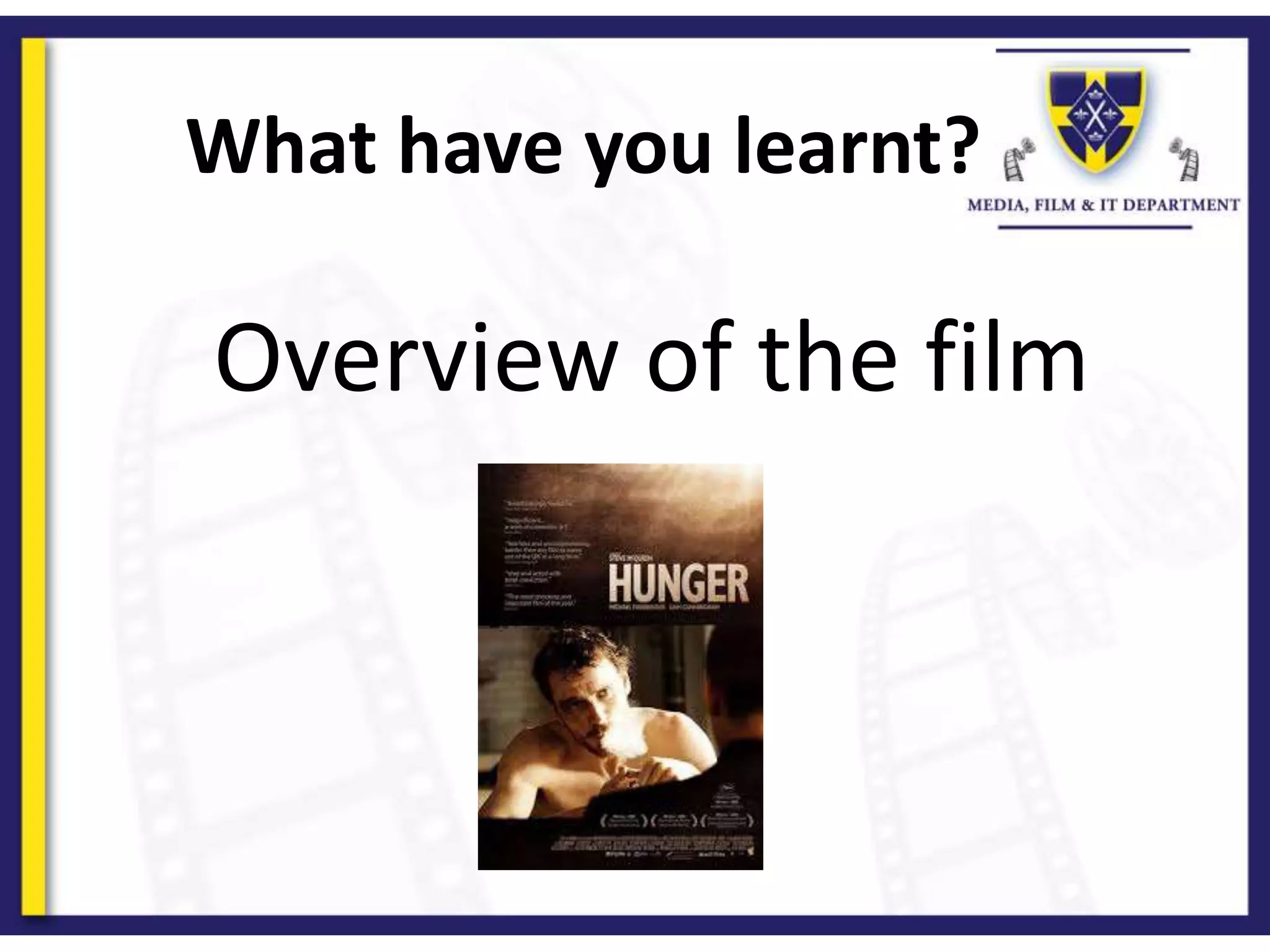
What have you learnt?
Overview of the film
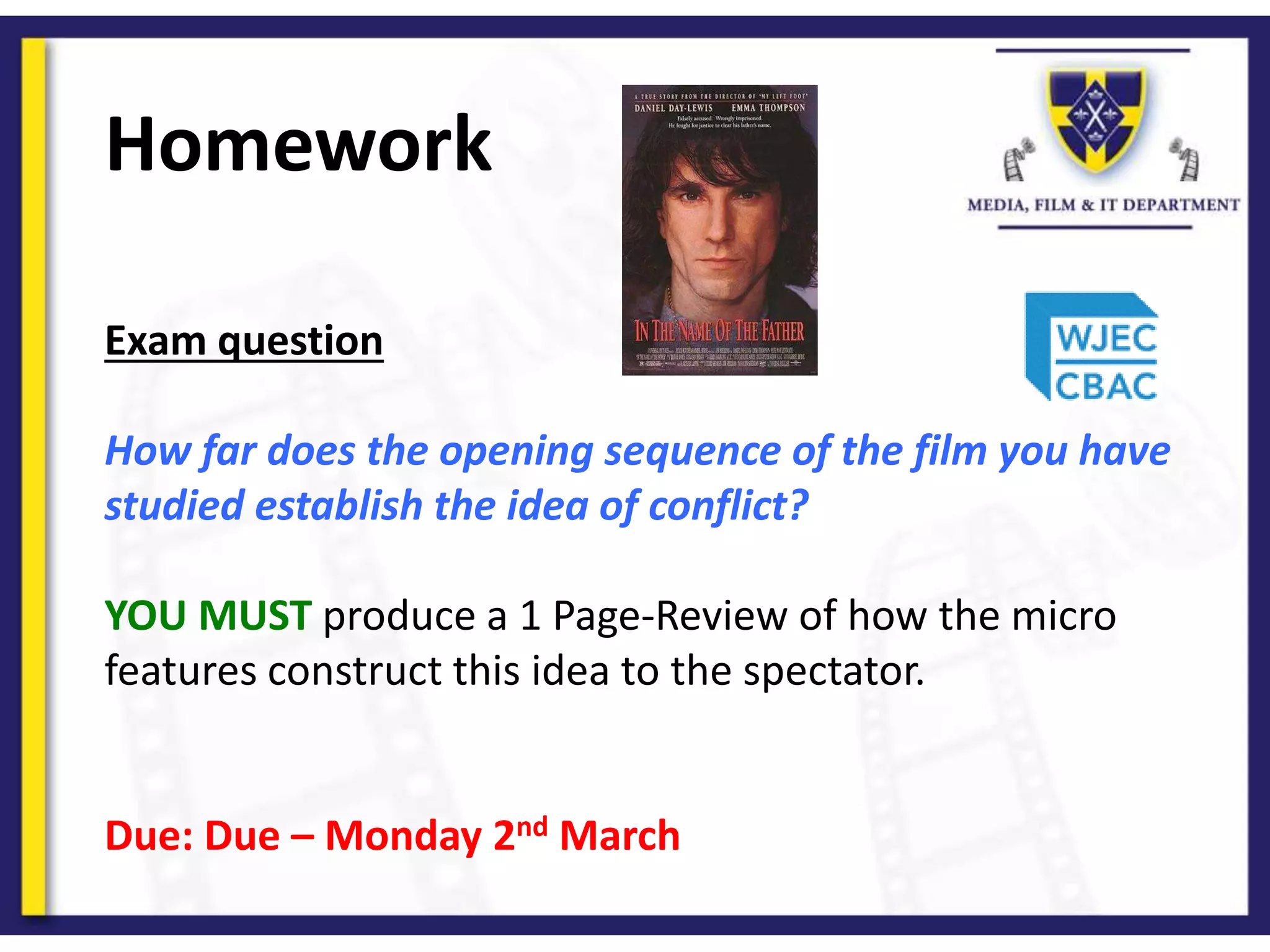
Homework
Exam question
How far does the opening sequence of the film you have
studied establish the idea of conflict?
YOU MUST produce a 1 Page-Review of how the micro
features construct this idea to the spectator.
Due: Due – Monday 2nd March

L16 hunger introduction

  • 1.
    Homework YOU MUST writedown what YOU have learnt in relation to the scenes analysed. ‘The way the narrative is constructed forces you to sympathise with the main character’ HOW far do you agree with this statement based on the 2 scenes analysed today?
  • 2.
    Title: ‘Hunger’ – Introduction andOverview Friday 27th February 2015 FM2 – British and American Film (60%) of AS Level) Section B – British Film topics Identity Study – ‘In the Name of the Father’ and ‘Hunger’
  • 3.
    Why? Aims & Objectives •YOU WILL re-cap prior learning. • YOU WILL learn about the 2nd Case Study Film ‘Hunger’ (2008 – Dir. Steve McQueen) and the context(s) surrounding the film. • YOU WILL establish HOW the film will meet some of the expectations of the Exam Board. • Review the Learning. AO1 Demonstrate knowledge and understanding of film as an audio-visual form of creative expression together and AO2 Apply knowledge and understanding, including some of the common critical approaches that characterise the subject, when exploring and analysing films.
  • 4.
    Starter – Re-cap PriorLearning YOU MUST come up with a term OR refer to a word associated to the text IN the Name of the Father that starts with A, E, I, O or U. Extension – YOU COULD list other theories/features associated to the text that begin with the letter.
  • 5.
  • 6.
    FM2 – EXAM BOARDEXPECTATIONS Mark Scheme • Excellent Knowledge – Institutional information, Character (Actor names), Key Scenes that are accurate (relevant) to the Question. • Specialist language = Micro Features, Terminology associated to the Texts being studied – for example ‘The Troubles’. • Narrative and Representation – Narrative Theory – Hallam & Marshment (2000); Syd Field; Vladimir Propp; Todorov; Stereotypes/Anti-stereotypes.
  • 8.
    Political Context 1981 Irishhunger strike These protests aimed to re-establish their political status by securing what were known as the "Five Demands": 1. The right not to wear a prison uniform. 1. The right not to do prison work. 2. The right of free association with other prisoners, and to organise educational and recreational pursuits. 3. The right to one visit, one letter and one parcel per week. 4. Full restoration of remission lost through the protest. March 1978 some prisoners refused to leave their cells to shower or use the lavatory because of attacks by prison officers, and were provided with wash- hand basins in their cells. 1981 - The ‘Dirty Protests’ ended the moment Bobby Sands went on hunger strike.
  • 9.
    ‘I don’t thinkpeople are bad in general, but circumstances make them do what they have to.’ (Steve McQueen)
  • 10.
    YOU MUST watcha scene that challenge this attempt to stay impartial and NOT create a politically motivated film. ‘I don’t think people are bad in general, but circumstances make them do what they have to.’ (Steve McQueen)
  • 11.
    What have youlearnt? You need to Evaluate – in 40 words – what you have learnt about the text today .
  • 12.
    You are goingto watch 40+ minutes of the film at least. .
  • 13.
    Section B – BritishFilm topics Identity Study – ‘In the Name of the Father’ and ‘Hunger’ YOU MUST use this sheet – BOTH SIDES - to complete your analysis of the text as the notes WILL help you for revision and for when it comes to analysing some of the key scenes.
  • 14.
    What have youlearnt? Overview of the film
  • 15.
    Homework Exam question How fardoes the opening sequence of the film you have studied establish the idea of conflict? YOU MUST produce a 1 Page-Review of how the micro features construct this idea to the spectator. Due: Due – Monday 2nd March

Editor's Notes

  • #2 Change for other lessons
  • #6 Mind-Map Ideas on the board and discuss issues covered so far.
  • #9 Mind-Map Ideas on the board and discuss issues covered so far.
  • #10 1)
  • #11 Scene 1 – “Get ready” scene – 25:08 in – As Bobby Sands is dragged away
  • #15 Thoughts on the film and ask some Open Questions regarding some of the themes & issues represented in the film – Focus on notes made on the whiteboard to gather the students opinions.
  • #16 Change for other lessons