CET463 ADVANCED
ENVIRONMENTAL
ENGINEERING
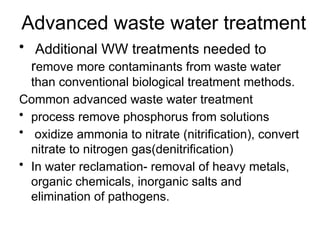
Advanced waste water treatment
• Additional WW treatments needed to
remove more contaminants from waste water
than conventional biological treatment methods.
Common advanced waste water treatment
• process remove phosphorus from solutions
• oxidize ammonia to nitrate (nitrification), convert
nitrate to nitrogen gas(denitrification)
• In water reclamation- removal of heavy metals,
organic chemicals, inorganic salts and
elimination of pathogens.
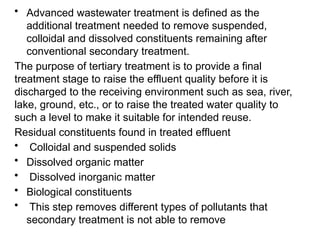
• Advanced wastewater treatment is defined as the
additional treatment needed to remove suspended,
colloidal and dissolved constituents remaining after
conventional secondary treatment.
The purpose of tertiary treatment is to provide a final
treatment stage to raise the effluent quality before it is
discharged to the receiving environment such as sea, river,
lake, ground, etc., or to raise the treated water quality to
such a level to make it suitable for intended reuse.
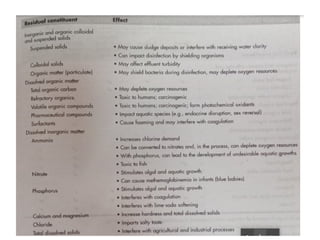
Residual constituents found in treated effluent
• Colloidal and suspended solids
• Dissolved organic matter
• Dissolved inorganic matter
• Biological constituents
• This step removes different types of pollutants that
secondary treatment is not able to remove
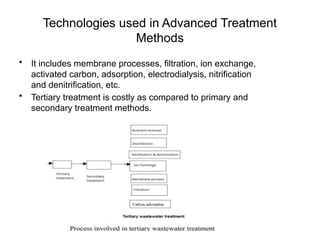
Technologies used in Advanced Treatment
Methods
• It includes membrane processes, filtration, ion exchange,
activated carbon, adsorption, electrodialysis, nitrification
and denitrification, etc.
• Tertiary treatment is costly as compared to primary and
secondary treatment methods.
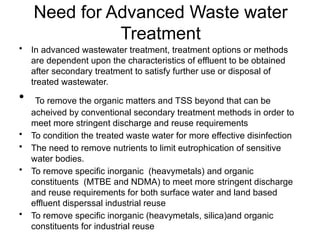
Need for Advanced Waste water
Treatment
• In advanced wastewater treatment, treatment options or methods
are dependent upon the characteristics of effluent to be obtained
after secondary treatment to satisfy further use or disposal of
treated wastewater.
• To remove the organic matters and TSS beyond that can be
acheived by conventional secondary treatment methods in order to
meet more stringent discharge and reuse requirements
• To condition the treated waste water for more effective disinfection
• The need to remove nutrients to limit eutrophication of sensitive
water bodies.
• To remove specific inorganic (heavymetals) and organic
constituents (MTBE and NDMA) to meet more stringent discharge
and reuse requirements for both surface water and land based
effluent disperssal industrial reuse
• To remove specific inorganic (heavymetals, silica)and organic
constituents for industrial reuse
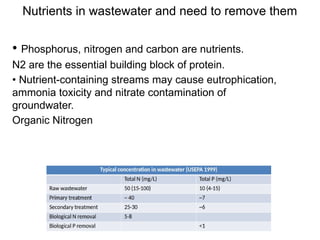
Nutrients in wastewater and need to remove them
• Phosphorus, nitrogen and carbon are nutrients.
N2 are the essential building block of protein.
• Nutrient-containing streams may cause eutrophication,
ammonia toxicity and nitrate contamination of
groundwater.
Organic Nitrogen
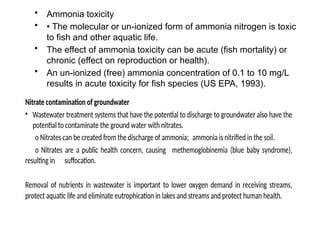
• Ammonia toxicity
• • The molecular or un-ionized form of ammonia nitrogen is toxic
to fish and other aquatic life.
• The effect of ammonia toxicity can be acute (fish mortality) or
chronic (effect on reproduction or health).
• An un-ionized (free) ammonia concentration of 0.1 to 10 mg/L
results in acute toxicity for fish species (US EPA, 1993).
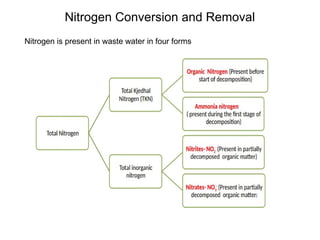
Nitrogen Conversion and Removal
Nitrogen is present in waste water in four forms
Biological Nitrification
O
H
H
NO
O
NH as
Nitrosomon
2
2
2
4 2
2
3





 

 


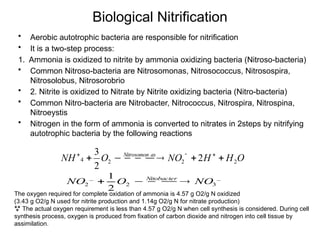
• Aerobic autotrophic bacteria are responsible for nitrification
• It is a two-step process:
1. Ammonia is oxidized to nitrite by ammonia oxidizing bacteria (Nitroso-bacteria)
• Common Nitroso-bacteria are Nitrosomonas, Nitrosococcus, Nitrosospira,
Nitrosolobus, Nitrosorobrio
• 2. Nitrite is oxidized to Nitrate by Nitrite oxidizing bacteria (Nitro-bacteria)
• Common Nitro-bacteria are Nitrobacter, Nitrococcus, Nitrospira, Nitrospina,
Nitroeystis
• Nitrogen in the form of ammonia is converted to nitrates in 2steps by nitrifying
autotrophic bacteria by the following reactions
_
3
2
_
2
2
1
NO
O
NO Nitobacter


 


The oxygen required for complete oxidation of ammonia is 4.57 g O2/g N oxidized
(3.43 g O2/g N used for nitrite production and 1.14g O2/g N for nitrate production)
 The actual oxygen requirement is less than 4.57 g O2/g N when cell synthesis is considered. During cell
synthesis process, oxygen is produced from fixation of carbon dioxide and nitrogen into cell tissue by
assimilation.
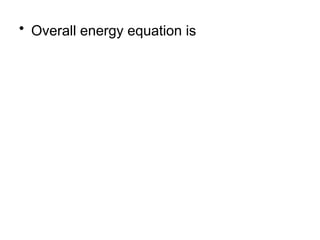
• Overall energy equation is
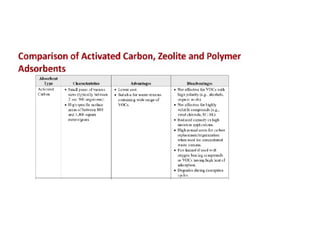
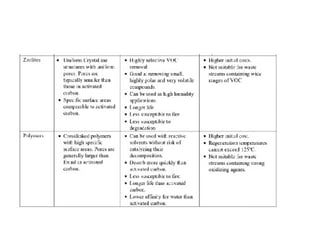
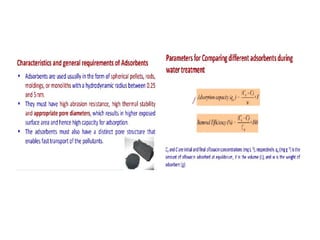
• Adsorbent should
have large surface
area 100-
1200m2/g
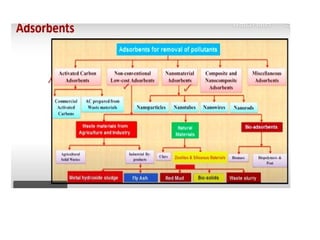
• Metal Organic
Carbon, MOC,
Carbon nanotube

KTU CE463 Advanced Environmental Engineering.pptx

  • 1.
  • 2.
    Advanced waste watertreatment • Additional WW treatments needed to remove more contaminants from waste water than conventional biological treatment methods. Common advanced waste water treatment • process remove phosphorus from solutions • oxidize ammonia to nitrate (nitrification), convert nitrate to nitrogen gas(denitrification) • In water reclamation- removal of heavy metals, organic chemicals, inorganic salts and elimination of pathogens.
  • 3.
    • Advanced wastewatertreatment is defined as the additional treatment needed to remove suspended, colloidal and dissolved constituents remaining after conventional secondary treatment. The purpose of tertiary treatment is to provide a final treatment stage to raise the effluent quality before it is discharged to the receiving environment such as sea, river, lake, ground, etc., or to raise the treated water quality to such a level to make it suitable for intended reuse. Residual constituents found in treated effluent • Colloidal and suspended solids • Dissolved organic matter • Dissolved inorganic matter • Biological constituents • This step removes different types of pollutants that secondary treatment is not able to remove
  • 4.
    Technologies used inAdvanced Treatment Methods • It includes membrane processes, filtration, ion exchange, activated carbon, adsorption, electrodialysis, nitrification and denitrification, etc. • Tertiary treatment is costly as compared to primary and secondary treatment methods.
  • 5.
    Need for AdvancedWaste water Treatment • In advanced wastewater treatment, treatment options or methods are dependent upon the characteristics of effluent to be obtained after secondary treatment to satisfy further use or disposal of treated wastewater. • To remove the organic matters and TSS beyond that can be acheived by conventional secondary treatment methods in order to meet more stringent discharge and reuse requirements • To condition the treated waste water for more effective disinfection • The need to remove nutrients to limit eutrophication of sensitive water bodies. • To remove specific inorganic (heavymetals) and organic constituents (MTBE and NDMA) to meet more stringent discharge and reuse requirements for both surface water and land based effluent disperssal industrial reuse • To remove specific inorganic (heavymetals, silica)and organic constituents for industrial reuse
  • 7.
    Nutrients in wastewaterand need to remove them • Phosphorus, nitrogen and carbon are nutrients. N2 are the essential building block of protein. • Nutrient-containing streams may cause eutrophication, ammonia toxicity and nitrate contamination of groundwater. Organic Nitrogen
  • 8.
    • Ammonia toxicity •• The molecular or un-ionized form of ammonia nitrogen is toxic to fish and other aquatic life. • The effect of ammonia toxicity can be acute (fish mortality) or chronic (effect on reproduction or health). • An un-ionized (free) ammonia concentration of 0.1 to 10 mg/L results in acute toxicity for fish species (US EPA, 1993).
  • 9.
    Nitrogen Conversion andRemoval Nitrogen is present in waste water in four forms
  • 10.
    Biological Nitrification O H H NO O NH as Nitrosomon 2 2 2 42 2 3             • Aerobic autotrophic bacteria are responsible for nitrification • It is a two-step process: 1. Ammonia is oxidized to nitrite by ammonia oxidizing bacteria (Nitroso-bacteria) • Common Nitroso-bacteria are Nitrosomonas, Nitrosococcus, Nitrosospira, Nitrosolobus, Nitrosorobrio • 2. Nitrite is oxidized to Nitrate by Nitrite oxidizing bacteria (Nitro-bacteria) • Common Nitro-bacteria are Nitrobacter, Nitrococcus, Nitrospira, Nitrospina, Nitroeystis • Nitrogen in the form of ammonia is converted to nitrates in 2steps by nitrifying autotrophic bacteria by the following reactions _ 3 2 _ 2 2 1 NO O NO Nitobacter       The oxygen required for complete oxidation of ammonia is 4.57 g O2/g N oxidized (3.43 g O2/g N used for nitrite production and 1.14g O2/g N for nitrate production)  The actual oxygen requirement is less than 4.57 g O2/g N when cell synthesis is considered. During cell synthesis process, oxygen is produced from fixation of carbon dioxide and nitrogen into cell tissue by assimilation.
  • 11.
    • Overall energyequation is
  • 19.
    • Adsorbent should havelarge surface area 100- 1200m2/g • Metal Organic Carbon, MOC, Carbon nanotube