
SCHOOL OF COMPUTER SCIENCE & IT-
            DAVV, INDORE


            Presentation on
      knowledge based engineering

Presented to:           Presented by:
Prof. Ugrasen Suman
                        Aditya Trivedi
                        M.Tech.-I sem
Goal:
The main goal of this presentation is to understand:
 Knowledge
 Knowledge based engineering
 Principles of knowledge engineering
 Views of knowledge engineering
 Trends in Knowledge Engineering
 Frameworks for knowledge based systems
 commanKADS framework
 References
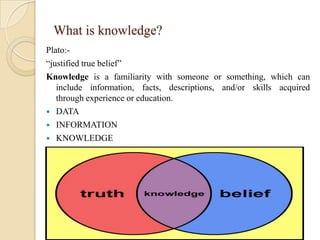
What is knowledge?
Plato:-
“justified true belief”
Knowledge is a familiarity with someone or something, which can
   include information, facts, descriptions, and/or skills acquired
   through experience or education.
 DATA
 INFORMATION
 KNOWLEDGE
Knowledge engineering:

Knowledge engineering (KE) was defined in 1983 by Edward
  Feigenbaum, and Pamela McCorduck as follows:
KE     is    an    engineering   discipline    that    involves
  integrating knowledge into computer systems in order to solve
  complex problems normally requiring a high level of human
  expertise.
Knowledge engineering for Knowledge based
systems:
Various activities of KE specific for the development of a knowledge-
  based system:
 Assessment of the problem
 Development of a knowledge-based system shell/structure
 Acquisition           and          structuring        of        the
  related information, knowledge and specific preferences (IPK
  model)
 Implementation of the structured knowledge into knowledge bases
 Testing and validation of the inserted knowledge
 Integration and maintenance of the system
 Revision and evaluation of the system.
Knowledge engineering principles:
   There are different:
     ◦ types of knowledge each requiring its own approach and technique.
     ◦ types of experts and expertise, such that methods should be chosen appropriately.
     ◦ ways of representing knowledge, which can aid the acquisition, validation and re-
       use of knowledge.
     ◦ ways of using knowledge, so that the acquisition process can be guided by the
       project aims (goal-oriented).
   Structured methods increase the efficiency of the acquisition
    process.
   Knowledge Engineering is the process of eliciting Knowledge for
    any purpose be it Expert system or AI development
Views of knowledge engineering:

There are two main views to knowledge engineering:
 Transfer View
 Modelling View
Overview of Trends in Knowledge Engineering:

   The paradigm Shift from a transfer view to a modelling view
   The evolving of Role Limiting methods and Generic Tasks
   The usage of Modelling Frameworks
   The influence of Ontology
Modelling frameworks for knowledge based
systems:
   commonKDAS
   MIKE(Model-based and incremental knowledge Engineering)
   PROTÉGÉ-II
What is CommonKADS?
   CommonKADS is the leading methodology to support structured
    knowledge engineering.
   enables to spot the opportunities and bottlenecks in how
    organizations develop, distribute and apply their knowledge
    resources, and so gives tools for corporate knowledge management.
   provides the methods to perform a detailed analysis of knowledge-
    intensive tasks and processes.
   supports the development of knowledge systems that support
    selected parts of the business process.
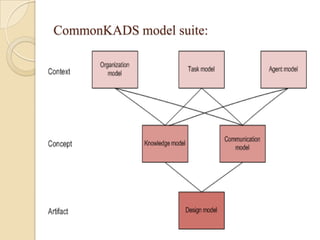
CommonKADS model suite:
References:

 www.wikipedia.org
 www.commonkads.uva.nl
 Book by Schreiber et al “Knowledge
  Engineering and Management”
  published by University press.
Thank you..!!
 Queries??

Knowledge based engineering

  • 1.
    SCHOOL OF COMPUTERSCIENCE & IT- DAVV, INDORE Presentation on knowledge based engineering Presented to: Presented by: Prof. Ugrasen Suman Aditya Trivedi M.Tech.-I sem
  • 2.
    Goal: The main goalof this presentation is to understand:  Knowledge  Knowledge based engineering  Principles of knowledge engineering  Views of knowledge engineering  Trends in Knowledge Engineering  Frameworks for knowledge based systems  commanKADS framework  References
  • 3.
    What is knowledge? Plato:- “justifiedtrue belief” Knowledge is a familiarity with someone or something, which can include information, facts, descriptions, and/or skills acquired through experience or education.  DATA  INFORMATION  KNOWLEDGE
  • 4.
    Knowledge engineering: Knowledge engineering(KE) was defined in 1983 by Edward Feigenbaum, and Pamela McCorduck as follows: KE is an engineering discipline that involves integrating knowledge into computer systems in order to solve complex problems normally requiring a high level of human expertise.
  • 5.
    Knowledge engineering forKnowledge based systems: Various activities of KE specific for the development of a knowledge- based system:  Assessment of the problem  Development of a knowledge-based system shell/structure  Acquisition and structuring of the related information, knowledge and specific preferences (IPK model)  Implementation of the structured knowledge into knowledge bases  Testing and validation of the inserted knowledge  Integration and maintenance of the system  Revision and evaluation of the system.
  • 6.
    Knowledge engineering principles:  There are different: ◦ types of knowledge each requiring its own approach and technique. ◦ types of experts and expertise, such that methods should be chosen appropriately. ◦ ways of representing knowledge, which can aid the acquisition, validation and re- use of knowledge. ◦ ways of using knowledge, so that the acquisition process can be guided by the project aims (goal-oriented).  Structured methods increase the efficiency of the acquisition process.  Knowledge Engineering is the process of eliciting Knowledge for any purpose be it Expert system or AI development
  • 7.
    Views of knowledgeengineering: There are two main views to knowledge engineering:  Transfer View  Modelling View
  • 8.
    Overview of Trendsin Knowledge Engineering:  The paradigm Shift from a transfer view to a modelling view  The evolving of Role Limiting methods and Generic Tasks  The usage of Modelling Frameworks  The influence of Ontology
  • 9.
    Modelling frameworks forknowledge based systems:  commonKDAS  MIKE(Model-based and incremental knowledge Engineering)  PROTÉGÉ-II
  • 10.
    What is CommonKADS?  CommonKADS is the leading methodology to support structured knowledge engineering.  enables to spot the opportunities and bottlenecks in how organizations develop, distribute and apply their knowledge resources, and so gives tools for corporate knowledge management.  provides the methods to perform a detailed analysis of knowledge- intensive tasks and processes.  supports the development of knowledge systems that support selected parts of the business process.
  • 11.
  • 12.
    References:  www.wikipedia.org  www.commonkads.uva.nl Book by Schreiber et al “Knowledge Engineering and Management” published by University press.
  • 13.