Nursah Basol, M.D.
Gaziosmanpasa University, Faculty of Medicine,
Department of Emergency Medicine
Tokat- TURKEY
1
2
3
 The first CCHF case was identified in Tokat in 2002.
4
 1944.. first described in Soviet soldiers in the Crimea
and was named Crimean fever.
 1956.. isolated from a child with similar symptoms and
was named Congo virus.
 1969… The causative agent of both diseases was shown
to be the same virus, and termed Crimean-Congo
hemorrhagic fever virus
5
 CCHF Virus
 Single helical RNA virus
 Member of the
Bunyaviridae family
 Nairovirus group
6
Tick Life Cycle
7
Transmission
 Tick bite (genus Hyalomma marginatum)
 Removing or smashing ticks with bare hands
 Contacting body fluids like blood of infected people
 Handling of tissue, blood or other body fluids of
infected animals unprotected.
 Nosocomial transmission
 Vertical transmission.
8
Pathogenesis
9
Epidemiology
10
Travelers
11
The Data of Turkey
920
665
727
584
695
721
438
270
0
100
200
300
400
500
600
700
800
900
1000
2009 2010 2011 2012 2013 2014 2015 2016
The Numbers of CCHF Patients According to Years (2009-2016)
12
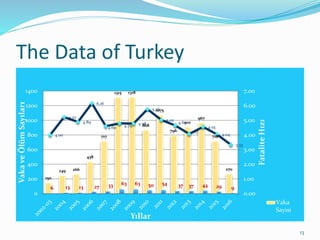
The Data of Turkey
13
150
249 266
438
717
1315 1318
868
1075
796
910
967
718
270
6 13 13 27 33 63 63 50 54 37 37 44 29 9
4.00
5.22
4.89
6.16
4.60 4.79 4.78
5.76
5.02
4.65
4.07
4.55
4.04
3.33
0.00
1.00
2.00
3.00
4.00
5.00
6.00
7.00
0
200
400
600
800
1000
1200
1400
FataliteHızı
VakaveÖlümSayıları
Yıllar
Vaka
Sayısı
GOU Hospital
0
50
100
150
200
250
2012 2013 2014 2015 2016
yatış
CCHF
exitus
14
Season
15
Symptoms
 Fever
 Headache
 Muscle pain
 Loss of appetite
 Nausea
 Vomiting
 Diarrhea
 Bleeding
16
Symptoms
17
Symptoms
 Fatigue
 (86.2%)
 Widespread body pain
 (74.5%)
 Fever
 (71.5%)
 Headache
 (68.6%)
 Nausea and Vomiting
 (46%)
18
Clinical Course
 Incubation Period (2-10 days)
 Prehemorrhagic Period (7 days)
 Hemorrhagic Period
 Recovery Period
19
Laboratuary
20
Laboratuary
21
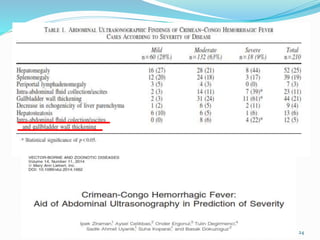
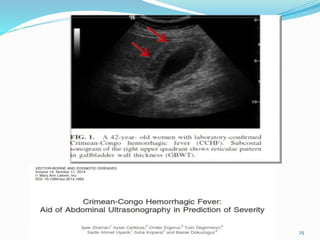
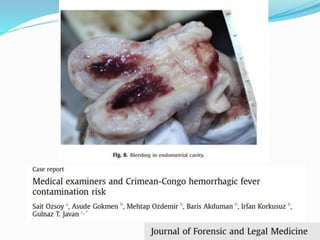
Abdominal Findings
22
23
24
25
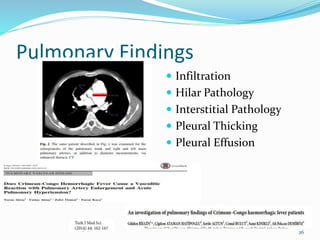
Pulmonary Findings
 Infiltration
 Hilar Pathology
 Interstitial Pathology
 Pleural Thicking
 Pleural Effusion
26
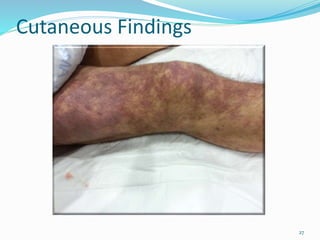
Cutaneous Findings
27
28
29
30
Diagnosis
 CCHF RT-PCR and/or
 ELISA IgG and IgM
31
Algorithm
Suddenly Onset of
 Fever
 Headache
 Common Body Pain
 Arthralgia
 Fatigue
 Diarrhea
 Bleeding
At Least 2 of them
 Living in an endemic
area
 History of visiting an
endemic area
 History of contacting
with animal body fluids
 History of contacting a
patient with CCHF
CBC
32
 CBC
 Plt: < 150.000
 Wbc: <4000
 Hospitalization
33
Differential Diagnosis
 Infectious diseases
59.2%
 Cellulitis
 Respiratory tract infection
 Urinary tract infection
 Intra-abdominal infection
 Sepsis unknown origin
 Leptospirosis
 Infective endocarditis
 Brucellosis
 Non-infectious diseases
40.8%
 Isolated thrombocytopenia
 Toxic hepatitis
 Cryptogenic liver cirrhosis
 Myelofibrosis
 Megaloblastic anemia
 Myositis
34
35
Prognosis
 AST
 ALT
 LDH
 Wbc
 Hepatomegaly
 Organ failure
 DIC Score
36
Emergency Approach
 Remove tick on the body
 Evaluate possible complaints
 2 of them exist
 CBC trombositopenia, leukopenia
 Hospitalization
37
Removing Tick
38
Emergency Approach
 Control fever
 Stabilization
 Supportive Care
 Treatment takes the form of the properties and needs
of the patient according to clinical observations and
laboratory results.
39
Emergency Approach
Factors for Supportive Care Plan:
 Platelet Count
 Leukocyte Count
 Hemoglobin levels
 Additional diseases
 Bleeding
 Liquid electrolyte imbalance
40
Ribavirin
 It is suggested by World Health Organization but not
approved by the FDA.
 In a metanalysis of Ribavirin treatment, it has been
concluded that Ribavirine does not affect mortality.
41
42
Occupational Risk Groups
43
Healtcare workers
44
Healtcare workers
45
For Invasive Procedures
46
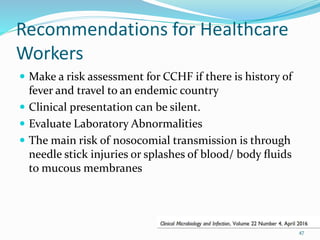
Recommendations for Healthcare
Workers
 Make a risk assessment for CCHF if there is history of
fever and travel to an endemic country
 Clinical presentation can be silent.
 Evaluate Laboratory Abnormalities
 The main risk of nosocomial transmission is through
needle stick injuries or splashes of blood/ body fluids
to mucous membranes
47
Recommendations for Healthcare
Workers
 A suspect or confirmed CCHF case must be isolated
and standard, contact and droplet precautions should
be undertaken.
 HCW must wear personal protective equipment
including a medical mask, facial shield/goggles, gloves
and a fluid repellant gown.
 An N95/FFP3 mask should be worn during aerosol
generating procedures
 HCW should not touch ticks directly with bare hands.
48
Take Home Messagges
 Not just endemic areas in danger
 Know very well possible complaints, clinical and
laboratuary findings on CCHF
 Don’t forget its long incubation period
 Supportive Care !!!
 Informe patient with tick bite
 Be careful while managing with CCHF patients.
49
Questions?
 nursahbsl@gmail.com
 www.gopacilservis.com
50
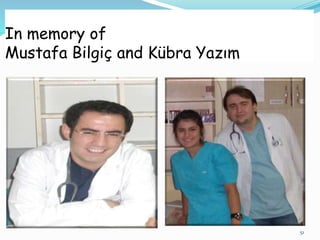
In memory of
Mustafa Bilgiç and Kübra Yazım
51

Kkka 09.11.2016

  • 1.
    Nursah Basol, M.D. GaziosmanpasaUniversity, Faculty of Medicine, Department of Emergency Medicine Tokat- TURKEY 1
  • 2.
  • 3.
  • 4.
     The firstCCHF case was identified in Tokat in 2002. 4
  • 5.
     1944.. firstdescribed in Soviet soldiers in the Crimea and was named Crimean fever.  1956.. isolated from a child with similar symptoms and was named Congo virus.  1969… The causative agent of both diseases was shown to be the same virus, and termed Crimean-Congo hemorrhagic fever virus 5
  • 6.
     CCHF Virus Single helical RNA virus  Member of the Bunyaviridae family  Nairovirus group 6
  • 7.
  • 8.
    Transmission  Tick bite(genus Hyalomma marginatum)  Removing or smashing ticks with bare hands  Contacting body fluids like blood of infected people  Handling of tissue, blood or other body fluids of infected animals unprotected.  Nosocomial transmission  Vertical transmission. 8
  • 9.
  • 10.
  • 11.
  • 12.
    The Data ofTurkey 920 665 727 584 695 721 438 270 0 100 200 300 400 500 600 700 800 900 1000 2009 2010 2011 2012 2013 2014 2015 2016 The Numbers of CCHF Patients According to Years (2009-2016) 12
  • 13.
    The Data ofTurkey 13 150 249 266 438 717 1315 1318 868 1075 796 910 967 718 270 6 13 13 27 33 63 63 50 54 37 37 44 29 9 4.00 5.22 4.89 6.16 4.60 4.79 4.78 5.76 5.02 4.65 4.07 4.55 4.04 3.33 0.00 1.00 2.00 3.00 4.00 5.00 6.00 7.00 0 200 400 600 800 1000 1200 1400 FataliteHızı VakaveÖlümSayıları Yıllar Vaka Sayısı
  • 14.
    GOU Hospital 0 50 100 150 200 250 2012 20132014 2015 2016 yatış CCHF exitus 14
  • 15.
  • 16.
    Symptoms  Fever  Headache Muscle pain  Loss of appetite  Nausea  Vomiting  Diarrhea  Bleeding 16
  • 17.
  • 18.
    Symptoms  Fatigue  (86.2%) Widespread body pain  (74.5%)  Fever  (71.5%)  Headache  (68.6%)  Nausea and Vomiting  (46%) 18
  • 19.
    Clinical Course  IncubationPeriod (2-10 days)  Prehemorrhagic Period (7 days)  Hemorrhagic Period  Recovery Period 19
  • 20.
  • 21.
  • 22.
  • 23.
  • 24.
  • 25.
  • 26.
    Pulmonary Findings  Infiltration Hilar Pathology  Interstitial Pathology  Pleural Thicking  Pleural Effusion 26
  • 27.
  • 28.
  • 29.
  • 30.
  • 31.
    Diagnosis  CCHF RT-PCRand/or  ELISA IgG and IgM 31
  • 32.
    Algorithm Suddenly Onset of Fever  Headache  Common Body Pain  Arthralgia  Fatigue  Diarrhea  Bleeding At Least 2 of them  Living in an endemic area  History of visiting an endemic area  History of contacting with animal body fluids  History of contacting a patient with CCHF CBC 32
  • 33.
     CBC  Plt:< 150.000  Wbc: <4000  Hospitalization 33
  • 34.
    Differential Diagnosis  Infectiousdiseases 59.2%  Cellulitis  Respiratory tract infection  Urinary tract infection  Intra-abdominal infection  Sepsis unknown origin  Leptospirosis  Infective endocarditis  Brucellosis  Non-infectious diseases 40.8%  Isolated thrombocytopenia  Toxic hepatitis  Cryptogenic liver cirrhosis  Myelofibrosis  Megaloblastic anemia  Myositis 34
  • 35.
  • 36.
    Prognosis  AST  ALT LDH  Wbc  Hepatomegaly  Organ failure  DIC Score 36
  • 37.
    Emergency Approach  Removetick on the body  Evaluate possible complaints  2 of them exist  CBC trombositopenia, leukopenia  Hospitalization 37
  • 38.
  • 39.
    Emergency Approach  Controlfever  Stabilization  Supportive Care  Treatment takes the form of the properties and needs of the patient according to clinical observations and laboratory results. 39
  • 40.
    Emergency Approach Factors forSupportive Care Plan:  Platelet Count  Leukocyte Count  Hemoglobin levels  Additional diseases  Bleeding  Liquid electrolyte imbalance 40
  • 41.
    Ribavirin  It issuggested by World Health Organization but not approved by the FDA.  In a metanalysis of Ribavirin treatment, it has been concluded that Ribavirine does not affect mortality. 41
  • 42.
  • 43.
  • 44.
  • 45.
  • 46.
  • 47.
    Recommendations for Healthcare Workers Make a risk assessment for CCHF if there is history of fever and travel to an endemic country  Clinical presentation can be silent.  Evaluate Laboratory Abnormalities  The main risk of nosocomial transmission is through needle stick injuries or splashes of blood/ body fluids to mucous membranes 47
  • 48.
    Recommendations for Healthcare Workers A suspect or confirmed CCHF case must be isolated and standard, contact and droplet precautions should be undertaken.  HCW must wear personal protective equipment including a medical mask, facial shield/goggles, gloves and a fluid repellant gown.  An N95/FFP3 mask should be worn during aerosol generating procedures  HCW should not touch ticks directly with bare hands. 48
  • 49.
    Take Home Messagges Not just endemic areas in danger  Know very well possible complaints, clinical and laboratuary findings on CCHF  Don’t forget its long incubation period  Supportive Care !!!  Informe patient with tick bite  Be careful while managing with CCHF patients. 49
  • 50.
  • 51.
    In memory of MustafaBilgiç and Kübra Yazım 51