Keeping the Promise :  Inventing a New Long-Term Care Nancy Fox, Pi ñon Management
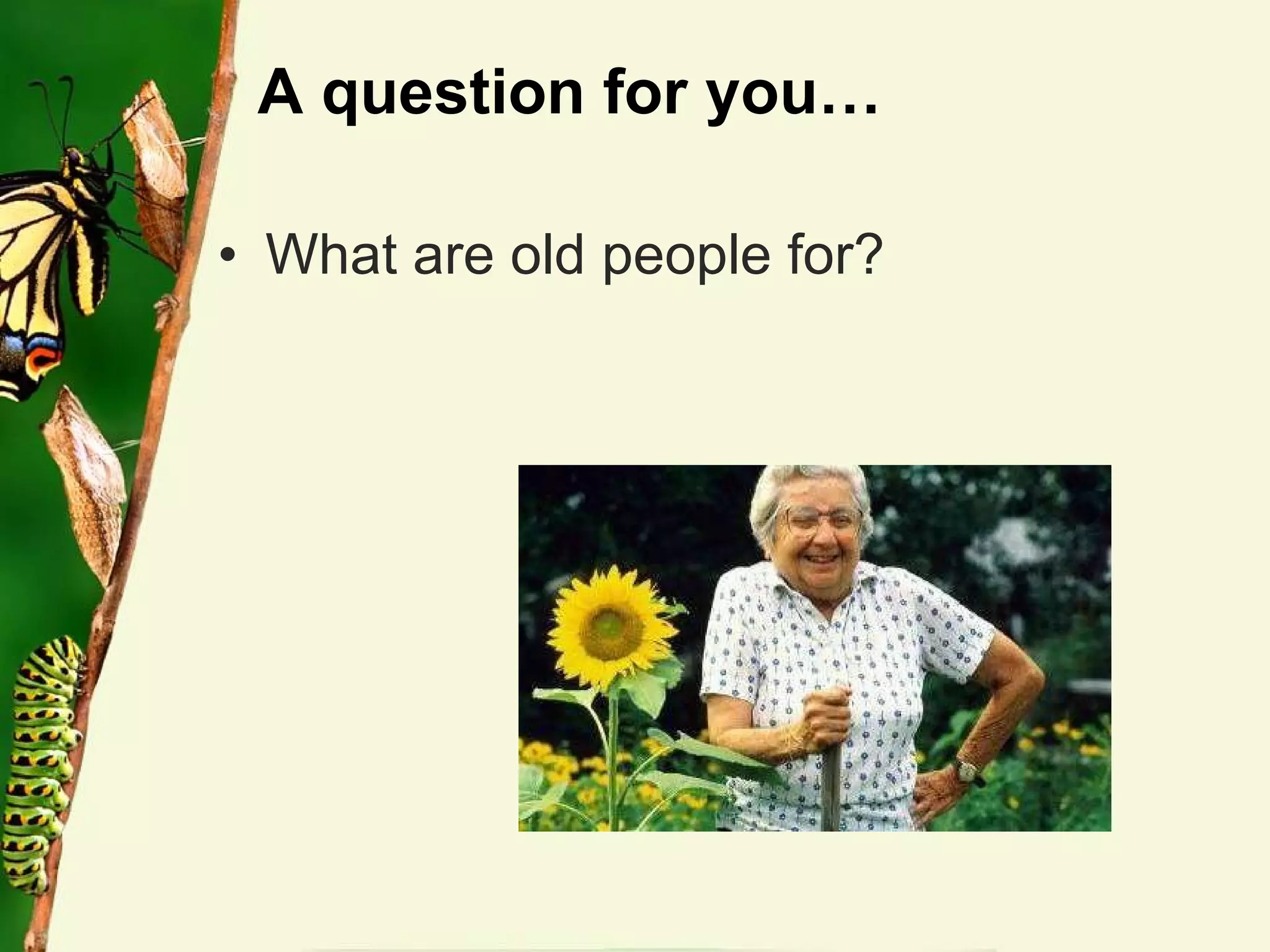
A question for you… What are old people for?
The Cult of Adulthood Created “God’s Waiting Room” Followed an Institutional Model of Care for our infirm and elderly. Last 20 years – tremendous improvements in quality of care Those are becoming harder and harder to sustain. The “Perfect Storm” of Long-Term Care A place where no one wants to live and few want to work
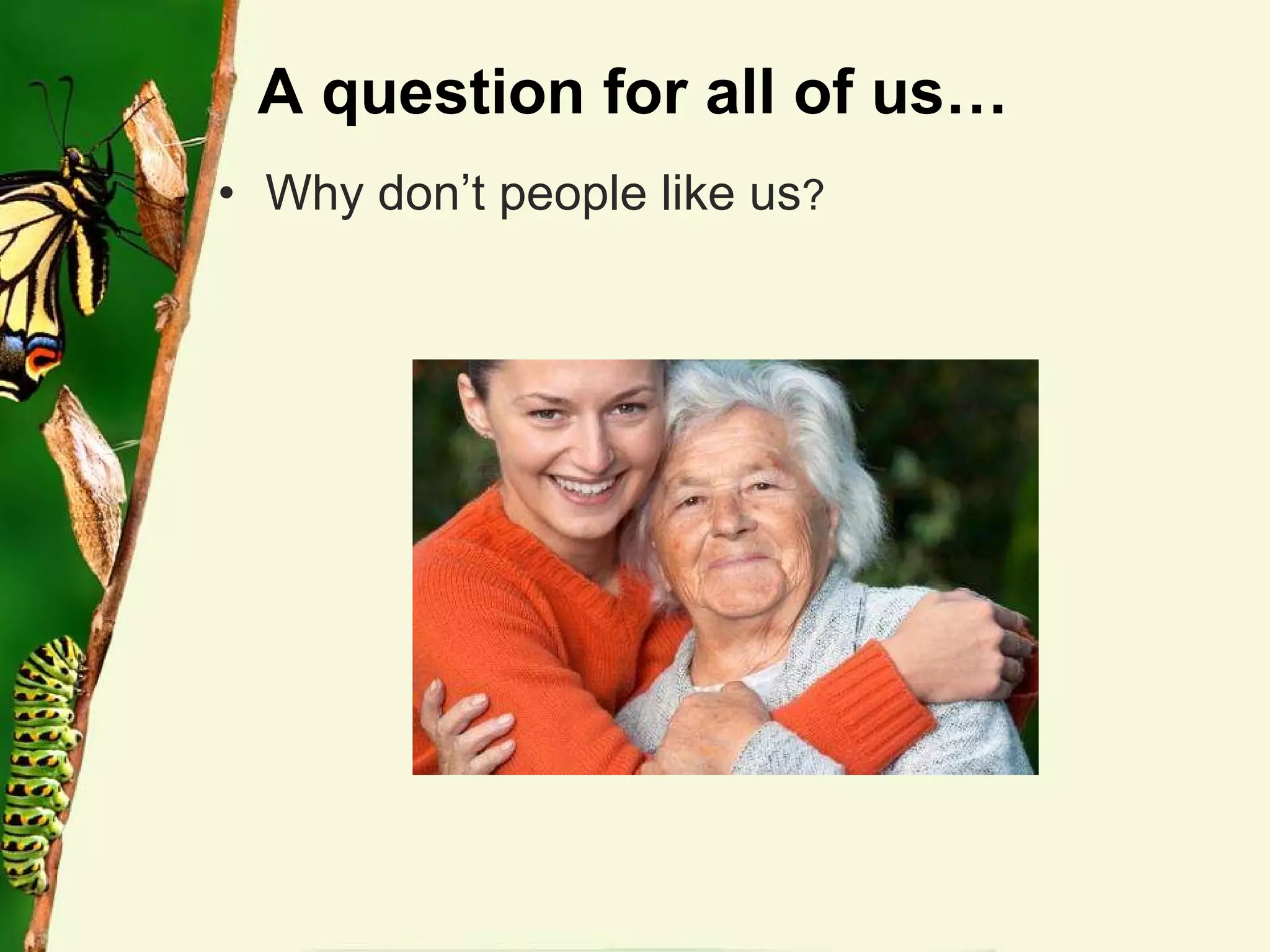
A question for all of us… Why don’t people like us ?
Daniel Pink – Drive: The Surprising Truth About What Motivates Us “ The course of human freedom has always moved in the direction of  more freedom . And there is a reason for that – because it is in our nature to push for it.” “ The secret to high performance and satisfaction - at work, at school, and at home – is the deeply human need to direct our own lives.” “ We are born to be Players, not Pawns.”
The reason people don’t like us Under the institutional model we remove every ounce of autonomy and freedom from their lives We engage in Surplus Safety at the high cost of stripping meaning and joy out of their lives We tell our staff to leave their hearts and their brains at the door Then a few very courageous and tireless people rush madly about trying to keep everyone in line
Culture Change Movement A Social Movement to change the way we think about and care for our Elders and those with disabilities. Engages & empowers the residents, staff and families in effort to unleash the creative energy and spark of life of the community Restores relationships, autonomy, meaning, purpose and joy Began in nursing homes Now spreading to all care settings And around the world
Person-Directed Care A world in which Residents truly direct their own care and make their own choices about how they spend their time.  A world in which Caregivers are highly involved in decisions that are relevant to their jobs and the people they care for.  The Residents, their families, and the staff are a part of a thriving, interdependent community where  relationships matter . Does this speak to your natural drive for autonomy?
Person-Centered Care A world in which the Resident’s natural need for autonomy is recognized and honored in a environment where maximum choice is balanced with the need for support, and risk is recognized and honored as a means to creating dignity. A world in which Caregivers know each resident well and create a supportive, yet empowering environment offering choices and balancing risk with autonomy for each individual resident on each day for each decision.
Dispelling the Myths Culture Change costs too much I can’t “do” Culture Change because I have an old building  Culture Change is only for old people The regulations won’t allow it Culture change doesn’t work in subacute My residents are not able to make decisions My residents are sicker than yours We are assisted living, we already do culture change We tried that and it doesn’t work We don’t have time for Culture Change
A little about Piñon Management Started in 1979 by Jeff Jerebker, President & CEO Manage 14 SNFs – 13 in CO and 1 in NM Also do temporary management and consulting nationally 4 of our managed homes serve younger populations including people living with chronic mental illness, MS, Huntington’s, TBI Many of our buildings were built in the 1960’s and 70’s Serve predominantly Medicaid populations Known for turnarounds of troubled homes
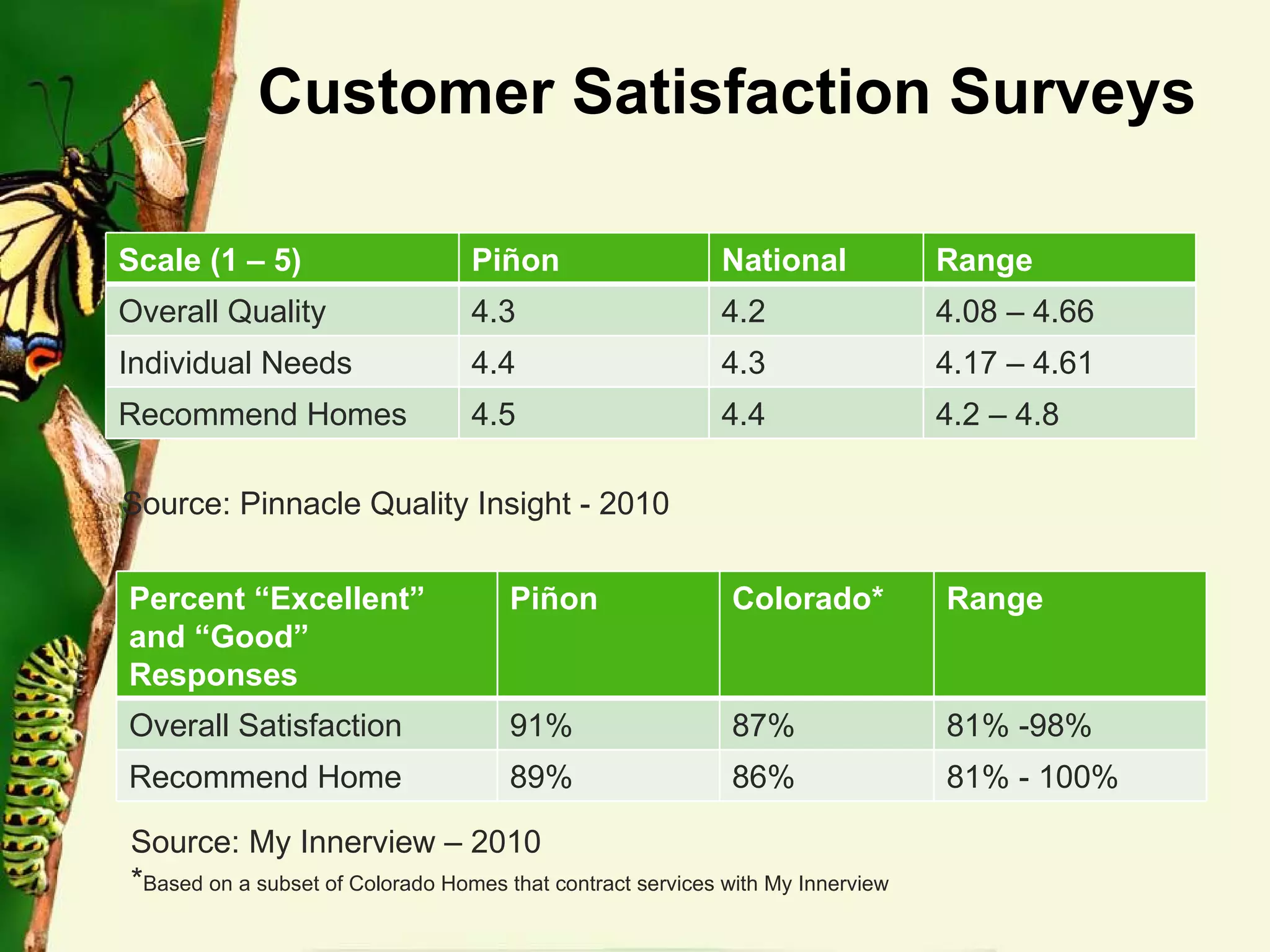
Customer Satisfaction Surveys Source: Pinnacle Quality Insight - 2010 Source: My Innerview – 2010 * Based on a subset of Colorado Homes that contract services with My Innerview Scale (1 – 5) Piñon National Range Overall Quality 4.3 4.2 4.08 – 4.66 Individual Needs 4.4 4.3 4.17 – 4.61 Recommend Homes 4.5 4.4 4.2 – 4.8 Percent “Excellent” and “Good” Responses Piñon Colorado* Range Overall Satisfaction 91% 87% 81% -98% Recommend Home 89% 86% 81% - 100%
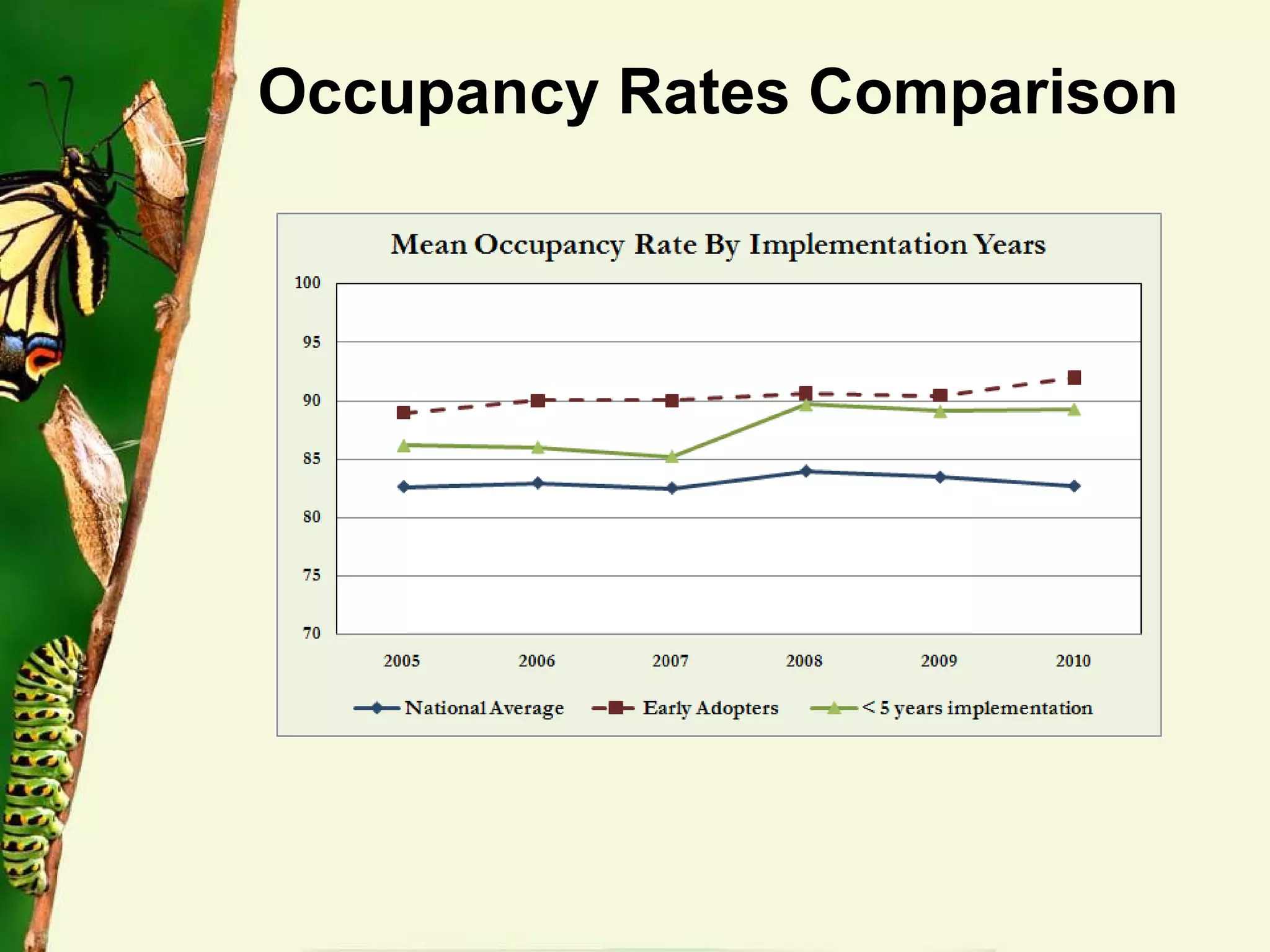
Occupancy Rates Comparison
Denver Occupancy Rates Based on cost report data 2010
Financial Outcomes As an example of financial impact of culture change, year-to-date figures from one home are given.  These numbers reflect the financial changes that occurred after Piñon took over management  of this home and brought in a knowledgeable administrator in March 2009 who implemented culture change practices. Net Operating Income Net Income December 2008 ($27,955) ($240,879) December 2009 $309,998 ($31,353) December 2010 $503,509 $407,178
Turnover *Source: American health Care Association 2007 AHCA Survey Nursing Staff Vacancy and Turnover in Nursing Facilities Piñon 2011 (All Homes) Colorado* United States* Nursing Admin 15% 37.4% 28.7% Nursing - RN 23% 48.4% 41% Nursing - LPN 14% 44.7% 49.9% Nursing - CNA 8% 66.4% 65.6% Overall  Staff Turnover 10%
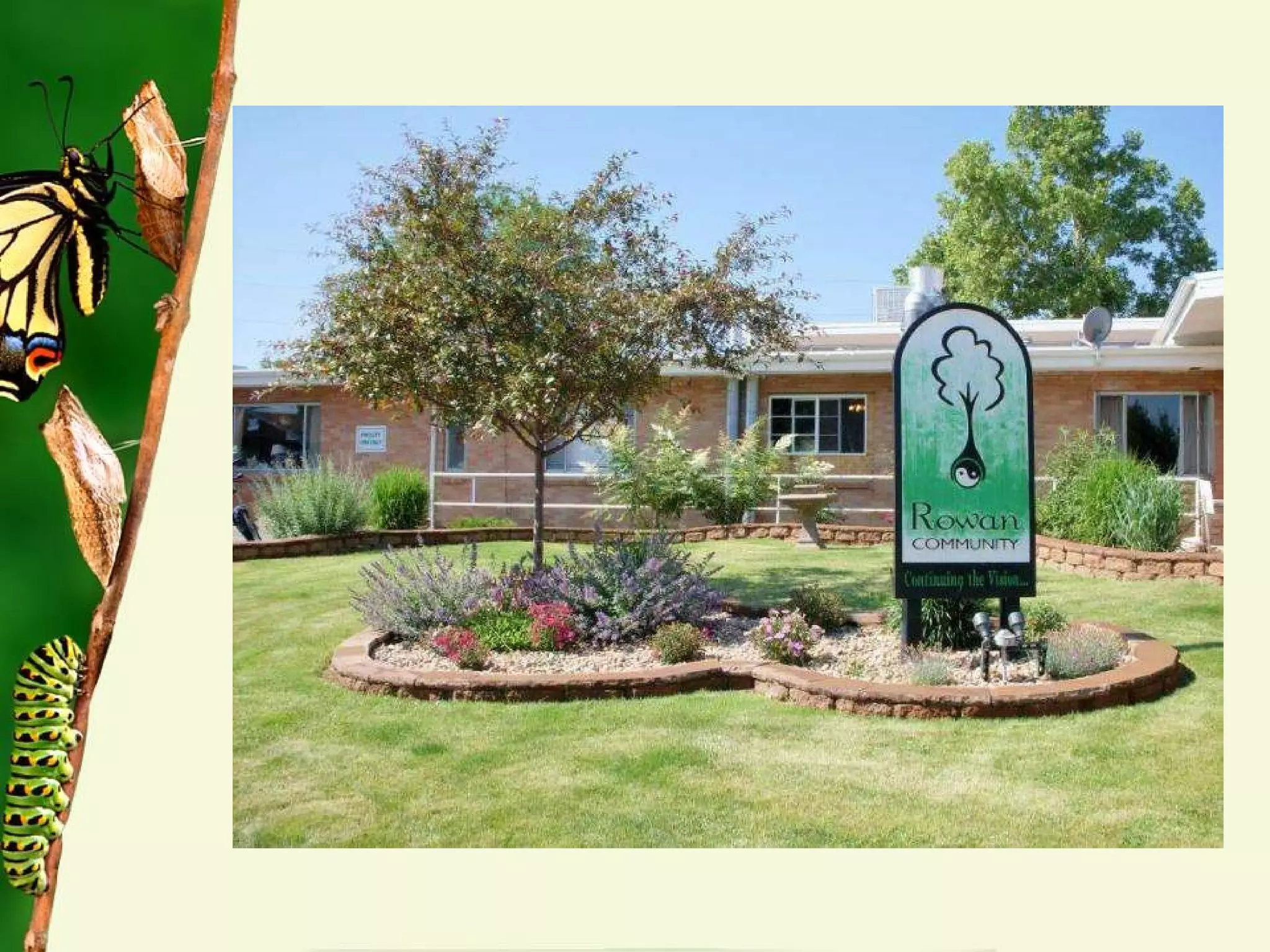
Staff Turnover – Rowan Community *Source: American health Care Association 2007 AHCA Survey Nursing Staff Vacancy and Turnover in Nursing Facilities Piñon Management Employee Data Department Turnover Colorado U.S. Nursing Admin - ADON 0% 37.4% 28.7% Nursing - RN 0% 48.4% 41% Nursing - LPN 0% 44.7% 49.9% Nursing - CNA 11% 66.4% 65.6% Nursing - Restorative Aide 0% Activities 0% Resident Transportation 50% Social Services 0% HIM - Medical Records 0% Accounting - Business Office 50% Dietary 36% Housekeeping 0% Laundry 50% Plant - Maintenance 0% OVERALL TURNOVER 14%
Clinical Outcomes Source: CMS Quality Measure/Quality Indicator Report – 2010 Quarter One Piñon Average National Average Colorado Average Prevalence of Falls 14.4% 13.1% 16.9% Residents with a UTI 7.6% 13% 16.3% Residents Who Lose Weight 8.4% 8.6% 8.8% Residents Who Were Physically Restrained 1.3% 3% 3.5%
Culture Change: A Way of Life NOT a Program 3 initiatives of deep, sustainable culture change… Physical transformation Organizational transformation Personal transformation
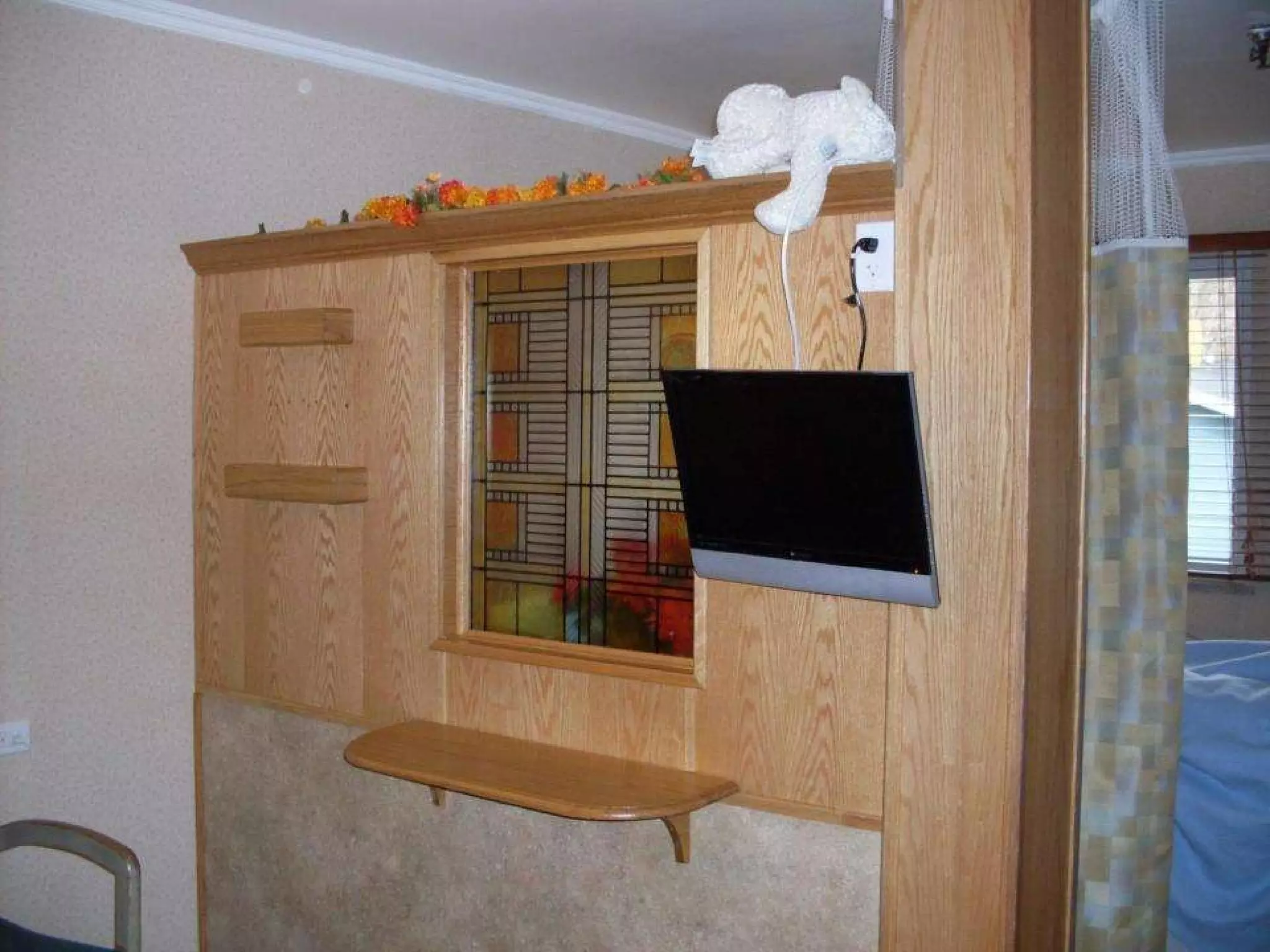
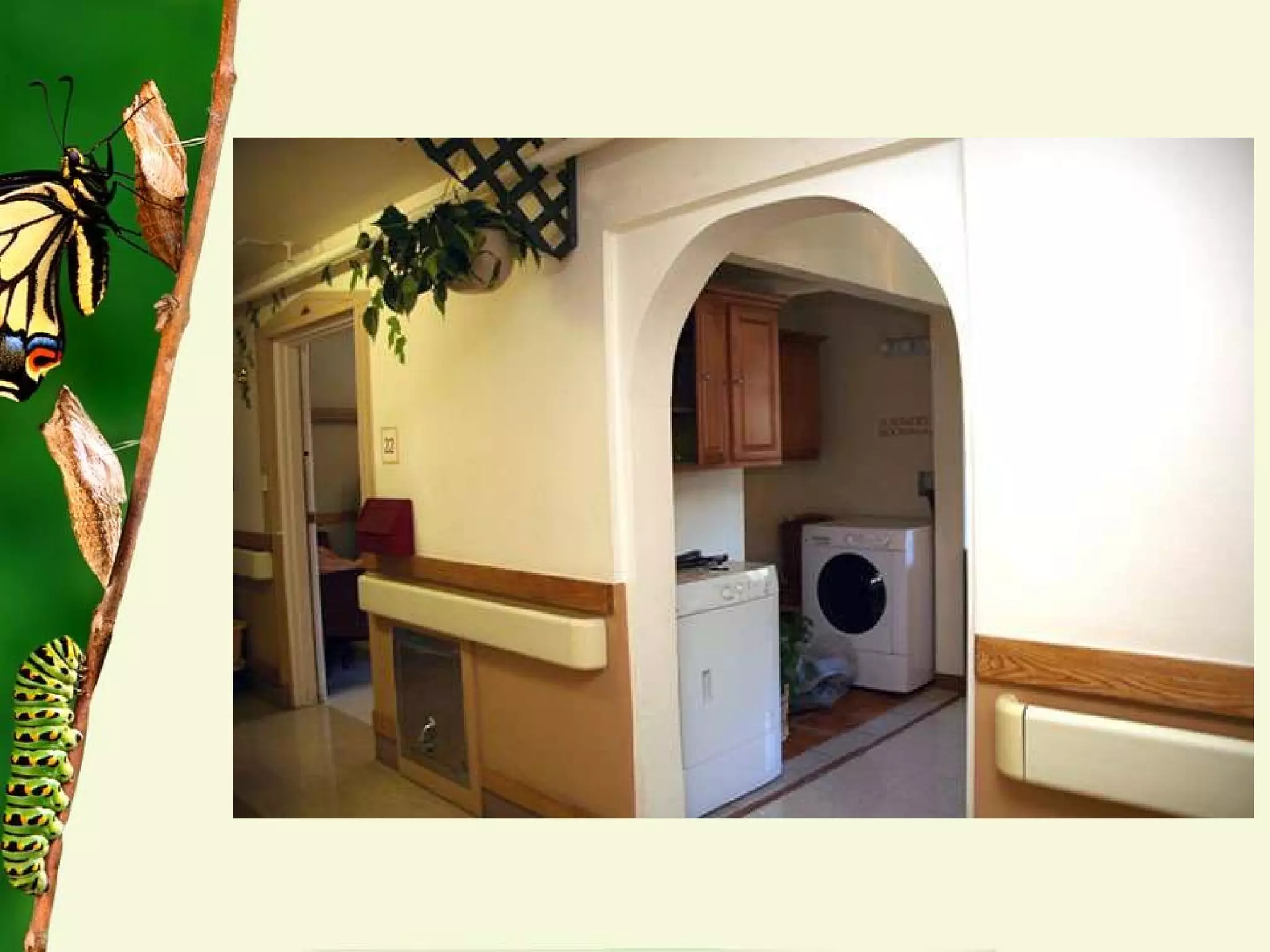
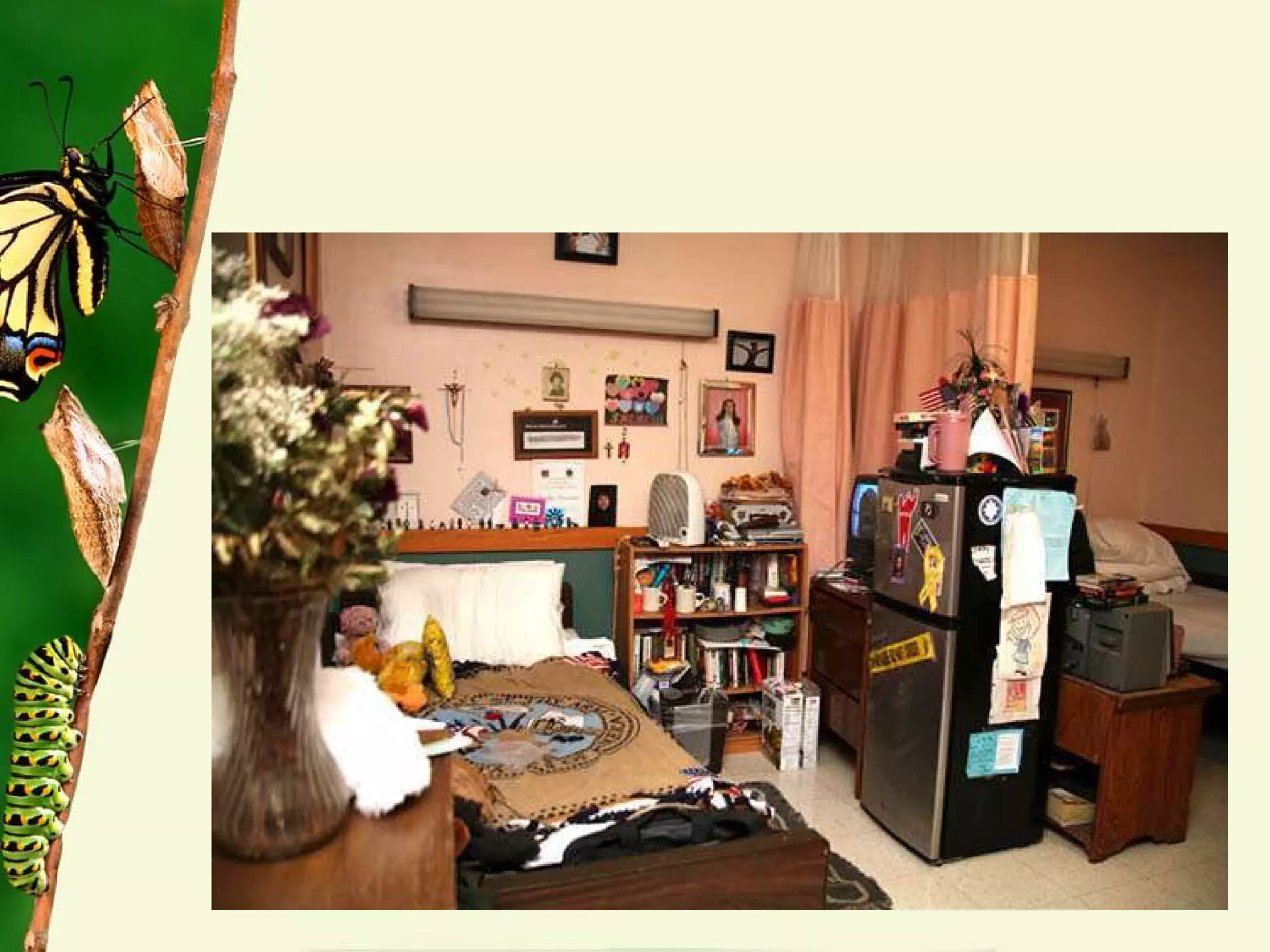
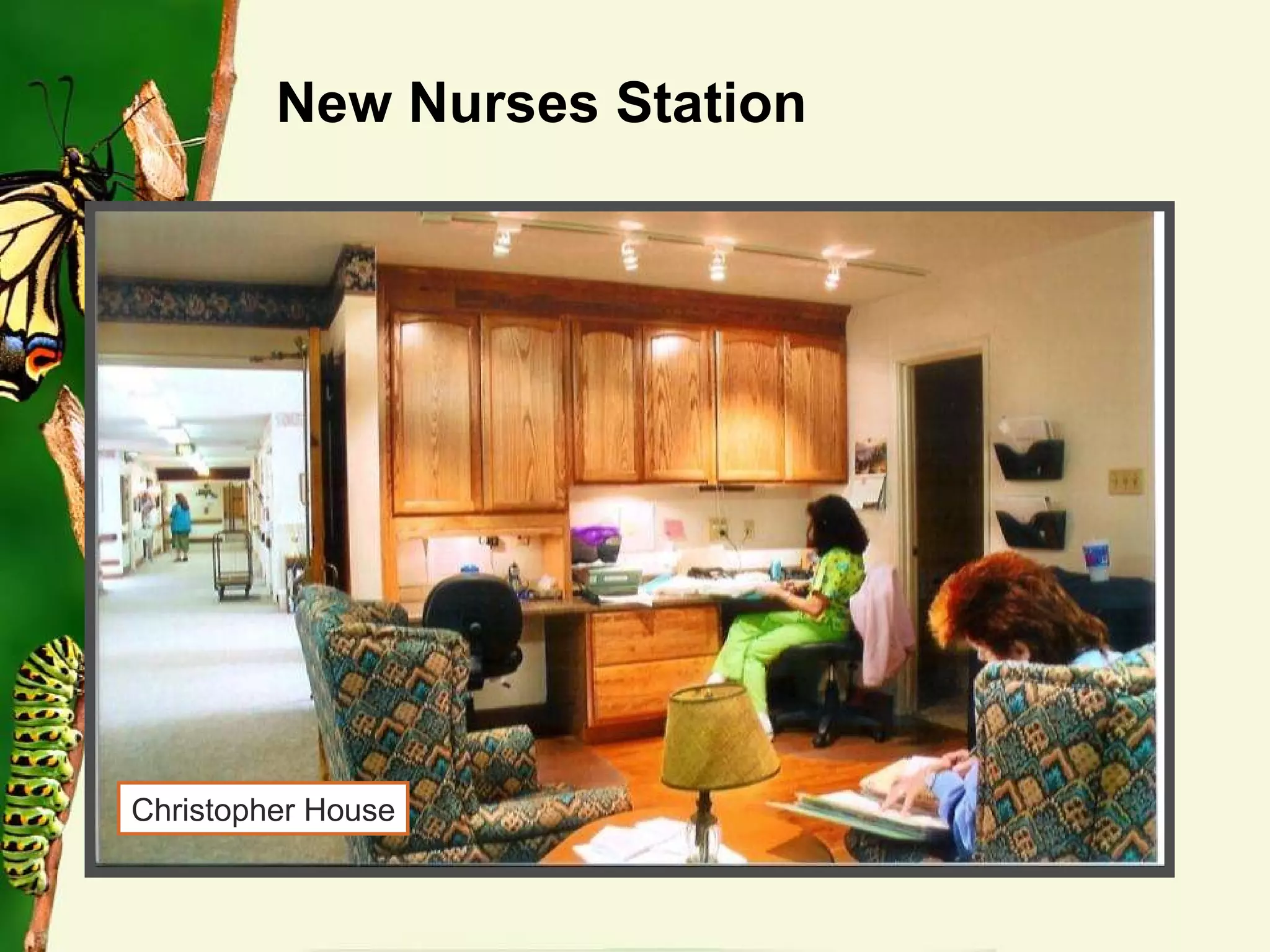
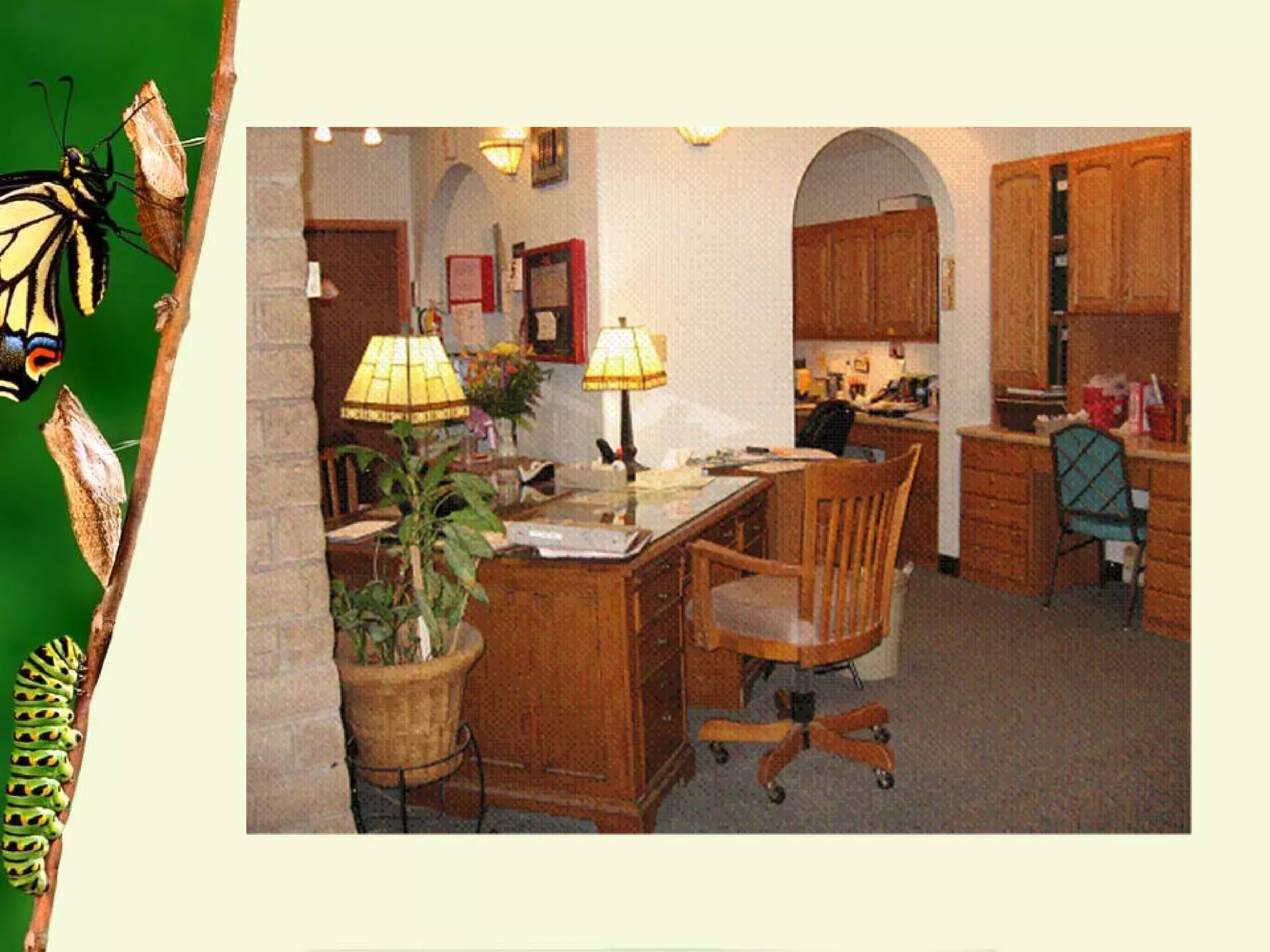
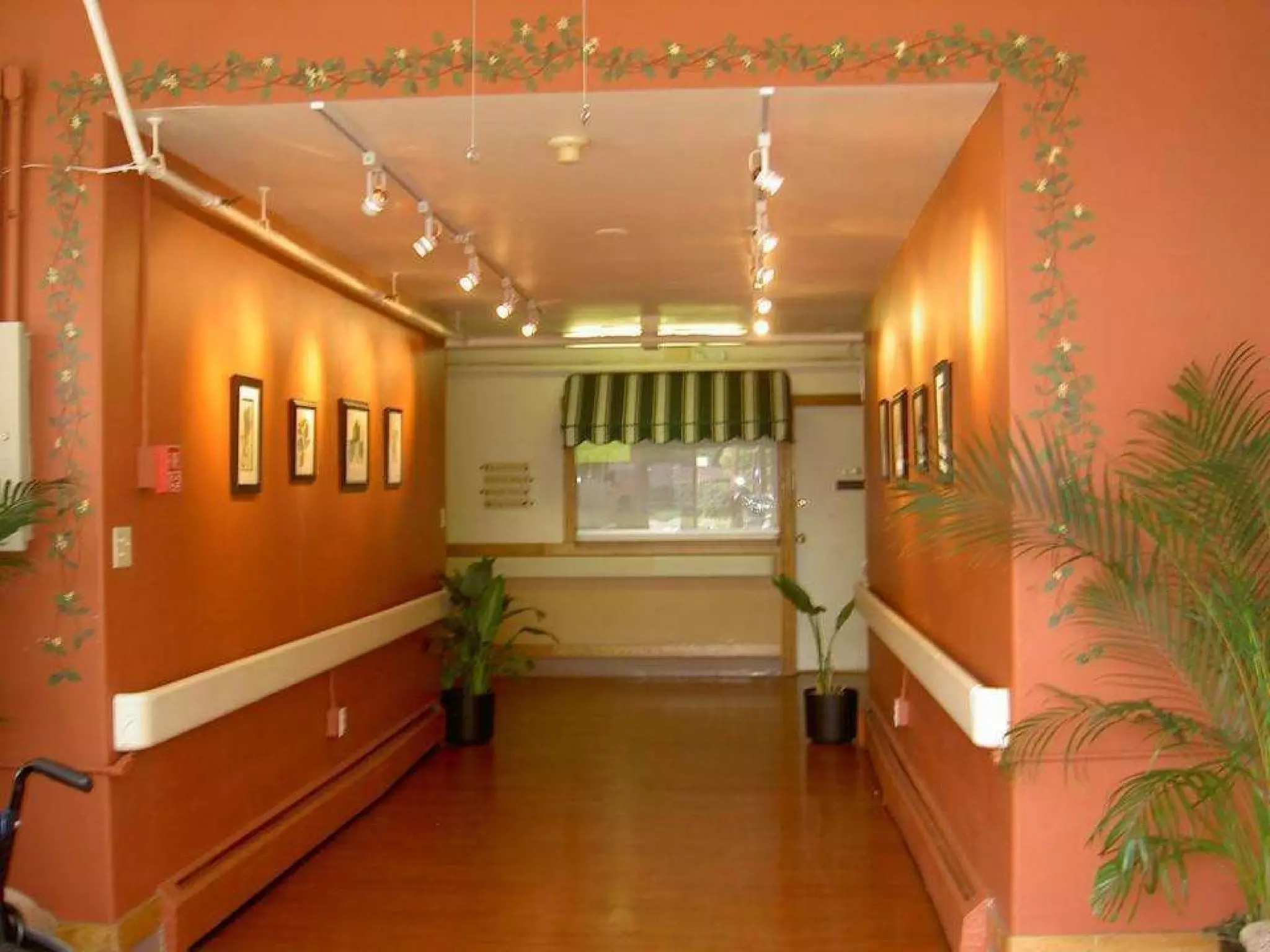
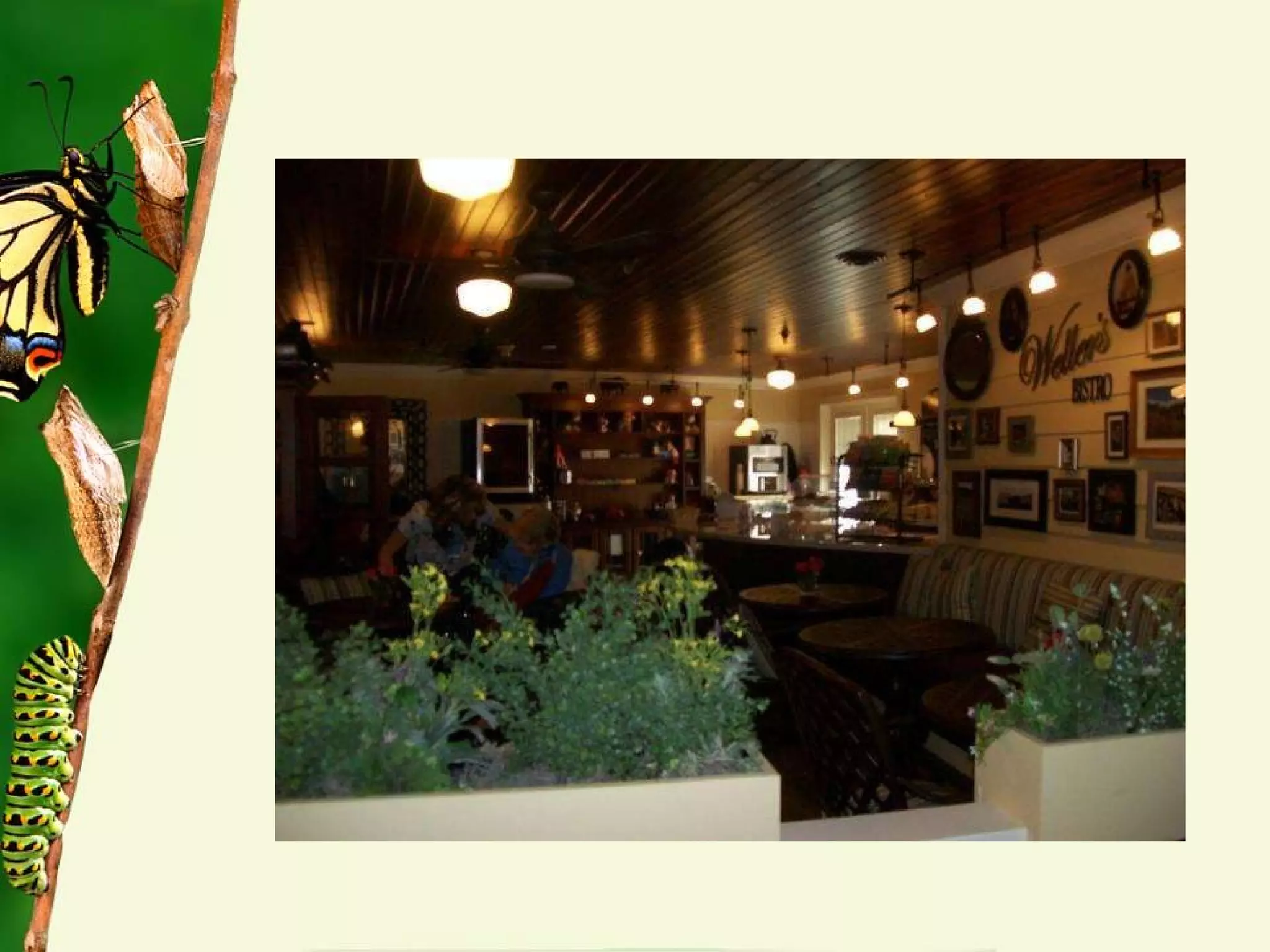
Physical transformation Removes the institutional trappings Reflects those who live and work there Creates a sense of identity and meaning and belonging – “lived space” Creates levels of privacy Encourages socialization Creates opportunity for normalcy Creates opportunity for relationship with the larger, living world Creates ease of access to companionship, a balancing of care, and opportunities for variety and spontaneity in the rhythm of daily life Feels like home, not homelike


Old Nurses Station Christopher House
New Nurses Station Christopher House


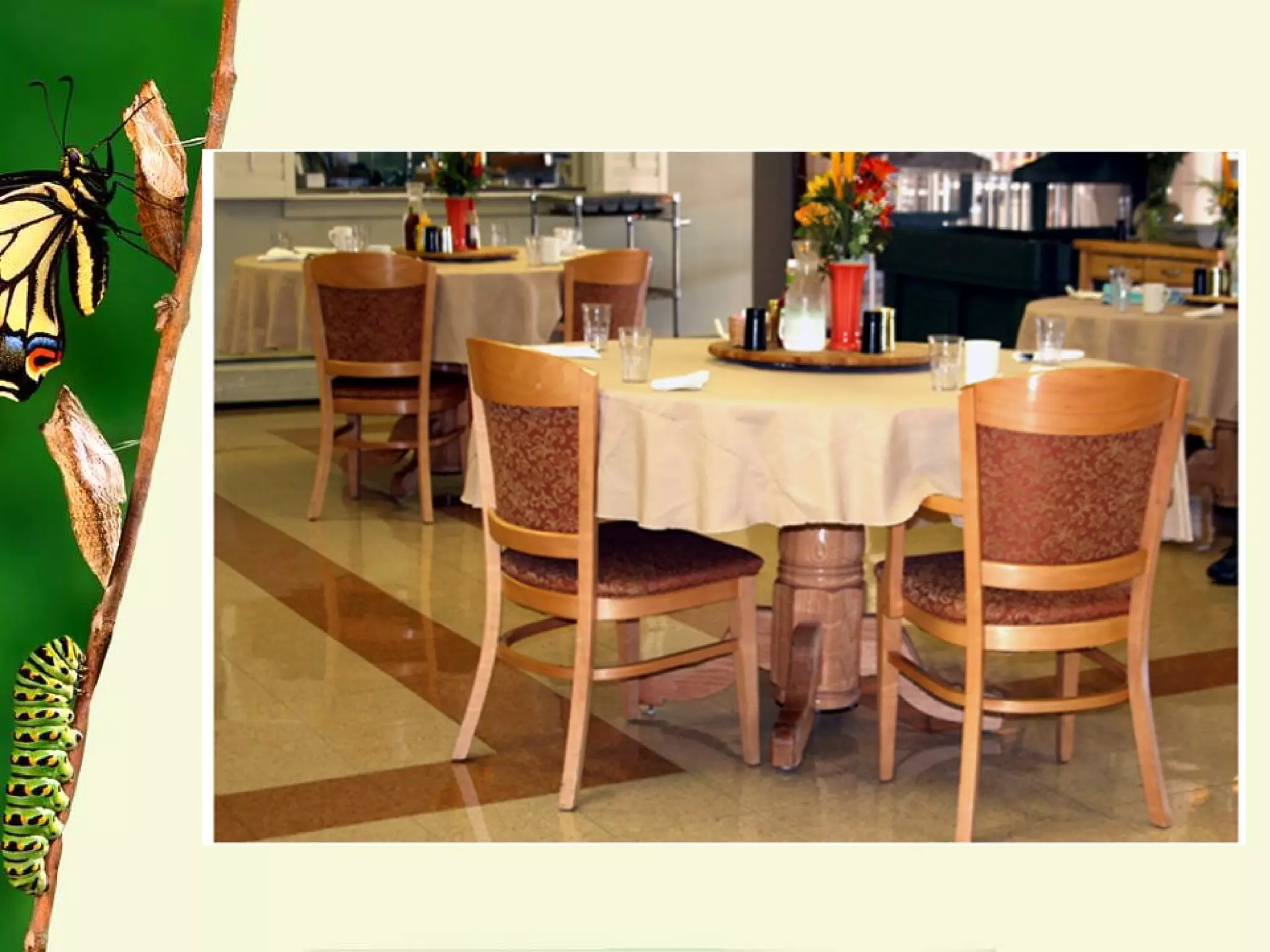
Old Dining Room North Star
Remodeled Dining Room North Star


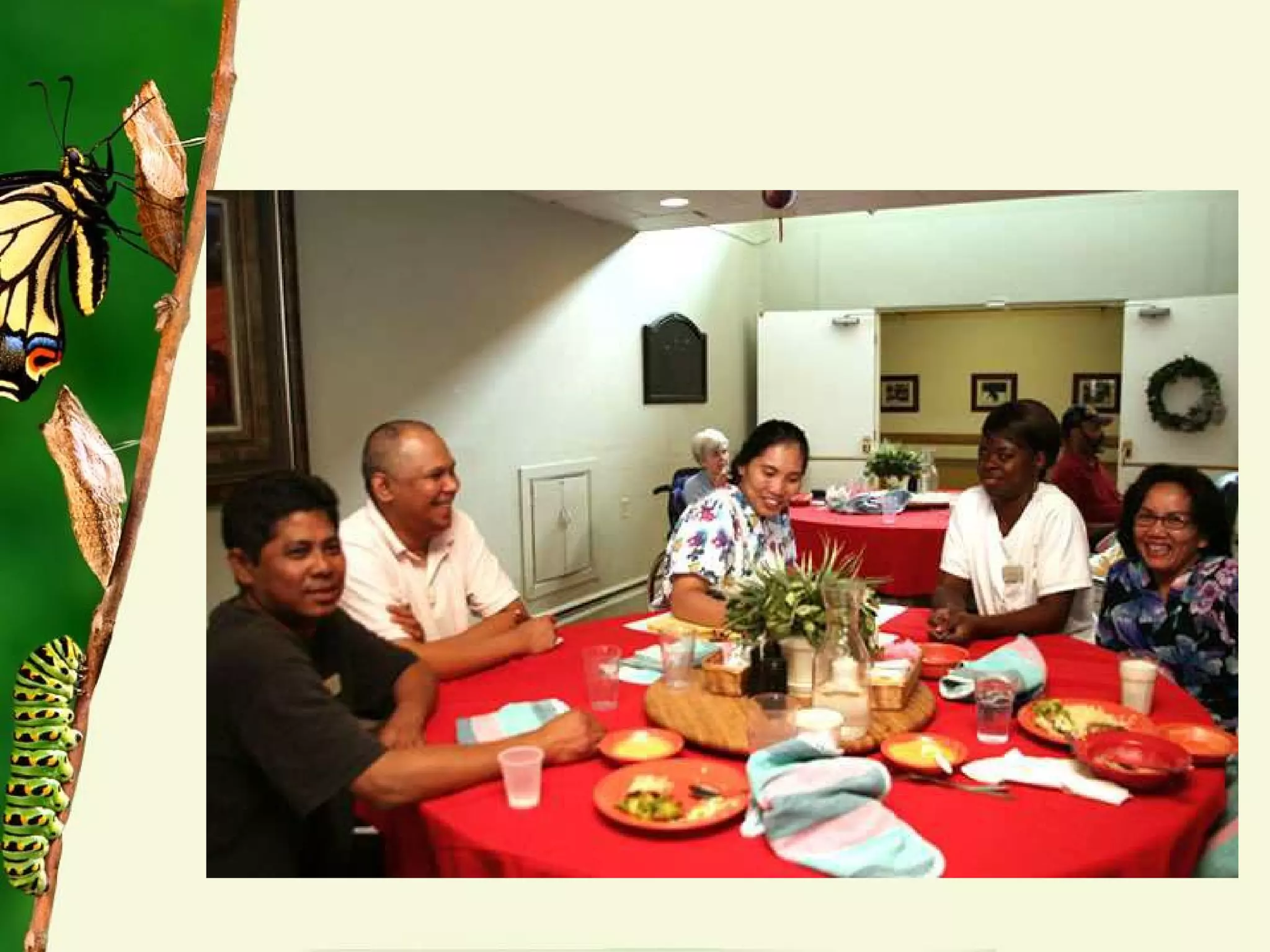
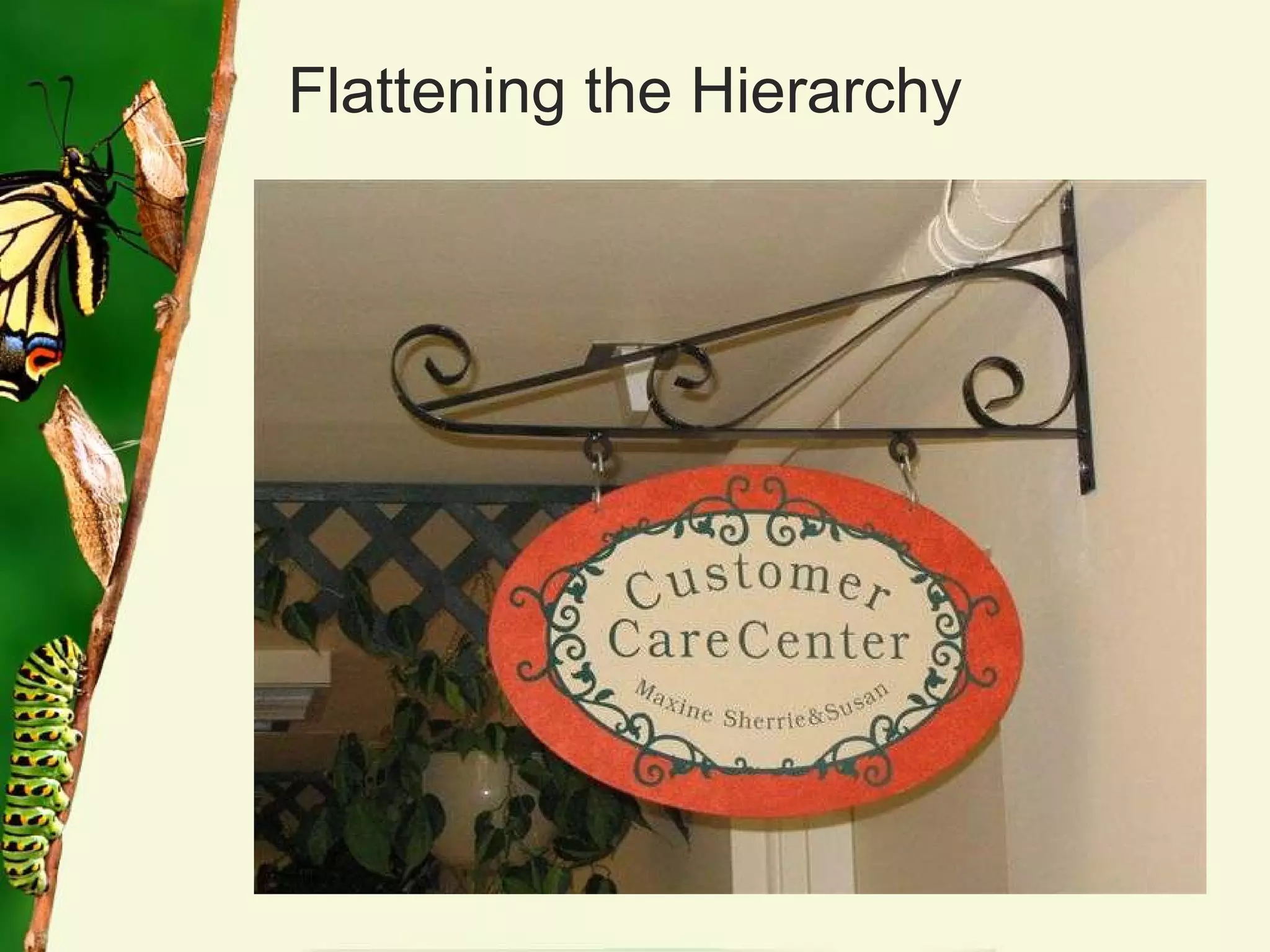
Organizational transformation Pushes decision-making and resources closer to the Elder Consistent assignment of staff into Neighborhood or Household Team instead of department and shift/ management and staff Cross training-blending of roles Shifting accountability Division of labor based on skills and likes not job descriptions Creates a sense of belonging
The Residents deciding on Dining Room Décor
Flattening the Hierarchy
 
Daily Community Meeting
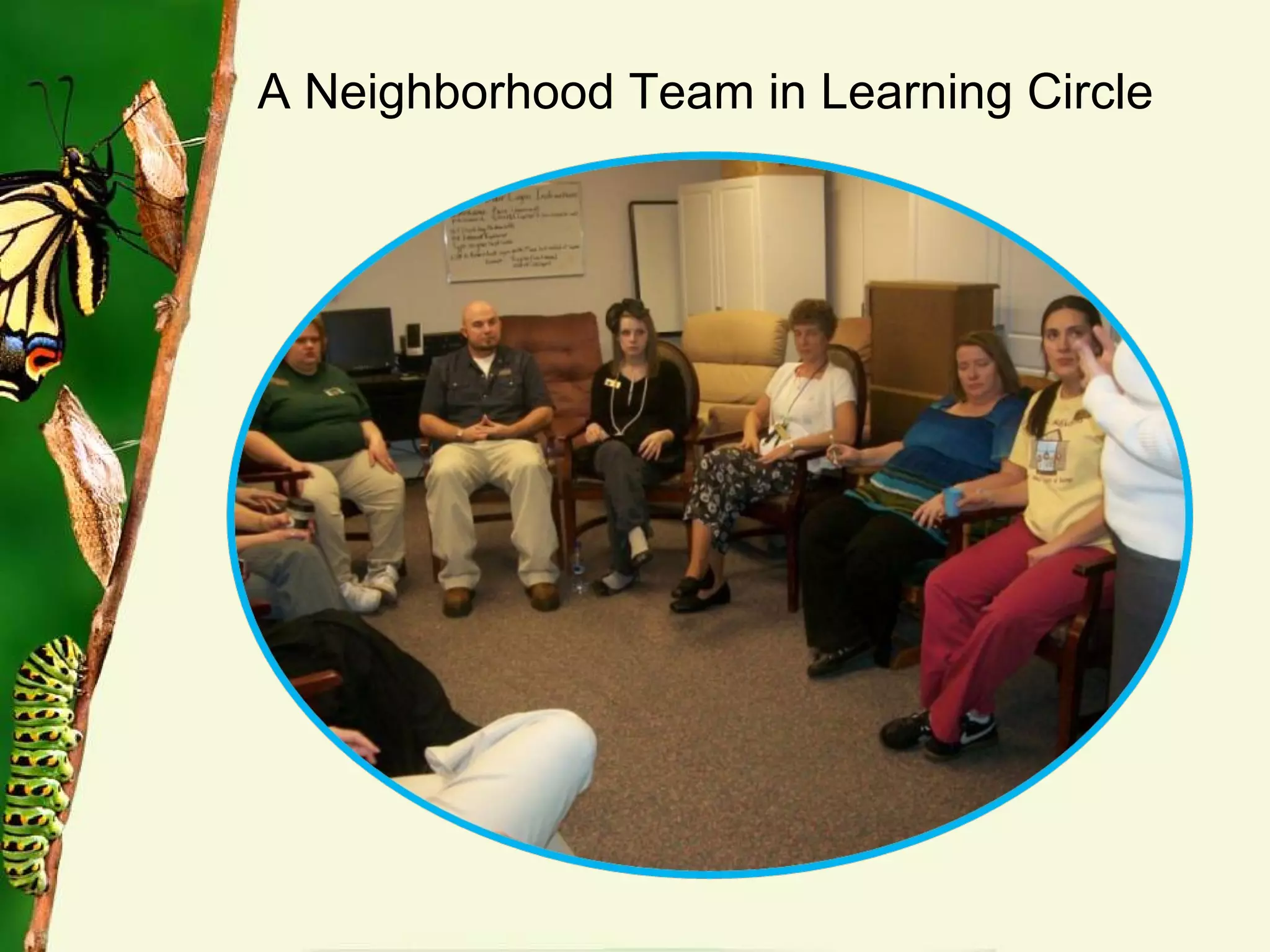
A Neighborhood Team in Learning Circle
Personal transformation Awakening to a new way of seeing the world – Eden Eyes Growing self and others – new skills New language Creating a new ethos New way of communicating Higher accountability Redefining CARE Caring for the whole person Begin asking “What if?” instead of saying, “If only.”
Downhill Skiing
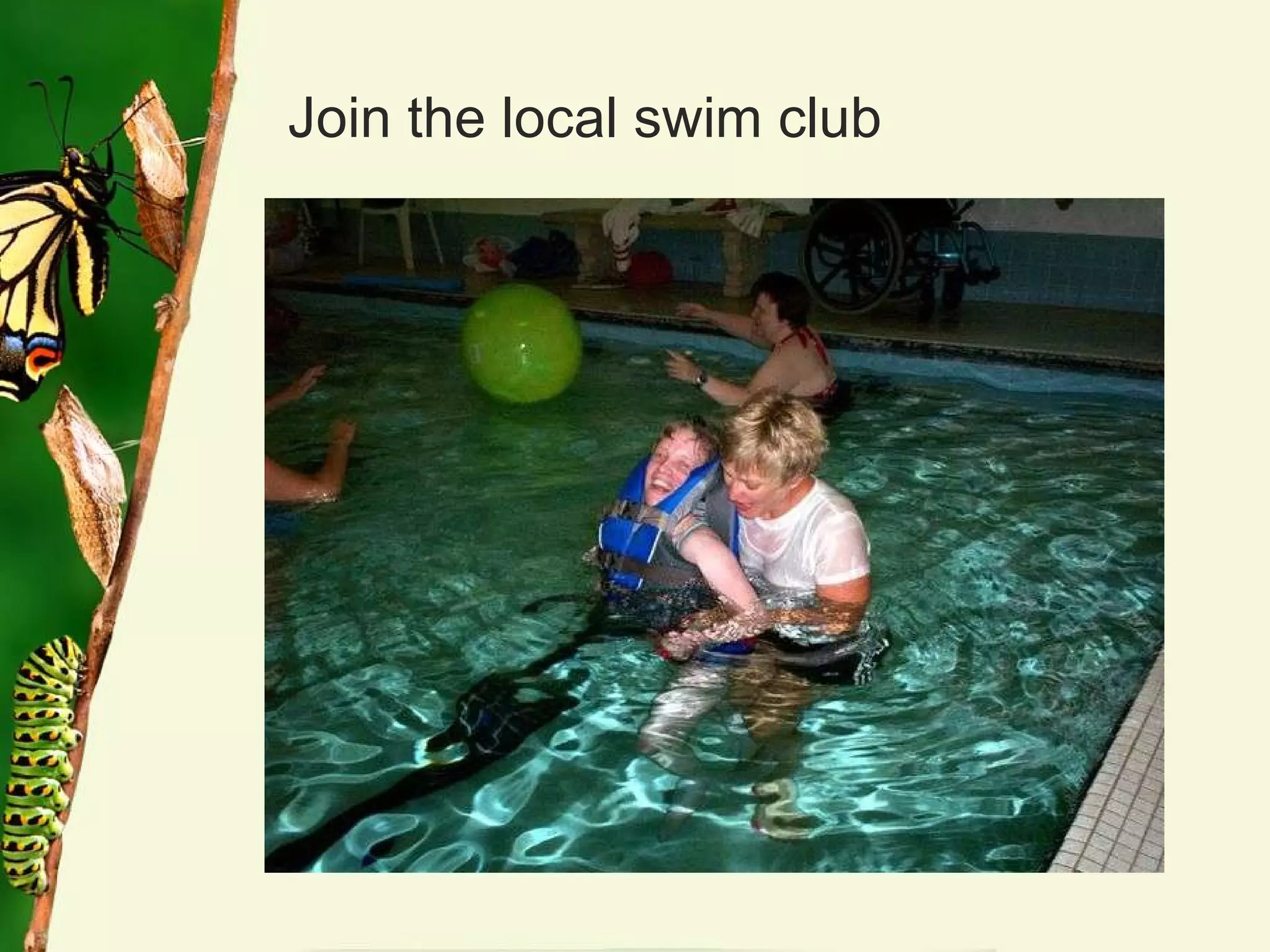
Join the local swim club
Put childcare in your home
Adult Enrichment Programs at Local College
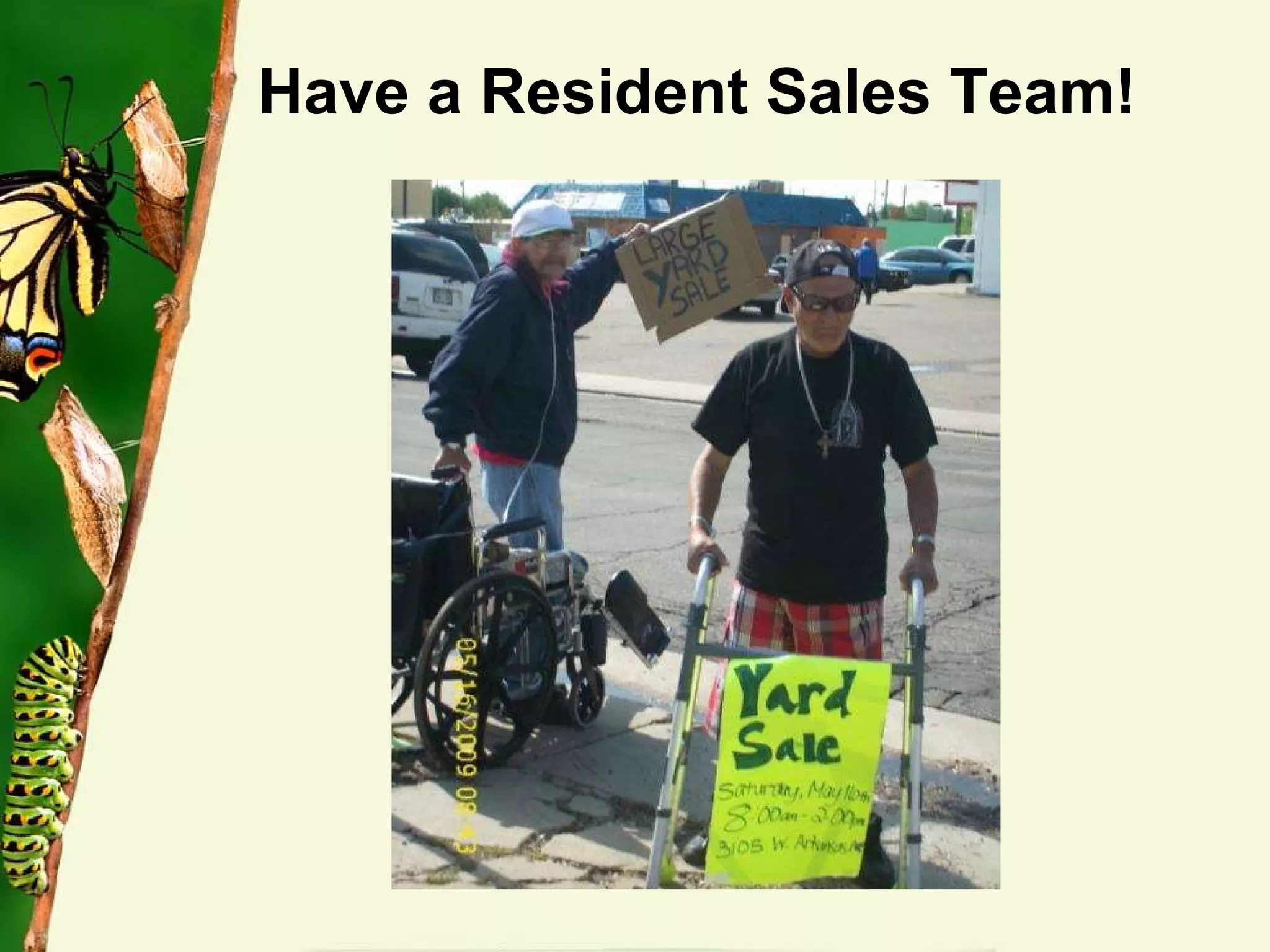
Have a Resident Sales Team!
They come here to live
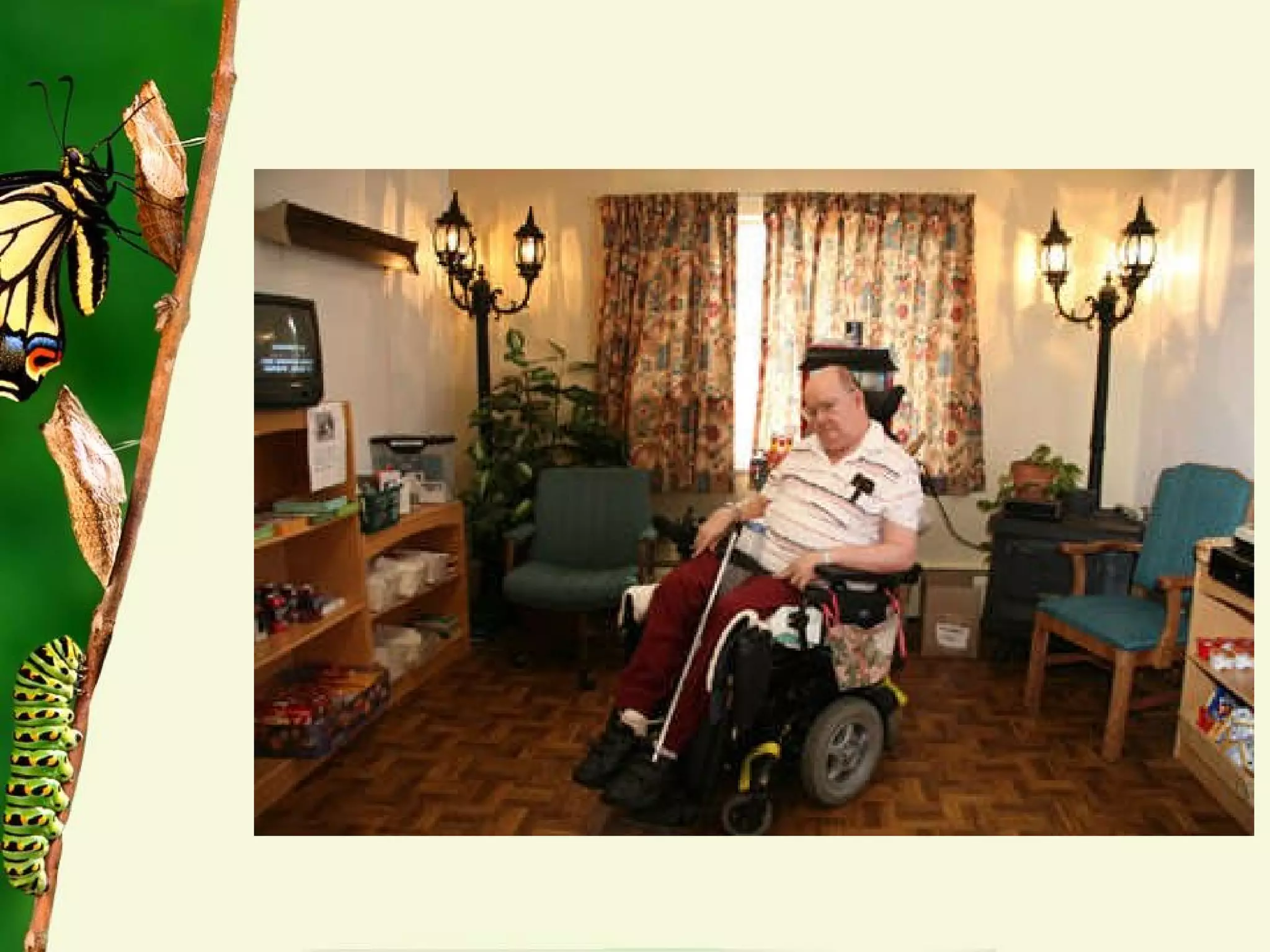
And continue to enjoy their simple pleasures..
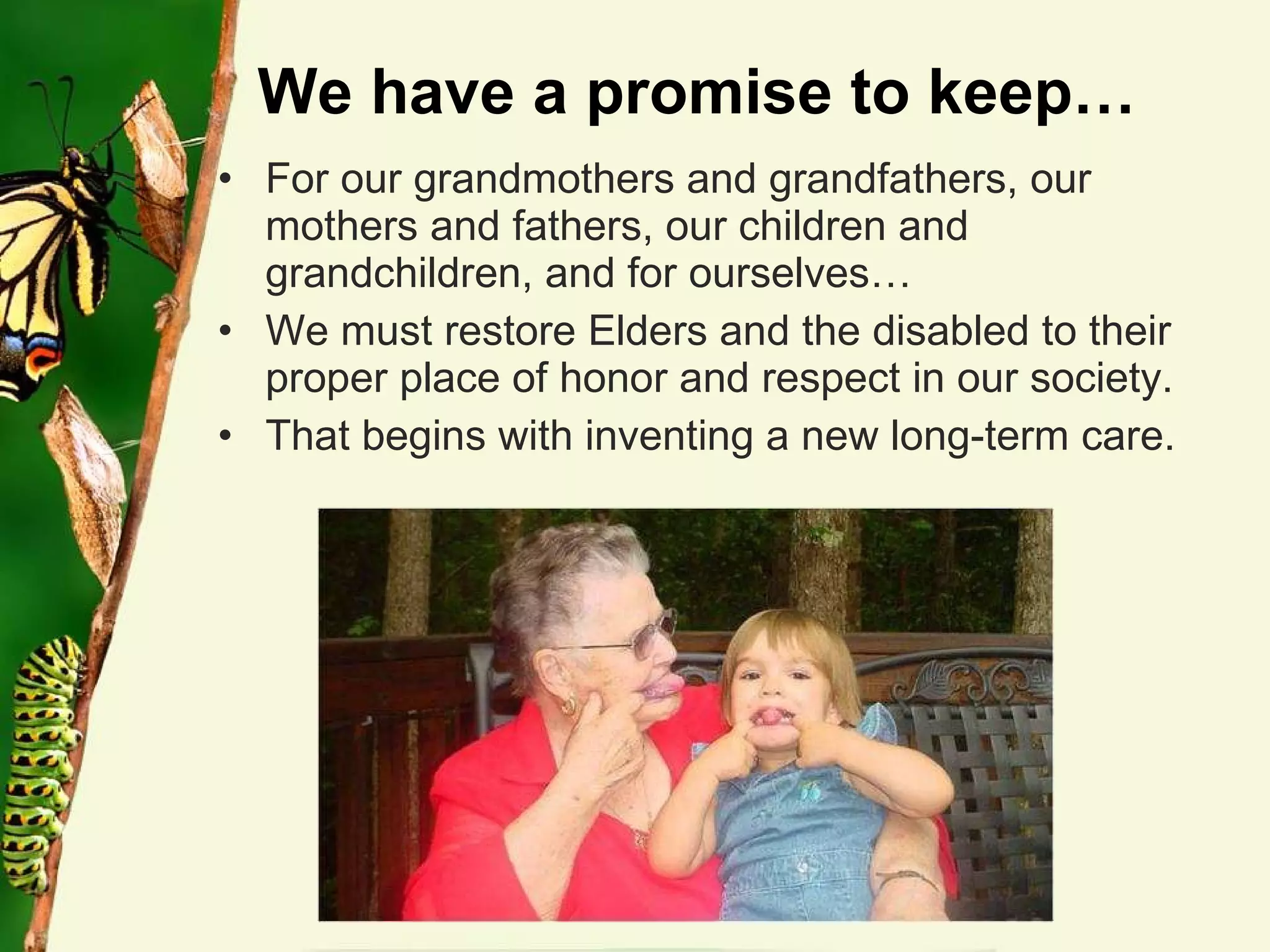
We have a promise to keep… For our grandmothers and grandfathers, our mothers and fathers, our children and grandchildren, and for ourselves… We must restore Elders and the disabled to their proper place of honor and respect in our society. That begins with inventing a new long-term care.

Keep the Promise - Inventing a NEW Long-Term Care: Nancy Fox

  • 1.
    Keeping the Promise: Inventing a New Long-Term Care Nancy Fox, Pi ñon Management
  • 2.
    A question foryou… What are old people for?
  • 3.
    The Cult ofAdulthood Created “God’s Waiting Room” Followed an Institutional Model of Care for our infirm and elderly. Last 20 years – tremendous improvements in quality of care Those are becoming harder and harder to sustain. The “Perfect Storm” of Long-Term Care A place where no one wants to live and few want to work
  • 4.
    A question forall of us… Why don’t people like us ?
  • 5.
    Daniel Pink –Drive: The Surprising Truth About What Motivates Us “ The course of human freedom has always moved in the direction of more freedom . And there is a reason for that – because it is in our nature to push for it.” “ The secret to high performance and satisfaction - at work, at school, and at home – is the deeply human need to direct our own lives.” “ We are born to be Players, not Pawns.”
  • 6.
    The reason peopledon’t like us Under the institutional model we remove every ounce of autonomy and freedom from their lives We engage in Surplus Safety at the high cost of stripping meaning and joy out of their lives We tell our staff to leave their hearts and their brains at the door Then a few very courageous and tireless people rush madly about trying to keep everyone in line
  • 7.
    Culture Change MovementA Social Movement to change the way we think about and care for our Elders and those with disabilities. Engages & empowers the residents, staff and families in effort to unleash the creative energy and spark of life of the community Restores relationships, autonomy, meaning, purpose and joy Began in nursing homes Now spreading to all care settings And around the world
  • 8.
    Person-Directed Care Aworld in which Residents truly direct their own care and make their own choices about how they spend their time. A world in which Caregivers are highly involved in decisions that are relevant to their jobs and the people they care for. The Residents, their families, and the staff are a part of a thriving, interdependent community where relationships matter . Does this speak to your natural drive for autonomy?
  • 9.
    Person-Centered Care Aworld in which the Resident’s natural need for autonomy is recognized and honored in a environment where maximum choice is balanced with the need for support, and risk is recognized and honored as a means to creating dignity. A world in which Caregivers know each resident well and create a supportive, yet empowering environment offering choices and balancing risk with autonomy for each individual resident on each day for each decision.
  • 10.
    Dispelling the MythsCulture Change costs too much I can’t “do” Culture Change because I have an old building Culture Change is only for old people The regulations won’t allow it Culture change doesn’t work in subacute My residents are not able to make decisions My residents are sicker than yours We are assisted living, we already do culture change We tried that and it doesn’t work We don’t have time for Culture Change
  • 11.
    A little aboutPiñon Management Started in 1979 by Jeff Jerebker, President & CEO Manage 14 SNFs – 13 in CO and 1 in NM Also do temporary management and consulting nationally 4 of our managed homes serve younger populations including people living with chronic mental illness, MS, Huntington’s, TBI Many of our buildings were built in the 1960’s and 70’s Serve predominantly Medicaid populations Known for turnarounds of troubled homes
  • 12.
    Customer Satisfaction SurveysSource: Pinnacle Quality Insight - 2010 Source: My Innerview – 2010 * Based on a subset of Colorado Homes that contract services with My Innerview Scale (1 – 5) Piñon National Range Overall Quality 4.3 4.2 4.08 – 4.66 Individual Needs 4.4 4.3 4.17 – 4.61 Recommend Homes 4.5 4.4 4.2 – 4.8 Percent “Excellent” and “Good” Responses Piñon Colorado* Range Overall Satisfaction 91% 87% 81% -98% Recommend Home 89% 86% 81% - 100%
  • 13.
  • 14.
    Denver Occupancy RatesBased on cost report data 2010
  • 15.
    Financial Outcomes Asan example of financial impact of culture change, year-to-date figures from one home are given. These numbers reflect the financial changes that occurred after Piñon took over management of this home and brought in a knowledgeable administrator in March 2009 who implemented culture change practices. Net Operating Income Net Income December 2008 ($27,955) ($240,879) December 2009 $309,998 ($31,353) December 2010 $503,509 $407,178
  • 16.
    Turnover *Source: Americanhealth Care Association 2007 AHCA Survey Nursing Staff Vacancy and Turnover in Nursing Facilities Piñon 2011 (All Homes) Colorado* United States* Nursing Admin 15% 37.4% 28.7% Nursing - RN 23% 48.4% 41% Nursing - LPN 14% 44.7% 49.9% Nursing - CNA 8% 66.4% 65.6% Overall Staff Turnover 10%
  • 17.
    Staff Turnover –Rowan Community *Source: American health Care Association 2007 AHCA Survey Nursing Staff Vacancy and Turnover in Nursing Facilities Piñon Management Employee Data Department Turnover Colorado U.S. Nursing Admin - ADON 0% 37.4% 28.7% Nursing - RN 0% 48.4% 41% Nursing - LPN 0% 44.7% 49.9% Nursing - CNA 11% 66.4% 65.6% Nursing - Restorative Aide 0% Activities 0% Resident Transportation 50% Social Services 0% HIM - Medical Records 0% Accounting - Business Office 50% Dietary 36% Housekeeping 0% Laundry 50% Plant - Maintenance 0% OVERALL TURNOVER 14%
  • 18.
    Clinical Outcomes Source:CMS Quality Measure/Quality Indicator Report – 2010 Quarter One Piñon Average National Average Colorado Average Prevalence of Falls 14.4% 13.1% 16.9% Residents with a UTI 7.6% 13% 16.3% Residents Who Lose Weight 8.4% 8.6% 8.8% Residents Who Were Physically Restrained 1.3% 3% 3.5%
  • 19.
    Culture Change: AWay of Life NOT a Program 3 initiatives of deep, sustainable culture change… Physical transformation Organizational transformation Personal transformation
  • 20.
    Physical transformation Removesthe institutional trappings Reflects those who live and work there Creates a sense of identity and meaning and belonging – “lived space” Creates levels of privacy Encourages socialization Creates opportunity for normalcy Creates opportunity for relationship with the larger, living world Creates ease of access to companionship, a balancing of care, and opportunities for variety and spontaneity in the rhythm of daily life Feels like home, not homelike
  • 21.
  • 22.
  • 23.
  • 24.
  • 25.
  • 26.
  • 27.
  • 28.
  • 29.
  • 30.
  • 31.
  • 32.
  • 33.
  • 34.
  • 35.
    Old Nurses StationChristopher House
  • 36.
    New Nurses StationChristopher House
  • 37.
  • 38.
  • 39.
  • 40.
    Old Dining RoomNorth Star
  • 41.
  • 42.
  • 43.
  • 44.
  • 45.
  • 46.
  • 47.
  • 48.
  • 49.
  • 50.
  • 51.
    Organizational transformation Pushesdecision-making and resources closer to the Elder Consistent assignment of staff into Neighborhood or Household Team instead of department and shift/ management and staff Cross training-blending of roles Shifting accountability Division of labor based on skills and likes not job descriptions Creates a sense of belonging
  • 52.
    The Residents decidingon Dining Room Décor
  • 53.
  • 54.
  • 55.
  • 56.
    A Neighborhood Teamin Learning Circle
  • 57.
    Personal transformation Awakeningto a new way of seeing the world – Eden Eyes Growing self and others – new skills New language Creating a new ethos New way of communicating Higher accountability Redefining CARE Caring for the whole person Begin asking “What if?” instead of saying, “If only.”
  • 58.
  • 59.
    Join the localswim club
  • 60.
  • 61.
    Adult Enrichment Programsat Local College
  • 62.
    Have a ResidentSales Team!
  • 63.
  • 64.
    And continue toenjoy their simple pleasures..
  • 65.
    We have apromise to keep… For our grandmothers and grandfathers, our mothers and fathers, our children and grandchildren, and for ourselves… We must restore Elders and the disabled to their proper place of honor and respect in our society. That begins with inventing a new long-term care.