KDK College of
Engineering
Department of
Information Technology
Subject: Effective
Technical Communication
Topic: Communication Skills for
Job Interviews
GroupMembem.
• A
R
Y
A SU8HIRAI BES
ARKAR (R0tI N0:33)
• BHUPENDRA DILIP M
A
R
B
A
T
E (ROII No:A)
• DEEP K
A
I
L
A
S S
AKH
ARKAR (ROII NO:35)
• DEV
ANSH U KISH 0ft DH0T£ (Roll No:36)
• DHIRÅJ RAIENDRA BAREkAR (Roll No:3?)
• DINESH V
A
S
A
N
T P
A
W
A
R (Roll No:38)
• ETHERN RAKESH W
ANKHEOE (Roll No:39)
• G
A
U
R
A
V V!NOD GOGE (Roll No:40}
Guided By: Prof. V D Sshh
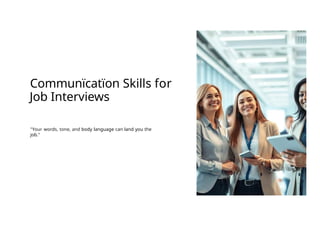
Communïcatïon Skills for
Job Interviews
"Your words, tone, and body language can land you the
job."
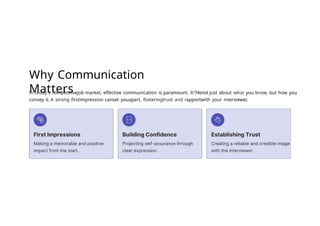
Why Communication
Matters
In today's competitivejob market, effective communication is paramount. It3
74snot just about what you know, but how you
convey it. A strong firstimpression canset youapart, fosteringtrust and rapportwith your interviewer.
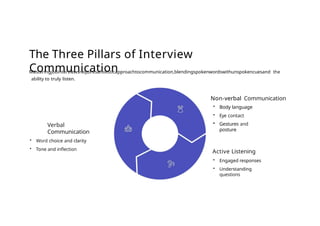
The Three Pillars of Interview
Communication
Masteringjobinterviewsrequiresaholisticapproachtocommunication,blendingspokenwordswithunspokencuesand the
ability to truly listen.
Non-verbal Communication
Verbal
Communication
• Word choice and clarity
• Tone and inflection
• Body language
• Eye contact
• Gestures and
posture
Active Listening
• Engaged responses
• Understanding
questions
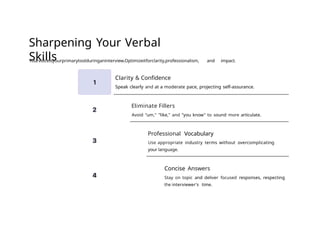
Sharpening Your Verbal
Skills
Yourvoiceisyourprimarytoolduringaninterview.Optimizeitforclarity,professionalism, and impact.
Clarity & Confidence
Speak clearly and at a moderate pace, projecting self-assurance.
Eliminate Fillers
Avoid "um," "like," and "you know" to sound more articulate.
Professional Vocabulary
Use appropriate industry terms without overcomplicating
your language.
Concise Answers
Stay on topic and deliver focused responses, respecting
the interviewer's time.
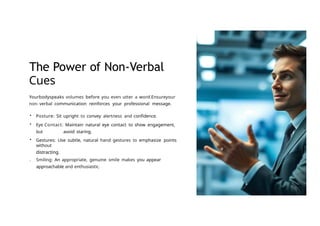
The Power of Non-Verbal
Cues
Yourbodyspeaks volumes before you even utter a word.Ensureyour
non- verbal communication reinforces your professional message.
• Posture: Sit upright to convey alertness and confidence.
• Eye Contact: Maintain natural eye contact to show engagement,
but avoid staring.
• Gestures: Use subtle, natural hand gestures to emphasize points
without
distracting.
. Smiling: An appropriate, genuine smile makes you appear
approachable and enthusiastic.
Mastering Active
Listening
Activelisteningisabouttrulyunderstanding,notjusthearing.ltshowsrespect and ensures you answer the right
question.
Listen Fully
Absorb the entire question before formulating
your response.
1
Clarify & Paraphrase
If unsure, rephrase the question to confirm
your understanding.
3
Show Engagement
Nod occasionally and use affirming gestures to
signal attentiveness.
2
Avoidlnterruptions
Allow the interviewer to finish speaking completely
before responding.
4
Common Communication
Pitfalls
Beawareofthesefrequentmistakesthatcandetractfromyourmessageandimpactyour interview
performance.
Pace Problems
Speaking too quickly or too slowly can make you
hard to follow.
Inappropriate Language
Using slang or overly casual language
undermines professionalism.
Poor Body Language
Slouching, fidgeting, or closed-off gestures send
negative signals.
Off-TopicAnswers
Failing to directly address the interviewer's
question demonstrates a lack of focus.
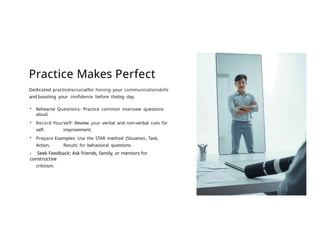
Practice Makes Perfect
Dedicated practiceiscrucialfor honing your communicationskills
and boosting your confidence before thebig day.
• Rehearse Questions: Practice common interview questions
aloud.
• Record Yourself: Review your verbal and non-verbal cues for
self- improvement.
• Prepare Examples: Use the STAR method (Situation, Task,
Action, Result) for behavioral questions.
‹ Seek Feedback: Ask friends, family, or mentors for
constructive
criticism.
Interview Day Essentials
Onthedayoftheinterview,thesetacticaltipswillhelpyouexecute your communication strategy
flawlessly.
01
Confident Greeting
Offer a firm handshake and a warm smile upon
arrival.
08
st r e ou nswe
Organize your thoughts using frameworks like STAR for
clarity.
0
2
Personalize Interaction
Use the interviewer*74s name, if appropriate, to build
rapport.
04
xpress
Thank the interviewer for their time and the opportunity
before Ie aving.
Your Communication
Journey
Effectivecommunication is notjustaskillfor
interviews;it'salifelongasset thatenhancesallaspects of
yourprofessional journey.
N
You*74re selling yourself, not
just
yOLlr re sume
Continue to practice and refine your communication, and you'll
unlock countless opportunities.

Kdk clg etc project for 3rd yrs project .

  • 1.
    KDK College of Engineering Departmentof Information Technology Subject: Effective Technical Communication Topic: Communication Skills for Job Interviews GroupMembem. • A R Y A SU8HIRAI BES ARKAR (R0tI N0:33) • BHUPENDRA DILIP M A R B A T E (ROII No:A) • DEEP K A I L A S S AKH ARKAR (ROII NO:35) • DEV ANSH U KISH 0ft DH0T£ (Roll No:36) • DHIRÅJ RAIENDRA BAREkAR (Roll No:3?) • DINESH V A S A N T P A W A R (Roll No:38) • ETHERN RAKESH W ANKHEOE (Roll No:39) • G A U R A V V!NOD GOGE (Roll No:40} Guided By: Prof. V D Sshh
  • 2.
    Communïcatïon Skills for JobInterviews "Your words, tone, and body language can land you the job."
  • 3.
    Why Communication Matters In today'scompetitivejob market, effective communication is paramount. It3 74snot just about what you know, but how you convey it. A strong firstimpression canset youapart, fosteringtrust and rapportwith your interviewer.
  • 4.
    The Three Pillarsof Interview Communication Masteringjobinterviewsrequiresaholisticapproachtocommunication,blendingspokenwordswithunspokencuesand the ability to truly listen. Non-verbal Communication Verbal Communication • Word choice and clarity • Tone and inflection • Body language • Eye contact • Gestures and posture Active Listening • Engaged responses • Understanding questions
  • 5.
    Sharpening Your Verbal Skills Yourvoiceisyourprimarytoolduringaninterview.Optimizeitforclarity,professionalism,and impact. Clarity & Confidence Speak clearly and at a moderate pace, projecting self-assurance. Eliminate Fillers Avoid "um," "like," and "you know" to sound more articulate. Professional Vocabulary Use appropriate industry terms without overcomplicating your language. Concise Answers Stay on topic and deliver focused responses, respecting the interviewer's time.
  • 6.
    The Power ofNon-Verbal Cues Yourbodyspeaks volumes before you even utter a word.Ensureyour non- verbal communication reinforces your professional message. • Posture: Sit upright to convey alertness and confidence. • Eye Contact: Maintain natural eye contact to show engagement, but avoid staring. • Gestures: Use subtle, natural hand gestures to emphasize points without distracting. . Smiling: An appropriate, genuine smile makes you appear approachable and enthusiastic.
  • 7.
    Mastering Active Listening Activelisteningisabouttrulyunderstanding,notjusthearing.ltshowsrespect andensures you answer the right question. Listen Fully Absorb the entire question before formulating your response. 1 Clarify & Paraphrase If unsure, rephrase the question to confirm your understanding. 3 Show Engagement Nod occasionally and use affirming gestures to signal attentiveness. 2 Avoidlnterruptions Allow the interviewer to finish speaking completely before responding. 4
  • 8.
    Common Communication Pitfalls Beawareofthesefrequentmistakesthatcandetractfromyourmessageandimpactyour interview performance. PaceProblems Speaking too quickly or too slowly can make you hard to follow. Inappropriate Language Using slang or overly casual language undermines professionalism. Poor Body Language Slouching, fidgeting, or closed-off gestures send negative signals. Off-TopicAnswers Failing to directly address the interviewer's question demonstrates a lack of focus.
  • 9.
    Practice Makes Perfect Dedicatedpracticeiscrucialfor honing your communicationskills and boosting your confidence before thebig day. • Rehearse Questions: Practice common interview questions aloud. • Record Yourself: Review your verbal and non-verbal cues for self- improvement. • Prepare Examples: Use the STAR method (Situation, Task, Action, Result) for behavioral questions. ‹ Seek Feedback: Ask friends, family, or mentors for constructive criticism.
  • 10.
    Interview Day Essentials Onthedayoftheinterview,thesetacticaltipswillhelpyouexecuteyour communication strategy flawlessly. 01 Confident Greeting Offer a firm handshake and a warm smile upon arrival. 08 st r e ou nswe Organize your thoughts using frameworks like STAR for clarity. 0 2 Personalize Interaction Use the interviewer*74s name, if appropriate, to build rapport. 04 xpress Thank the interviewer for their time and the opportunity before Ie aving.
  • 11.
    Your Communication Journey Effectivecommunication isnotjustaskillfor interviews;it'salifelongasset thatenhancesallaspects of yourprofessional journey. N You*74re selling yourself, not just yOLlr re sume Continue to practice and refine your communication, and you'll unlock countless opportunities.