KALI CHARAN NIGAM INSTITUTE OF TECHNOLOGY,BANDA
THERMODYNAMICS(KME-301)
UNIT-5: Refrigeration Cycles
VAPOUR COMPRESSION REFRIGERATION SYSTEM & TYPES OF VAPOUR
COMPRESSION REFRIGERATION CYCLES
BY
PRADEEP KUMAR SINGH
ASSISTANT PROFESSOR
MECHANICAL DEPARTMENT
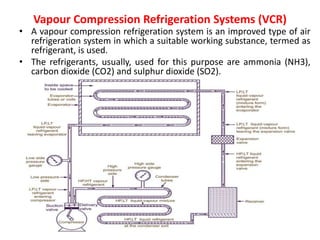
Vapour Compression Refrigeration Systems (VCR)
• A vapour compression refrigeration system is an improved type of air
refrigeration system in which a suitable working substance, termed as
refrigerant, is used.
• The refrigerants, usually, used for this purpose are ammonia (NH3),
carbon dioxide (CO2) and sulphur dioxide (SO2).
Parts Of VCR
It consists of the following five essential parts :
1. Compressor. The low pressure and temperature vapour refrigerant
from evaporator is drawn into the compressor through the inlet or
suction valve , where it is compresses to a high pressure and
temperature. This high pressure and temperature vapour
refrigerant is discharge the condenser through the delivery or
discharge valve.
2. Condenser. The condenser or cooler consists of coils of pipe in
which the high pressure and temperature vapour refrigerant is
cooled and condensed. The refrigerant, while passing through the
condenser, gives up its latent heat to the surrounding condensing
medium which is normally air or water.
3. Receiver. The condensed liquid refrigerant from the condenser is
stored in a vessel known as receiver from where it is supplied to
the evaporator through the expansion valve or refrigerant control
valve.
4. Expansion valve. It is also called throttle valve or refrigerant control
valve. The function of the expansion valve is to allow the liquid
refrigerant under high pressure and temperature to pass at a
controlled rate after reducing its pressure and temperature. Some of
the liquid refrigerant evaporates as it passes through the expansion
valve, but the greater portion is vaporised in the evaporator at the low
pressure and temperature.
5. Evaporator. An evaporator consists of coils of pipe in which the liquid-
vapour refrigerant at low pressure and temperature is evaporated and
changed into vapour refrigerant at low pressure and temperature. In
evaporating, the liquid vapour refrigerant absorbs its latent heat of
vaporisation from the medium (air, water or brine) which is to be
cooled.
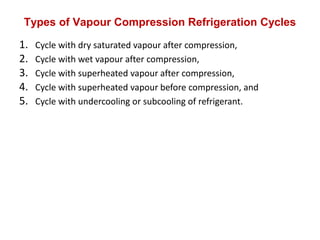
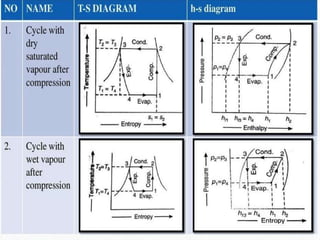
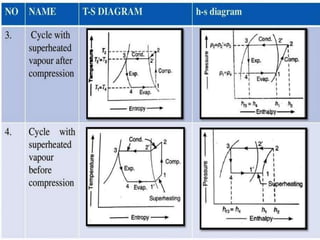
Types of Vapour Compression Refrigeration Cycles
1. Cycle with dry saturated vapour after compression,
2. Cycle with wet vapour after compression,
3. Cycle with superheated vapour after compression,
4. Cycle with superheated vapour before compression, and
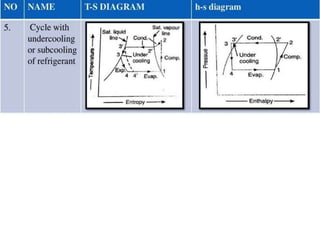
5. Cycle with undercooling or subcooling of refrigerant.
KCNIT
KCNIT
KCNIT

KCNIT

  • 1.
    KALI CHARAN NIGAMINSTITUTE OF TECHNOLOGY,BANDA THERMODYNAMICS(KME-301) UNIT-5: Refrigeration Cycles VAPOUR COMPRESSION REFRIGERATION SYSTEM & TYPES OF VAPOUR COMPRESSION REFRIGERATION CYCLES BY PRADEEP KUMAR SINGH ASSISTANT PROFESSOR MECHANICAL DEPARTMENT
  • 2.
    Vapour Compression RefrigerationSystems (VCR) • A vapour compression refrigeration system is an improved type of air refrigeration system in which a suitable working substance, termed as refrigerant, is used. • The refrigerants, usually, used for this purpose are ammonia (NH3), carbon dioxide (CO2) and sulphur dioxide (SO2).
  • 3.
    Parts Of VCR Itconsists of the following five essential parts : 1. Compressor. The low pressure and temperature vapour refrigerant from evaporator is drawn into the compressor through the inlet or suction valve , where it is compresses to a high pressure and temperature. This high pressure and temperature vapour refrigerant is discharge the condenser through the delivery or discharge valve. 2. Condenser. The condenser or cooler consists of coils of pipe in which the high pressure and temperature vapour refrigerant is cooled and condensed. The refrigerant, while passing through the condenser, gives up its latent heat to the surrounding condensing medium which is normally air or water. 3. Receiver. The condensed liquid refrigerant from the condenser is stored in a vessel known as receiver from where it is supplied to the evaporator through the expansion valve or refrigerant control valve.
  • 4.
    4. Expansion valve.It is also called throttle valve or refrigerant control valve. The function of the expansion valve is to allow the liquid refrigerant under high pressure and temperature to pass at a controlled rate after reducing its pressure and temperature. Some of the liquid refrigerant evaporates as it passes through the expansion valve, but the greater portion is vaporised in the evaporator at the low pressure and temperature. 5. Evaporator. An evaporator consists of coils of pipe in which the liquid- vapour refrigerant at low pressure and temperature is evaporated and changed into vapour refrigerant at low pressure and temperature. In evaporating, the liquid vapour refrigerant absorbs its latent heat of vaporisation from the medium (air, water or brine) which is to be cooled.
  • 5.
    Types of VapourCompression Refrigeration Cycles 1. Cycle with dry saturated vapour after compression, 2. Cycle with wet vapour after compression, 3. Cycle with superheated vapour after compression, 4. Cycle with superheated vapour before compression, and 5. Cycle with undercooling or subcooling of refrigerant.