Jeff Kosciejew
@kosciejew
kosciejew@gmail.com
Getting started
using Kanban
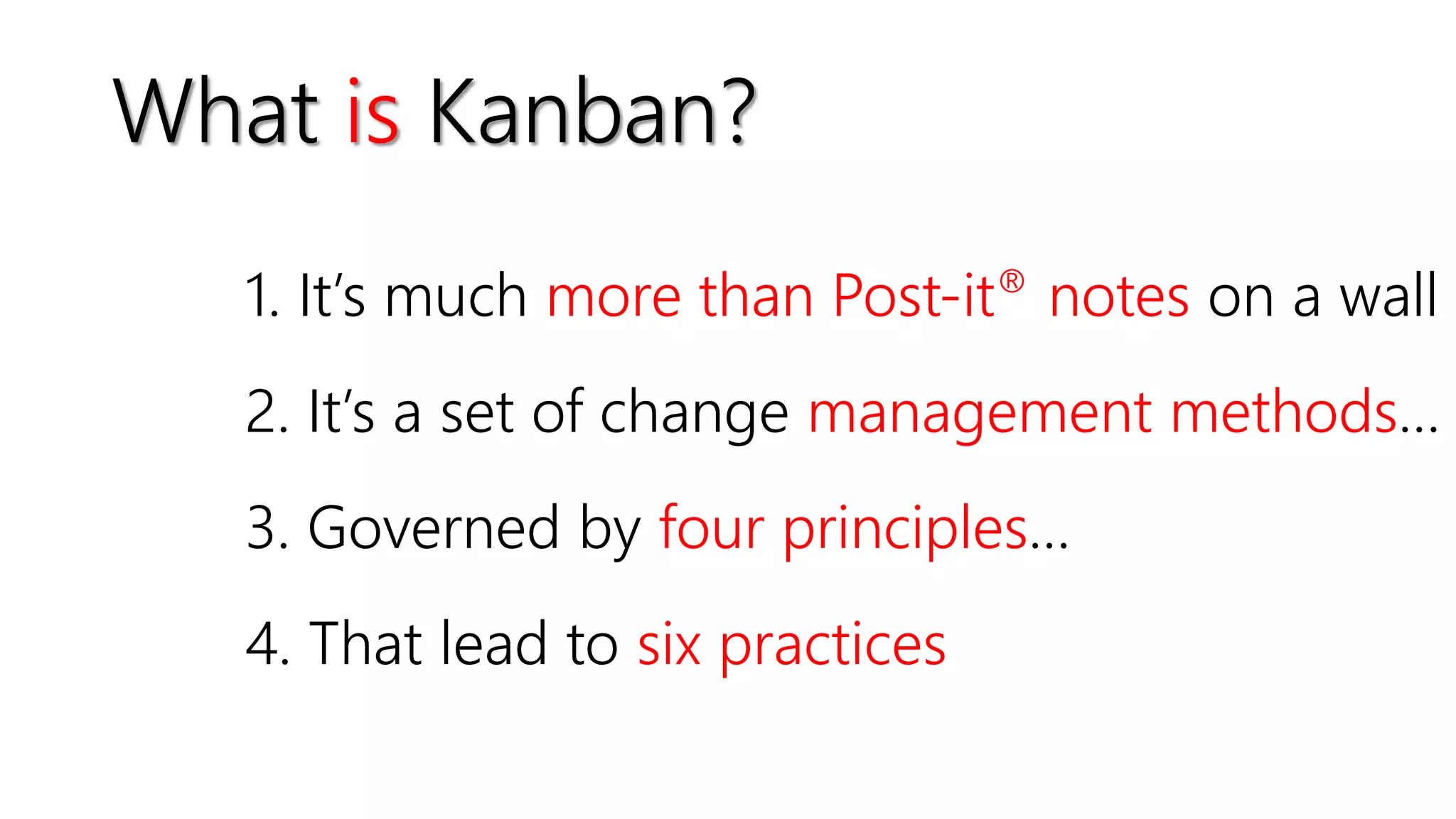
What is Kanban?
1. It’s much more than Post-it® notes on a wall
2. It’s a set of change management methods…
3. Governed by four principles…
4. That lead to six practices
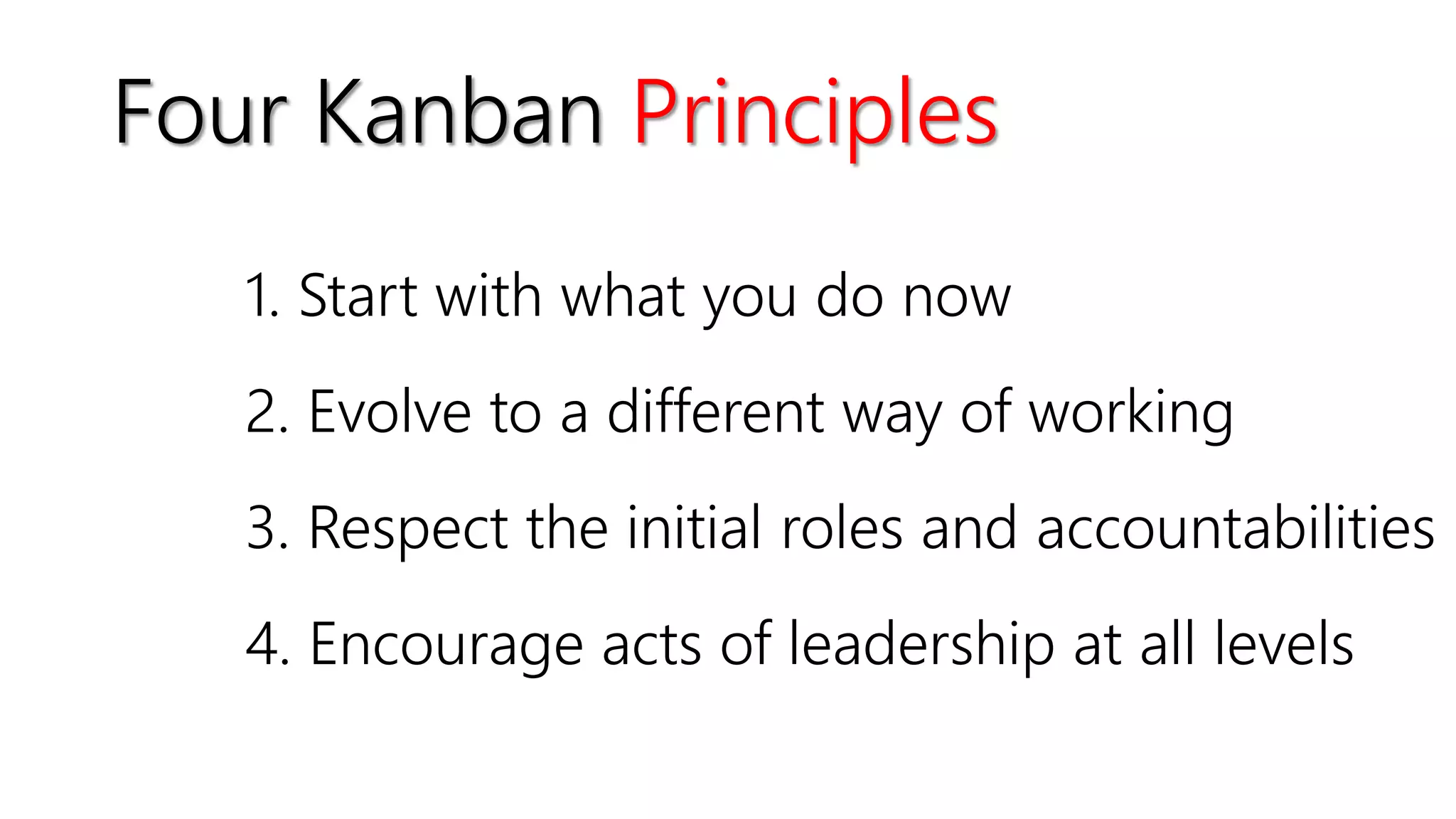
Four Kanban Principles
1. Start with what you do now
2. Evolve to a different way of working
3. Respect the initial roles and accountabilities
4. Encourage acts of leadership at all levels
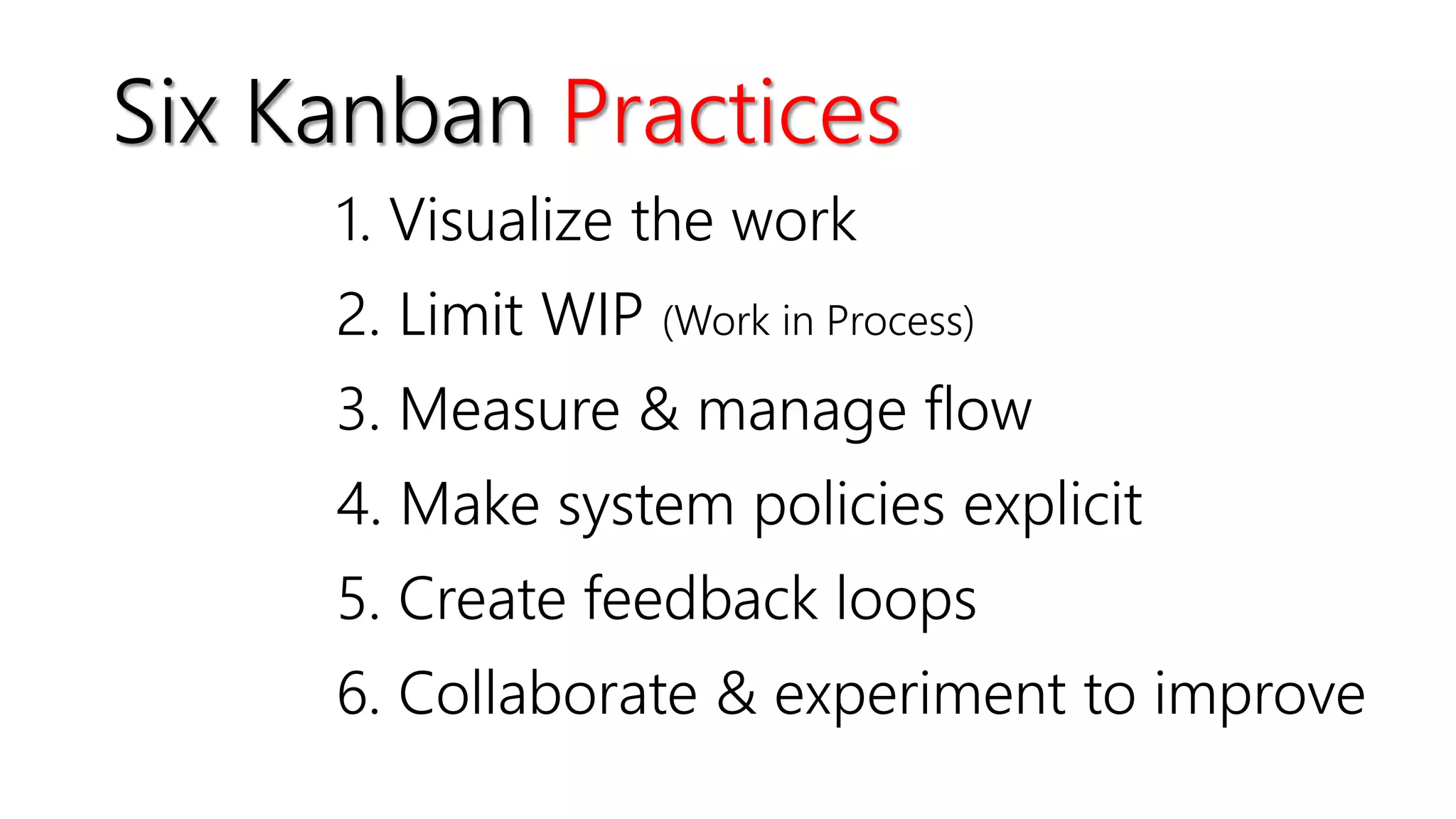
1. Visualize the work
2. Limit WIP (Work in Process)
3. Measure & manage flow
4. Make system policies explicit
5. Create feedback loops
6. Collaborate & experiment to improve
Six Kanban Practices
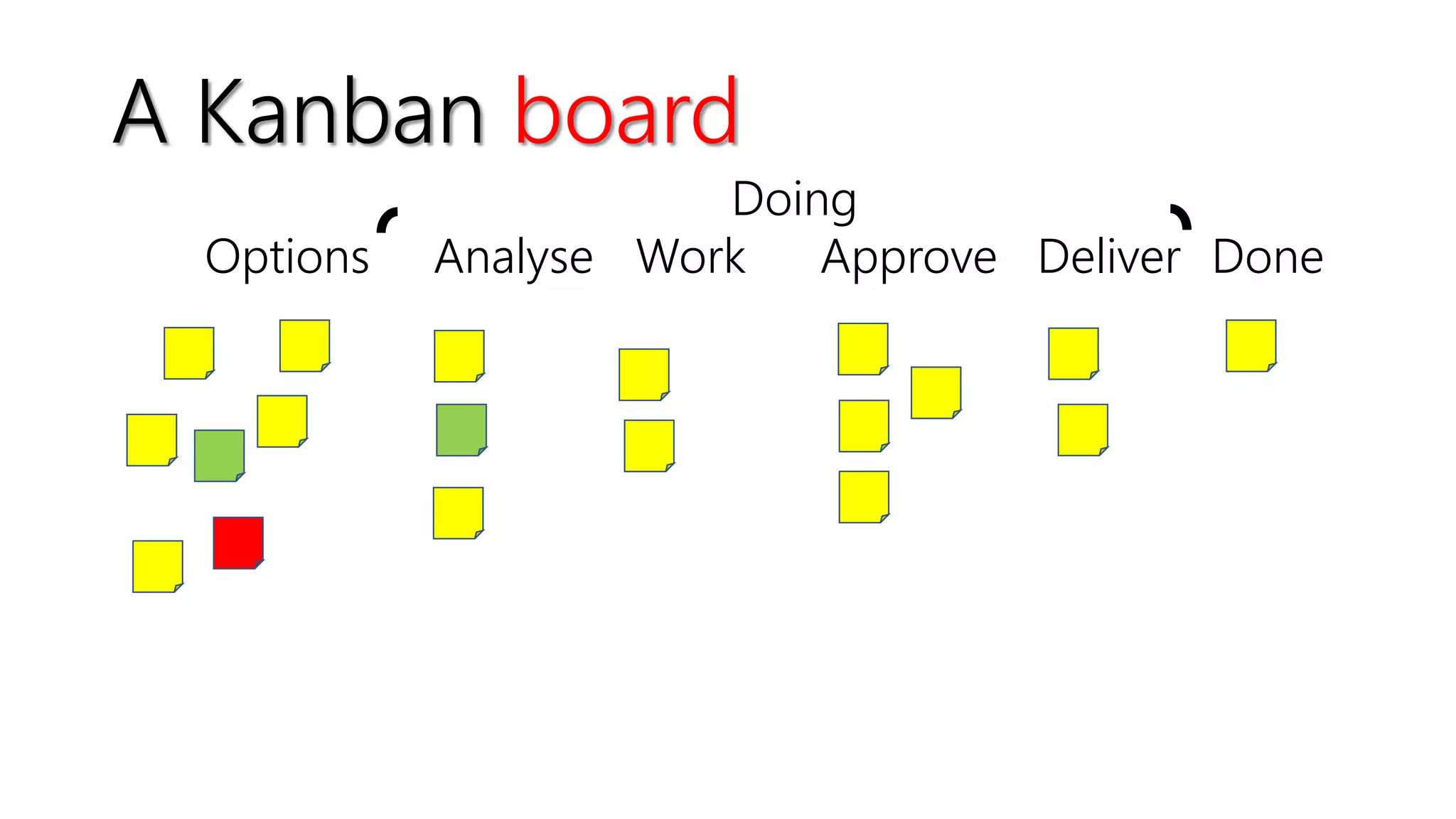
Doing
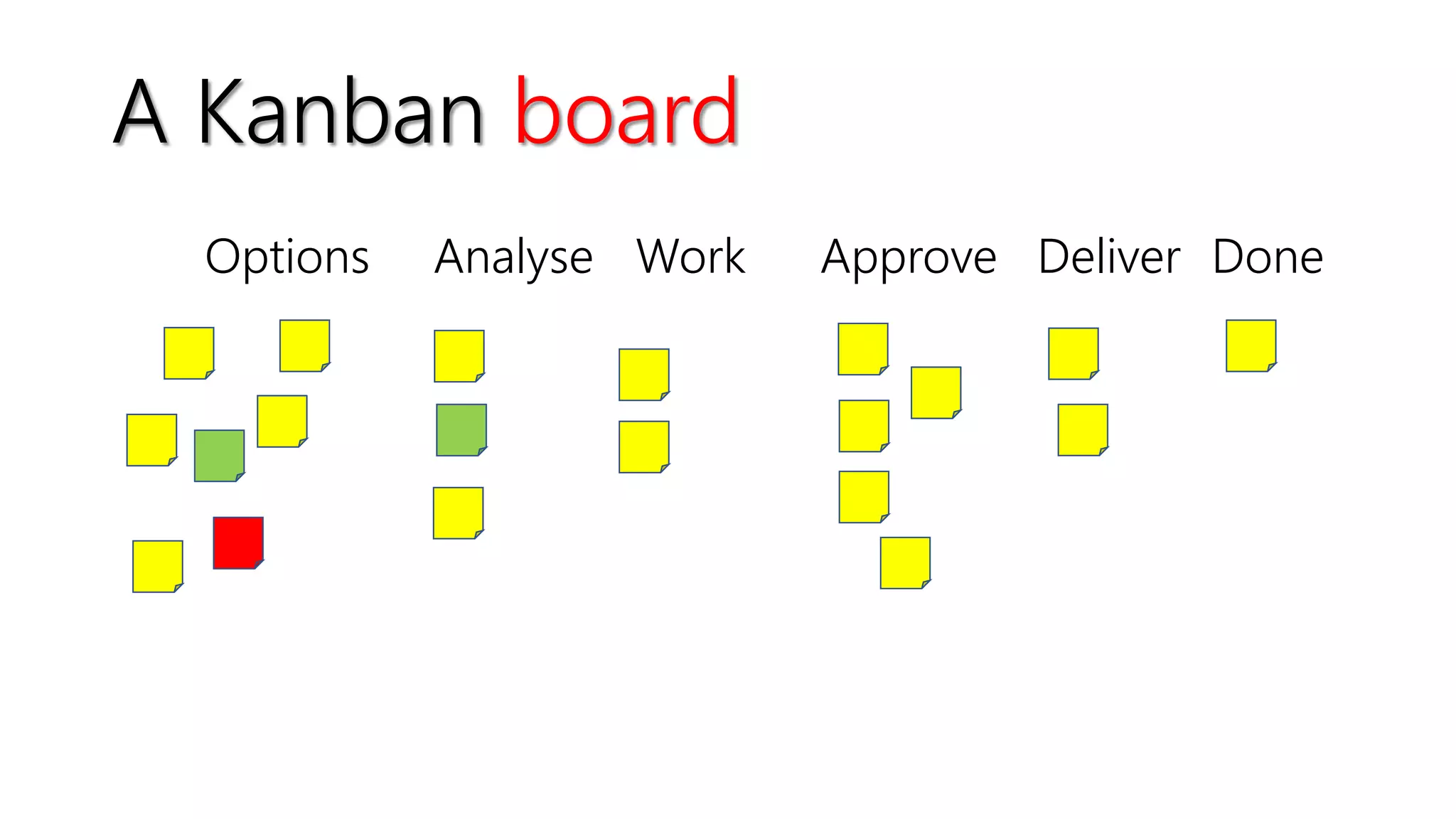
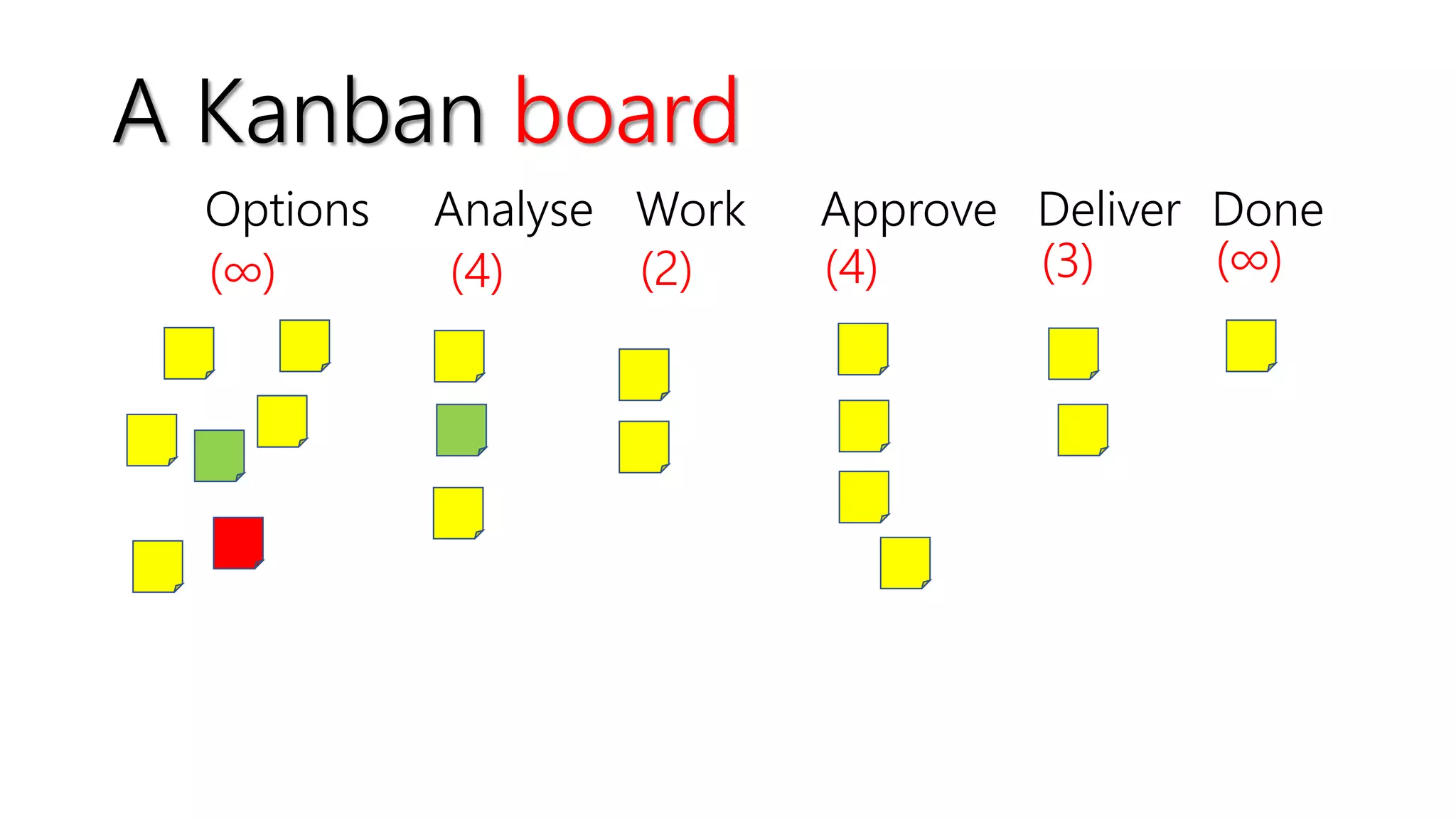
Options Analyse Work Approve Deliver Done
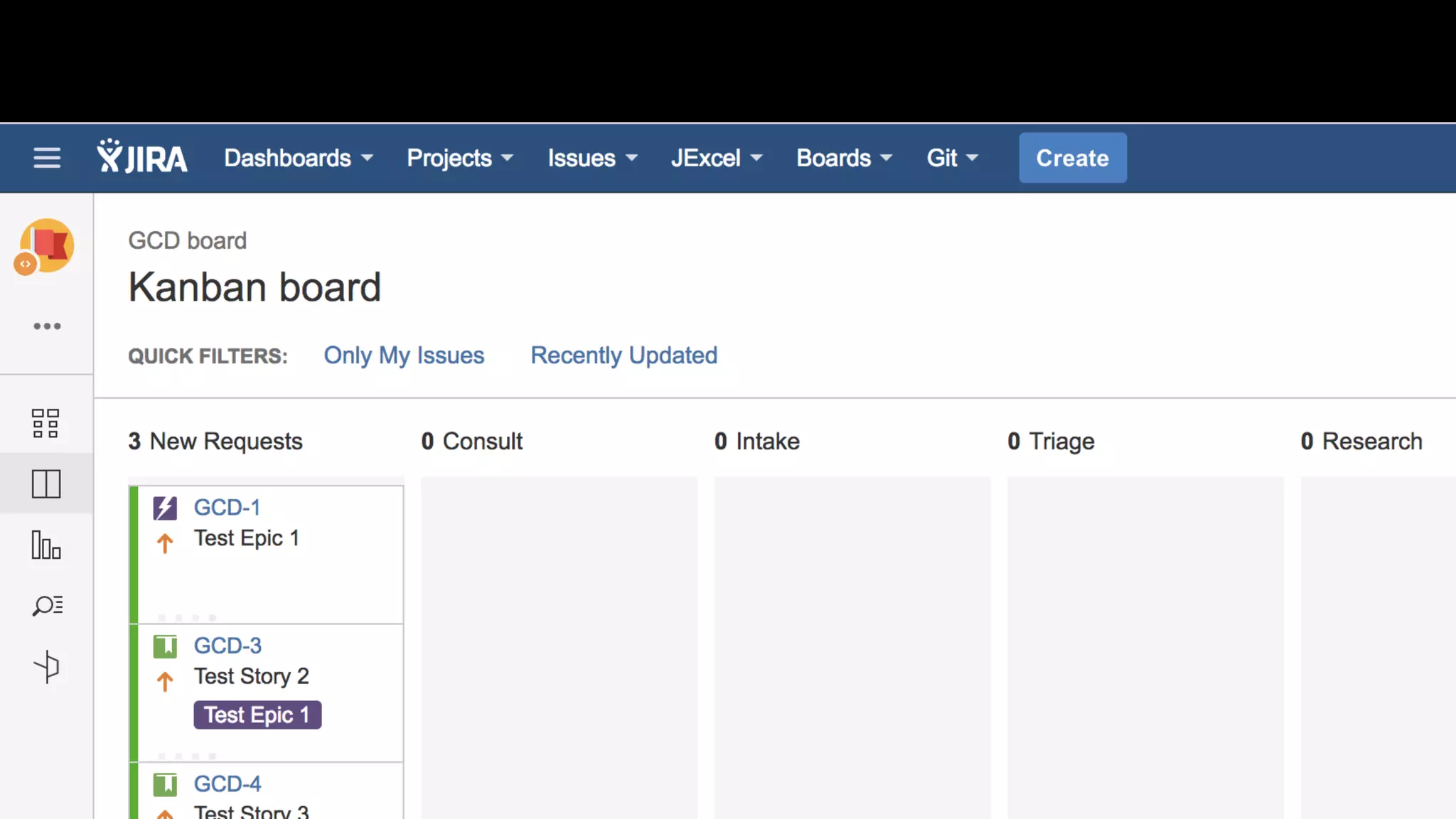
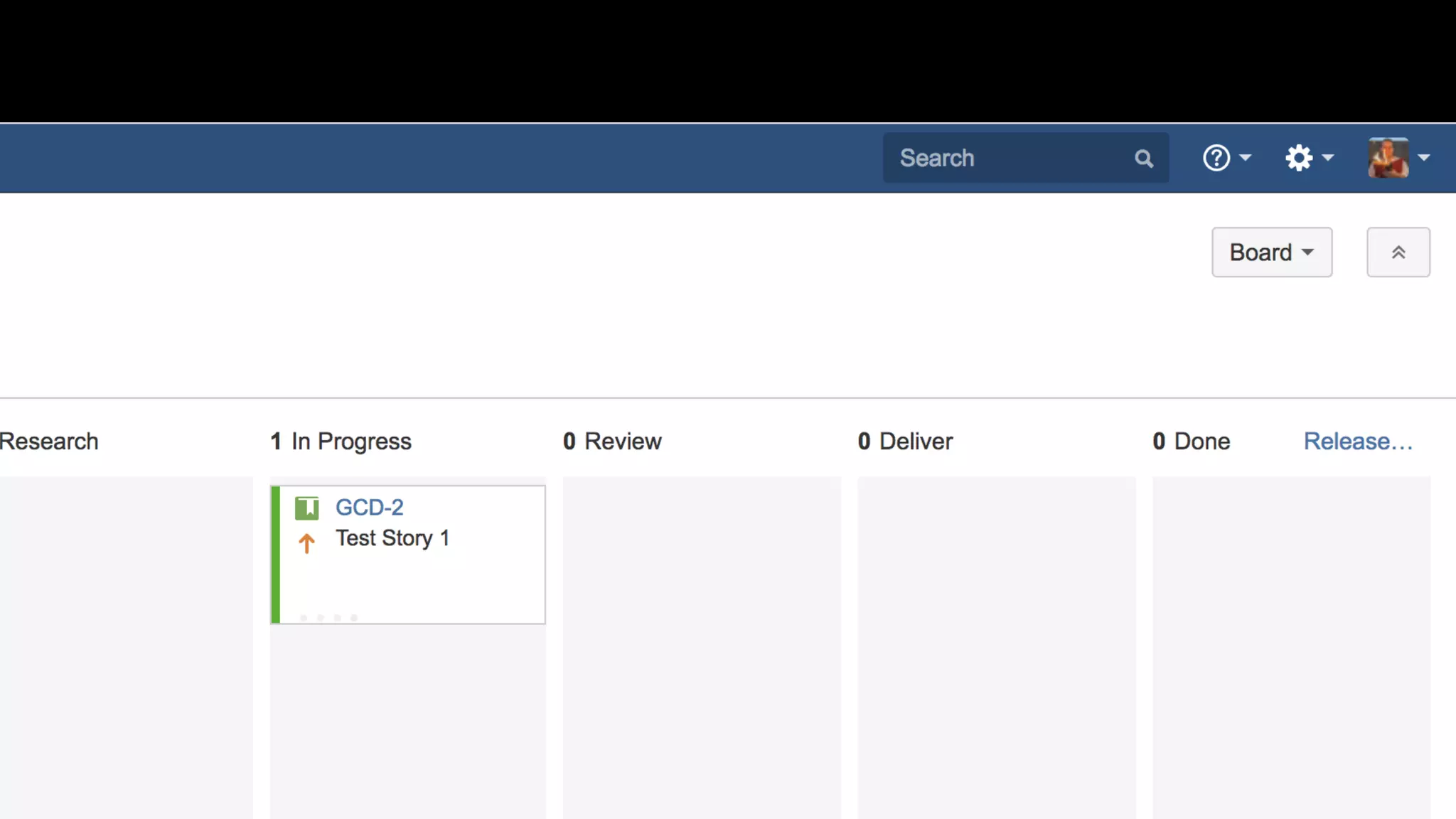
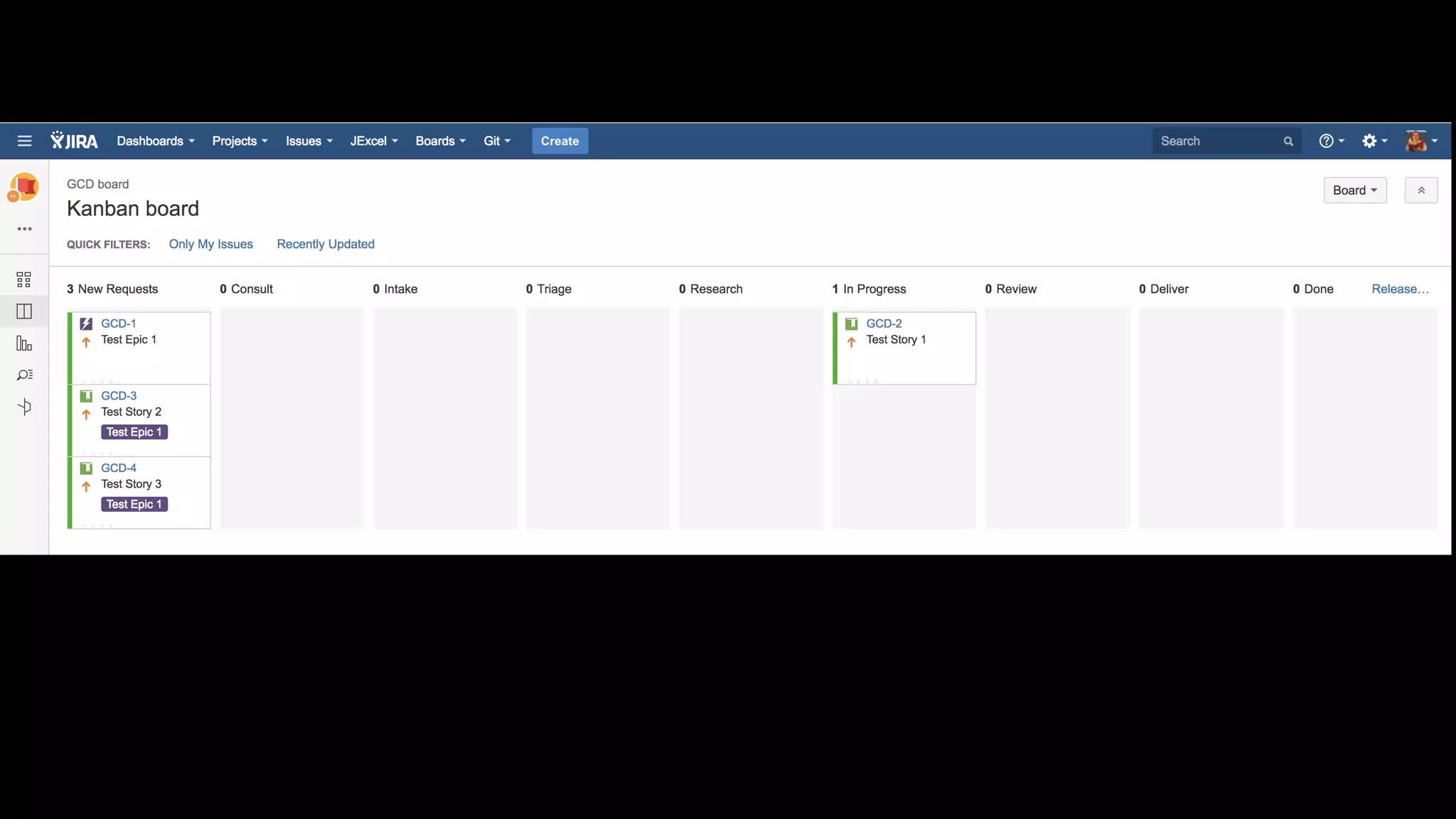
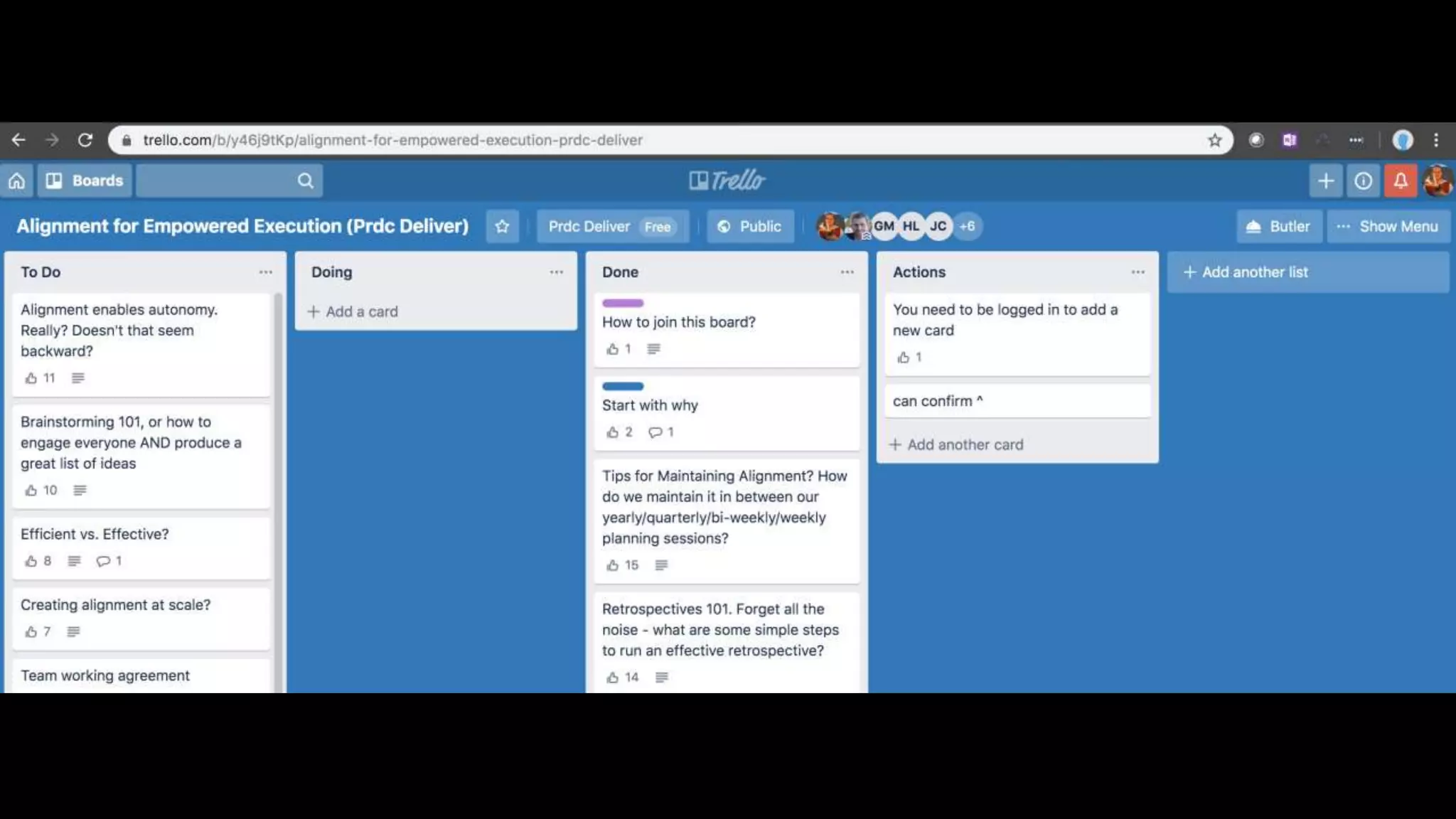
A Kanban board
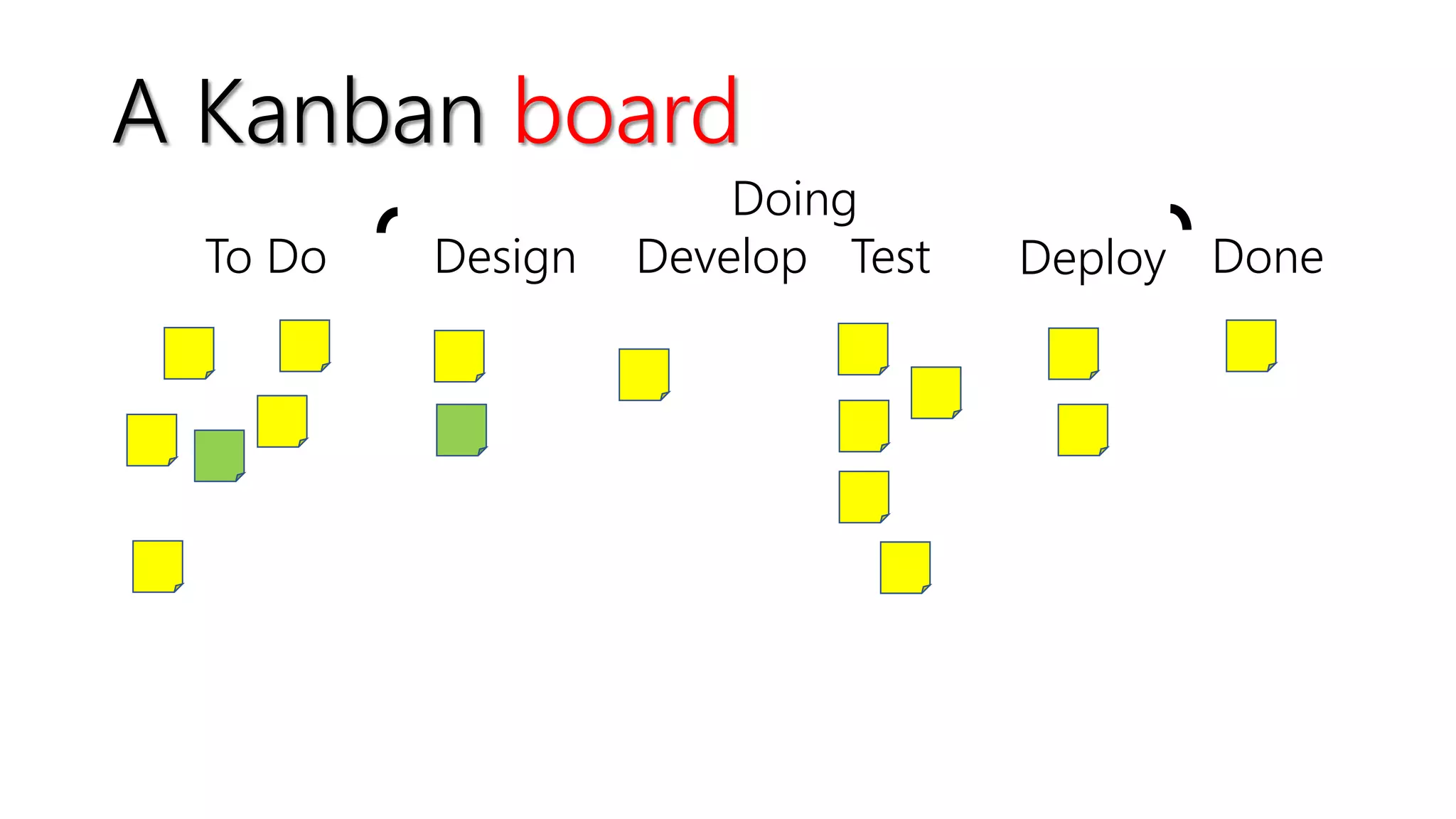
Doing
To Do Design Develop Test Deploy Done
A Kanban board
Options Analyse Work Approve Deliver Done
A Kanban board
Exercise I A 1
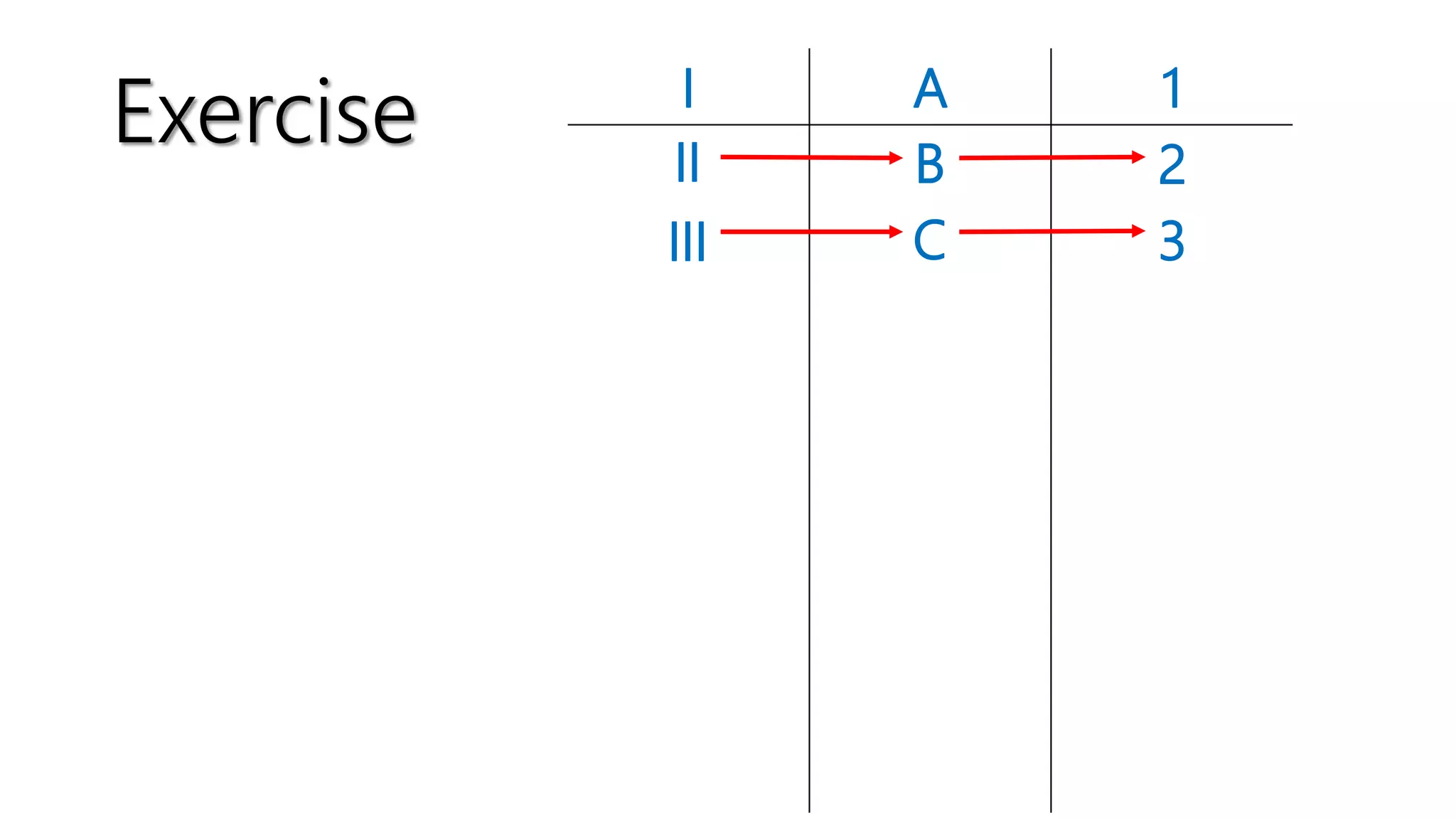
II
III
B
C
2
3
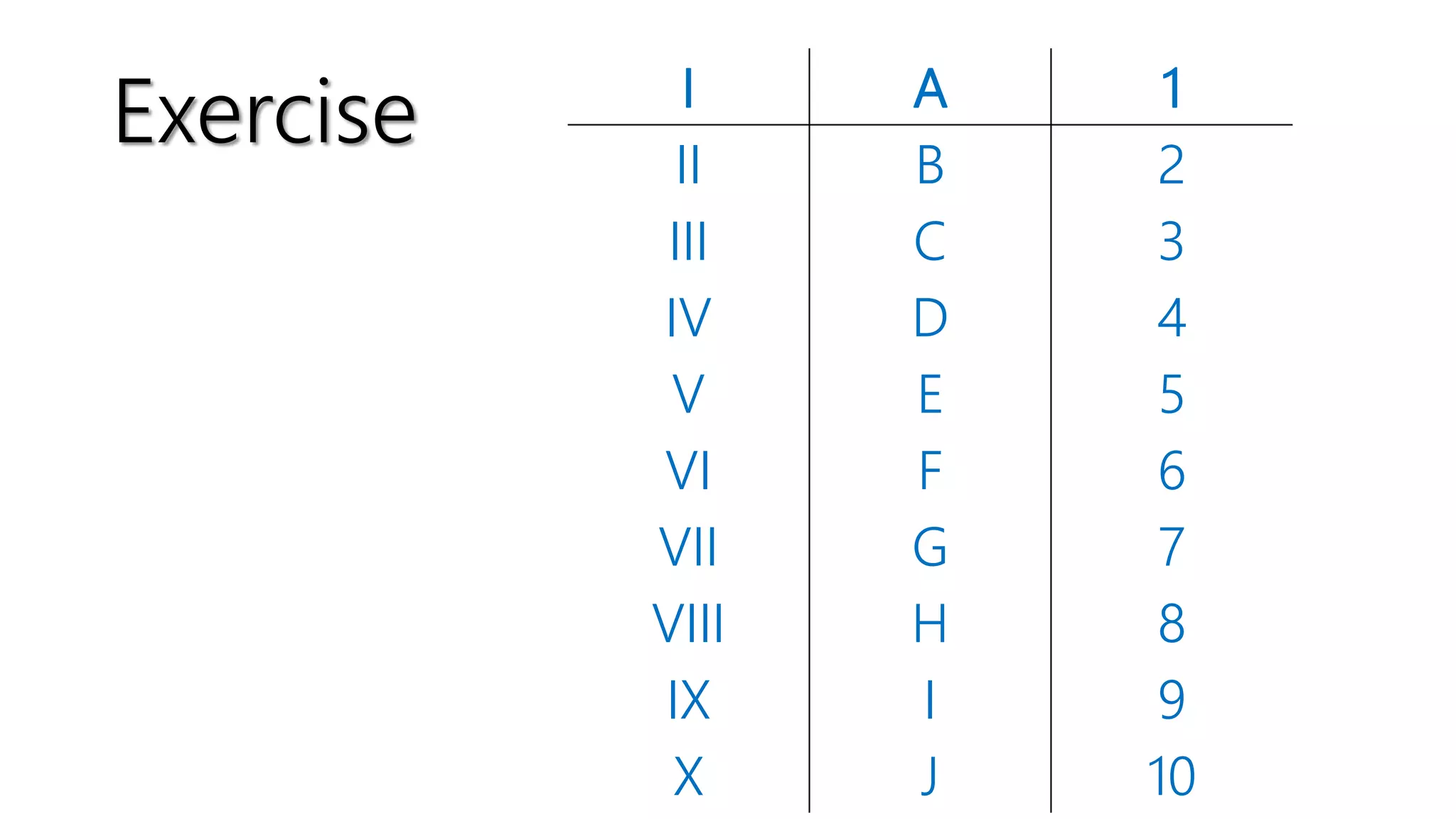
Exercise I A 1
II B 2
III C 3
IV D 4
V E 5
VI F 6
VII G 7
VIII H 8
IX I 9
X J 10
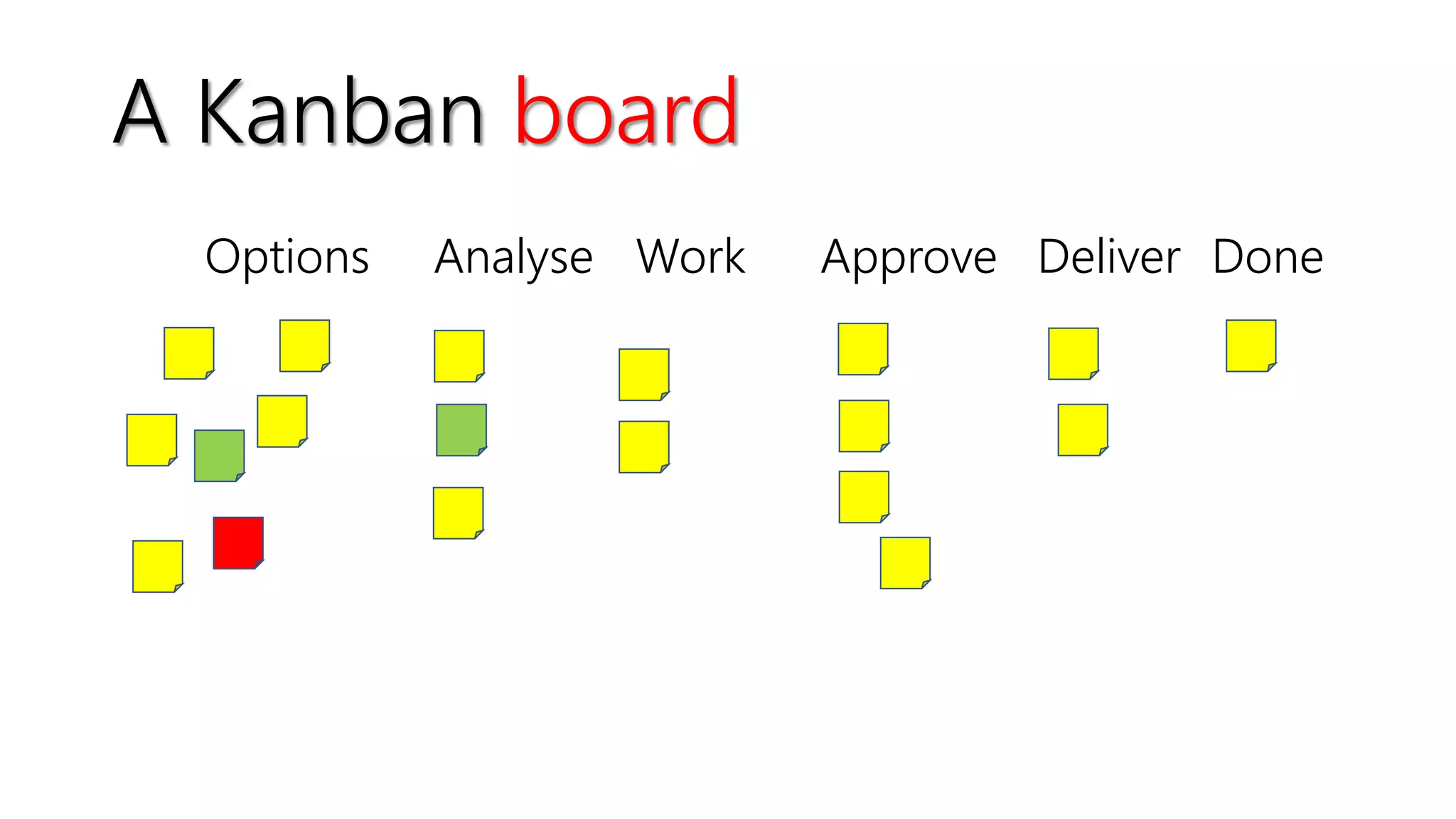
Options Analyse Work Approve Deliver Done
A Kanban board
A Kanban board
(∞) (4) (2) (4) (3) (∞)
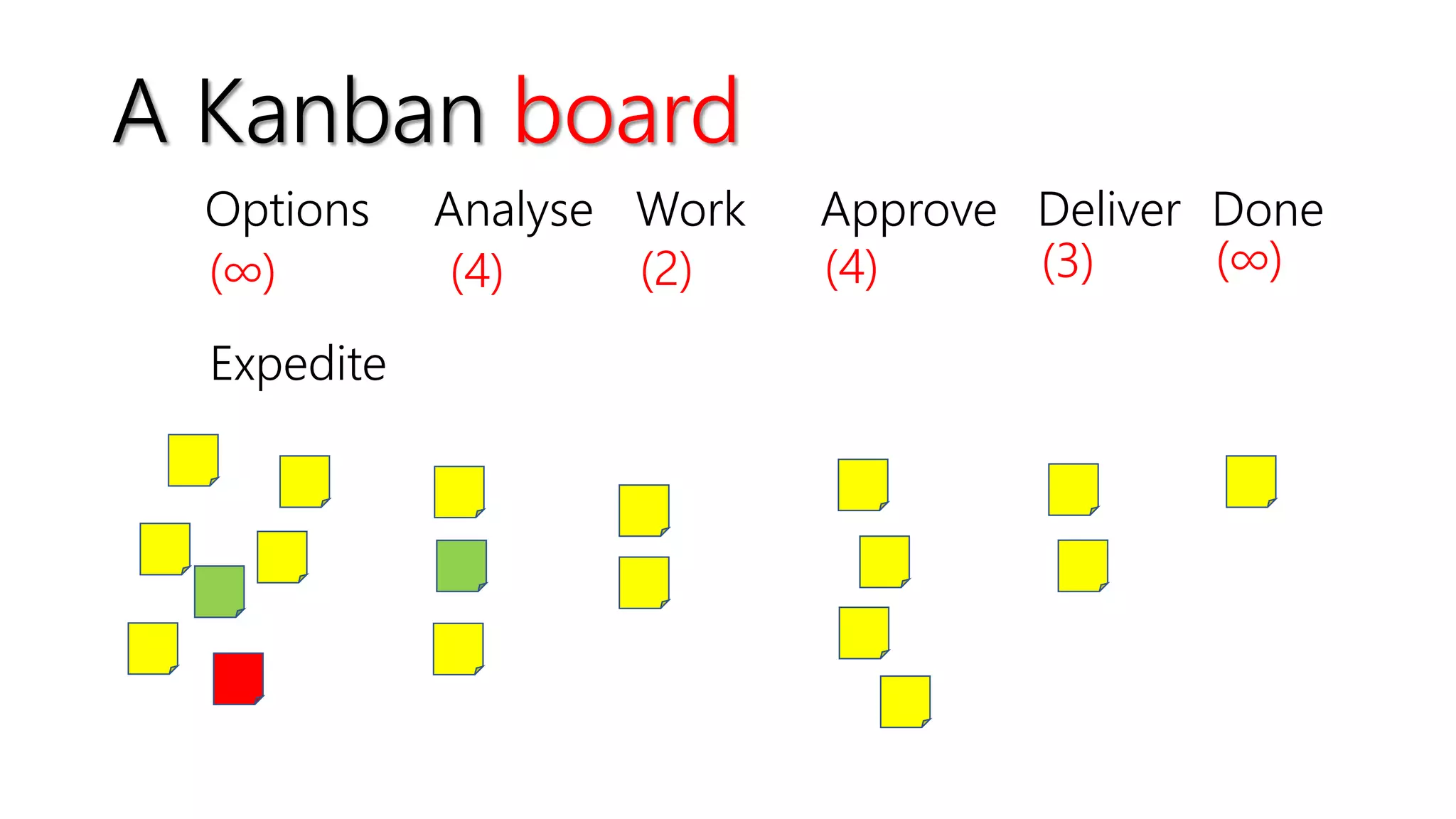
Options Analyse Work Approve Deliver Done
A Kanban board
(∞) (4) (2) (4) (3) (∞)
Expedite
Options Analyse Work Approve Deliver Done
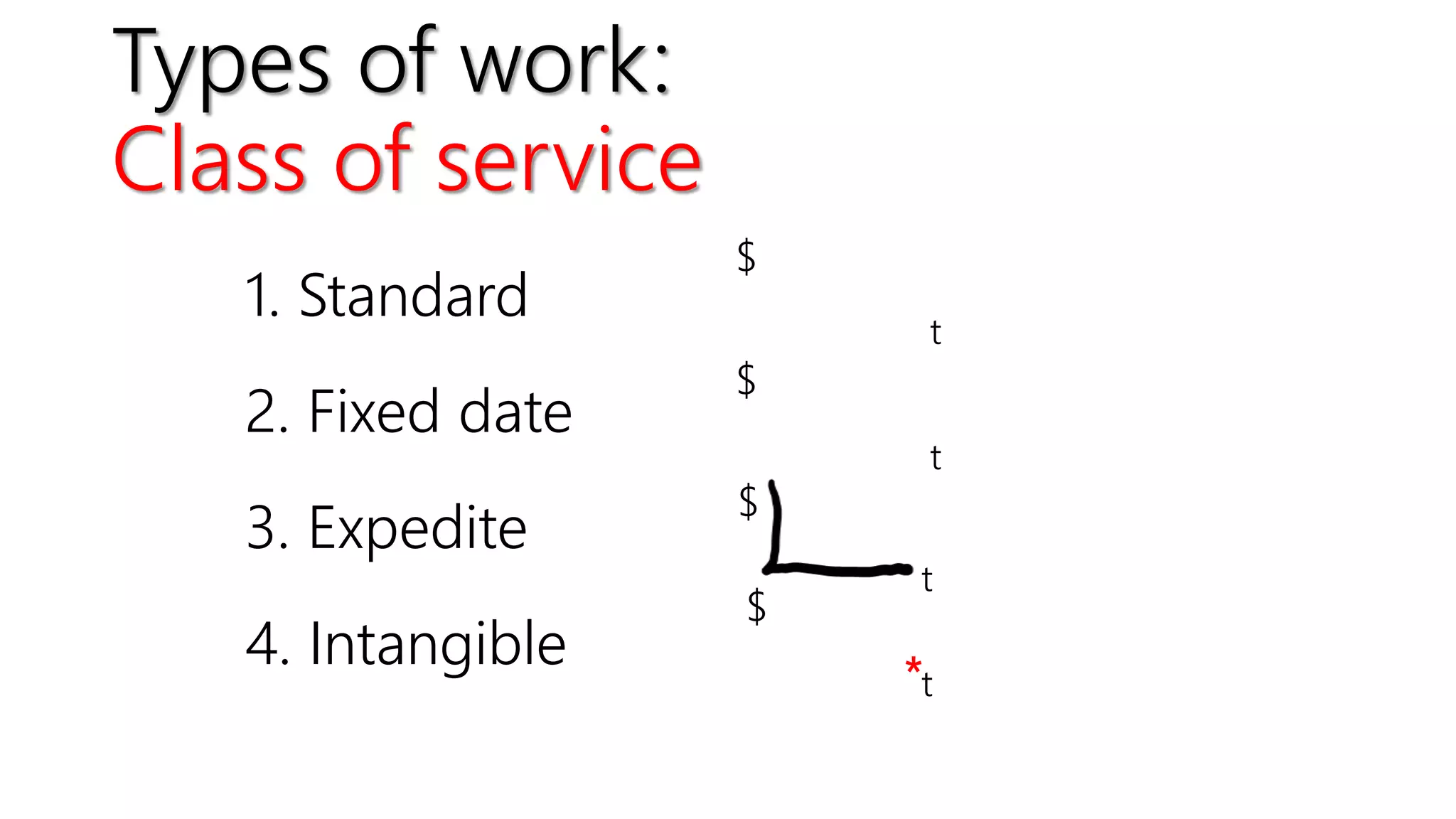
Types of work:
Class of service
1. Standard
$
t
3. Expedite
$
t
2. Fixed date
$
t
4. Intangible
$
t*
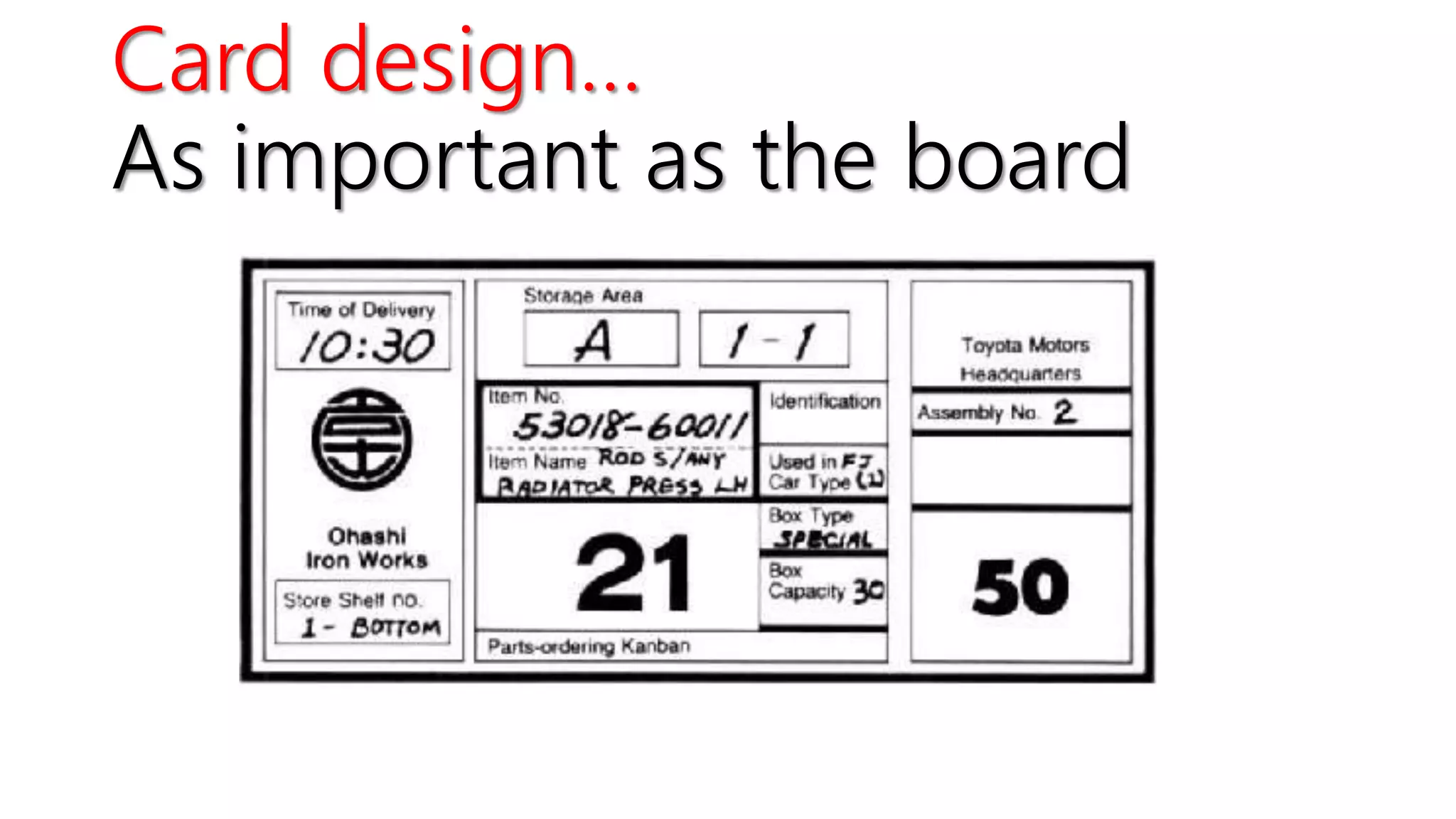
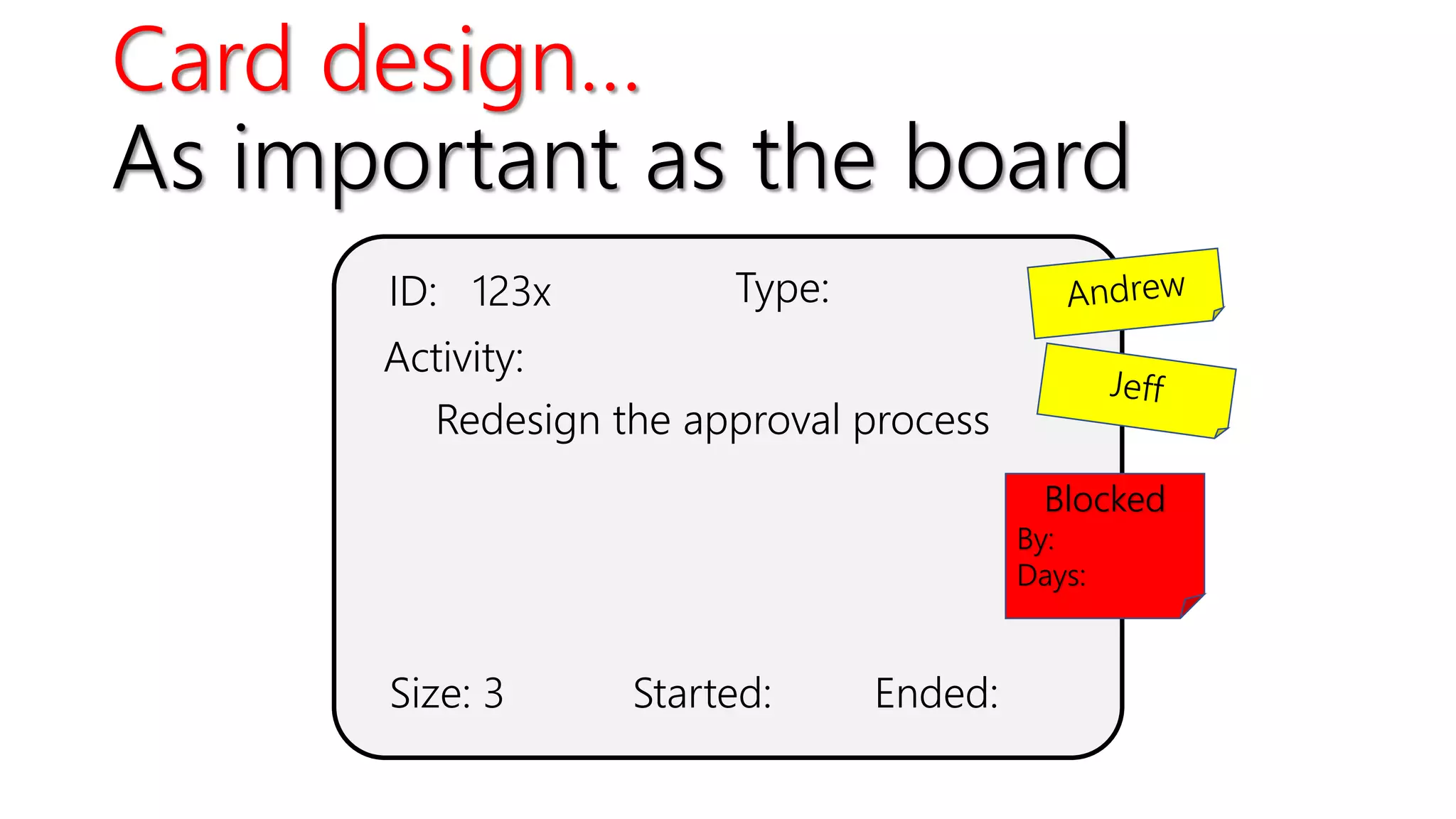
Card design…
As important as the board
Size: 3 Ended:Started:
Activity:
Blocked
By:
Days:
ID: 123x
Redesign the approval process
Type:
Card design…
As important as the board
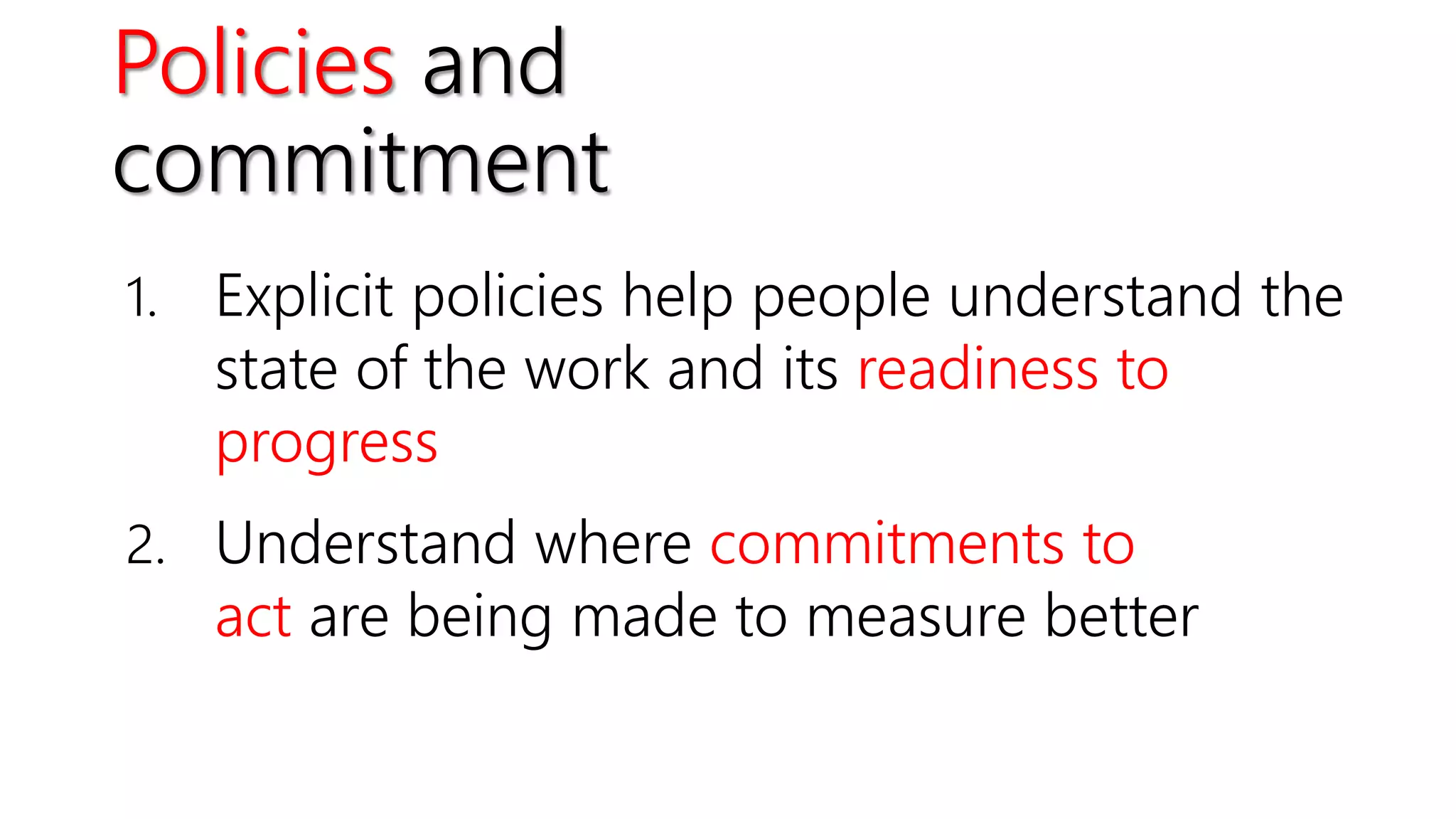
Policies and
commitment
1. Explicit policies help people understand the
state of the work and its readiness to
progress
2. Understand where commitments to
act are being made to measure better
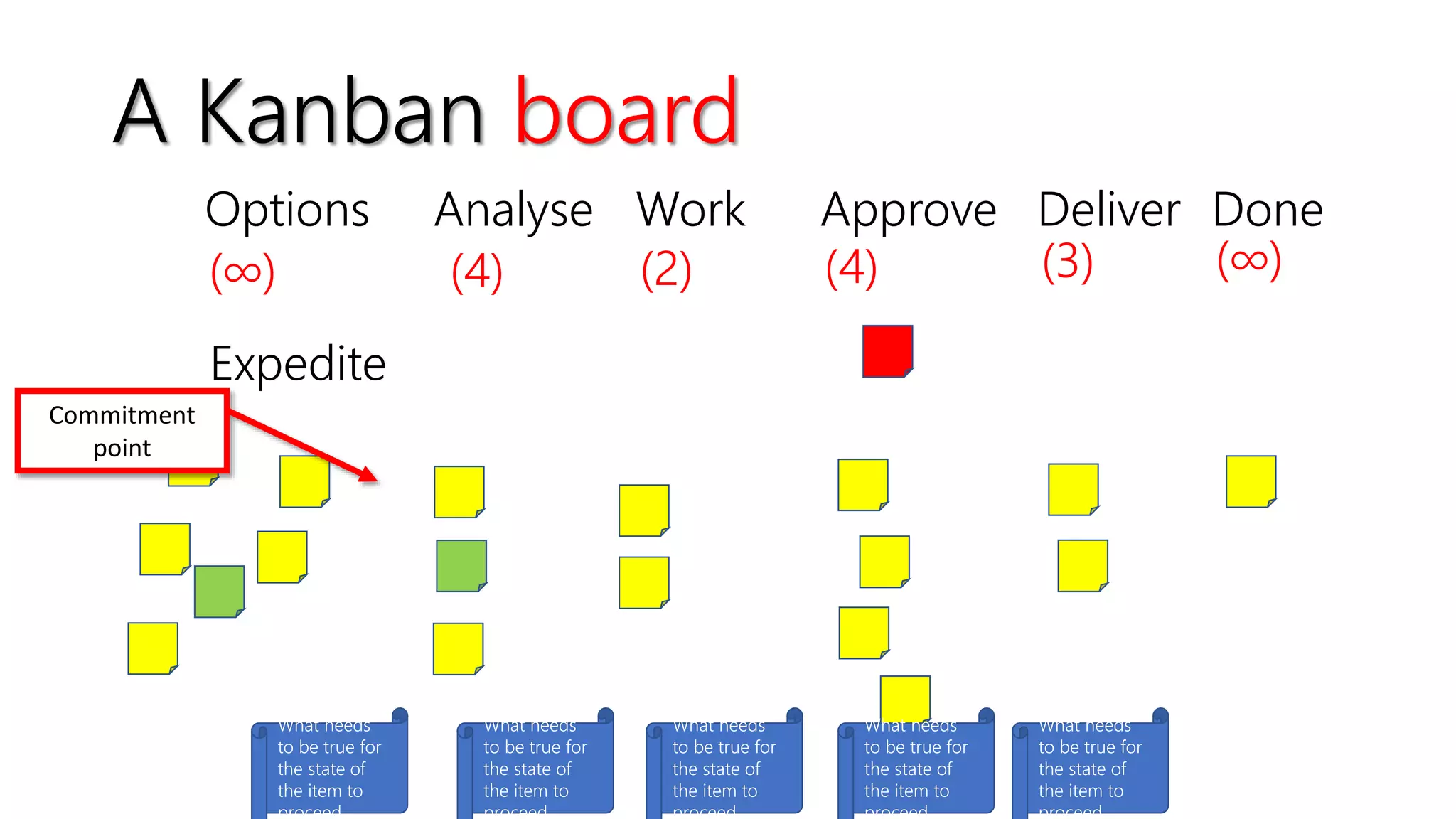
A Kanban board
(∞) (4) (2) (4) (3) (∞)
Expedite
Options Analyse Work Approve Deliver Done
Commitment
point
What needs
to be true for
the state of
the item to
proceed
What needs
to be true for
the state of
the item to
proceed
What needs
to be true for
the state of
the item to
proceed
What needs
to be true for
the state of
the item to
proceed
What needs
to be true for
the state of
the item to
proceed
24
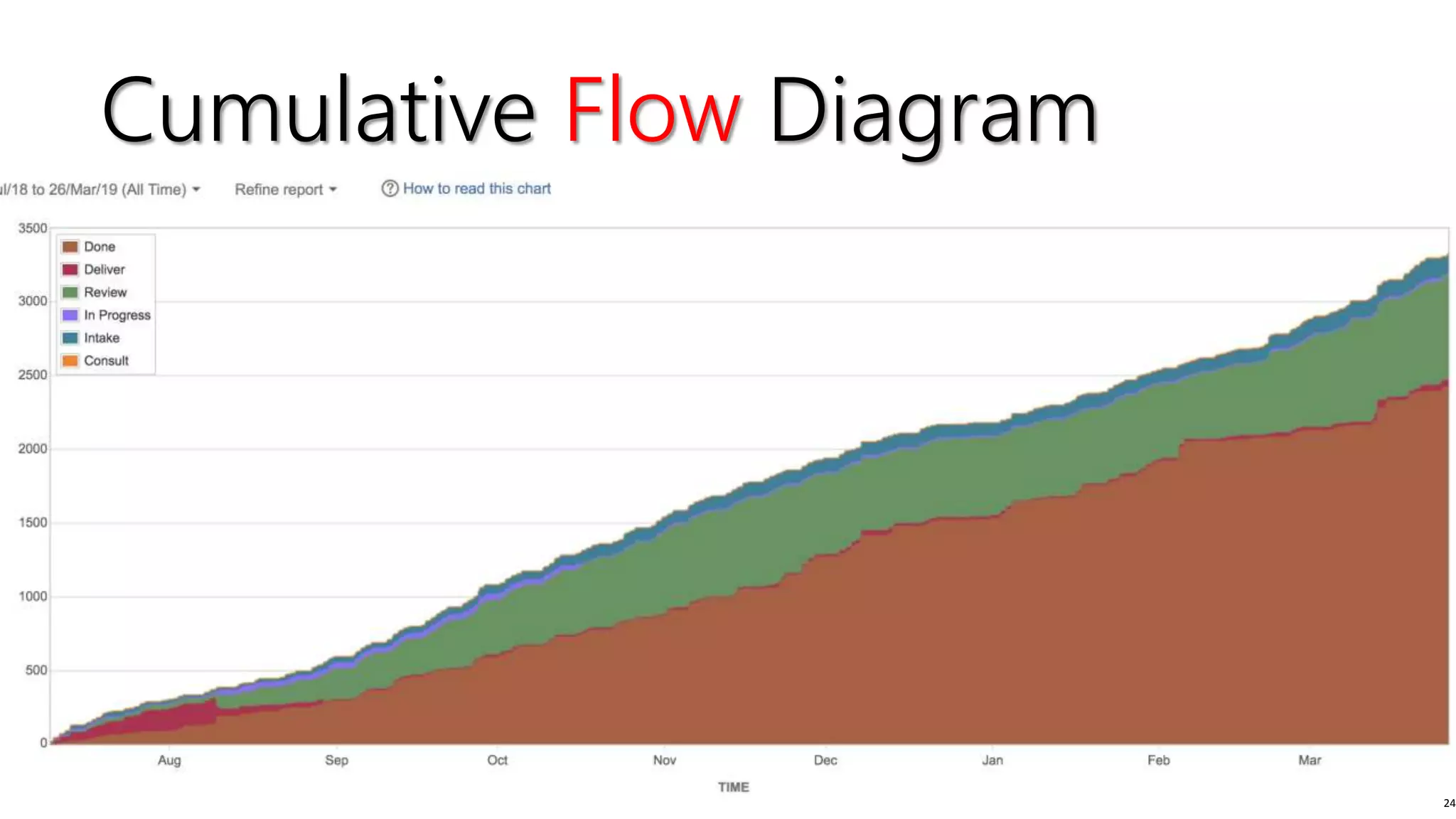
Cumulative Flow Diagram
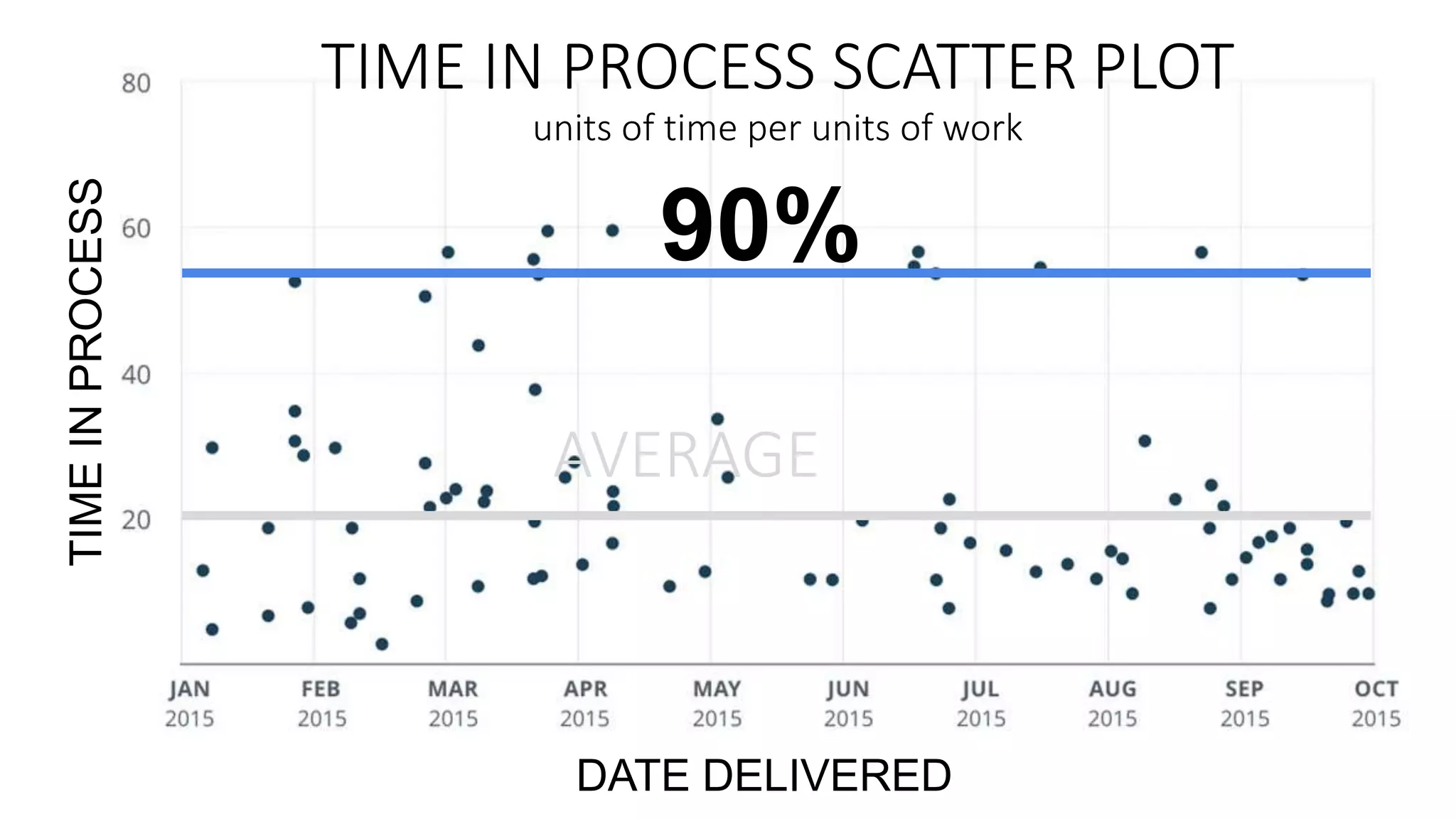
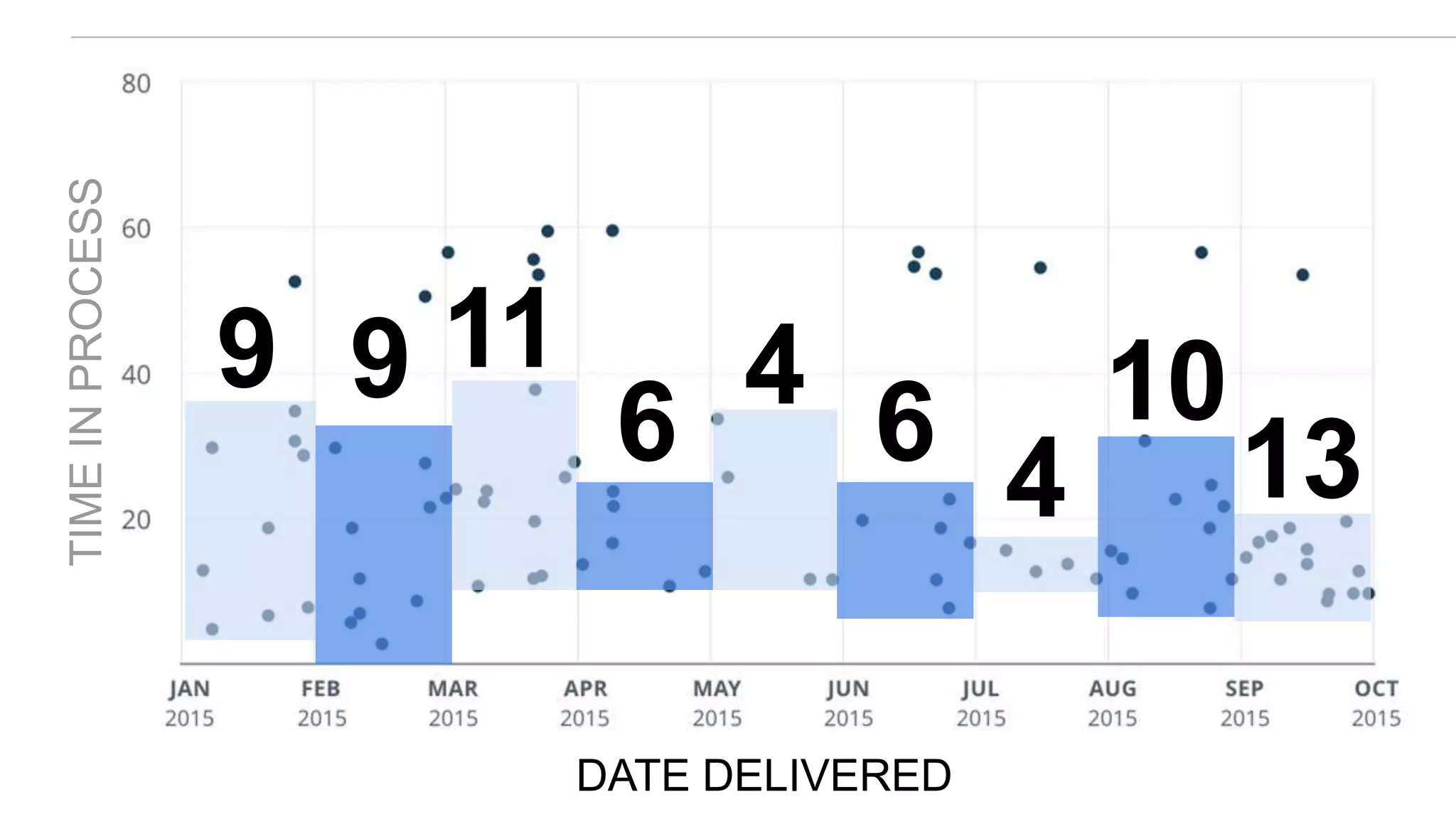
TIMEINPROCESS
90%
AVERAGE
DATE DELIVERED
TIME IN PROCESS SCATTER PLOT
units of time per units of work
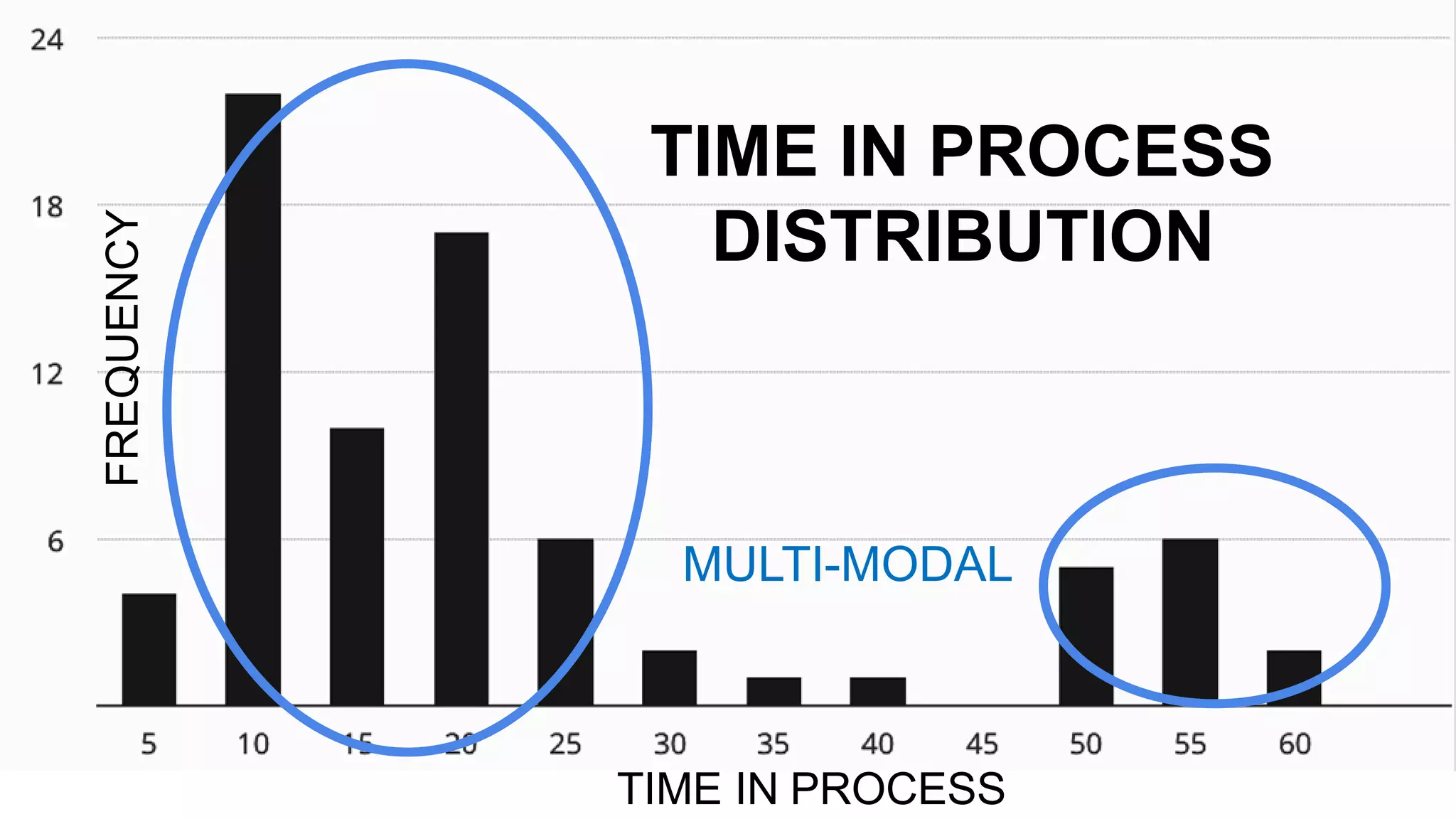
FREQUENCY
TIME IN PROCESS
TIME IN PROCESS
DISTRIBUTION
MULTI-MODAL
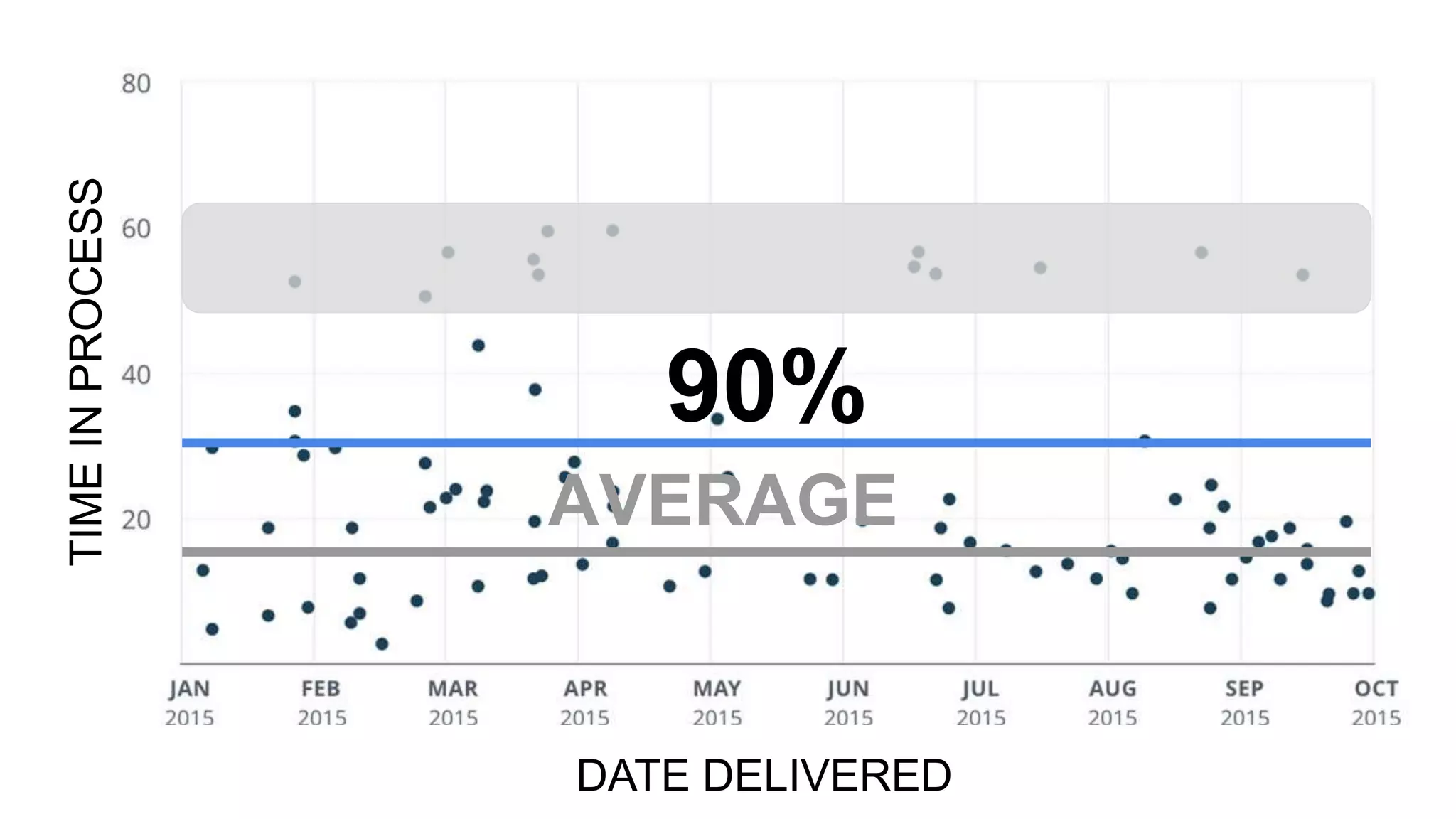
TIMEINPROCESS
90%
DATE DELIVERED
AVERAGE
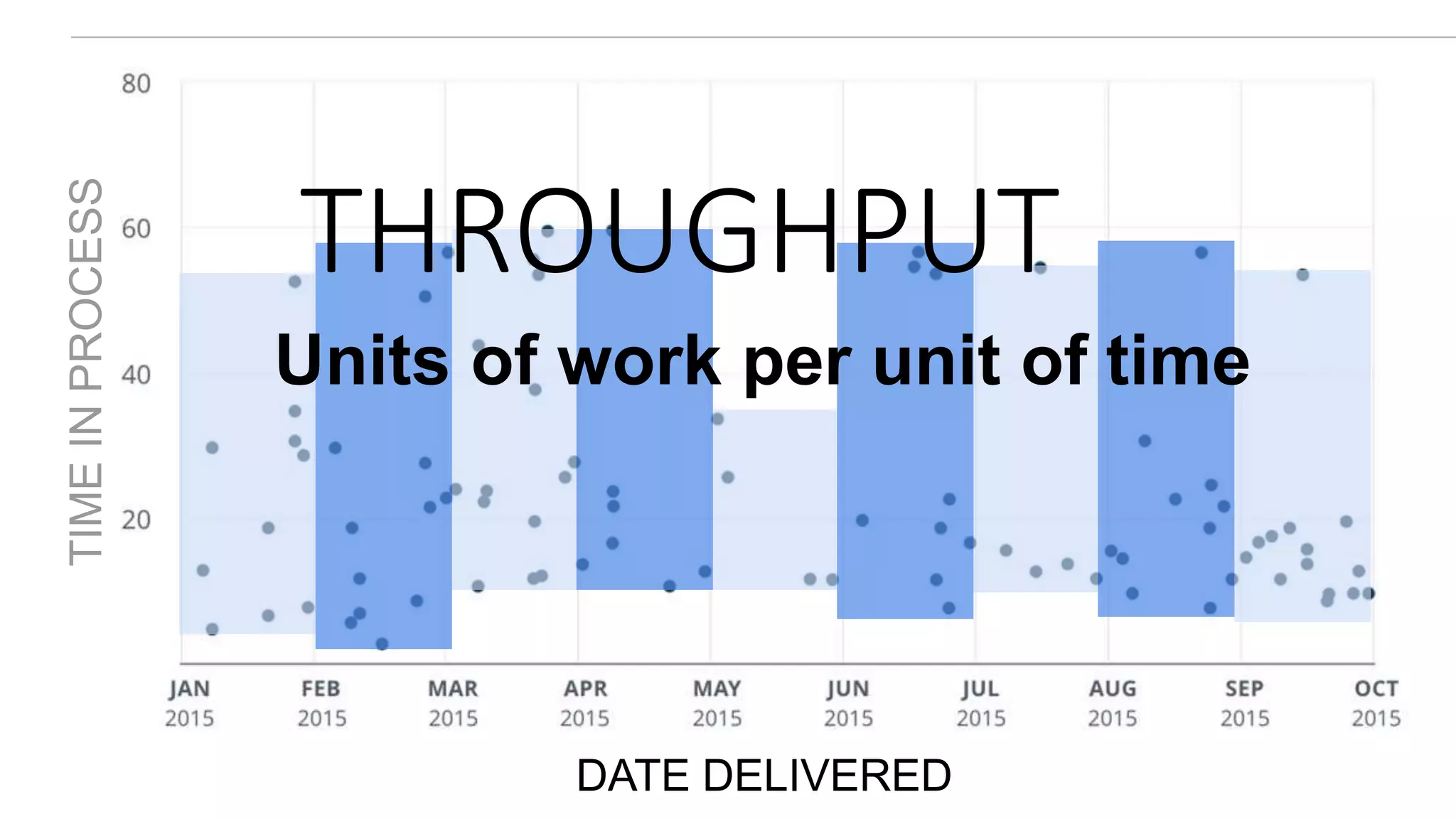
TIMEINPROCESS
THROUGHPUT
Units of work per unit of time
DATE DELIVERED
TIMEINPROCESS
DATE DELIVERED
9 9 11
6
4
6
4
10
13
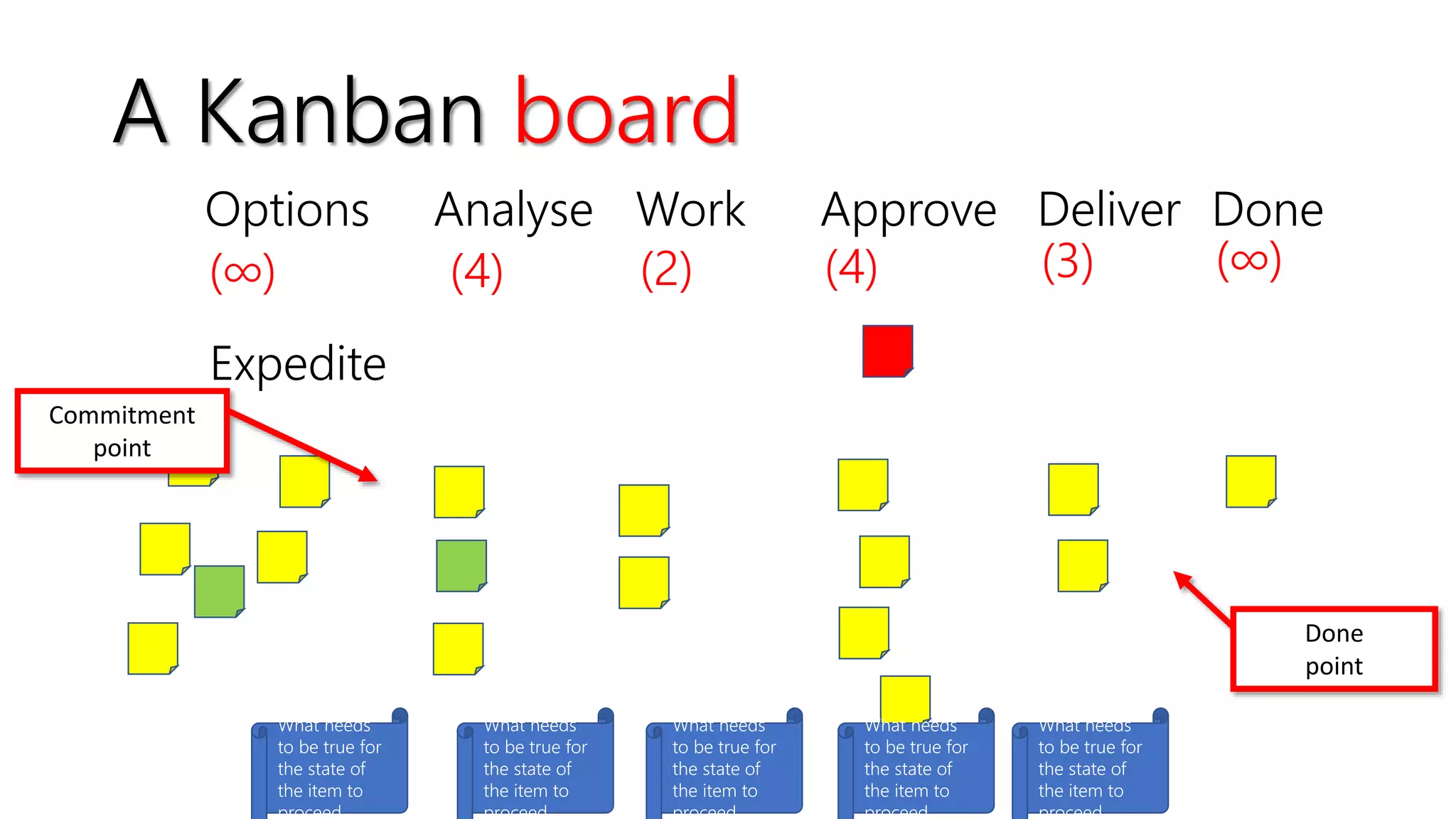
A Kanban board
(∞) (4) (2) (4) (3) (∞)
Expedite
Options Analyse Work Approve Deliver Done
Commitment
point
What needs
to be true for
the state of
the item to
proceed
What needs
to be true for
the state of
the item to
proceed
What needs
to be true for
the state of
the item to
proceed
What needs
to be true for
the state of
the item to
proceed
What needs
to be true for
the state of
the item to
proceed
Done
point
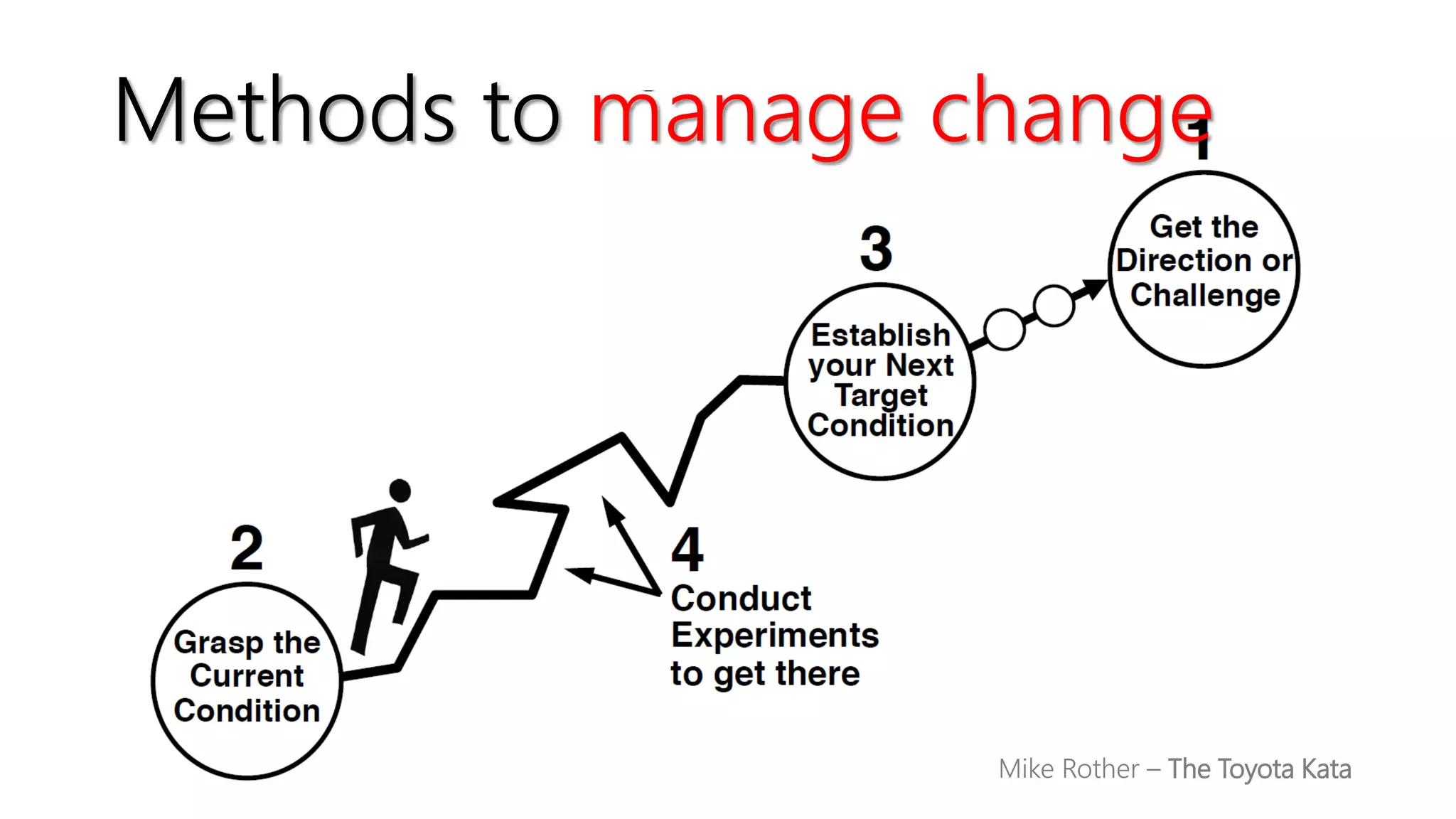
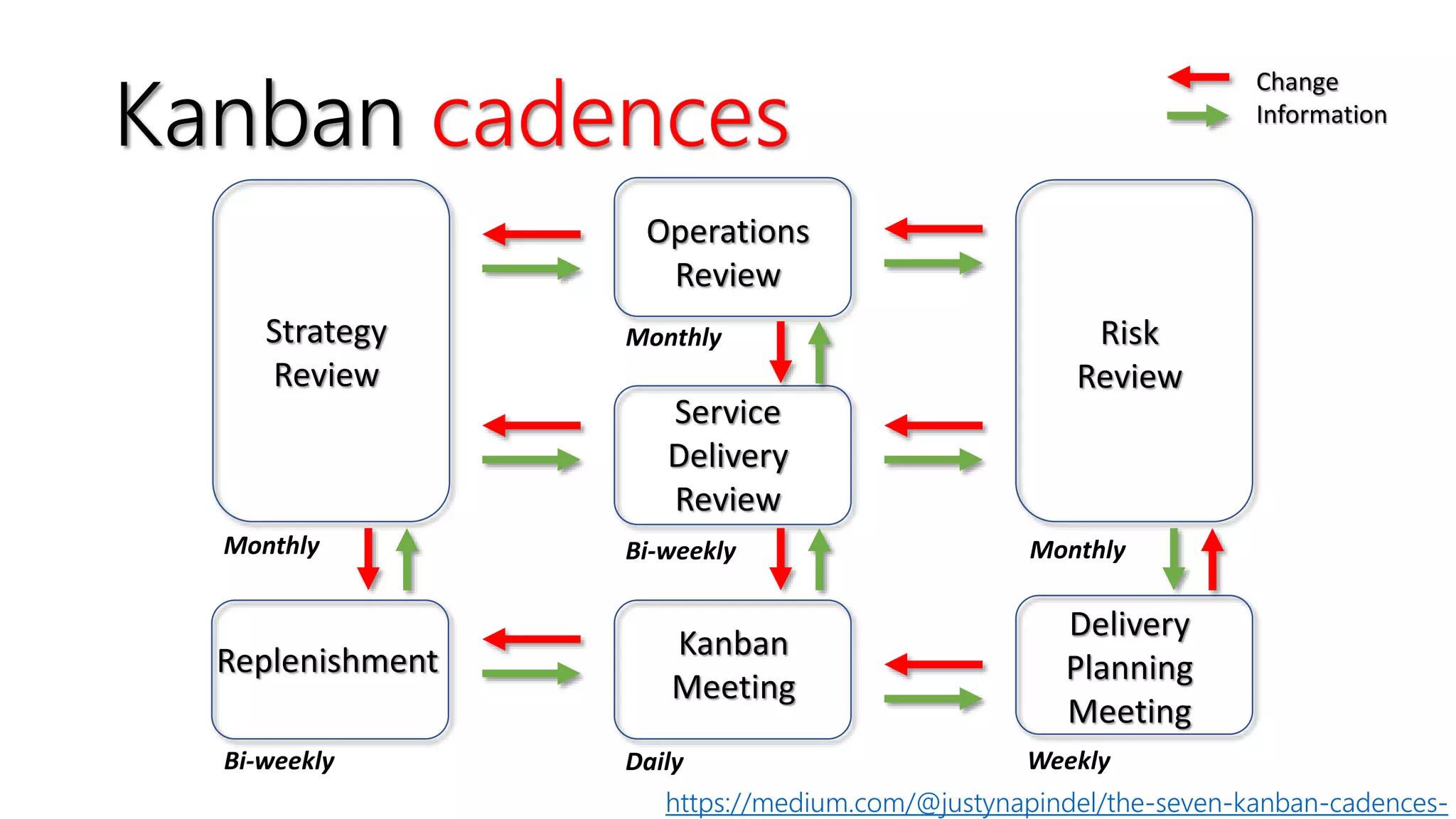
Methods to manage change
Mike Rother – The Toyota Kata
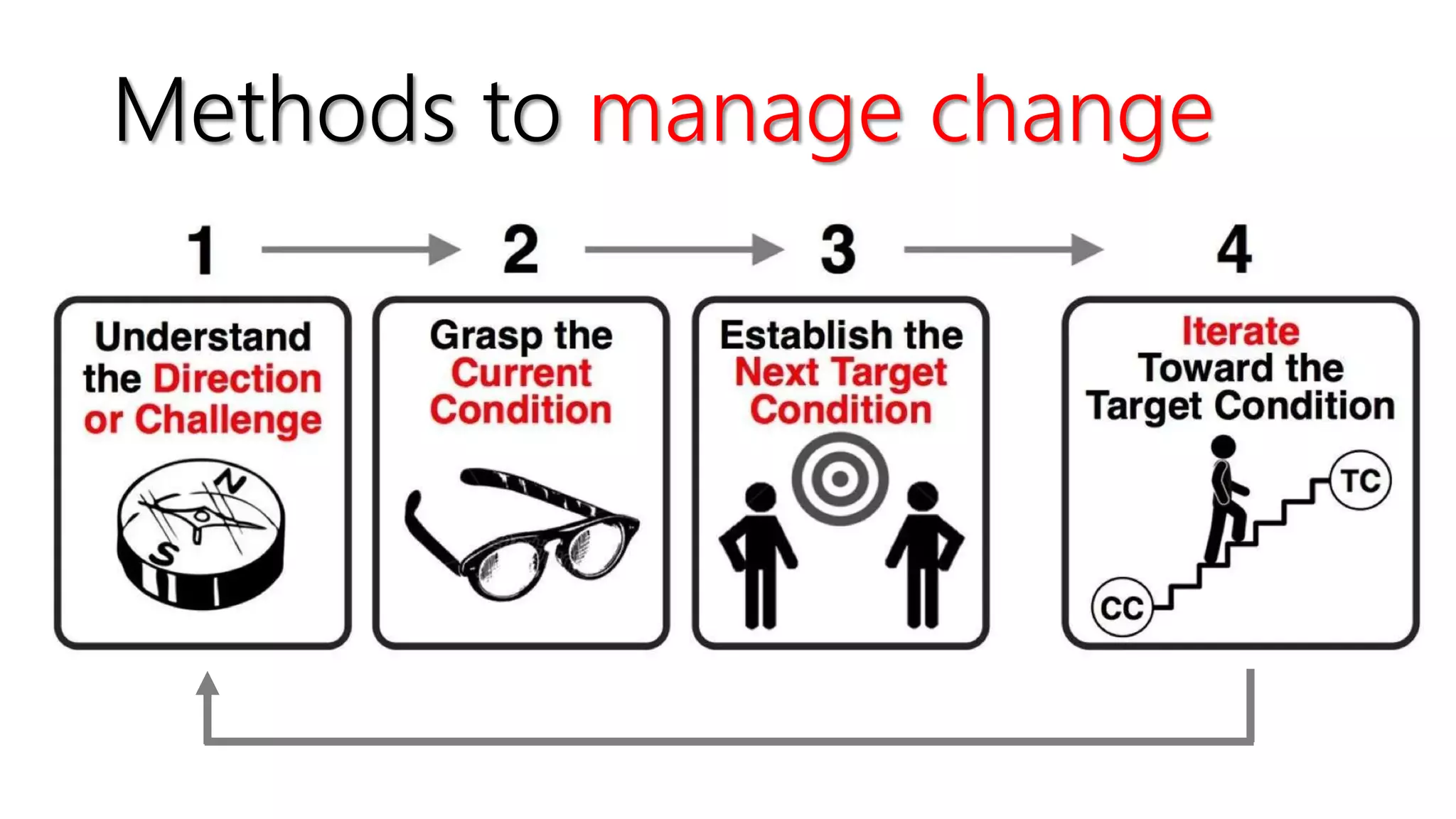
Methods to manage change
Change
Information
Replenishment
Bi-weekly
Kanban
Meeting
Daily
Delivery
Planning
Meeting
Weekly
Service
Delivery
Review
Bi-weekly
Risk
Review
Monthly
Operations
Review
MonthlyStrategy
Review
Monthly
https://medium.com/@justynapindel/the-seven-kanban-cadences-
Kanban cadences
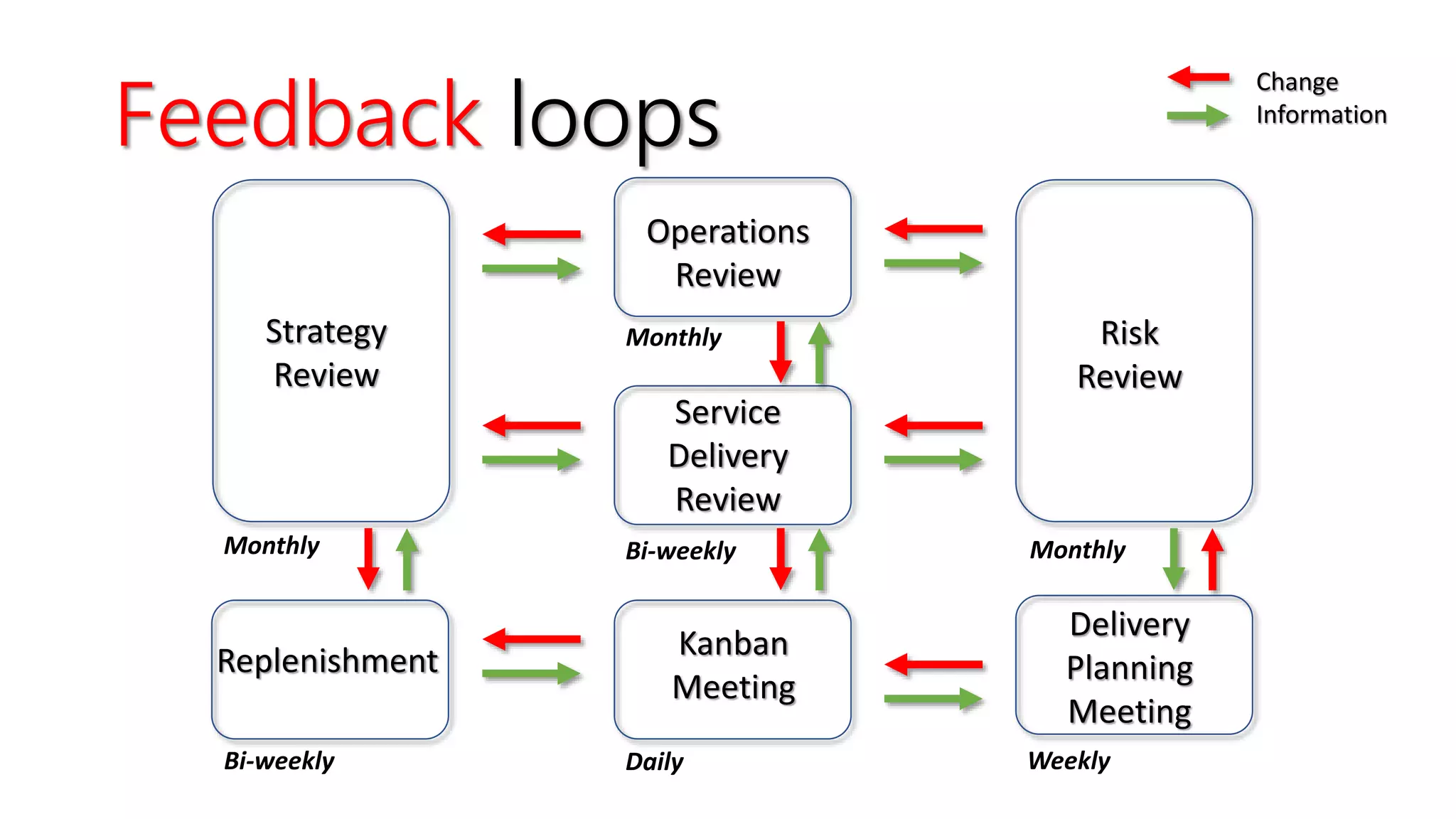
Change
Information
Replenishment
Bi-weekly
Kanban
Meeting
Daily
Delivery
Planning
Meeting
Weekly
Service
Delivery
Review
Bi-weekly
Risk
Review
Monthly
Operations
Review
MonthlyStrategy
Review
Monthly
Feedback loops
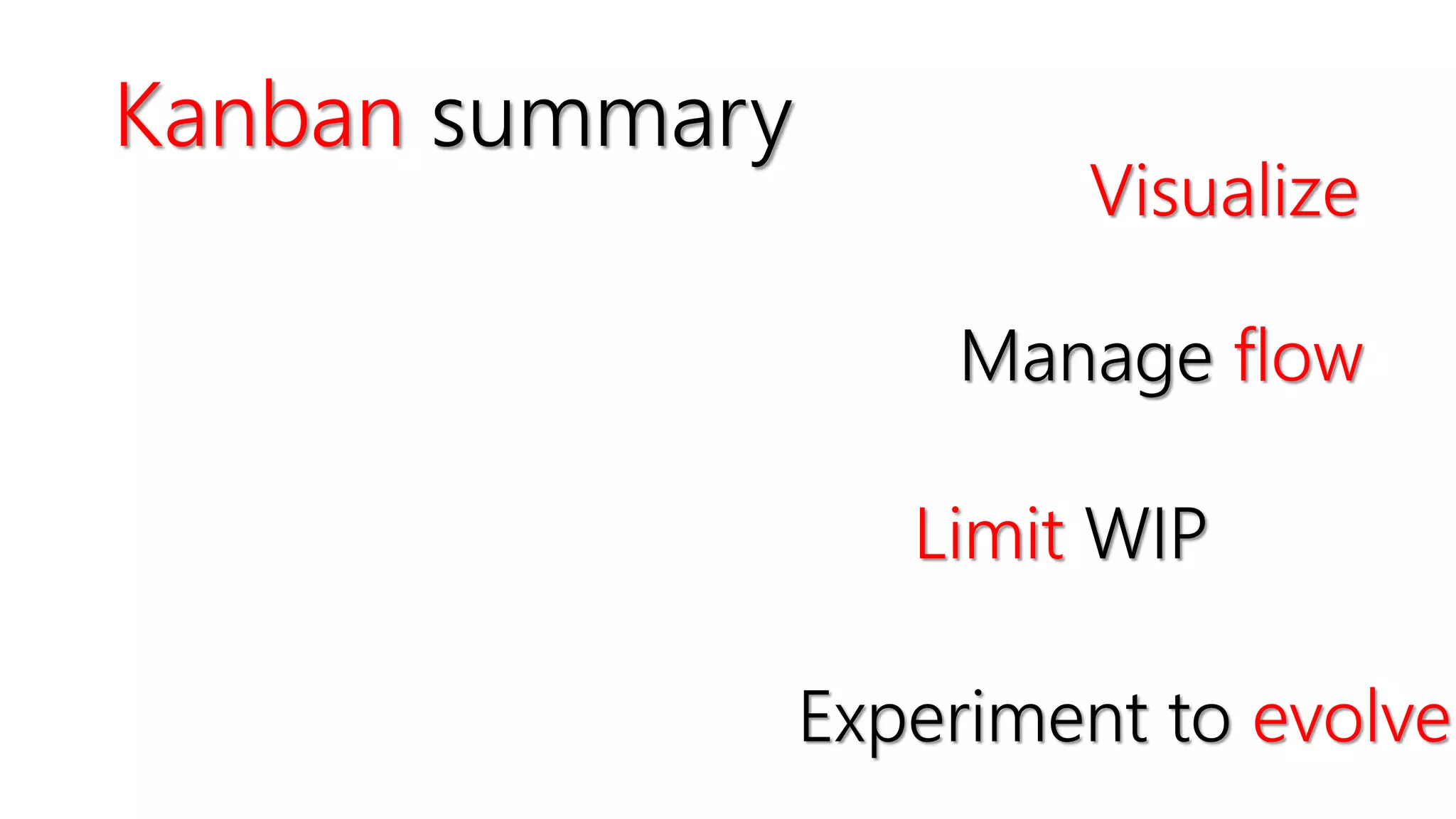
Visualize
Manage flow
Experiment to evolve
Limit WIP
Kanban summary
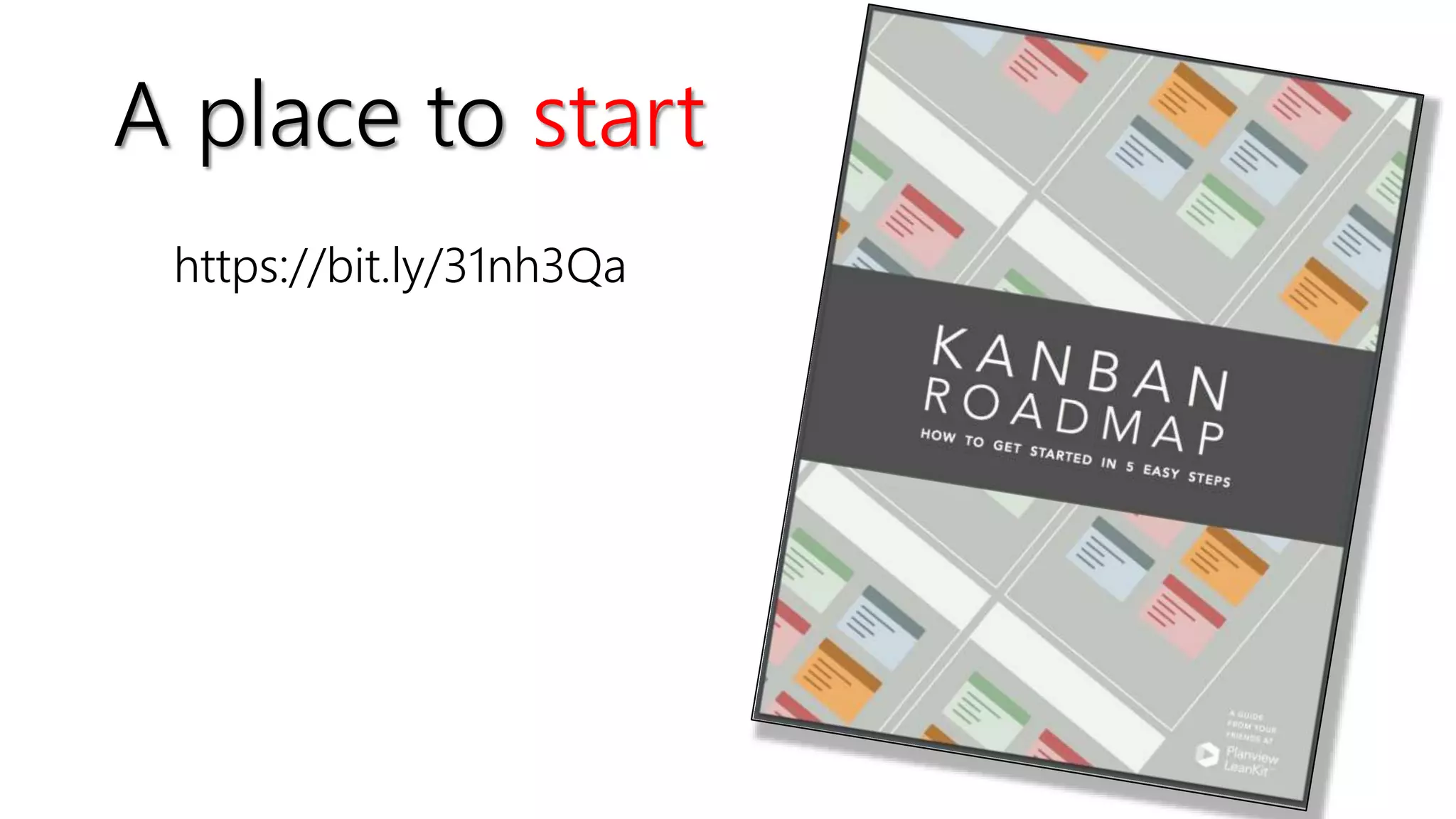
A place to start
https://bit.ly/31nh3Qa
• Kanban from the Inside - Mike Burrows, 2014
• Personal Kanban - Jim Bensen & Tonianne DeMaria Barry,
2011
• Making Work Visible - Dominica DeGrandis, 2017
• Stop Starting, Start Finishing - Arne Rooke, 2013
• Kanban in Action - Marcus Hammarberg & Joakim Sunden,
2014
• Kanban: Successful Evolutionary Change for Your Technology
An incomplete list of great books
https://bit.ly/2VObeKI
Getting started
using Kanban
Jeff Kosciejew
@kosciejew
kosciejew@gmail.com

Kanban Intro & Overview

Editor's Notes

  • #4 Start where you are Evolve Initially respect roles Encourage acts of leadership (experiment)
  • #5 Visualize Limit wip Measure & manage flow Make policies explicit Create feedback loops Collaborate & experiment
  • #7 Basic
  • #18 Add WIP Limits, expedite and commitment
  • #19 Add WIP Limits, expedite and commitment
  • #20 xpedite Standard Fixed date Intangible
  • #21 Activity, who, size, start/end date, blocked indicator Tell the lawyer story Story/Goal Defect/Correction Task/Support Feature/Service
  • #22 Activity, who, size, start/end date, blocked indicator Tell the lawyer story Story/Goal Defect/Correction Task/Support Feature/Service
  • #23 Explicitly state the conditions for state change https://blog.coryfoy.com/2011/07/recreating-scrum-using-kanban-and-explicit-policies/ Replenish cadence = 2 weeks Backlog WIP = Velocity We pull items we expect to take less than 8 days (i.e., within iteration boundaries
  • #24 Add WIP Limits, expedite and commitment
  • #31 Add WIP Limits, expedite and commitment
  • #32 New habits Musicban Sewingban Readingban