Introduction to Journalism
Early Journalism
 Before1900-the principle
was that “where there is a
student body there is a
need for a news organ”
 School publication was
just a dotted account with
little significance other
than the birth of the
school publication.
 1920-literary essay had
given way to the feature
story.
1920 P1920 Poetry abdicated its position to theoetry abdicated its position to the
columns, news story suggestedcolumns, news story suggested
interpretation, and editorial entered theinterpretation, and editorial entered the
paper.paper.
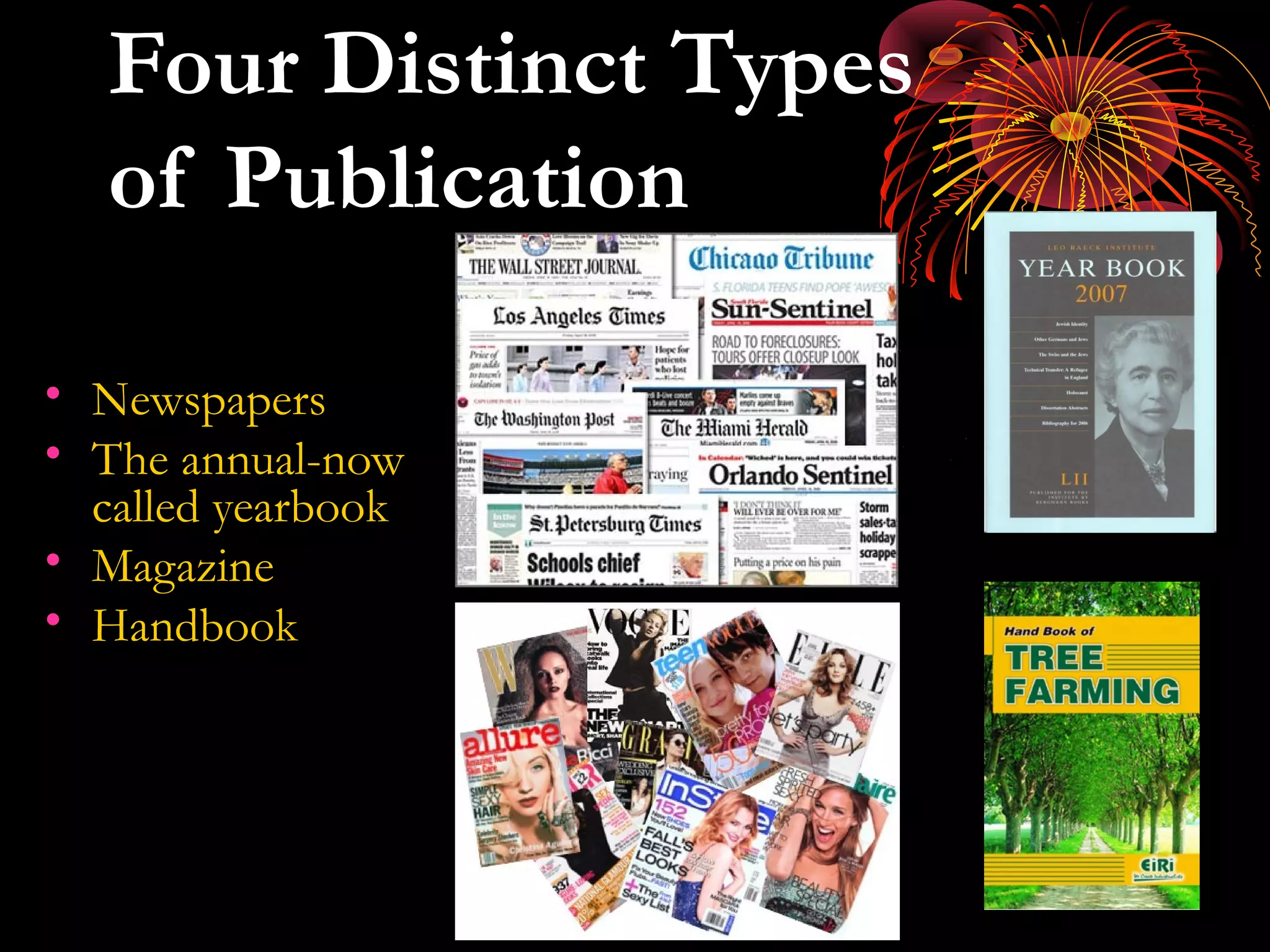
Four Distinct Types
of Publication
• Newspapers
• The annual-now
called yearbook
• Magazine
• Handbook
Definition of Journalism
 “literature in a hurry” –Jose A.
Quirino
 “ Something that embraces all
forms in which and through which
the news and comments on the
news reach the public. All that
happens in the world, if such
happenings hold interest for the
public, and all the thought,
actions, and ideas which these
happenings stimulate become the
materials for the journalist.”-F.
Fraser Bond
Functions of Journalism
 1. Inform the public
through the news
coverage
 2.Influence and mold
the public opinion
 3. Amuse or entertain
the public
 4. Serve and promote
community welfare as
a whole
Scope of Journalism
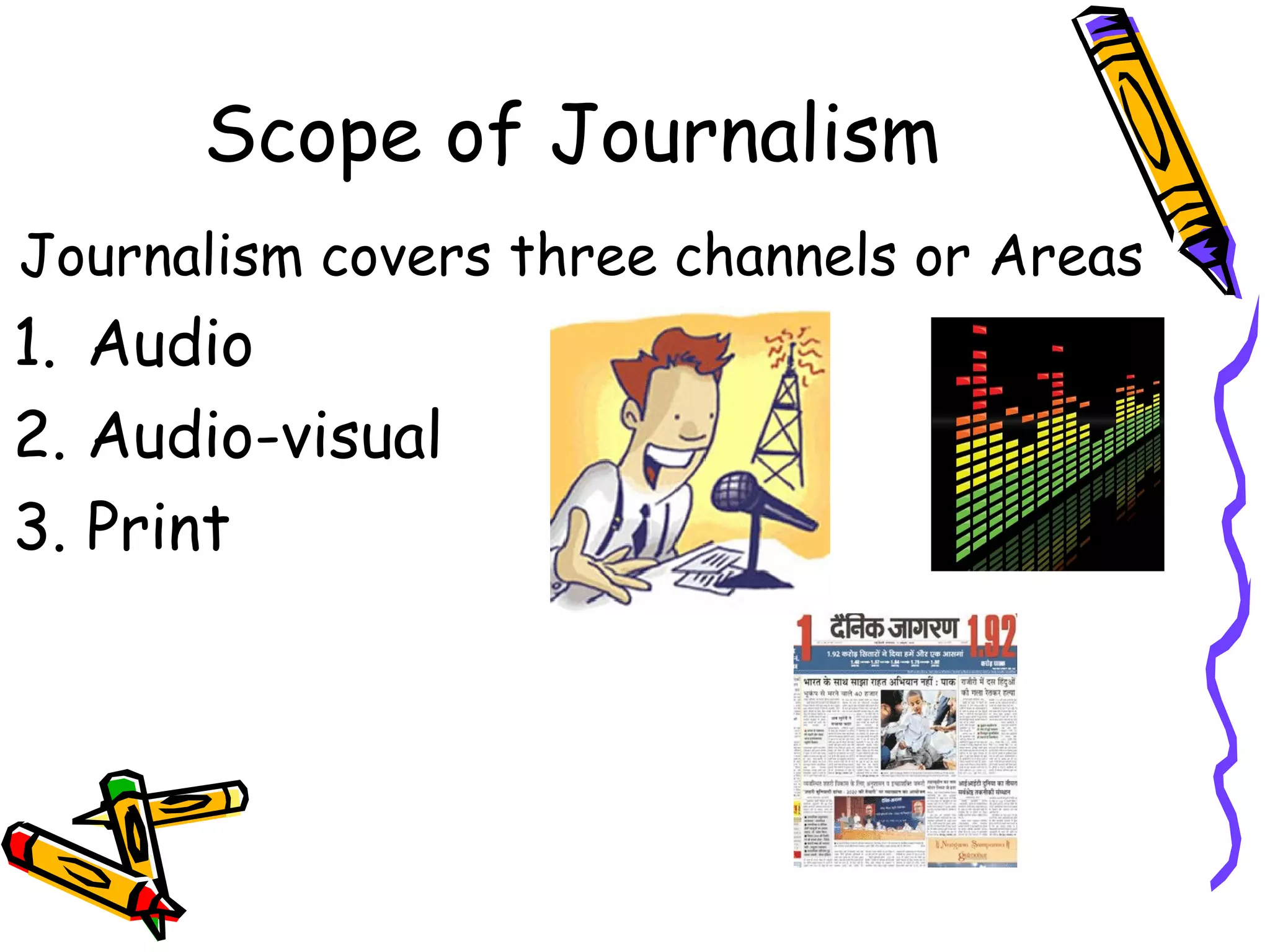
Journalism covers three channels or Areas
1. Audio
2. Audio-visual
3. Print
Qualities of a Good Journalist
1.Resourcefulness- a good journalist is
supposed to be resourceful in order
to gain access credible sources of
information and to gain success to all
important event.
2. Critical- in order to separate truth
from propaganda and dogmas that
may distort truth.
Qualities of a Good Journalist
3. Objective- a journalist is supposed to put aside
personal biases and should not let his emotions
cloud his judgment.
4. Conscientious- a journalist is not supposed to
use his influence in order to meet personal
objectives and should be well aware of the
consequences that may result from his actions.
If you want to
succeed you’ll
definitely need
to be
headstrong.
Always think “
What do I need
to do to achieve
my goals?”

Journalism 111018023628-phpapp02

  • 1.
  • 2.
    Early Journalism  Before1900-theprinciple was that “where there is a student body there is a need for a news organ”  School publication was just a dotted account with little significance other than the birth of the school publication.  1920-literary essay had given way to the feature story.
  • 3.
    1920 P1920 Poetryabdicated its position to theoetry abdicated its position to the columns, news story suggestedcolumns, news story suggested interpretation, and editorial entered theinterpretation, and editorial entered the paper.paper.
  • 4.
    Four Distinct Types ofPublication • Newspapers • The annual-now called yearbook • Magazine • Handbook
  • 5.
    Definition of Journalism “literature in a hurry” –Jose A. Quirino  “ Something that embraces all forms in which and through which the news and comments on the news reach the public. All that happens in the world, if such happenings hold interest for the public, and all the thought, actions, and ideas which these happenings stimulate become the materials for the journalist.”-F. Fraser Bond
  • 6.
    Functions of Journalism 1. Inform the public through the news coverage  2.Influence and mold the public opinion  3. Amuse or entertain the public  4. Serve and promote community welfare as a whole
  • 7.
    Scope of Journalism Journalismcovers three channels or Areas 1. Audio 2. Audio-visual 3. Print
  • 8.
    Qualities of aGood Journalist 1.Resourcefulness- a good journalist is supposed to be resourceful in order to gain access credible sources of information and to gain success to all important event. 2. Critical- in order to separate truth from propaganda and dogmas that may distort truth.
  • 9.
    Qualities of aGood Journalist 3. Objective- a journalist is supposed to put aside personal biases and should not let his emotions cloud his judgment. 4. Conscientious- a journalist is not supposed to use his influence in order to meet personal objectives and should be well aware of the consequences that may result from his actions.
  • 10.
    If you wantto succeed you’ll definitely need to be headstrong. Always think “ What do I need to do to achieve my goals?”