Problem-Solving Techniques
In any business environment, it's crucial to employ effective problem-
solving techniques. Regardless of the size of the business, there will
always be obstacles that have to be addressed in order to foster
growth. It may not always be evident how these problems should be
solved, and they could affect a single team or the entirety of the
organisation itself.
Successful entrepreneurs such as Jordan Diment know that in order
to tackle them effectively, it's important to follow reliable processes
designed to promote evaluation, implement solutions and monitor
success.
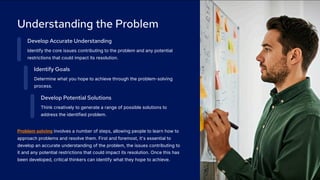
Understanding the Problem
Develop Accurate Understanding
Identify the core issues contributing to the problem and any potential
restrictions that could impact its resolution.
Identify Goals
Determine what you hope to achieve through the problem-solving
process.
Develop Potential Solutions
Think creatively to generate a range of possible solutions to
address the identified problem.
Problem solving involves a number of steps, allowing people to learn how to
approach problems and resolve them. First and foremost, it's essential to
develop an accurate understanding of the problem, the issues contributing to
it and any potential restrictions that could impact its resolution. Once this has
been developed, critical thinkers can identify what they hope to achieve.
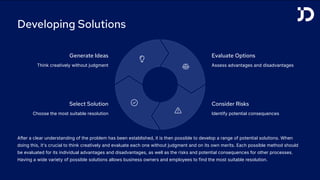
Developing Solutions
After a clear understanding of the problem has been established, it is then possible to develop a range of potential solutions. When
doing this, it's crucial to think creatively and evaluate each one without judgment and on its own merits. Each possible method should
be evaluated for its individual advantages and disadvantages, as well as the risks and potential consequences for other processes.
Having a wide variety of possible solutions allows business owners and employees to find the most suitable resolution.
Generate Ideas
Think creatively without judgment
Evaluate Options
Assess advantages and disadvantages
Consider Risks
Identify potential consequences
Select Solution
Choose the most suitable resolution
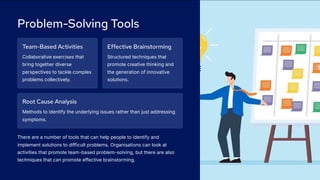
Problem-Solving Tools
Team-Based Activities
Collaborative exercises that
bring together diverse
perspectives to tackle complex
problems collectively.
Effective Brainstorming
Structured techniques that
promote creative thinking and
the generation of innovative
solutions.
Root Cause Analysis
Methods to identify the underlying issues rather than just addressing
symptoms.
There are a number of tools that can help people to identify and
implement solutions to difficult problems. Organisations can look at
activities that promote team-based problem-solving, but there are also
techniques that can promote effective brainstorming.
The Six Hats Technique
The Six Hats technique utilises six metaphorical hats, encouraging individuals or teams to look at a problem from a
different angle each time; for example, the white hat should be used to focus on facts, while the red hat is designed to
express emotions.
White Hat
Focus on facts and available information
Red Hat
Express emotions and intuitive feelings
Yellow Hat
Identify benefits and positive aspects
Black Hat
Consider risks and potential problems
Green Hat
Generate creative ideas and alternatives
Blue Hat
Manage the thinking process
The 5 Whys Technique
Why is the problem occurring?
Initial identification of the issue
Why is that happening?
Digging deeper into causes
Why does that situation exist?
Exploring underlying factors
Why has this developed?
Examining historical context
Why is this the root cause?
Confirming the fundamental issue
Utilising a technique called the 5 Whys is extremely useful for identifying the root cause of a problem. Asking the question 'why' multiple times allows individuals
to hone in on the underlying issues.
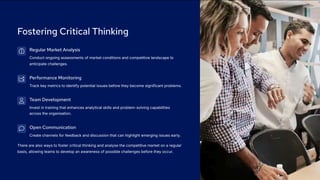
Fostering Critical Thinking
Regular Market Analysis
Conduct ongoing assessments of market conditions and competitive landscape to
anticipate challenges.
Performance Monitoring
Track key metrics to identify potential issues before they become significant problems.
Team Development
Invest in training that enhances analytical skills and problem-solving capabilities
across the organisation.
Open Communication
Create channels for feedback and discussion that can highlight emerging issues early.
There are also ways to foster critical thinking and analyse the competitive market on a regular
basis, allowing teams to develop an awareness of possible challenges before they occur.
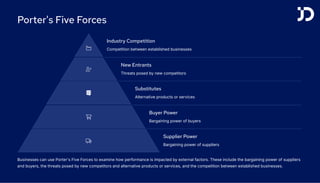
Porter's Five Forces
Industry Competition
Competition between established businesses
New Entrants
Threats posed by new competitors
Substitutes
Alternative products or services
Buyer Power
Bargaining power of buyers
Supplier Power
Bargaining power of suppliers
Businesses can use Porter's Five Forces to examine how performance is impacted by external factors. These include the bargaining power of suppliers
and buyers, the threats posed by new competitors and alternative products or services, and the competition between established businesses.
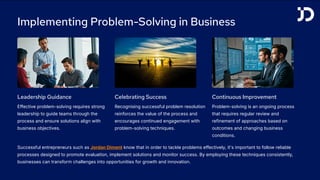
Implementing Problem-Solving in Business
Leadership Guidance
Effective problem-solving requires strong
leadership to guide teams through the
process and ensure solutions align with
business objectives.
Celebrating Success
Recognising successful problem resolution
reinforces the value of the process and
encourages continued engagement with
problem-solving techniques.
Continuous Improvement
Problem-solving is an ongoing process
that requires regular review and
refinement of approaches based on
outcomes and changing business
conditions.
Successful entrepreneurs such as Jordan Diment know that in order to tackle problems effectively, it's important to follow reliable
processes designed to promote evaluation, implement solutions and monitor success. By employing these techniques consistently,
businesses can transform challenges into opportunities for growth and innovation.

Jordan Diment - Problem Solving Techniques

  • 1.
    Problem-Solving Techniques In anybusiness environment, it's crucial to employ effective problem- solving techniques. Regardless of the size of the business, there will always be obstacles that have to be addressed in order to foster growth. It may not always be evident how these problems should be solved, and they could affect a single team or the entirety of the organisation itself. Successful entrepreneurs such as Jordan Diment know that in order to tackle them effectively, it's important to follow reliable processes designed to promote evaluation, implement solutions and monitor success.
  • 2.
    Understanding the Problem DevelopAccurate Understanding Identify the core issues contributing to the problem and any potential restrictions that could impact its resolution. Identify Goals Determine what you hope to achieve through the problem-solving process. Develop Potential Solutions Think creatively to generate a range of possible solutions to address the identified problem. Problem solving involves a number of steps, allowing people to learn how to approach problems and resolve them. First and foremost, it's essential to develop an accurate understanding of the problem, the issues contributing to it and any potential restrictions that could impact its resolution. Once this has been developed, critical thinkers can identify what they hope to achieve.
  • 3.
    Developing Solutions After aclear understanding of the problem has been established, it is then possible to develop a range of potential solutions. When doing this, it's crucial to think creatively and evaluate each one without judgment and on its own merits. Each possible method should be evaluated for its individual advantages and disadvantages, as well as the risks and potential consequences for other processes. Having a wide variety of possible solutions allows business owners and employees to find the most suitable resolution. Generate Ideas Think creatively without judgment Evaluate Options Assess advantages and disadvantages Consider Risks Identify potential consequences Select Solution Choose the most suitable resolution
  • 4.
    Problem-Solving Tools Team-Based Activities Collaborativeexercises that bring together diverse perspectives to tackle complex problems collectively. Effective Brainstorming Structured techniques that promote creative thinking and the generation of innovative solutions. Root Cause Analysis Methods to identify the underlying issues rather than just addressing symptoms. There are a number of tools that can help people to identify and implement solutions to difficult problems. Organisations can look at activities that promote team-based problem-solving, but there are also techniques that can promote effective brainstorming.
  • 5.
    The Six HatsTechnique The Six Hats technique utilises six metaphorical hats, encouraging individuals or teams to look at a problem from a different angle each time; for example, the white hat should be used to focus on facts, while the red hat is designed to express emotions. White Hat Focus on facts and available information Red Hat Express emotions and intuitive feelings Yellow Hat Identify benefits and positive aspects Black Hat Consider risks and potential problems Green Hat Generate creative ideas and alternatives Blue Hat Manage the thinking process
  • 6.
    The 5 WhysTechnique Why is the problem occurring? Initial identification of the issue Why is that happening? Digging deeper into causes Why does that situation exist? Exploring underlying factors Why has this developed? Examining historical context Why is this the root cause? Confirming the fundamental issue Utilising a technique called the 5 Whys is extremely useful for identifying the root cause of a problem. Asking the question 'why' multiple times allows individuals to hone in on the underlying issues.
  • 7.
    Fostering Critical Thinking RegularMarket Analysis Conduct ongoing assessments of market conditions and competitive landscape to anticipate challenges. Performance Monitoring Track key metrics to identify potential issues before they become significant problems. Team Development Invest in training that enhances analytical skills and problem-solving capabilities across the organisation. Open Communication Create channels for feedback and discussion that can highlight emerging issues early. There are also ways to foster critical thinking and analyse the competitive market on a regular basis, allowing teams to develop an awareness of possible challenges before they occur.
  • 8.
    Porter's Five Forces IndustryCompetition Competition between established businesses New Entrants Threats posed by new competitors Substitutes Alternative products or services Buyer Power Bargaining power of buyers Supplier Power Bargaining power of suppliers Businesses can use Porter's Five Forces to examine how performance is impacted by external factors. These include the bargaining power of suppliers and buyers, the threats posed by new competitors and alternative products or services, and the competition between established businesses.
  • 9.
    Implementing Problem-Solving inBusiness Leadership Guidance Effective problem-solving requires strong leadership to guide teams through the process and ensure solutions align with business objectives. Celebrating Success Recognising successful problem resolution reinforces the value of the process and encourages continued engagement with problem-solving techniques. Continuous Improvement Problem-solving is an ongoing process that requires regular review and refinement of approaches based on outcomes and changing business conditions. Successful entrepreneurs such as Jordan Diment know that in order to tackle problems effectively, it's important to follow reliable processes designed to promote evaluation, implement solutions and monitor success. By employing these techniques consistently, businesses can transform challenges into opportunities for growth and innovation.