Download to read offline

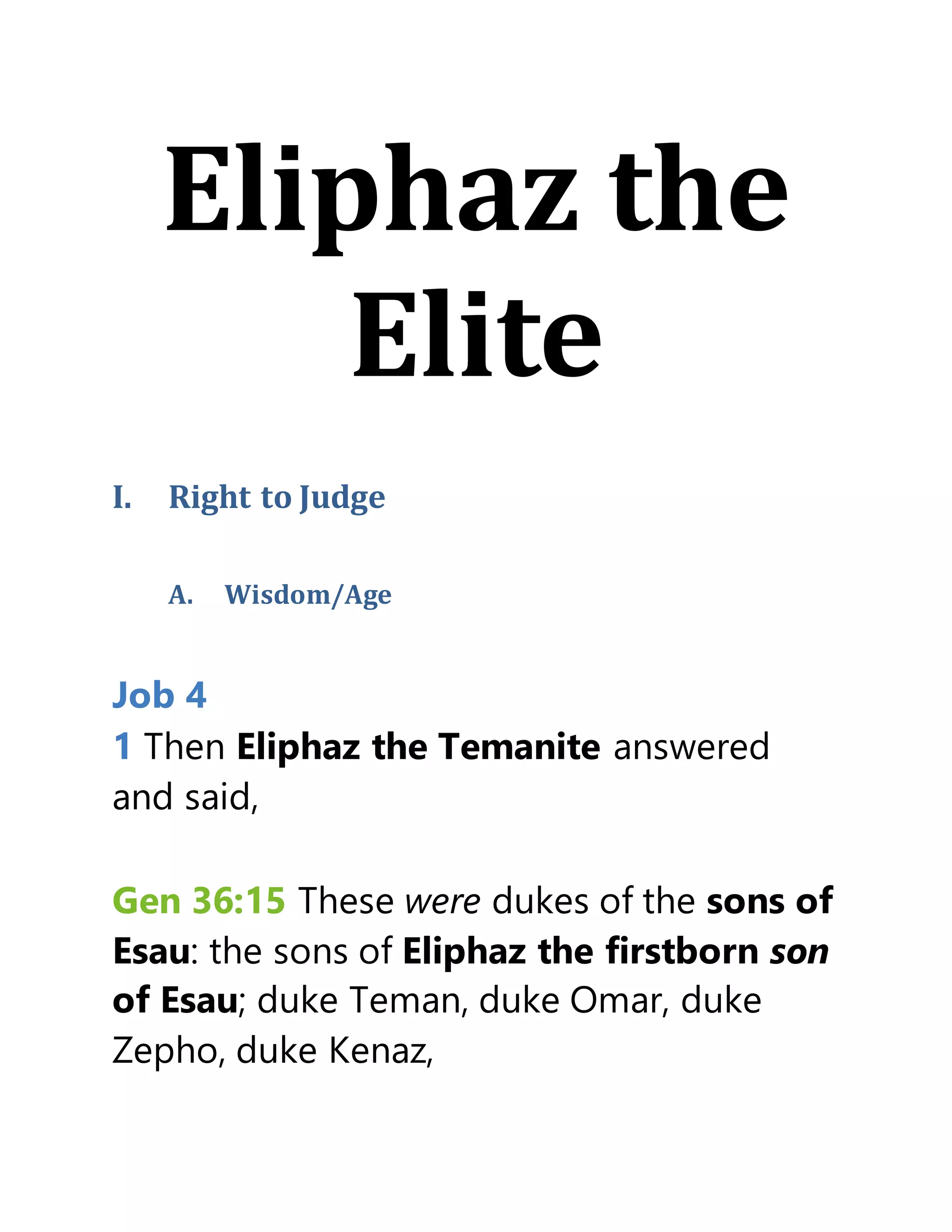
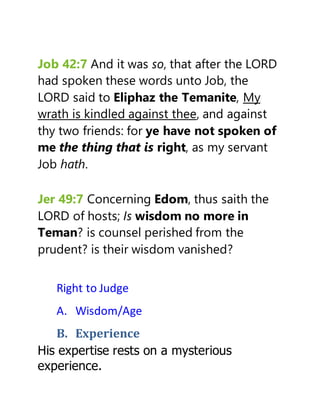
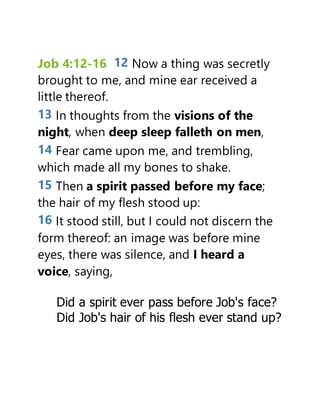
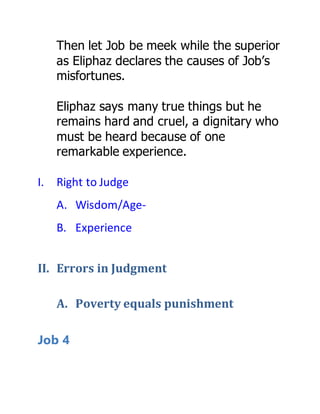
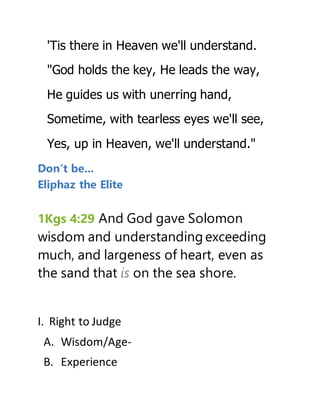
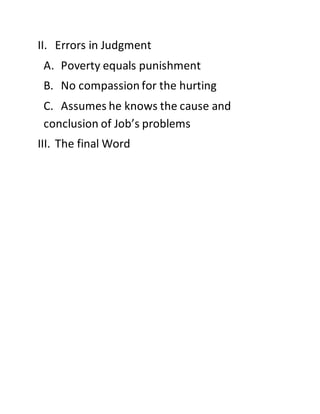

The document explores the dialogue of Eliphaz the Temanite from the Book of Job, emphasizing his misguided judgments regarding Job's suffering, which he attributes to personal sin. It critiques the errors in judgment presented by Eliphaz, including the assumption that poverty equates to punishment and a lack of compassion for the hurting. Ultimately, it underscores that not all suffering is a direct result of divine chastisement, indicating that true understanding of suffering may only come later in life or after death.


![谷歌霸屏推广[ 𝙩𝙤𝙥 𝟮𝟯𝟯. 𝙘 𝙤𝙢 ]](https://cdn.slidesharecdn.com/ss_thumbnails/top233-260130171247-43791db0-thumbnail.jpg?width=640&height=640&fit=bounds)


