JOB
ROTATION
PRESENTED BY: MOUMITA
HALDER
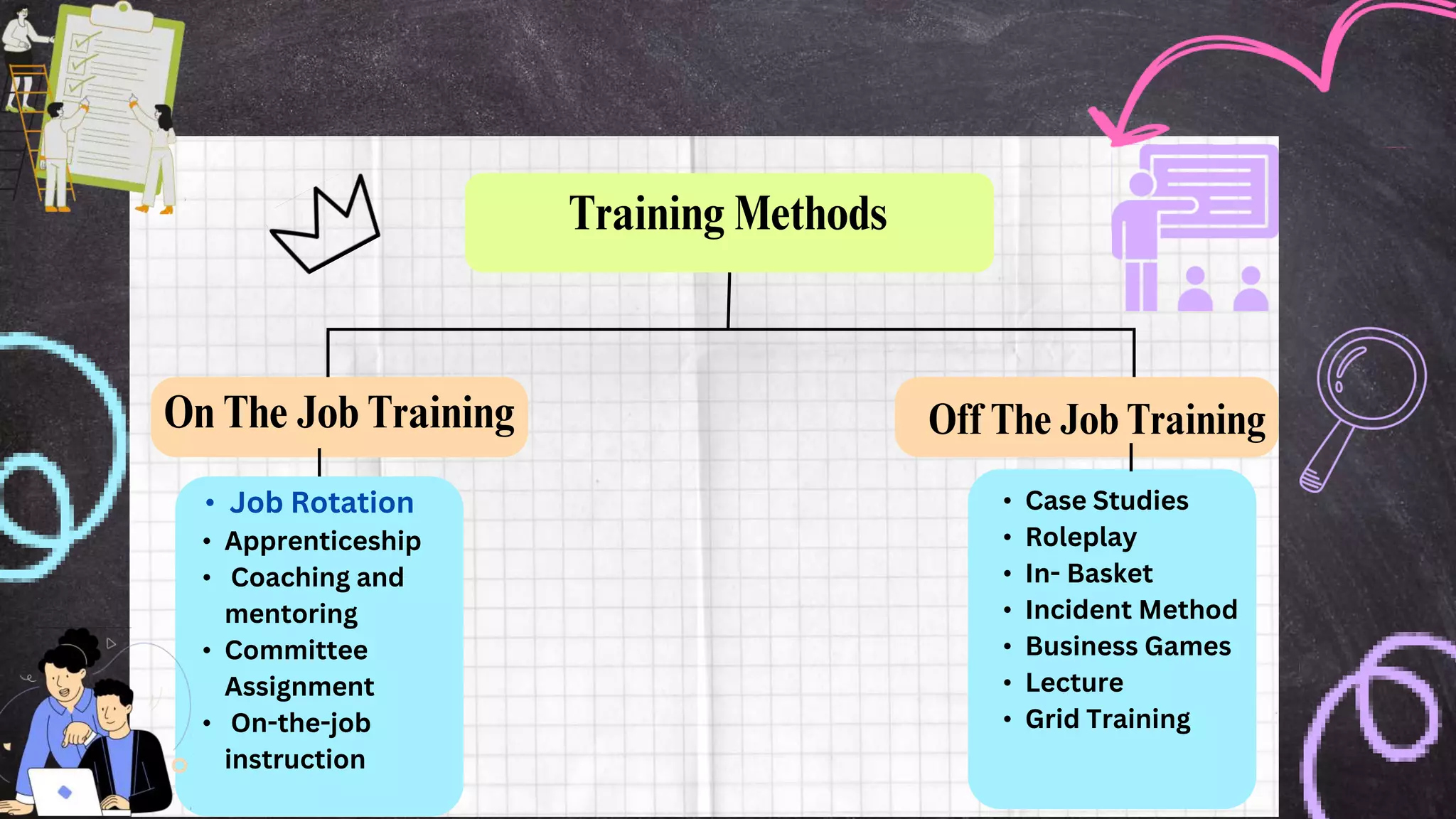
On The Job Training Off The Job Training
Training Methods
• Job Rotation
• Apprenticeship
• Coaching and
mentoring
• Committee
Assignment
• On-the-job
instruction
• Case Studies
• Roleplay
• In- Basket
• Incident Method
• Business Games
• Lecture
• Grid Training
What is Job Rotation?
Job rotation is a training method where employees are
periodically moved from one job to another. This can be
done within the same department, across different
departments, or even to different geographical locations.
The goal of job rotation is to give employees the opportunity to
learn new skills, gain new perspectives, and develop their
careers.
Types of Job Rotation
•
•
•
•
•
•
Horizontal Vertical Lateral
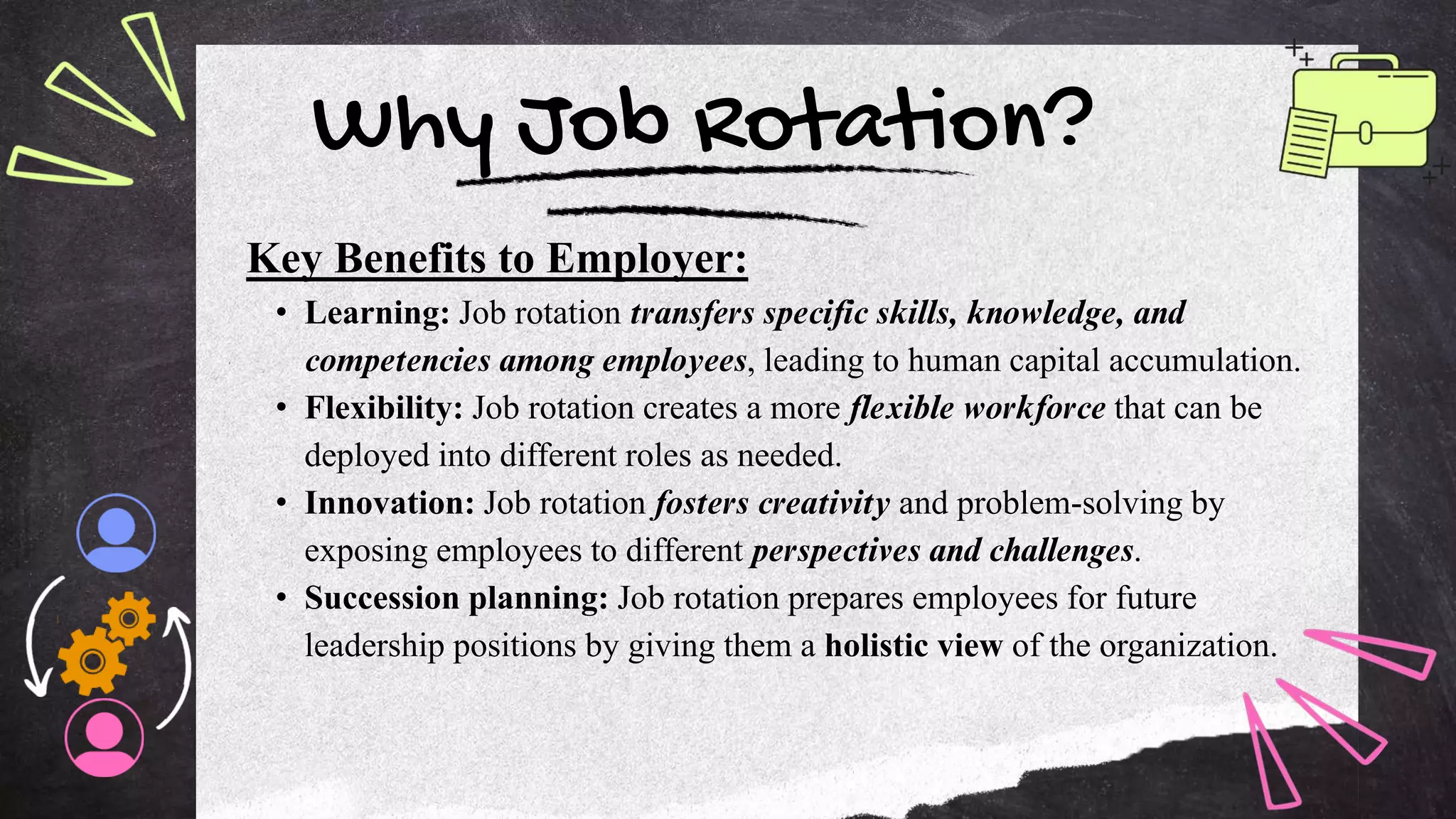
Why Job Rotation?
Key Benefits to Employer:
• Learning: Job rotation transfers specific skills, knowledge, and
competencies among employees, leading to human capital accumulation.
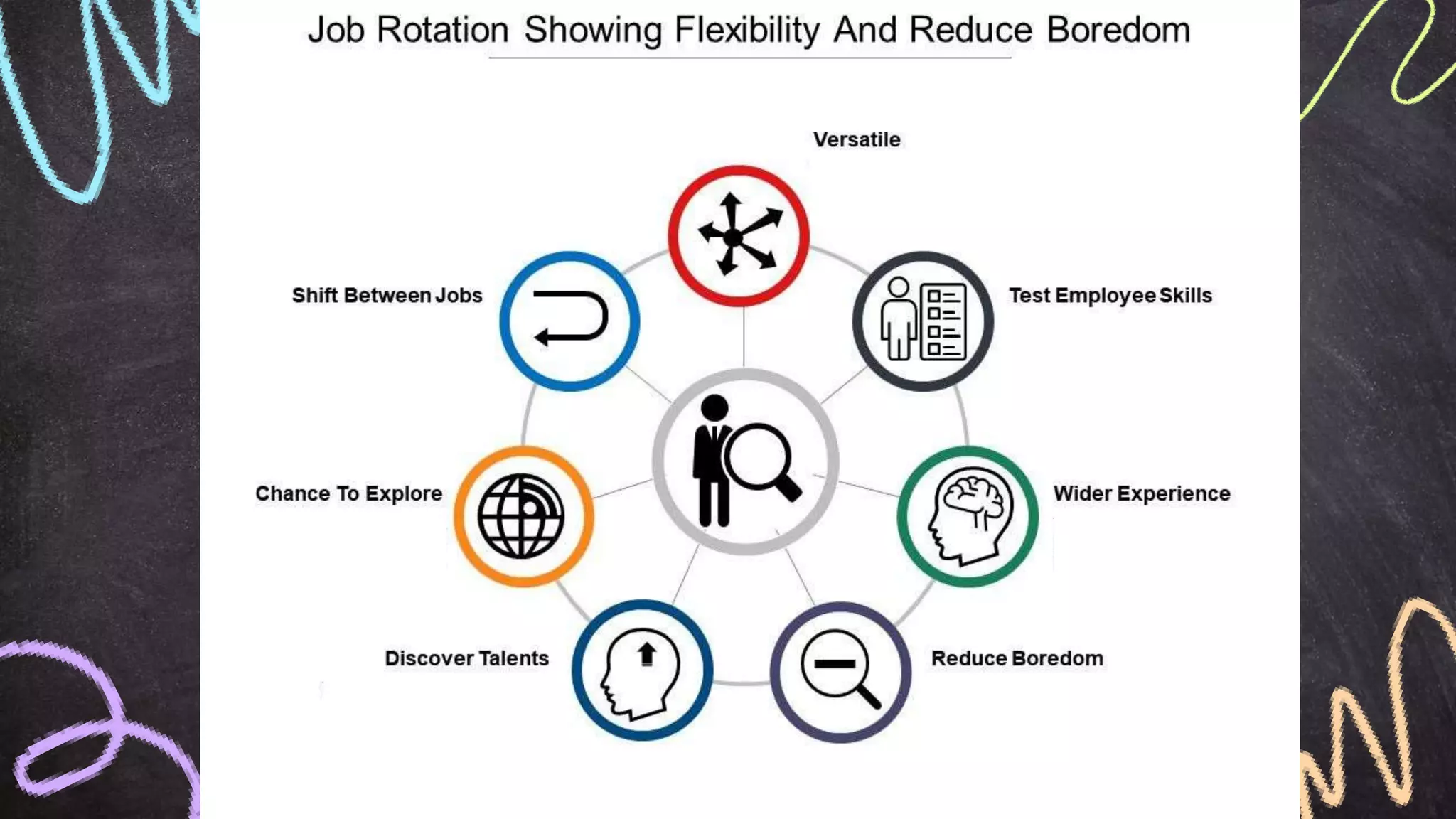
• Flexibility: Job rotation creates a more flexible workforce that can be
deployed into different roles as needed.
• Innovation: Job rotation fosters creativity and problem-solving by
exposing employees to different perspectives and challenges.
• Succession planning: Job rotation prepares employees for future
leadership positions by giving them a holistic view of the organization.
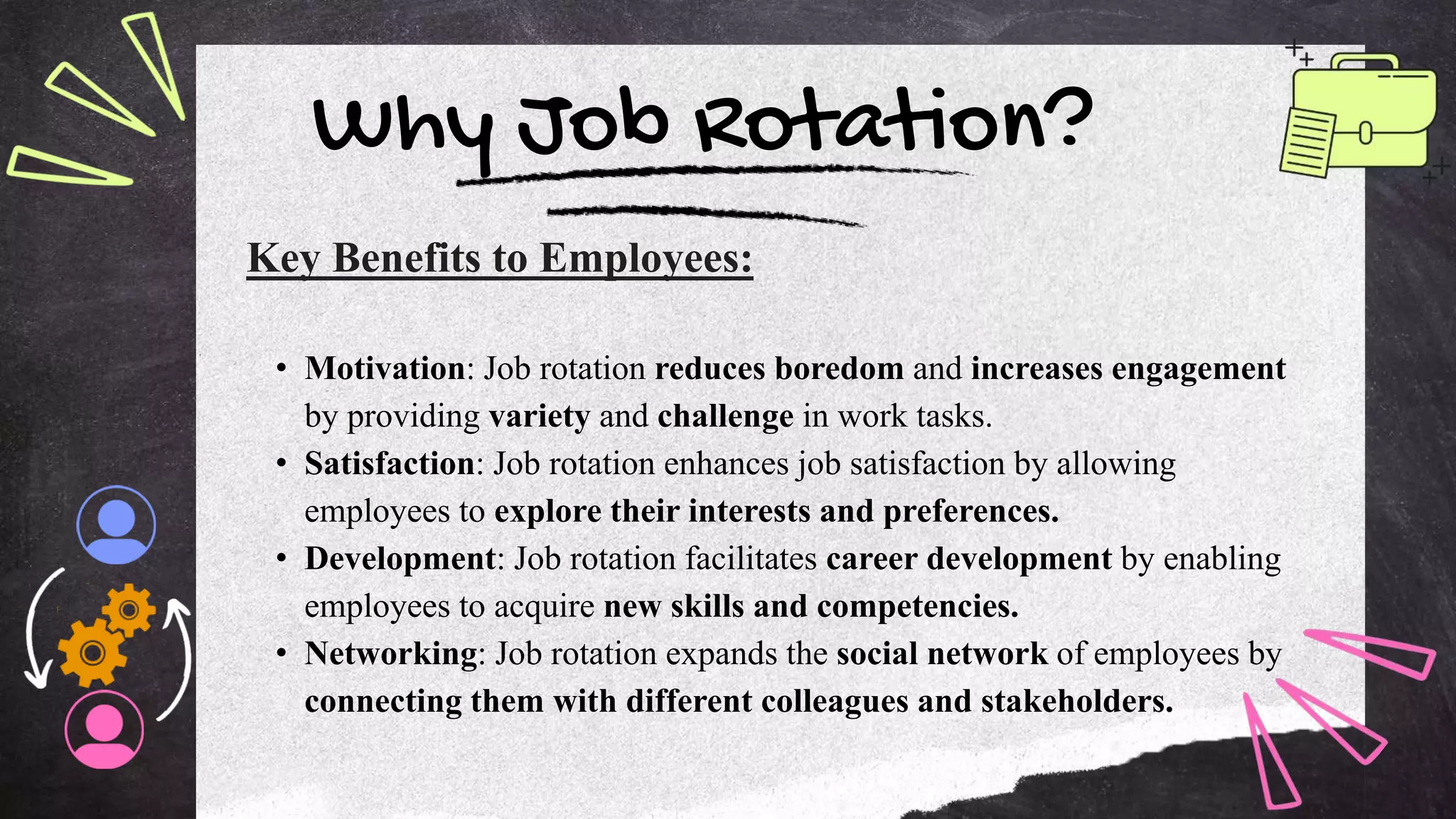
Why Job Rotation?
Key Benefits to Employees:
• Motivation: Job rotation reduces boredom and increases engagement
by providing variety and challenge in work tasks.
• Satisfaction: Job rotation enhances job satisfaction by allowing
employees to explore their interests and preferences.
• Development: Job rotation facilitates career development by enabling
employees to acquire new skills and competencies.
• Networking: Job rotation expands the social network of employees by
connecting them with different colleagues and stakeholders.
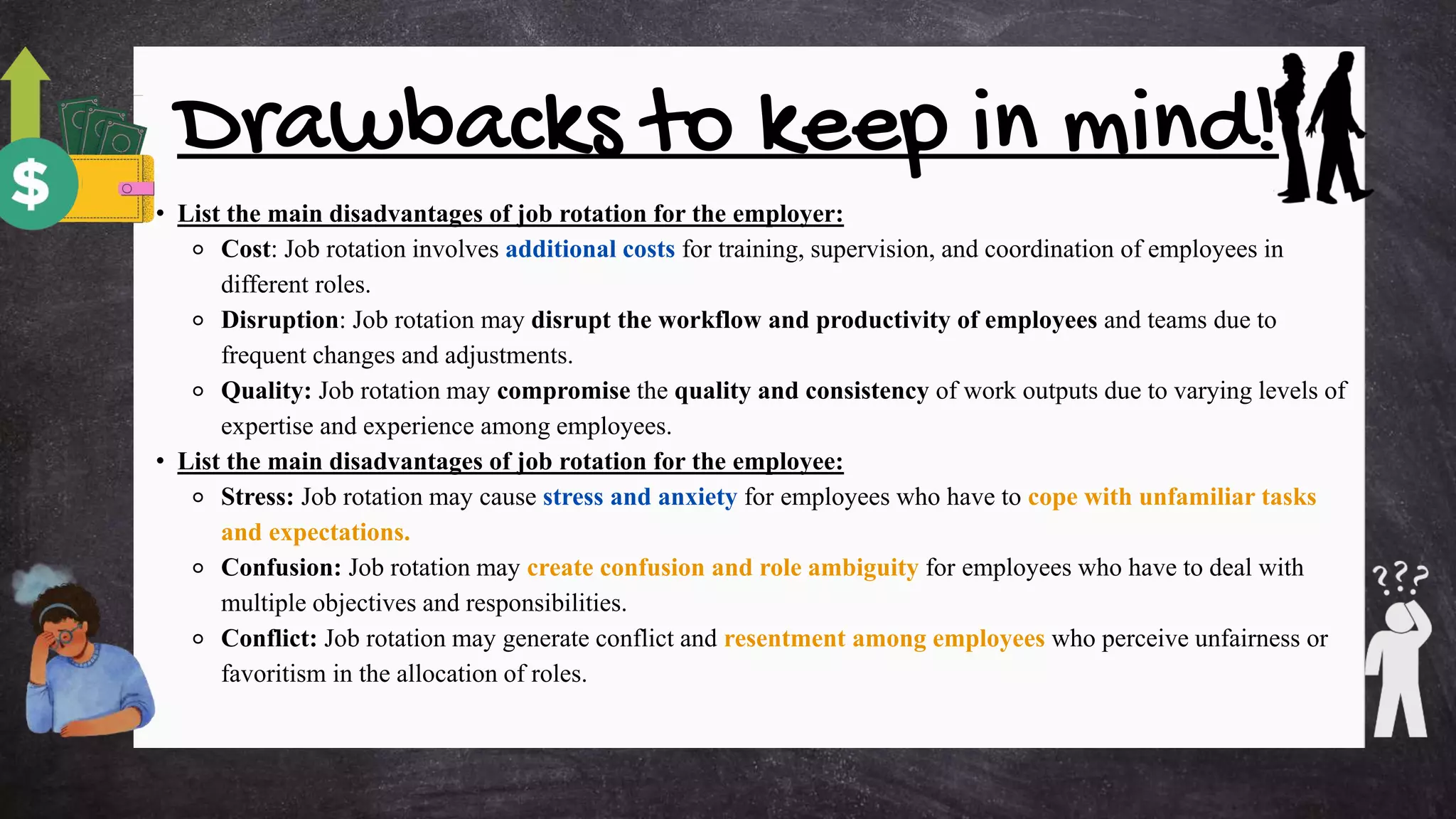
• List the main disadvantages of job rotation for the employer:
⚬ Cost: Job rotation involves additional costs for training, supervision, and coordination of employees in
different roles.
⚬ Disruption: Job rotation may disrupt the workflow and productivity of employees and teams due to
frequent changes and adjustments.
⚬ Quality: Job rotation may compromise the quality and consistency of work outputs due to varying levels of
expertise and experience among employees.
• List the main disadvantages of job rotation for the employee:
⚬ Stress: Job rotation may cause stress and anxiety for employees who have to cope with unfamiliar tasks
and expectations.
⚬ Confusion: Job rotation may create confusion and role ambiguity for employees who have to deal with
multiple objectives and responsibilities.
⚬ Conflict: Job rotation may generate conflict and resentment among employees who perceive unfairness or
favoritism in the allocation of roles.
Drawbacks to keep in mind!
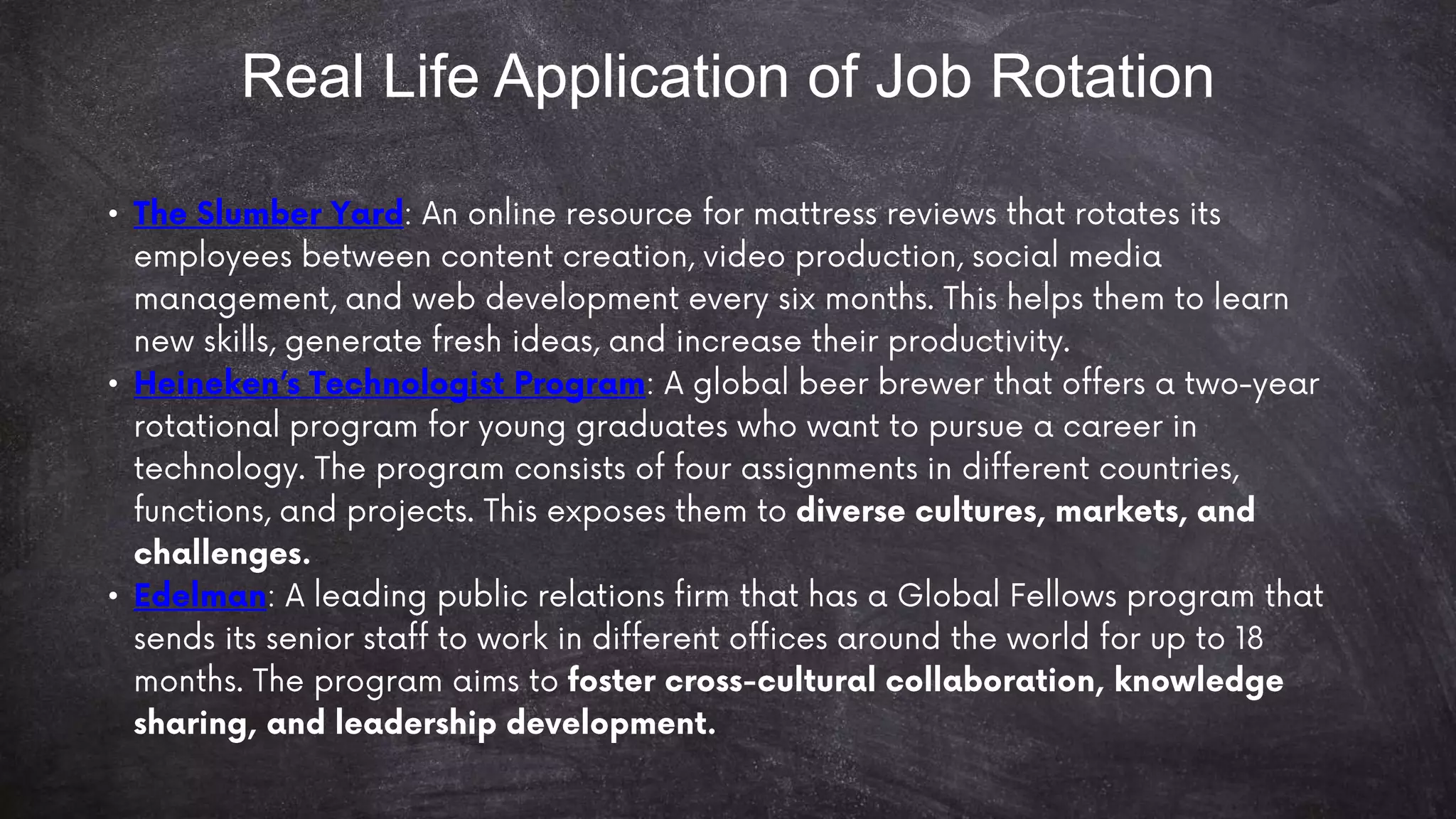
Real Life Application of Job Rotation
•
•
•
•
•
The metrics used to measure the success of the LASR program include:
• Employee retention rate: The percentage of LASRs who stay with Lenovo after completing the program.
• Employee satisfaction rate: The percentage of LASRs who report high levels of job satisfaction and
engagement.
• Sales performance rate: The percentage of LASRs who achieve or exceed their sales targets.
• Leadership potential rate: The percentage of LASRs who are identified as high-potential employees for
future leadership positions.
• Diversity and inclusion rate: The percentage of LASRs who come from diverse backgrounds and
contribute to a more inclusive workplace culture.
THANK
YOU
For your
attention!

JOB ROTATION.pptx

  • 1.
  • 2.
    On The JobTraining Off The Job Training Training Methods • Job Rotation • Apprenticeship • Coaching and mentoring • Committee Assignment • On-the-job instruction • Case Studies • Roleplay • In- Basket • Incident Method • Business Games • Lecture • Grid Training
  • 3.
    What is JobRotation? Job rotation is a training method where employees are periodically moved from one job to another. This can be done within the same department, across different departments, or even to different geographical locations. The goal of job rotation is to give employees the opportunity to learn new skills, gain new perspectives, and develop their careers.
  • 4.
    Types of JobRotation • • • • • • Horizontal Vertical Lateral
  • 6.
    Why Job Rotation? KeyBenefits to Employer: • Learning: Job rotation transfers specific skills, knowledge, and competencies among employees, leading to human capital accumulation. • Flexibility: Job rotation creates a more flexible workforce that can be deployed into different roles as needed. • Innovation: Job rotation fosters creativity and problem-solving by exposing employees to different perspectives and challenges. • Succession planning: Job rotation prepares employees for future leadership positions by giving them a holistic view of the organization.
  • 7.
    Why Job Rotation? KeyBenefits to Employees: • Motivation: Job rotation reduces boredom and increases engagement by providing variety and challenge in work tasks. • Satisfaction: Job rotation enhances job satisfaction by allowing employees to explore their interests and preferences. • Development: Job rotation facilitates career development by enabling employees to acquire new skills and competencies. • Networking: Job rotation expands the social network of employees by connecting them with different colleagues and stakeholders.
  • 8.
    • List themain disadvantages of job rotation for the employer: ⚬ Cost: Job rotation involves additional costs for training, supervision, and coordination of employees in different roles. ⚬ Disruption: Job rotation may disrupt the workflow and productivity of employees and teams due to frequent changes and adjustments. ⚬ Quality: Job rotation may compromise the quality and consistency of work outputs due to varying levels of expertise and experience among employees. • List the main disadvantages of job rotation for the employee: ⚬ Stress: Job rotation may cause stress and anxiety for employees who have to cope with unfamiliar tasks and expectations. ⚬ Confusion: Job rotation may create confusion and role ambiguity for employees who have to deal with multiple objectives and responsibilities. ⚬ Conflict: Job rotation may generate conflict and resentment among employees who perceive unfairness or favoritism in the allocation of roles. Drawbacks to keep in mind!
  • 9.
    Real Life Applicationof Job Rotation • • •
  • 10.
    • • The metrics usedto measure the success of the LASR program include: • Employee retention rate: The percentage of LASRs who stay with Lenovo after completing the program. • Employee satisfaction rate: The percentage of LASRs who report high levels of job satisfaction and engagement. • Sales performance rate: The percentage of LASRs who achieve or exceed their sales targets. • Leadership potential rate: The percentage of LASRs who are identified as high-potential employees for future leadership positions. • Diversity and inclusion rate: The percentage of LASRs who come from diverse backgrounds and contribute to a more inclusive workplace culture.
  • 11.