US Hypertension Management Guidelines: A Review of the Recent
Past and Recommendations for the Future
Lara C. Kovell, MD; Haitham M. Ahmed, MD, MPH; Satish Misra, MD; Seamus P. Whelton, MD, MPH; Greg P. Prokopowicz, MD;
Roger S. Blumenthal, MD; John W. McEvoy, MB, BCh, BAO, MHS
Hypertension affects %29% of the US adult population,
an estimated 72 million people, with a prevalence of
>65% in persons older than 60 years.1,2
It is an important risk
factor for myocardial infarction (MI), heart failure (HF), stroke,
and cardiovascular disease (CVD), accounting for %41% of all
CVD deaths.3,4
Indeed, there is a known graded relationship
between increasing blood pressure (BP) and the risk of CVD,
starting at 115/75 mm Hg.5
Based on observational data, an
increase in BP of 20 mm Hg systolic or 10 mm Hg diastolic is
associated with a doubling of the risk of CVD death,
regardless of age.5
Further, hypertension in middle age is
known to increase the risk of chronic kidney disease (CKD)
and dementia in later life, an important issue given the aging
demographic in Western societies.6
Finally, despite the fact
that BP recognition and control are improving, it is concerning
that nearly half of the hypertensive population remains
suboptimally controlled.2
With the 2003 Joint National Committee’s seventh report
(JNC 7) becoming increasingly outdated and the 2011
Institute of Medicine report calling for high-quality evidence-
based guidelines,7,8
the Eighth Joint National Committee (JNC
8) was initially appointed to create an updated treatment
guideline for hypertension under the auspices of the National
Institutes of Health (NIH). Although the NIH ultimately
withdrew from the guideline development process at a late
stage in the development of JNC 8, the panel decided,
nonetheless, to publish their recommendations indepen-
dently.
The panel aimed to answer 3 questions: Does initiating
antihypertensive treatment at specific BP thresholds improve
health outcomes? Does treatment with antihypertensive
therapy to a specific BP goal improve health outcomes? Are
there differences in benefit/harm between antihypertensive
drugs or drug classes on specific health outcomes? The
committee focused exclusively on large, randomized con-
trolled trials (RCTs) as supporting evidence, although 5 of the
9 recommendations in the final report were ultimately based
on expert opinion. Partly in response to JNC 8, the American
College of Cardiology (ACC) and American Heart Association
(AHA) are now in the process of developing official hyperten-
sion guidelines. In this review, we discuss the basis of each
recommendation from the JNC 8 panel, provide additional
insights, and compare these recommendations with guideli-
nes from other professional societies to generate suggestions
for the new AHA/ACC hypertension guideline committee.
JNC 8 Recommendation 1
In the general population aged ≥60 years, initiate pharmaco-
logic treatment to lower BP at systolic BP (SBP) ≥150 mm Hg
or diastolic BP (DBP) ≥90 mm Hg and treat to a goal SBP
<150 mm Hg and goal DBP <90 mm Hg.
Basis of Recommendation
This first recommendation is based on several RCTs
evaluating treatment of SBP to <140 mm Hg versus a more
liberal target (140–160 mm Hg) in patients >65 years of
age.9,10
In the Japanese Trial to Assess Optimal Systolic
Blood Pressure in Elderly Hypertensive Patients (JATOS),
4418 patients between the ages of 65 and 85 were
randomized to SBP treatment goal <140 mm Hg versus
140 to <160 mm Hg. Despite the fact that the intensive
treatment group achieved a significantly lower BP (136/
75 mm Hg versus 146/78 mm Hg), the primary end point of
combined CVD and renal failure did not differ significantly
between the 2 groups.
From the Ciccarone Center for Prevention of Heart Disease (L.C.K., H.M.A.,
S.M., S.P.W., R.S.B., J.W.M.) and Division of General Internal Medicine,
Department of Medicine (G.P.P.), Johns Hopkins University School of Medicine,
Baltimore, MD.
Correspondence to: Lara C. Kovell, MD, 1800 Orleans Street, Zayed Building,
7125, Baltimore, MD 21287. E-mail: lkovell1@jhmi.edu
J Am Heart Assoc. 2015;4:e002315 doi: 10.1161/JAHA.115.002315.
ª 2015 The Authors. Published on behalf of the American Heart Association,
Inc., by Wiley Blackwell. This is an open access article under the terms of the
Creative Commons Attribution-NonCommercial License, which permits use,
distribution and reproduction in any medium, provided the original work is
properly cited and is not used for commercial purposes.
DOI: 10.1161/JAHA.115.002315 Journal of the American Heart Association 1
CONTEMPORARY REVIEW
byguestonFebruary20,2018http://jaha.ahajournals.org/Downloadedfrom
One limitation of this trial, however, is that it was only
powered to detect a 40% relative risk reduction (or an
absolute risk reduction from 5% to 3%) in the primary end
point. While a 10/3–mm Hg reduction in BP is substantial, it
may not be sufficient to achieve a 40% reduction in CVD or
renal failure. Also, these patients were followed for only
2 years and the main treatment drug was a long-acting
calcium channel blocker (CCB). Diuretics, widely considered
first line along with CCBs in most professional society
guidelines, were used in only 12% of the patients.7,11–13
While
not reaching statistical significance, subgroup analysis sug-
gested that intensive treatment goals may be beneficial in
patients <75 years old while adopting a more liberal strategy
may be safer in those ≥75 years old.10
The VALISH (Valsartan in Elderly Isolated Systolic Hyper-
tension) trial examined a slightly older hypertensive patient
population (N=3260), with mean age of 76 years, to a strict
(<140 mm Hg) or moderate (140 to <150 mm Hg) SBP
control strategy with valsartan as the first-line drug. There
was a nonsignificant trend toward reduction of the primary
outcome of composite CVD and renal disease with the
intensive treatment strategy (10.6 versus 12.0 per 1000 pa-
tient-y; P=0.38) at 3 years of follow-up.
An important consideration is that VALISH was signifi-
cantly underpowered, with substantially fewer primary end
point events than predicted. While VALISH was conducted in
Japan, most guidelines for the elderly, African Americans, or
Europeans would suggest that angiotensin type II receptor
blockers (ARBs) are second line to a diuretic or CCB for
controlling BP.12,14,15
In both of these trials, the treatment
strategies were well tolerated with few adverse events.
One trial not included in the JNC 8 analysis was FEVER
(Felodipine Event Reduction), which enrolled 9800 Chinese
patients aged 50 to 79 years with hypertension and at least
one other cardiovascular risk factor for a comparison of
diuretic monotherapy versus diuretic plus CCB. Of note, this
patient population had a higher rate of prior stroke/transient
ischemic attack (TIA), suggesting higher baseline risk for CVD;
that is despite the fact that other baseline characteristics
such as diabetes, previous MI, and incidence of cardiovascular
events were in a similar range to those of other large
studies.16
Unlike JATOS, FEVER did not meet the JNC 8
committee’s criteria for inclusion in their deliberations.1
While the trials included in JNC 8 evaluated different BP
goals, FEVER did not have specific BP targets but used 2
different treatment strategies that were clearly designed to
have more intensive BP control (treatment arm) versus less-
intensive BP control (placebo arm). The exclusion of high-
quality randomized evidence evaluating different BP treatment
strategies and the limited focus solely on trials with prespec-
ified BP targets are significant limitations of JNC 8 that likely
will be remedied by the next AHA/ACC committee.
Both groups in FEVER had a reduction in BP, with BP
falling from 154/91 to 137/83 mm Hg in the diuretic-plus-
CCB (intensive treatment) group and from 154/91 to 143/
85 mm Hg in the diuretic-alone (control) group. Fatal and
nonfatal stroke was reduced by 27% in the intensive
treatment group (P=0.001), while cardiac events and all-
cause mortality were lowered by 35% (P=0.012) and 31%
(P=0.006), respectively.16
The average age of the FEVER
patients was 62 years; thus, according to the JNC 8
recommendations, the majority of these patients would not
receive additional therapy to achieve SBP ≤140 mm Hg. In
such, these patients may lose the additional stroke and CVD
benefit seen in FEVER. However, given that there was no
subgroup analysis of patients >60 years old, the magnitude
of benefit in this age group is unclear.
More evidence to support lower targets in US adults comes
from the recently completed Systolic Blood Pressure Inter-
vention Trial (SPRINT). This study randomized 9361 nondia-
betic adults ≥50 years old with no prior stroke to a standard
group with target SBP <140 mm Hg and an intensive group
with target SBP <120 mm Hg.17
SPRINT was designed to look
for a benefit of intensive BP treatment in those at risk for
developing heart failure or CVD, with an average age of 68
years and Framingham 10-year CVD risk score of 20%. The
independent Data and Safety Monitoring Board recently
advised the NIH to stop the study early due to the significantly
reduced relative rates of CVD-related death (43%, P=0.005)
and events (25%, P<0.001).18,19
This reduction in CVD events
came at the cost of higher rates of hypotension, acute kidney
injury, syncope, and electrolyte disturbances. The results from
SPRINT contradict the recommendations of JNC8 and may
support even lower SBP targets for the consideration of the
new AHA/ACC guideline committee.
Although the JNC 8 BP target of <150/90 mm Hg is
recommended for those older than 60 years, evidence for this
target is strongest for those >80 years. HYVET (Hypertension
in the Very Elderly Trial) showed a benefit to treating patients
>80 years old to an average SBP of 144 mm Hg (N=3845).
These patients initially had SBP >160 mm Hg at baseline and
were treated with indapamide plus perindopril as needed to
achieve a goal BP of <150/80 mm Hg. This trial was stopped
early for mortality benefit, with outcomes including 39%
reduction in fatal strokes, 21% reduction in death from any
cause, and 64% reduction in HF rates in the treatment
group.20
In HYVET, frail adults >80 years old were excluded
from the trial, but this suggests that otherwise robust adults
>80 years old have a significant reduction in mortality and
CVD outcomes targeting SBP <150 mm Hg. What is not clear
from HYVET is whether further reductions in BP to lower
thresholds would have been beneficial in this sample. In the
prespecified subgroup analysis of the SPRINT trial, the
reduction in CVD events and death in the intensive treatment
DOI: 10.1161/JAHA.115.002315 Journal of the American Heart Association 2
Blood Pressure Treatment Targets Kovell et al
CONTEMPORARYREVIEW
byguestonFebruary20,2018http://jaha.ahajournals.org/Downloadedfrom
arm (targeting SBP <120 mm Hg) was seen across age
groups, including in people aged 75 years or older.18
Similar
to HYVET, SPRINT avoided possibly frail older adults, by
excluding residents of nursing homes or assisted living
facilities. These results will also impact the new guideline
committee.
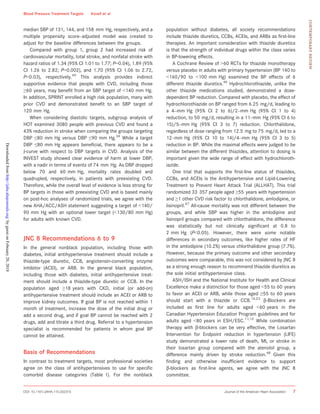
Table 1. Guideline Comparison
Guideline Population
Goal BP
(mm Hg) First-Line Treatment Options
2014 Hypertension
Guideline15
Adults <60 y <140/90 Nonblack: thiazide, ACEI, ARB, or CCB
Black: thiazide or CCB
Adults ≥60 y <150/90
Adults with diabetes <140/90 Thiazide, ACEI, ARB, or CCB
Adults with CKD <140/90 ACEI or ARB
JNC 77
Adults ≥18 y <140/90 Thiazide, 2-drug combination for BP >20/10 mm Hg over target
Adults with diabetes <130/80 Thiazide, ACEI, b-blocker, CCB, or ARB
Adults with CKD <130/80 ACEI or ARB
ASH/ISH 201414
Adults <80 y <140/90 Nonblack <60 y: ACEI or ARB
Nonblack ≥60 y or black: CCB or thiazide
Adults ≥80 y <150/90
Adults ≥80 y with CKD or
diabetes
<140/90 ACEI or ARB
Adults <80 y with CKD and
albuminuria
<130/80 ACEI or ARB
CHEP 201411
Adults <80 y <140/90 Thiazide, b-blocker (age <60 y), ACEI (nonblack), CCB, or ARB
Adults ≥80 y <150 Thiazide, ACEI (nonblack), CCB, or ARB
Adults with diabetes <130/80 ACEI or ARB (CVD or CKD), or ACEI, ARB, CCB, or thiazide
Adults with CKD <140/90 ACEI or ARB
ESH/ESC 201312
Nonfrail adults <80 y <140/90 Diuretic, b-blocker, CCB, ACEI, or ARB
Adults >80 y <150/90 Diuretic, CCB
Adults with diabetes <140/85 ACEI or ARB
Adults with CKD without
proteinuria
<140/90 ACEI or ARB
Adults with CKD with overt
proteinuria
<130/90 ACEI or ARB
Adults with CHD <140/90 ACEI, ARB, or b-blocker
ADA 201521
Adults with diabetes <140/90* ACEI or ARB
KDIGO 201222
Adults with CKD and urine
albumin <30 mg/24 h
<140/90
Adults with CKD and urine
albumin ≥30 mg/24 h
<130/80 ARB or ACEI with urine albumin ≥300 mg/24 h
ISHIB 201013
Black adults, primary prevention <135/85 ≤10 mm Hg above target, CCB or diuretic. >15/10 mm Hg above target, CCB plus
RAS blocker or diuretic plus RAS blocker
Black adults, with target organ
damage†
<130/80 Diuretic or CCB (preferred), RAS blocker (alternative), b-blocker (optional)
NICE 201123
Adults <80 y <140/90 Adults >55 y: CCB or thiazide; adults<55 y: ACEI or ARB
Adults ≥80 y <150/90 CCB or thiazide
BP indicates blood pressure; ACEI, angiotensin-converting enzyme inhibitor; ARB, angiotensin type II receptor blocker; CCB, calcium channel blocker; JNC 7, Seventh Joint National
Committee; CKD, chronic kidney disease; ASH/ISH, American Society of Hypertension/International Society of Hypertension; CHEP, Canadian Hypertension Education Program; CVD,
cardiovascular disease; ESH/ESC, European Society of Hypertension/European Society of Cardiology; CHD, congestive heart disease; ADA, American Diabetes Association; KDIGO, Kidney
Disease: Improving Global Outcomes; ISHIB, International Society on Hypertension in Blacks; RAS, renin-angiotensin system; NICE, National Institute for Health and Clinical Excellence.
*Optional target of <130/80 mm Hg for certain individuals, such as younger patients, if this target can be achieved without adverse treatment burden.
†
Target organ damage defined as albumin:creatinine ratio >200 mg/g, estimated glomerular filtration rate <60 mL/min per 1.73 m2
, or electrocardiographic/echocardiographic evidence
of left ventricular hypertrophy.
DOI: 10.1161/JAHA.115.002315 Journal of the American Heart Association 3
Blood Pressure Treatment Targets Kovell et al
CONTEMPORARYREVIEW
byguestonFebruary20,2018http://jaha.ahajournals.org/Downloadedfrom
The American Society of Hypertension (ASH)/International
Society of Hypertension (ISH) along with the Canadian
Hypertension Education Program guidelines use a higher
age cutoff of >80 years for a treatment goal of BP <150/
90 mm Hg (Table 1).11,14,21–23
Unlike the JNC 8 panel’s
recommendations, the European Society of Hypertension
(ESH) and the European Society of Cardiology (ESC) add
another variable of frailty, likely due to the fact that trials such
as HYVET attempted to exclude frail patients such as those
with dementia or requiring nursing home care.12
They
recommend a tailored approach for the fragile elderly patient
<80 years of age by using individualized targets.
Observational Evidence and Additional Insights
When we do not have randomized trial evidence, high-quality
observational data and meta-analyses may be helpful in the
formulation of a more-comprehensive BP treatment guideline.
Several studies have found a modest-to-high correlation
between RCTs and nonrandomized studies in estimating the
benefit of medical interventions, although the magnitudes of
effect were not always similar.24,25
Results from one large
cohort supporting a lower BP target was reported by Sim
et al in the Kaiser Permanente Southern California health
system. This retrospective analysis examined nearly 400 000
people treated for hypertension to determine the optimal
treatment target for the composite end point of mortality and
end-stage renal disease. The lowest risk of the primary
outcome was seen at an on-treatment BP of 137/71 mm Hg
with a J-shape curve suggesting higher risk with lower and
higher BP targets. In subgroup analysis, a similar curve was
seen in those ≥70 years of age with a higher optimal target
of 140/70 mm Hg.26
Along with the Kaiser study, a meta-analysis by the Blood
Pressure Lowering Treatment Trialists’ Collaboration (BPLTTC)
confirmed a benefit in treating stage I hypertension (BP 140 to
159/90 to 99 mm Hg).27
With a mean age of 63 years and
mean baseline SBP of 146 mm Hg, the patients in the active
treatment arm had an average BP reduction of 3.6/
2.4 mm Hg and odds ratios of 0.72 (95% CI 0.55 to 0.94)
for strokes, 0.75 (95% CI 0.57 to 0.98) for CVD deaths, and
0.78 (95% CI 0.67 to 0.92) for all-cause mortality.27
In
subgroup analysis, this finding of a lower odds ratio for all-
cause mortality held for those >67 years old (odds ratio 0.73,
CI 0.56 to 0.95).27
Again, along with results from SPRINT, this
suggests that using the new JNC 8 treatment targets would
lead to a loss of mortality benefit in patients >60 years old
with SBP between 140 and 150 mm Hg.
A recent cost-effectiveness model of treating stage I
hypertension showed a reduction in both CVD events and
deaths along with significant cost savings, especially in those
>60 years old.28
This study used the JNC 8 panel’s recom-
mended treatment targets, but did not model the cost savings
or mortality benefit of treating adults >60 years with SBP 140
to 150 mm Hg. However, there was significant cost-savings
gained for treating men and women between the ages of 45
and 60 with BP >140/90 mm Hg. Given the projected
increase in CVD events with those >60 years of age, we
believe that there is likely to be a benefit to treating mild
hypertension in this group as well.
The impact of adopting the JNC 8 guidelines on a
population level will lead to a significant change in those
eligible for BP treatment. While an estimated 41.5 million
people are above their BP goal under JNC 7, only 28 million
are above goal according to the JNC 8 recommendations,
based on estimates from the National Health and Nutrition
Examination Survey, a representative population sample.29
This corresponds to 13.5 million adults, with the majority
≥60 years old, who were previously considered above goal
and now no longer eligible for further treatment. An important
consideration is that these 13.5 million include 37% with
diabetes, 39% with CKD, and 19% with CVD.29
The National Cardiovascular Data Registry PINNACLE
Registry confirmed that the population of patients for whom
the BP goals changed in JNC 8 is also the population who are
at highest risk for CVD events, with an average Framingham
risk score of 8.5Æ3.2% and 10-year atherosclerotic CVD
(ASCVD) risk score of 28Æ19%.30
In this high-risk group in
particular, a more effective approach than the traditional
target-based BP treatment could be a risk-based treatment
model, incorporating global CVD risk scores. Support for this
approach was established by the BPLTTC.31
In their meta-
analysis of nearly 52 000 individuals, the BPLTTC showed that
while BP treatment led to the same relative risk reduction
across all 4 risk categories, the greatest absolute benefit by
number of CVD events prevented occurred in the highest
baseline CVD risk category.31
While this approach still needs to be externally validated,
we suggest that the new AHA/ACC guideline committee
consider a risk-based approach for adults >60 years of age;
initiating treatment for those with SBP ≥140 mm Hg if their
10-year ASCVD risk score is >7.5% based on the pooled
cohort equations.32
Persons with ASCVD risk <7.5% appear
less likely to benefit from this more-aggressive BP target and
may not require treatment until their SBP is ≥150 mm Hg. We
note, however, that, given the substantial influence of age in
the ASCVD risk calculator, the vast majority of men and many
women >60 years old who have an SBP of >140 mm Hg
would qualify for more-aggressive BP treatment based on this
7.5% threshold. Thus, future research may identify a more-
optimal ASCVD risk cut-point (perhaps, for example, >15%
[the risk cutoff for SPRINT]), below which a more lenient SBP
goal of 150 mm Hg could be targeted in adults between 60
and 80 years old.
DOI: 10.1161/JAHA.115.002315 Journal of the American Heart Association 4
Blood Pressure Treatment Targets Kovell et al
CONTEMPORARYREVIEW
byguestonFebruary20,2018http://jaha.ahajournals.org/Downloadedfrom
The 2014 National Institute for Health and Clinical
Excellence cardiovascular risk assessment guidelines suggest
starting BP treatment in adults with a CVD risk score ≥10%
based on the QRISK2 calculator.33
It is worth noting that
estimation of CVD risk is also now a critical part of the
cholesterol treatment guidelines and, hence, could also be
used to enhance the treatment of hypertension in high-risk
adults. Further research will be needed to explore the optimal
ASCVD risk score to initiate BP treatment for men and women
and to determine the potential role, if any, of cardiac
biomarkers such as coronary artery calcium in guiding risk-
based allocation of hypertension therapy.
To reiterate, with CVD risk being heavily influenced by age,
the absolute benefit of BP treatment for risk reduction is
greatest in the elderly. However, despite the JNC 8 recom-
mendations, none of the trials on which these recommenda-
tions are based were conducted in elderly hypertensive
patients with an initial SBP between 140 and 150 mm Hg.
Thus, it is not possible to be entirely sure what BP target to
use without more evidence from RCTs, which is why the
results from SPRINT will be critical for the new guideline
committee.
However, RCTs cannot answer every question and, in these
situations, the new AHA/ACC committee may need to rely
more on other high-quality, prospective observational data
and meta-analyses to help determine better BP targets or to
integrate a treatment approach that incorporates CVD risk
factor estimation.
JNC 8 Recommendations 2 to 5
In all persons <60 years or in persons >18 years (and either
those younger or older than 60 years with either diabetes or
CKD), initiate pharmacologic treatment to lower SBP ≥140 or
DBP ≥90 mm Hg and treat to a goal BP of <140/90 mm Hg.
Basis of Recommendation
There is broader agreement between the professional
societies on how to treat younger patients with hypertension.
While most studies examined adults >30 years, JNC 8
extends the same target to those aged 18 to 30 years. More
support can be found for DBP versus SBP goals among
younger adults with hypertension, especially in the Hyperten-
sion Optimal Treatment (HOT) trial.34
This trial randomized
18 790 hypertensive patients (aged 50 to 80 years) with
baseline DBP 100 to 115 mm Hg into 3 groups based on
target DBP ≤90, ≤85, or ≤80 mm Hg.
The main goal of this study was to assess the association
between these 3 target DBPs and major CVD events (nonfatal
MI, nonfatal stroke, and cardiovascular death). There was little
difference in event rates between the 3 groups, except that
the rate of MI was reduced in the 2 lower DBP target groups
compared with the DBP ≤90 mm Hg group. Further subgroup
analyses of patients with diabetes demonstrated fewer major
CVD events, fewer strokes, and reduced cardiovascular
mortality in the lowest BP treatment target group, while
those with prior CVD had a significant reduction in stroke
across the 3 groups.34
While all 3 groups in HOT achieved a mean DBP
<90 mm Hg, the lowest risk of cardiovascular mortality was
seen at 85.6 mm Hg and the lowest rate of CVD events was
seen at 82.6 mm Hg. Based on this trial, everyone with
hypertension under the JNC 8 guidelines has a DBP goal of
<90 mm Hg. There is less evidence supporting an SBP target
of <140 mm Hg in this group of patients. However, in trials
like HOT, even though DBP was being targeted, SBP also fell
at least 25 mm Hg in all 3 groups.34
Indeed, given SPRINT
suggests clinical benefit for an SBP target of 120 mm Hg
among higher risk persons <60 years, it is likely that
forthcoming guidelines may even reduce this SBP target to
a threshold lower than 140. However, the DBP values in the
intensive therapy arm of SPRINT are not currently known.
Other supporting evidence for DBP treatment thresholds
includes the Veterans Administration Cooperative Study
Group on Antihypertensive Agents, in which 380 men with
DBP 90 to 114 mm Hg were randomized to antihypertensive
therapy or placebo. Those receiving treatment benefited from
a reduction in both morbidity and mortality.35
The same
findings were seen in the MRC (Medical Research Council,
N=17 354) and HDFP (Hypertension Detection and Follow-up,
N=10 940) trials, with those with DBP >90 mm Hg benefiting
from active treatment, especially in stroke reduction.36,37
Additional Insights: Diabetes
The recommendation for target BP in patients with diabetes
by most professional societies is <140/90 mm Hg, although
ESH/ESC recommend a DBP target of <85 mm Hg. In a post-
hoc analysis of the 1501 patients with diabetes in the HOT
trial, the ≤80 mm Hg target group versus ≤90 mm Hg target
group had a 50% reduction in major CVD events and 66%
reduction in cardiovascular mortality.34
Subgroup analysis of
people with diabetes in FEVER showed a reduction in the
number of strokes by 44% in the on-treatment group, with BP
achieved of 139/82 mm Hg versus 144/84 mm Hg in the
control group. In FEVER, no difference was seen in cardio-
vascular mortality or events between the 2 groups.38
One landmark trial, enrolling only participants with type 2
diabetes, was the Action to Control Cardiovascular Risk in
Diabetes (ACCORD) trial. This trial compared 2 SBP targets,
<140 or <120 mm Hg, with the 2 groups achieving mean BP
of 134/71 and 119/64 mm Hg, respectively. After 4.7 years
of follow-up, the primary outcome of nonfatal MI, stroke, or
DOI: 10.1161/JAHA.115.002315 Journal of the American Heart Association 5
Blood Pressure Treatment Targets Kovell et al
CONTEMPORARYREVIEW
byguestonFebruary20,2018http://jaha.ahajournals.org/Downloadedfrom
CVD death was not significantly different between the 2
groups, although the total stroke rate in the intensive
treatment arm was reduced by 41% (P=0.01).39
This study
has been criticized for lack of power however. Despite stroke
being an infrequent event, in absolute terms the stroke rates
were 0.3% per year in the intensive-treatment group versus
0.5% per year in the standard-treatment group. However, this
reduction in stroke came at a cost of more adverse events in
the intensive treatment group (4.2% versus 2.2%), including
significantly higher rates of kidney injury, hypotension, and
hypokalemia.
Based on these studies, achieving a lower BP goal in
people with diabetes appears to be more consistently
associated with a lower risk of stroke than MI. While the
diastolic target of <80 mm Hg only showed a benefit in a
post-hoc subgroup analysis in HOT, based on our review of the
evidence we support a target SBP <140 mm Hg based on
ACCORD and DBP <85 mm Hg based on FEVER and HOT for
adults with diabetes.
Additional Insights: CKD
BP targets in CKD patients were also increased from <130/
80 to <140/90 mm Hg between the JNC 7 and JNC 8
guidelines. While the JNC 8 panel did not incorporate
proteinuria as an outcome of interest, the ASH/ISH, the
ESH/ESC, and the Kidney Disease: Improving Global Out-
comes (KDIGO) group all make a distinction between CKD
patients based on proteinuria status, with a lower BP goal of
<130/80 to 90 mm Hg for those with proteinuria detectable
on urinanalysis.12,14,22
The International Society on Hypertension in Blacks also
recommends a target of <130/80 mm Hg for black adults
with CKD. The evidence for these recommendations is based
on 3 trials—the African American Study of Kidney Disease
and Hypertension (AASK), the Modification of Diet in Renal
Disease (MDRD) study, and the Blood-pressure Control for
Renoprotection in Patients with Non-diabetic Chronic Renal
Disease (REIN-2) study. None of these trials showed a
difference in kidney or CVD outcomes between those with
lower versus higher BP goals.40–42
AASK (N=1094) evaluated mean arterial pressure (MAP)
goals, targeting 102 to 107 mm Hg in the usual-BP group
versus ≤92 mm Hg in the lower-BP group. While the lower-BP
group achieved an average BP of 128/78 mm Hg, compared
with 141/85 mm Hg in the other group, there was no
significant change in the rate of glomerular filtration rate
decline, end-stage renal disease, or death. There was,
however, a decrease in proteinuria in the strict treatment
group at 6 months (17% decrease versus 7% increase), and
this effect persisted throughout the length of the study.41
MDRD (N=1585) used the same MAP targets, and in
participants with at least 1 g/d of proteinuria, the lower BP
target group had a slower rate of glomerular filtration rate
decline.42
While there were modest benefits to the lower BP target,
especially in those with significant proteinuria, we should
keep in mind the ACCORD findings of intensive BP treatment
leading to double the relative rates of renal injury (glomerular
filtration rate <30 mL/min per 1.73 m2
; 99 versus 52 events,
P<0.001). However, ACCORD did not show any difference in
rates of ESRD; it also showed that intensive treatment led to a
lower incidence of macroalbuminuria, with rates of 6.6%
versus 8.7% in the standard-treatment group (P=0.009). Given
that the baseline risk of the patient appears to influence the
outcomes of BP treatment, a lower BP goal of <130/
80 mm Hg may be recommended for those with >300 mg/d
proteinuria. We expect that further subgroup analysis from
SPRINT will also inform this recommendation, as their
recruitment targeted a prespecified subgroup of participants
with CKD.
Additional Insights: Secondary Prevention of CVD
One population not specifically addressed in the JNC 8
guidelines is those with prior CVD. Determining BP targets for
these patients requires the interpretation of conflicting
observational studies and clinical trials and the possible
existence of a J-shaped curve relating BP and CVD outcomes
(with increased risk at lower and higher on-treatment BP
values). In 2007, the AHA offered a goal of <130/80 mm Hg
in those with established CVD, CVD equivalents and for those
with a 10-year Framingham risk score of >10% in its scientific
statement on the prevention and management of ischemic
heart disease.43
More recently, the AHA, ACC, and ASH published a new
guideline, endorsing a goal of <140/90 mm Hg for those
with hypertension and CVD with an optional target of
<130/80 mm Hg for those with CVD and previous MI,
stroke/TIA, carotid artery disease, peripheral arterial dis-
ease, or abdominal aortic aneurysm.43
ESH/ESC recom-
mends a goal of <140/90 mm Hg for adults with CVD,
while other societies do not have specific treatment goals
for this population.
One clinical trial, the International Verapamil-Trandolapril
Study (INVEST), looked first at a CCB strategy versus a non-
CCB strategy for lowering BP in people ≥60 years with CVD.44
Because both treatment strategies led to >70% of patients
achieving BP <140/90 mm Hg within the follow-up period of
24 months, all patients were combined for a post-hoc
analysis looking at optimal treatment targets. All patients
were split into 3 groups based on their SBP: group 1,
<140 mm Hg (57%); group 2, 140 to <150 mm Hg (21%); and
group 3, ≥150 mm Hg (22%). These groups achieved a
DOI: 10.1161/JAHA.115.002315 Journal of the American Heart Association 6
Blood Pressure Treatment Targets Kovell et al
CONTEMPORARYREVIEW
byguestonFebruary20,2018http://jaha.ahajournals.org/Downloadedfrom
median SBP of 131, 144, and 158 mm Hg, respectively, and a
multiple propensity score–adjusted model was created to
adjust for the baseline differences between the groups.
Compared with group 1, group 2 had increased risk of
cardiovascular mortality, total stroke, and nonfatal stroke with
hazard ratios of 1.34 (95% CI 1.01 to 1.77; P=0.04), 1.89 (95%
CI 1.26 to 2.82; P=0.002), and 1.70 (95% CI 1.06 to 2.72,
P=0.03), respectively.45
This analysis provides indirect
supportive evidence that people with CVD, including those
≥60 years, may benefit from an SBP target of <140 mm Hg.
In addition, SPRINT enrolled a high risk population, many with
prior CVD and demonstrated benefit to an SBP target of
120 mm Hg.
When considering diastolic targets, subgroup analysis of
HOT examined 3080 people with previous CVD and found a
43% reduction in stroke when comparing the groups targeting
DBP ≤80 mm Hg versus DBP ≤90 mm Hg.34
While a target
DBP ≤80 mm Hg appears beneficial, there appears to be a
J-curve with respect to DBP targets in CVD. Analysis of the
INVEST study showed clear evidence of harm at lower DBP,
with a nadir in terms of events of 74 mm Hg. As DBP dropped
below 70 and 60 mm Hg, mortality rates doubled and
quadrupled, respectively, in patients with preexisting CVD.
Therefore, while the overall level of evidence is less strong for
BP targets in those with preexisting CVD and is based mainly
on post-hoc analyses of randomized trials, we agree with the
new AHA/ACC/ASH statement suggesting a target of <140/
90 mm Hg with an optional lower target (<130/80 mm Hg)
for adults with known CVD.
JNC 8 Recommendations 6 to 9
In the general nonblack population, including those with
diabetes, initial antihypertensive treatment should include a
thiazide-type diuretic, CCB, angiotensin-converting enzyme
inhibitor (ACEI), or ARB. In the general black population,
including those with diabetes, initial antihypertensive treat-
ment should include a thiazide-type diuretic or CCB. In the
population aged ≥18 years with CKD, initial (or add-on)
antihypertensive treatment should include an ACEI or ARB to
improve kidney outcomes. If goal BP is not reached within 1
month of treatment, increase the dose of the initial drug or
add a second drug, and if goal BP cannot be reached with 2
drugs, add and titrate a third drug. Referral to a hypertension
specialist is recommended for patients in whom goal BP
cannot be attained.
Basis of Recommendations
In contrast to treatment targets, most professional societies
agree on the class of antihypertensives to use for specific
comorbid disease categories (Table 1). For the nonblack
population without diabetes, all society recommendations
include thiazide diuretics, CCBs, ACEIs, and ARBs as first-line
therapies. An important consideration with thiazide diuretics
is that the strength of individual drugs within the class varies
in BP-lowering effects.
A Cochrane Review of >60 RCTs for thiazide monotherapy
versus placebo in adults with primary hypertension (BP 140 to
<160/90 to <100 mm Hg) examined the BP effects of 6
different thiazide diuretics.46
Hydrochlorothiazide, unlike the
other thiazide medications studied, demonstrated a dose-
dependent BP reduction. Compared with placebo, the effect of
hydrochlorothiazide on BP ranged from 6.25 mg/d, leading to
a 4–mm Hg (95% CI 2 to 6)/2–mm Hg (95% CI 1 to 4)
reduction, to 50 mg/d, resulting in a 11–mm Hg (95% CI 6 to
15)/5–mm Hg (95% CI 3 to 7) reduction. Chlorthalidone,
regardless of dose ranging from 12.5 mg to 75 mg/d, led to a
12–mm Hg (95% CI 10 to 14)/4–mm Hg (95% CI 3 to 5)
reduction in BP. While the maximal effects were judged to be
similar between the different thiazides, attention to dosing is
important given the wide range of effect with hydrochloroth-
iazide.
One trial that supports the first-line status of thiazides,
CCBs, and ACEIs is the Antihypertensive and Lipid-Lowering
Treatment to Prevent Heart Attack Trial (ALLHAT). This trial
randomized 33 357 people aged ≥55 years with hypertension
and ≥1 other CVD risk factor to chlorthalidone, amlodipine, or
lisinopril.47
All-cause mortality was not different between the
groups, and while SBP was higher in the amlodipine and
lisinopril groups compared with chlorthalidone, the difference
was statistically but not clinically significant at 0.8 to
2 mm Hg (P<0.05). However, there were some notable
differences in secondary outcomes, like higher rates of HF
in the amlodipine (10.2%) versus chlorthalidone group (7.7%).
However, because the primary outcome and other secondary
outcomes were comparable, this was not considered by JNC 8
as a strong enough reason to recommend thiazide diuretics as
the sole initial antihypertensive class.
ASH/ISH and the National Institute for Health and Clinical
Excellence make a distinction for those aged <55 to 60 years
to favor an ACEI or ARB, while those aged ≥55 to 60 years
should start with a thiazide or CCB.14,23
b-Blockers are
included as first line for adults aged <60 years in the
Canadian Hypertension Education Program guidelines and for
adults aged <80 years in ESH/ESC.11,12
While combination
therapy with b-blockers can be very effective, the Losartan
Intervention for Endpoint reduction in hypertension (LIFE)
study demonstrated a lower rate of death, MI, or stroke in
their losartan group compared with the atenolol group, a
difference mainly driven by stroke reduction.48
Given this
finding and otherwise insufficient evidence to support
b-blockers as first-line agents, we agree with the JNC 8
committee.
DOI: 10.1161/JAHA.115.002315 Journal of the American Heart Association 7
Blood Pressure Treatment Targets Kovell et al
CONTEMPORARYREVIEW
byguestonFebruary20,2018http://jaha.ahajournals.org/Downloadedfrom
Additional Insights
While JNC 8 has the same treatment recommendations for
people with or without diabetes, most other societies suggest
that only ACEIs or ARBs should be first-line treatment for
patients with diabetes. In the case of patients with diabetes
and a history of CKD, we agree that ACEIs or ARBs should be
first line.
In the black population with hypertension, CCBs and
thiazide diuretics generally tend to be favored as initial
therapy over renin-angiotensin system blockers.13,14,45
The
evidence for this recommendation comes from ALLHAT, which
showed in prespecified subgroup analysis that black patients
treated with lisinopril had higher rates of stroke, CVD, and HF
plus 4 mm Hg higher SBP compared with those treated with
chlorthalidone.49
On the other hand, the primary and secondary outcomes
were similar in the chlorthalidone and amlodipine groups
except for higher rates of HF with amlodipine. Compared with
lisinopril, the black patients in the amlodipine group had lower
stroke rates and improved BP control. Therefore, both CCBs
and thiazide diuretics are considered first line for black
patients with hypertension.
If a black patient has coexisting CKD, initial treatment
should be an ACEI or ARB if the patient also has albuminuria,
as supported by the KDIGO guidelines. This recommendation,
for starting with CCBs and thiazides is generalized to black
patients with diabetes, because nearly half of the black
patients in ALLHAT had diabetes. Given that most patients
require >1 agent to control hypertension, it is important to
know that combination treatment with CCB or diuretics plus
rennin-angiotensin system blockade leads to the same
efficacy in black or white patients. The International Society
for Hypertension in Blacks suggests starting with a CCB or
thiazide diuretic if <10 mm Hg above target or using a 2-drug
approach if >15/10 mm Hg over with a CCB or diuretic plus a
rennin-angiotensin system blocker.13
Other Limitations
There are several limitations to consider in the JNC 8
committee’s approach to BP treatment (Table 2). Unlike the
other professional societies’ guidelines, the JNC 8 panel did
not address topics outside of their chosen critical questions,
specifically given the paucity of randomized trial evidence
addressing such questions. While they endorsed the AHA/
ACC Guideline on Lifestyle Management to Reduce Cardio-
vascular Risk,50
the JNC 8 does not address lifestyle
modifications or a timeline for attempting them. Another
limitation is that ambulatory BP monitoring, including cut-off
values for diagnosing hypertension based on home BP
readings, is not addressed.
One suggestion is to confirm elevated BP with ambula-
tory BP monitoring, such as that recently recommended by
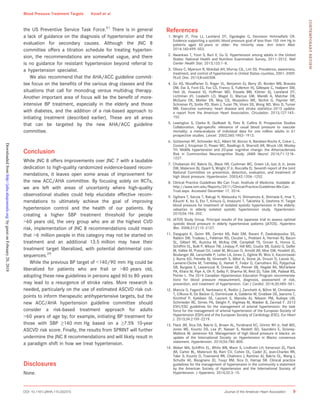
Table 2. Recommendations for the AHA/ACC Committee
General Area JNC 8 Recommendation Recommendations for AHA/ACC Committee
Diagnosis of
hypertension
None  Add specific recommendations on use of ambulatory blood
pressure monitoring and home blood pressure monitoring
 Devise a risk-based strategy for determination of treatment
initiation thresholds and targets
 Specify timeframe of attempting lifestyle modification alone
before initiation of therapy
Treatment initiation
thresholds and
targets
Adults ≥60 y old, SBP/DBP treatment initiation threshold and
target of 150/90 mm Hg
 Lower the SBP treatment initiation threshold and target to
140 mm Hg for adults ≤80 y old
16,20,21
Adults 18 y old and 60 y old or any adult with diabetes or CKD,
SBP/DBP treatment initiation threshold and target of 140/
90 mm Hg
 Lower DBP treatment initiation threshold and target to
85 mm Hg for diabetic adults,
27,31
 Optional SBP/DBP treatment initiation threshold and target of
≤130/80 mm Hg for adults with CKD and 300 mg/d
proteinuria
35,36
 Add specific guidance for adults with preexisting CVD
Selection of therapy Nonblack adults, including diabetics: first-line therapy includes
thiazides, CCB, ACEI/ARB
Black adults, including diabetics: first-line therapy includes
thiazides or CCB
Adults with CKD: first-line therapy includes ACEI/ARB
 For nonblack adults with preexisting CVD or diabetes,
recommend ACEI or ARB as first-line therapy
 For black adults with diabetes, recommend ACEI or ARB as
add-on therapy for patients requiring multidrug therapy
AHA indicates American Heart Association; ACC, American College of Cardiology; JNC, Joint National Committee; SBP, systolic blood pressure; DBP, diastolic blood pressure; CKD, chronic
kidney disease; CVD, cardiovascular disease; CCB, calcium channel blocker; ACEI, angiotensin-converting enzyme inhibitor; ARB, angiotensin type II receptor blocker.
DOI: 10.1161/JAHA.115.002315 Journal of the American Heart Association 8
Blood Pressure Treatment Targets Kovell et al
CONTEMPORARYREVIEW
byguestonFebruary20,2018http://jaha.ahajournals.org/Downloadedfrom
the US Preventive Service Task Force.51
There is in general
a lack of guidance on the diagnosis of hypertension and the
evaluation for secondary causes. Although the JNC 8
committee offers a titration schedule for treating hyperten-
sion, the recommendations are somewhat vague, and there
is no guidance for resistant hypertension beyond referral to
a hypertension specialist.
We also recommend that the AHA/ACC guideline commit-
tee focus on the benefits of the various drug classes and the
situations that call for monodrug versus multidrug therapy.
Another important area of focus will be the benefit of more-
intensive BP treatment, especially in the elderly and those
with diabetes, and the addition of a risk-based approach to
initiating treatment (described earlier). These are all areas
that can be targeted by the new AHA/ACC guideline
committee.
Conclusion
While JNC 8 offers improvements over JNC 7 with a laudable
dedication to high-quality randomized evidence-based recom-
mendations, it leaves open some areas of improvement for
the new ACC/AHA committee. By focusing solely on RCTs,
we are left with areas of uncertainty where high-quality
observational studies could help elucidate effective recom-
mendations to ultimately achieve the goal of improving
hypertension control and the health of our patients. By
creating a higher SBP treatment threshold for people
60 years old, the very group who are at the highest CVD
risk, implementation of JNC 8 recommendations could mean
that 6 million people in this category may not be started on
treatment and an additional 13.5 million may have their
treatment target liberalized, with potential detrimental con-
sequences.29
While the previous BP target of 140/90 mm Hg could be
liberalized for patients who are frail or 80 years old,
adopting these new guidelines in persons aged 60 to 80 years
may lead to a resurgence of stroke rates. More research is
needed, particularly on the use of estimated ASCVD risk cut-
points to inform therapeutic antihypertensive targets, but the
new ACC/AHA hypertension guideline committee should
consider a risk-based treatment approach for adults
60 years of age by; for example, initiating BP treatment for
those with SBP ≥140 mm Hg based on a ≥7.5% 10-year
ASCVD risk score. Finally, the results from SPRINT will further
undermine the JNC 8 recommendations and will likely result in
a paradigm shift in how we treat hypertension.
Disclosures
None.
References
1. Wright JT, Fine LJ, Lackland DT, Ogedegbe G, Dennison Himmelfarb CR.
Evidence supporting a systolic blood pressure goal of less than 150 mm Hg in
patients aged 60 years or older: the minority view. Ann Intern Med.
2014;160:499–503.
2. Nwankwo T, Yoon S, Burt V, Gu Q. Hypertension among adults in the United
States: National Health and Nutrition Examination Survey, 2011–2012. Natl
Center Health Stat. 2013;133:1–8.
3. Olives C, Myerson R, Mokdad AH, Murray CJL, Lim SS. Prevalence, awareness,
treatment, and control of hypertension in United States counties, 2001–2009.
PLoS One. 2013;8:e60308.
4. Go AS, Mozaffarian D, Roger VL, Benjamin EJ, Berry JD, Borden WB, Bravata
DM, Dai S, Ford ES, Fox CS, Franco S, Fullerton HJ, Gillespie C, Hailpern SM,
Heit JA, Howard VJ, Huffman MD, Kissela BM, Kittner SJ, Lackland DT,
Lichtman JH, Lisabeth LD, Magid D, Marcus GM, Marelli A, Matchar DB,
McGuire DK, Mohler ER, Moy CS, Mussolino ME, Nichol G, Paynter NP,
Schreiner PJ, Sorlie PD, Stein J, Turan TN, Virani SS, Wong ND, Woo D, Turner
MB. Executive summary: heart disease and stroke statistics–2013 update:
a report from the American Heart Association. Circulation. 2013;127:143–
152.
5. Lewington S, Clarke R, Qizilbash N, Peto R, Collins R; Prospective Studies
Collaboration. Age-specific relevance of usual blood pressure to vascular
mortality: a meta-analysis of individual data for one million adults in 61
prospective studies. Lancet. 2002;360:1903–1913.
6. Gottesman RF, Schneider ALC, Albert M, Alonso A, Bandeen-Roche K, Coker L,
Coresh J, Knopman D, Power MC, Rawlings A, Sharrett AR, Wruck LM, Mosley
TH. Midlife hypertension and 20-year cognitive change: the Atherosclerosis
Risk in Communities Neurocognitive Study. JAMA Neurol. 2014;71:1218–
1227.
7. Chobanian AV, Bakris GL, Black HR, Cushman WC, Green LA, Izzo JL Jr, Jones
DW, Materson BJ, Oparil S, Wright JT Jr, Roccella EJ. Seventh report of the Joint
National Committee on prevention, detection, evaluation, and treatment of
high blood pressure. Hypertension. 2003;42:1206–1252.
8. Clinical Practice Guidelines We Can Trust. Institute of Medicine. Available at:
http://www.iom.edu/Reports/2011/Clinical-Practice-Guidelines-We-Can-
Trust.aspx. Accessed December 17, 2014.
9. Ogihara T, Saruta T, Rakugi H, Matsuoka H, Shimamoto K, Shimada K, Imai Y,
Kikuchi K, Ito S, Eto T, Kimura G, Imaizumi T, Takishita S, Ueshima H. Target
blood pressure for treatment of isolated systolic hypertension in the elderly:
valsartan in elderly isolated systolic hypertension study. Hypertension.
2010;56:196–202.
10. JATOS Study Group. Principal results of the Japanese trial to assess optimal
systolic blood pressure in elderly hypertensive patients (JATOS). Hypertens
Res. 2008;31:2115–2127.
11. Dasgupta K, Quinn RR, Zarnke KB, Rabi DM, Ravani P, Daskalopoulou SS,
Rabkin SW, Trudeau L, Feldman RD, Cloutier L, Prebtani A, Herman RJ, Bacon
SL, Gilbert RE, Ruzicka M, McKay DW, Campbell TS, Grover S, Honos G,
Schiffrin EL, Bolli P, Wilson TW, Lindsay P, Hill MD, Coutts SB, Gubitz G, Gelfer
M, Vallee M, Prasad GV, Lebel M, McLean D, Arnold JM, Moe GW, Howlett JG,
Boulanger JM, Larochelle P, Leiter LA, Jones C, Ogilvie RI, Woo V, Kaczorowski
J, Burns KD, Petrella RJ, Hiremath S, Milot A, Stone JA, Drouin D, Lavoie KL,
Lamarre-Cliche M, Tremblay G, Hamet P, Fodor G, Carruthers SG, Pylypchuk
GB, Burgess E, Lewanczuk R, Dresser GK, Penner SB, Hegele RA, McFarlane
PA, Khara M, Pipe A, Oh P, Selby P, Sharma M, Reid DJ, Tobe SW, Padwal RS,
Poirier L. The 2014 Canadian Hypertension Education Program recommenda-
tions for blood pressure measurement, diagnosis, assessment of risk,
prevention, and treatment of hypertension. Can J Cardiol. 2014;30:485–501.
12. Mancia G, Fagard R, Narkiewicz K, Redon J, Zanchetti A, B€ohm M, Christiaens
T, Cifkova R, De Backer G, Dominiczak A, Galderisi M, Grobbee DE, Jaarsma T,
Kirchhof P, Kjeldsen SE, Laurent S, Manolis AJ, Nilsson PM, Ruilope LM,
Schmieder RE, Sirnes PA, Sleight P, Viigimaa M, Waeber B, Zannad F. 2013
ESH/ESC guidelines for the management of arterial hypertension: the task
force for the management of arterial hypertension of the European Society of
Hypertension (ESH) and of the European Society of Cardiology (ESC). Eur Heart
J. 2013;34:2159–2219.
13. Flack JM, Sica DA, Bakris G, Brown AL, Ferdinand KC, Grimm RH Jr, Hall WD,
Jones WE, Kountz DS, Lea JP, Nasser S, Nesbitt SD, Saunders E, Scisney-
Matlock M, Jamerson KA. Management of high blood pressure in blacks: an
update of the International Society on Hypertension in Blacks consensus
statement. Hypertension. 2010;56:780–800.
14. Weber MA, Schiffrin EL, White WB, Mann S, Lindholm LH, Kenerson JG, Flack
JM, Carter BL, Materson BJ, Ram CV, Cohen DL, Cadet JC, Jean-Charles RR,
Taler S, Kountz D, Townsend RR, Chalmers J, Ramirez AJ, Bakris GL, Wang J,
Schutte AE, Bisognano JD, Touyz RM, Sica D, Harrap SB. Clinical practice
guidelines for the management of hypertension in the community a statement
by the American Society of Hypertension and the International Society of
Hypertension. J Hypertens. 2014;32:3–15.
DOI: 10.1161/JAHA.115.002315 Journal of the American Heart Association 9
Blood Pressure Treatment Targets Kovell et al
CONTEMPORARYREVIEW
byguestonFebruary20,2018http://jaha.ahajournals.org/Downloadedfrom
15. James PA, Oparil S, Carter BL, Cushman WC, Dennison-Himmelfarb C, Handler
J, Lackland DT, LeFevre ML, MacKenzie TD, Ogedegbe O, Smith SC Jr, Svetkey
LP, Taler SJ, Townsend RR, Wright JT Jr, Narva AS, Ortiz E. 2014 Evidence-
based guideline for the management of high blood pressure in adults: report
from the panel members appointed to the Eighth Joint National Committee
(JNC 8). JAMA. 2014;311:507–520.
16. Liu L, Zhang Y, Liu G, Li W, Zhang X, Zanchetti A. The Felodipine Event
Reduction (FEVER) Study: a randomized long-term placebo-controlled trial in
Chinese hypertensive patients. J Hypertens. 2005;23:2157–2172.
17. Ambrosius WT, Sink KM, Foy CG, Berlowitz DR, Cheung AK, Cushman WC, Fine
LJ, Goff DC Jr, Johnson KC, Killeen AA, Lewis CE, Oparil S, Reboussin DM,
Rocco MV, Snyder JK, Williamson JD, Wright JT Jr, Whelton PK. The design and
rationale of a multicenter clinical trial comparing two strategies for control of
systolic blood pressure: the Systolic Blood Pressure Intervention Trial
(SPRINT). Clin Trials. 2014;11:532–546.
18. The SPRINT Research Group. A Randomized Trial of Intensive versus Standard
Blood-Pressure Control. N Engl J Med. 2015 November 9.
19. Major hypertension trial stopped early for positive benefit with lower blood
pressure control target. American Heart Association. Available at: http://
newsroom.heart.org/news/major-hypertension-trial-stopped-early-for-positive-
benefit-with-lower-blood-pressure-control-target. Accessed September 23,
2015.
20. Beckett NS, Peters R, Fletcher AE, Staessen JA, Liu L, Dumitrascu D,
Stoyanovsky V, Antikainen RL, Nikitin Y, Anderson C, Belhani A, Forette F,
Rajkumar C, Thijs L, Banya W, Bulpitt CJ. Treatment of hypertension in patients
80 years of age or older. N Engl J Med. 2008;358:1887–1898.
21. American Diabetes Association. (8) Cardiovascular disease and risk manage-
ment. Diabetes Care. 2015;38(suppl):S49–S57.
22. Stevens PE, Levin A; Kidney Disease: Improving Global Outcomes Chronic
Kidney Disease Guideline Development Work Group Members. Evaluation and
management of chronic kidney disease: synopsis of the kidney disease:
improving global outcomes 2012 clinical practice guideline. Ann Intern Med.
2013;158:825–830.
23. Jaques H; National Institute for Health and Clinical Excellence (NICE). NICE
guideline on hypertension. Eur Heart J. 2013;34:406–408.
24. Benson K, Hartz AJ. A comparison of observational studies and randomized,
controlled trials. N Engl J Med. 2000;342:1878–1886.
25. Ioannidis JP, Haidich AB, Pappa M, Pantazis N, Kokori SI, Tektonidou MG,
Contopoulos-Ioannidis DG, Lau J. Comparison of evidence of treatment effects
in randomized and nonrandomized studies. JAMA. 2001;286:821–830.
26. Sim JJ, Shi J, Kovesdy CP, Kalantar-Zadeh K, Jacobsen SJ. Impact of achieved
blood pressures on mortality risk and end-stage renal disease among
a large, diverse hypertension population. J Am Coll Cardiol. 2014;64:588–
597.
27. Sundstr€om J, Arima H, Jackson R, Turnbull F, Rahimi K, Chalmers J, Woodward
M, Neal B. Effects of blood pressure reduction in mild hypertension: a
systematic review and meta-analysis. Ann Intern Med. 2015;162:184–191.
28. Moran AE, Odden MC, Thanataveerat A, Tzong KY, Rasmussen PW, Guzman D,
Williams L, Bibbins-Domingo K, Coxson PG, Goldman L. Cost-effectiveness of
hypertension therapy according to 2014 guidelines. N Engl J Med.
2015;372:447–455.
29. Navar-Boggan AM, Pencina MJ, Williams K, Sniderman AD, Peterson ED.
Proportion of US adults potentially affected by the 2014 hypertension
guideline. JAMA. 2014;311:1424–1429.
30. Borden WB, Maddox TM, Tang F, Rumsfeld JS, Oetgen WJ, Mullen JB, Spinler
SA, Peterson ED, Masoudi FA. Impact of the 2014 expert panel recommen-
dations for management of high blood pressure on contemporary cardiovas-
cular practice: insights from the NCDR PINNACLE registry. J Am Coll Cardiol.
2014;64:2196–2203.
31. Blood Pressure Lowering Treatment Trialists’ Collaboration, Sundstr€om J,
Arima H, Woodward M, Jackson R, Karmali K, Lloyd-Jones D, Baigent C,
Emberson J, Rahimi K, MacMahon S, Patel A, Perkovic V, Turnbull F, Neal B.
Blood pressure-lowering treatment based on cardiovascular risk: a meta-
analysis of individual patient data. Lancet. 2014;384:591–598.
32. Stone NJ, Robinson JG, Lichtenstein AH, Bairey Merz CN, Blum CB, Eckel RH,
Goldberg AC, Gordon D, Levy D, Lloyd-Jones DM, McBride P, Schwartz JS,
Shero ST, Smith SC Jr, Watson K, Wilson PW. 2013 ACC/AHA guideline on the
treatment of blood cholesterol to reduce atherosclerotic cardiovascular risk in
adults: a report of the American College of Cardiology/American Heart
Association Task Force on Practice Guidelines. J Am Coll Cardiol.
2014;63:2889–2934.
33. Lipid modification: cardiovascular risk assessment and the modification of
blood lipids for the primary and secondary prevention of cardiovascular
disease. Guidance and guidelines NICE. Available at: http://www.nice.org.uk/
guidance/cg181. Accessed January 29, 2015.
34. Hansson L, Zanchetti A, Carruthers SG, Dahl€of B, Elmfeldt D, Julius S, Menard
J, Rahn KH, Wedel H, Westerling S. Effects of intensive blood-pressure lowering
and low-dose aspirin in patients with hypertension: principal results of the
Hypertension Optimal Treatment (HOT) randomised trial. HOT Study Group.
Lancet. 1998;351:1755–1762.
35. Effects morbidity of treatment on in hypertension: II. Results in patients with
diastolic blood pressure averaging 90 through 114 mm Hg. JAMA.
1970;213:1143–1152.
36. MRC trial of treatment of mild hypertension: principal results. Medical
Research Council Working Party. Br Med J (Clin Res Ed). 1985;291:97–104.
37. Five-year findings of the hypertension detection and follow-up program. III.
Reduction in stroke incidence among persons with high blood pressure.
Hypertension Detection and Follow-up Program Cooperative Group. JAMA.
1982;247:633–638.
38. Zhang Y, Zhang X, Liu L, Zanchetti A; FEVER Study Group. Is a systolic blood
pressure target 140 mmHg indicated in all hypertensives? Subgroup
analyses of findings from the randomized FEVER trial. Eur Heart J.
2011;32:1500–1508.
39. ACCORD Study Group, Cushman WC, Evans GW, Byington RP, Goff DC Jr,
Grimm RH Jr, Cutler JA, Simons-Morton DG, Basile JN, Corson MA, Probstfield
JL, Katz L, Peterson KA, Friedewald WT, Buse JB, Bigger JT, Gerstein HC, Ismail-
Beigi F. Effects of intensive blood-pressure control in type 2 diabetes mellitus.
N Engl J Med. 2010;362:1575–1585.
40. Ruggenenti P, Perna A, Loriga G, Ganeva M, Ene-Iordache B, Turturro M,
Lesti M, Perticucci E, Chakarski IN, Leonardis D, Garini G, Sessa A, Basile
C, Alpa M, Scanziani R, Sorba G, Zoccali C, Remuzzi G. Blood-pressure
control for renoprotection in patients with non-diabetic chronic renal
disease (REIN-2): multicentre, randomised controlled trial. Lancet.
2005;365:939–946.
41. Wright JT, Bakris G, Greene T, Agodoa LY, Appel LJ, Charleston J, Cheek D,
Douglas-Baltimore JG, Gassman J, Glassock R, Hebert L, Jamerson K, Lewis J,
Phillips RA, Toto RD, Middleton JP, Rostand SG. Effect of blood pressure
lowering and antihypertensive drug class on progression of hypertensive
kidney disease: results from the AASK trial. JAMA. 2002;288:2421–2431.
42. Klahr S, Levey AS, Beck GJ, Caggiula AW, Hunsicker L, Kusek JW, Striker G. The
effects of dietary protein restriction and blood-pressure control on the
progression of chronic renal disease. Modification of Diet in Renal Disease
Study Group. N Engl J Med. 1994;330:877–884.
43. Rosendorff C, Black HR, Cannon CP, Gersh BJ, Gore J, Izzo JL Jr, Kaplan NM,
O’Connor CM, O’Gara PT, Oparil S. Treatment of hypertension in the
prevention and management of ischemic heart disease: a scientific statement
from the American Heart Association Council for High Blood Pressure
Research and the Councils on Clinical Cardiology and Epidemiology and
Prevention. Circulation. 2007;115:2761–2788.
44. Pepine CJ, Handberg EM, Cooper-DeHoff RM, Marks RG, Kowey P, Messerli FH,
Mancia G, Cangiano JL, Garcia-Barreto D, Keltai M, Erdine S, Bristol HA, Kolb
HR, Bakris GL, Cohen JD, Parmley WW. A calcium antagonist vs a non-calcium
antagonist hypertension treatment strategy for patients with coronary artery
disease. The International Verapamil-Trandolapril Study (INVEST): a random-
ized controlled trial. JAMA. 2003;290:2805–2816.
45. Bangalore S, Gong Y, Cooper-DeHoff RM, Pepine CJ, Messerli FH. 2014
Eighth Joint National Committee Panel recommendation for blood pressure
targets revisited: results from the INVEST study. J Am Coll Cardiol.
2014;64:784–793.
46. Musini VM, Nazer M, Bassett K, Wright JM. Blood pressure-lowering efficacy of
monotherapy with thiazide diuretics for primary hypertension. Cochrane
Database Syst Rev. 2014;5:CD003824.
47. Major cardiovascular events in hypertensive patients randomized to doxazosin
vs chlorthalidone: the antihypertensive and lipid-lowering treatment to prevent
heart attack trial (ALLHAT). ALLHAT Collaborative Research Group. JAMA.
2000;283:1967–1975.
48. Lindholm LH, Ibsen H, Dahl€of B, Devereux RB, Beevers G, de Faire U, Fyhrquist
F, Julius S, Kjeldsen SE, Kristiansson K, Lederballe-Pedersen O, Nieminen MS,
Omvik P, Oparil S, Wedel H, Aurup P, Edelman J, Snapinn S. Cardiovascular
morbidity and mortality in patients with diabetes in the Losartan Intervention
For Endpoint reduction in hypertension study (LIFE): a randomised trial against
atenolol. Lancet. 2002;359:1004–1010.
49. ALLHAT Officers and Coordinators for the ALLHAT Collaborative Research
Group. The Antihypertensive and Lipid-Lowering Treatment to Prevent Heart
Attack Trial. Major outcomes in high-risk hypertensive patients randomized to
angiotensin-converting enzyme inhibitor or calcium channel blocker vs
diuretic: the Antihypertensive and Lipid-Lowering Treatment to Prevent Heart
Attack Trial (ALLHAT). JAMA. 2002;288:2981–2997.
50. Eckel RH, Jakicic JM, Ard JD, de Jesus JM, Houston Miller N, Hubbard VS, Lee
IM, Lichtenstein AH, Loria CM, Millen BE, Nonas CA, Sacks FM, Smith SC Jr,
DOI: 10.1161/JAHA.115.002315 Journal of the American Heart Association 10
Blood Pressure Treatment Targets Kovell et al
CONTEMPORARYREVIEW
byguestonFebruary20,2018http://jaha.ahajournals.org/Downloadedfrom
Svetkey LP, Wadden TA, Yanovski SZ. 2013 AHA/ACC guideline on lifestyle
management to reduce cardiovascular risk: a report of the American College
of Cardiology/American Heart Association Task Force on Practice Guidelines.
J Am Coll Cardiol. 2014;63:2960–2984.
51. Piper MA, Evans CV, Burda BU, Margolis KL, O’Connor E, Whitlock EP.
Diagnostic and predictive accuracy of blood pressure screening
methods with consideration of rescreening intervals: a systematic review
for the U.S. Preventive Services Task Force. Ann Intern Med.
2015;162:192.
Key Words: blood pressure • blood pressure goals • hyper-
tension • JNC 8 • treatment
DOI: 10.1161/JAHA.115.002315 Journal of the American Heart Association 11
Blood Pressure Treatment Targets Kovell et al
CONTEMPORARYREVIEW
byguestonFebruary20,2018http://jaha.ahajournals.org/Downloadedfrom
S. Blumenthal and John W. McEvoy
Lara C. Kovell, Haitham M. Ahmed, Satish Misra, Seamus P. Whelton, Greg P. Prokopowicz, Roger
for the Future
US Hypertension Management Guidelines: A Review of the Recent Past and Recommendations
Online ISSN: 2047-9980
Dallas, TX 75231
is published by the American Heart Association, 7272 Greenville Avenue,Journal of the American Heart AssociationThe
doi: 10.1161/JAHA.115.002315
2015;4:e002315; originally published December 7, 2015;J Am Heart Assoc.
http://jaha.ahajournals.org/content/4/12/e002315
World Wide Web at:
The online version of this article, along with updated information and services, is located on the
for more information.http://jaha.ahajournals.orgAccess publication. Visit the Journal at
is an online only OpenJournal of the American Heart AssociationSubscriptions, Permissions, and Reprints: The
byguestonFebruary20,2018http://jaha.ahajournals.org/Downloadedfrom

Jnc 8 full

  • 1.
    US Hypertension ManagementGuidelines: A Review of the Recent Past and Recommendations for the Future Lara C. Kovell, MD; Haitham M. Ahmed, MD, MPH; Satish Misra, MD; Seamus P. Whelton, MD, MPH; Greg P. Prokopowicz, MD; Roger S. Blumenthal, MD; John W. McEvoy, MB, BCh, BAO, MHS Hypertension affects %29% of the US adult population, an estimated 72 million people, with a prevalence of >65% in persons older than 60 years.1,2 It is an important risk factor for myocardial infarction (MI), heart failure (HF), stroke, and cardiovascular disease (CVD), accounting for %41% of all CVD deaths.3,4 Indeed, there is a known graded relationship between increasing blood pressure (BP) and the risk of CVD, starting at 115/75 mm Hg.5 Based on observational data, an increase in BP of 20 mm Hg systolic or 10 mm Hg diastolic is associated with a doubling of the risk of CVD death, regardless of age.5 Further, hypertension in middle age is known to increase the risk of chronic kidney disease (CKD) and dementia in later life, an important issue given the aging demographic in Western societies.6 Finally, despite the fact that BP recognition and control are improving, it is concerning that nearly half of the hypertensive population remains suboptimally controlled.2 With the 2003 Joint National Committee’s seventh report (JNC 7) becoming increasingly outdated and the 2011 Institute of Medicine report calling for high-quality evidence- based guidelines,7,8 the Eighth Joint National Committee (JNC 8) was initially appointed to create an updated treatment guideline for hypertension under the auspices of the National Institutes of Health (NIH). Although the NIH ultimately withdrew from the guideline development process at a late stage in the development of JNC 8, the panel decided, nonetheless, to publish their recommendations indepen- dently. The panel aimed to answer 3 questions: Does initiating antihypertensive treatment at specific BP thresholds improve health outcomes? Does treatment with antihypertensive therapy to a specific BP goal improve health outcomes? Are there differences in benefit/harm between antihypertensive drugs or drug classes on specific health outcomes? The committee focused exclusively on large, randomized con- trolled trials (RCTs) as supporting evidence, although 5 of the 9 recommendations in the final report were ultimately based on expert opinion. Partly in response to JNC 8, the American College of Cardiology (ACC) and American Heart Association (AHA) are now in the process of developing official hyperten- sion guidelines. In this review, we discuss the basis of each recommendation from the JNC 8 panel, provide additional insights, and compare these recommendations with guideli- nes from other professional societies to generate suggestions for the new AHA/ACC hypertension guideline committee. JNC 8 Recommendation 1 In the general population aged ≥60 years, initiate pharmaco- logic treatment to lower BP at systolic BP (SBP) ≥150 mm Hg or diastolic BP (DBP) ≥90 mm Hg and treat to a goal SBP <150 mm Hg and goal DBP <90 mm Hg. Basis of Recommendation This first recommendation is based on several RCTs evaluating treatment of SBP to <140 mm Hg versus a more liberal target (140–160 mm Hg) in patients >65 years of age.9,10 In the Japanese Trial to Assess Optimal Systolic Blood Pressure in Elderly Hypertensive Patients (JATOS), 4418 patients between the ages of 65 and 85 were randomized to SBP treatment goal <140 mm Hg versus 140 to <160 mm Hg. Despite the fact that the intensive treatment group achieved a significantly lower BP (136/ 75 mm Hg versus 146/78 mm Hg), the primary end point of combined CVD and renal failure did not differ significantly between the 2 groups. From the Ciccarone Center for Prevention of Heart Disease (L.C.K., H.M.A., S.M., S.P.W., R.S.B., J.W.M.) and Division of General Internal Medicine, Department of Medicine (G.P.P.), Johns Hopkins University School of Medicine, Baltimore, MD. Correspondence to: Lara C. Kovell, MD, 1800 Orleans Street, Zayed Building, 7125, Baltimore, MD 21287. E-mail: lkovell1@jhmi.edu J Am Heart Assoc. 2015;4:e002315 doi: 10.1161/JAHA.115.002315. ª 2015 The Authors. Published on behalf of the American Heart Association, Inc., by Wiley Blackwell. This is an open access article under the terms of the Creative Commons Attribution-NonCommercial License, which permits use, distribution and reproduction in any medium, provided the original work is properly cited and is not used for commercial purposes. DOI: 10.1161/JAHA.115.002315 Journal of the American Heart Association 1 CONTEMPORARY REVIEW byguestonFebruary20,2018http://jaha.ahajournals.org/Downloadedfrom
  • 2.
    One limitation ofthis trial, however, is that it was only powered to detect a 40% relative risk reduction (or an absolute risk reduction from 5% to 3%) in the primary end point. While a 10/3–mm Hg reduction in BP is substantial, it may not be sufficient to achieve a 40% reduction in CVD or renal failure. Also, these patients were followed for only 2 years and the main treatment drug was a long-acting calcium channel blocker (CCB). Diuretics, widely considered first line along with CCBs in most professional society guidelines, were used in only 12% of the patients.7,11–13 While not reaching statistical significance, subgroup analysis sug- gested that intensive treatment goals may be beneficial in patients <75 years old while adopting a more liberal strategy may be safer in those ≥75 years old.10 The VALISH (Valsartan in Elderly Isolated Systolic Hyper- tension) trial examined a slightly older hypertensive patient population (N=3260), with mean age of 76 years, to a strict (<140 mm Hg) or moderate (140 to <150 mm Hg) SBP control strategy with valsartan as the first-line drug. There was a nonsignificant trend toward reduction of the primary outcome of composite CVD and renal disease with the intensive treatment strategy (10.6 versus 12.0 per 1000 pa- tient-y; P=0.38) at 3 years of follow-up. An important consideration is that VALISH was signifi- cantly underpowered, with substantially fewer primary end point events than predicted. While VALISH was conducted in Japan, most guidelines for the elderly, African Americans, or Europeans would suggest that angiotensin type II receptor blockers (ARBs) are second line to a diuretic or CCB for controlling BP.12,14,15 In both of these trials, the treatment strategies were well tolerated with few adverse events. One trial not included in the JNC 8 analysis was FEVER (Felodipine Event Reduction), which enrolled 9800 Chinese patients aged 50 to 79 years with hypertension and at least one other cardiovascular risk factor for a comparison of diuretic monotherapy versus diuretic plus CCB. Of note, this patient population had a higher rate of prior stroke/transient ischemic attack (TIA), suggesting higher baseline risk for CVD; that is despite the fact that other baseline characteristics such as diabetes, previous MI, and incidence of cardiovascular events were in a similar range to those of other large studies.16 Unlike JATOS, FEVER did not meet the JNC 8 committee’s criteria for inclusion in their deliberations.1 While the trials included in JNC 8 evaluated different BP goals, FEVER did not have specific BP targets but used 2 different treatment strategies that were clearly designed to have more intensive BP control (treatment arm) versus less- intensive BP control (placebo arm). The exclusion of high- quality randomized evidence evaluating different BP treatment strategies and the limited focus solely on trials with prespec- ified BP targets are significant limitations of JNC 8 that likely will be remedied by the next AHA/ACC committee. Both groups in FEVER had a reduction in BP, with BP falling from 154/91 to 137/83 mm Hg in the diuretic-plus- CCB (intensive treatment) group and from 154/91 to 143/ 85 mm Hg in the diuretic-alone (control) group. Fatal and nonfatal stroke was reduced by 27% in the intensive treatment group (P=0.001), while cardiac events and all- cause mortality were lowered by 35% (P=0.012) and 31% (P=0.006), respectively.16 The average age of the FEVER patients was 62 years; thus, according to the JNC 8 recommendations, the majority of these patients would not receive additional therapy to achieve SBP ≤140 mm Hg. In such, these patients may lose the additional stroke and CVD benefit seen in FEVER. However, given that there was no subgroup analysis of patients >60 years old, the magnitude of benefit in this age group is unclear. More evidence to support lower targets in US adults comes from the recently completed Systolic Blood Pressure Inter- vention Trial (SPRINT). This study randomized 9361 nondia- betic adults ≥50 years old with no prior stroke to a standard group with target SBP <140 mm Hg and an intensive group with target SBP <120 mm Hg.17 SPRINT was designed to look for a benefit of intensive BP treatment in those at risk for developing heart failure or CVD, with an average age of 68 years and Framingham 10-year CVD risk score of 20%. The independent Data and Safety Monitoring Board recently advised the NIH to stop the study early due to the significantly reduced relative rates of CVD-related death (43%, P=0.005) and events (25%, P<0.001).18,19 This reduction in CVD events came at the cost of higher rates of hypotension, acute kidney injury, syncope, and electrolyte disturbances. The results from SPRINT contradict the recommendations of JNC8 and may support even lower SBP targets for the consideration of the new AHA/ACC guideline committee. Although the JNC 8 BP target of <150/90 mm Hg is recommended for those older than 60 years, evidence for this target is strongest for those >80 years. HYVET (Hypertension in the Very Elderly Trial) showed a benefit to treating patients >80 years old to an average SBP of 144 mm Hg (N=3845). These patients initially had SBP >160 mm Hg at baseline and were treated with indapamide plus perindopril as needed to achieve a goal BP of <150/80 mm Hg. This trial was stopped early for mortality benefit, with outcomes including 39% reduction in fatal strokes, 21% reduction in death from any cause, and 64% reduction in HF rates in the treatment group.20 In HYVET, frail adults >80 years old were excluded from the trial, but this suggests that otherwise robust adults >80 years old have a significant reduction in mortality and CVD outcomes targeting SBP <150 mm Hg. What is not clear from HYVET is whether further reductions in BP to lower thresholds would have been beneficial in this sample. In the prespecified subgroup analysis of the SPRINT trial, the reduction in CVD events and death in the intensive treatment DOI: 10.1161/JAHA.115.002315 Journal of the American Heart Association 2 Blood Pressure Treatment Targets Kovell et al CONTEMPORARYREVIEW byguestonFebruary20,2018http://jaha.ahajournals.org/Downloadedfrom
  • 3.
    arm (targeting SBP<120 mm Hg) was seen across age groups, including in people aged 75 years or older.18 Similar to HYVET, SPRINT avoided possibly frail older adults, by excluding residents of nursing homes or assisted living facilities. These results will also impact the new guideline committee. Table 1. Guideline Comparison Guideline Population Goal BP (mm Hg) First-Line Treatment Options 2014 Hypertension Guideline15 Adults <60 y <140/90 Nonblack: thiazide, ACEI, ARB, or CCB Black: thiazide or CCB Adults ≥60 y <150/90 Adults with diabetes <140/90 Thiazide, ACEI, ARB, or CCB Adults with CKD <140/90 ACEI or ARB JNC 77 Adults ≥18 y <140/90 Thiazide, 2-drug combination for BP >20/10 mm Hg over target Adults with diabetes <130/80 Thiazide, ACEI, b-blocker, CCB, or ARB Adults with CKD <130/80 ACEI or ARB ASH/ISH 201414 Adults <80 y <140/90 Nonblack <60 y: ACEI or ARB Nonblack ≥60 y or black: CCB or thiazide Adults ≥80 y <150/90 Adults ≥80 y with CKD or diabetes <140/90 ACEI or ARB Adults <80 y with CKD and albuminuria <130/80 ACEI or ARB CHEP 201411 Adults <80 y <140/90 Thiazide, b-blocker (age <60 y), ACEI (nonblack), CCB, or ARB Adults ≥80 y <150 Thiazide, ACEI (nonblack), CCB, or ARB Adults with diabetes <130/80 ACEI or ARB (CVD or CKD), or ACEI, ARB, CCB, or thiazide Adults with CKD <140/90 ACEI or ARB ESH/ESC 201312 Nonfrail adults <80 y <140/90 Diuretic, b-blocker, CCB, ACEI, or ARB Adults >80 y <150/90 Diuretic, CCB Adults with diabetes <140/85 ACEI or ARB Adults with CKD without proteinuria <140/90 ACEI or ARB Adults with CKD with overt proteinuria <130/90 ACEI or ARB Adults with CHD <140/90 ACEI, ARB, or b-blocker ADA 201521 Adults with diabetes <140/90* ACEI or ARB KDIGO 201222 Adults with CKD and urine albumin <30 mg/24 h <140/90 Adults with CKD and urine albumin ≥30 mg/24 h <130/80 ARB or ACEI with urine albumin ≥300 mg/24 h ISHIB 201013 Black adults, primary prevention <135/85 ≤10 mm Hg above target, CCB or diuretic. >15/10 mm Hg above target, CCB plus RAS blocker or diuretic plus RAS blocker Black adults, with target organ damage† <130/80 Diuretic or CCB (preferred), RAS blocker (alternative), b-blocker (optional) NICE 201123 Adults <80 y <140/90 Adults >55 y: CCB or thiazide; adults<55 y: ACEI or ARB Adults ≥80 y <150/90 CCB or thiazide BP indicates blood pressure; ACEI, angiotensin-converting enzyme inhibitor; ARB, angiotensin type II receptor blocker; CCB, calcium channel blocker; JNC 7, Seventh Joint National Committee; CKD, chronic kidney disease; ASH/ISH, American Society of Hypertension/International Society of Hypertension; CHEP, Canadian Hypertension Education Program; CVD, cardiovascular disease; ESH/ESC, European Society of Hypertension/European Society of Cardiology; CHD, congestive heart disease; ADA, American Diabetes Association; KDIGO, Kidney Disease: Improving Global Outcomes; ISHIB, International Society on Hypertension in Blacks; RAS, renin-angiotensin system; NICE, National Institute for Health and Clinical Excellence. *Optional target of <130/80 mm Hg for certain individuals, such as younger patients, if this target can be achieved without adverse treatment burden. † Target organ damage defined as albumin:creatinine ratio >200 mg/g, estimated glomerular filtration rate <60 mL/min per 1.73 m2 , or electrocardiographic/echocardiographic evidence of left ventricular hypertrophy. DOI: 10.1161/JAHA.115.002315 Journal of the American Heart Association 3 Blood Pressure Treatment Targets Kovell et al CONTEMPORARYREVIEW byguestonFebruary20,2018http://jaha.ahajournals.org/Downloadedfrom
  • 4.
    The American Societyof Hypertension (ASH)/International Society of Hypertension (ISH) along with the Canadian Hypertension Education Program guidelines use a higher age cutoff of >80 years for a treatment goal of BP <150/ 90 mm Hg (Table 1).11,14,21–23 Unlike the JNC 8 panel’s recommendations, the European Society of Hypertension (ESH) and the European Society of Cardiology (ESC) add another variable of frailty, likely due to the fact that trials such as HYVET attempted to exclude frail patients such as those with dementia or requiring nursing home care.12 They recommend a tailored approach for the fragile elderly patient <80 years of age by using individualized targets. Observational Evidence and Additional Insights When we do not have randomized trial evidence, high-quality observational data and meta-analyses may be helpful in the formulation of a more-comprehensive BP treatment guideline. Several studies have found a modest-to-high correlation between RCTs and nonrandomized studies in estimating the benefit of medical interventions, although the magnitudes of effect were not always similar.24,25 Results from one large cohort supporting a lower BP target was reported by Sim et al in the Kaiser Permanente Southern California health system. This retrospective analysis examined nearly 400 000 people treated for hypertension to determine the optimal treatment target for the composite end point of mortality and end-stage renal disease. The lowest risk of the primary outcome was seen at an on-treatment BP of 137/71 mm Hg with a J-shape curve suggesting higher risk with lower and higher BP targets. In subgroup analysis, a similar curve was seen in those ≥70 years of age with a higher optimal target of 140/70 mm Hg.26 Along with the Kaiser study, a meta-analysis by the Blood Pressure Lowering Treatment Trialists’ Collaboration (BPLTTC) confirmed a benefit in treating stage I hypertension (BP 140 to 159/90 to 99 mm Hg).27 With a mean age of 63 years and mean baseline SBP of 146 mm Hg, the patients in the active treatment arm had an average BP reduction of 3.6/ 2.4 mm Hg and odds ratios of 0.72 (95% CI 0.55 to 0.94) for strokes, 0.75 (95% CI 0.57 to 0.98) for CVD deaths, and 0.78 (95% CI 0.67 to 0.92) for all-cause mortality.27 In subgroup analysis, this finding of a lower odds ratio for all- cause mortality held for those >67 years old (odds ratio 0.73, CI 0.56 to 0.95).27 Again, along with results from SPRINT, this suggests that using the new JNC 8 treatment targets would lead to a loss of mortality benefit in patients >60 years old with SBP between 140 and 150 mm Hg. A recent cost-effectiveness model of treating stage I hypertension showed a reduction in both CVD events and deaths along with significant cost savings, especially in those >60 years old.28 This study used the JNC 8 panel’s recom- mended treatment targets, but did not model the cost savings or mortality benefit of treating adults >60 years with SBP 140 to 150 mm Hg. However, there was significant cost-savings gained for treating men and women between the ages of 45 and 60 with BP >140/90 mm Hg. Given the projected increase in CVD events with those >60 years of age, we believe that there is likely to be a benefit to treating mild hypertension in this group as well. The impact of adopting the JNC 8 guidelines on a population level will lead to a significant change in those eligible for BP treatment. While an estimated 41.5 million people are above their BP goal under JNC 7, only 28 million are above goal according to the JNC 8 recommendations, based on estimates from the National Health and Nutrition Examination Survey, a representative population sample.29 This corresponds to 13.5 million adults, with the majority ≥60 years old, who were previously considered above goal and now no longer eligible for further treatment. An important consideration is that these 13.5 million include 37% with diabetes, 39% with CKD, and 19% with CVD.29 The National Cardiovascular Data Registry PINNACLE Registry confirmed that the population of patients for whom the BP goals changed in JNC 8 is also the population who are at highest risk for CVD events, with an average Framingham risk score of 8.5Æ3.2% and 10-year atherosclerotic CVD (ASCVD) risk score of 28Æ19%.30 In this high-risk group in particular, a more effective approach than the traditional target-based BP treatment could be a risk-based treatment model, incorporating global CVD risk scores. Support for this approach was established by the BPLTTC.31 In their meta- analysis of nearly 52 000 individuals, the BPLTTC showed that while BP treatment led to the same relative risk reduction across all 4 risk categories, the greatest absolute benefit by number of CVD events prevented occurred in the highest baseline CVD risk category.31 While this approach still needs to be externally validated, we suggest that the new AHA/ACC guideline committee consider a risk-based approach for adults >60 years of age; initiating treatment for those with SBP ≥140 mm Hg if their 10-year ASCVD risk score is >7.5% based on the pooled cohort equations.32 Persons with ASCVD risk <7.5% appear less likely to benefit from this more-aggressive BP target and may not require treatment until their SBP is ≥150 mm Hg. We note, however, that, given the substantial influence of age in the ASCVD risk calculator, the vast majority of men and many women >60 years old who have an SBP of >140 mm Hg would qualify for more-aggressive BP treatment based on this 7.5% threshold. Thus, future research may identify a more- optimal ASCVD risk cut-point (perhaps, for example, >15% [the risk cutoff for SPRINT]), below which a more lenient SBP goal of 150 mm Hg could be targeted in adults between 60 and 80 years old. DOI: 10.1161/JAHA.115.002315 Journal of the American Heart Association 4 Blood Pressure Treatment Targets Kovell et al CONTEMPORARYREVIEW byguestonFebruary20,2018http://jaha.ahajournals.org/Downloadedfrom
  • 5.
    The 2014 NationalInstitute for Health and Clinical Excellence cardiovascular risk assessment guidelines suggest starting BP treatment in adults with a CVD risk score ≥10% based on the QRISK2 calculator.33 It is worth noting that estimation of CVD risk is also now a critical part of the cholesterol treatment guidelines and, hence, could also be used to enhance the treatment of hypertension in high-risk adults. Further research will be needed to explore the optimal ASCVD risk score to initiate BP treatment for men and women and to determine the potential role, if any, of cardiac biomarkers such as coronary artery calcium in guiding risk- based allocation of hypertension therapy. To reiterate, with CVD risk being heavily influenced by age, the absolute benefit of BP treatment for risk reduction is greatest in the elderly. However, despite the JNC 8 recom- mendations, none of the trials on which these recommenda- tions are based were conducted in elderly hypertensive patients with an initial SBP between 140 and 150 mm Hg. Thus, it is not possible to be entirely sure what BP target to use without more evidence from RCTs, which is why the results from SPRINT will be critical for the new guideline committee. However, RCTs cannot answer every question and, in these situations, the new AHA/ACC committee may need to rely more on other high-quality, prospective observational data and meta-analyses to help determine better BP targets or to integrate a treatment approach that incorporates CVD risk factor estimation. JNC 8 Recommendations 2 to 5 In all persons <60 years or in persons >18 years (and either those younger or older than 60 years with either diabetes or CKD), initiate pharmacologic treatment to lower SBP ≥140 or DBP ≥90 mm Hg and treat to a goal BP of <140/90 mm Hg. Basis of Recommendation There is broader agreement between the professional societies on how to treat younger patients with hypertension. While most studies examined adults >30 years, JNC 8 extends the same target to those aged 18 to 30 years. More support can be found for DBP versus SBP goals among younger adults with hypertension, especially in the Hyperten- sion Optimal Treatment (HOT) trial.34 This trial randomized 18 790 hypertensive patients (aged 50 to 80 years) with baseline DBP 100 to 115 mm Hg into 3 groups based on target DBP ≤90, ≤85, or ≤80 mm Hg. The main goal of this study was to assess the association between these 3 target DBPs and major CVD events (nonfatal MI, nonfatal stroke, and cardiovascular death). There was little difference in event rates between the 3 groups, except that the rate of MI was reduced in the 2 lower DBP target groups compared with the DBP ≤90 mm Hg group. Further subgroup analyses of patients with diabetes demonstrated fewer major CVD events, fewer strokes, and reduced cardiovascular mortality in the lowest BP treatment target group, while those with prior CVD had a significant reduction in stroke across the 3 groups.34 While all 3 groups in HOT achieved a mean DBP <90 mm Hg, the lowest risk of cardiovascular mortality was seen at 85.6 mm Hg and the lowest rate of CVD events was seen at 82.6 mm Hg. Based on this trial, everyone with hypertension under the JNC 8 guidelines has a DBP goal of <90 mm Hg. There is less evidence supporting an SBP target of <140 mm Hg in this group of patients. However, in trials like HOT, even though DBP was being targeted, SBP also fell at least 25 mm Hg in all 3 groups.34 Indeed, given SPRINT suggests clinical benefit for an SBP target of 120 mm Hg among higher risk persons <60 years, it is likely that forthcoming guidelines may even reduce this SBP target to a threshold lower than 140. However, the DBP values in the intensive therapy arm of SPRINT are not currently known. Other supporting evidence for DBP treatment thresholds includes the Veterans Administration Cooperative Study Group on Antihypertensive Agents, in which 380 men with DBP 90 to 114 mm Hg were randomized to antihypertensive therapy or placebo. Those receiving treatment benefited from a reduction in both morbidity and mortality.35 The same findings were seen in the MRC (Medical Research Council, N=17 354) and HDFP (Hypertension Detection and Follow-up, N=10 940) trials, with those with DBP >90 mm Hg benefiting from active treatment, especially in stroke reduction.36,37 Additional Insights: Diabetes The recommendation for target BP in patients with diabetes by most professional societies is <140/90 mm Hg, although ESH/ESC recommend a DBP target of <85 mm Hg. In a post- hoc analysis of the 1501 patients with diabetes in the HOT trial, the ≤80 mm Hg target group versus ≤90 mm Hg target group had a 50% reduction in major CVD events and 66% reduction in cardiovascular mortality.34 Subgroup analysis of people with diabetes in FEVER showed a reduction in the number of strokes by 44% in the on-treatment group, with BP achieved of 139/82 mm Hg versus 144/84 mm Hg in the control group. In FEVER, no difference was seen in cardio- vascular mortality or events between the 2 groups.38 One landmark trial, enrolling only participants with type 2 diabetes, was the Action to Control Cardiovascular Risk in Diabetes (ACCORD) trial. This trial compared 2 SBP targets, <140 or <120 mm Hg, with the 2 groups achieving mean BP of 134/71 and 119/64 mm Hg, respectively. After 4.7 years of follow-up, the primary outcome of nonfatal MI, stroke, or DOI: 10.1161/JAHA.115.002315 Journal of the American Heart Association 5 Blood Pressure Treatment Targets Kovell et al CONTEMPORARYREVIEW byguestonFebruary20,2018http://jaha.ahajournals.org/Downloadedfrom
  • 6.
    CVD death wasnot significantly different between the 2 groups, although the total stroke rate in the intensive treatment arm was reduced by 41% (P=0.01).39 This study has been criticized for lack of power however. Despite stroke being an infrequent event, in absolute terms the stroke rates were 0.3% per year in the intensive-treatment group versus 0.5% per year in the standard-treatment group. However, this reduction in stroke came at a cost of more adverse events in the intensive treatment group (4.2% versus 2.2%), including significantly higher rates of kidney injury, hypotension, and hypokalemia. Based on these studies, achieving a lower BP goal in people with diabetes appears to be more consistently associated with a lower risk of stroke than MI. While the diastolic target of <80 mm Hg only showed a benefit in a post-hoc subgroup analysis in HOT, based on our review of the evidence we support a target SBP <140 mm Hg based on ACCORD and DBP <85 mm Hg based on FEVER and HOT for adults with diabetes. Additional Insights: CKD BP targets in CKD patients were also increased from <130/ 80 to <140/90 mm Hg between the JNC 7 and JNC 8 guidelines. While the JNC 8 panel did not incorporate proteinuria as an outcome of interest, the ASH/ISH, the ESH/ESC, and the Kidney Disease: Improving Global Out- comes (KDIGO) group all make a distinction between CKD patients based on proteinuria status, with a lower BP goal of <130/80 to 90 mm Hg for those with proteinuria detectable on urinanalysis.12,14,22 The International Society on Hypertension in Blacks also recommends a target of <130/80 mm Hg for black adults with CKD. The evidence for these recommendations is based on 3 trials—the African American Study of Kidney Disease and Hypertension (AASK), the Modification of Diet in Renal Disease (MDRD) study, and the Blood-pressure Control for Renoprotection in Patients with Non-diabetic Chronic Renal Disease (REIN-2) study. None of these trials showed a difference in kidney or CVD outcomes between those with lower versus higher BP goals.40–42 AASK (N=1094) evaluated mean arterial pressure (MAP) goals, targeting 102 to 107 mm Hg in the usual-BP group versus ≤92 mm Hg in the lower-BP group. While the lower-BP group achieved an average BP of 128/78 mm Hg, compared with 141/85 mm Hg in the other group, there was no significant change in the rate of glomerular filtration rate decline, end-stage renal disease, or death. There was, however, a decrease in proteinuria in the strict treatment group at 6 months (17% decrease versus 7% increase), and this effect persisted throughout the length of the study.41 MDRD (N=1585) used the same MAP targets, and in participants with at least 1 g/d of proteinuria, the lower BP target group had a slower rate of glomerular filtration rate decline.42 While there were modest benefits to the lower BP target, especially in those with significant proteinuria, we should keep in mind the ACCORD findings of intensive BP treatment leading to double the relative rates of renal injury (glomerular filtration rate <30 mL/min per 1.73 m2 ; 99 versus 52 events, P<0.001). However, ACCORD did not show any difference in rates of ESRD; it also showed that intensive treatment led to a lower incidence of macroalbuminuria, with rates of 6.6% versus 8.7% in the standard-treatment group (P=0.009). Given that the baseline risk of the patient appears to influence the outcomes of BP treatment, a lower BP goal of <130/ 80 mm Hg may be recommended for those with >300 mg/d proteinuria. We expect that further subgroup analysis from SPRINT will also inform this recommendation, as their recruitment targeted a prespecified subgroup of participants with CKD. Additional Insights: Secondary Prevention of CVD One population not specifically addressed in the JNC 8 guidelines is those with prior CVD. Determining BP targets for these patients requires the interpretation of conflicting observational studies and clinical trials and the possible existence of a J-shaped curve relating BP and CVD outcomes (with increased risk at lower and higher on-treatment BP values). In 2007, the AHA offered a goal of <130/80 mm Hg in those with established CVD, CVD equivalents and for those with a 10-year Framingham risk score of >10% in its scientific statement on the prevention and management of ischemic heart disease.43 More recently, the AHA, ACC, and ASH published a new guideline, endorsing a goal of <140/90 mm Hg for those with hypertension and CVD with an optional target of <130/80 mm Hg for those with CVD and previous MI, stroke/TIA, carotid artery disease, peripheral arterial dis- ease, or abdominal aortic aneurysm.43 ESH/ESC recom- mends a goal of <140/90 mm Hg for adults with CVD, while other societies do not have specific treatment goals for this population. One clinical trial, the International Verapamil-Trandolapril Study (INVEST), looked first at a CCB strategy versus a non- CCB strategy for lowering BP in people ≥60 years with CVD.44 Because both treatment strategies led to >70% of patients achieving BP <140/90 mm Hg within the follow-up period of 24 months, all patients were combined for a post-hoc analysis looking at optimal treatment targets. All patients were split into 3 groups based on their SBP: group 1, <140 mm Hg (57%); group 2, 140 to <150 mm Hg (21%); and group 3, ≥150 mm Hg (22%). These groups achieved a DOI: 10.1161/JAHA.115.002315 Journal of the American Heart Association 6 Blood Pressure Treatment Targets Kovell et al CONTEMPORARYREVIEW byguestonFebruary20,2018http://jaha.ahajournals.org/Downloadedfrom
  • 7.
    median SBP of131, 144, and 158 mm Hg, respectively, and a multiple propensity score–adjusted model was created to adjust for the baseline differences between the groups. Compared with group 1, group 2 had increased risk of cardiovascular mortality, total stroke, and nonfatal stroke with hazard ratios of 1.34 (95% CI 1.01 to 1.77; P=0.04), 1.89 (95% CI 1.26 to 2.82; P=0.002), and 1.70 (95% CI 1.06 to 2.72, P=0.03), respectively.45 This analysis provides indirect supportive evidence that people with CVD, including those ≥60 years, may benefit from an SBP target of <140 mm Hg. In addition, SPRINT enrolled a high risk population, many with prior CVD and demonstrated benefit to an SBP target of 120 mm Hg. When considering diastolic targets, subgroup analysis of HOT examined 3080 people with previous CVD and found a 43% reduction in stroke when comparing the groups targeting DBP ≤80 mm Hg versus DBP ≤90 mm Hg.34 While a target DBP ≤80 mm Hg appears beneficial, there appears to be a J-curve with respect to DBP targets in CVD. Analysis of the INVEST study showed clear evidence of harm at lower DBP, with a nadir in terms of events of 74 mm Hg. As DBP dropped below 70 and 60 mm Hg, mortality rates doubled and quadrupled, respectively, in patients with preexisting CVD. Therefore, while the overall level of evidence is less strong for BP targets in those with preexisting CVD and is based mainly on post-hoc analyses of randomized trials, we agree with the new AHA/ACC/ASH statement suggesting a target of <140/ 90 mm Hg with an optional lower target (<130/80 mm Hg) for adults with known CVD. JNC 8 Recommendations 6 to 9 In the general nonblack population, including those with diabetes, initial antihypertensive treatment should include a thiazide-type diuretic, CCB, angiotensin-converting enzyme inhibitor (ACEI), or ARB. In the general black population, including those with diabetes, initial antihypertensive treat- ment should include a thiazide-type diuretic or CCB. In the population aged ≥18 years with CKD, initial (or add-on) antihypertensive treatment should include an ACEI or ARB to improve kidney outcomes. If goal BP is not reached within 1 month of treatment, increase the dose of the initial drug or add a second drug, and if goal BP cannot be reached with 2 drugs, add and titrate a third drug. Referral to a hypertension specialist is recommended for patients in whom goal BP cannot be attained. Basis of Recommendations In contrast to treatment targets, most professional societies agree on the class of antihypertensives to use for specific comorbid disease categories (Table 1). For the nonblack population without diabetes, all society recommendations include thiazide diuretics, CCBs, ACEIs, and ARBs as first-line therapies. An important consideration with thiazide diuretics is that the strength of individual drugs within the class varies in BP-lowering effects. A Cochrane Review of >60 RCTs for thiazide monotherapy versus placebo in adults with primary hypertension (BP 140 to <160/90 to <100 mm Hg) examined the BP effects of 6 different thiazide diuretics.46 Hydrochlorothiazide, unlike the other thiazide medications studied, demonstrated a dose- dependent BP reduction. Compared with placebo, the effect of hydrochlorothiazide on BP ranged from 6.25 mg/d, leading to a 4–mm Hg (95% CI 2 to 6)/2–mm Hg (95% CI 1 to 4) reduction, to 50 mg/d, resulting in a 11–mm Hg (95% CI 6 to 15)/5–mm Hg (95% CI 3 to 7) reduction. Chlorthalidone, regardless of dose ranging from 12.5 mg to 75 mg/d, led to a 12–mm Hg (95% CI 10 to 14)/4–mm Hg (95% CI 3 to 5) reduction in BP. While the maximal effects were judged to be similar between the different thiazides, attention to dosing is important given the wide range of effect with hydrochloroth- iazide. One trial that supports the first-line status of thiazides, CCBs, and ACEIs is the Antihypertensive and Lipid-Lowering Treatment to Prevent Heart Attack Trial (ALLHAT). This trial randomized 33 357 people aged ≥55 years with hypertension and ≥1 other CVD risk factor to chlorthalidone, amlodipine, or lisinopril.47 All-cause mortality was not different between the groups, and while SBP was higher in the amlodipine and lisinopril groups compared with chlorthalidone, the difference was statistically but not clinically significant at 0.8 to 2 mm Hg (P<0.05). However, there were some notable differences in secondary outcomes, like higher rates of HF in the amlodipine (10.2%) versus chlorthalidone group (7.7%). However, because the primary outcome and other secondary outcomes were comparable, this was not considered by JNC 8 as a strong enough reason to recommend thiazide diuretics as the sole initial antihypertensive class. ASH/ISH and the National Institute for Health and Clinical Excellence make a distinction for those aged <55 to 60 years to favor an ACEI or ARB, while those aged ≥55 to 60 years should start with a thiazide or CCB.14,23 b-Blockers are included as first line for adults aged <60 years in the Canadian Hypertension Education Program guidelines and for adults aged <80 years in ESH/ESC.11,12 While combination therapy with b-blockers can be very effective, the Losartan Intervention for Endpoint reduction in hypertension (LIFE) study demonstrated a lower rate of death, MI, or stroke in their losartan group compared with the atenolol group, a difference mainly driven by stroke reduction.48 Given this finding and otherwise insufficient evidence to support b-blockers as first-line agents, we agree with the JNC 8 committee. DOI: 10.1161/JAHA.115.002315 Journal of the American Heart Association 7 Blood Pressure Treatment Targets Kovell et al CONTEMPORARYREVIEW byguestonFebruary20,2018http://jaha.ahajournals.org/Downloadedfrom
  • 8.
    Additional Insights While JNC8 has the same treatment recommendations for people with or without diabetes, most other societies suggest that only ACEIs or ARBs should be first-line treatment for patients with diabetes. In the case of patients with diabetes and a history of CKD, we agree that ACEIs or ARBs should be first line. In the black population with hypertension, CCBs and thiazide diuretics generally tend to be favored as initial therapy over renin-angiotensin system blockers.13,14,45 The evidence for this recommendation comes from ALLHAT, which showed in prespecified subgroup analysis that black patients treated with lisinopril had higher rates of stroke, CVD, and HF plus 4 mm Hg higher SBP compared with those treated with chlorthalidone.49 On the other hand, the primary and secondary outcomes were similar in the chlorthalidone and amlodipine groups except for higher rates of HF with amlodipine. Compared with lisinopril, the black patients in the amlodipine group had lower stroke rates and improved BP control. Therefore, both CCBs and thiazide diuretics are considered first line for black patients with hypertension. If a black patient has coexisting CKD, initial treatment should be an ACEI or ARB if the patient also has albuminuria, as supported by the KDIGO guidelines. This recommendation, for starting with CCBs and thiazides is generalized to black patients with diabetes, because nearly half of the black patients in ALLHAT had diabetes. Given that most patients require >1 agent to control hypertension, it is important to know that combination treatment with CCB or diuretics plus rennin-angiotensin system blockade leads to the same efficacy in black or white patients. The International Society for Hypertension in Blacks suggests starting with a CCB or thiazide diuretic if <10 mm Hg above target or using a 2-drug approach if >15/10 mm Hg over with a CCB or diuretic plus a rennin-angiotensin system blocker.13 Other Limitations There are several limitations to consider in the JNC 8 committee’s approach to BP treatment (Table 2). Unlike the other professional societies’ guidelines, the JNC 8 panel did not address topics outside of their chosen critical questions, specifically given the paucity of randomized trial evidence addressing such questions. While they endorsed the AHA/ ACC Guideline on Lifestyle Management to Reduce Cardio- vascular Risk,50 the JNC 8 does not address lifestyle modifications or a timeline for attempting them. Another limitation is that ambulatory BP monitoring, including cut-off values for diagnosing hypertension based on home BP readings, is not addressed. One suggestion is to confirm elevated BP with ambula- tory BP monitoring, such as that recently recommended by Table 2. Recommendations for the AHA/ACC Committee General Area JNC 8 Recommendation Recommendations for AHA/ACC Committee Diagnosis of hypertension None Add specific recommendations on use of ambulatory blood pressure monitoring and home blood pressure monitoring Devise a risk-based strategy for determination of treatment initiation thresholds and targets Specify timeframe of attempting lifestyle modification alone before initiation of therapy Treatment initiation thresholds and targets Adults ≥60 y old, SBP/DBP treatment initiation threshold and target of 150/90 mm Hg Lower the SBP treatment initiation threshold and target to 140 mm Hg for adults ≤80 y old 16,20,21 Adults 18 y old and 60 y old or any adult with diabetes or CKD, SBP/DBP treatment initiation threshold and target of 140/ 90 mm Hg Lower DBP treatment initiation threshold and target to 85 mm Hg for diabetic adults, 27,31 Optional SBP/DBP treatment initiation threshold and target of ≤130/80 mm Hg for adults with CKD and 300 mg/d proteinuria 35,36 Add specific guidance for adults with preexisting CVD Selection of therapy Nonblack adults, including diabetics: first-line therapy includes thiazides, CCB, ACEI/ARB Black adults, including diabetics: first-line therapy includes thiazides or CCB Adults with CKD: first-line therapy includes ACEI/ARB For nonblack adults with preexisting CVD or diabetes, recommend ACEI or ARB as first-line therapy For black adults with diabetes, recommend ACEI or ARB as add-on therapy for patients requiring multidrug therapy AHA indicates American Heart Association; ACC, American College of Cardiology; JNC, Joint National Committee; SBP, systolic blood pressure; DBP, diastolic blood pressure; CKD, chronic kidney disease; CVD, cardiovascular disease; CCB, calcium channel blocker; ACEI, angiotensin-converting enzyme inhibitor; ARB, angiotensin type II receptor blocker. DOI: 10.1161/JAHA.115.002315 Journal of the American Heart Association 8 Blood Pressure Treatment Targets Kovell et al CONTEMPORARYREVIEW byguestonFebruary20,2018http://jaha.ahajournals.org/Downloadedfrom
  • 9.
    the US PreventiveService Task Force.51 There is in general a lack of guidance on the diagnosis of hypertension and the evaluation for secondary causes. Although the JNC 8 committee offers a titration schedule for treating hyperten- sion, the recommendations are somewhat vague, and there is no guidance for resistant hypertension beyond referral to a hypertension specialist. We also recommend that the AHA/ACC guideline commit- tee focus on the benefits of the various drug classes and the situations that call for monodrug versus multidrug therapy. Another important area of focus will be the benefit of more- intensive BP treatment, especially in the elderly and those with diabetes, and the addition of a risk-based approach to initiating treatment (described earlier). These are all areas that can be targeted by the new AHA/ACC guideline committee. Conclusion While JNC 8 offers improvements over JNC 7 with a laudable dedication to high-quality randomized evidence-based recom- mendations, it leaves open some areas of improvement for the new ACC/AHA committee. By focusing solely on RCTs, we are left with areas of uncertainty where high-quality observational studies could help elucidate effective recom- mendations to ultimately achieve the goal of improving hypertension control and the health of our patients. By creating a higher SBP treatment threshold for people 60 years old, the very group who are at the highest CVD risk, implementation of JNC 8 recommendations could mean that 6 million people in this category may not be started on treatment and an additional 13.5 million may have their treatment target liberalized, with potential detrimental con- sequences.29 While the previous BP target of 140/90 mm Hg could be liberalized for patients who are frail or 80 years old, adopting these new guidelines in persons aged 60 to 80 years may lead to a resurgence of stroke rates. More research is needed, particularly on the use of estimated ASCVD risk cut- points to inform therapeutic antihypertensive targets, but the new ACC/AHA hypertension guideline committee should consider a risk-based treatment approach for adults 60 years of age by; for example, initiating BP treatment for those with SBP ≥140 mm Hg based on a ≥7.5% 10-year ASCVD risk score. Finally, the results from SPRINT will further undermine the JNC 8 recommendations and will likely result in a paradigm shift in how we treat hypertension. Disclosures None. References 1. Wright JT, Fine LJ, Lackland DT, Ogedegbe G, Dennison Himmelfarb CR. Evidence supporting a systolic blood pressure goal of less than 150 mm Hg in patients aged 60 years or older: the minority view. Ann Intern Med. 2014;160:499–503. 2. Nwankwo T, Yoon S, Burt V, Gu Q. Hypertension among adults in the United States: National Health and Nutrition Examination Survey, 2011–2012. Natl Center Health Stat. 2013;133:1–8. 3. Olives C, Myerson R, Mokdad AH, Murray CJL, Lim SS. Prevalence, awareness, treatment, and control of hypertension in United States counties, 2001–2009. PLoS One. 2013;8:e60308. 4. Go AS, Mozaffarian D, Roger VL, Benjamin EJ, Berry JD, Borden WB, Bravata DM, Dai S, Ford ES, Fox CS, Franco S, Fullerton HJ, Gillespie C, Hailpern SM, Heit JA, Howard VJ, Huffman MD, Kissela BM, Kittner SJ, Lackland DT, Lichtman JH, Lisabeth LD, Magid D, Marcus GM, Marelli A, Matchar DB, McGuire DK, Mohler ER, Moy CS, Mussolino ME, Nichol G, Paynter NP, Schreiner PJ, Sorlie PD, Stein J, Turan TN, Virani SS, Wong ND, Woo D, Turner MB. Executive summary: heart disease and stroke statistics–2013 update: a report from the American Heart Association. Circulation. 2013;127:143– 152. 5. Lewington S, Clarke R, Qizilbash N, Peto R, Collins R; Prospective Studies Collaboration. Age-specific relevance of usual blood pressure to vascular mortality: a meta-analysis of individual data for one million adults in 61 prospective studies. Lancet. 2002;360:1903–1913. 6. Gottesman RF, Schneider ALC, Albert M, Alonso A, Bandeen-Roche K, Coker L, Coresh J, Knopman D, Power MC, Rawlings A, Sharrett AR, Wruck LM, Mosley TH. Midlife hypertension and 20-year cognitive change: the Atherosclerosis Risk in Communities Neurocognitive Study. JAMA Neurol. 2014;71:1218– 1227. 7. Chobanian AV, Bakris GL, Black HR, Cushman WC, Green LA, Izzo JL Jr, Jones DW, Materson BJ, Oparil S, Wright JT Jr, Roccella EJ. Seventh report of the Joint National Committee on prevention, detection, evaluation, and treatment of high blood pressure. Hypertension. 2003;42:1206–1252. 8. Clinical Practice Guidelines We Can Trust. Institute of Medicine. Available at: http://www.iom.edu/Reports/2011/Clinical-Practice-Guidelines-We-Can- Trust.aspx. Accessed December 17, 2014. 9. Ogihara T, Saruta T, Rakugi H, Matsuoka H, Shimamoto K, Shimada K, Imai Y, Kikuchi K, Ito S, Eto T, Kimura G, Imaizumi T, Takishita S, Ueshima H. Target blood pressure for treatment of isolated systolic hypertension in the elderly: valsartan in elderly isolated systolic hypertension study. Hypertension. 2010;56:196–202. 10. JATOS Study Group. Principal results of the Japanese trial to assess optimal systolic blood pressure in elderly hypertensive patients (JATOS). Hypertens Res. 2008;31:2115–2127. 11. Dasgupta K, Quinn RR, Zarnke KB, Rabi DM, Ravani P, Daskalopoulou SS, Rabkin SW, Trudeau L, Feldman RD, Cloutier L, Prebtani A, Herman RJ, Bacon SL, Gilbert RE, Ruzicka M, McKay DW, Campbell TS, Grover S, Honos G, Schiffrin EL, Bolli P, Wilson TW, Lindsay P, Hill MD, Coutts SB, Gubitz G, Gelfer M, Vallee M, Prasad GV, Lebel M, McLean D, Arnold JM, Moe GW, Howlett JG, Boulanger JM, Larochelle P, Leiter LA, Jones C, Ogilvie RI, Woo V, Kaczorowski J, Burns KD, Petrella RJ, Hiremath S, Milot A, Stone JA, Drouin D, Lavoie KL, Lamarre-Cliche M, Tremblay G, Hamet P, Fodor G, Carruthers SG, Pylypchuk GB, Burgess E, Lewanczuk R, Dresser GK, Penner SB, Hegele RA, McFarlane PA, Khara M, Pipe A, Oh P, Selby P, Sharma M, Reid DJ, Tobe SW, Padwal RS, Poirier L. The 2014 Canadian Hypertension Education Program recommenda- tions for blood pressure measurement, diagnosis, assessment of risk, prevention, and treatment of hypertension. Can J Cardiol. 2014;30:485–501. 12. Mancia G, Fagard R, Narkiewicz K, Redon J, Zanchetti A, B€ohm M, Christiaens T, Cifkova R, De Backer G, Dominiczak A, Galderisi M, Grobbee DE, Jaarsma T, Kirchhof P, Kjeldsen SE, Laurent S, Manolis AJ, Nilsson PM, Ruilope LM, Schmieder RE, Sirnes PA, Sleight P, Viigimaa M, Waeber B, Zannad F. 2013 ESH/ESC guidelines for the management of arterial hypertension: the task force for the management of arterial hypertension of the European Society of Hypertension (ESH) and of the European Society of Cardiology (ESC). Eur Heart J. 2013;34:2159–2219. 13. Flack JM, Sica DA, Bakris G, Brown AL, Ferdinand KC, Grimm RH Jr, Hall WD, Jones WE, Kountz DS, Lea JP, Nasser S, Nesbitt SD, Saunders E, Scisney- Matlock M, Jamerson KA. Management of high blood pressure in blacks: an update of the International Society on Hypertension in Blacks consensus statement. Hypertension. 2010;56:780–800. 14. Weber MA, Schiffrin EL, White WB, Mann S, Lindholm LH, Kenerson JG, Flack JM, Carter BL, Materson BJ, Ram CV, Cohen DL, Cadet JC, Jean-Charles RR, Taler S, Kountz D, Townsend RR, Chalmers J, Ramirez AJ, Bakris GL, Wang J, Schutte AE, Bisognano JD, Touyz RM, Sica D, Harrap SB. Clinical practice guidelines for the management of hypertension in the community a statement by the American Society of Hypertension and the International Society of Hypertension. J Hypertens. 2014;32:3–15. DOI: 10.1161/JAHA.115.002315 Journal of the American Heart Association 9 Blood Pressure Treatment Targets Kovell et al CONTEMPORARYREVIEW byguestonFebruary20,2018http://jaha.ahajournals.org/Downloadedfrom
  • 10.
    15. James PA,Oparil S, Carter BL, Cushman WC, Dennison-Himmelfarb C, Handler J, Lackland DT, LeFevre ML, MacKenzie TD, Ogedegbe O, Smith SC Jr, Svetkey LP, Taler SJ, Townsend RR, Wright JT Jr, Narva AS, Ortiz E. 2014 Evidence- based guideline for the management of high blood pressure in adults: report from the panel members appointed to the Eighth Joint National Committee (JNC 8). JAMA. 2014;311:507–520. 16. Liu L, Zhang Y, Liu G, Li W, Zhang X, Zanchetti A. The Felodipine Event Reduction (FEVER) Study: a randomized long-term placebo-controlled trial in Chinese hypertensive patients. J Hypertens. 2005;23:2157–2172. 17. Ambrosius WT, Sink KM, Foy CG, Berlowitz DR, Cheung AK, Cushman WC, Fine LJ, Goff DC Jr, Johnson KC, Killeen AA, Lewis CE, Oparil S, Reboussin DM, Rocco MV, Snyder JK, Williamson JD, Wright JT Jr, Whelton PK. The design and rationale of a multicenter clinical trial comparing two strategies for control of systolic blood pressure: the Systolic Blood Pressure Intervention Trial (SPRINT). Clin Trials. 2014;11:532–546. 18. The SPRINT Research Group. A Randomized Trial of Intensive versus Standard Blood-Pressure Control. N Engl J Med. 2015 November 9. 19. Major hypertension trial stopped early for positive benefit with lower blood pressure control target. American Heart Association. Available at: http:// newsroom.heart.org/news/major-hypertension-trial-stopped-early-for-positive- benefit-with-lower-blood-pressure-control-target. Accessed September 23, 2015. 20. Beckett NS, Peters R, Fletcher AE, Staessen JA, Liu L, Dumitrascu D, Stoyanovsky V, Antikainen RL, Nikitin Y, Anderson C, Belhani A, Forette F, Rajkumar C, Thijs L, Banya W, Bulpitt CJ. Treatment of hypertension in patients 80 years of age or older. N Engl J Med. 2008;358:1887–1898. 21. American Diabetes Association. (8) Cardiovascular disease and risk manage- ment. Diabetes Care. 2015;38(suppl):S49–S57. 22. Stevens PE, Levin A; Kidney Disease: Improving Global Outcomes Chronic Kidney Disease Guideline Development Work Group Members. Evaluation and management of chronic kidney disease: synopsis of the kidney disease: improving global outcomes 2012 clinical practice guideline. Ann Intern Med. 2013;158:825–830. 23. Jaques H; National Institute for Health and Clinical Excellence (NICE). NICE guideline on hypertension. Eur Heart J. 2013;34:406–408. 24. Benson K, Hartz AJ. A comparison of observational studies and randomized, controlled trials. N Engl J Med. 2000;342:1878–1886. 25. Ioannidis JP, Haidich AB, Pappa M, Pantazis N, Kokori SI, Tektonidou MG, Contopoulos-Ioannidis DG, Lau J. Comparison of evidence of treatment effects in randomized and nonrandomized studies. JAMA. 2001;286:821–830. 26. Sim JJ, Shi J, Kovesdy CP, Kalantar-Zadeh K, Jacobsen SJ. Impact of achieved blood pressures on mortality risk and end-stage renal disease among a large, diverse hypertension population. J Am Coll Cardiol. 2014;64:588– 597. 27. Sundstr€om J, Arima H, Jackson R, Turnbull F, Rahimi K, Chalmers J, Woodward M, Neal B. Effects of blood pressure reduction in mild hypertension: a systematic review and meta-analysis. Ann Intern Med. 2015;162:184–191. 28. Moran AE, Odden MC, Thanataveerat A, Tzong KY, Rasmussen PW, Guzman D, Williams L, Bibbins-Domingo K, Coxson PG, Goldman L. Cost-effectiveness of hypertension therapy according to 2014 guidelines. N Engl J Med. 2015;372:447–455. 29. Navar-Boggan AM, Pencina MJ, Williams K, Sniderman AD, Peterson ED. Proportion of US adults potentially affected by the 2014 hypertension guideline. JAMA. 2014;311:1424–1429. 30. Borden WB, Maddox TM, Tang F, Rumsfeld JS, Oetgen WJ, Mullen JB, Spinler SA, Peterson ED, Masoudi FA. Impact of the 2014 expert panel recommen- dations for management of high blood pressure on contemporary cardiovas- cular practice: insights from the NCDR PINNACLE registry. J Am Coll Cardiol. 2014;64:2196–2203. 31. Blood Pressure Lowering Treatment Trialists’ Collaboration, Sundstr€om J, Arima H, Woodward M, Jackson R, Karmali K, Lloyd-Jones D, Baigent C, Emberson J, Rahimi K, MacMahon S, Patel A, Perkovic V, Turnbull F, Neal B. Blood pressure-lowering treatment based on cardiovascular risk: a meta- analysis of individual patient data. Lancet. 2014;384:591–598. 32. Stone NJ, Robinson JG, Lichtenstein AH, Bairey Merz CN, Blum CB, Eckel RH, Goldberg AC, Gordon D, Levy D, Lloyd-Jones DM, McBride P, Schwartz JS, Shero ST, Smith SC Jr, Watson K, Wilson PW. 2013 ACC/AHA guideline on the treatment of blood cholesterol to reduce atherosclerotic cardiovascular risk in adults: a report of the American College of Cardiology/American Heart Association Task Force on Practice Guidelines. J Am Coll Cardiol. 2014;63:2889–2934. 33. Lipid modification: cardiovascular risk assessment and the modification of blood lipids for the primary and secondary prevention of cardiovascular disease. Guidance and guidelines NICE. Available at: http://www.nice.org.uk/ guidance/cg181. Accessed January 29, 2015. 34. Hansson L, Zanchetti A, Carruthers SG, Dahl€of B, Elmfeldt D, Julius S, Menard J, Rahn KH, Wedel H, Westerling S. Effects of intensive blood-pressure lowering and low-dose aspirin in patients with hypertension: principal results of the Hypertension Optimal Treatment (HOT) randomised trial. HOT Study Group. Lancet. 1998;351:1755–1762. 35. Effects morbidity of treatment on in hypertension: II. Results in patients with diastolic blood pressure averaging 90 through 114 mm Hg. JAMA. 1970;213:1143–1152. 36. MRC trial of treatment of mild hypertension: principal results. Medical Research Council Working Party. Br Med J (Clin Res Ed). 1985;291:97–104. 37. Five-year findings of the hypertension detection and follow-up program. III. Reduction in stroke incidence among persons with high blood pressure. Hypertension Detection and Follow-up Program Cooperative Group. JAMA. 1982;247:633–638. 38. Zhang Y, Zhang X, Liu L, Zanchetti A; FEVER Study Group. Is a systolic blood pressure target 140 mmHg indicated in all hypertensives? Subgroup analyses of findings from the randomized FEVER trial. Eur Heart J. 2011;32:1500–1508. 39. ACCORD Study Group, Cushman WC, Evans GW, Byington RP, Goff DC Jr, Grimm RH Jr, Cutler JA, Simons-Morton DG, Basile JN, Corson MA, Probstfield JL, Katz L, Peterson KA, Friedewald WT, Buse JB, Bigger JT, Gerstein HC, Ismail- Beigi F. Effects of intensive blood-pressure control in type 2 diabetes mellitus. N Engl J Med. 2010;362:1575–1585. 40. Ruggenenti P, Perna A, Loriga G, Ganeva M, Ene-Iordache B, Turturro M, Lesti M, Perticucci E, Chakarski IN, Leonardis D, Garini G, Sessa A, Basile C, Alpa M, Scanziani R, Sorba G, Zoccali C, Remuzzi G. Blood-pressure control for renoprotection in patients with non-diabetic chronic renal disease (REIN-2): multicentre, randomised controlled trial. Lancet. 2005;365:939–946. 41. Wright JT, Bakris G, Greene T, Agodoa LY, Appel LJ, Charleston J, Cheek D, Douglas-Baltimore JG, Gassman J, Glassock R, Hebert L, Jamerson K, Lewis J, Phillips RA, Toto RD, Middleton JP, Rostand SG. Effect of blood pressure lowering and antihypertensive drug class on progression of hypertensive kidney disease: results from the AASK trial. JAMA. 2002;288:2421–2431. 42. Klahr S, Levey AS, Beck GJ, Caggiula AW, Hunsicker L, Kusek JW, Striker G. The effects of dietary protein restriction and blood-pressure control on the progression of chronic renal disease. Modification of Diet in Renal Disease Study Group. N Engl J Med. 1994;330:877–884. 43. Rosendorff C, Black HR, Cannon CP, Gersh BJ, Gore J, Izzo JL Jr, Kaplan NM, O’Connor CM, O’Gara PT, Oparil S. Treatment of hypertension in the prevention and management of ischemic heart disease: a scientific statement from the American Heart Association Council for High Blood Pressure Research and the Councils on Clinical Cardiology and Epidemiology and Prevention. Circulation. 2007;115:2761–2788. 44. Pepine CJ, Handberg EM, Cooper-DeHoff RM, Marks RG, Kowey P, Messerli FH, Mancia G, Cangiano JL, Garcia-Barreto D, Keltai M, Erdine S, Bristol HA, Kolb HR, Bakris GL, Cohen JD, Parmley WW. A calcium antagonist vs a non-calcium antagonist hypertension treatment strategy for patients with coronary artery disease. The International Verapamil-Trandolapril Study (INVEST): a random- ized controlled trial. JAMA. 2003;290:2805–2816. 45. Bangalore S, Gong Y, Cooper-DeHoff RM, Pepine CJ, Messerli FH. 2014 Eighth Joint National Committee Panel recommendation for blood pressure targets revisited: results from the INVEST study. J Am Coll Cardiol. 2014;64:784–793. 46. Musini VM, Nazer M, Bassett K, Wright JM. Blood pressure-lowering efficacy of monotherapy with thiazide diuretics for primary hypertension. Cochrane Database Syst Rev. 2014;5:CD003824. 47. Major cardiovascular events in hypertensive patients randomized to doxazosin vs chlorthalidone: the antihypertensive and lipid-lowering treatment to prevent heart attack trial (ALLHAT). ALLHAT Collaborative Research Group. JAMA. 2000;283:1967–1975. 48. Lindholm LH, Ibsen H, Dahl€of B, Devereux RB, Beevers G, de Faire U, Fyhrquist F, Julius S, Kjeldsen SE, Kristiansson K, Lederballe-Pedersen O, Nieminen MS, Omvik P, Oparil S, Wedel H, Aurup P, Edelman J, Snapinn S. Cardiovascular morbidity and mortality in patients with diabetes in the Losartan Intervention For Endpoint reduction in hypertension study (LIFE): a randomised trial against atenolol. Lancet. 2002;359:1004–1010. 49. ALLHAT Officers and Coordinators for the ALLHAT Collaborative Research Group. The Antihypertensive and Lipid-Lowering Treatment to Prevent Heart Attack Trial. Major outcomes in high-risk hypertensive patients randomized to angiotensin-converting enzyme inhibitor or calcium channel blocker vs diuretic: the Antihypertensive and Lipid-Lowering Treatment to Prevent Heart Attack Trial (ALLHAT). JAMA. 2002;288:2981–2997. 50. Eckel RH, Jakicic JM, Ard JD, de Jesus JM, Houston Miller N, Hubbard VS, Lee IM, Lichtenstein AH, Loria CM, Millen BE, Nonas CA, Sacks FM, Smith SC Jr, DOI: 10.1161/JAHA.115.002315 Journal of the American Heart Association 10 Blood Pressure Treatment Targets Kovell et al CONTEMPORARYREVIEW byguestonFebruary20,2018http://jaha.ahajournals.org/Downloadedfrom
  • 11.
    Svetkey LP, WaddenTA, Yanovski SZ. 2013 AHA/ACC guideline on lifestyle management to reduce cardiovascular risk: a report of the American College of Cardiology/American Heart Association Task Force on Practice Guidelines. J Am Coll Cardiol. 2014;63:2960–2984. 51. Piper MA, Evans CV, Burda BU, Margolis KL, O’Connor E, Whitlock EP. Diagnostic and predictive accuracy of blood pressure screening methods with consideration of rescreening intervals: a systematic review for the U.S. Preventive Services Task Force. Ann Intern Med. 2015;162:192. Key Words: blood pressure • blood pressure goals • hyper- tension • JNC 8 • treatment DOI: 10.1161/JAHA.115.002315 Journal of the American Heart Association 11 Blood Pressure Treatment Targets Kovell et al CONTEMPORARYREVIEW byguestonFebruary20,2018http://jaha.ahajournals.org/Downloadedfrom
  • 12.
    S. Blumenthal andJohn W. McEvoy Lara C. Kovell, Haitham M. Ahmed, Satish Misra, Seamus P. Whelton, Greg P. Prokopowicz, Roger for the Future US Hypertension Management Guidelines: A Review of the Recent Past and Recommendations Online ISSN: 2047-9980 Dallas, TX 75231 is published by the American Heart Association, 7272 Greenville Avenue,Journal of the American Heart AssociationThe doi: 10.1161/JAHA.115.002315 2015;4:e002315; originally published December 7, 2015;J Am Heart Assoc. http://jaha.ahajournals.org/content/4/12/e002315 World Wide Web at: The online version of this article, along with updated information and services, is located on the for more information.http://jaha.ahajournals.orgAccess publication. Visit the Journal at is an online only OpenJournal of the American Heart AssociationSubscriptions, Permissions, and Reprints: The byguestonFebruary20,2018http://jaha.ahajournals.org/Downloadedfrom