Hypertension: The Silent Killer
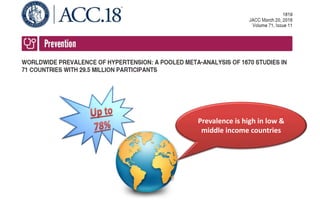
Prevalence is high in low &
middle income countries
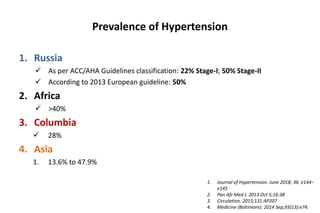
Prevalence of Hypertension
1. Russia
 As per ACC/AHA Guidelines classification: 22% Stage-I; 50% Stage-II
 According to 2013 European guideline: 50%
2. Africa
 >40%
3. Columbia
 28%
4. Asia
1. 13.6% to 47.9%
1. Journal of Hypertension. June 2018; 36: e144–
e145
2. Pan Afr Med J. 2013 Oct 5;16:38
3. Circulation. 2015;131:AP207
4. Medicine (Baltimore). 2014 Sep;93(13):e74.
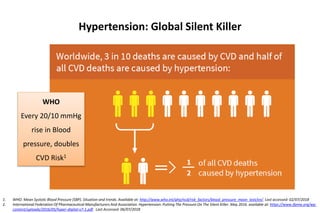
Hypertension: Global Silent Killer
1. WHO. Mean Systolic Blood Pressure (SBP). Situation and trends. Available at: http://www.who.int/gho/ncd/risk_factors/blood_pressure_mean_text/en/. Last accessed: 02/07/2018
2. International Federation Of Pharmaceutical Manufacturers And Association. Hypertension: Putting The Pressure On The Silent Killer. May 2016. available at: https://www.ifpma.org/wp-
content/uploads/2016/05/hyper-digital-v7-1.pdf . Last Accessed: 06/07/2018
WHO
Every 20/10 mmHg
rise in Blood
pressure, doubles
CVD Risk1
Coexisting diseases with Hypertension
BMJ 2016;352:i101
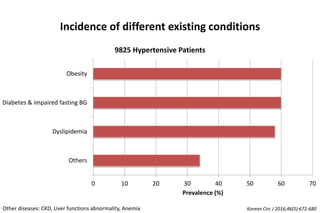
Incidence of different existing conditions
0 10 20 30 40 50 60 70
Others
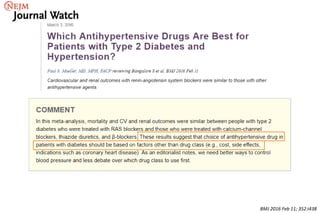
Dyslipidemia
Diabetes & impaired fasting BG
Obesity
Prevalence (%)
9825 Hypertensive Patients
Korean Circ J 2016;46(5):672-680Other diseases: CKD, Liver functions abnormality, Anemia
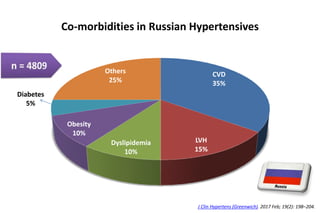
Co-morbidities in Russian Hypertensives
CVD
35%
LVH
15%
Dyslipidemia
10%
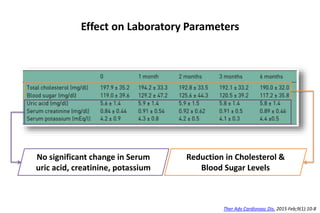
Obesity
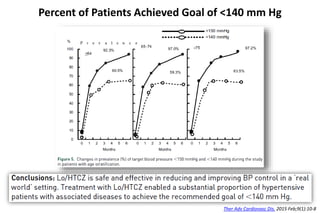
10%
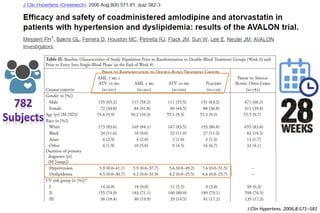
Diabetes
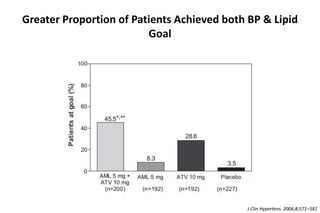
5%
Others
25%
J Clin Hypertens (Greenwich). 2017 Feb; 19(2): 198–204.
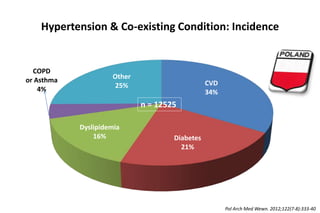
Hypertension & Co-existing Condition: Incidence
CVD
34%
Diabetes
21%
Dyslipidemia
16%
COPD
or Asthma
4%
Other
25%
Pol Arch Med Wewn. 2012;122(7-8):333-40
n = 12525
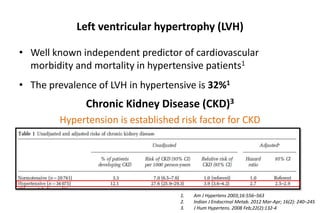
Left ventricular hypertrophy (LVH)
• Well known independent predictor of cardiovascular
morbidity and mortality in hypertensive patients1
• The prevalence of LVH in hypertensive is 32%1
Chronic Kidney Disease (CKD)3
Hypertension is established risk factor for CKD
1. Am J Hypertens 2003;16:556–563
2. Indian J Endocrinol Metab. 2012 Mar-Apr; 16(2): 240–245
3. J Hum Hypertens. 2008 Feb;22(2):132-4
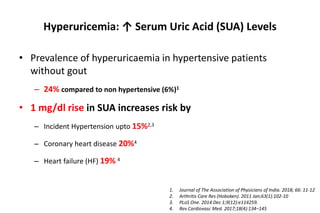
Hyperuricemia: ↑ Serum Uric Acid (SUA) Levels
• Prevalence of hyperuricaemia in hypertensive patients
without gout
– 24% compared to non hypertensive (6%)1
• 1 mg/dl rise in SUA increases risk by
– Incident Hypertension upto 15%2,3
– Coronary heart disease 20%4
– Heart failure (HF) 19% 4
1. Journal of The Association of Physicians of India. 2018; 66: 11-12
2. Arthritis Care Res (Hoboken). 2011 Jan;63(1):102-10
3. PLoS One. 2014 Dec 1;9(12):e114259.
4. Rev Cardiovasc Med. 2017;18(4):134–145
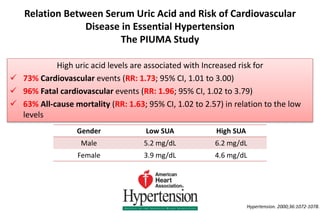
Relation Between Serum Uric Acid and Risk of Cardiovascular
Disease in Essential Hypertension
The PIUMA Study
High uric acid levels are associated with Increased risk for
 73% Cardiovascular events (RR: 1.73; 95% CI, 1.01 to 3.00)
 96% Fatal cardiovascular events (RR: 1.96; 95% CI, 1.02 to 3.79)
 63% All-cause mortality (RR: 1.63; 95% CI, 1.02 to 2.57) in relation to the low
levels
Gender Low SUA High SUA
Male 5.2 mg/dL 6.2 mg/dL
Female 3.9 mg/dL 4.6 mg/dL
Hypertension. 2000;36:1072-1078.
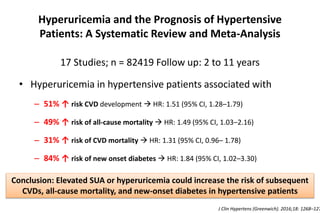
Hyperuricemia and the Prognosis of Hypertensive
Patients: A Systematic Review and Meta-Analysis
17 Studies; n = 82419 Follow up: 2 to 11 years
• Hyperuricemia in hypertensive patients associated with
– 51% ↑ risk CVD development  HR: 1.51 (95% CI, 1.28–1.79)
– 49% ↑ risk of all-cause mortality  HR: 1.49 (95% CI, 1.03–2.16)
– 31% ↑ risk of CVD mortality  HR: 1.31 (95% CI, 0.96– 1.78)
– 84% ↑ risk of new onset diabetes  HR: 1.84 (95% CI, 1.02–3.30)
J Clin Hypertens (Greenwich). 2016;18: 1268–127
Conclusion: Elevated SUA or hyperuricemia could increase the risk of subsequent
CVDs, all-cause mortality, and new-onset diabetes in hypertensive patients
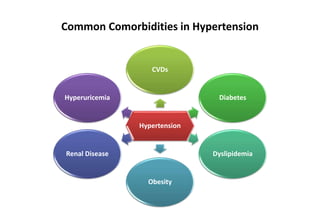
Common Comorbidities in Hypertension
Hypertension
CVDs
Diabetes
Dyslipidemia
Obesity
Renal Disease
Hyperuricemia
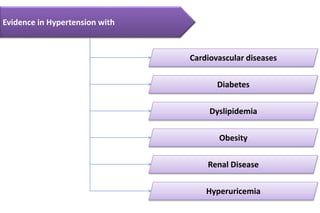
Evidence in Hypertension with
Cardiovascular diseases
Diabetes
Dyslipidemia
Renal Disease
Hyperuricemia
Obesity
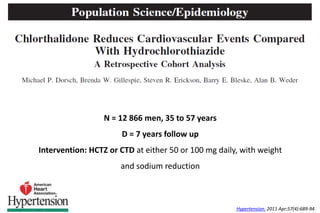
N = 12 866 men, 35 to 57 years
D = 7 years follow up
Intervention: HCTZ or CTD at either 50 or 100 mg daily, with weight
and sodium reduction
Hypertension. 2011 Apr;57(4):689-94.
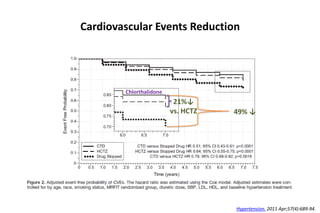
Cardiovascular Events Reduction
Hypertension. 2011 Apr;57(4):689-94.
49% ↓
21%↓
vs. HCTZ
Chlorthalidone
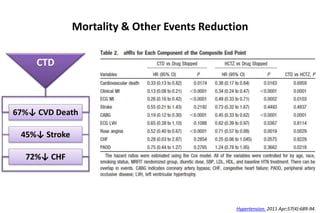
Mortality & Other Events Reduction
67%↓ CVD Death
45%↓ Stroke
72%↓ CHF
Hypertension. 2011 Apr;57(4):689-94.
CTD
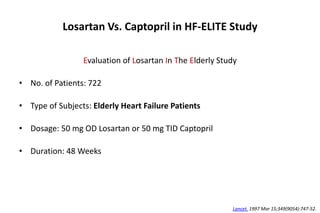
Losartan Vs. Captopril in HF-ELITE Study
Evaluation of Losartan In The Elderly Study
• No. of Patients: 722
• Type of Subjects: Elderly Heart Failure Patients
• Dosage: 50 mg OD Losartan or 50 mg TID Captopril
• Duration: 48 Weeks
Lancet. 1997 Mar 15;349(9054):747-52.
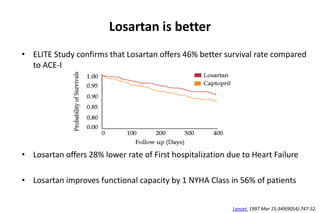
Losartan is better
• ELITE Study confirms that Losartan offers 46% better survival rate compared
to ACE-I
• Losartan offers 28% lower rate of First hospitalization due to Heart Failure
• Losartan improves functional capacity by 1 NYHA Class in 56% of patients
Lancet. 1997 Mar 15;349(9054):747-52.
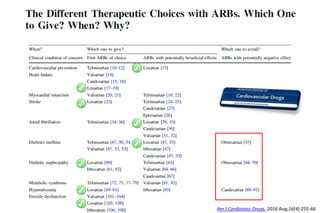
Am J Cardiovasc Drugs. 2016 Aug;16(4):255-66.
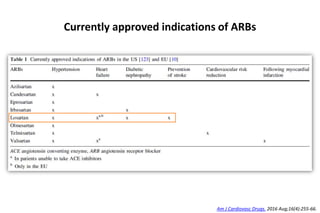
Currently approved indications of ARBs
Am J Cardiovasc Drugs. 2016 Aug;16(4):255-66.
Meta-analysis (n=3767)
13
11
10 8
6
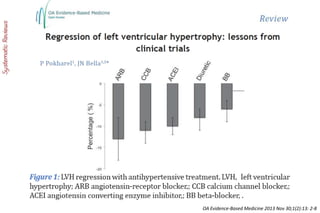
OA Evidence-Based Medicine 2013 Nov 30;1(2):13: 2-8
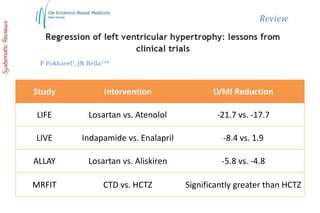
Study Intervention LVMI Reduction
LIFE Losartan vs. Atenolol -21.7 vs. -17.7
LIVE Indapamide vs. Enalapril -8.4 vs. 1.9
ALLAY Losartan vs. Aliskiren -5.8 vs. -4.8
MRFIT CTD vs. HCTZ Significantly greater than HCTZ
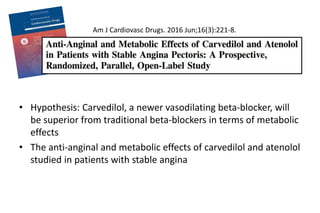
• Hypothesis: Carvedilol, a newer vasodilating beta-blocker, will
be superior from traditional beta-blockers in terms of metabolic
effects
• The anti-anginal and metabolic effects of carvedilol and atenolol
studied in patients with stable angina
Am J Cardiovasc Drugs. 2016 Jun;16(3):221-8.
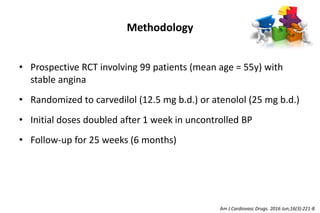
Methodology
• Prospective RCT involving 99 patients (mean age = 55y) with
stable angina
• Randomized to carvedilol (12.5 mg b.d.) or atenolol (25 mg b.d.)
• Initial doses doubled after 1 week in uncontrolled BP
• Follow-up for 25 weeks (6 months)
Am J Cardiovasc Drugs. 2016 Jun;16(3):221-8.
Results
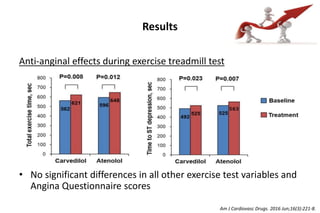
Anti-anginal effects during exercise treadmill test
• No significant differences in all other exercise test variables and
Angina Questionnaire scores
Am J Cardiovasc Drugs. 2016 Jun;16(3):221-8.
Results
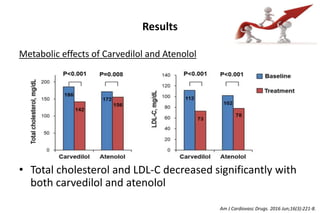
Metabolic effects of Carvedilol and Atenolol
• Total cholesterol and LDL-C decreased significantly with
both carvedilol and atenolol
Am J Cardiovasc Drugs. 2016 Jun;16(3):221-8.
Results
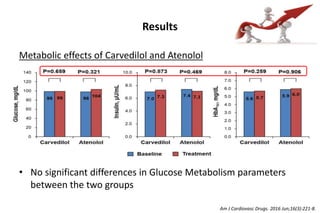
Metabolic effects of Carvedilol and Atenolol
• No significant differences in Glucose Metabolism parameters
between the two groups
Am J Cardiovasc Drugs. 2016 Jun;16(3):221-8.
Conclusions
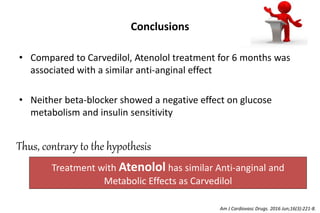
• Compared to Carvedilol, Atenolol treatment for 6 months was
associated with a similar anti-anginal effect
• Neither beta-blocker showed a negative effect on glucose
metabolism and insulin sensitivity
Treatment with Atenolol has similar Anti-anginal and
Metabolic Effects as Carvedilol
Thus, contrary to the hypothesis
Am J Cardiovasc Drugs. 2016 Jun;16(3):221-8.
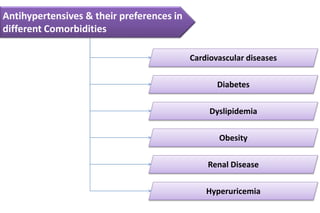
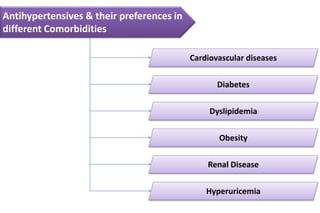
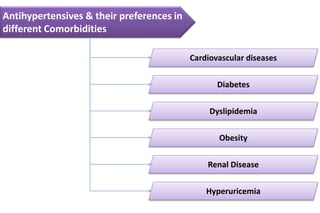
Antihypertensives & their preferences in
different Comorbidities
Cardiovascular diseases
Diabetes
Dyslipidemia
Renal Disease
Hyperuricemia
Obesity
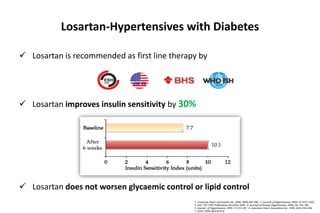
Losartan-Hypertensives with Diabetes
 Losartan is recommended as first line therapy by
 Losartan improves insulin sensitivity by 30%
 Losartan does not worsen glycaemic control or lipid control
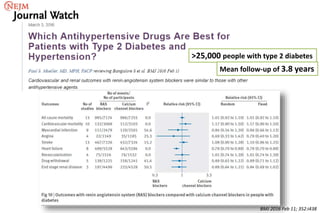
>25,000 people with type 2 diabetes
Mean follow-up of 3.8 years
BMJ 2016 Feb 11; 352:i438
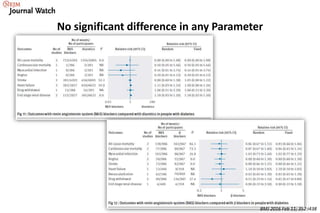
No significant difference in any Parameter
BMJ 2016 Feb 11; 352:i438
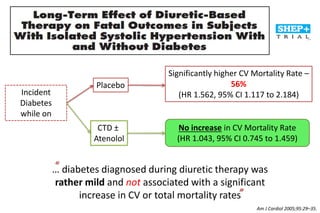
Incident
Diabetes
while on
Placebo
Significantly higher CV Mortality Rate –
56%
(HR 1.562, 95% CI 1.117 to 2.184)
No increase in CV Mortality Rate
(HR 1.043, 95% CI 0.745 to 1.459)
CTD ±
Atenolol
Am J Cardiol 2005;95:29–35.
… diabetes diagnosed during diuretic therapy was
rather mild and not associated with a significant
increase in CV or total mortality rates
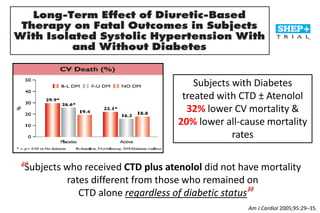
Am J Cardiol 2005;95:29–35.
Subjects with Diabetes
treated with CTD ± Atenolol
32% lower CV mortality &
20% lower all-cause mortality
rates
Subjects who received CTD plus atenolol did not have mortality
rates different from those who remained on
CTD alone regardless of diabetic status
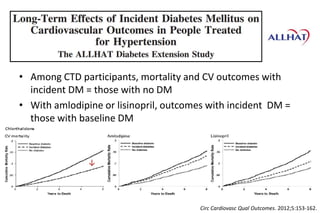
• 22,418 participants from ALLHAT followed for 6.9 yrs
• CTD had lowest HR for CV mortality, total mortality, non-CV
mortality, CHD, and stroke for participants who developed
incident DM
Circ Cardiovasc Qual Outcomes. 2012;5:153-162.
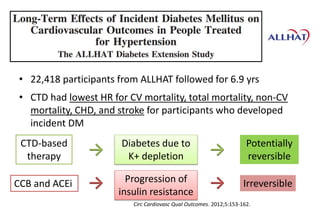
CTD-based
therapy
Diabetes due to
K+ depletion
Potentially
reversible
CCB and ACEi Progression of
insulin resistance
Irreversible→ →
→ →
• Among CTD participants, mortality and CV outcomes with
incident DM = those with no DM
• With amlodipine or lisinopril, outcomes with incident DM =
those with baseline DM
Circ Cardiovasc Qual Outcomes. 2012;5:153-162.
↓
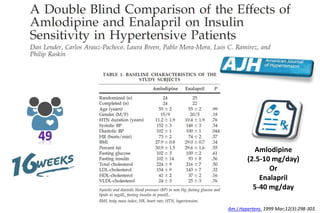
Amlodipine
(2.5-10 mg/day)
Or
Enalapril
5-40 mg/day
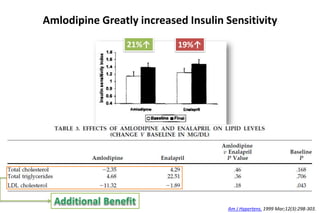
Am J Hypertens. 1999 Mar;12(3):298-303.
Amlodipine Greatly increased Insulin Sensitivity
21%↑ 19%↑
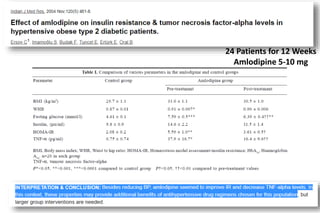
24 Patients for 12 Weeks
Amlodipine 5-10 mg
Antihypertensives & their preferences in
different Comorbidities
Cardiovascular diseases
Diabetes
Dyslipidemia
Renal Disease
Hyperuricemia
Obesity
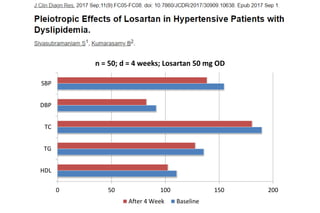
0 50 100 150 200
HDL
TG
TC
DBP
SBP
n = 50; d = 4 weeks; Losartan 50 mg OD
After 4 Week Baseline
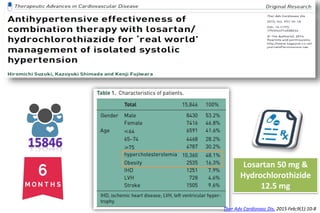
Losartan 50 mg &
Hydrochlorothizide
12.5 mg
Ther Adv Cardiovasc Dis. 2015 Feb;9(1):10-8
Effect on Laboratory Parameters
Reduction in Cholesterol &
Blood Sugar Levels
No significant change in Serum
uric acid, creatinine, potassium
Ther Adv Cardiovasc Dis. 2015 Feb;9(1):10-8
Percent of Patients Achieved Goal of <140 mm Hg
Ther Adv Cardiovasc Dis. 2015 Feb;9(1):10-8
J Clin Hypertens. 2006;8:571–581
Greater Proportion of Patients Achieved both BP & Lipid
Goal
J Clin Hypertens. 2006;8:571–581
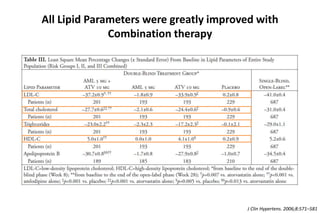
All Lipid Parameters were greatly improved with
Combination therapy
J Clin Hypertens. 2006;8:571–581
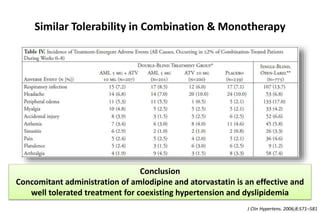
Similar Tolerability in Combination & Monotherapy
Conclusion
Concomitant administration of amlodipine and atorvastatin is an effective and
well tolerated treatment for coexisting hypertension and dyslipidemia
J Clin Hypertens. 2006;8:571–581
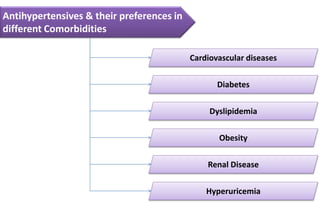
Antihypertensives & their preferences in
different Comorbidities
Cardiovascular diseases
Diabetes
Dyslipidemia
Renal Disease
Hyperuricemia
Obesity
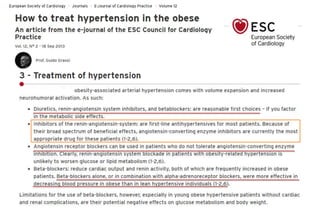
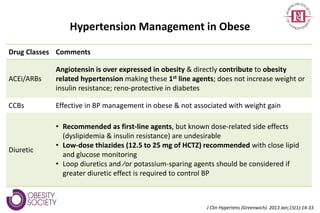
Hypertension Management in Obese
Drug Classes Comments
ACEi/ARBs
Angiotensin is over expressed in obesity & directly contribute to obesity
related hypertension making these 1st line agents; does not increase weight or
insulin resistance; reno-protective in diabetes
CCBs Effective in BP management in obese & not associated with weight gain
Diuretic
• Recommended as first-line agents, but known dose-related side effects
(dyslipidemia & insulin resistance) are undesirable
• Low-dose thiazides (12.5 to 25 mg of HCTZ) recommended with close lipid
and glucose monitoring
• Loop diuretics and ⁄or potassium-sparing agents should be considered if
greater diuretic effect is required to control BP
J Clin Hypertens (Greenwich). 2013 Jan;15(1):14-33
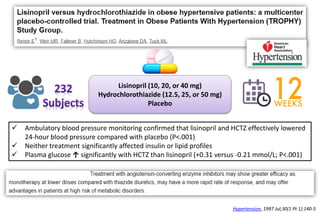
Lisinopril (10, 20, or 40 mg)
Hydrochlorothiazide (12.5, 25, or 50 mg)
Placebo
 Ambulatory blood pressure monitoring confirmed that lisinopril and HCTZ effectively lowered
24-hour blood pressure compared with placebo (P<.001)
 Neither treatment significantly affected insulin or lipid profiles
 Plasma glucose ↑ significantly with HCTZ than lisinopril (+0.31 versus -0.21 mmol/L; P<.001)
Hypertension. 1997 Jul;30(1 Pt 1):140-5
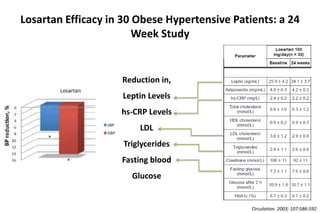
Losartan Efficacy in 30 Obese Hypertensive Patients: a 24
Week Study
Circulation. 2003; 107:586-592
Reduction in,
Leptin Levels
hs-CRP Levels
LDL
Triglycerides
Fasting blood
Glucose
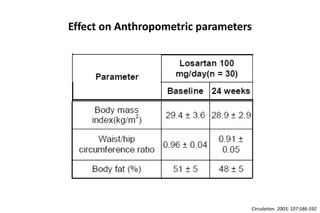
Effect on Anthropometric parameters
Circulation. 2003; 107:586-592
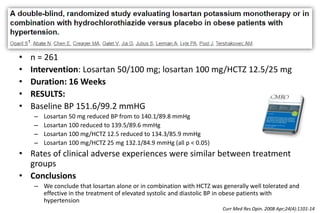
• n = 261
• Intervention: Losartan 50/100 mg; losartan 100 mg/HCTZ 12.5/25 mg
• Duration: 16 Weeks
• RESULTS:
• Baseline BP 151.6/99.2 mmHG
– Losartan 50 mg reduced BP from to 140.1/89.8 mmHg
– Losartan 100 reduced to 139.5/89.6 mmHg
– Losartan 100 mg/HCTZ 12.5 reduced to 134.3/85.9 mmHg
– Losartan 100 mg/HCTZ 25 mg 132.1/84.9 mmHg (all p < 0.05)
• Rates of clinical adverse experiences were similar between treatment
groups
• Conclusions
– We conclude that losartan alone or in combination with HCTZ was generally well tolerated and
effective in the treatment of elevated systolic and diastolic BP in obese patients with
hypertension
Curr Med Res Opin. 2008 Apr;24(4):1101-14
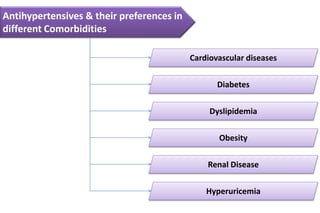
Antihypertensives & their preferences in
different Comorbidities
Cardiovascular diseases
Diabetes
Dyslipidemia
Renal Disease
Hyperuricemia
Obesity
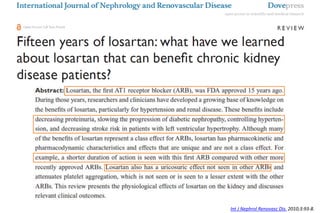
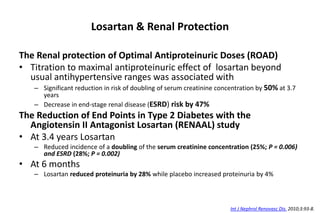
Int J Nephrol Renovasc Dis. 2010;3:93-8.
Losartan & Renal Protection
The Renal protection of Optimal Antiproteinuric Doses (ROAD)
• Titration to maximal antiproteinuric effect of losartan beyond
usual antihypertensive ranges was associated with
– Significant reduction in risk of doubling of serum creatinine concentration by 50% at 3.7
years
– Decrease in end-stage renal disease (ESRD) risk by 47%
The Reduction of End Points in Type 2 Diabetes with the
Angiotensin II Antagonist Losartan (RENAAL) study
• At 3.4 years Losartan
– Reduced incidence of a doubling of the serum creatinine concentration (25%; P = 0.006)
and ESRD (28%; P = 0.002)
• At 6 months
– Losartan reduced proteinuria by 28% while placebo increased proteinuria by 4%
Int J Nephrol Renovasc Dis. 2010;3:93-8.
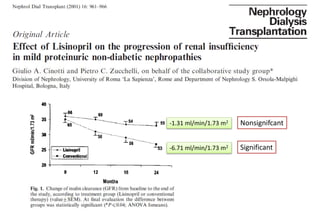
-1.31 ml/min/1.73 m2
-6.71 ml/min/1.73 m2
Nonsignifcant
Significant
Antihypertensives & their preferences in
different Comorbidities
Cardiovascular diseases
Diabetes
Dyslipidemia
Renal Disease
Hyperuricemia
Obesity
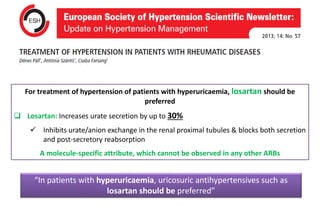
“In patients with hyperuricaemia, uricosuric antihypertensives such as
losartan should be preferred”
For treatment of hypertension of patients with hyperuricaemia, losartan should be
preferred
 Losartan: Increases urate secretion by up to 30%
 Inhibits urate/anion exchange in the renal proximal tubules & blocks both secretion
and post-secretory reabsorption
A molecule-specific attribute, which cannot be observed in any other ARBs
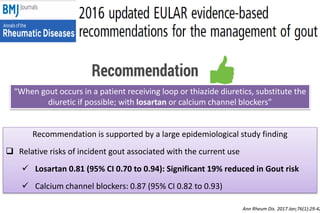
“When gout occurs in a patient receiving loop or thiazide diuretics, substitute the
diuretic if possible; with losartan or calcium channel blockers”
Recommendation is supported by a large epidemiological study finding
 Relative risks of incident gout associated with the current use
 Losartan 0.81 (95% CI 0.70 to 0.94): Significant 19% reduced in Gout risk
 Calcium channel blockers: 0.87 (95% CI 0.82 to 0.93)
Ann Rheum Dis. 2017 Jan;76(1):29-42
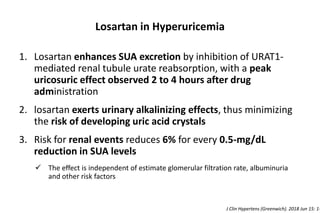
Losartan in Hyperuricemia
1. Losartan enhances SUA excretion by inhibition of URAT1-
mediated renal tubule urate reabsorption, with a peak
uricosuric effect observed 2 to 4 hours after drug
administration
2. losartan exerts urinary alkalinizing effects, thus minimizing
the risk of developing uric acid crystals
3. Risk for renal events reduces 6% for every 0.5-mg/dL
reduction in SUA levels
 The effect is independent of estimate glomerular filtration rate, albuminuria
and other risk factors
J Clin Hypertens (Greenwich). 2018 Jun 15: 1-
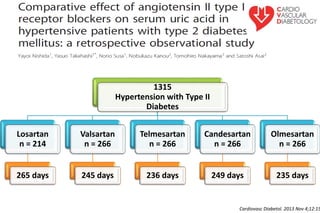
Cardiovasc Diabetol. 2013 Nov 4;12:15
1315
Hypertension with Type II
Diabetes
Losartan
n = 214
265 days
Valsartan
n = 266
245 days
Telmesartan
n = 266
236 days
Candesartan
n = 266
249 days
Olmesartan
n = 266
235 days
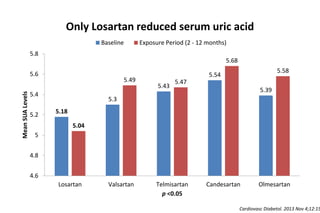
Only Losartan reduced serum uric acid
5.18
5.3
5.43
5.54
5.39
5.04
5.49 5.47
5.68
5.58
4.6
4.8
5
5.2
5.4
5.6
5.8
Losartan Valsartan Telmisartan Candesartan Olmesartan
MeanSUALevels
p <0.05
Baseline Exposure Period (2 - 12 months)
Cardiovasc Diabetol. 2013 Nov 4;12:15
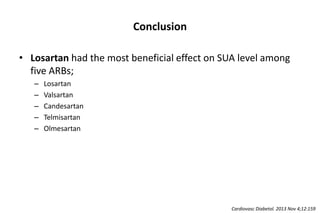
Conclusion
• Losartan had the most beneficial effect on SUA level among
five ARBs;
– Losartan
– Valsartan
– Candesartan
– Telmisartan
– Olmesartan
Cardiovasc Diabetol. 2013 Nov 4;12:159
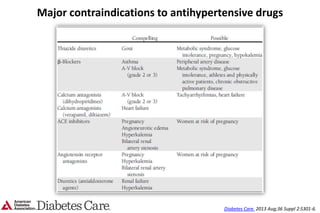
Major contraindications to antihypertensive drugs
Diabetes Care. 2013 Aug;36 Suppl 2:S301-6.
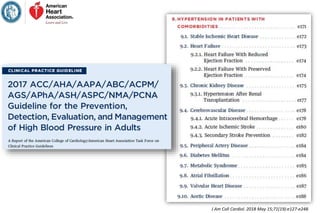
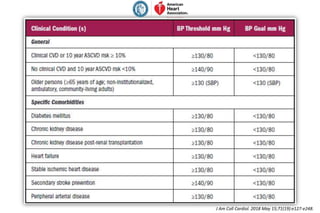
Guidelines Recommendation on hypertension with
co-morbidities
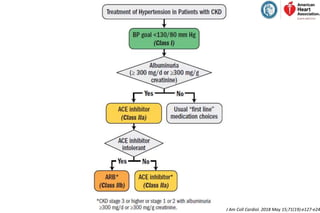
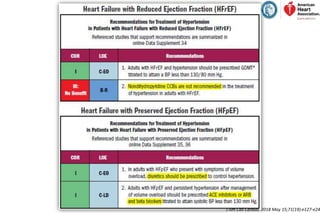
J Am Coll Cardiol. 2018 May 15;71(19):e127-e248.
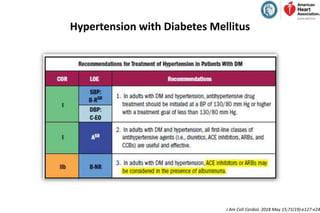
Hypertension with Diabetes Mellitus
J Am Coll Cardiol. 2018 May 15;71(19):e127-e24
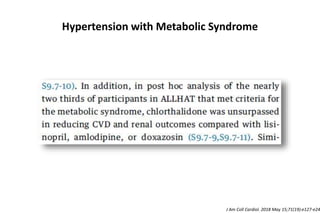
Hypertension with Metabolic Syndrome
J Am Coll Cardiol. 2018 May 15;71(19):e127-e24
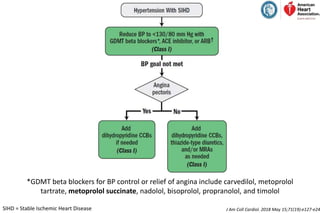
*GDMT beta blockers for BP control or relief of angina include carvedilol, metoprolol
tartrate, metoprolol succinate, nadolol, bisoprolol, propranolol, and timolol
SIHD = Stable Ischemic Heart Disease
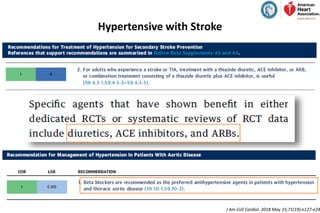
Hypertensive with Stroke
J Am Coll Cardiol. 2018 May 15;71(19):e127-e24
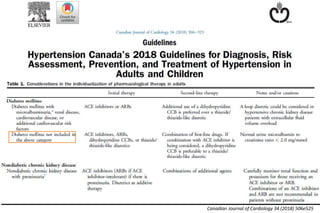
Canadian Journal of Cardiology 34 (2018) 506e525
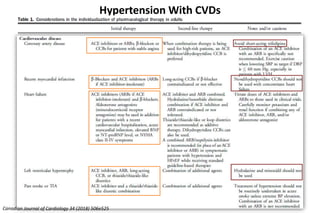
Hypertension With CVDs
Canadian Journal of Cardiology 34 (2018) 506e525
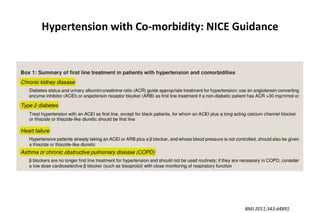
BMJ 2011;343:d4891.
Hypertension with Co-morbidity: NICE Guidance
Conclusions
(To be Added by Speaker)
Hypertension with comorbidity

Hypertension with comorbidity

  • 1.
  • 2.
    Prevalence is highin low & middle income countries
  • 3.
    Prevalence of Hypertension 1.Russia  As per ACC/AHA Guidelines classification: 22% Stage-I; 50% Stage-II  According to 2013 European guideline: 50% 2. Africa  >40% 3. Columbia  28% 4. Asia 1. 13.6% to 47.9% 1. Journal of Hypertension. June 2018; 36: e144– e145 2. Pan Afr Med J. 2013 Oct 5;16:38 3. Circulation. 2015;131:AP207 4. Medicine (Baltimore). 2014 Sep;93(13):e74.
  • 4.
    Hypertension: Global SilentKiller 1. WHO. Mean Systolic Blood Pressure (SBP). Situation and trends. Available at: http://www.who.int/gho/ncd/risk_factors/blood_pressure_mean_text/en/. Last accessed: 02/07/2018 2. International Federation Of Pharmaceutical Manufacturers And Association. Hypertension: Putting The Pressure On The Silent Killer. May 2016. available at: https://www.ifpma.org/wp- content/uploads/2016/05/hyper-digital-v7-1.pdf . Last Accessed: 06/07/2018 WHO Every 20/10 mmHg rise in Blood pressure, doubles CVD Risk1
  • 5.
    Coexisting diseases withHypertension BMJ 2016;352:i101
  • 6.
    Incidence of differentexisting conditions 0 10 20 30 40 50 60 70 Others Dyslipidemia Diabetes & impaired fasting BG Obesity Prevalence (%) 9825 Hypertensive Patients Korean Circ J 2016;46(5):672-680Other diseases: CKD, Liver functions abnormality, Anemia
  • 7.
    Co-morbidities in RussianHypertensives CVD 35% LVH 15% Dyslipidemia 10% Obesity 10% Diabetes 5% Others 25% J Clin Hypertens (Greenwich). 2017 Feb; 19(2): 198–204.
  • 8.
    Hypertension & Co-existingCondition: Incidence CVD 34% Diabetes 21% Dyslipidemia 16% COPD or Asthma 4% Other 25% Pol Arch Med Wewn. 2012;122(7-8):333-40 n = 12525
  • 9.
    Left ventricular hypertrophy(LVH) • Well known independent predictor of cardiovascular morbidity and mortality in hypertensive patients1 • The prevalence of LVH in hypertensive is 32%1 Chronic Kidney Disease (CKD)3 Hypertension is established risk factor for CKD 1. Am J Hypertens 2003;16:556–563 2. Indian J Endocrinol Metab. 2012 Mar-Apr; 16(2): 240–245 3. J Hum Hypertens. 2008 Feb;22(2):132-4
  • 10.
    Hyperuricemia: ↑ SerumUric Acid (SUA) Levels • Prevalence of hyperuricaemia in hypertensive patients without gout – 24% compared to non hypertensive (6%)1 • 1 mg/dl rise in SUA increases risk by – Incident Hypertension upto 15%2,3 – Coronary heart disease 20%4 – Heart failure (HF) 19% 4 1. Journal of The Association of Physicians of India. 2018; 66: 11-12 2. Arthritis Care Res (Hoboken). 2011 Jan;63(1):102-10 3. PLoS One. 2014 Dec 1;9(12):e114259. 4. Rev Cardiovasc Med. 2017;18(4):134–145
  • 11.
    Relation Between SerumUric Acid and Risk of Cardiovascular Disease in Essential Hypertension The PIUMA Study High uric acid levels are associated with Increased risk for  73% Cardiovascular events (RR: 1.73; 95% CI, 1.01 to 3.00)  96% Fatal cardiovascular events (RR: 1.96; 95% CI, 1.02 to 3.79)  63% All-cause mortality (RR: 1.63; 95% CI, 1.02 to 2.57) in relation to the low levels Gender Low SUA High SUA Male 5.2 mg/dL 6.2 mg/dL Female 3.9 mg/dL 4.6 mg/dL Hypertension. 2000;36:1072-1078.
  • 12.
    Hyperuricemia and thePrognosis of Hypertensive Patients: A Systematic Review and Meta-Analysis 17 Studies; n = 82419 Follow up: 2 to 11 years • Hyperuricemia in hypertensive patients associated with – 51% ↑ risk CVD development  HR: 1.51 (95% CI, 1.28–1.79) – 49% ↑ risk of all-cause mortality  HR: 1.49 (95% CI, 1.03–2.16) – 31% ↑ risk of CVD mortality  HR: 1.31 (95% CI, 0.96– 1.78) – 84% ↑ risk of new onset diabetes  HR: 1.84 (95% CI, 1.02–3.30) J Clin Hypertens (Greenwich). 2016;18: 1268–127 Conclusion: Elevated SUA or hyperuricemia could increase the risk of subsequent CVDs, all-cause mortality, and new-onset diabetes in hypertensive patients
  • 13.
    Common Comorbidities inHypertension Hypertension CVDs Diabetes Dyslipidemia Obesity Renal Disease Hyperuricemia
  • 14.
    Evidence in Hypertensionwith Cardiovascular diseases Diabetes Dyslipidemia Renal Disease Hyperuricemia Obesity
  • 15.
    N = 12866 men, 35 to 57 years D = 7 years follow up Intervention: HCTZ or CTD at either 50 or 100 mg daily, with weight and sodium reduction Hypertension. 2011 Apr;57(4):689-94.
  • 16.
    Cardiovascular Events Reduction Hypertension.2011 Apr;57(4):689-94. 49% ↓ 21%↓ vs. HCTZ Chlorthalidone
  • 17.
    Mortality & OtherEvents Reduction 67%↓ CVD Death 45%↓ Stroke 72%↓ CHF Hypertension. 2011 Apr;57(4):689-94. CTD
  • 18.
    Losartan Vs. Captoprilin HF-ELITE Study Evaluation of Losartan In The Elderly Study • No. of Patients: 722 • Type of Subjects: Elderly Heart Failure Patients • Dosage: 50 mg OD Losartan or 50 mg TID Captopril • Duration: 48 Weeks Lancet. 1997 Mar 15;349(9054):747-52.
  • 19.
    Losartan is better •ELITE Study confirms that Losartan offers 46% better survival rate compared to ACE-I • Losartan offers 28% lower rate of First hospitalization due to Heart Failure • Losartan improves functional capacity by 1 NYHA Class in 56% of patients Lancet. 1997 Mar 15;349(9054):747-52.
  • 20.
    Am J CardiovascDrugs. 2016 Aug;16(4):255-66.
  • 21.
    Currently approved indicationsof ARBs Am J Cardiovasc Drugs. 2016 Aug;16(4):255-66.
  • 22.
    Meta-analysis (n=3767) 13 11 10 8 6 OAEvidence-Based Medicine 2013 Nov 30;1(2):13: 2-8
  • 23.
    Study Intervention LVMIReduction LIFE Losartan vs. Atenolol -21.7 vs. -17.7 LIVE Indapamide vs. Enalapril -8.4 vs. 1.9 ALLAY Losartan vs. Aliskiren -5.8 vs. -4.8 MRFIT CTD vs. HCTZ Significantly greater than HCTZ
  • 24.
    • Hypothesis: Carvedilol,a newer vasodilating beta-blocker, will be superior from traditional beta-blockers in terms of metabolic effects • The anti-anginal and metabolic effects of carvedilol and atenolol studied in patients with stable angina Am J Cardiovasc Drugs. 2016 Jun;16(3):221-8.
  • 25.
    Methodology • Prospective RCTinvolving 99 patients (mean age = 55y) with stable angina • Randomized to carvedilol (12.5 mg b.d.) or atenolol (25 mg b.d.) • Initial doses doubled after 1 week in uncontrolled BP • Follow-up for 25 weeks (6 months) Am J Cardiovasc Drugs. 2016 Jun;16(3):221-8.
  • 26.
    Results Anti-anginal effects duringexercise treadmill test • No significant differences in all other exercise test variables and Angina Questionnaire scores Am J Cardiovasc Drugs. 2016 Jun;16(3):221-8.
  • 27.
    Results Metabolic effects ofCarvedilol and Atenolol • Total cholesterol and LDL-C decreased significantly with both carvedilol and atenolol Am J Cardiovasc Drugs. 2016 Jun;16(3):221-8.
  • 28.
    Results Metabolic effects ofCarvedilol and Atenolol • No significant differences in Glucose Metabolism parameters between the two groups Am J Cardiovasc Drugs. 2016 Jun;16(3):221-8.
  • 29.
    Conclusions • Compared toCarvedilol, Atenolol treatment for 6 months was associated with a similar anti-anginal effect • Neither beta-blocker showed a negative effect on glucose metabolism and insulin sensitivity Treatment with Atenolol has similar Anti-anginal and Metabolic Effects as Carvedilol Thus, contrary to the hypothesis Am J Cardiovasc Drugs. 2016 Jun;16(3):221-8.
  • 30.
    Antihypertensives & theirpreferences in different Comorbidities Cardiovascular diseases Diabetes Dyslipidemia Renal Disease Hyperuricemia Obesity
  • 31.
    Losartan-Hypertensives with Diabetes Losartan is recommended as first line therapy by  Losartan improves insulin sensitivity by 30%  Losartan does not worsen glycaemic control or lipid control
  • 32.
    >25,000 people withtype 2 diabetes Mean follow-up of 3.8 years BMJ 2016 Feb 11; 352:i438
  • 33.
    BMJ 2016 Feb11; 352:i438 No significant difference in any Parameter
  • 34.
    BMJ 2016 Feb11; 352:i438
  • 35.
    Incident Diabetes while on Placebo Significantly higherCV Mortality Rate – 56% (HR 1.562, 95% CI 1.117 to 2.184) No increase in CV Mortality Rate (HR 1.043, 95% CI 0.745 to 1.459) CTD ± Atenolol Am J Cardiol 2005;95:29–35. … diabetes diagnosed during diuretic therapy was rather mild and not associated with a significant increase in CV or total mortality rates
  • 36.
    Am J Cardiol2005;95:29–35. Subjects with Diabetes treated with CTD ± Atenolol 32% lower CV mortality & 20% lower all-cause mortality rates Subjects who received CTD plus atenolol did not have mortality rates different from those who remained on CTD alone regardless of diabetic status
  • 37.
    • 22,418 participantsfrom ALLHAT followed for 6.9 yrs • CTD had lowest HR for CV mortality, total mortality, non-CV mortality, CHD, and stroke for participants who developed incident DM Circ Cardiovasc Qual Outcomes. 2012;5:153-162. CTD-based therapy Diabetes due to K+ depletion Potentially reversible CCB and ACEi Progression of insulin resistance Irreversible→ → → →
  • 38.
    • Among CTDparticipants, mortality and CV outcomes with incident DM = those with no DM • With amlodipine or lisinopril, outcomes with incident DM = those with baseline DM Circ Cardiovasc Qual Outcomes. 2012;5:153-162. ↓
  • 39.
    Amlodipine (2.5-10 mg/day) Or Enalapril 5-40 mg/day AmJ Hypertens. 1999 Mar;12(3):298-303.
  • 40.
    Am J Hypertens.1999 Mar;12(3):298-303. Amlodipine Greatly increased Insulin Sensitivity 21%↑ 19%↑
  • 41.
    24 Patients for12 Weeks Amlodipine 5-10 mg
  • 42.
    Antihypertensives & theirpreferences in different Comorbidities Cardiovascular diseases Diabetes Dyslipidemia Renal Disease Hyperuricemia Obesity
  • 43.
    0 50 100150 200 HDL TG TC DBP SBP n = 50; d = 4 weeks; Losartan 50 mg OD After 4 Week Baseline
  • 44.
    Losartan 50 mg& Hydrochlorothizide 12.5 mg Ther Adv Cardiovasc Dis. 2015 Feb;9(1):10-8
  • 45.
    Effect on LaboratoryParameters Reduction in Cholesterol & Blood Sugar Levels No significant change in Serum uric acid, creatinine, potassium Ther Adv Cardiovasc Dis. 2015 Feb;9(1):10-8
  • 46.
    Percent of PatientsAchieved Goal of <140 mm Hg Ther Adv Cardiovasc Dis. 2015 Feb;9(1):10-8
  • 47.
    J Clin Hypertens.2006;8:571–581
  • 48.
    Greater Proportion ofPatients Achieved both BP & Lipid Goal J Clin Hypertens. 2006;8:571–581
  • 49.
    All Lipid Parameterswere greatly improved with Combination therapy J Clin Hypertens. 2006;8:571–581
  • 50.
    Similar Tolerability inCombination & Monotherapy Conclusion Concomitant administration of amlodipine and atorvastatin is an effective and well tolerated treatment for coexisting hypertension and dyslipidemia J Clin Hypertens. 2006;8:571–581
  • 51.
    Antihypertensives & theirpreferences in different Comorbidities Cardiovascular diseases Diabetes Dyslipidemia Renal Disease Hyperuricemia Obesity
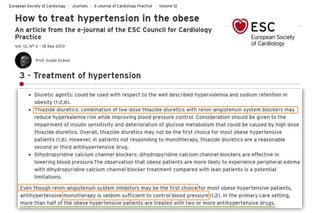
  • 54.
    Hypertension Management inObese Drug Classes Comments ACEi/ARBs Angiotensin is over expressed in obesity & directly contribute to obesity related hypertension making these 1st line agents; does not increase weight or insulin resistance; reno-protective in diabetes CCBs Effective in BP management in obese & not associated with weight gain Diuretic • Recommended as first-line agents, but known dose-related side effects (dyslipidemia & insulin resistance) are undesirable • Low-dose thiazides (12.5 to 25 mg of HCTZ) recommended with close lipid and glucose monitoring • Loop diuretics and ⁄or potassium-sparing agents should be considered if greater diuretic effect is required to control BP J Clin Hypertens (Greenwich). 2013 Jan;15(1):14-33
  • 55.
    Lisinopril (10, 20,or 40 mg) Hydrochlorothiazide (12.5, 25, or 50 mg) Placebo  Ambulatory blood pressure monitoring confirmed that lisinopril and HCTZ effectively lowered 24-hour blood pressure compared with placebo (P<.001)  Neither treatment significantly affected insulin or lipid profiles  Plasma glucose ↑ significantly with HCTZ than lisinopril (+0.31 versus -0.21 mmol/L; P<.001) Hypertension. 1997 Jul;30(1 Pt 1):140-5
  • 56.
    Losartan Efficacy in30 Obese Hypertensive Patients: a 24 Week Study Circulation. 2003; 107:586-592 Reduction in, Leptin Levels hs-CRP Levels LDL Triglycerides Fasting blood Glucose
  • 57.
    Effect on Anthropometricparameters Circulation. 2003; 107:586-592
  • 58.
    • n =261 • Intervention: Losartan 50/100 mg; losartan 100 mg/HCTZ 12.5/25 mg • Duration: 16 Weeks • RESULTS: • Baseline BP 151.6/99.2 mmHG – Losartan 50 mg reduced BP from to 140.1/89.8 mmHg – Losartan 100 reduced to 139.5/89.6 mmHg – Losartan 100 mg/HCTZ 12.5 reduced to 134.3/85.9 mmHg – Losartan 100 mg/HCTZ 25 mg 132.1/84.9 mmHg (all p < 0.05) • Rates of clinical adverse experiences were similar between treatment groups • Conclusions – We conclude that losartan alone or in combination with HCTZ was generally well tolerated and effective in the treatment of elevated systolic and diastolic BP in obese patients with hypertension Curr Med Res Opin. 2008 Apr;24(4):1101-14
  • 59.
    Antihypertensives & theirpreferences in different Comorbidities Cardiovascular diseases Diabetes Dyslipidemia Renal Disease Hyperuricemia Obesity
  • 61.
    Int J NephrolRenovasc Dis. 2010;3:93-8.
  • 62.
    Losartan & RenalProtection The Renal protection of Optimal Antiproteinuric Doses (ROAD) • Titration to maximal antiproteinuric effect of losartan beyond usual antihypertensive ranges was associated with – Significant reduction in risk of doubling of serum creatinine concentration by 50% at 3.7 years – Decrease in end-stage renal disease (ESRD) risk by 47% The Reduction of End Points in Type 2 Diabetes with the Angiotensin II Antagonist Losartan (RENAAL) study • At 3.4 years Losartan – Reduced incidence of a doubling of the serum creatinine concentration (25%; P = 0.006) and ESRD (28%; P = 0.002) • At 6 months – Losartan reduced proteinuria by 28% while placebo increased proteinuria by 4% Int J Nephrol Renovasc Dis. 2010;3:93-8.
  • 63.
    -1.31 ml/min/1.73 m2 -6.71ml/min/1.73 m2 Nonsignifcant Significant
  • 64.
    Antihypertensives & theirpreferences in different Comorbidities Cardiovascular diseases Diabetes Dyslipidemia Renal Disease Hyperuricemia Obesity
  • 65.
    “In patients withhyperuricaemia, uricosuric antihypertensives such as losartan should be preferred” For treatment of hypertension of patients with hyperuricaemia, losartan should be preferred  Losartan: Increases urate secretion by up to 30%  Inhibits urate/anion exchange in the renal proximal tubules & blocks both secretion and post-secretory reabsorption A molecule-specific attribute, which cannot be observed in any other ARBs
  • 66.
    “When gout occursin a patient receiving loop or thiazide diuretics, substitute the diuretic if possible; with losartan or calcium channel blockers” Recommendation is supported by a large epidemiological study finding  Relative risks of incident gout associated with the current use  Losartan 0.81 (95% CI 0.70 to 0.94): Significant 19% reduced in Gout risk  Calcium channel blockers: 0.87 (95% CI 0.82 to 0.93) Ann Rheum Dis. 2017 Jan;76(1):29-42
  • 67.
    Losartan in Hyperuricemia 1.Losartan enhances SUA excretion by inhibition of URAT1- mediated renal tubule urate reabsorption, with a peak uricosuric effect observed 2 to 4 hours after drug administration 2. losartan exerts urinary alkalinizing effects, thus minimizing the risk of developing uric acid crystals 3. Risk for renal events reduces 6% for every 0.5-mg/dL reduction in SUA levels  The effect is independent of estimate glomerular filtration rate, albuminuria and other risk factors J Clin Hypertens (Greenwich). 2018 Jun 15: 1-
  • 68.
    Cardiovasc Diabetol. 2013Nov 4;12:15 1315 Hypertension with Type II Diabetes Losartan n = 214 265 days Valsartan n = 266 245 days Telmesartan n = 266 236 days Candesartan n = 266 249 days Olmesartan n = 266 235 days
  • 69.
    Only Losartan reducedserum uric acid 5.18 5.3 5.43 5.54 5.39 5.04 5.49 5.47 5.68 5.58 4.6 4.8 5 5.2 5.4 5.6 5.8 Losartan Valsartan Telmisartan Candesartan Olmesartan MeanSUALevels p <0.05 Baseline Exposure Period (2 - 12 months) Cardiovasc Diabetol. 2013 Nov 4;12:15
  • 70.
    Conclusion • Losartan hadthe most beneficial effect on SUA level among five ARBs; – Losartan – Valsartan – Candesartan – Telmisartan – Olmesartan Cardiovasc Diabetol. 2013 Nov 4;12:159
  • 71.
    Major contraindications toantihypertensive drugs Diabetes Care. 2013 Aug;36 Suppl 2:S301-6.
  • 72.
    Guidelines Recommendation onhypertension with co-morbidities
  • 73.
    J Am CollCardiol. 2018 May 15;71(19):e127-e248.
  • 74.
    J Am CollCardiol. 2018 May 15;71(19):e127-e248.
  • 75.
    Hypertension with DiabetesMellitus J Am Coll Cardiol. 2018 May 15;71(19):e127-e24
  • 76.
    Hypertension with MetabolicSyndrome J Am Coll Cardiol. 2018 May 15;71(19):e127-e24
  • 77.
    J Am CollCardiol. 2018 May 15;71(19):e127-e24
  • 78.
    J Am CollCardiol. 2018 May 15;71(19):e127-e24
  • 79.
    J Am CollCardiol. 2018 May 15;71(19):e127-e24 *GDMT beta blockers for BP control or relief of angina include carvedilol, metoprolol tartrate, metoprolol succinate, nadolol, bisoprolol, propranolol, and timolol SIHD = Stable Ischemic Heart Disease
  • 80.
    Hypertensive with Stroke JAm Coll Cardiol. 2018 May 15;71(19):e127-e24
  • 81.
    Canadian Journal ofCardiology 34 (2018) 506e525
  • 82.
    Hypertension With CVDs CanadianJournal of Cardiology 34 (2018) 506e525
  • 83.
    BMJ 2011;343:d4891. Hypertension withCo-morbidity: NICE Guidance
  • 84.

Editor's Notes

  • #4 https://journals.lww.com/jhypertension/Abstract/2018/06001/HYPERTENSION_PREVALENCE_IN_RUSSIAN_POPULATION.430.aspx http://circ.ahajournals.org/content/131/Suppl_1/AP207
  • #37 diabetes diagnosed during diuretic therapy was rather mild and not associated with a significant increase in CV or total mortality rates
  • #40 “Therefore, concerns regarding potential adverse diabetic effects associated with thiazide-type diuretic therapy should not inhibit its use.”
  • #54 https://www.escardio.org/Journals/E-Journal-of-Cardiology-Practice/Volume-12/How-to-treat-hypertension-in-the-obese
  • #55 https://www.escardio.org/Journals/E-Journal-of-Cardiology-Practice/Volume-12/How-to-treat-hypertension-in-the-obese
  • #65 Alpha and Beta blockers & CCBs