Download as PDF, PPTX
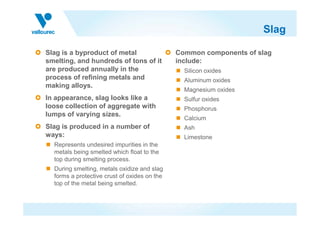
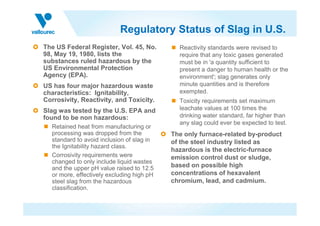
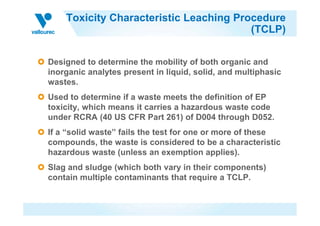
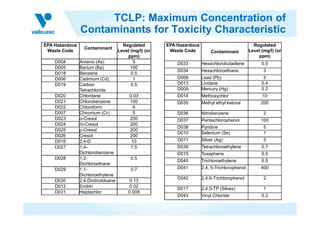
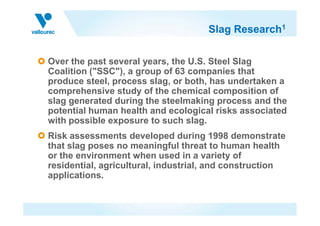
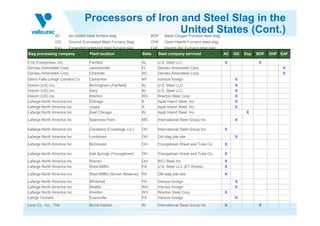
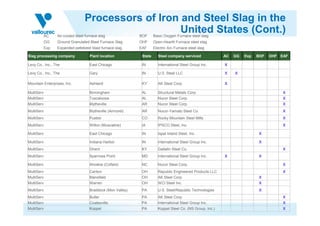
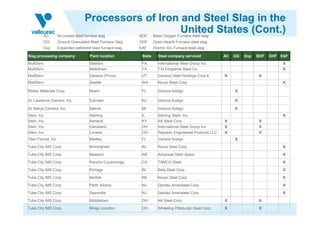
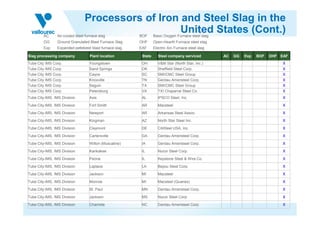
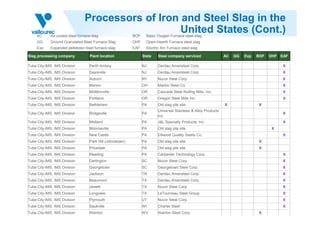
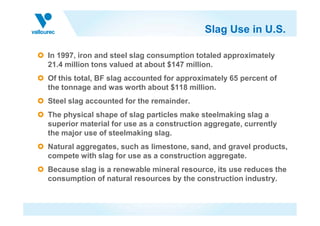
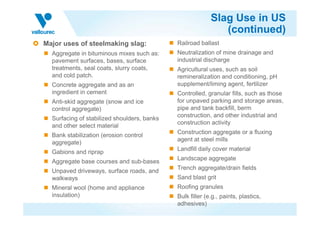
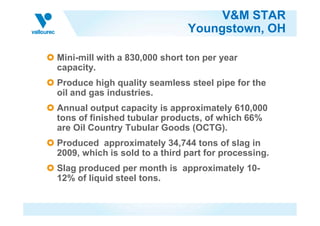
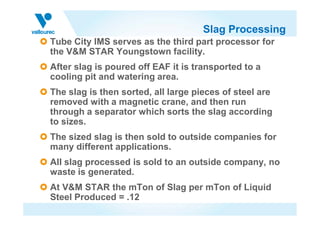
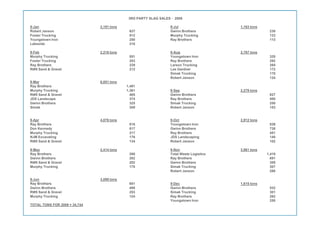
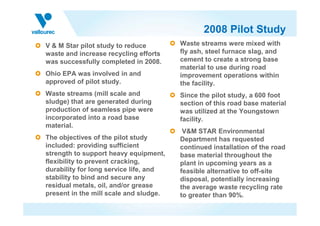
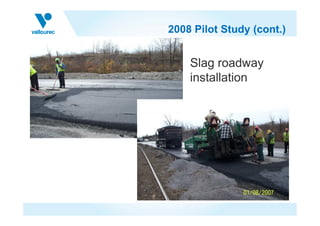
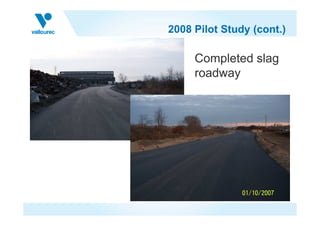
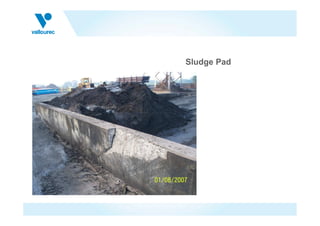
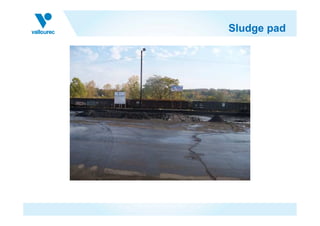
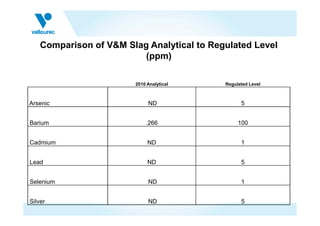

Slag is a byproduct of metal smelting produced in hundreds of tons annually. It appears as a loose collection of aggregate lumps and includes components like silicon, aluminum, and magnesium oxides. Slag forms as impurities float to the top during smelting or forms a protective crust on top of smelted metals. The US EPA tested slag and determined it did not meet the regulatory definitions of ignitable, corrosive, reactive, or toxic waste. As a result, slag is not considered a hazardous waste in the US.


![Getting Started with Apache Spark: Big Data Made Simple [Free Meetup]](https://cdn.slidesharecdn.com/ss_thumbnails/apachesparkgettingstarted-260203175547-8361bcc3-thumbnail.jpg?width=640&height=640&fit=bounds)


