 # JAVA CARD #
SEMINAR PRESENTATION
NAME : ABHISHEK SIDDHU GORE.
EN NO : 2026018
AGENDA OF SEMINAR
 INTRODUCTION.
 HISTORY.
 JAVA CARD SECURITY ARCHITECTURE.
 WORKING OF JAVA CARD.
 ADVANTAGES OF JAVA CARD.
 DISADVANTAGES OF JAVA CARD.
 APPLICATIONS.
 CONCLUSION.
INTRODUCTION :
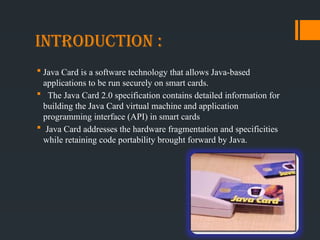
 Java Card is a software technology that allows Java-based
applications to be run securely on smart cards.
 The Java Card 2.0 specification contains detailed information for
building the Java Card virtual machine and application
programming interface (API) in smart cards
 Java Card addresses the hardware fragmentation and specificities
while retaining code portability brought forward by Java.
HISTORY :
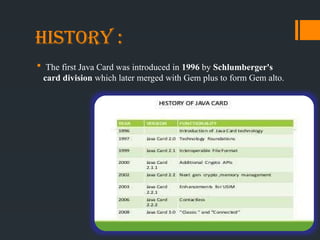
 The first Java Card was introduced in 1996 by Schlumberger's
card division which later merged with Gem plus to form Gem alto.
JAVA CARD SECURITY
ARCHITECTURE :
 The Java Card technology enables smart cards and other devices
with limited memory to run Java-based applications.
 Java Card technology brings a whole set of advantages to smart
cards.
 It is also important to note that the Java Card technology
[Java Card] was developed specifically to enhance the security of
smart cards.
WORKING OF JAVA CARD :
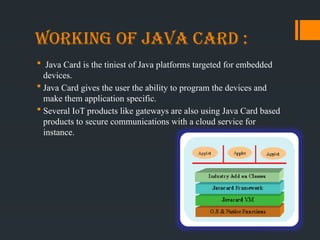
 Java Card is the tiniest of Java platforms targeted for embedded
devices.
 Java Card gives the user the ability to program the devices and
make them application specific.
 Several IoT products like gateways are also using Java Card based
products to secure communications with a cloud service for
instance.
ADVANTAGES :
 More Secure.
 Safe to Transport.
 Offer a variety of benefits.
 Time saving.
 Double as an ID card.
 Less expensive.
 Prevents fraud.
DISADVANTAGES :
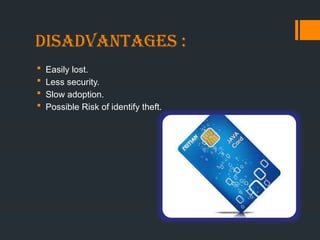
 Easily lost.
 Less security.
 Slow adoption.
 Possible Risk of identify theft.
APPLICATIONS :
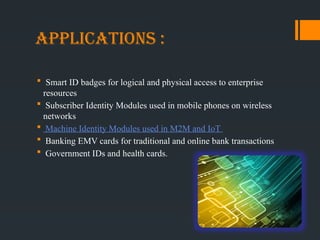
 Smart ID badges for logical and physical access to enterprise
resources
 Subscriber Identity Modules used in mobile phones on wireless
networks
 Machine Identity Modules used in M2M and IoT
 Banking EMV cards for traditional and online bank transactions
 Government IDs and health cards.
CONCLUSION :
 The Java Card adds a new platform to the world of Java.
 At the same time, the number of Java Cards in existence could
easily extend into the millions within the next few years.
 Which means you may soon be storing your personal information
and downloading applications using a little card you carry around
in your wallet or purse.

Java Card is a software technology that allows Java-based applications to be run securely on smart cards.

  • 1.
     # JAVACARD # SEMINAR PRESENTATION NAME : ABHISHEK SIDDHU GORE. EN NO : 2026018
  • 2.
    AGENDA OF SEMINAR INTRODUCTION.  HISTORY.  JAVA CARD SECURITY ARCHITECTURE.  WORKING OF JAVA CARD.  ADVANTAGES OF JAVA CARD.  DISADVANTAGES OF JAVA CARD.  APPLICATIONS.  CONCLUSION.
  • 3.
    INTRODUCTION :  JavaCard is a software technology that allows Java-based applications to be run securely on smart cards.  The Java Card 2.0 specification contains detailed information for building the Java Card virtual machine and application programming interface (API) in smart cards  Java Card addresses the hardware fragmentation and specificities while retaining code portability brought forward by Java.
  • 4.
    HISTORY :  Thefirst Java Card was introduced in 1996 by Schlumberger's card division which later merged with Gem plus to form Gem alto.
  • 5.
    JAVA CARD SECURITY ARCHITECTURE:  The Java Card technology enables smart cards and other devices with limited memory to run Java-based applications.  Java Card technology brings a whole set of advantages to smart cards.  It is also important to note that the Java Card technology [Java Card] was developed specifically to enhance the security of smart cards.
  • 6.
    WORKING OF JAVACARD :  Java Card is the tiniest of Java platforms targeted for embedded devices.  Java Card gives the user the ability to program the devices and make them application specific.  Several IoT products like gateways are also using Java Card based products to secure communications with a cloud service for instance.
  • 7.
    ADVANTAGES :  MoreSecure.  Safe to Transport.  Offer a variety of benefits.  Time saving.  Double as an ID card.  Less expensive.  Prevents fraud.
  • 8.
    DISADVANTAGES :  Easilylost.  Less security.  Slow adoption.  Possible Risk of identify theft.
  • 9.
    APPLICATIONS :  SmartID badges for logical and physical access to enterprise resources  Subscriber Identity Modules used in mobile phones on wireless networks  Machine Identity Modules used in M2M and IoT  Banking EMV cards for traditional and online bank transactions  Government IDs and health cards.
  • 10.
    CONCLUSION :  TheJava Card adds a new platform to the world of Java.  At the same time, the number of Java Cards in existence could easily extend into the millions within the next few years.  Which means you may soon be storing your personal information and downloading applications using a little card you carry around in your wallet or purse.