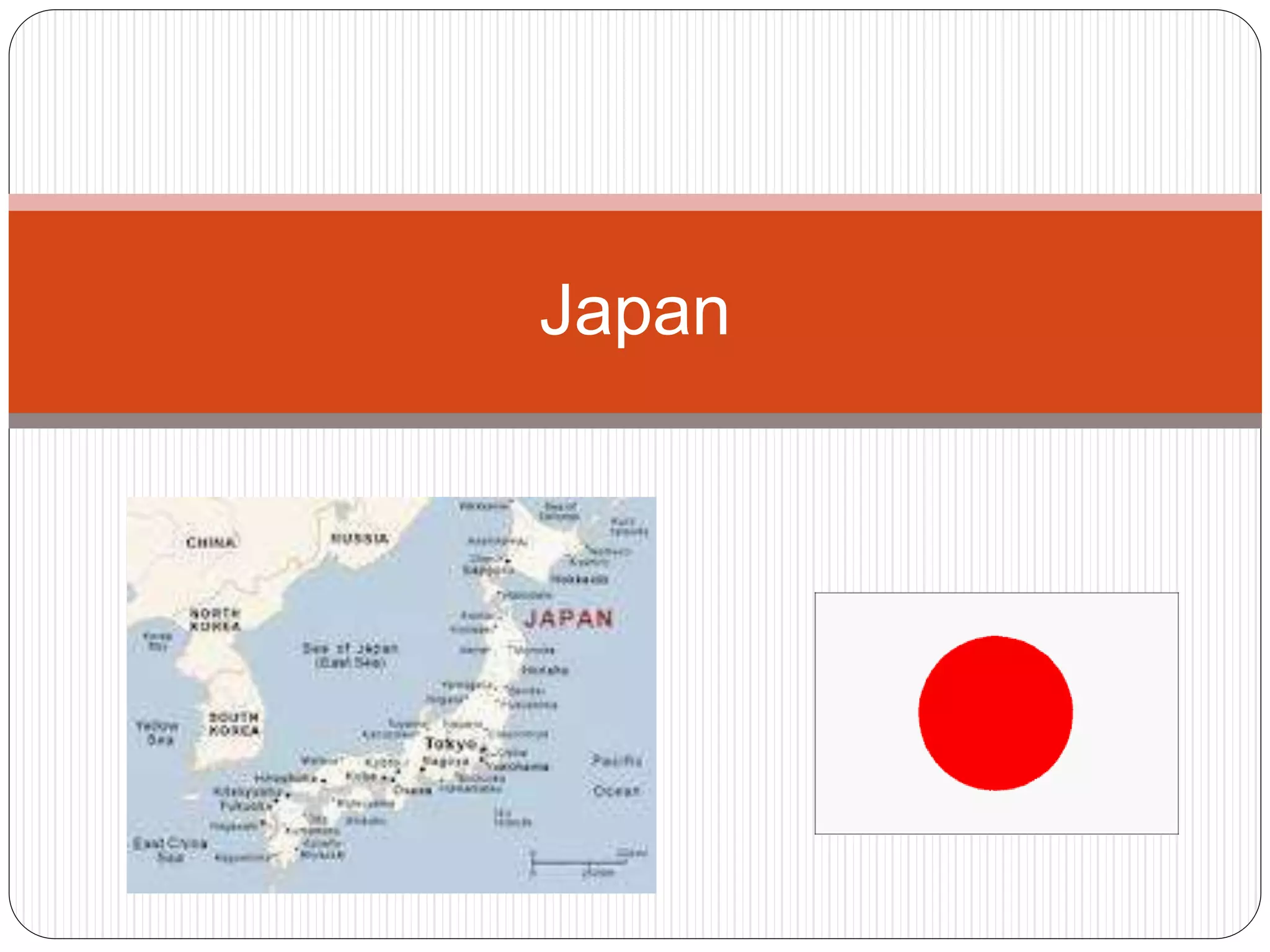
Japan
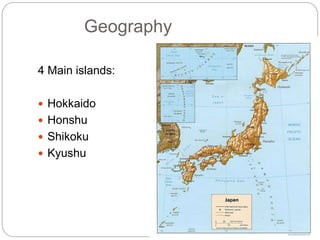
Geography 
4 Main islands: 
 Hokkaido 
 Honshu 
 Shikoku 
 Kyushu
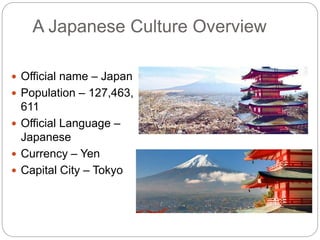
A Japanese Culture Overview 
 Official name – Japan 
 Population – 127,463, 
611 
 Official Language – 
Japanese 
 Currency – Yen 
 Capital City – Tokyo
Traditional religious & philosophical 
influences 
 Shintoism – Attention towards the 
cyclical aspect of nature 
 Buddihism – Fear of irreversible loss 
of identity 
 Zen – Nothingness, the concept of 
emptiness and contrast between full 
and empty
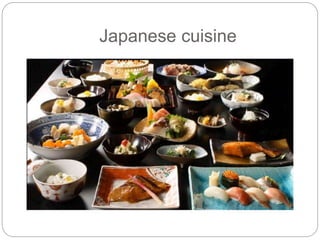
Japanese cuisine
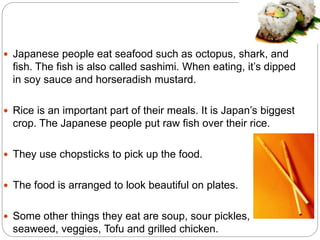
 Japanese people eat seafood such as octopus, shark, and 
fish. The fish is also called sashimi. When eating, it’s dipped 
in soy sauce and horseradish mustard. 
 Rice is an important part of their meals. It is Japan’s biggest 
crop. The Japanese people put raw fish over their rice. 
 They use chopsticks to pick up the food. 
 The food is arranged to look beautiful on plates. 
 Some other things they eat are soup, sour pickles, 
seaweed, veggies, Tofu and grilled chicken.
Japanese customs 
 Greetings 
 The Art of eating and 
drinking 
 Visiting Houses and 
Hospitality 
 Punctuality and Work 
Ethics
Behavior habits 
 They bow to greet one another. The lower 
you bow the more respect you give. 
 They have festivals to show respect for their 
land. 
 They also respect their land by not littering. 
 Old and special people get special greetings. 
For example, people bow VERY low. 
 The Japanese use the carp (a type of fish) to 
symbolize strength and courage. 
 They will hide their own feelings not to hurt 
other's
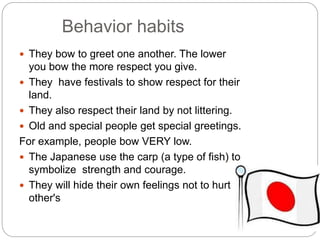
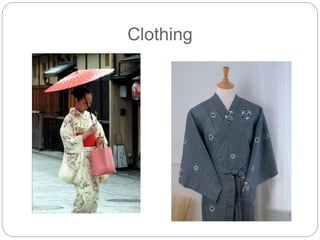
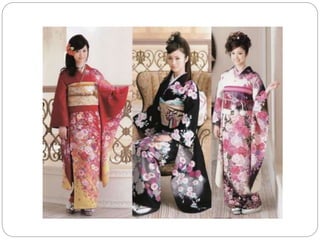
Clothing
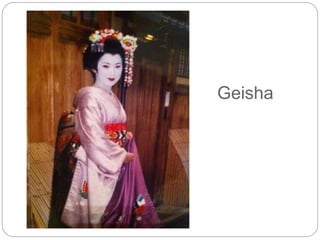
Geisha
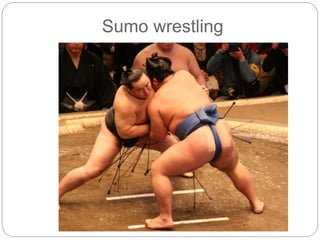
Sumo wrestling
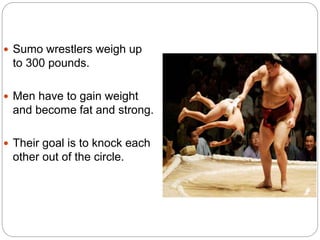
 Sumo wrestlers weigh up 
to 300 pounds. 
 Men have to gain weight 
and become fat and strong. 
 Their goal is to knock each 
other out of the circle.
Conclusion

Japan

  • 1.
  • 2.
    Geography 4 Mainislands:  Hokkaido  Honshu  Shikoku  Kyushu
  • 3.
    A Japanese CultureOverview  Official name – Japan  Population – 127,463, 611  Official Language – Japanese  Currency – Yen  Capital City – Tokyo
  • 5.
    Traditional religious &philosophical influences  Shintoism – Attention towards the cyclical aspect of nature  Buddihism – Fear of irreversible loss of identity  Zen – Nothingness, the concept of emptiness and contrast between full and empty
  • 6.
  • 7.
     Japanese peopleeat seafood such as octopus, shark, and fish. The fish is also called sashimi. When eating, it’s dipped in soy sauce and horseradish mustard.  Rice is an important part of their meals. It is Japan’s biggest crop. The Japanese people put raw fish over their rice.  They use chopsticks to pick up the food.  The food is arranged to look beautiful on plates.  Some other things they eat are soup, sour pickles, seaweed, veggies, Tofu and grilled chicken.
  • 8.
    Japanese customs Greetings  The Art of eating and drinking  Visiting Houses and Hospitality  Punctuality and Work Ethics
  • 9.
    Behavior habits They bow to greet one another. The lower you bow the more respect you give.  They have festivals to show respect for their land.  They also respect their land by not littering.  Old and special people get special greetings. For example, people bow VERY low.  The Japanese use the carp (a type of fish) to symbolize strength and courage.  They will hide their own feelings not to hurt other's
  • 10.
  • 12.
  • 13.
  • 14.
     Sumo wrestlersweigh up to 300 pounds.  Men have to gain weight and become fat and strong.  Their goal is to knock each other out of the circle.
  • 15.